Chrysler 300C: 3.0 CRD, 5.7 Hemi and SRT8 6.4 Hemi
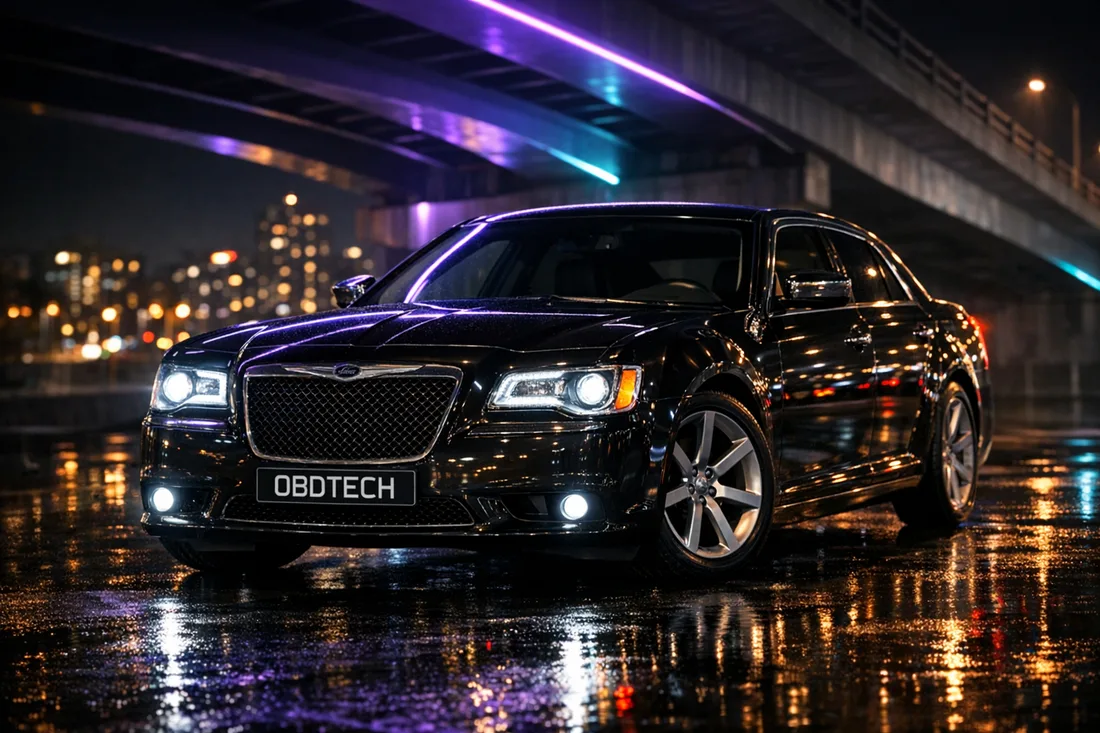
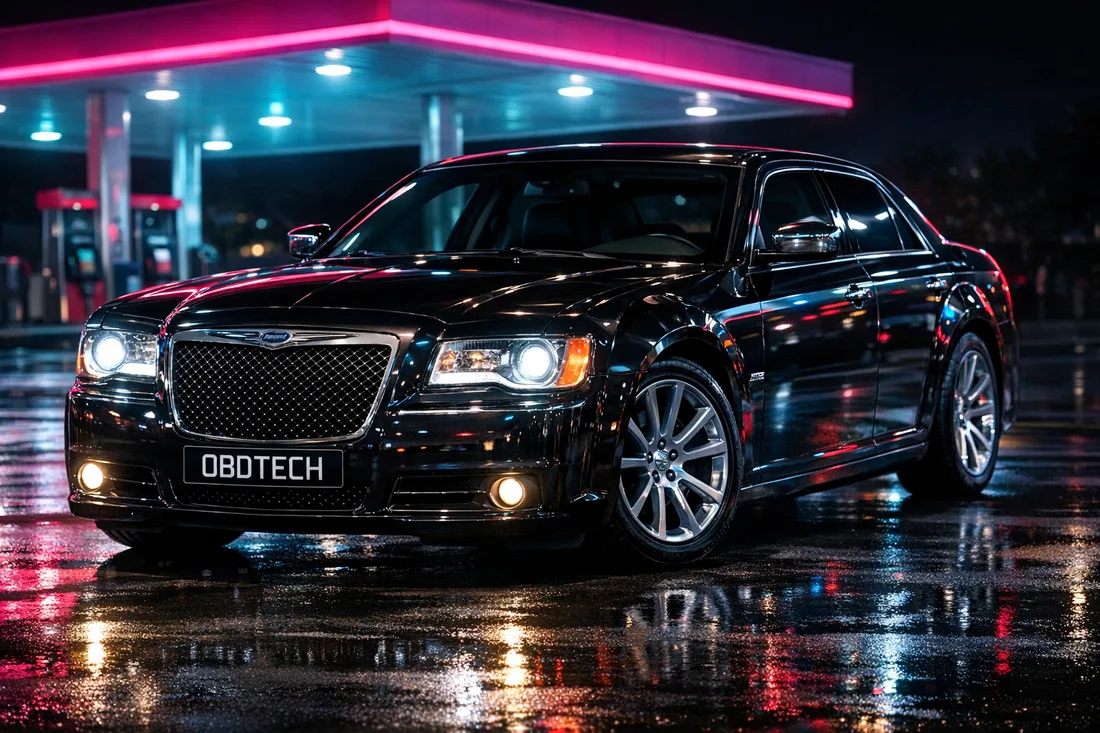
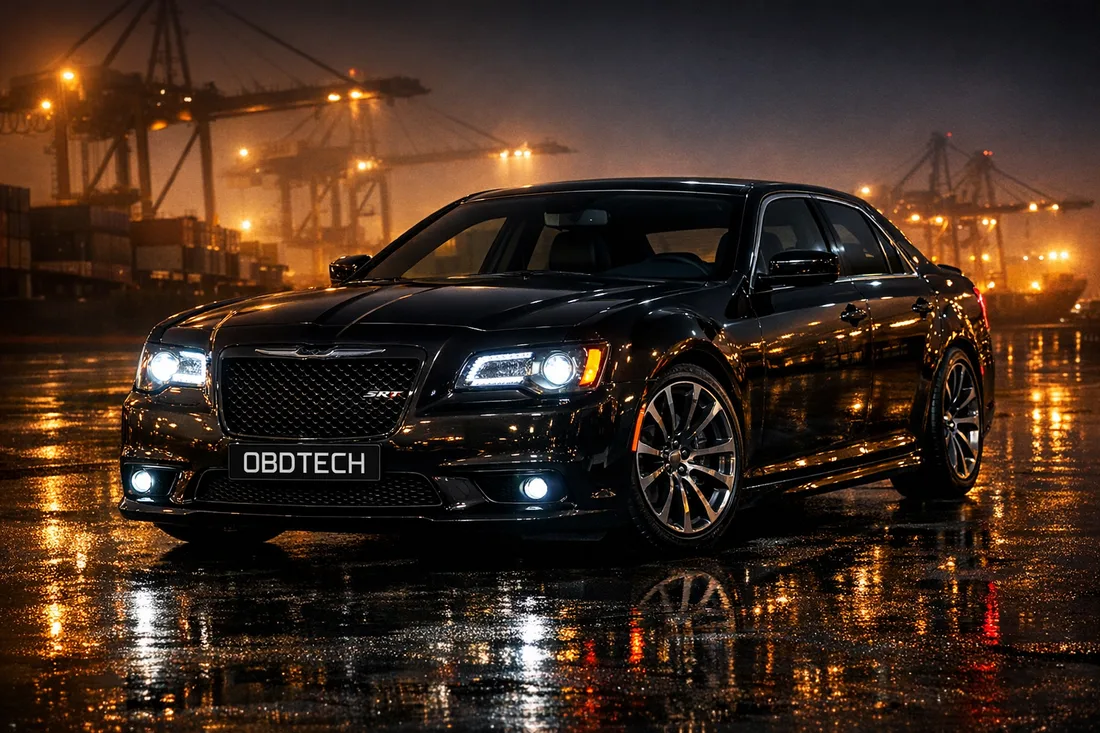
The 300C has always been about presence: a big, rear driven American saloon that arrived in New Zealand looking like it meant business. But under that shared silhouette sits three very different machines, a Mercedes sourced diesel V6, a 5.7-litre Hemi V8, and the full fat 6.4-litre SRT8. Each one has its own character, its own strengths, and its own very specific set of things that go wrong. Our Penrose workshop sees all three regularly, and this page tells you exactly what to expect from each.
The Stuttgart American Diesel
There's something genuinely interesting about a large American saloon running a Mercedes built diesel. The 3.0 CRD uses the OM642 V6, a 2987 cc unit producing 211 hp and 510 Nm, managed by a Bosch EDC16CP31 ECU. It made the 300C genuinely usable as an everyday car in New Zealand, pairing that imposing presence with fuel economy the Hemi versions can only dream about. But the OM642 is a well documented engine, and that documentation includes a very specific list of things that wear out.
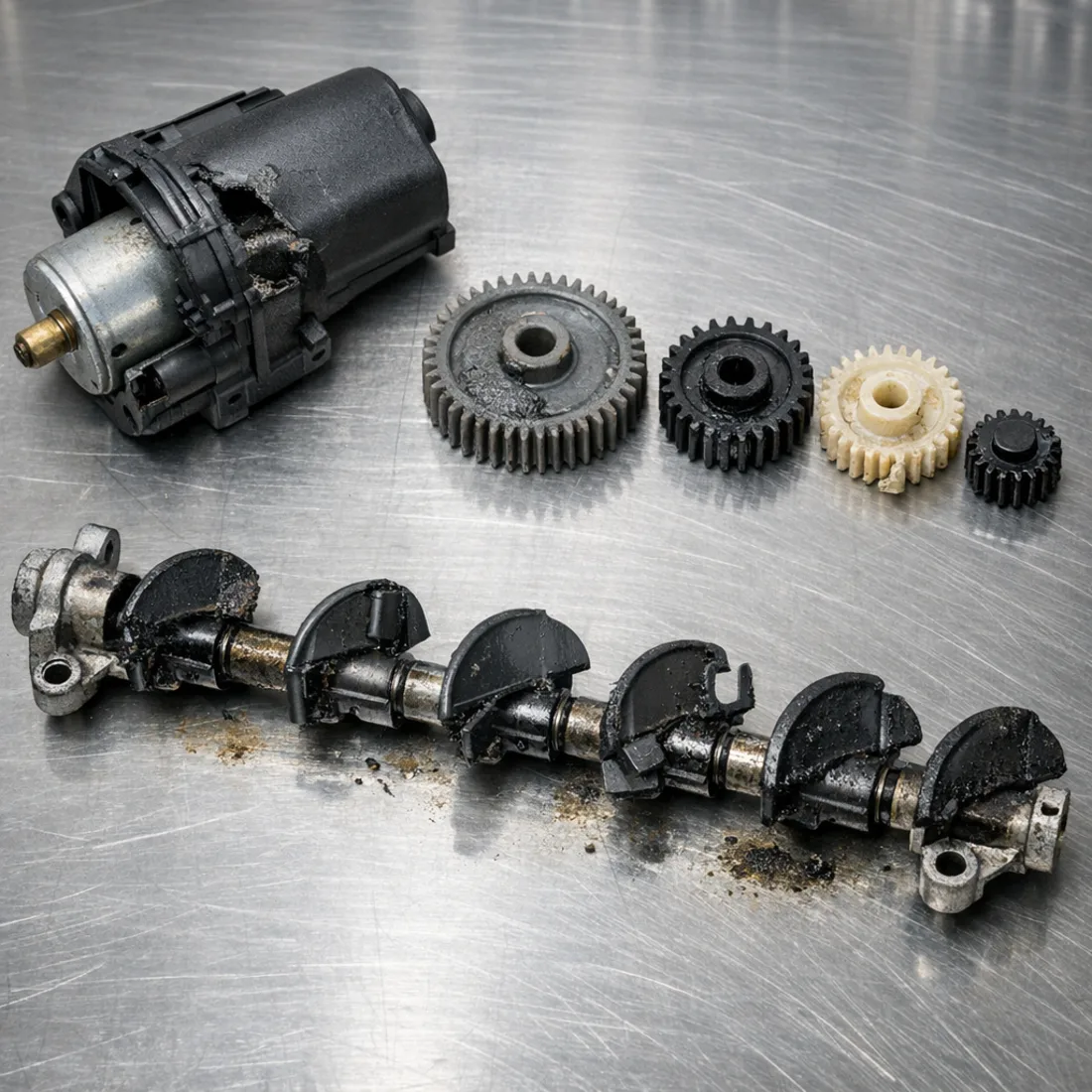
The swirl flap actuator is the one that bites first. The small plastic gears inside the intake manifold actuator seize and strip with age and heat cycling, triggering rough running and limp mode. It's a known OM642 weak point across every brand that uses this engine, and the 300C is no exception. If your diesel 300C has started hesitating under load or throwing a swirl flap fault code, that's where to look first.
The oil cooler is the other one worth knowing about. Sitting in the valley of the V6, its seals harden with age and start leaking, mixing oil and coolant in ways that quickly become expensive if left. Catch it early, replace the cooler and seals with new genuine parts, and you're sorted. Leave it, and you're looking at a much bigger bill.
EGR clogging and DPF loading are standard diesel problems, but the CRD suffers more than most when it's used for short urban trips. The DPF never gets hot enough to self clean, soot builds up, and eventually the car goes into reduced power mode. We clean rather than delete these systems, diagnosing them properly and restoring them to working order. Because we read the Mercedes based powertrain modules directly, rather than relying on a generic scan tool, we can actually see what the ECU is telling us rather than guessing from a generic fault code.
-
Intake manifold swirl flap actuator failure: stripped gears, limp mode, rough running
-
Oil cooler and seals leaking oil and coolant into the valley
-
EGR valve clogging, particularly on short trip urban driving
-
DPF soot loading and regeneration failures
-
Injector wear and turbo actuator faults at higher mileage
Routine servicing on the CRD means the correct low ash diesel grade oil, fresh fuel and air filters, glow plugs when they're due, and keeping an eye on the drive belts.
The timing chain also deserves a check at higher mileage. Get these basics right and the OM642 will go a long way.
Routine servicing on the CRD means the correct low ash diesel grade oil, fresh fuel and air filters, glow plugs when they're due, and keeping an eye on the drive belts. The timing chain also deserves a check at higher mileage. Get these basics right and the OM642 will go a long way. Neglect the oil quality in particular and the chain guides pay the price.
For the diesel 300C, Stage 1 tuning is a meaningful upgrade. Our calibration takes the CRD from 211 hp and 510 Nm to 275 hp and 600 Nm, gains of 64 hp and 90 Nm from the same Bosch ECU, the same hardware, the same fuel. That's not a marginal improvement; it genuinely transforms the way the car pulls. If you're keeping the CRD long term, it's worth having the conversation about tuning alongside your next service.
Get your 300C booked in with a specialist who knows all three variants.
The Big Petrol That Needs Respect
If the CRD is the sensible choice, the 5.7 Hemi is the one you buy with your heart. Five thousand, six hundred and fifty four cubic centimetres, 363 hp, 534 Nm, managed by a Siemens/Continental GPEC2 ECU. It sounds superb, it pulls hard, and it makes the 300C feel like the muscle car it was always pretending to be. It also has the Multi Displacement System, which is where things get interesting.
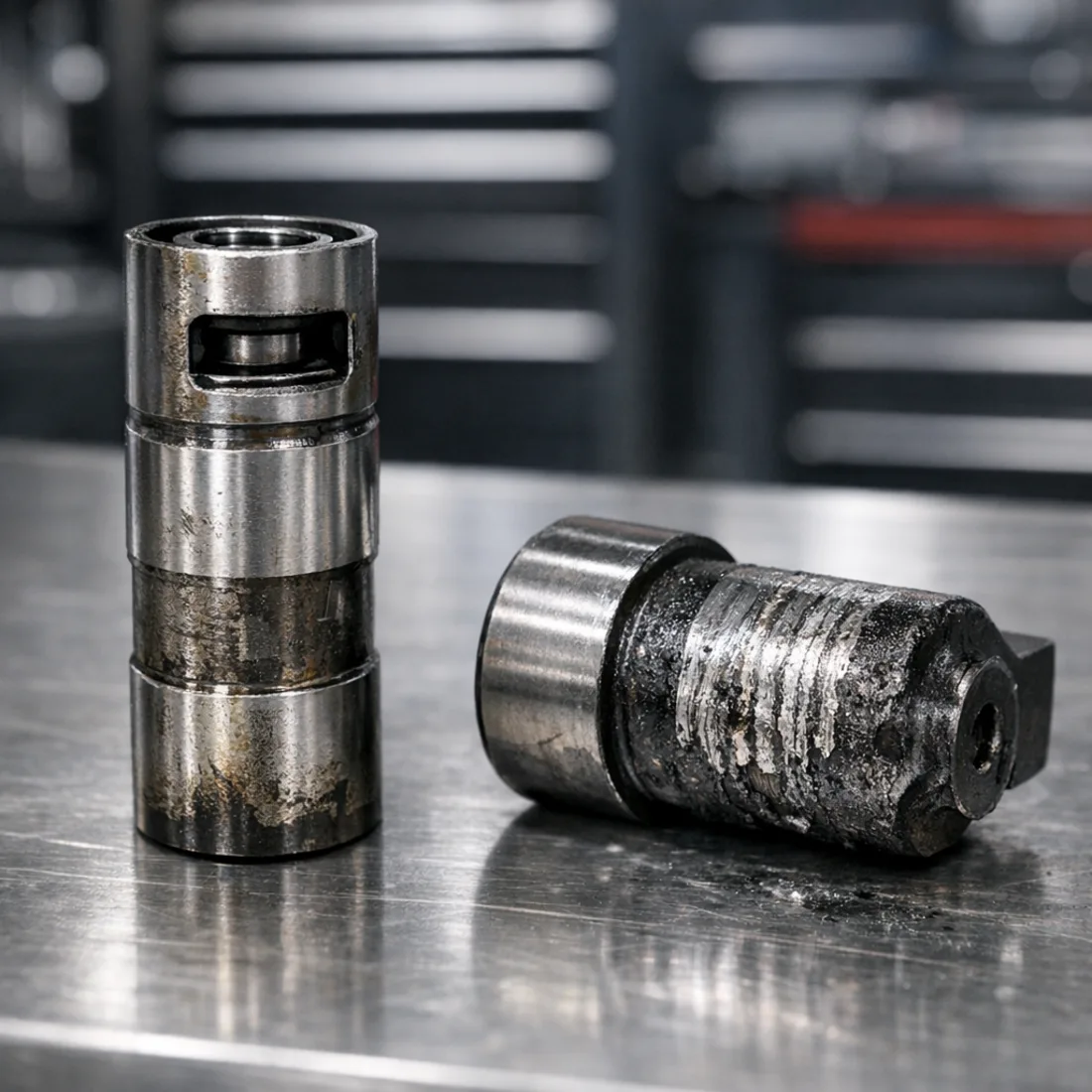
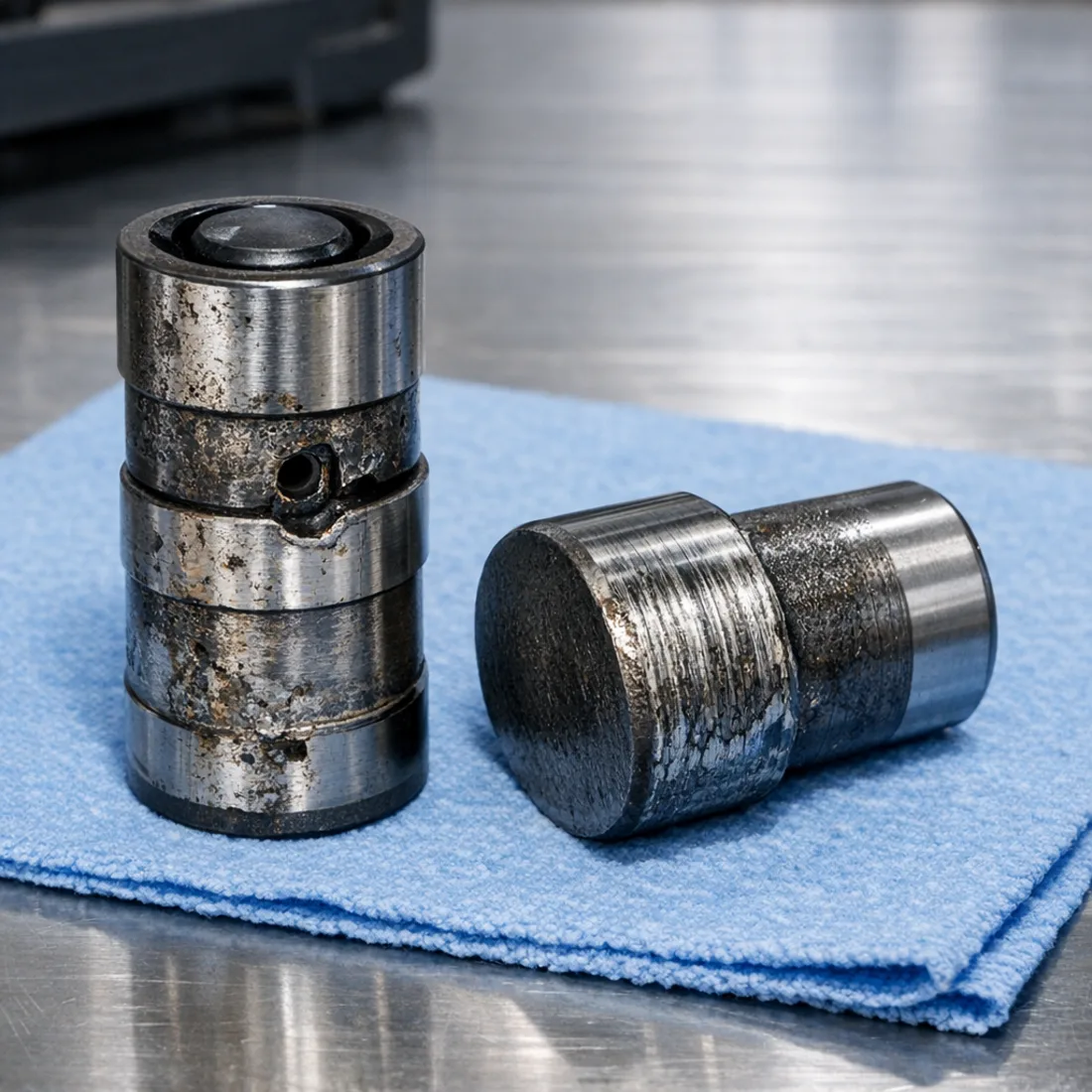
The MDS cylinder deactivation system is designed to save fuel by cutting four cylinders at light load. In theory, a good idea. In practice, the lifters that do the deactivating wear over time, and when they start to go, you get the classic Hemi tick. Left alone, worn lifters can damage the camshaft, and a camshaft replacement on a V8 is a different conversation to an oil change. If your 5.7 is ticking, get it looked at properly rather than hoping it goes away.
Exhaust manifold bolts are another known weak point. Heat cycling causes them to snap over time, and a snapped manifold bolt means an exhaust leak that sounds much worse than it is. But it does need fixing, and the repair requires the correct approach and new hardware rather than a quick patch. Oil consumption creeping up with age and kilometres is also worth watching. The 5.7 Hemi likes fresh, correct grade oil changed on time, and cutting corners there accelerates the wear pattern on both the lifters and the rings.
On the diagnostic side, we run the wiTECH platform for these cars, the same dealer level system Chrysler uses, not a generic code reader. That means we can see all modules, read live data from the MDS system, and actually understand what the engine is telling us. A generic scan tool will give you a fault code; wiTECH tells you what's actually happening inside the engine management.
-
MDS lifter wear causing the Hemi tick and potential camshaft lobe damage
-
Exhaust manifold bolt failure causing ticking or exhaust leaks
-
Rising oil consumption as the engine ages
-
Electronic throttle body and sensor faults affecting running quality
The 5.7's tune potential is more modest than the diesel, simply because it's already a big naturally aspirated V8 with nothing compressing the air.
Our Stage 1 calibration lifts it from 363 hp and 534 Nm to 385 hp and 555 Nm. Worthwhile, and noticeable, but the bigger gains on the petrol Hemis sit with the 6.4.
The 5.7's tune potential is more modest than the diesel, simply because it's already a big naturally aspirated V8 with nothing compressing the air. Our Stage 1 calibration lifts it from 363 hp and 534 Nm to 385 hp and 555 Nm. Worthwhile, and noticeable, but the bigger gains on the petrol Hemis sit with the 6.4.
475 Horsepower With Caveats
The SRT8 is the one that makes no compromises. Six thousand, four hundred and seventeen cc, 475 hp, 637 Nm, Brembo brakes front and rear, and a noise that turns heads whether you're trying to or not. It uses the same Siemens/Continental GPEC2 ECU as the 5.7, and it shares something else with the standard Hemi too: the MDS cylinder deactivation system, with all of its associated lifter concerns.
The difference with the SRT8 is that the stresses are higher. More power, more heat, more torque through the drivetrain, and owners who tend to use it the way it was designed to be used. The MDS lifters are the same weak point as on the 5.7, but on a car that's been driven hard, the wear pattern can arrive faster. Camshaft lobe damage following lifter failure is a real risk if the early ticking is ignored. Get on top of it.
The cooling system deserves proper attention on the SRT8. A high output V8 generates serious heat, and a cooling system running on old coolant with marginal hoses is a risk worth eliminating. Transmission fluid is another one, the gearbox on these cars benefits from a proper fluid service rather than being treated as a lifetime fill. It isn't.
The Brembo brakes are spectacular when they're in good condition and ordinary when they're not. Fresh pads and rotors make a dramatic difference on a car this heavy and this powerful. We stock and fit new genuine and OEM specification parts, so the SRT8 stops the way it's supposed to rather than making do with whatever's cheapest.
Diagnostics on the SRT8 go through the same wiTECH platform we use for the 5.7. Every module, full live data, the works. That matters on a car with this much electronics behind it.
-
MDS lifter wear and camshaft lobe damage from cylinder deactivation fatigue
-
Oil consumption and rocker arm wear
-
Exhaust manifold bolt failure and heat related leaks
-
Cooling system stress on a high output V8 in hard use
-
Transmission fluid condition in both eight speed and older automatic boxes
-
Brembo brake pad and rotor wear faster than standard specification cars
Tuning the SRT8 is rewarding but measured. Starting from 475 hp and 637 Nm, our Stage 1 calibration brings it to 495 hp and 655 Nm.
On a car that already has this much torque, the improvement is felt across the rev range rather than just at peak numbers, sharpening throttle response and improving the pull through the mid range.
Tuning the SRT8 is rewarding but measured. Starting from 475 hp and 637 Nm, our Stage 1 calibration brings it to 495 hp and 655 Nm. That's 20 hp and 18 Nm of extra torque from the ECU alone. On a car that already has this much torque, the improvement is felt across the rev range rather than just at peak numbers, sharpening throttle response and improving the pull through the mid range where you actually use it on the road.
Picking Between Them: Which 300C Makes Sense Used?
If you're shopping the used market and trying to decide between these three, here's the honest breakdown.
You want the most liveable day to day 300C, with strong torque, better economy, and a smaller service bill at the pump. But budget for swirl flap and oil cooler work as part of your purchase price negotiation if the car has high kilometres and no service history for those items. A well maintained CRD is excellent value. A neglected one with DPF issues can become expensive quickly.
You want the sweet spot for most buyers. It's simpler to live with than the diesel, easier to source parts for, and the MDS lifter issue, while real, is manageable if you service it correctly and pay attention to the early warning signs. If you're buying used, listen carefully at idle when the engine is warm. A tick that shouldn't be there is a negotiating point, not necessarily a deal breaker, but it needs addressing.
You know what you're getting into. It costs more to run, the brakes wear faster, the fuel bill is real, and the MDS system needs the same vigilance as on the 5.7. But nothing else offers 475 hp in a rear driven New Zealand saloon at used car money, and properly maintained examples are genuinely compelling.
- CRD: check for swirl flap fault codes and limp mode history
- CRD: inspect oil cooler for signs of oil and coolant mixing
- CRD: ask for DPF service history, especially on urban use cars
- 5.7 Hemi: listen at warm idle for the Hemi tick linked to MDS lifter wear
- 5.7 Hemi: check oil consumption and service interval history
- SRT8: check transmission fluid history, do not treat it as a lifetime fill
- SRT8: inspect the cooling system hoses and coolant condition
- SRT8: listen for the Hemi tick and check Brembo brake pad and rotor condition
- All three: check suspension bushes and dampers for wear on New Zealand roads
Servicing Across the 300C Family
All three cars share some servicing principles even though they're mechanically very different. Our car servicing covers the full range, from the CRD's oil and fuel and glow plug schedules through to the Hemis' oil, spark plugs, and drive belts.
On the diesel, the correct low ash oil grade matters more than most people realise. Standard workshop oil will not do the job properly in an OM642. On the petrol Hemis, the correct oil grade for the MDS system is equally non negotiable. Fresh iridium spark plugs on the V8s make a real difference to combustion efficiency and cold start behaviour, and the 5.7 and 6.4 both use more spark plugs than most four cylinders, so it's not a trivial job.
CRD: low ash diesel grade oil, fuel filter, air filter, glow plugs, timing chain inspection at higher mileage. 5.7 Hemi: correct grade oil, iridium spark plugs, air filter, drive belts, cooling system check. SRT8 6.4 Hemi: correct grade oil, iridium spark plugs, transmission fluid service, cooling system, Brembo brake service. All three: cabin filter, wipers, suspension components, brake pad and rotor inspection.
Suspension wear is worth checking on all three, particularly if the car has lived its life on New Zealand roads with their variable surface quality. Bushes and dampers on a heavy rear driven saloon take a specific kind of loading, and worn suspension changes the car's character in ways that aren't always obvious until you drive a properly sorted example.
How We Diagnose the 300C Range
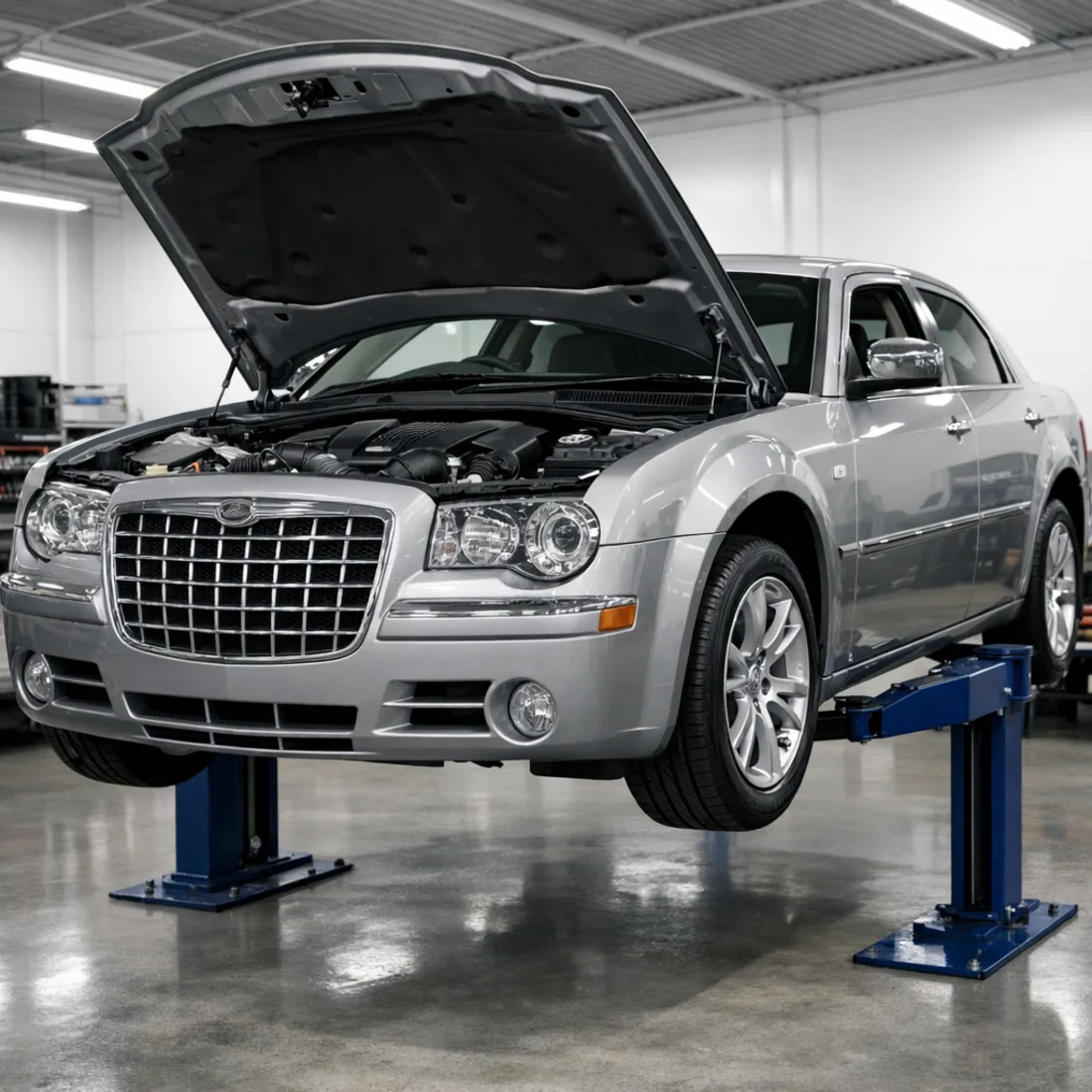
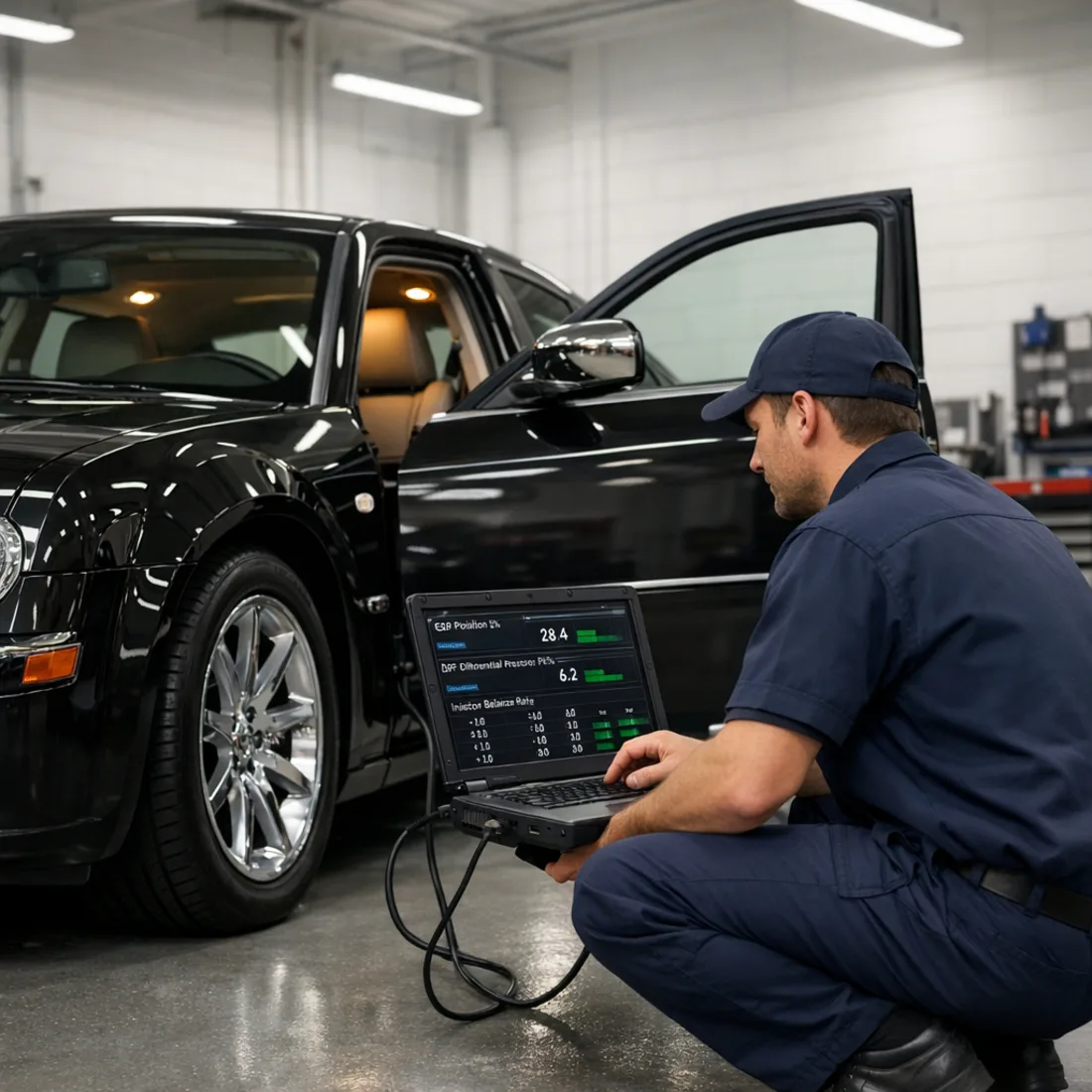
Diagnosis is where the right tooling separates a proper result from a guess. For the 3.0 CRD, the ECU is a Bosch EDC16CP31 running Mercedes based powertrain software. Generic scan tools will connect and pull basic codes, but they won't give you the full picture. We read the actual module data, which means swirl flap position, EGR flow values, DPF soot load, oil cooler temperature differentials, all of it. That's the difference between knowing a fault code exists and understanding what caused it.
For the 5.7 Hemi and the SRT8 6.4, both running the Siemens/Continental GPEC2 ECU, we use the wiTECH platform, the factory dealer diagnostic tool for Chrysler. It covers every module in the car, engine, transmission, body control, ABS, airbags, all of it. When we're looking at an MDS lifter concern, we can watch the cylinder deactivation system operating in real time rather than speculating from a code. That matters when you're deciding whether a repair is urgent or manageable.
We also handle transmission diagnostics and gearbox repairs across the range, including the automatic gearboxes fitted to all three variants. The SRT8's eight speed in particular benefits from a proper fluid service and a transmission module read to check for adaptive learning data that may need a reset after a fluid change.
Tuning the 300C: What's Realistic Across the Range
All three variants have tuning potential, and the gains vary quite a bit depending on the powertrain. The diesel CRD responds most dramatically to a calibration change because the Bosch ECU has significant headroom that the factory leaves untouched for emissions and durability reasons. On the petrol side, naturally aspirated V8s have less headroom than a diesel with a turbo, but the gains are still real. Both Hemi variants also support a pop and bang crackle map for those who want more character on the overrun.
Our Stage 1 takes the CRD from 211 hp and 510 Nm to 275 hp and 600 Nm. That's a 64 hp and 90 Nm improvement from software alone, and it transforms the driving character of the car without touching the hardware.
The 5.7 goes from 363 hp to 385 hp and from 534 Nm to 555 Nm. On a car already producing this much torque, sharpened throttle response and improved mid range delivery is what you actually feel on the road.
The SRT8 moves from 475 hp to 495 hp and from 637 Nm to 655 Nm. Those numbers might look modest in percentage terms, but on a car already producing this much torque, the improvement is felt across the rev range, sharpening throttle response and improving the pull through the mid range where you actually use it.
All tuning is written to match the specific engine, ECU revision and condition of your car. We don't run a one size fits all file. The car is diagnosed first, any existing faults are addressed, and the calibration is applied to a healthy engine. That's the only way it works properly. Ask us about our ECU file service if you're looking to tune remotely.
Frequently Asked Questions
The questions we get most. Something else on your mind? Get in touch.