Chrysler PT Cruiser Service and Repair in Auckland
There is something likeable about the PT Cruiser. It was retro before retro was trendy, it packed a surprising amount of practicality into a compact body, and in GT Turbo form it had real performance credentials. But even the most characterful cars are still just cars, and all cars eventually need someone who knows exactly what they are dealing with under the bonnet. That is where we come in.



Three Engines, Three Very Different Characters
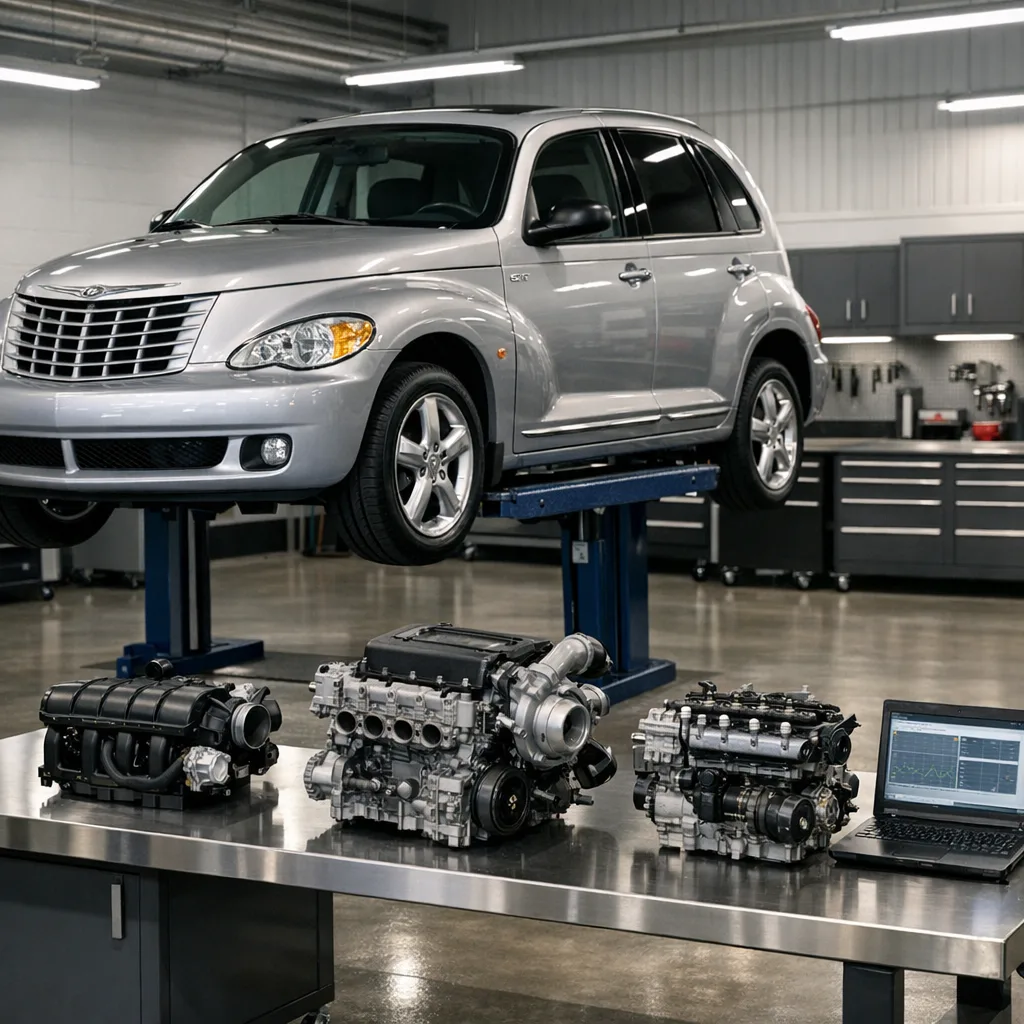
We work on all three PT Cruiser variants: the 2.0i petrol, the 2.2 CRD diesel, and the GT 2.4 Turbo. Each one has its own personality, its own quirks, and its own list of things that go wrong after a few years on New Zealand roads. What follows is the unvarnished picture.
The 2.0i is the entry point. Running a 1995 cc engine with a 9.6 to 1 compression ratio, it produces 140 hp and 188 Nm. It is naturally aspirated and straightforward by modern standards, which means it is relatively forgiving to service but still has its weak points.
-
Ignition coil packs and spark plugs cause rough idle and misfires as they age, often dismissed as a quirk rather than a warning.
-
Crank and cam position sensors are common failure points, causing stalling or a no start condition without much warning.
-
The timing belt is not optional maintenance. Skip the belt and tensioner replacement and you are looking at a bent valve situation that turns a routine service into a major engine repair.
-
The thermostat housing and water pump both leak on higher mileage examples, and a tired radiator will push the temperature gauge higher than it should be on a warm Auckland day.
The first sign is usually a rattling noise on cold start, and by the time you hear it clearly, the tensioner has already been struggling for a while.
Timing belt failure never announces itself politely.
The auxiliary drive belt gets checked and replaced on condition at every service visit. Coolant condition is tested at every service too: degraded coolant stops protecting the aluminium components in the cooling system and that accelerates corrosion in the thermostat housing.
Get your PT Cruiser booked in with our Penrose workshop team.
DPF and EGR Issues on the 2.2 CRD
The 2.2 CRD diesel is a different animal entirely, an 18 to 1 compression ratio diesel displacing 2148 cc, producing 150 hp and 300 Nm through a Bosch EDC16C2 ECU. It is the torque hauler of the range, well suited to Auckland's stop and go commute, but it brings diesel specific issues along for the ride.
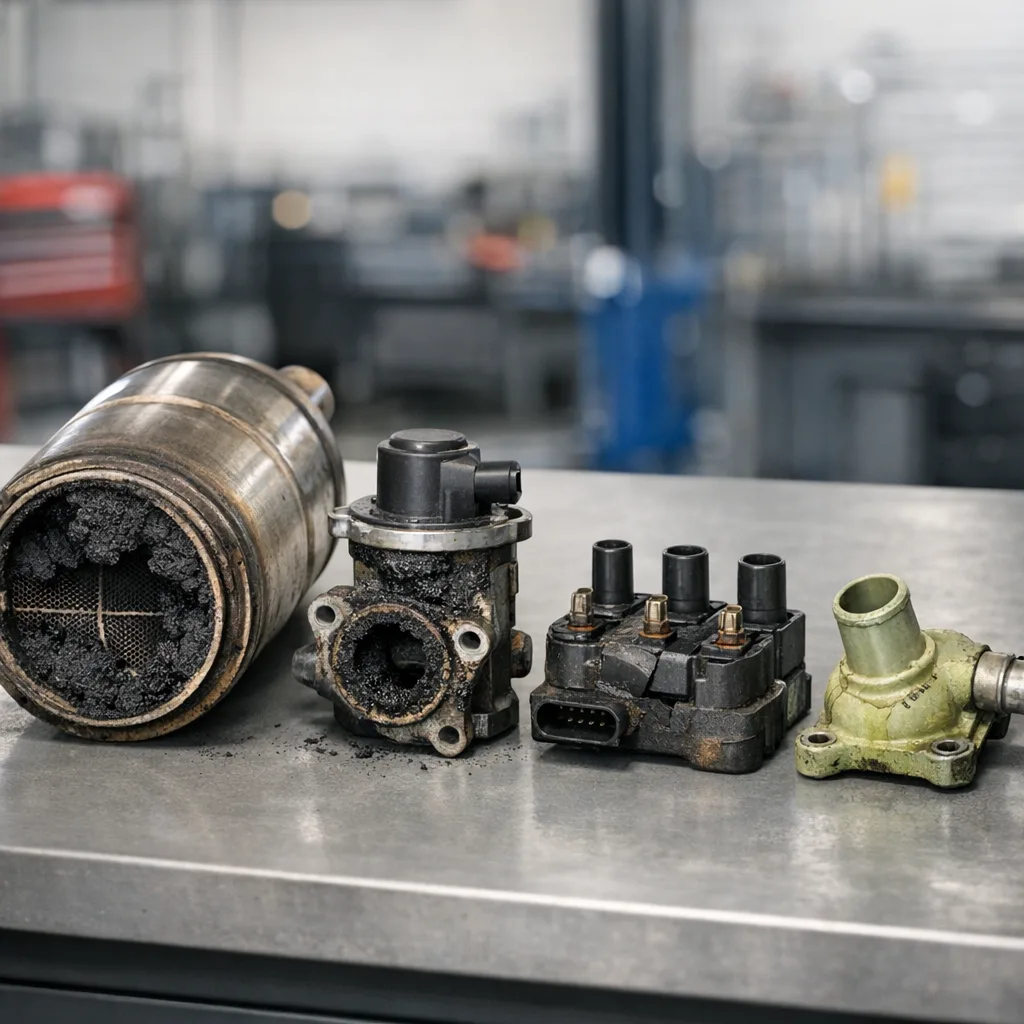
The 2.2 CRD diesel talks to its Bosch EDC16C2 ECU constantly, monitoring fuelling, boost pressure and exhaust temperatures. When the diesel particulate filter starts blocking, which it does on cars that spend most of their life on short trips around town, the ECU logs faults and forces a regeneration cycle. If the car never gets a long enough run to complete that cycle, the filter keeps filling up. The orange DPF warning light comes on, power drops noticeably, and left long enough the engine goes into limp mode. We diagnose the actual soot loading and back pressure figures rather than guessing, and we can carry out a forced regeneration or a professional clean where the filter is recoverable.
EGR valves on the 664 engine also carbon up over time. The valve sticks, the EGR circuit faults appear in the ECU, and idle quality suffers. If you want to understand what your options are for the DPF and EGR on the diesel, our team can walk you through the diagnostic findings and what is appropriate for your situation, including what affects WOF compliance for road registered vehicles.
-
DPF blockage from short urban trips causes the ECU to log faults, power to drop noticeably, and eventually forces the engine into limp mode.
-
EGR valves on the 664 engine carbon up over time, causing the valve to stick, EGR circuit faults in the ECU, and poor idle quality.
-
The high pressure fuel pump is sensitive to oil quality. Using the wrong grade accelerates wear and leads to expensive fuelling issues.
-
A blocked fuel filter forces the high pressure pump to work harder than it should, shortening its service life on the CRD.
We diagnose the actual soot loading and back pressure figures rather than guessing.
That is how you correctly diagnose a DPF fault rather than chasing parts.
Boost and Fuelling on the GT 2.4 Turbo
Then there is the GT 2.4 Turbo, the one people actually get excited about. The engine code is EDV or EDT, 2429 cc, 8.1 to 1 compression, and from the factory it delivers 230 hp with 332 Nm. That is a quick car dressed in retro sheet metal.
The GT Turbo is the most rewarding of the three to drive and also the one that rewards proper maintenance the most. Boost leaks from aged intercooler pipes are a common fault: a split or loose connection drops boost pressure, the turbo sounds like it is working hard, and the car feels noticeably flat above 3000 rpm. Left unaddressed, the ECU tries to compensate and you end up with inconsistent fuelling. We pressure test the charge side of the system to find leaks that do not show up as obvious fault codes.
-
Boost leaks from aged intercooler pipes drop pressure, the turbo sounds like it is working hard, and the car feels noticeably flat above 3000 rpm.
-
When boost leaks go unaddressed, the ECU tries to compensate and inconsistent fuelling results, compounding the original fault.
-
Intercooler pipe connections and charge pipe hoses need regular inspection, as splits rarely show up as obvious fault codes on a generic scan tool.
230 hp with 332 Nm from the factory. That is a quick car dressed in retro sheet metal.
Stage 1 takes it to 270 hp and 390 Nm without touching any hardware.
Brake performance is worth upgrading alongside any power tune. If the GT is putting out 270 hp you want the brakes to match. Our team handles brake pad and rotor replacement on all PT Cruiser variants, and we can advise on upgraded pad compounds for the Turbo if you are pushing the car harder than standard.
Everything we fit is genuine, brand new OEM or OEM grade quality. We do not fit second best and we do not guess at causes. You can also read more about what we cover across our mechanical repair services.
Which PT Cruiser Is Right for You
We work on all three PT Cruiser variants and each one has its own personality, its own quirks, and its own list of things that go wrong after a few years on New Zealand roads. Here is how to choose and what to watch for when buying.
You want the simplest ownership experience and lowest running costs. It is naturally aspirated and relatively forgiving to service. Watch for coil pack wear, crank and cam sensor condition, and ask about timing belt history before buying.
You do regular commuting and want torque for Auckland's stop and go traffic. Diesel economy suits high mileage use. Check DPF and EGR history carefully and confirm the car has had regular long runs to allow regeneration cycles to complete.
You want the most rewarding driving experience and genuine performance. It is the one people get excited about. Check the intercooler pipes and charge system for boost leaks, and confirm the turbo is healthy before purchase.
- Ask for full timing belt service history on the 2.0i before committing to purchase
- Check DPF warning light history and soot loading records on any 2.2 CRD
- Inspect intercooler pipes and charge pipe hose connections on the GT 2.4 Turbo
- Check coolant condition and look for signs of thermostat housing or water pump weeping on all variants
- Run a full wiTECH dealer diagnostic scan across all modules before purchasing any used PT Cruiser
- Confirm EGR valve condition and idle quality on the 2.2 CRD diesel
Servicing the PT Cruiser the Right Way
All three engines have specific oil requirements. We use full synthetic oil that meets or exceeds the factory specification for each variant, not a generic supermarket grade. The 2.2 CRD is particularly sensitive to oil quality given the injection pressures involved, and cutting corners here accelerates wear on the high pressure pump. We replace the oil filter, air filter, and cabin filter at each service, and we inspect the fuel filter on the diesel while we are at it because a blocked fuel filter on the CRD causes the pump to work harder than it should.
The timing belt on the 2.0i is not optional maintenance. We replace the belt, tensioner and idler pulley together as a set, and we check the water pump condition at the same time since it is driven off the same belt. It is far cheaper to replace a water pump that shows early signs of wear during a belt job than to come back six months later when it fails and takes the belt with it.
Our full vehicle servicing for the PT Cruiser covers spark plugs for the petrol variants, brake pad and rotor inspection, suspension component checks, and anything else that shows up during the diagnostic sweep we run at the start of every visit.
Diagnostics Done Properly with wiTECH
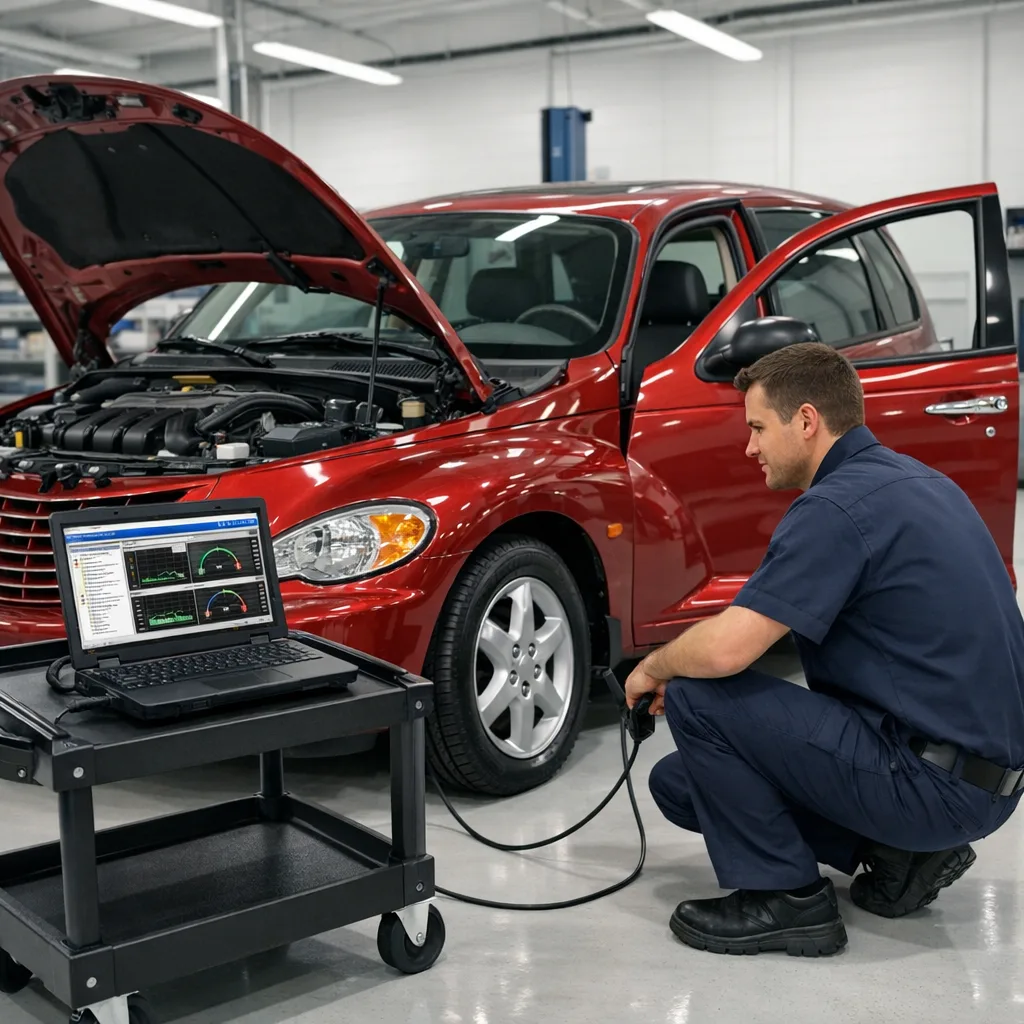
We use wiTECH, the proper Chrysler dealer level diagnostic platform, to read the PT Cruiser's control modules. This matters more than it might sound. A generic scan tool will pull basic powertrain codes, but wiTECH talks to every module in the car: body control, transmission, ABS, airbag, and the engine ECU in full.
It reads live data streams properly, so we can watch crank sensor signal quality in real time rather than just noting that a fault code has been logged. That is how you correctly diagnose an intermittent stall rather than chasing parts. For the diesel, reading actual injection timing and rail pressure figures against the target values tells us immediately whether a rough running complaint is a sensor, a fuelling issue or something mechanical.
We also handle the electrical side of the PT Cruiser, which covers anything from a parasitic drain flattening the battery to sensor replacements and wiring repairs. If your PT Cruiser has a warning light you cannot explain or an intermittent fault that comes and goes, that is exactly the kind of job we are set up for.
Performance Tuning for the PT Cruiser
All three variants respond to tuning, though the results vary predictably with the engine. From a modest sharpening of the 2.0i to a transformative diesel remap and a serious power upgrade on the GT Turbo, each variant has real gains available.
A Stage 1 remap on the 2.0i is a modest improvement that smooths out the power delivery and makes the engine feel more eager. Available options include DTC removal, pop and bang crackle map, Vmax adjustment, and decat.
A Stage 1 tune on the Bosch EDC16C2 ECU is more rewarding. That extra torque transforms the diesel from competent to fun in everyday driving. Available options include EGR off, DPF off (off road and track use; affects WOF compliance for road registered vehicles), DTC removal and Vmax.
The GT 2.4 Turbo is the standout. Stage 1 takes the EDV or EDT engine from 230 hp and 332 Nm to 270 hp and 390 Nm without touching any hardware. Available options include DTC removal, pop and bang crackle map, Vmax adjustment, and decat.
For anyone wanting to explore what the GT can do, our power gain tuning service explains how we approach it. DTC removal is available across all three variants and Vmax adjustment is available on all variants.
Off-road and motorsport use only. EGR, DPF, AdBlue, decat and related DTC options are not road legal in New Zealand, and a vehicle with them will not pass a WOF.
Frequently Asked Questions
The questions we get most. Something else on your mind? Get in touch.