Maserati GranTurismo 4.2 & 4.7 V8 Service, Diagnostics & Repair in Auckland
Imagine pulling up to a set of lights in something that sounds like a Ferrari and looks like a Pininfarina sketch come to life. That is exactly what the GranTurismo delivers every single time, because underneath that long bonnet there is a Ferrari derived V8 that shares its bloodline with Maranello. The catch is that blood costs money to keep clean. Skip a service interval or use the wrong oil grade and that magnificent engine will remind you, usually at the worst possible moment and with the kind of repair bill that makes your eyes water. This page covers what you actually need to know.
Two V8s, Three Personalities: Understanding the Engine Range
The GranTurismo arrived in New Zealand with two distinct V8 engines and three output states worth understanding before you book anything. The 4.2 litre M139P is the original, running a 92.0 mm bore by 80.0 mm stroke for 4244 cc of displacement. It produces 405 hp and 460 Nm at the crank, managed by either a Bosch ME7.3.2 or the later Bosch ME9.1.1 ECU depending on the production year of the car. It is a smooth, creamy unit that rewards careful maintenance.
Then there is the 4.7 litre family, which comes in two states. The base M145 engine runs the same 94.0 mm bore by 84.5 mm stroke for 4691 cc, producing 440 hp and 490 Nm, again on Bosch ME7.3.2 or ME9.1.1. The hotter M145A in the later GranTurismo Sport and MC squeezes out 460 hp and 520 Nm from the identical displacement, running an 11.25:1 compression ratio and paired exclusively with the Bosch ME9.1.1. The jump between the two 4.7 variants is real in feel. Both share the same architecture but the S version has a noticeably sharper throttle response and a more urgent top end. Know which one you have before anyone quotes you on parts or tuning.
-
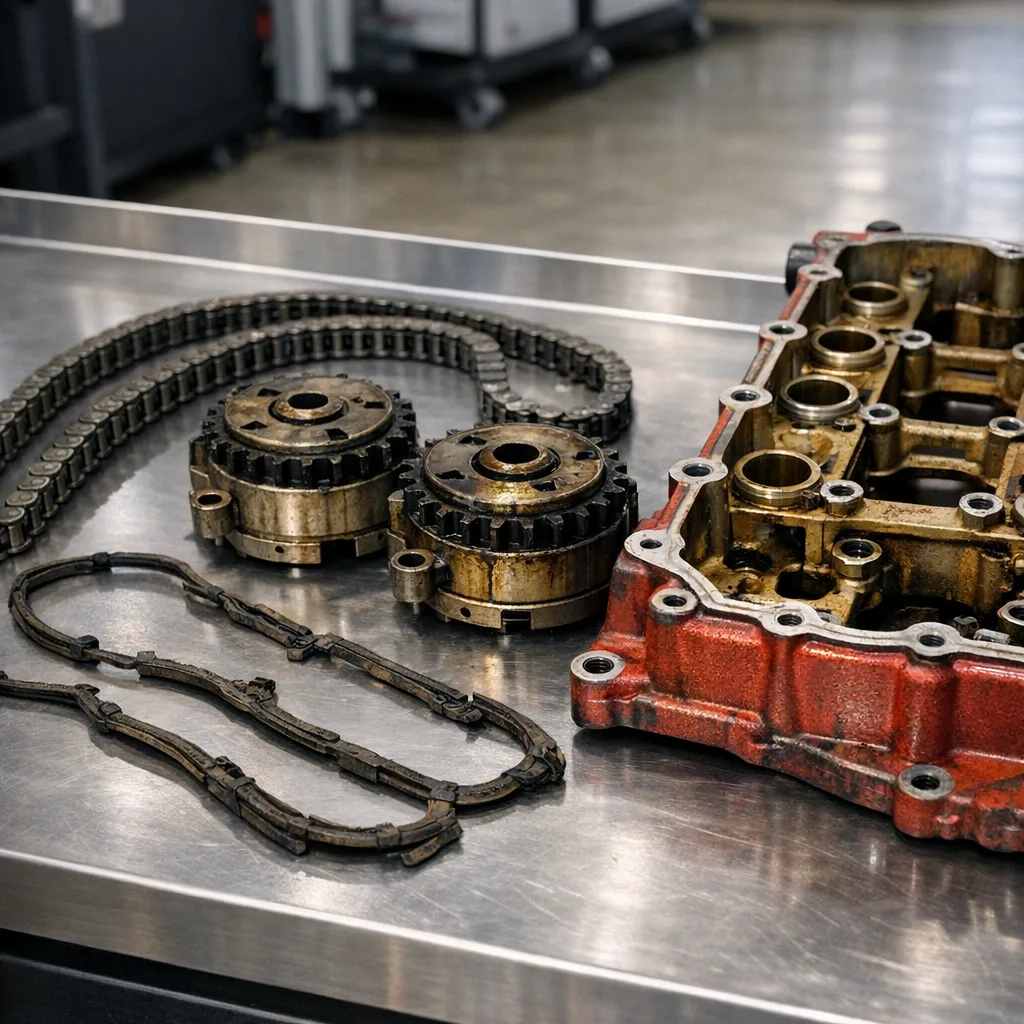
Timing chain and variator wear when service intervals stretch or the wrong viscosity oil is used, leading to cold start rattle, hunting idle and camshaft position faults in the ECU.
-
Cam cover gasket and seal degradation with age and heat cycles, causing oil weeping around the cam cover perimeter, burning smells and oil tracking onto hot exhaust components.
-
MC Shift single clutch automated manual gearbox: clutch wear causing jerky or slow gearchanges, and hydraulic actuator faults that log gearbox codes and can trigger limp mode.
-
Skyhook adaptive damper faults logged as warnings, ride becoming noticeably firmer or uneven side to side, plus worn suspension bushes and drop links causing knocking over bumps.
Catching timing chain wear early with a proper diagnostic read and an oil service is cheap. Catching it after the chain has jumped a tooth is an engine out job.
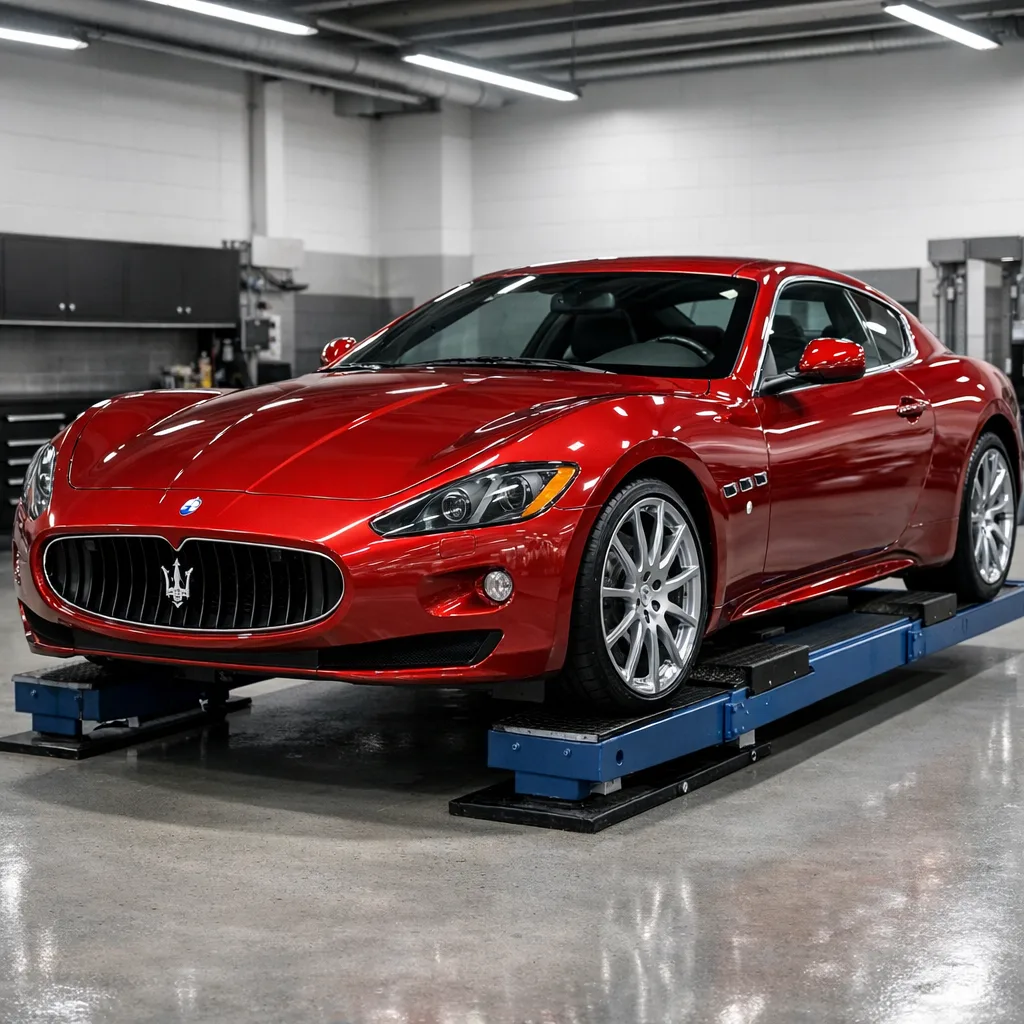
The fix starts with the correct full synthetic oil, a fresh filter and an honest assessment of chain stretch and variator condition on the hoist.
Get your GranTurismo booked in with a proper specialist.
The 4.7 Family: M145 and M145A in Detail
The 4.7 V8 in the GranTurismo S, Sport and MC is a Ferrari derived engine and is strong, but it demands correct maintenance. The M145 produces 440 hp and 490 Nm while the M145A in the later GranTurismo Sport and MC reaches 460 hp and 520 Nm. Both run a 94.0 mm bore by 84.5 mm stroke for 4691 cc and an 11.25:1 compression ratio. The M145A is paired exclusively with the Bosch ME9.1.1 ECU and has a noticeably sharper throttle response and a more urgent top end compared with the base 4.7.
Known weak points include variator and timing chain wear if oil changes are neglected, so sticking to the right service interval matters. These engines are sensitive to oil level and the correct grade, and oil leaks from the cam covers and seals are common with age. The electro actuated MC Shift gearbox on the semi auto cars can need clutch replacement and actuator attention, while the conventional ZF auto cars are easier to live with.
-
Variator and timing chain wear accelerated by neglected oil change intervals or incorrect viscosity, with symptoms of cold start rattle and camshaft position fault codes.
-
Oil leaks from cam covers and seals common with age, with burning smell when warm and oil tracking onto hot exhaust surfaces creating a fire risk.
-
MC Shift clutch wear and hydraulic actuator faults causing jerky gearchanges, hesitation from rest and transmission limp mode.
-
Skyhook damper faults and worn suspension bushes and drop links causing uneven ride quality and knocking over Auckland road surfaces.
The ZF automatic fitted to some variants is a far less drama prone unit, but the MC Shift cars need someone who knows the system rather than someone guessing at it.
We read live data from the gearbox module for clutch wear data and actuator pressures, not just the fault code on the OBD port.
Timing chain and variator work, clutch and actuator replacement on the MC Shift cars, suspension refreshes including Skyhook damper replacement and bush renewal, cam cover gasket and seal replacement, and electrical diagnosis across all the body modules are not jobs for a workshop that handles one or two of these cars a year. The GranTurismo is a low volume, high complexity vehicle in the New Zealand fleet, and it needs people who have already made the mistakes and learned from them. Our mechanical repair service covers the full scope of engine and drivetrain work on these cars.
Routine Servicing That Keeps the V8 Honest
These engines need the right oil, full stop. Both the 4.2 and 4.7 V8s call for a full synthetic oil that meets or exceeds the factory specification, and using a grade that is too light or too thick causes exactly the variator and chain wear described above. An oil and filter change on the correct schedule is the single most effective maintenance item on the list. Beyond that, the air filter and cabin filter need attention on a time and mileage basis regardless of how few kilometres the car has covered, because infrequent use does not stop filters from ageing.
Brake performance on a car with this power output matters more than on most. The standard braking system is well engineered but pads and rotors do wear, and because the GranTurismo is not always driven hard, the pads can sit and corrode more than they wear evenly. Our brake inspection and repair service covers pad and rotor condition, caliper function and brake fluid condition, all of which matter on a car that can reach serious speeds very quickly. For the gearbox, whether the car has the MC Shift or the ZF automatic, our gearbox repair and diagnosis service covers fluid, actuator checks and fault code reading from the transmission module directly.
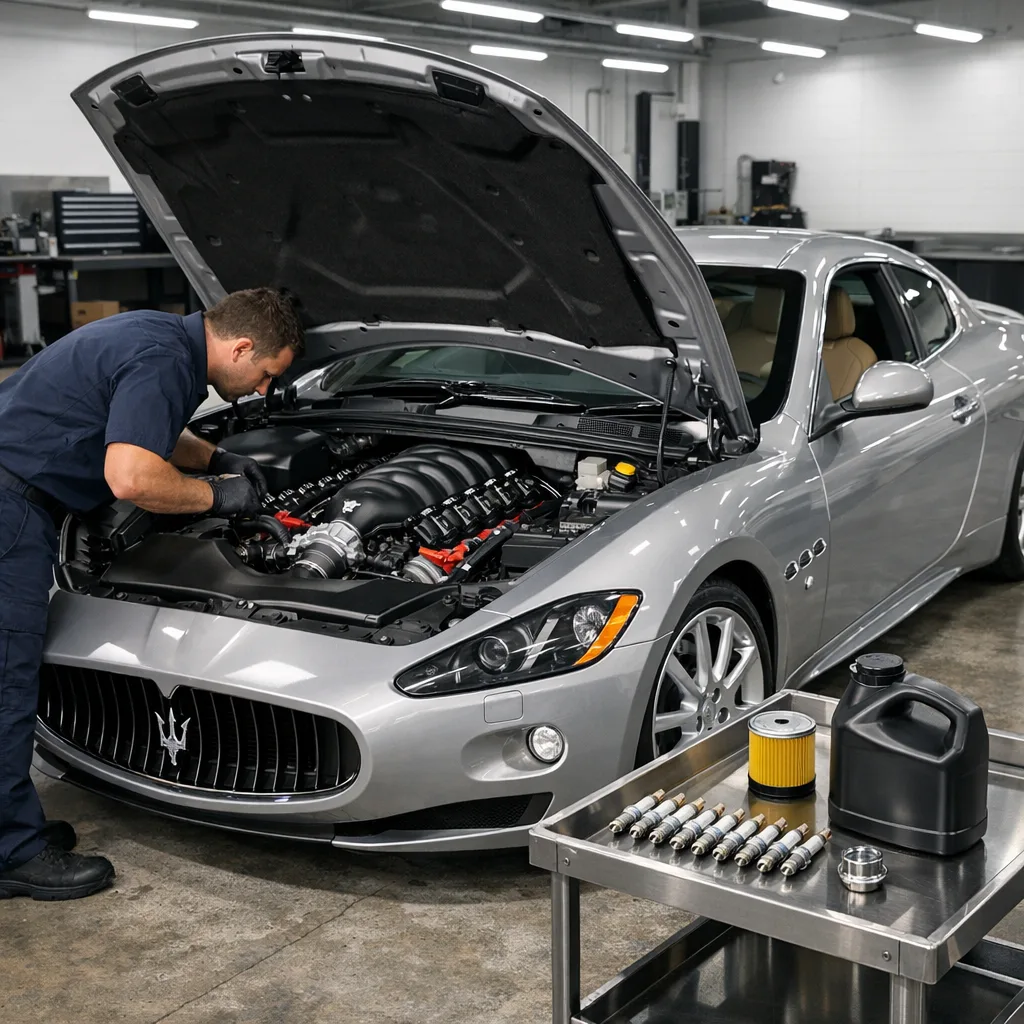
Routine items we handle include: full synthetic oil and filter change to the correct factory grade and interval; engine air filter and cabin pollen filter replacement; spark plug replacement across all eight cylinders using the correct plug specification; drive belt inspection and replacement on condition; brake pad and rotor inspection and replacement where worn; wiper blade replacement and washer system check; suspension bush, drop link and Skyhook damper inspection; timing chain and variator condition assessment; and a full multi module diagnostic scan for stored and pending faults.
How We Actually Diagnose a GranTurismo
A generic scan tool plugged into the OBD port will read a fault code and that is roughly where it stops. The GranTurismo carries multiple control modules covering the engine, the MC Shift or ZF gearbox, the Skyhook suspension, the body electronics and the instrument cluster, and they talk to each other in ways a basic reader cannot follow.
We work with the Maserati factory diagnostic platform, which means we read live data streams from the Bosch ME7.3.2 and ME9.1.1 engine ECUs, interrogate the gearbox module for clutch wear data and actuator pressures, and pull the full fault history from every module on the car. That is how you find the actual root cause rather than the symptom the customer already knew about.
Stage 1 Tuning for the 4.2 and 4.7 V8
The GranTurismo is not a car that cries out for more power, but once you understand what a Stage 1 calibration actually does to these Bosch ECUs, it is hard to argue against it. All tuning files are written to the specific ECU variant, so the ME7.3.2 and ME9.1.1 each get their own calibration rather than a generic map forced onto the wrong platform.
On the 4.2 M139P, our Stage 1 file lifts output from 405 hp and 460 Nm to 430 hp and 495 Nm, a gain of 25 hp and 35 Nm. The mid range delivery improves noticeably and the throttle feels more immediate.
On the 4.7 M145 producing 440 hp, the tune moves the numbers to 460 hp and 510 Nm, adding 20 hp and 20 Nm.
On the 4.7 M145A at 460 hp, the Stage 1 calibration reaches 485 hp and 550 Nm, a 25 hp and 30 Nm gain over stock.
Beyond the core power figures, the ECU calibration work available on these models includes DTC removal for fault codes that are nuisance only, a pop and bang crackle map for a sharper exhaust note on overrun, and Vmax governor removal. DECAT mapping is available for off road and track use; note that removing catalytic converters affects exhaust emissions compliance and may have implications for WOF purposes on a road registered vehicle. You can read more about how our tuning approach works on our ECU file service page.
Off-road and motorsport use only. EGR, DPF, AdBlue, decat and related DTC options are not road legal in New Zealand, and a vehicle with them will not pass a WOF.
Frequently Asked Questions
The questions we get most. Something else on your mind? Get in touch.