Mini Clubman R55 and Cooper S R56: The Full Story Across Every Generation
The R55 Clubman and R56 Cooper S share the same platform, the same Prince family engines, and, if we're honest, the same collection of well documented faults that appear with near religious consistency once the odometer climbs. From the naturally aspirated 1.6i daily driver through the turbocharged Cooper S to the full fat JCW, each version built on what came before and brought its own new headaches. Knowing where your car sits in that story, and what to watch for, is the difference between staying ahead of the problems and getting ambushed by them.



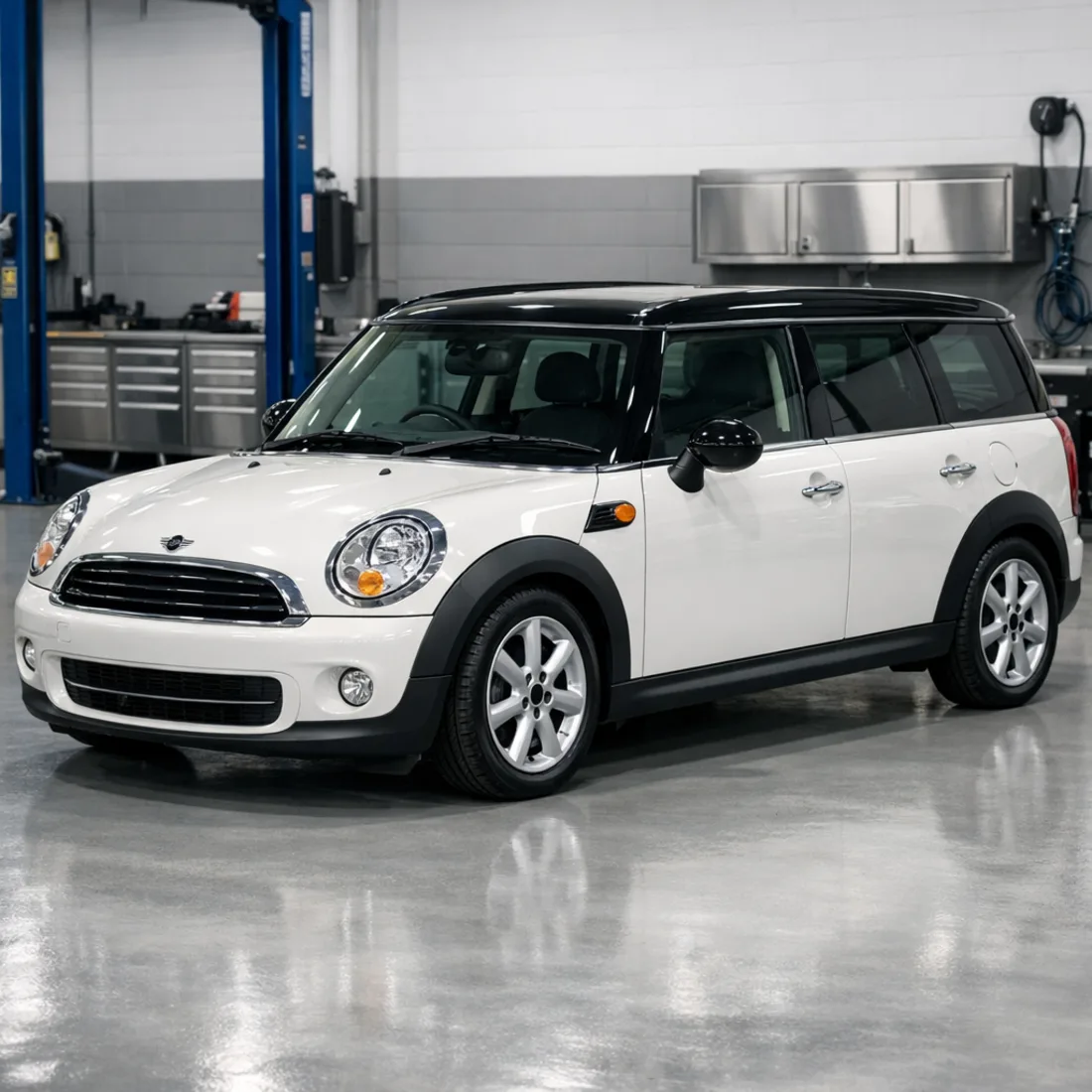
Mini Clubman 1.6i: The Everyday One With Quiet Habits
The naturally aspirated Clubman 1.6i is the entry point of this family. With the N16B16MO producing 115 hp and 160 Nm it's not trying to win anything at the lights, but it is well suited to daily Auckland commuting and it holds its value as a neat, practical second car. The problem is that "naturally aspirated" doesn't mean "low maintenance", and the Prince family engine underneath it has a personality all of its own.
The most common thing we find on these is timing chain and tensioner wear. The rattle on a cold start is the tell tale sign, and if you're hearing it, don't ignore it. The chain stretches, the tensioner loses its fight, and if you let it run long enough you're looking at a job far more expensive than catching it early. It's a known fault on the Prince engine across the whole BMW/Mini family, not just the 1.6i, but the naturally aspirated version doesn't have the extra attention that the hot variants tend to attract, so owners sometimes let it drift.
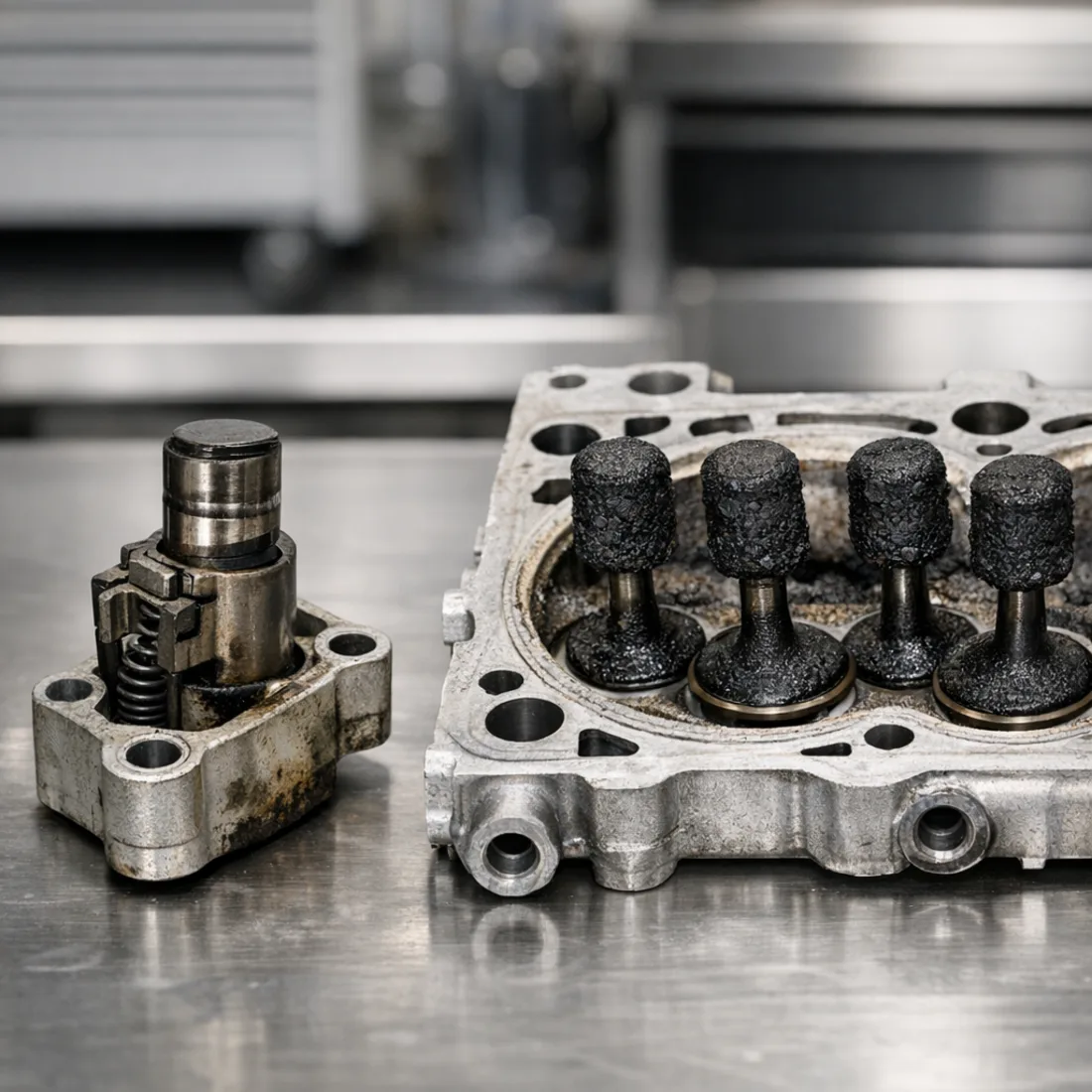
Carbon build up on the intake valves is another one. Direct injection means the fuel spray never washes the back of the valves the way port injection does, so carbon accumulates over time and causes rough running, misfires and hesitation. A walnut blast clean of the intake is the proper fix, and it makes a noticeable difference to how the engine pulls.
Thermostat housing leaks and water pump failures turn up regularly on these too. The housing is plastic, it gets heat cycled constantly, and it eventually cracks or weeps coolant. Catch it before it becomes an overheating event and it's a straightforward repair. Miss it and you're into head gasket territory, which is a conversation nobody wants to have.
-
Timing chain and tensioner wear, cold start rattle
-
Carbon build up on intake valves from direct injection
-
Thermostat housing leaks
-
Water pump failure
-
VANOS variable valve timing faults
-
Oil consumption, especially as kilometres climb
"Naturally aspirated" doesn't mean "low maintenance".
The Prince family engine has a personality all of its own, and the timing chain is the one to watch.
For routine servicing, the 1.6i needs oil and filter on schedule with the correct low ash grade, air filter, cabin filter, spark plugs to NGK spec, drive belt, and brake pads and rotors as they wear. We also handle suspension arms and bushes, which soften with age and start to show as vague steering and clunking over bumps.
Stage 1 tuning is available on the N16B16MO: we can take it from 115 hp to 130 hp and 160 Nm to 175 Nm using the Bosch MEV17.2 ECU. It's a modest but real gain and it gives the naturally aspirated car a little more life without changing its character. We always confirm the engine is in good health before touching the tune.
Get your Mini booked in with a proper specialist.
Mini Clubman JCW: The Same Faults, Turned Up to Eleven
The John Cooper Works version of the R55 Clubman takes the same basic package and drops in the N14B16 turbocharged engine, lifting output to 211 hp and 280 Nm. It's a genuinely entertaining machine, longer and more practical than the standard hatch but with enough performance to keep things interesting. The issue is that these cars get driven like they're supposed to, and the N14 is an engine that absolutely rewards staying on top of the maintenance schedule.
Everything that affects the 1.6i comes to the surface faster on the JCW simply because of how these cars are used. The timing chain and tensioner fault is, if anything, more urgent here. The N14 has a well documented history of tensioner rattle at cold start, and with the added heat cycles and stress of a turbocharged engine being pushed hard, the chain wear accelerates. If you've just bought a used JCW Clubman, a timing chain inspection should be near the top of your first service list.
The high pressure fuel pump is a JCW specific concern that the 1.6i largely avoids. The HPFP on the N14 can fail progressively, showing up as hesitation under load, difficult cold starts or a rough idle. We fit new genuine specification pumps when this happens, and it's a job worth doing properly because a failing pump puts strain on the injectors too.
The turbo hardware adds its own list. Oil feed lines to the turbo can weep or fracture, the diverter valve takes a hammering under repeated hard acceleration, and when either fails you lose boost, get fault codes and sometimes start burning oil into the intercooler circuit. These are straightforward fixes if you catch them early.
-
Timing chain and tensioner rattle, especially cold start
-
Carbon build up on intake valves requiring walnut blast
-
High pressure fuel pump failure
-
Turbo oil feed line leaks
-
Diverter valve failure under hard driving
-
Thermostat housing leaks
-
Accelerated brake pad and rotor wear from hard use
If you've just bought a used JCW Clubman, a timing chain inspection should be near the top of your first service list.
The N14 has a well documented history of tensioner rattle at cold start, and a turbo engine under hard use accelerates the wear.
We also see a lot of JCW Clubmans come in with brake wear that's advanced beyond what the owner expected. The brake service on a JCW needs to factor in the car's actual use, not just the standard interval. Iridium spec spark plugs, the correct low SAPS oil, and keeping the drive belt and coils fresh all matter more on this engine than on the naturally aspirated version.
Stage 1 tuning on the JCW N14 is a real step forward: from 211 hp to 230 hp and 280 Nm to 340 Nm via the Bosch MED17.2 ECU. Additional options available include DTC removal, pop and bang crackle map, start/stop off, FLAPS delete and Vmax. We always run a full health check before any tune goes on, because a sick N14 and a tune is a bad combination.
Mini Cooper S R56 N18: The Refined Turbo, Still Not Without Issues
BMW/Mini revised the turbo 1.6 for the R56 Cooper S generation, producing the N18B16. On paper it's a step forward from the N14: cleaner, more refined, and rated at 184 hp with 240 Nm. In practice it's a better engine in several ways, but it doesn't escape the family traits. If you're shopping between the JCW N14 Clubman and the R56 Cooper S N18, think of the N18 as the tidier, slightly calmer sibling. You still need to look after it.
Timing chain and tensioner wear carries over. The cold start rattle is your warning sign on the N18 just as it is on the N14 and N16, and the same advice applies: don't wait. The N18 is a direct injection engine too, so carbon build up on the intake valves is an ongoing reality. Walnut blast cleaning is the fix, and how often you need it depends a lot on how the car has been serviced and driven.
The N18 also leaks from the valve cover gasket and oil filter housing gasket with some regularity. These aren't catastrophic faults but they make a mess, can mask other issues, and are worth fixing cleanly with new OEM spec gaskets rather than ignoring. The HPFP and thermostat housing/water pump combination rounds out the usual suspects, same as on the JCW, just with slightly less urgency on a car that's been driven a little more gently.
Clutch slip on high mileage R56 Cooper S cars is worth a mention. If the previous owner enjoyed the performance, the clutch may be near end of life, and it's something to probe before buying used. Suspension bushes and struts also soften over the years, and the R56 is old enough now that fresh rubber in the suspension makes a real difference to how the car handles.
-
Timing chain and tensioner wear
-
Carbon build up on intake valves
-
High pressure fuel pump failure
-
Thermostat housing and water pump leaks
-
Valve cover gasket and oil filter housing gasket oil leaks
-
Clutch slip on high mileage examples
-
Suspension bushes and struts softening with age
The 100 Nm torque gain in particular transforms how the car pulls from low revs.
Stage 1 on the N18 is the most impressive gain of this whole family, a jump of 26 hp and 100 Nm.
Stage 1 tuning on the N18 is the most impressive gain of this whole family: from 184 hp to 210 hp and 240 Nm to 340 Nm, a jump of 26 hp and 100 Nm, using the Bosch MED17.1.1, MEVD17.2.2 or MEVD17.2.7 ECU depending on the build. Pop and bang, start/stop off, DTC removal, FLAPS and Vmax are all available alongside the base power tune.
The 100 Nm torque jump is the standout number here and it genuinely transforms the driving experience.
How to Pick Between These Three
If you're shopping the used market and weighing up these variants against each other, here's the honest breakdown.
You want the most affordable variant to run. Lower insurance, gentler on tyres and brakes, and a slightly smaller fault list. Just don't let the timing chain go unserviced because of the "it's only the base model" mindset.
You want the most fun and the most practical body shape of the lot. It's also the one most likely to have been driven hard. A full service history and a fresh timing chain inspection are non negotiable before buying used. The sweet spot is a one owner car with receipts, not an enthusiast special with unknown provenance.
You want genuine performance without the JCW price tag. The N18 is a more sorted engine than the N14 in day to day use, the tuning gains on it are exceptional, and there are more of them in New Zealand which keeps parts access reasonable. Look for oil leaks from the valve cover, check the clutch engagement, and listen for chain rattle on a cold start before you hand over the money.
- Listen for timing chain rattle on a cold start across all three variants before buying
- Ask for service history and confirm the correct oil grade has been used
- Check for coolant weeps around the thermostat housing and water pump
- On the JCW, probe the HPFP and diverter valve condition and inspect turbo oil feed lines
- On the N18, check for oil leaks at the valve cover and oil filter housing gaskets
- On the R56 Cooper S, check clutch engagement on high mileage examples
- Inspect suspension bushes and struts, especially on older higher kilometre cars
- Whichever one you end up with, the underlying platform means our workshop knowledge transfers directly across all three
Servicing Across the Whole Family
All three of these engines share the same bore and stroke and live inside similar engine bays, which means servicing intervals and procedures have a lot in common. The differences are mainly in the turbo hardware, fuel system pressures and the specific ECU platform each variant uses.
Oil and filter: correct low SAPS or low ash grade specific to each engine, on interval. Using the wrong oil grade shortens engine life on all three variants. Spark plugs: iridium spec on the JCW N14, NGK spec on the N16 and N18. These engines are sensitive to plug condition. Timing chain and tensioner: inspect at every major service. Replace proactively if there's any rattle or if history is unknown. This is the single biggest cost avoidance item across the whole family.
Air filter, cabin filter, drive belt, wipers: routine but important. A blocked air filter on a turbo engine is a performance killer. Coolant system: thermostat housing, water pump and coolant condition should be on the radar from 80,000 km onwards on all three. Brakes: standard intervals for the 1.6i, accelerated inspection schedule for the JCW and Cooper S given how they're driven.
We only fit brand new genuine or OEM specification parts on every job, no exceptions. Our mechanical repairs scope covers the full range of what we do across all three variants.
How We Diagnose These Cars
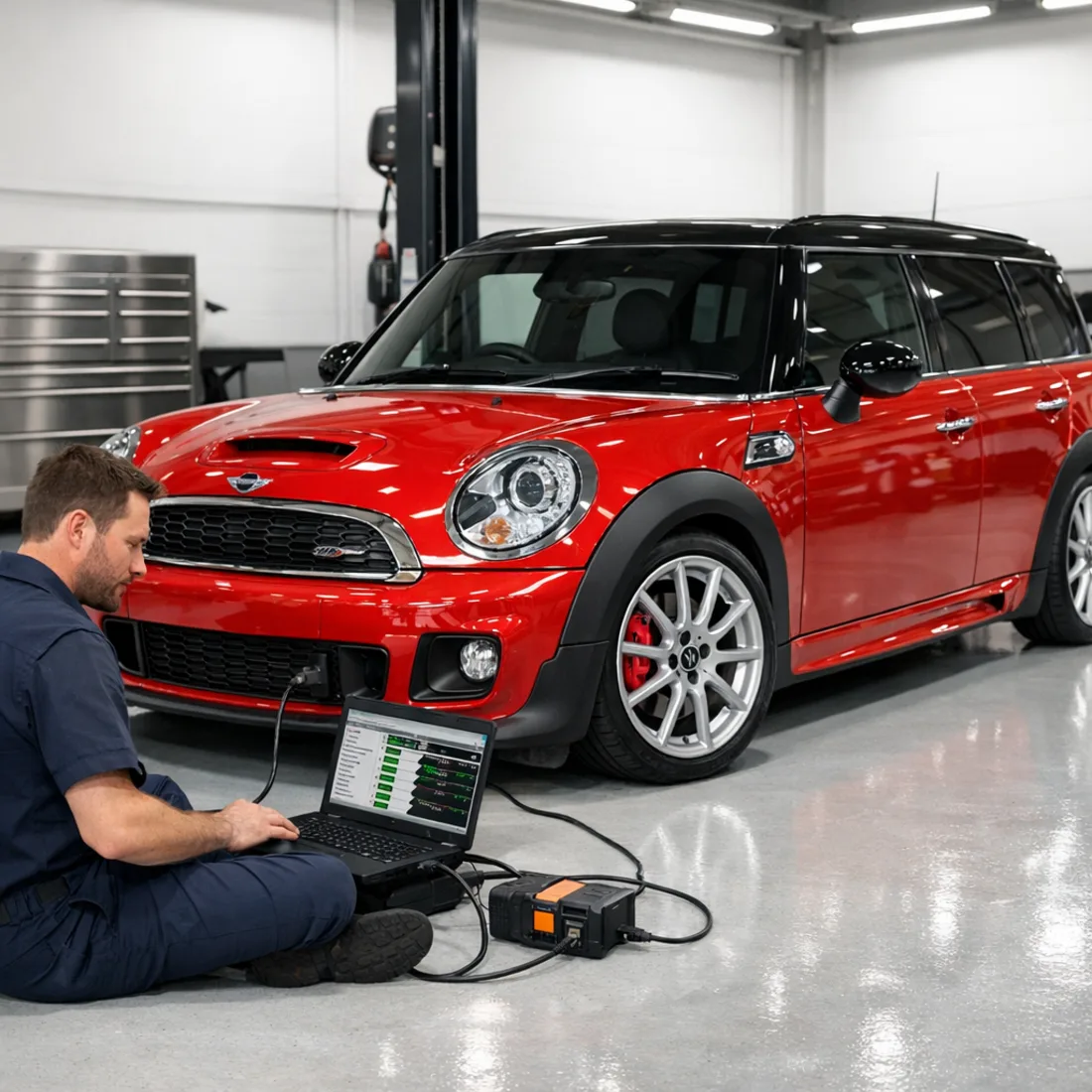
Every one of these variants runs on BMW/Mini electronics, which means proper diagnosis requires the factory tooling. We use BMW ISTA/Rheingold with a genuine ICOM or ICOM NEXT interface. This is not a generic OBD reader situation. A generic scan tool will read basic fault codes on a Mini but it won't read live data properly, it won't access the body modules, it won't run guided fault trees, and it won't let you code or programme replacement components correctly.
With ISTA we can read the full fault memory across every module in the car, check fuel trim adaptations, monitor boost pressure and injection data in real time, and identify whether a fault code reflects a real failure or a sensor that's drifted out of range. On the JCW and Cooper S this makes a real difference when diagnosing HPFP faults, timing chain wear or VANOS operation, because the data tells a much more complete story than a fault code number alone.
For the 1.6i the same platform gives us the VANOS and cam sensor data that these engines genuinely need to diagnose properly. A rattle that could be the chain, the VANOS, or a tensioner spring becomes a definitive answer rather than a parts swap guessing game.
Tuning: What Each Variant Can Do
All three variants are tunable through their respective Bosch ECUs, and the gains vary significantly based on how much hardware headroom the engine has. We run a health check before any tune, because there's no point locking in more power to an engine that's carrying a stretched chain or a weak HPFP.
Stage 1 on the Bosch MEV17.2 ECU takes the naturally aspirated 1.6i from 115 hp to 130 hp and 160 Nm to 175 Nm. A real world improvement in throttle response and mid range pull. Best suited to cars that are already well serviced. Pop and bang crackle map and start/stop off are also available on the N16.
Stage 1 on the Bosch MED17.2 ECU goes from 211 hp to 230 hp and 280 Nm to 340 Nm. The 60 Nm torque gain makes the car significantly more tractable, not just faster at peak revs. Additional options include DTC removal, pop and bang crackle map, start/stop off, FLAPS delete and Vmax.
Stage 1 on the Bosch MED17.1.1, MEVD17.2.2 or MEVD17.2.7 ECU goes from 184 hp to 210 hp and 240 Nm to 340 Nm. The 100 Nm torque jump is the standout number here and it genuinely transforms the driving experience. Pop and bang, start/stop off, DTC removal, FLAPS and Vmax are all available alongside the base power tune.
Beyond the base power tune, DTC removal, pop and bang crackle map, start/stop off, FLAPS delete and Vmax are available across all three turbo variants. Pop and bang and start/stop off are also available on the naturally aspirated 1.6i. Ask about our file service if you want to discuss a remote tune option.
Frequently Asked Questions
The questions we get most. Something else on your mind? Get in touch.