Porsche Cayenne: Every Generation Serviced and Repaired in Penrose, Auckland
The Cayenne has always been Porsche's most polarising model, an SUV that somehow drives like a sports car, tows like a workhorse, and costs like a supercar to fix when something goes wrong. Across the 958 generation and into the E3, Porsche refined the formula considerably, but each variant brought its own distinct set of faults that catch owners off guard. Whether you're driving a 211 hp diesel that's ticked past 200,000 km or a twin turbo V8 GTS with 460 hp on tap, we know exactly what these cars do when they misbehave, and exactly how to put them right.





Cayenne 958 3.0 TDI 211hp: The Diesel Foundation
This is where a lot of Auckland's Cayenne fleet began. The 958 3.0 TDI with the MCR.CB engine code produces 211 hp and 550 Nm from a 2967 cc V6 diesel, and it's an Audi derived platform that Porsche tuned their own way. The result is a car that pulls hard from low revs, cruises the motorway on modest fuel, and still feels unmistakably like a Porsche from the driver's seat. Many of these cars are well past 150,000 km in New Zealand now, and that's exactly when the known weak points start showing up.
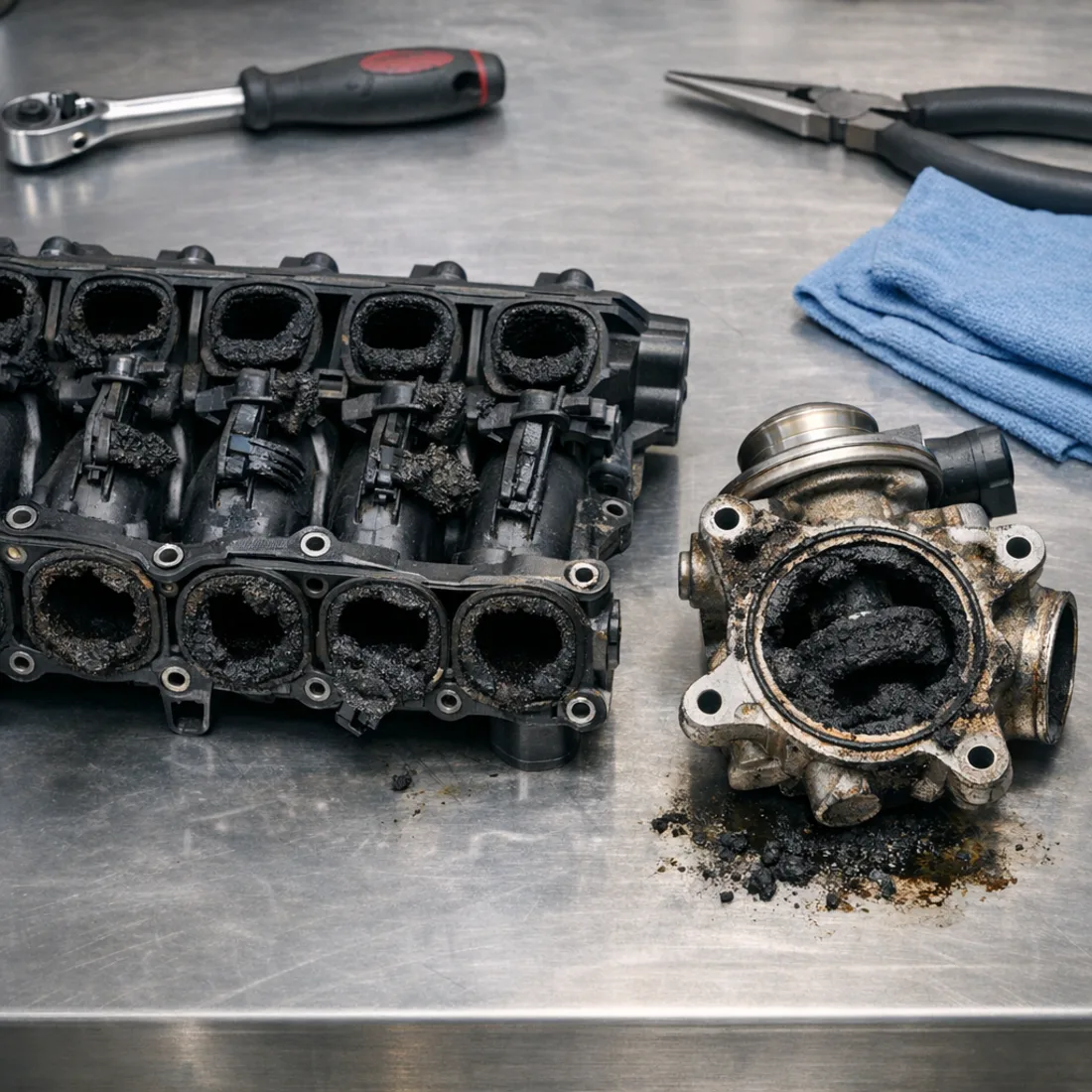
The swirl flap and EGR situation is the one that catches owners most off guard. Carbon build up is gradual, and by the time the car's running rough or showing fault codes, there's often a significant clean up job involved. We diagnose these properly using the PIWIS Tester, the correct Porsche factory platform, rather than a generic scan tool. That matters because a generic reader simply won't reach all the control units or give you the live data and guided fault finding that a car this complex needs.
Routine service on this car should include oil and filter with the correct low ash long life diesel grade, air filter, fuel filter, cabin filter, glow plugs, drive belts, and brake pads and rotors. These aren't luxury items, they're maintenance that keeps the bigger bills away.
-
Carbon build up on intake ports and swirl flaps restricting airflow and affecting idle quality
-
EGR valve and intake system fouling requiring cleaning or replacement
-
DPF clogging, especially on cars doing short urban trips
-
Timing chain guides and tensioners wearing at higher mileage
-
Water pump and thermostat failures causing overheating or temperature erraticism
-
Oil cooler and seal leaks as the car ages
A Stage 1 tune lifts output to 300 hp and 630 Nm, a gain of 89 hp and 80 Nm.
That's a significant jump from the 211 hp base and transforms the car's character considerably.
Get your Cayenne booked in with a specialist who has the factory tooling to do it properly.
Cayenne 958.2 3.0 TDI 262hp: The Facelift Diesel, More Power, Same Weak Points
The facelift 958.2 Cayenne brought a bump to 262 hp and 580 Nm from the same 2967 cc V6 diesel, now coded MCV.VA and still managed by the Bosch EDC17CP44. Porsche shared this engine across the VAG group, so you'll find near identical units in the Touareg and Audi Q7 of the same era. That shared platform means shared knowledge of exactly what goes wrong, and what we see here confirms all of it.
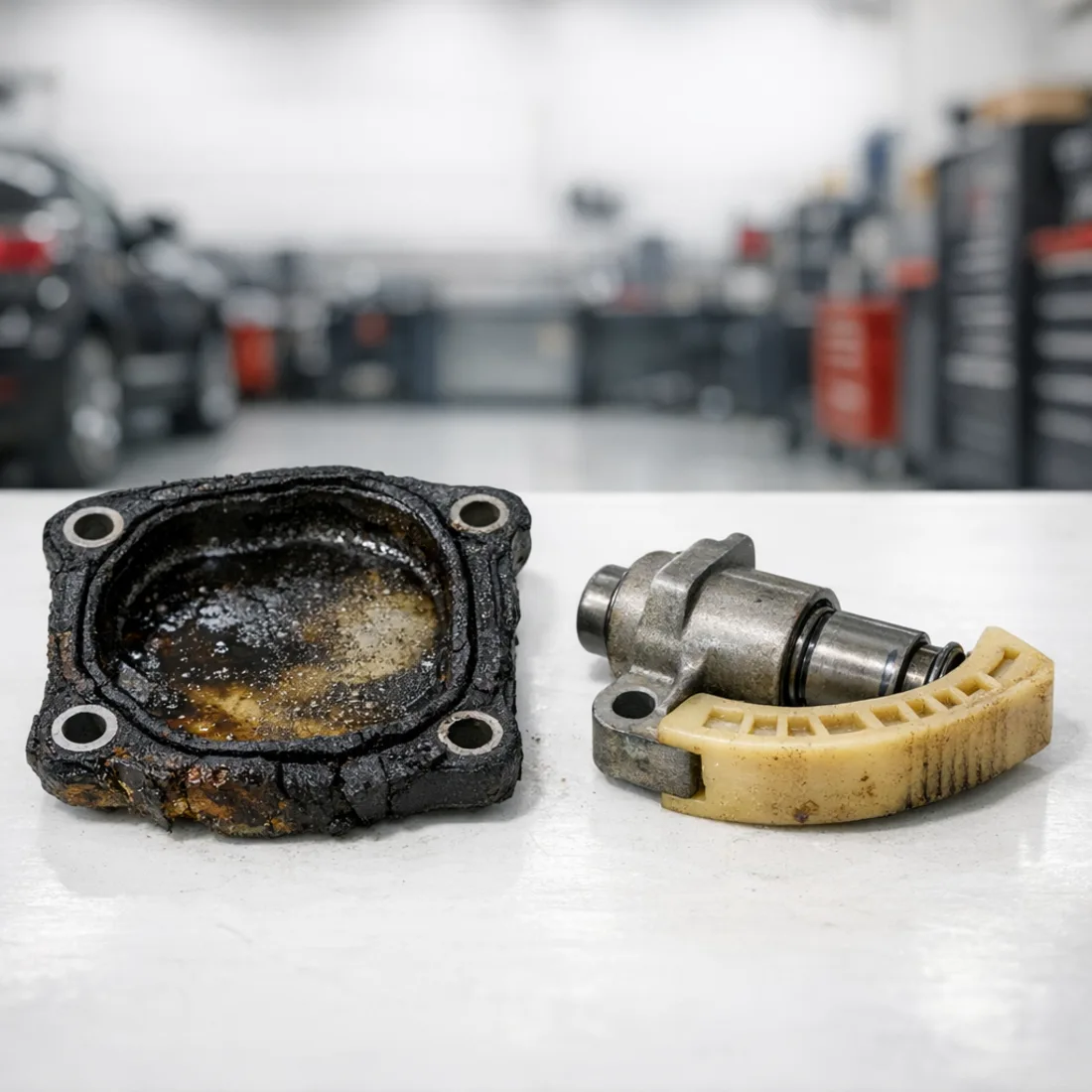
The oil cooler seal failure is arguably the most important one to catch early. When coolant gets into the oil, the damage isn't always immediately obvious, but it compounds quickly. If you're buying one of these used, a proper oil and coolant sample check is worth doing before any money changes hands. The timing chain being at the rear of the block also means that if you hear any rattling on cold start, get it looked at promptly. The repair is invasive and expensive if the guides have already broken up.
Compared to the 211 hp pre facelift car, the 262 hp version adds AdBlue complexity on later builds, so the diagnostic picture is slightly broader. We use ODIS, the correct factory level platform for VAG diesel systems including this Cayenne, to read live data, run guided fault finding and perform service resets properly. Generic scan tools simply don't cut it here.
-
Oil cooler and cooler seal failure allowing coolant to contaminate engine oil
-
Timing chain and tensioner wear, especially notable because the chain sits at the rear of the engine, making repair more labour intensive
-
Carbon build up on intake ports and swirl flaps
-
EGR cooler faults causing efficiency issues and fault codes
-
DPF loading and regeneration failures on cars doing mostly short trips
-
AdBlue and NOx sensor issues on later examples
-
Turbo actuator and vacuum system faults triggering limp mode
A Stage 1 tune lifts this variant to 300 hp and 630 Nm.
Identical ceiling to the 211 hp car but a smaller proportional gain given the higher starting point.
Cayenne 958 4.2 TDI 385hp: The Big Diesel That Won't Be Ignored
There's something quietly absurd about a two and a half tonne SUV with 850 Nm of torque. The 958 Cayenne 4.2 TDI with engine codes MCU.DB and MCU.DC delivers exactly that, pulling 385 hp from a 4134 cc V8 diesel managed by the Bosch EDC17CP44. It leaves most things at the traffic lights behind and feels genuinely effortless at motorway speed. It also treats servicing as non negotiable.
The dual timing chain arrangement at the rear of the block is the defining concern on this engine. It shares the rear chain architecture with the 3.0 TDI, but with a V8 the repair is even more involved. Listen carefully at cold start. Any rattle, even brief, needs prompt investigation. We diagnose the 4.2 TDI using PIWIS Tester for full system access, which lets us read all control units, not just engine and gearbox, and carry out proper guided fault finding rather than guessing from a handful of generic codes.
Compared to the 3.0 TDI variants, this car also adds greater injector complexity and a higher load fuel system, so any running issue should be scanned properly before parts are guessed at. A Stage 1 tune is available, lifting output to 450 hp and 950 Nm, a gain of 65 hp and 100 Nm on top of an already strong baseline.
-
Timing chain and tensioner wear at higher mileage, with dual chains at the rear of the block making repair labour intensive
-
Cold start rattling as an early warning of chain wear
-
Injector and high pressure fuel system faults
-
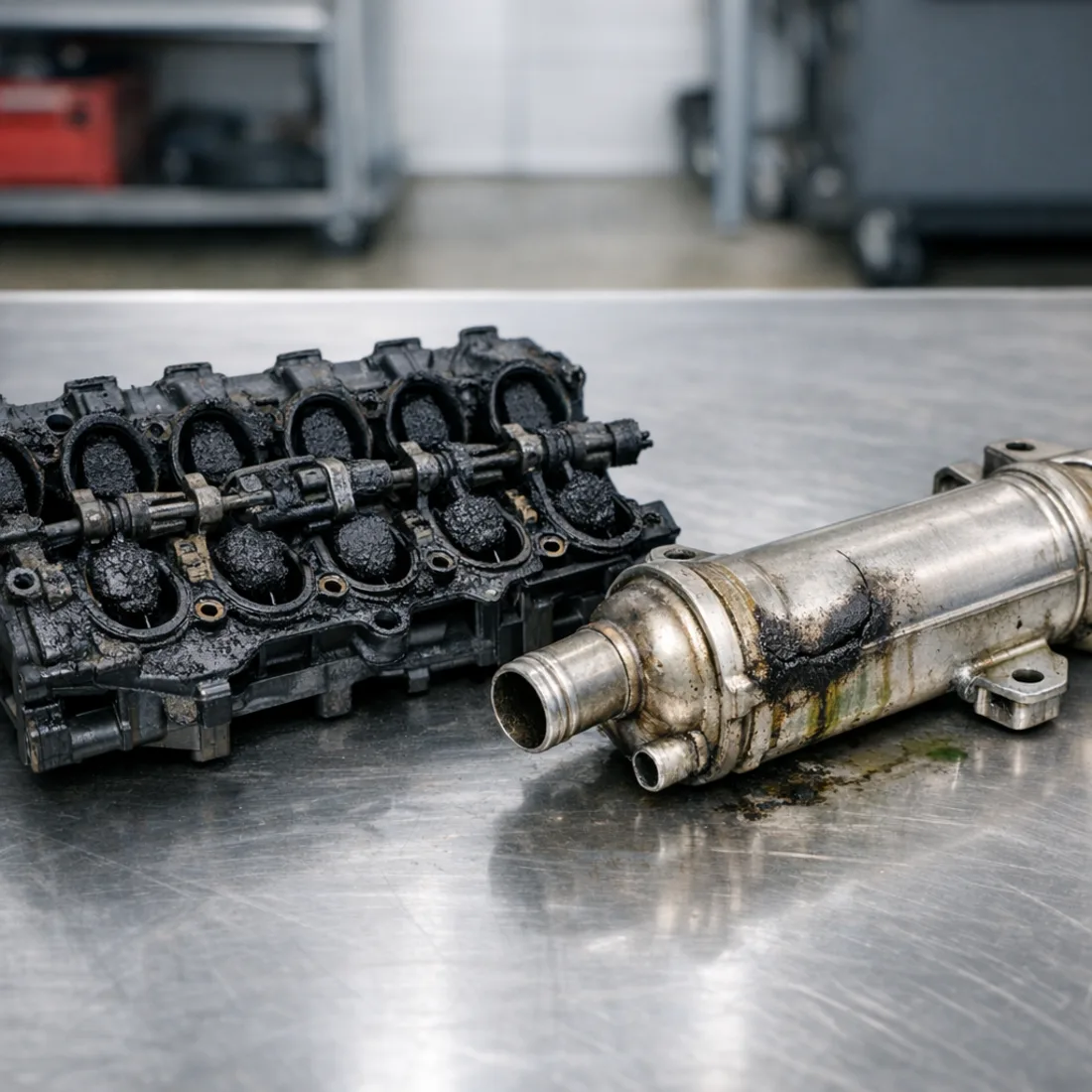
Carbon build up on intake and swirl flaps
-
EGR cooler faults and DPF loading
-
AdBlue system issues as mileage climbs
Any rattle at cold start, even brief, needs prompt investigation.
The dual rear timing chain repair on this V8 is invasive and expensive if the guides have already broken up.
Cayenne 958.2 GTS 3.6T 440hp: The Enthusiast's Pick Gets a Turbo
The GTS has always been the driver's Cayenne, the one that looks restrained from the outside but makes its intentions clear the moment you press the sport button and the exhaust note drops. For the 958.2 facelift Porsche retired the old naturally aspirated GTS motor and replaced it with the MCX.ZA 3.6 litre twin turbo V6 making 440 hp and 600 Nm. It's a substantial step forward in torque and throttle response, and it rewards the owner who actually pushes it. It also has very specific failure modes that come with forced induction.
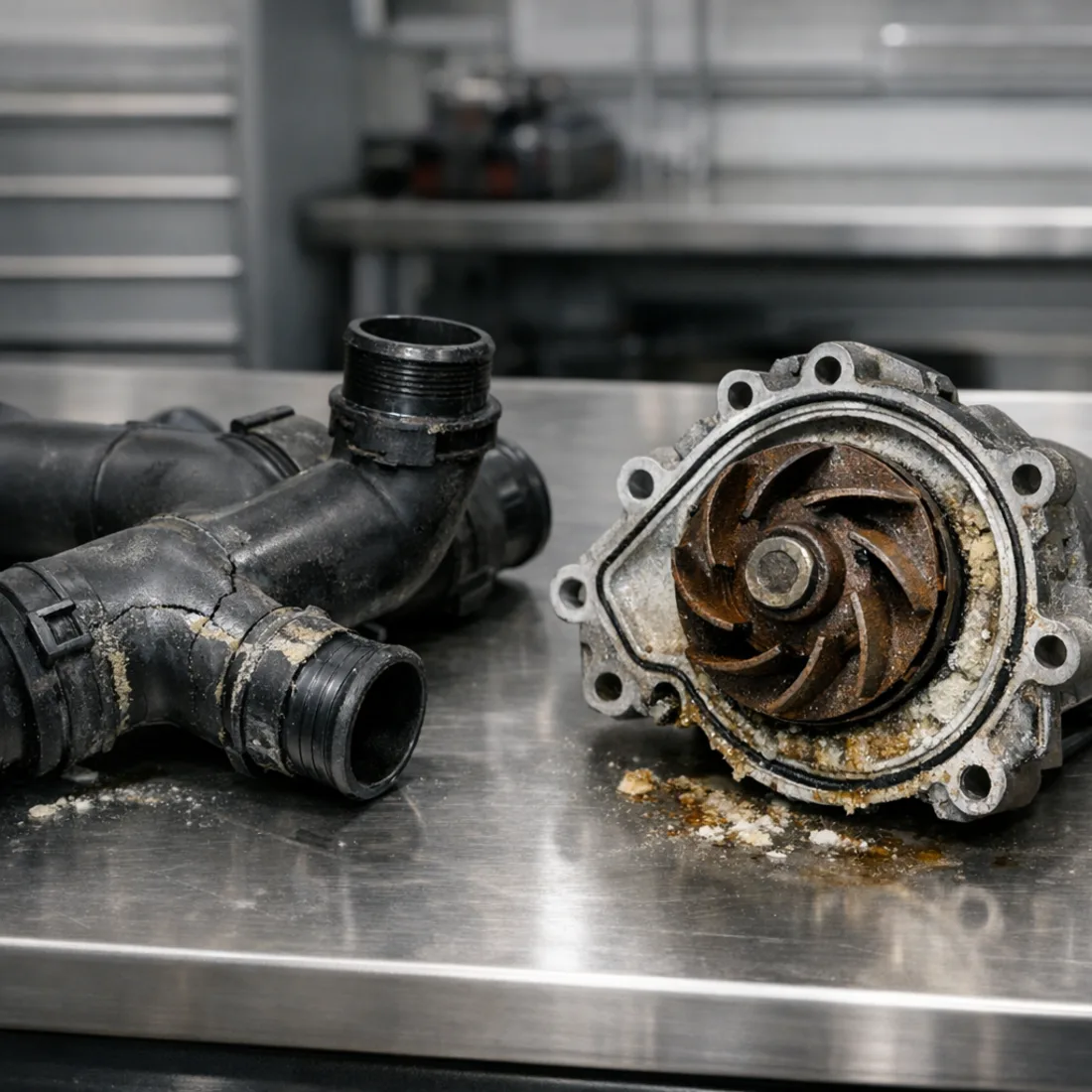
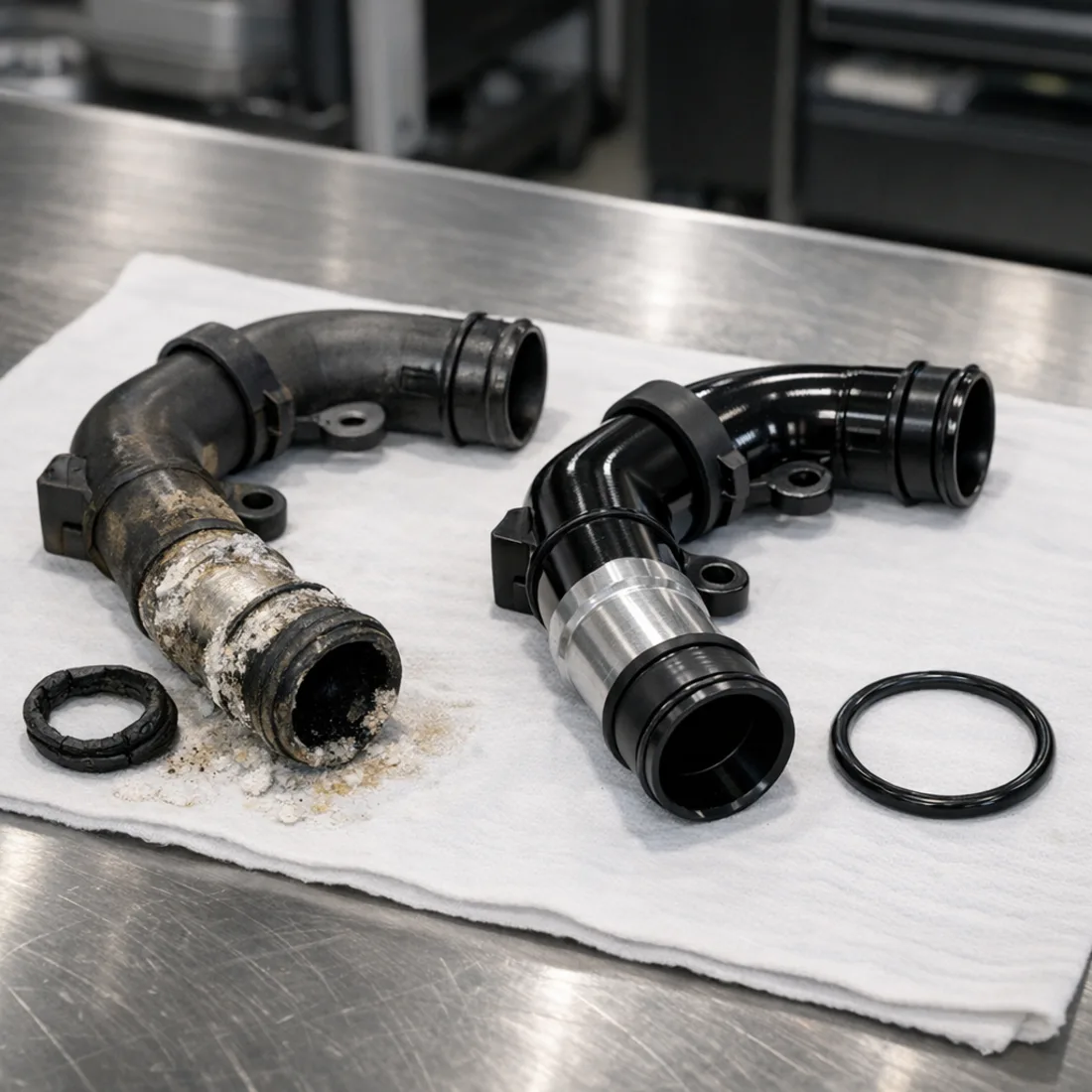
The coolant pipe and water pump issue is something we see consistently on these turbo V6 GTS cars. It often starts as a minor weep that owners dismiss, but coolant loss on a turbocharged engine isn't something to defer. The intake carbon build up is equally predictable with direct injection, and a decarbonising service at appropriate intervals keeps the throttle response crisp and avoids harder fault code conversations later.
We use PIWIS Tester as the diagnostic platform here, giving us full access to all control units including air suspension, PASM, and the ECU managed by the Siemens/Continental SDI10.2. Compared to the diesel 958 variants, the petrol GTS has no DPF or AdBlue concerns, but the turbo plumbing and cooling system demand the same level of attentiveness. If you're choosing between the 958.2 diesel and the GTS for a used buy, the GTS rewards careful maintenance history more than almost any other Cayenne variant.
-
Coolant pipe and water pump weeping, a recurring theme on this twin turbo V6
-
Carbon build up on intake valves, inherent to direct injection engines
-
Ignition coils and spark plugs wearing over time under performance use
-
Boost and vacuum leaks from turbo related plumbing
-
Air suspension and PASM damper leaks and compressor faults
A Stage 1 tune lifts output to 480 hp and 650 Nm, adding 40 hp and 50 Nm with improved throttle response throughout the rev range.
The GTS rewards careful maintenance history more than almost any other Cayenne variant.
Cayenne E3 GTS 4.0T 460hp: The Twin Turbo V8 at the Top of the Tree
Four hundred and sixty horsepower under an SUV roofline sounds like a contradiction until you drive one. The E3 Cayenne GTS with the 4.0 litre twin turbo V8 produces 460 hp and 620 Nm in factory trim, managed by dual Bosch MG1CS002 and MG1CS008 ECUs alongside a ZF AL552 gearbox unit. It pulls hard enough to embarrass proper sports cars at the lights, the air suspension flattens corners with composure that doesn't seem possible for a vehicle this size, and the whole thing still fits a school run. It's an extraordinary machine. And like any extraordinary machine, it has very specific needs when something goes quietly wrong.
The hot vee engine layout, where the turbos sit in the valley between the cylinder banks, is efficient for packaging and spool up but runs very hot internally. The coolant pipe and seal weeping is a direct consequence of that thermal environment, and it's something we check on every E3 GTS that comes in. Catching it early is far cheaper than dealing with the consequences of sustained coolant loss on a turbocharged V8.
The PDCC and air suspension on these cars are sophisticated systems that genuinely transform the driving experience, but they're also systems with components that degrade. Fault codes in these modules need proper PIWIS Tester access to read and code correctly. Generic scan tools leave you guessing. The timing chain is a wet chain setup, so it's more durable than the rear of block diesel arrangement, but chain and tensioner condition on higher mileage cars is still worth confirming at service time.
-
Coolant pipe and seal weeping from the hot vee turbo V8 architecture
-
Oil and coolant consumption at higher mileage requiring monitoring
-
PDCC and air suspension faults and leaks
-
Carbon build up on the intake at high mileage
-
High performance brakes and tyres wearing quickly under performance use
-
Timing chain and tensioner condition worth monitoring as mileage climbs
A Stage 1 tune on this V8 is properly impressive: 620 hp and 870 Nm, a gain of 160 hp and 250 Nm over stock.
That's a transformation, not just a tweak.
Choosing Between Them: Which Cayenne Makes Sense Used?
If you're shopping the Cayenne range used, the decision usually comes down to diesel versus petrol and how much complexity you're comfortable with.
You want the most accessible entry point. Strong torque, reasonable running costs and well understood faults. The key is finding one with a solid service history and no signs of oil cooler seal weeping or sustained short trip use that's hammered the DPF.
You want a bit more power and a later facelift. Later examples bring AdBlue, which adds another system to keep healthy, but it is manageable with proper servicing.
You want the standout performer in the diesel range. 385 hp and 850 Nm make it genuinely quick, but the dual rear timing chain separates a good buy from an expensive one. Have it properly inspected before buying.
You want the GTS character without the E3 price tag. The twin turbo V6 is strong and characterful, the faults are predictable, and a Stage 1 tune makes it genuinely rapid. Watch the coolant pipes and service history on the cooling system.
You want the flagship. It's newer, more complex, and the repair costs reflect that. But if it's been looked after it's the best Cayenne ever made. Budget appropriately for the service schedule and don't treat PDCC or air suspension fault codes as things to defer.
- Check oil and coolant condition for signs of mixing, particularly on the 3.0 TDI 262hp
- Listen for cold start rattle on both TDI variants, especially the 4.2 V8 TDI
- Verify DPF health on all diesel variants, especially city driven cars
- Inspect coolant pipes and water pump on GTS petrol variants for any signs of weeping
- Confirm PDCC and air suspension function on E3 GTS before buying
- Review full service history and confirm correct oil grades have been used throughout
- Have any used example scanned with factory level tooling, not a generic reader
Servicing the Cayenne Across All Generations
Every generation of Cayenne, diesel or petrol, naturally aspirated or turbocharged, shares one thing: the servicing requirements are specific and the tolerances for cutting corners are low. Porsche doesn't build cars that forgive deferred maintenance graciously.
For all diesel variants, the correct low SAPS oil grade is non negotiable. Using the wrong grade affects DPF life directly. Fuel filter replacement, air filter, cabin filter, glow plugs, and drive belt inspection should all be part of the regular schedule, not occasional considerations. Brake fluid should be replaced on schedule given the performance braking systems these cars carry. For our full approach to car servicing across all makes and models, that page sets out the detail.
For petrol variants, spark plugs and ignition coils matter more than many owners realise. On the turbo engines especially, worn plugs affect combustion consistency and can show as misfires that generate misleading fault codes. Oil grade and change intervals are equally important on the E3 V8 given the hot vee thermal environment.
On both diesel and petrol Cayennes the brake system deserves proper attention. Performance pads and rotors wear faster under spirited use, and the PCCB ceramic brake option on some GTS variants needs specialist handling. We cover the full scope of brake repairs for these cars including pad and rotor replacement, caliper servicing and brake fluid changes.
How We Diagnose the Cayenne: Factory Tools, Not Guesswork
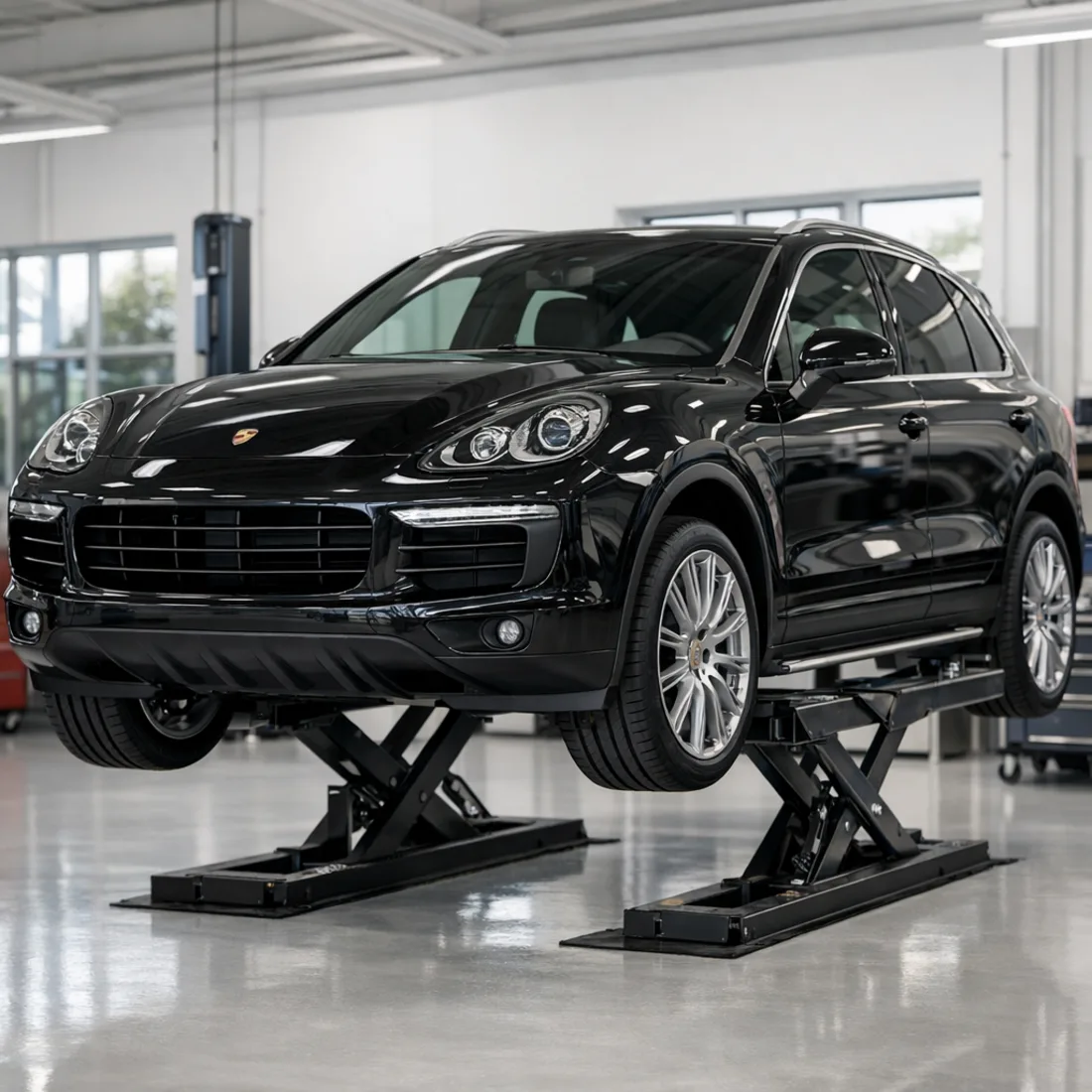
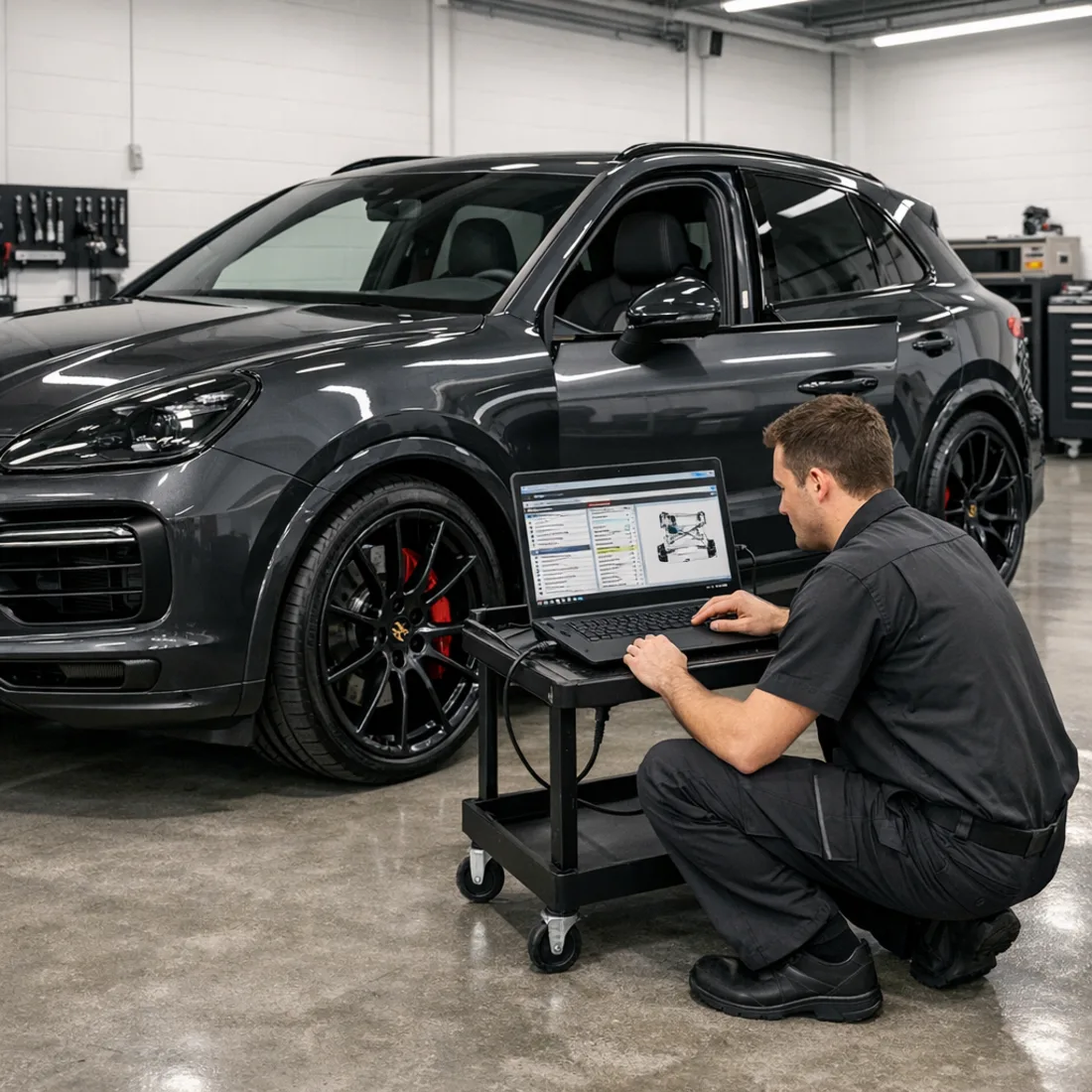
The diagnostic platform matters enormously with these cars. A generic Bluetooth scanner will read basic engine fault codes on a Cayenne, but it won't reach the air suspension control unit, the PDCC module, the gearbox, the immobiliser or the instrument cluster. It won't let you do guided fault finding, adaptations, or service resets that the car actually needs. And on a vehicle this complex, treating a symptom from an incomplete fault code is an expensive way to not fix the problem.
For the 958 petrol variants and the E3 GTS we use PIWIS Tester, the Porsche factory diagnostic platform. For the 958 diesel variants that share VAG architecture we use ODIS, which provides the same factory level access for those engines and their associated modules. Both platforms give us live data, full module access, guided fault finding routines and correct coding capability. That's what proper diagnosis looks like on a Cayenne.
If your car needs module coding or programming after a repair, that's something we handle correctly rather than approximating. Programming done wrong on these systems can create problems that are harder to fix than the original fault. Our team covers the full scope of car programming and coding for Porsche vehicles.
Tuning the Cayenne: What's Possible Across the Range
Every Cayenne variant we service also has tuning options available, and the gains are genuinely worthwhile across the range. These aren't marginal adjustments. The calibrations are done properly, using the correct ECU identifiers for each variant, not generic maps dropped onto whatever ECU presents itself.
The most dramatic proportional gain in the diesel range. That 89 hp jump transforms the character of the car. Additional options available include DTC removal, Launch control, Pop and Bang Crackle map, Start/Stop Off, Flaps, Vmax and Adblue.
Identical ceiling to the 211 hp car but from a stronger base, with a smoother torque delivery throughout the rev range. Additional options available include DTC removal, Pop and Bang Crackle map, Start/Stop Off, Flaps, Vmax and Adblue.
All of that torque, arriving even more readily, makes the already impressive diesel Cayenne feel substantially quicker without changing its everyday usability. Additional options available include DTC removal, Pop and Bang Crackle map, Start/Stop Off, Flaps, Vmax and Adblue.
Improved throttle response and stronger mid range torque from the twin turbo V6. Additional options available include DTC removal, Decat, Flaps and Vmax.
The headline act across the entire Cayenne range. From 460 hp and 620 Nm to 620 hp and 870 Nm at Stage 1. That's a transformation, not just a tweak, from a car that was already extraordinary.
DPF and EGR systems on the diesel cars are diagnosed and cleaned where appropriate. Any emissions related fault should be investigated properly rather than masked. For remote tuning options see our file service.
Frequently Asked Questions
The questions we get most. Something else on your mind? Get in touch.