Dodge Challenger: 3.6 V6, 6.4 HEMI, SRT 392 and Hellcat
The Dodge Challenger is one of the most single minded cars on the road. From the entry level Pentastar V6 right up to the supercharged 6.2 Hellcat, every generation was built around the same idea: big presence, big engine, and no apologies. What links them all, beyond the wide body and the long bonnet, is that they all end up needing a workshop that actually knows what it is looking at. Generic scan tools, guesswork and parts cannon repairs are not how you keep a Hemi happy. This is the full story of the Challenger family, generation by generation, with the real faults, the real fixes and honest buying advice between them.
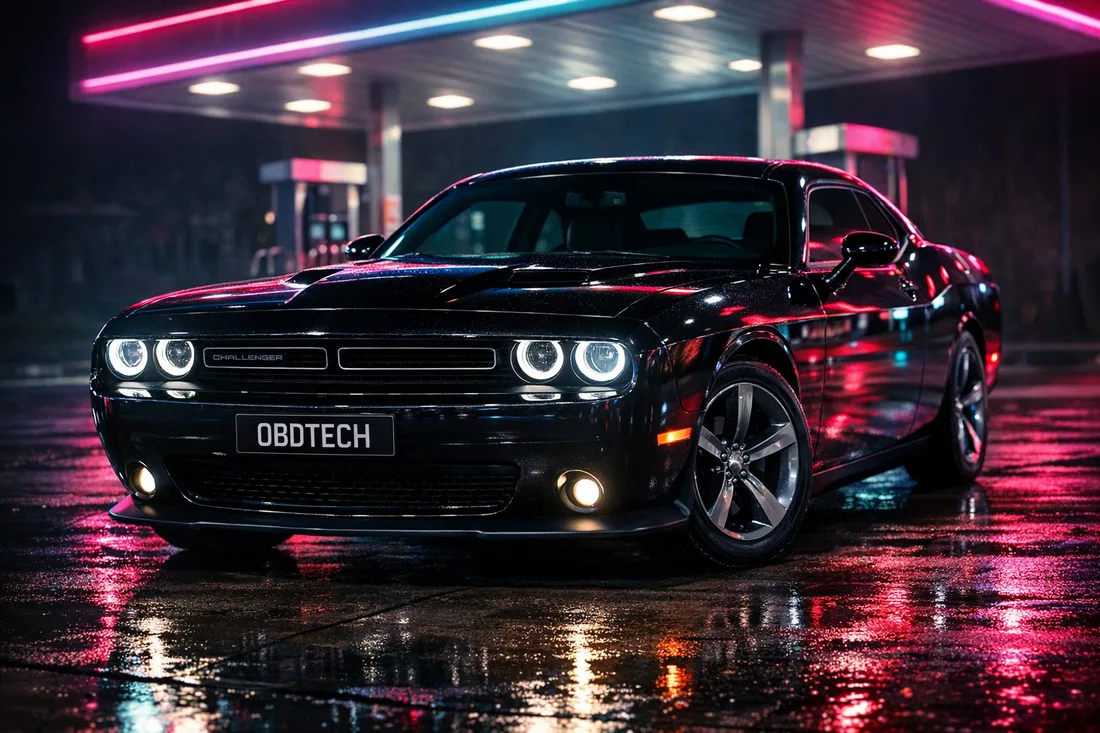

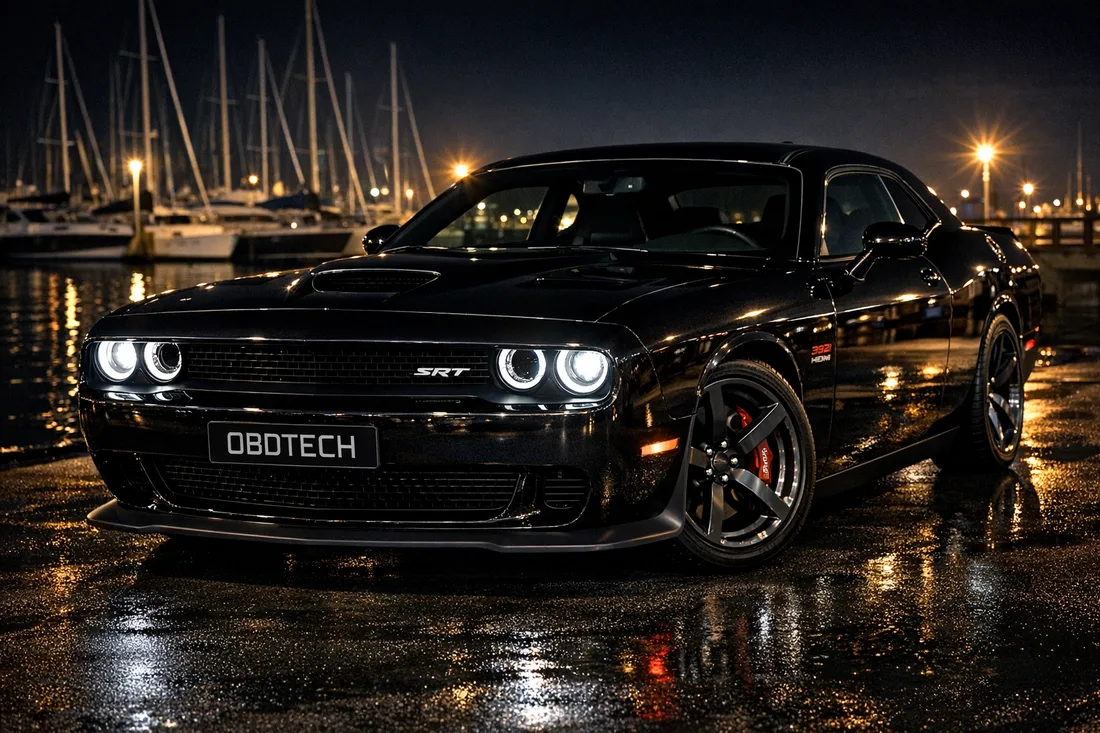

Dodge Challenger 3.6 V6 Pentastar
The Pentastar 3.6 V6 is the entry point to the Challenger lineup, and it is a better engine than its reputation sometimes suggests. Three hundred and five horsepower from 3604cc, a 10.2:1 compression ratio, and a timing chain rather than a belt means there is no cam belt to stress about. It is a fundamentally sound design, but it has some well documented weak points that catch owners off guard if they are not across the history.
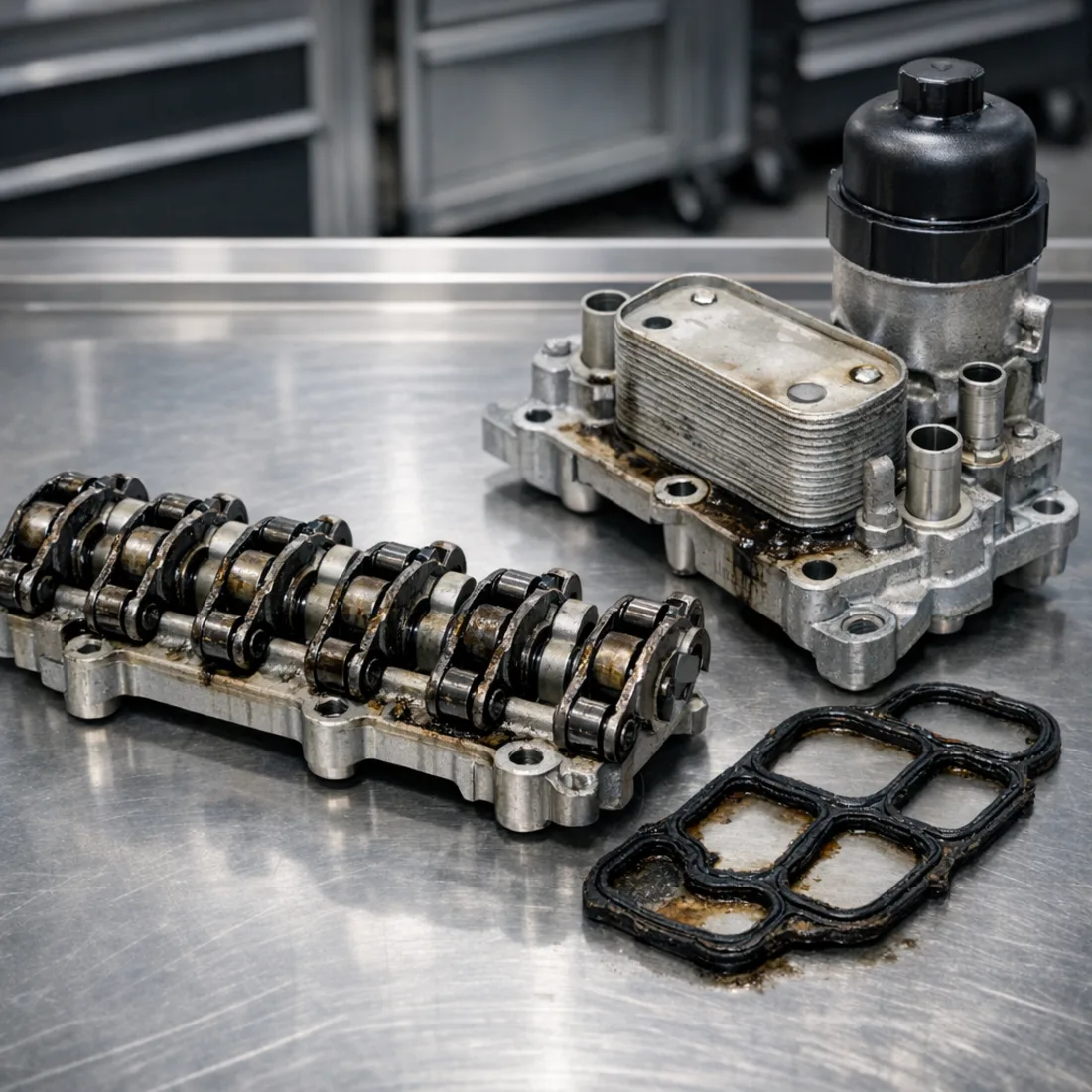
The early Pentastar engines had a known left bank cylinder head issue that showed up as a ticking noise and misfire. The head design was revised on later builds, so if you are buying used, knowing which build date you are looking at matters. Beyond that, rocker arm and lifter wear is a recurring theme that produces tapping sounds and misfire codes, and it is worth dealing with early rather than leaving it to get expensive. The oil cooler and filter housing gasket is another one that weeps oil quietly over time, and a lot of owners only notice it when there is a puddle under the car. Cooling components, the water pump and the electronic throttle body all earn attention as the kilometres climb.
-
Left bank cylinder head tick and misfire (early build engines)
-
Rocker arm and lifter wear causing tapping and misfire codes
-
Oil cooler and filter housing gasket weeping oil
-
Cooling system wear including water pump failure
-
Electronic throttle body faults at higher mileages
-
Timing chain and guide noise as service intervals slip
A timing chain rather than a belt means there is no cam belt to stress about.
It is a fundamentally sound design, but it has some well documented weak points that catch owners off guard.
Routine servicing covers oil and filter with the correct grade, air filter, cabin filter, spark plugs, drive belts and the accessory system. Brake pads, rotors and suspension work round out the regular visits. We also offer a Stage 1 tune that brings the V6 to 325 hp and 385 Nm, a gain of 20 hp and 22 Nm over stock. It is not the Hellcat, but it makes the car noticeably sharper and more responsive. As a daily driver the V6 is cheaper to feed and easier on consumables than the big V8s, and that matters after the novelty wears off.
Get your Challenger booked in with a proper specialist.
Dodge Challenger 6.4 HEMI V8
Step up to the 6.4 HEMI and you are in genuinely different territory. Four hundred and seventy horsepower, 640 Nm, a 6410cc pushrod V8, engine code ESG, and a Motorola NGC5 ECU running the show. This is a naturally aspirated engine and that simplicity is part of the appeal, but it shares DNA and some shared failure modes with the SRT 392 that sits alongside it. If you are buying between these two, understanding the difference matters.
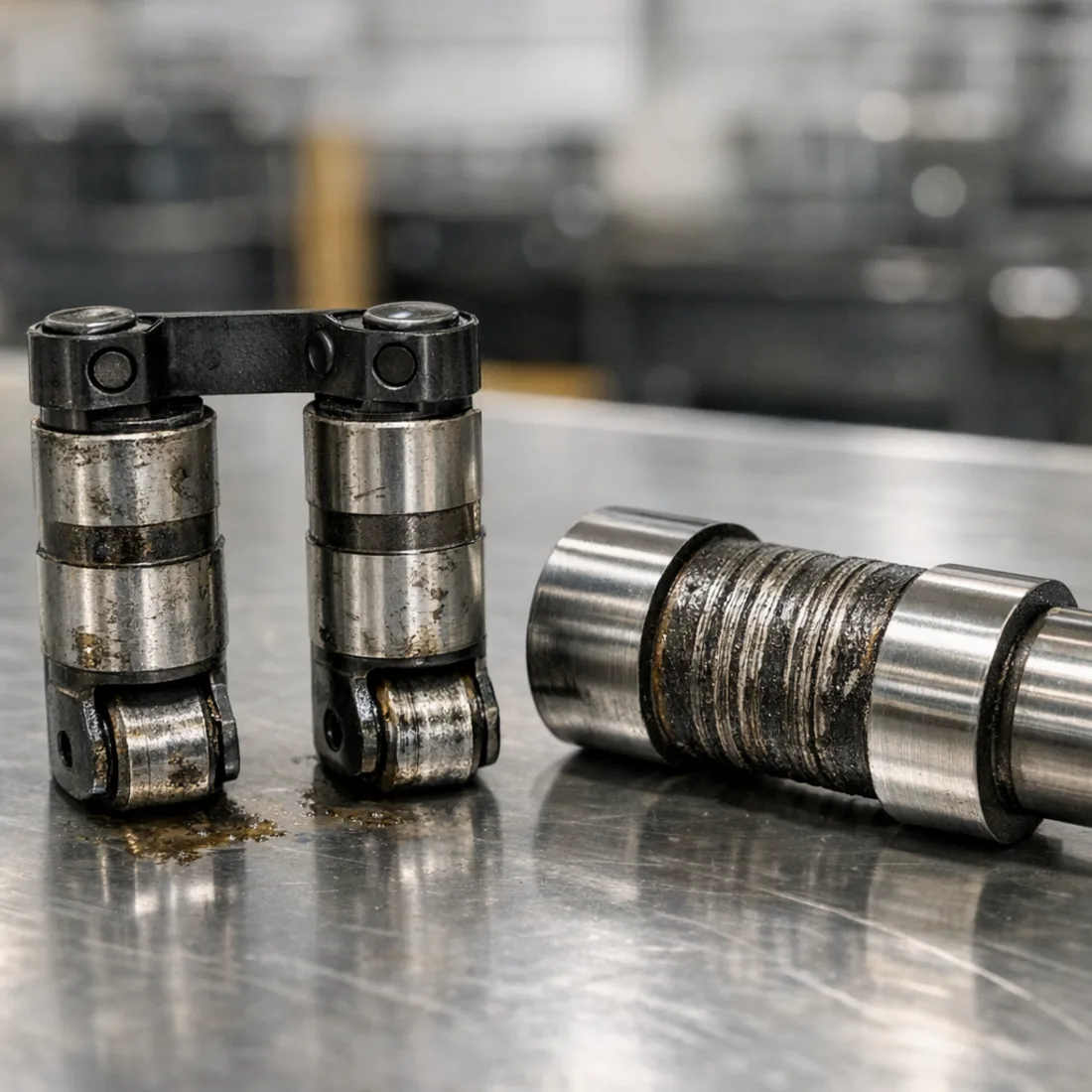
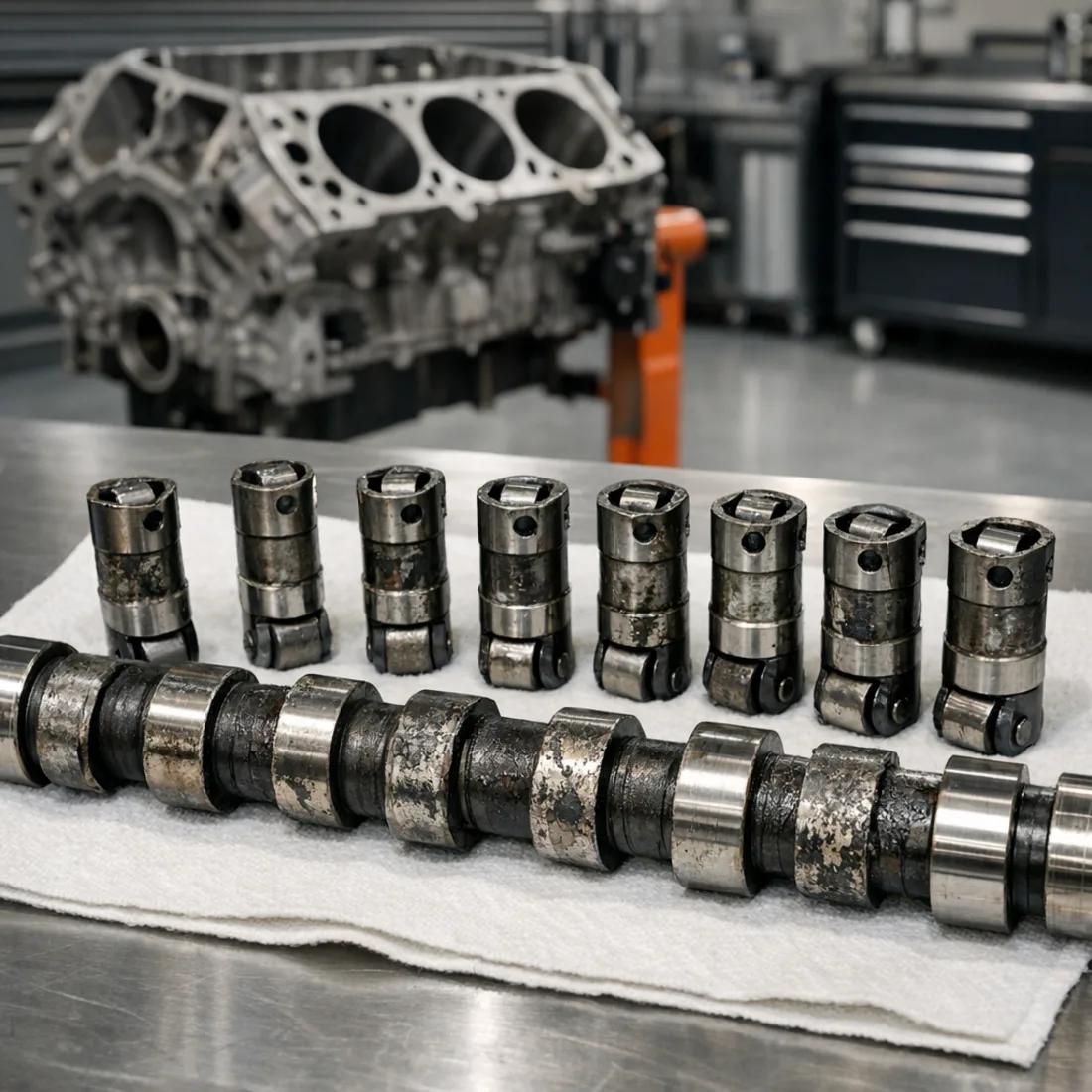
The MDS cylinder deactivation system is the big one on this generation. MDS switches the V8 down to four cylinders under light loads to save fuel, but the lifters that do that switching are known to wear and, if ignored, they can damage the camshaft. A tick at idle that does not clear with fresh oil is worth investigating immediately, not next service. Rocker arms are another common failure area on this engine. Oil consumption is worth monitoring, particularly if the previous owner was not religious about oil changes. Exhaust manifold bolts are another recurring item, they loosen and sometimes break, and a broken manifold bolt is exactly as tedious to sort as it sounds. Cooling system stress under hard use is worth keeping an eye on too.
-
MDS lifter and camshaft wear causing tick or misfire
-
Rocker arm failures leading to further valvetrain damage
-
Oil consumption, especially on neglected service history examples
-
Exhaust manifold bolt loosening and breakage
-
Cooling system stress under sustained hard driving
A tick at idle that does not clear with fresh oil is worth investigating immediately, not next service.
The lifters can damage the camshaft if left alone, and cam replacement is a much bigger job than catching it early.
Servicing the 6.4 HEMI calls for SAE 0W-40 grade oil, spark plugs on the correct heat range, air filter, cabin filter and drive belts. Brake pads and rotors are regular items on a car with this power, and suspension refresh is worth doing if the car has worked hard. The Stage 1 tune on this engine takes it to 500 hp and 700 Nm, gains of 30 hp and 60 Nm over stock, which is a meaningful step on a naturally aspirated V8.
Dodge Challenger SRT 392 6.4 V8
The SRT 392 is the 6.4 Hemi in a higher state of tune, 485 hp and 644 Nm from the same 6410cc architecture, same 103.9 x 94.6 mm bore and stroke as the standard 6.4, but with a higher 10.9:1 compression ratio and a Siemens/Continental GPEC2A ECU instead of the Motorola NGC5. That ECU difference is relevant because it opens up more tuning options, including a Stage 1 map to 505 hp and 665 Nm, Pop and Bang crackle maps, Start/Stop defeat, DTC removal and Vmax adjustments.
The fault profile is very similar to the standard 6.4 HEMI, and that is not a coincidence, they share the same engine family. MDS lifter and camshaft wear is the headline item here too. The Hemi tick is famous enough that it has its own name in the community, but the SRT 392 version gets worked harder than most, which means the consequences of ignoring it arrive faster. Rocker and roller lifter failure that damages the cam if left alone, oil consumption, exhaust manifold bolt breakage, and heat soak on hard driven cars are all on the list. What distinguishes an SRT 392 owner from a standard 6.4 owner is usually the way the car gets used, and that matters when it comes to service intervals.
-
MDS system lifter wear and camshaft damage (the Hemi tick)
-
Roller lifter and rocker arm failure progressing to cam damage
-
Oil consumption on hard used or service neglected examples
-
Exhaust manifold bolt failure
-
Heat soak and cooling stress under track or spirited use
The Hemi tick is famous enough that it has its own name in the community.
The SRT 392 version gets worked harder than most, which means the consequences of ignoring it arrive faster.
The GPEC2A ECU means the SRT 392 responds well to tuning. The Stage 1 map is a genuine improvement and pairs well with intake and exhaust upgrades that sharpen throttle response. Regular servicing with the correct high spec oil grade, fresh spark plugs on the right interval, and attention to the brakes and suspension keeps these cars honest. Our brake repair and service work gets regular business from SRT 392 owners who push their cars hard.
Dodge Challenger Hellcat 6.2 V8 Supercharged
Seven hundred and seven horsepower. That number is not a marketing claim, it is what the supercharged 6.2 Hemi V8 actually makes, backed up by 880 Nm of torque from 6166cc, a 9.5:1 compression ratio and a Roots type supercharger bolted to the top of it. The ECU is the Siemens/Continental GPEC2A, same family as the SRT 392 but calibrated for forced induction. The Hellcat is in a different category from everything else in the Challenger lineup, and its fault profile reflects that.
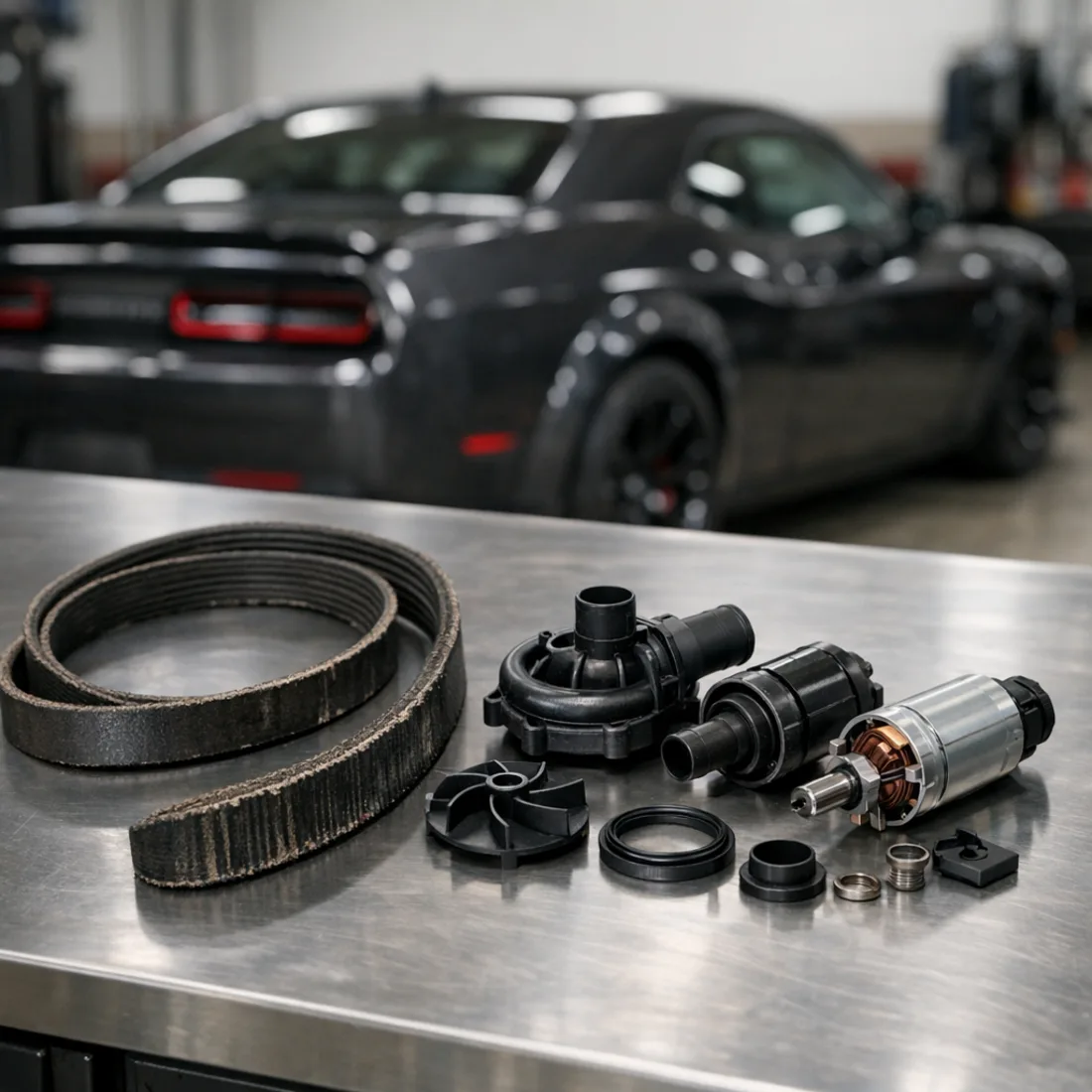
Heat management is the central challenge on the Hellcat. The supercharger generates heat, the intercooler heat exchanger and dedicated coolant pump are working hard to manage it, and when either one starts to lose efficiency, the car feels it in power and in reliability. The intercooler pump is a known failure item and worth checking on any used example. The supercharger snout bearing is another, these do not like abuse or sustained high boost runs without proper cooling, and a worn snout bearing is not a cheap fix. The supercharger belt itself can slip or stretch under hard use, the squealing you sometimes hear at high revs is not just drama, it is a warning. Spark plugs foul or wear faster under boost than they would on a stock naturally aspirated Hemi, and ignition coils earn regular attention. Oil condition and grade are critical because this engine runs hot and gets worked.
-
Intercooler coolant pump failure causing heat soak and power loss
-
Supercharger snout bearing wear on hard used examples
-
Supercharger belt slip or stretch under sustained boost
-
Spark plug fouling and accelerated ignition coil wear
-
Intercooler heat exchanger efficiency loss over time
-
Oil degradation from heat and hard use between services
Seven hundred and seven horsepower. That number is not a marketing claim.
The Hellcat is in a different category from everything else in the Challenger lineup, and its fault profile reflects that.
Routine servicing includes oil and filter with a correct high performance grade, air filter, cabin filter, drive and supercharger belts, and spark plugs. The big Brembo brakes on most Hellcat examples are genuinely effective but they are also genuinely consumable, so pads, rotors and brake fluid are regular items. Suspension bushes and dampers on a car this heavy and this fast do not last forever either. There is a Stage 1 tune available that takes the Hellcat to 740 hp and 918 Nm, a gain of 33 hp and 38 Nm. Supporting modifications complement it well. The GPEC2A platform also supports DTC removal, Pop and Bang maps, Start/Stop defeat and Vmax adjustment. All tuning work is done on a properly serviced, mechanically sound car.
Which Challenger Should You Buy Used?
If you are shopping the Challenger market in New Zealand, the question is almost always which V8 rather than whether to get the V8. Here is the honest breakdown.
You want the look and the experience without the running costs. It is cheaper to fuel, gentler on consumables, and a well maintained Pentastar is a durable engine. The sweet spot is a later build example with a clean service history, because the early left bank head concern was addressed in revised production. If there is a tick at idle, walk away or price in a proper investigation.
You want naturally aspirated V8 character with a simpler ECU. The risk is MDS lifter and cam wear on a car that has been driven hard and serviced loosely. A pre purchase inspection that includes a compression and leak down check plus a proper wiTECH scan of the PCM is money well spent before you commit.
You want more power from the factory and better tuning options. The fault profiles of the SRT 392 and the standard 6.4 HEMI are very similar because the engine family is the same, but the GPEC2A ECU opens up a broader menu. The same pre purchase diligence applies: scan it, check compression, and know the service history.
You want the most rewarding but also the most demanding Challenger. Its unique failure points around the supercharger, intercooler pump and heat management mean a poorly maintained example can develop expensive problems fast. On a well maintained Hellcat the intercooler pump and supercharger belt are worth replacing as a precaution if the history is not clear. The tuning headroom is genuinely exciting, but make sure the foundation is solid first.
- Check build date on V6 examples to confirm revised left bank cylinder head
- Listen for a persistent Hemi tick at idle on all 6.4 engines
- Ask for full oil change history and check oil consumption on 6.4 variants
- Inspect for exhaust manifold bolt breakage on V8 models
- Check intercooler pump operation and supercharger belt condition on Hellcat
- Run a full wiTECH scan of all modules before committing to any Challenger
- Inspect brake pads, rotors and suspension condition on any hard used example
Servicing Across the Challenger Family
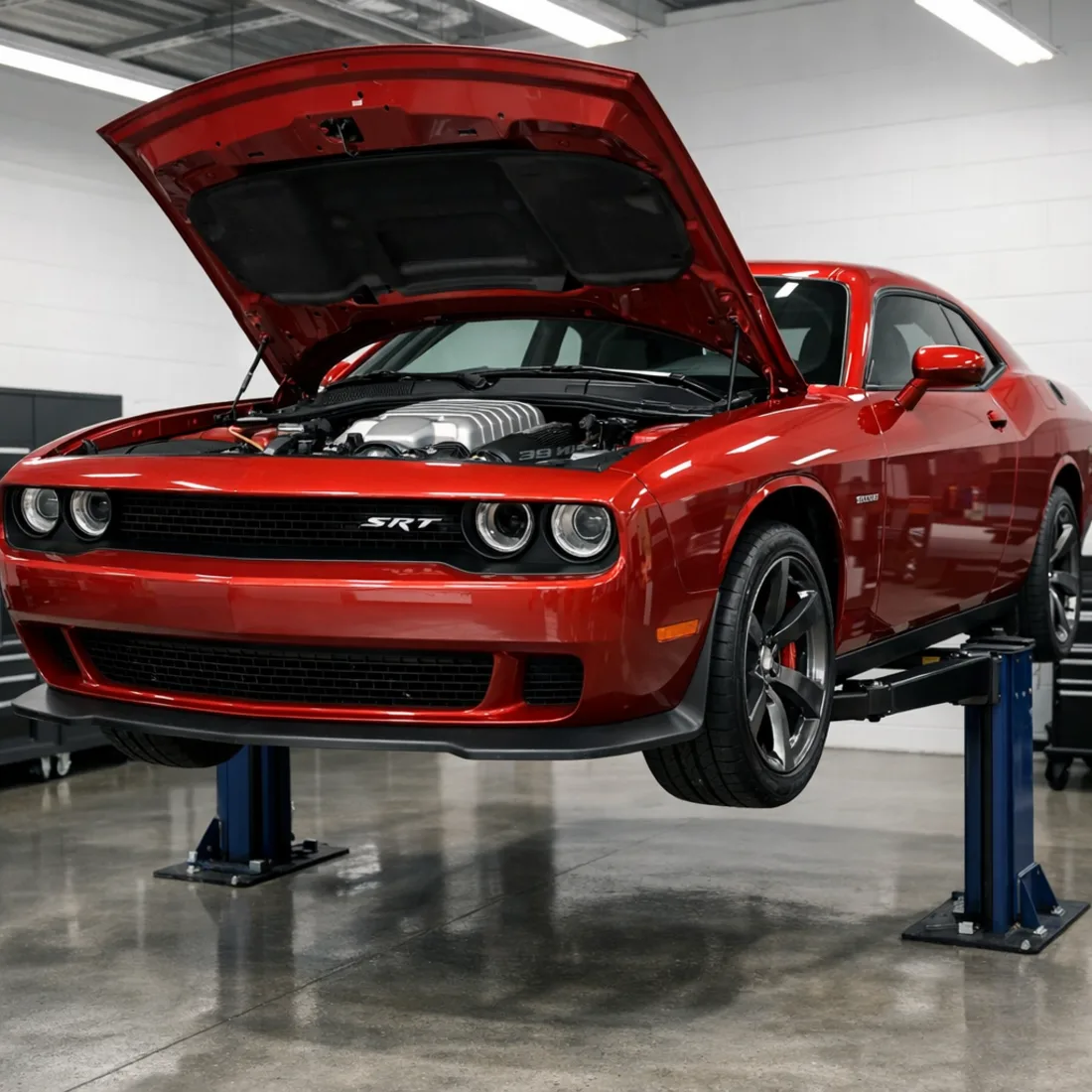
Every Challenger that comes into our workshop gets treated the same way regardless of which engine is under the bonnet: we use factory level wiTECH diagnostics to scan all modules before and after work, and we fit brand new genuine or OEM spec parts. No exceptions.
The service items that all four variants share include engine oil and filter with the correct grade for that specific engine, air filter and cabin filter replacement, spark plugs on the correct heat range and interval, drive belts and accessory system inspection (supercharger belt on the Hellcat), coolant condition and cooling system integrity check, brake pads, rotors, sensors and brake fluid, and suspension bushes and damper condition, which matters on these heavy cars.
Our comprehensive car servicing covers all of this, and we schedule it around the specific demands of whichever Challenger engine you have. The 6.4 engines on the MDS system get particular attention to valvetrain oil delivery. The Hellcat gets the intercooler circuit and supercharger belt checked every visit. The V6 gets the oil cooler housing checked for weeping gaskets. Small catches before they become big repairs is the whole point.
How We Diagnose Challengers
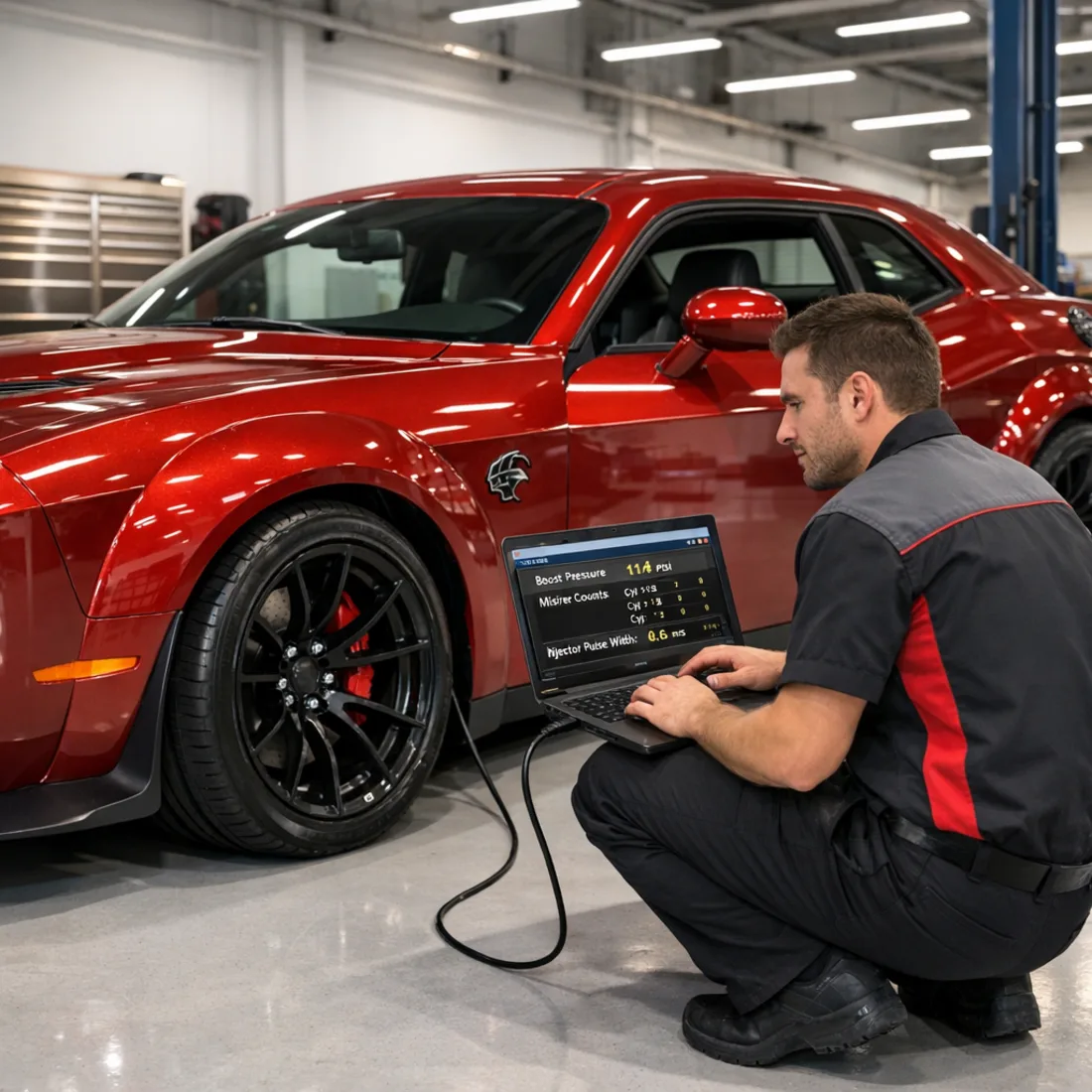
The Challenger family runs Siemens/Continental GPEC2A ECUs on the SRT 392, the Hellcat and the V6, and a Motorola NGC5 on the standard 6.4 HEMI. Both platforms require proper factory level tooling to read correctly. A generic Bluetooth scanner picks up basic fault codes. The wiTECH platform reads every module in the car, runs guided diagnostic tests, accesses live data streams across the drivetrain, body and chassis modules, and lets us program or update modules when needed.
That distinction matters more than it might sound. A Hemi tick on an MDS engine could be a lifter, a cam, a rocker, or an oil pressure issue. A misfire on the Pentastar could be a plug, a coil, a rocker, or the left bank head. Without the right tooling and someone who has seen these faults before, you are guessing. We do not guess. Our auto electrical and diagnostics team uses wiTECH as standard on every Challenger that comes through the door, whether it is in for a fault or just a service.
Tuning the Challenger: What Each Generation Offers
All four Challenger variants have tuning options available at our workshop. The Hellcat Stage 1 gain of 33 hp and 38 Nm sounds modest as a percentage, but on an already supercharged 707 hp platform it is genuinely felt on the road. The 6.4 HEMI ESG responds particularly well to tuning relative to its starting point, with a 30 hp and 60 Nm gain that sharpens the car noticeably. On the SRT 392 and V6, the GPEC2A ECU opens up the broader menu of features beyond just power, and owners regularly add the crackle map and Start/Stop defeat at the same time as the power tune.
DTC removal, Pop and Bang crackle map, Start/Stop defeat, Vmax and flap options available alongside the power tune.
A particularly strong response for a naturally aspirated V8. Vmax and decat options available.
DTC removal, Pop and Bang crackle map, Start/Stop defeat, Vmax and flap options available. Pairs well with intake and exhaust upgrades for sharper throttle response.
DTC removal, Pop and Bang crackle map, Start/Stop defeat, Vmax and flap options available. Supporting modifications complement it well.
All tuning work is done on a properly serviced, mechanically sound car. We will not tune a Challenger with a Hemi tick or a weeping gasket. Fix the faults first, then extract the performance. Ask us about remote file service options for ECU tuning.
Frequently Asked Questions
The questions we get most. Something else on your mind? Get in touch.