Dodge Durango 3.6 V6: Service, Diagnostics and Repair in NZ
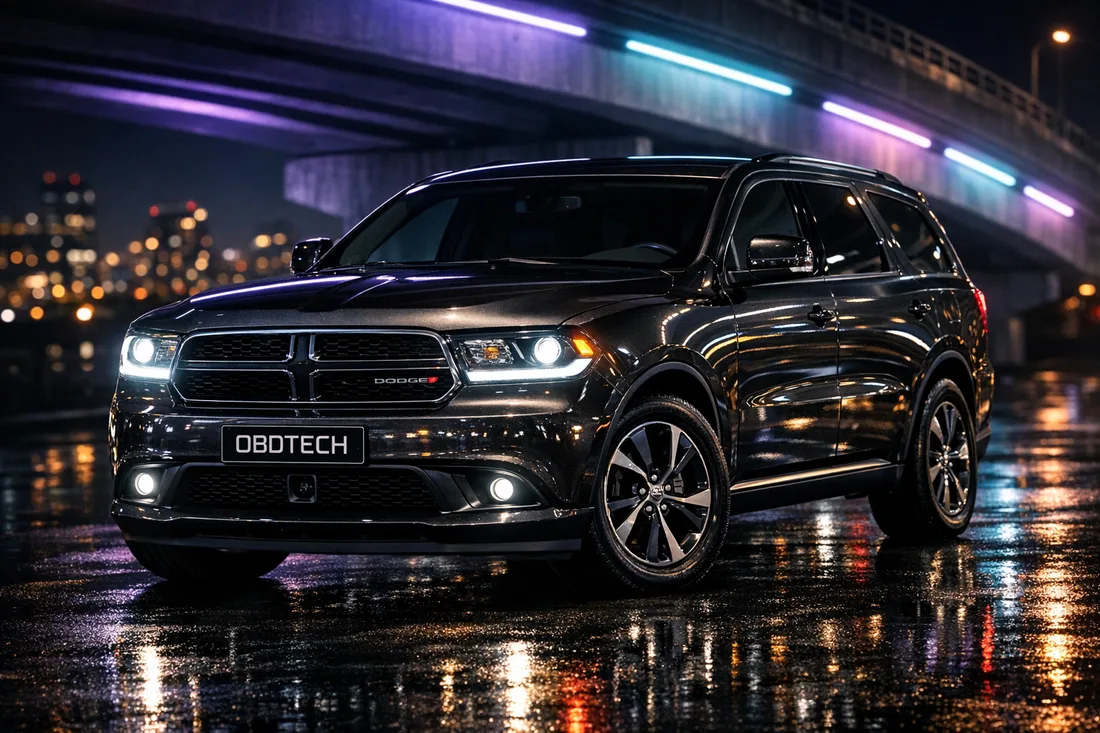
Picture this: you are sitting in something that manages to be a genuine seven seater, tow a caravan, and still feel reasonably composed on a motorway on ramp. That is the Durango's party trick, and it has built a quiet but loyal following in the New Zealand fleet. The third generation WD body brought the 3.6 Pentastar V6 with it, and for most owners that engine has been a solid, unfussy companion. Most of the time. Like any high mileage workhorse that does school runs Monday and tows a boat Friday, it eventually starts asking for attention in ways you would rather it did not.
The Engine Under the Bonnet: What the Pentastar 3.6 Actually Is
The Pentastar 3.6 is a 3604cc V6 running a 10.2:1 compression ratio, with a bore and stroke of 96.0mm by 83.0mm. Chrysler fitted it to an enormous range of vehicles across multiple brands, and the Durango's tune pushes it to 290 horsepower and 350 Nm of torque from the factory. The brain behind the operation is a Siemens/Continental GPEC2 ECU, which is worth knowing because it matters a great deal to how you diagnose faults and how you tune the car. This is not a unit you want to poke at with a generic Bluetooth dongle and hope for the best.
One thing worth understanding early: the Pentastar uses a timing chain, not a belt. There is no scheduled belt replacement to budget for. What you do watch instead is chain stretch and tensioner condition as the kilometres stack up, because a chain that has started to wear does not announce itself loudly until it becomes a much more expensive conversation.
-
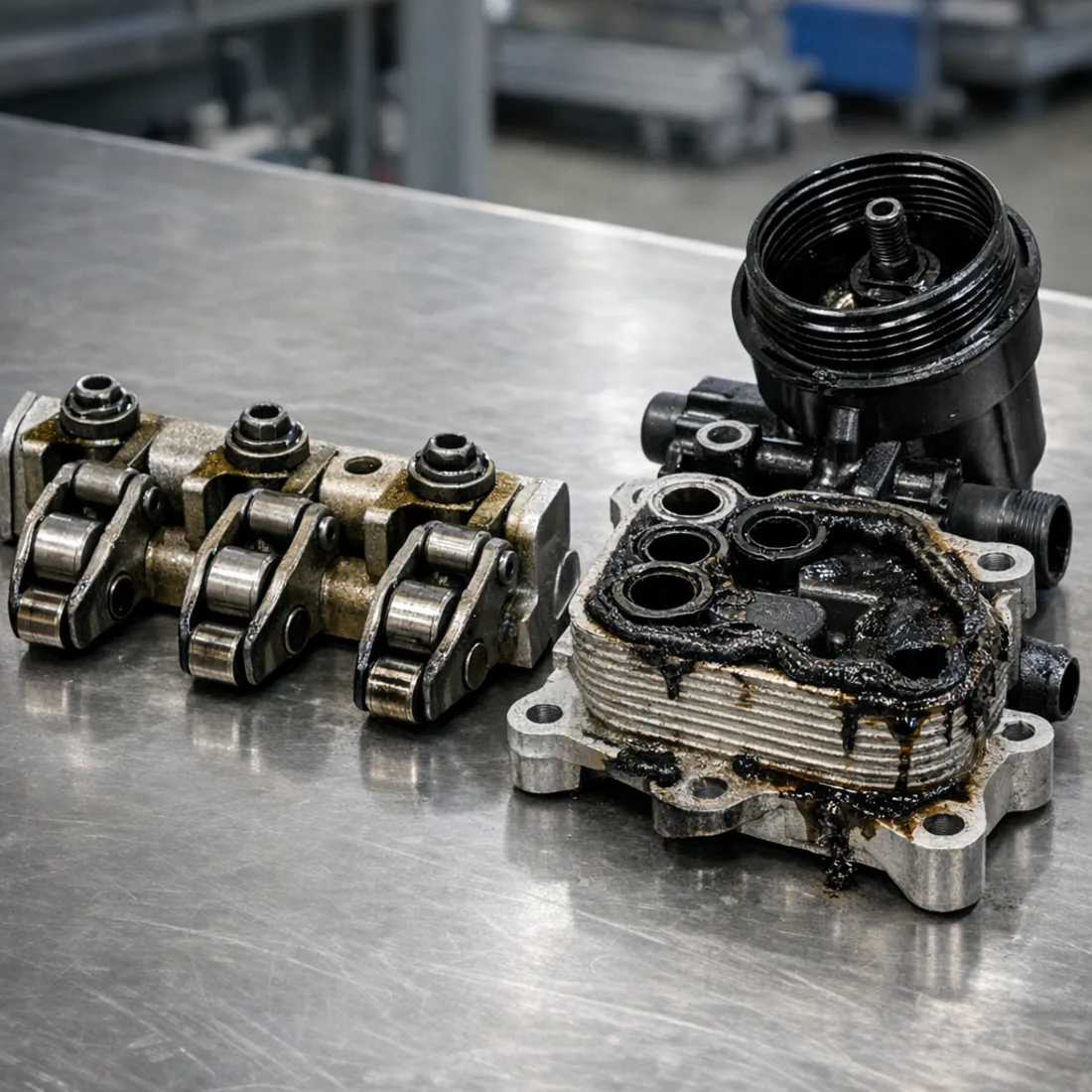
Left bank cylinder head ticking and misfires: early Pentastar units had a documented issue with the left bank cylinder head where oil drained away from the rocker arm area during cold starts, leading to rocker arm and lifter wear and misfires on cylinders three, five or six. The symptom to watch is a tick loudest on cold start that does not fully disappear once the engine is warm, paired with a rough idle or a P030X misfire code.
-
Oil filter housing and cooler assembly weeping: heat cycling over time causes the gaskets and seals on the oil filter housing and cooler assembly to weep oil, which can drip onto belts and create a secondary problem. The repair is a housing removal, gasket and seal replacement, and a full clean of the surrounding area.
-
Cooling system: thermostat housing and water pump: the thermostat housing is a plastic unit, and cracking, warping or a failed seal leads to coolant loss that can go unnoticed until the temperature gauge starts behaving strangely. The water pump is a separate watch item at higher mileages. A coolant pressure test quickly confirms whether either is the source of a slow loss.
-
Oil consumption and rocker arm wear: some Pentastar units develop a pattern of using oil between services. If the engine is not maintaining proper oil pressure and film thickness at the top of the head, the rocker arms and their contact surfaces wear faster than they should. Addressing it early keeps what is an otherwise repairable situation from becoming a cylinder head rebuild.
The workshop that can actually read this vehicle properly, and that makes all the difference.
We use wiTECH, the genuine Chrysler factory diagnostic platform, to connect to every module in the vehicle, not just the engine.
The GPEC2 ECU in this Durango communicates at a depth that consumer scan tools simply cannot reach. We use wiTECH, which is the genuine Chrysler factory diagnostic platform, to connect to every module in the vehicle, not just the engine. That means we can read live data from the powertrain, transmission, ABS, body control module and more in a single session, run guided diagnostic tests, and perform calibrations and relearns that the repair actually requires to complete properly. When a misfire code sits alongside a left bank oil pressure live data reading that tells a different story to the fault description, that context is what separates a correct diagnosis from a parts cannon approach.
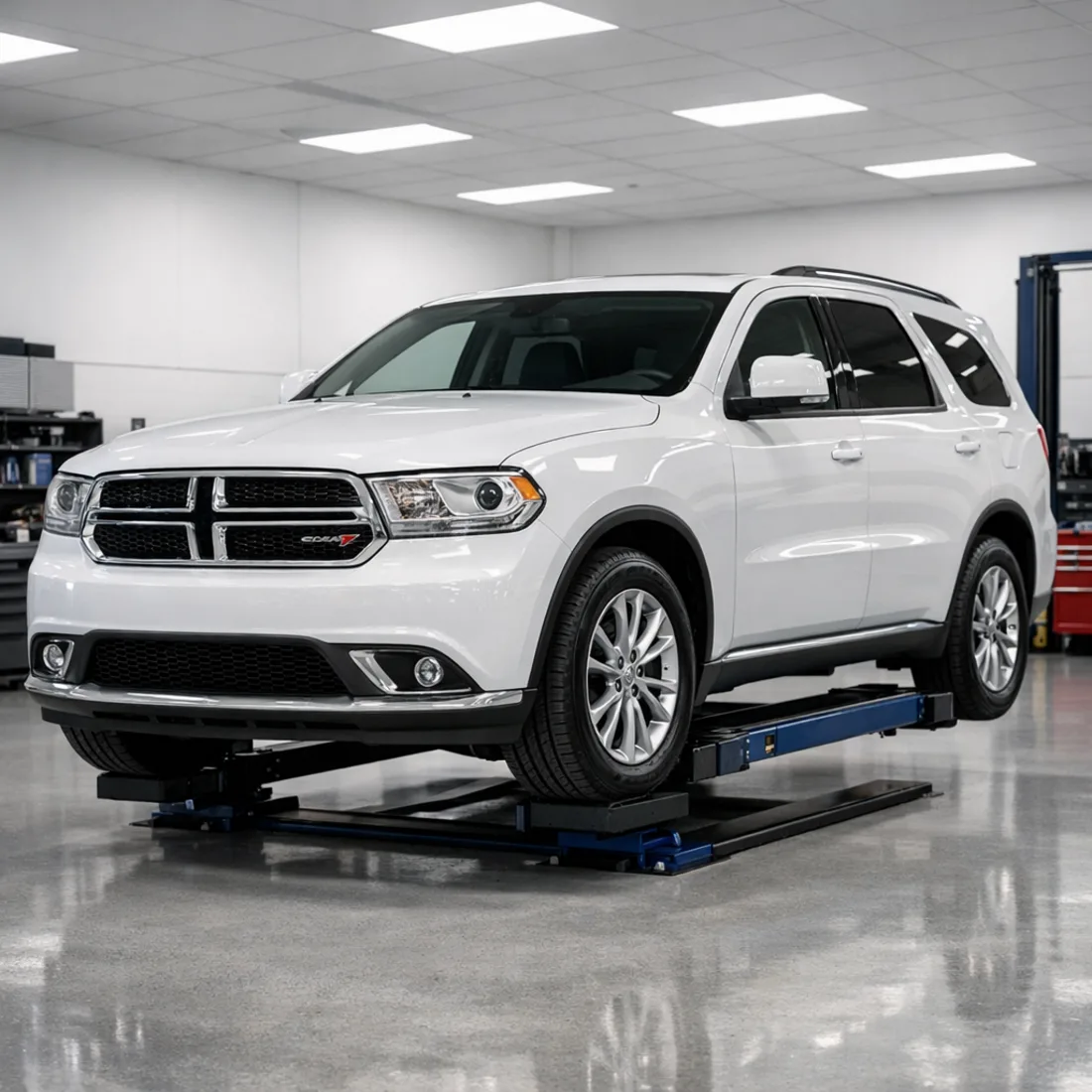
The Durango is a heavy vehicle that in New Zealand often spends time towing and covering rougher roads. Control arm bushes and front end links take a meaningful beating, and wear in the suspension tends to show up as vague steering, a wander at motorway speed, or a knock over broken surfaces. A full hoist inspection lets us check these properly, because worn suspension geometry also accelerates tyre wear in ways that cost money quietly over time. Our mechanical repairs service covers the full scope of what we handle, from suspension components through to drivetrain.
Get your Durango booked in with a workshop that can actually read this vehicle properly.
Routine Servicing That Keeps the Pentastar Honest
The oil and filter service is the foundation, and on the Pentastar 3.6 that means a full synthetic oil that meets or exceeds the Chrysler factory specification. Getting this right matters more than it might seem on an engine that already has a known sensitivity to oil maintenance. We pair it with a fresh filter, a visual inspection of the oil filter housing area for early signs of weeping, and a dipstick check against the consumption baseline.
Spark plugs on a 3.6 Pentastar are not a wild expense, but a set that has gone too long starts to make the coils work harder, and coil wear on a V6 adds up quickly. Fresh plugs at the right interval protect a component that costs considerably more. The drive belt and tensioner get a close look every routine service because a snapped belt on a vehicle this size leaves you properly stranded.
Brake work on the Durango matters. The vehicle is heavy, and a set of pads that is down to the wear indicator on a lighter car is doing proportionally more work on this one. Our brake repair and replacement service covers a full inspection, not just a visual glance at the outer pad through the wheel.
The coolant service is one that often gets deferred on grey import and parallel import vehicles because the service history is incomplete. Old coolant loses its corrosion inhibitor long before it changes colour, and the plastic thermostat housing does not respond well to acidic coolant over time. A flush and refill with the correct coolant type is genuinely preventive work on this engine. Every part we fit is brand new, OEM or OEM grade. That means the oil filter housing gasket, the thermostat housing, the spark plugs and the brake rotors are all fresh components, not sourced from a breaker's yard. The Durango is a vehicle people depend on, and it deserves parts that are going to last.
How We Actually Diagnose a Durango
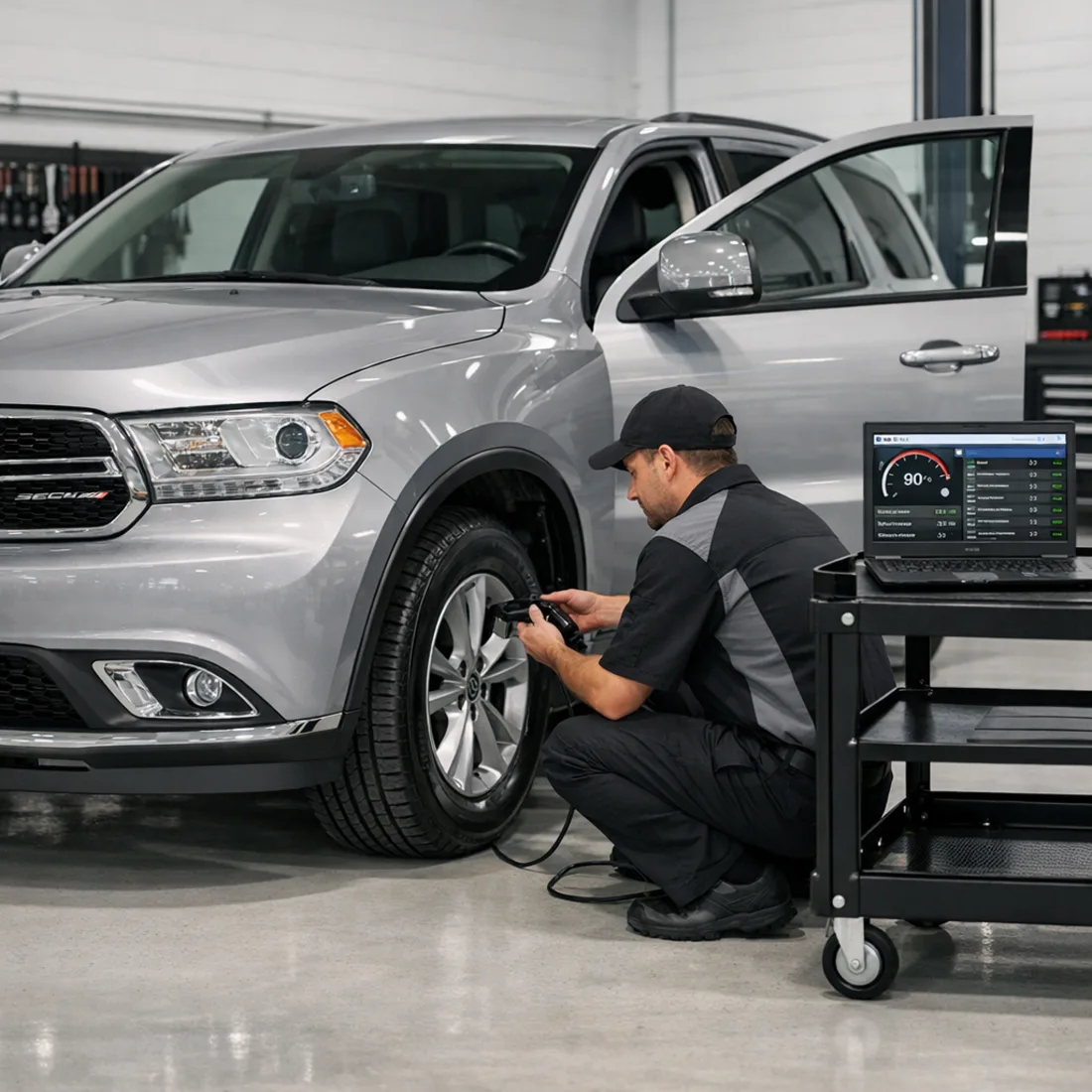
The GPEC2 ECU in this Durango communicates at a depth that consumer scan tools simply cannot reach. We use wiTECH, which is the genuine Chrysler factory diagnostic platform, to connect to every module in the vehicle, not just the engine. That means we can read live data from the powertrain, transmission, ABS, body control module and more in a single session, run guided diagnostic tests, and perform calibrations and relearns that the repair actually requires to complete properly.
When a misfire code sits alongside a left bank oil pressure live data reading that tells a different story to the fault description, that context is what separates a correct diagnosis from a parts cannon approach. Whether you are chasing a fault code, overdue for a full routine service, or simply want to understand what shape your Pentastar is actually in, bring it to us at Unit 26, 930 Great South Road, Penrose, Auckland 1061. Book online or give us a call and we will get the Durango on the hoist and give you a straight answer.
Stage 1 Tuning: More From the Pentastar Without the Drama
The GPEC2 ECU responds well to calibration work, and our Stage 1 tune takes the Durango from the factory 290 horsepower and 350 Nm to 310 horsepower and 375 Nm. That is a 20 horsepower and 25 Nm gain that sharpens throttle response and makes the engine feel less lazy at mid range, which is exactly where a heavy seven seater needs it most. No hardware changes, no reliability compromises, just a properly written calibration pushed through the ECU via the same wiTECH interface we use for diagnostics.
A properly written calibration pushed through the GPEC2 ECU via the same wiTECH interface we use for diagnostics. Sharpens throttle response and fills in the mid range where a heavy seven seater needs it most. No hardware changes, no reliability compromises. Additional options include Start/Stop disable, pop and bang crackle map, DTC removal, Vmax adjustment, and decat and throttle flap configuration (off road and track use; note WOF compliance implications).
Alongside the power calibration we can also address the automatic start/stop system if it drives you to distraction on short trips, and a pop and bang crackle map is available for those who want a bit more character on overrun. DTC removal for nuisance codes, Vmax adjustment, decat configuration and throttle body flap parameters are all in the toolkit as well. Details and options are on our ECU tuning page if you want to read through the specifics before booking.
Frequently Asked Questions
The questions we get most. Something else on your mind? Get in touch.