Dodge Journey: 2.0 CRD and 3.6 V6
The Dodge Journey sold itself on seven seats, American presence and a choice of two very different engines under the bonnet. One is a Volkswagen sourced diesel with European habits and European weaknesses. The other is Chrysler's own Pentastar V6, a genuinely strong petrol motor that still managed to earn a reputation for a few early production quirks. Both versions have aged into the New Zealand used market in numbers, and both reward owners who know exactly what they're dealing with.


2.0 CRD: The European Engine Wearing an American Badge
Here's the thing most Journey buyers didn't realise when they drove off the forecourt: that 2.0 CRD under the bonnet is a Volkswagen sourced diesel. Engine code BWD, 1968 cc, 81 mm bore, 91.5 mm stroke, 18.0:1 compression, Bosch EDC16U31 ECU. Stock output is 140 hp and 320 Nm. It's the same basic architecture that powered a huge slab of Europe's family cars through the late 2000s, and that's a double edged sword. Parts availability is decent and the bottom end is fundamentally sound. But every weakness that engine family is known for turns up on the Journey, right on cue.
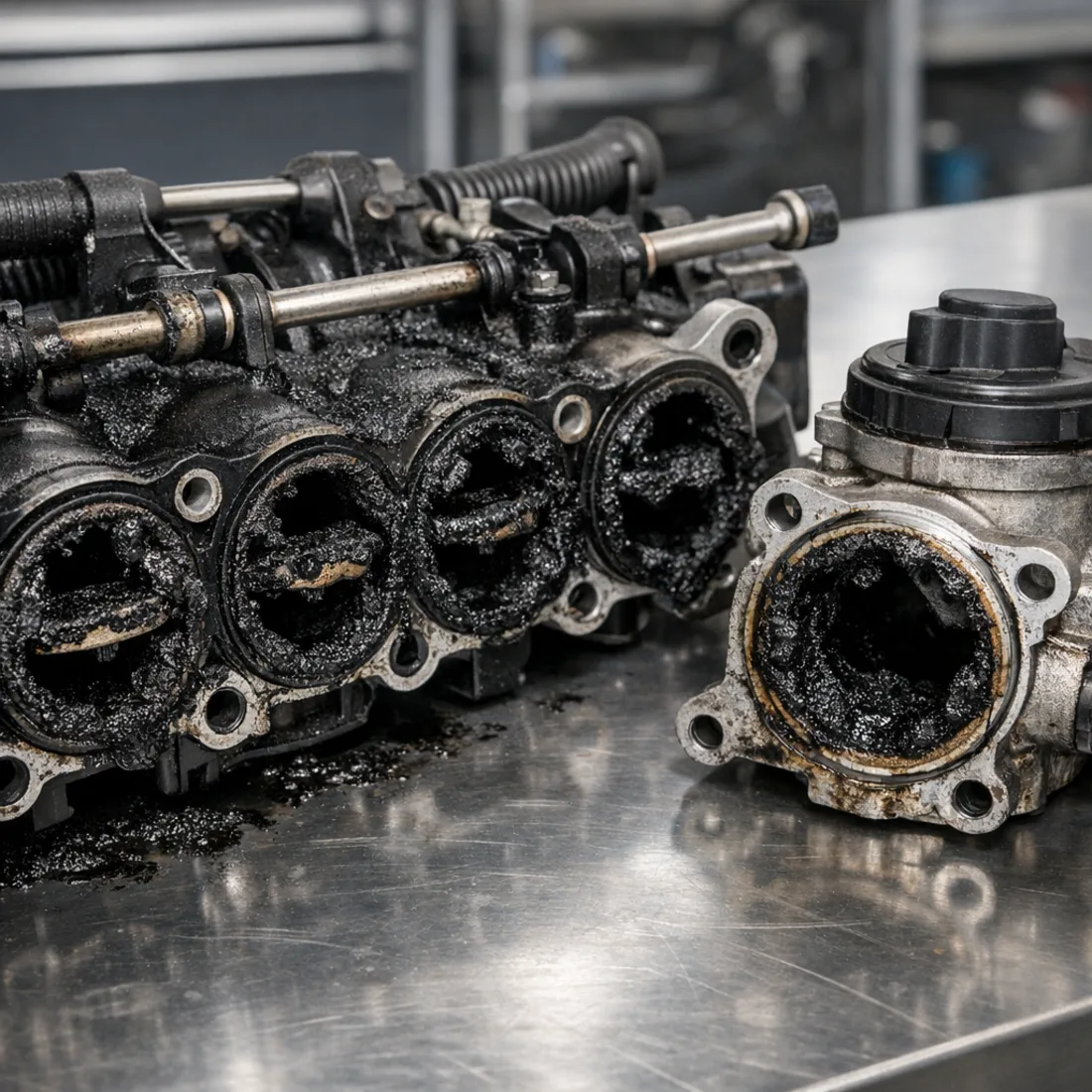
The EGR valve is the first thing we look at. It clogs progressively with carbon, restricts flow and eventually triggers fault codes and rough running. Tied to that, the intake manifold soots up internally and the swirl flaps, if your car has them, can seize or break. A broken swirl flap dropping into the intake is a serious failure, so early diagnosis matters. The turbo actuator is another weak point. Boost pressure faults leading to limp mode are a common complaint, and the difference between a sticking actuator and a failing turbo is something you diagnose properly, not guess at.
Diesel particulate filter blockage is a frequent one on these, especially cars used predominantly around town. Short trips mean the DPF never fully regenerates. We clean and restore DPF systems, diagnose regeneration faults and address the root causes that cause repeated blockages. We don't just clear the code and send you on your way.
Higher mileage CRDs are worth having the dual mass flywheel and clutch inspected. The DMF wears in line with how the car's been driven, and a worn DMF transfers vibration and shudder back through the drivetrain in ways that get progressively worse. Injector wear and hard starting can also appear as the engine ages, particularly if service intervals have been stretched.
-
EGR valve clogging and carbon buildup in the intake manifold
-
Swirl flap seizure or failure
-
Turbo actuator faults causing limp mode
-
DPF blockage from short trip use
-
Dual mass flywheel and clutch wear on higher mileage cars
-
Cambelt and water pump service (critical on this engine)
-
Injector wear and hard starting
One thing the CRD absolutely requires: the cambelt and water pump service on schedule.
This is a timing belt diesel. If the belt lets go, the engine doesn't survive.
We diagnose the 2.0 CRD with factory level tooling, not a generic code reader. That means live data, actuator tests and the ability to read faults across every module in the car, not just the engine ECU. For routine servicing, we cover oil and filter with the correct diesel grade, air filter, fuel filter, cabin filter, glow plugs, drive belts, brake pads and rotors, and suspension components.
The CRD's EGR and DPF system is worth its own mention under servicing. These aren't set and forget components. Carbon accumulates in the EGR and intake over time, and the DPF requires the car to be driven in a way that supports active regeneration. When those conditions aren't met, we see the faults stack up. We clean EGR systems and diagnose DPF faults properly, finding the root cause rather than just clearing codes.
Get your Journey booked in with a proper specialist in Penrose.
3.6 V6 Pentastar: More Power, Different Problems
The 3.6 litre Pentastar V6 is a completely different animal from the CRD. It's a Chrysler designed petrol motor, 3604 cc, 96 mm bore, 83 mm stroke, 10.2:1 compression, running a Siemens/Continental GPEC2 ECU. Factory outputs are 283 hp and 353 Nm. That's a healthy number for a family SUV, and the Pentastar is genuinely capable. But early production runs had some specific weak points that still show up years later, and the Journey's age in the NZ fleet means many of these cars are now deep enough in mileage that those faults are surfacing.
The most talked about issue with early Pentastars is the cylinder head on the left bank. It was prone to causing misfires and rough running, and if you're buying a used V6 Journey, this is worth checking. We look at this closely during diagnostics, and wiTECH gives us the live data and misfire counters to see exactly what's happening cylinder by cylinder.
The oil filter housing and cooler are another known leak point. Oil weeping from that area is worth addressing before it becomes a larger mess. Rocker or lifter noise can develop when oil changes have been skipped or stretched, so service history matters here. The cooling system also deserves attention: the thermostat housing and water pump are common attention areas on this engine, and an overheating Pentastar is not somewhere you want to be.
Being a petrol engine, the V6 runs spark plugs, and these are worth replacing on schedule. Ignition coils are worth checking at the same time, especially on a car showing any intermittent misfire behaviour. We cover all of this as part of a proper service, along with air filter, cabin filter, drive belt inspection, brake pads and rotors, suspension, and cooling system work.
-
Left bank cylinder head issues causing misfires and rough running (early Pentastar)
-
Oil filter housing and cooler weeping oil
-
Rocker and lifter noise from irregular oil changes
-
Thermostat housing and water pump leaks or failures
-
Spark plug and ignition coil wear
-
Sensor faults across engine and drivetrain modules
A generic code reader gives you a fault code. wiTECH gives us live sensor data, module level fault logs, freeze frame data and the ability to run tests the generic tools simply can't access.
When a V6 Journey comes in with a rough idle or a misfire that clears and returns, that depth of information is what finds the actual cause, not just the symptom.
We diagnose the Pentastar V6 with Chrysler wiTECH, which is the factory diagnostic system for these cars. That's not a detail to gloss over. When a V6 Journey comes in with a rough idle or a misfire that clears and returns, that depth of information is what finds the actual cause, not just the symptom.
Good brake repairs on the Journey are straightforward but wear in line with how the car's been loaded. Seven seat family SUV driven hard with a full car: the brakes tell the story. We handle all brake repairs in house, from pad and rotor replacement through to caliper work.

Picking Between Them: Which Journey Makes Sense Used?
If you're shopping the used Journey market in New Zealand, you're choosing between two genuinely different vehicles that happen to share a body. Here's how to think about it.
You cover real distance regularly and want fuel economy. The diesel torque curve makes it feel stronger than 140 hp suggests, and the 320 Nm arrives low in the rev range. If the car you're looking at has full service records and a recent belt service, it's a solid buy. If the history is murky, factor in a full inspection and potential belt service before you commit.
You want an easier car to live with day to day. Petrol, no DPF, no cambelt to worry about (it runs a chain), and the Pentastar is broadly more forgiving of less than perfect service history. The cylinder head issue on very early cars is the main thing to check. If a pre purchase inspection confirms the engine is running cleanly and oil sealing is good, the V6 Journey is a comfortable, capable family hauler.
- Check service records for a recent cambelt and water pump service on the 2.0 CRD
- Inspect the EGR and DPF history on diesel cars, especially those used around town
- On early Pentastar V6 cars, confirm the left bank cylinder head has been assessed
- Look for oil weeping around the oil filter housing and cooler on the V6
- The sweet spot is a V6 with reasonable mileage and confirmed service history, or a CRD with documented belt and EGR work already done
- A proper pre purchase inspection before you buy is worth every dollar
Servicing Both Journeys: What to Expect
Regardless of which engine your Journey carries, we service them both as complete vehicles. Oil and filter, correct grade for the engine. Air filter, cabin filter, brake inspection, suspension check, drive belts. For the CRD that extends to fuel filter, glow plugs and cambelt and water pump monitoring. For the V6, spark plugs and ignition system checks on schedule. We fit genuine and OEM quality parts only, every time.
Good car servicing on a Journey isn't just about the oil change. These are complex vehicles with multiple modules talking to each other, and a proper service includes checking for stored faults across the system, not just the engine light. We pick up developing issues before they become expensive ones.
Factory Tooling, Not Guesswork
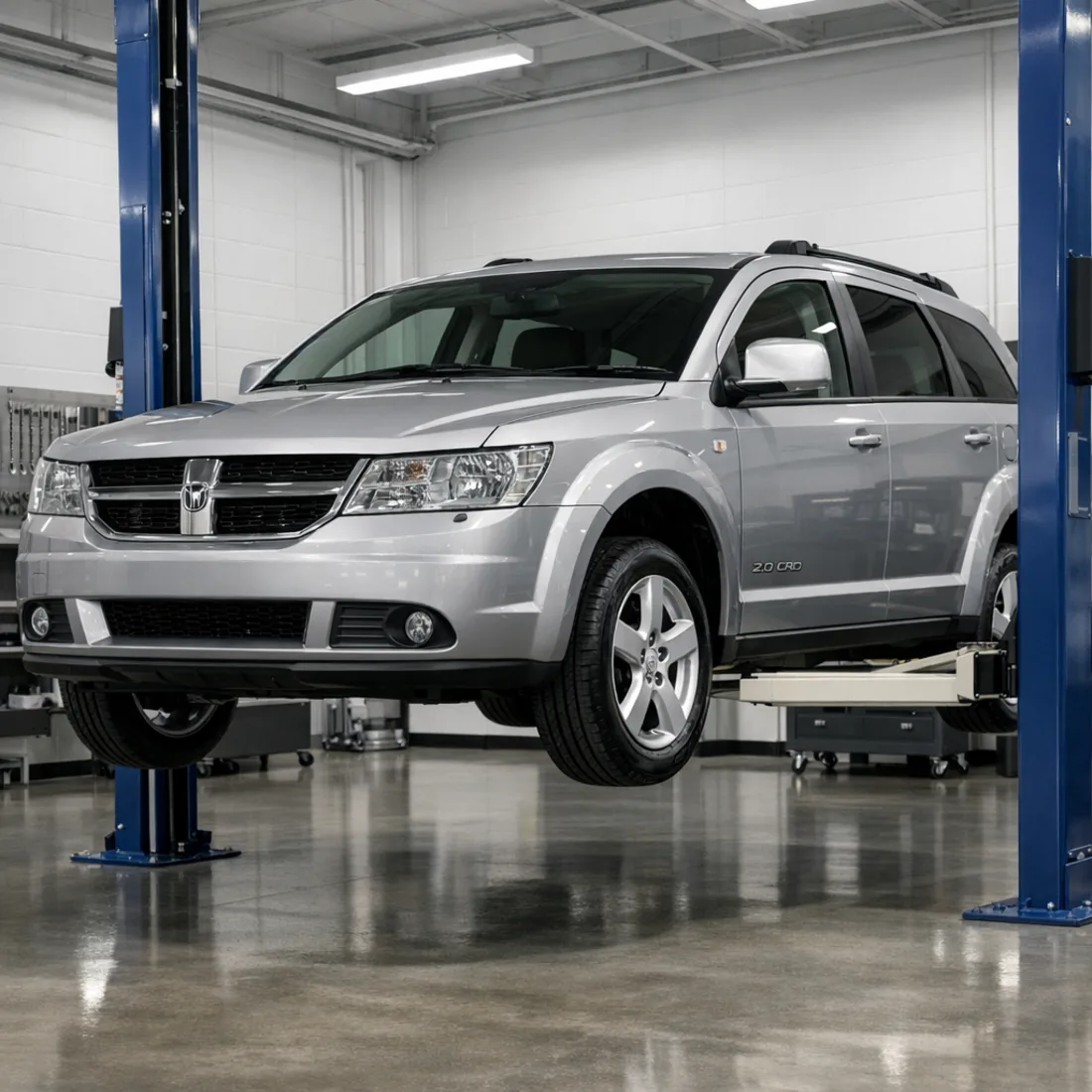
We diagnose the 2.0 CRD with factory level tooling, not a generic code reader. That means live data, actuator tests and the ability to read faults across every module in the car, not just the engine ECU. For the Pentastar V6 we use Chrysler wiTECH, the factory diagnostic system for these cars, which gives us live sensor data, module level fault logs, freeze frame data and the ability to run tests the generic tools simply can't access.
When a V6 Journey comes in with a rough idle or a misfire that clears and returns, that depth of information is what finds the actual cause, not just the symptom. When a CRD arrives in limp mode, we're running actuator tests on the turbo and reading live boost data, not guessing at whether to replace the turbo or the actuator.
Tuning Options Across the Journey Range
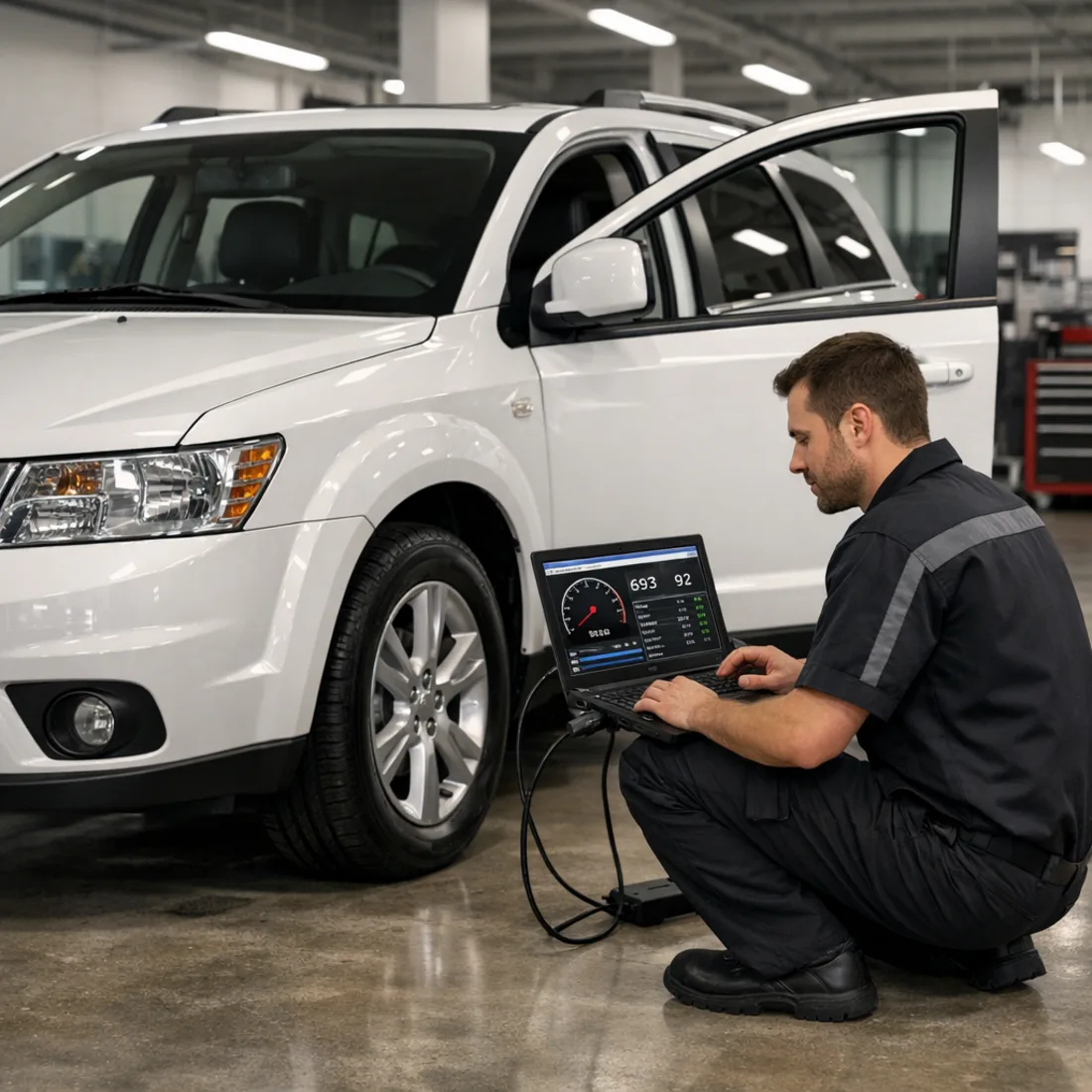
Both Journey engines respond well to a Stage 1 tune, and the numbers are meaningful in both cases.
The 2.0 CRD goes from 140 hp and 320 Nm stock to 175 hp and 400 Nm after a Stage 1 remap. On a diesel that already delivers its torque low in the rev range, the 80 Nm gain is something you feel immediately. The car becomes noticeably more relaxed at highway speeds and more responsive from a standing start. If your 2.0 CRD Journey feels sluggish pulling out of intersections or working against headwinds on the motorway, the tune addresses exactly that. Related work available includes EGR off, DPF off, DTC removal, flaps, Vmax and AdBlue options.
The 3.6 V6 Pentastar moves from 283 hp and 353 Nm to 305 hp and 375 Nm with a Stage 1 tune. A 22 hp and 22 Nm gain is a worthwhile improvement on a petrol V6. The Pentastar responds cleanly to calibration work through the GPEC2 ECU. Additional work available includes DTC removal, pop and bang crackle map, start/stop off, decat, flaps and Vmax.
All tuning work is carried out on the actual ECU hardware in the car. We use proper tuning files suited to the specific ECU on each Journey variant. We only tune cars that are mechanically sound, so if there are underlying faults, we address those first. If you want to understand what's involved before committing, our tuning page covers the process in detail.
Frequently Asked Questions
The questions we get most. Something else on your mind? Get in touch.