Dodge Nitro 2.8 CRD, 3.7 V6 and 4.0 V6: The Full Story
The Dodge Nitro arrived in New Zealand looking like it had escaped a Mad Max set, boxy, bold, and built on a Jeep Liberty platform when everything else on the road was trying to be a soft roader. Three very different powertrains sat under that same slab sided body: a VM Motori diesel that rewarded economy minded buyers, a simple 3.7 Powertech V6 petrol that just got on with the job, and a 4.0 V6 that gave the whole thing a proper shove. Each engine has its own character, its own known faults, and its own sweet spot. If you own one of these and want the full picture, this is it.
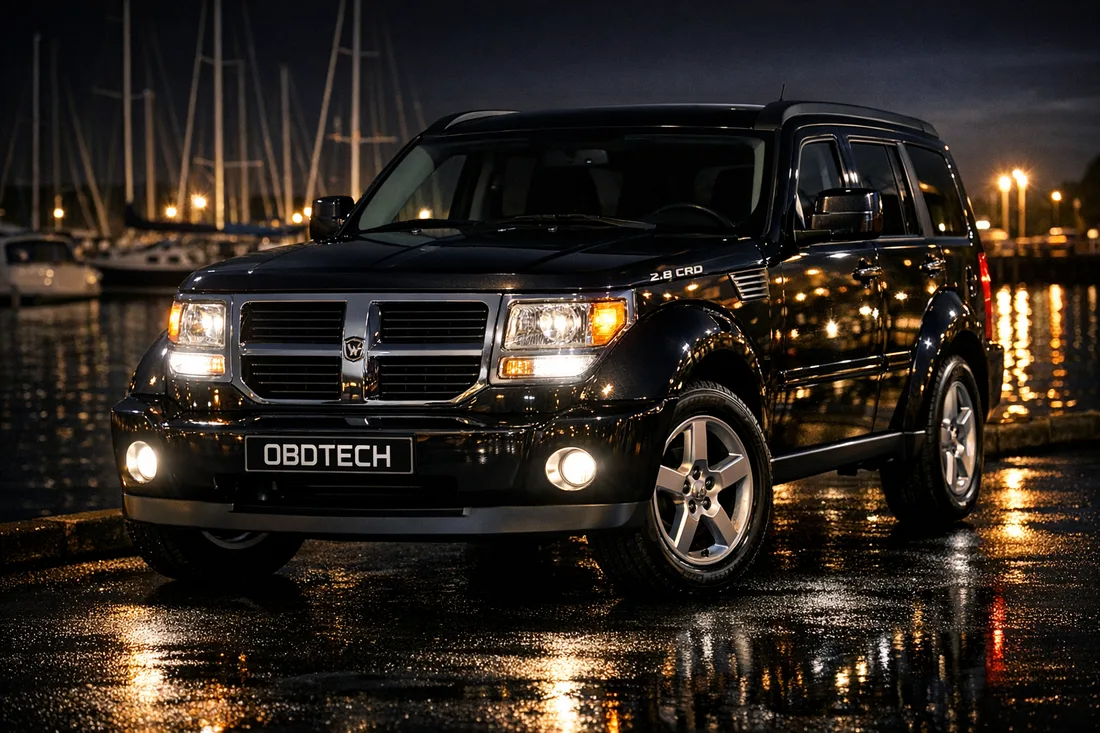
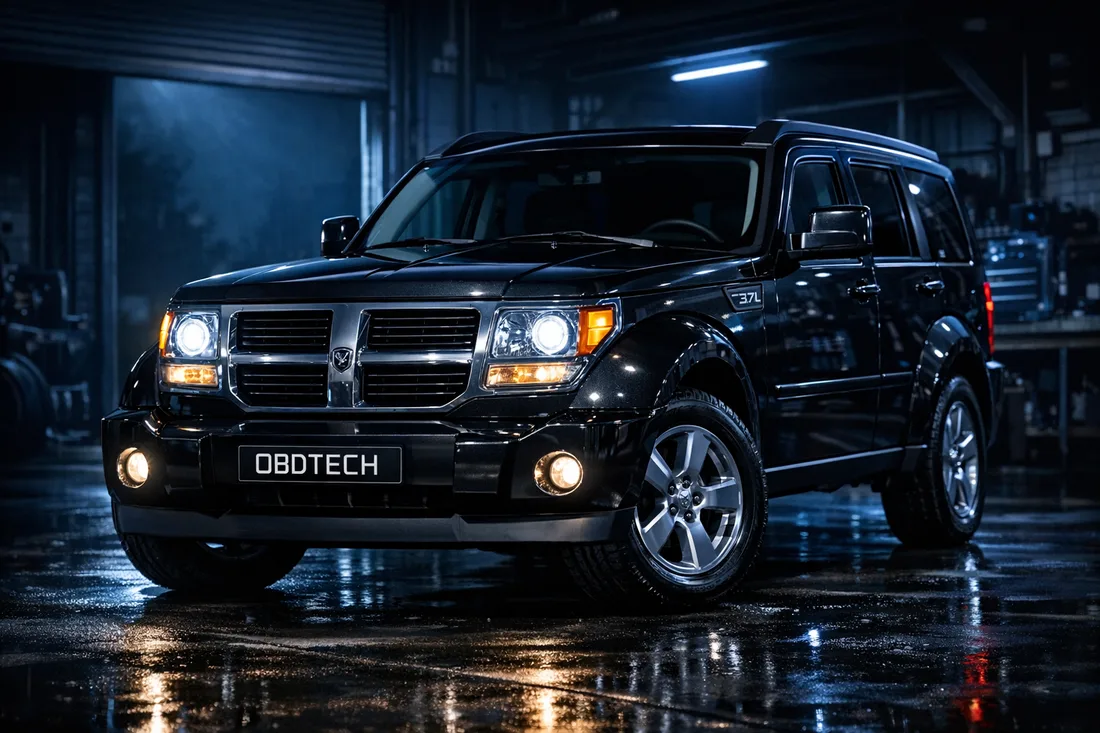
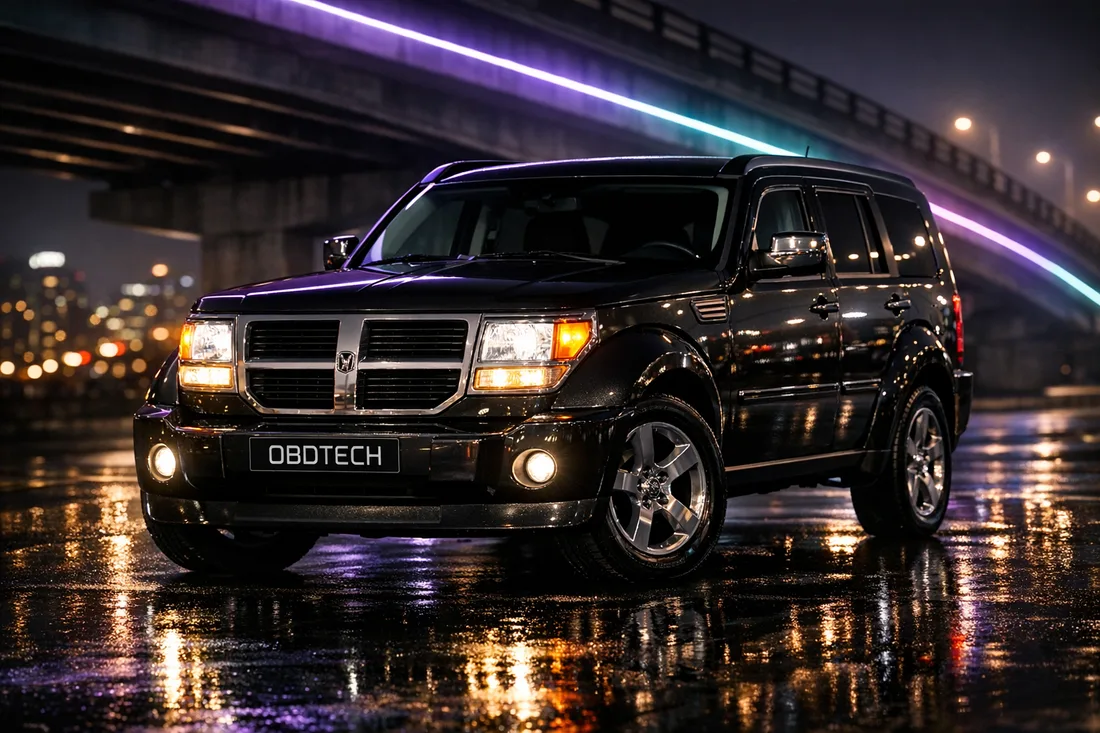
The 2.8 CRD: Character Engine With a Specific Maintenance Story
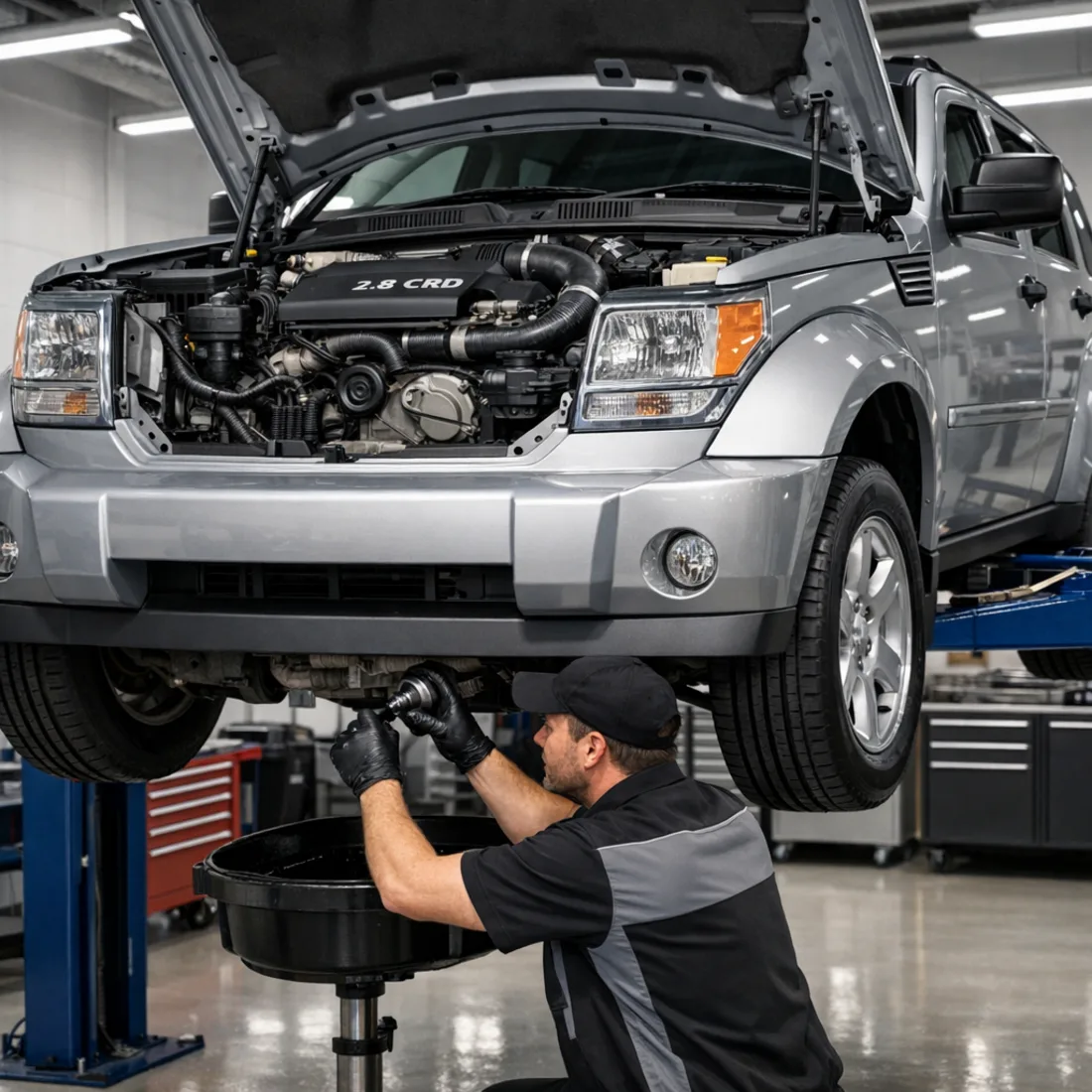
The 2.8 CRD is the diesel you actually wanted if you were doing real kilometres. The VM Motori unit, engine code A 428 DOHC, displaces 2768 cc with a 94.0 x 100.0 mm bore and stroke and a 17.5:1 compression ratio. The Bosch EDC16CP31 ECU manages 177 hp and 420 Nm from the factory, which is a solid number for the era. On fuel economy alone this one made a lot of sense for NZ buyers, and quite a few of them are still earning their keep.
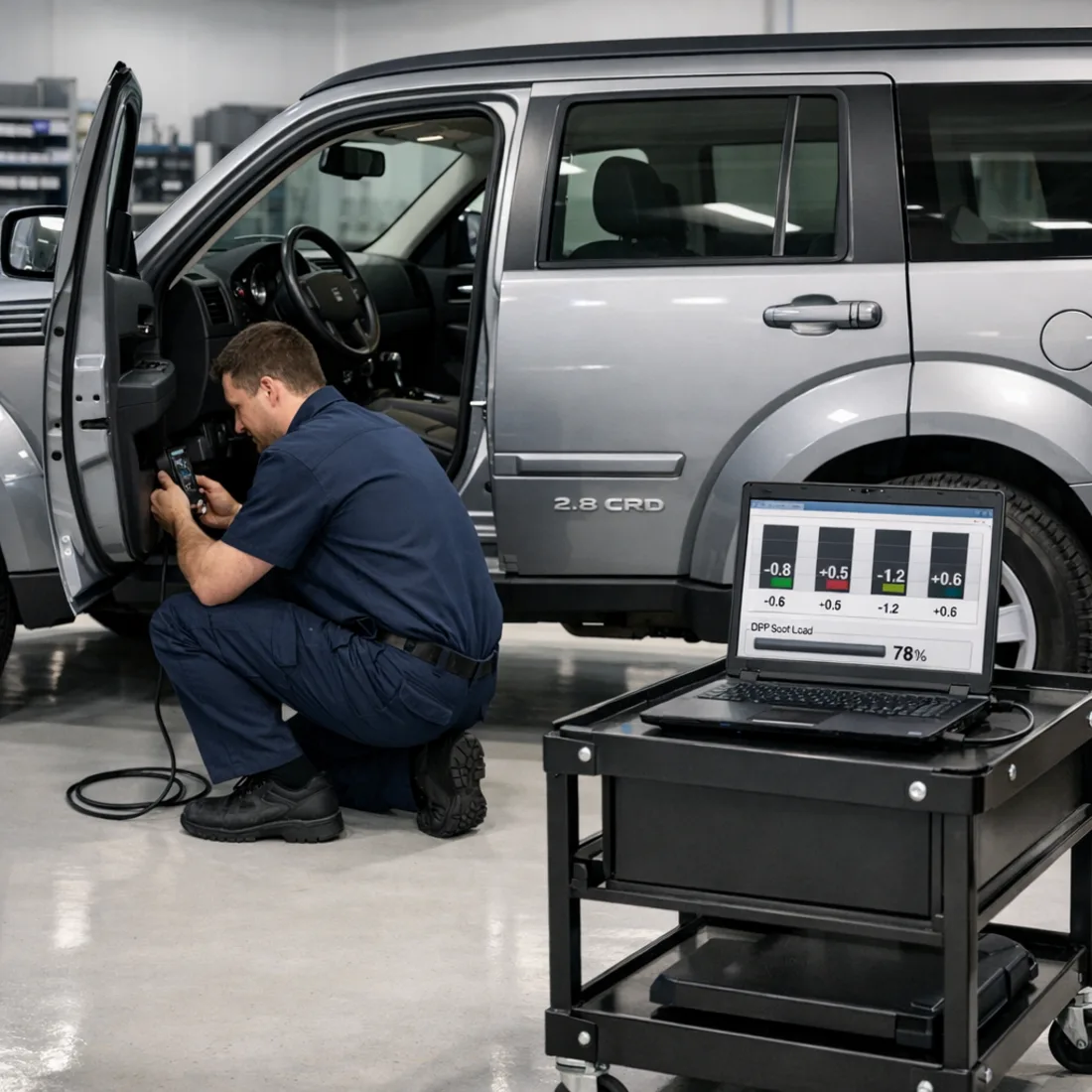
The problem is that the VM Motori diesel has a reputation, and it has earned it. These engines do not forgive neglect. When injectors get tired you get hard starting, rough running, and eventually the kind of smoke that gets you noticed at traffic lights. The injector wear is gradual and owners often live with early symptoms far longer than they should because a generic code reader does not tell the full story. We use the wiTECH platform alongside StarSCAN or StarMOBILE to pull live injector data and DPF delta pressure readings, which is the only way to properly understand what is actually happening inside this system.
The DPF is a real conversation piece on these. If the car has been doing mostly short suburban runs, the DPF may never fully regenerate and will eventually block. We diagnose it properly before recommending a course of action, which might be a forced regen, a professional clean, or further investigation if the underlying cause is an injector or sensor fault contributing to incomplete regeneration. There is no point cleaning a DPF if something upstream is causing it to block again in two months.
Comparing this to the petrol variants in the Nitro family: the CRD needs more attention to its fuel system and emissions hardware, but rewards that attention with torque the V6 petrol versions simply cannot match at low revs. If your Nitro is doing highway kilometres, the diesel is the one to have. If it is mostly town work, the petrol options have a simpler maintenance story.
-
Injector wear causing hard starting and rough idle
-
EGR valve clogging leading to power loss and smoke
-
Turbo actuator faults affecting boost response
-
DPF blockage from short trip driving patterns
-
Swirl flap failure and intake carbon build up
-
Auto gearbox harshness from neglected fluid service
-
Suspension bush and front end component wear on NZ roads
There is no point cleaning a DPF if something upstream is causing it to block again in two months.
We diagnose it properly before recommending a course of action.
Routine service items on the 2.8 CRD include oil and filter with the correct diesel grade, air filter, fuel filter, cabin filter, drive belts, glow plugs, and brake pads and rotors. Coolant and gearbox fluid get overlooked more often than they should. A proper scheduled service on one of these covers all of it, not just the oil.
On the tuning side, the EDC16CP31 ECU responds well. Our Stage 1 tune takes the 2.8 CRD from 177 hp and 420 Nm to 210 hp and 500 Nm, a gain of 33 hp and 80 Nm. That transforms the driving character without touching hardware.
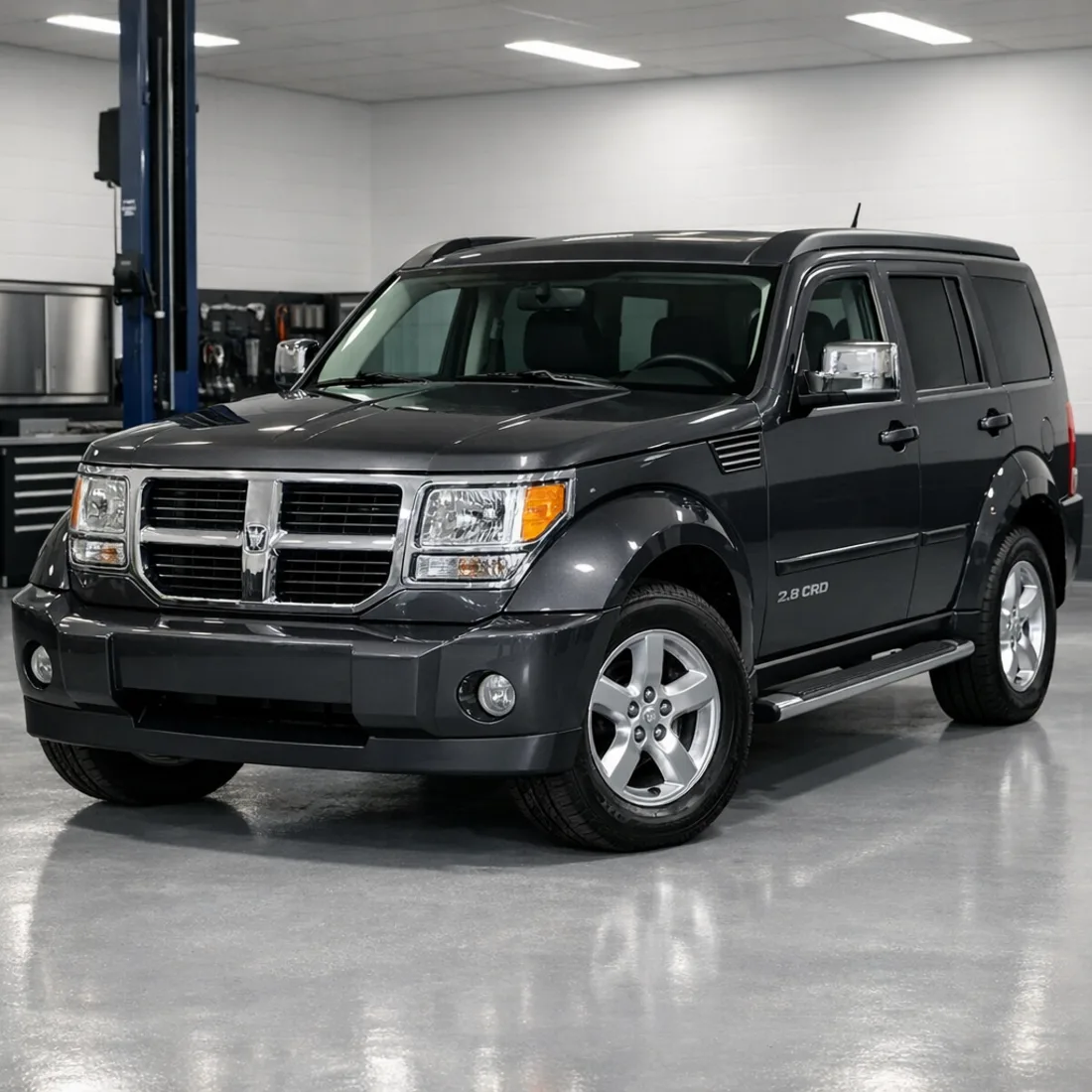
Get your Nitro booked in with a proper Chrysler specialist in Penrose.
The 3.7 V6: The Honest Workhorse With a Hidden Weak Spot
Where the 2.8 CRD is a technically complex diesel that demands proper attention, the 3.7 Powertech V6 takes a simpler approach. It is a 3701 cc SOHC petrol unit with a 93.0 x 91.0 mm bore and stroke and a 9.7:1 compression ratio. The Motorola NGC4 ECU manages a stock 210 hp and 319 Nm. Not spectacular numbers, but honest ones. For a lot of Nitro owners this has been a perfectly reliable daily driver, and that reputation is mostly deserved.
Mostly. Because the 3.7 has a specific Achilles heel that is easy to miss until it becomes expensive: valve seat problems. Dropped or worn valve seats are a recognised issue on this engine, and when the cylinder head gets involved it stops being a small job fast. The good news is that the early warning signs are there if you know what to look for: unusual coolant consumption, a loss of compression on one cylinder, or combustion gases in the cooling system. We catch these early with proper diagnostics rather than waiting for a bigger problem to declare itself.
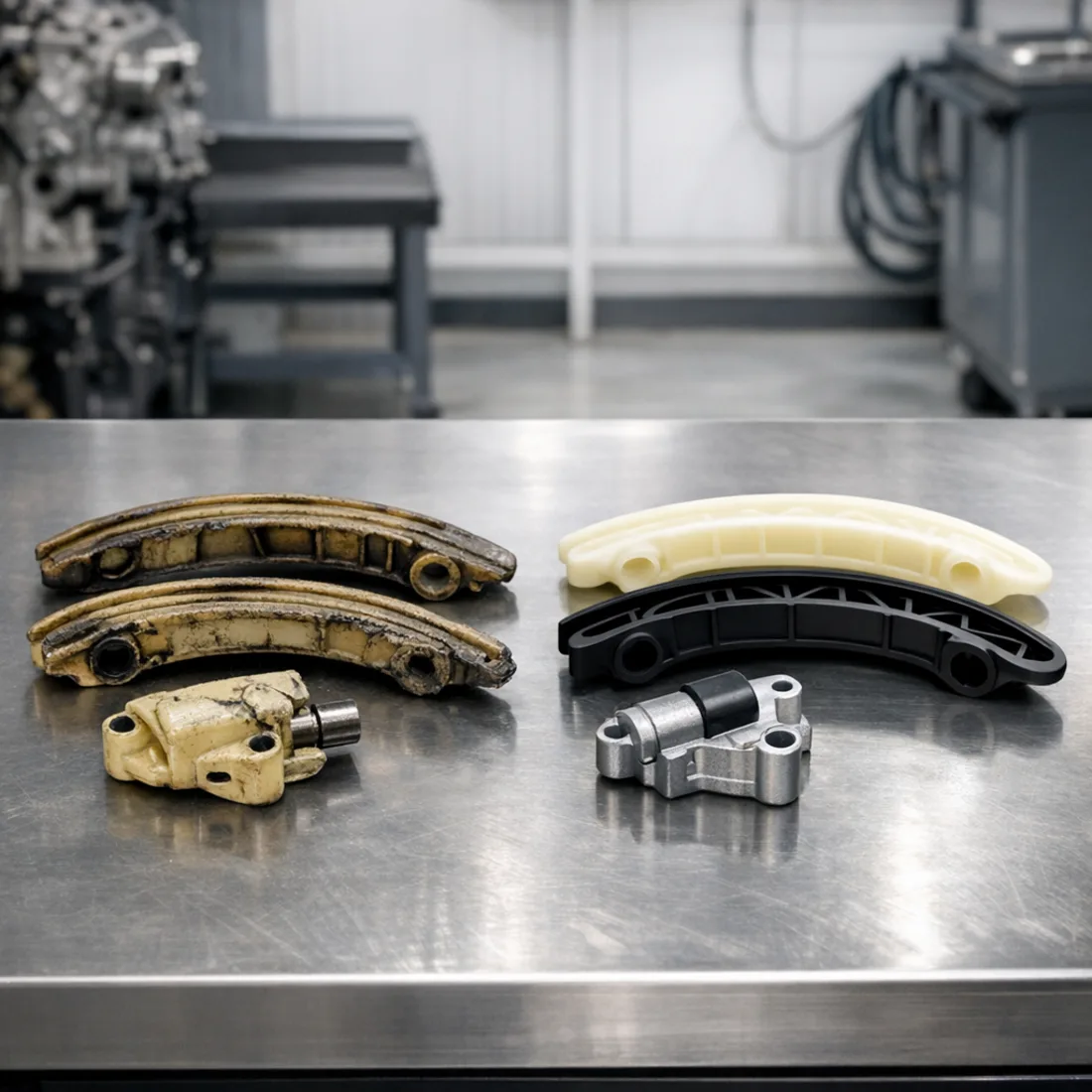
That timing chain rattle on cold start deserves its own mention. A lot of owners hear it and decide it is just the engine doing its morning stretch. It is not. On the 3.7, chain guide and tensioner wear is a real thing, and oil change discipline matters a lot here. An engine that has been on extended intervals or run with the wrong oil grade will show this faster. The rattle is the engine asking you to take it seriously.
Compared to the 2.8 CRD: the 3.7 has a simpler maintenance checklist day to day, no DPF, no swirl flaps, no glow plugs. But the cylinder head situation means the stakes are higher if you ignore the signs. Compared to the 4.0 V6 above it in the range: the 3.7 gives away 50 hp and some torque, but the fundamental architecture is closely related and many of the suspension and body wear patterns are the same across both petrol variants.
-
Valve seat wear and potential cylinder head involvement
-
Timing chain guide and tensioner wear, especially on neglected examples
-
Cold start timing rattle that owners often dismiss as normal warm up noise
-
Oil consumption and sludge build up from skipped services
-
Suspension bush, ball joint and rear axle wear at higher mileage
The rattle is the engine asking you to take it seriously.
Chain guide and tensioner wear is a real thing on the 3.7, and oil change discipline matters a lot here.
Routine work on the 3.7 includes oil and filter with the correct grade, air filter, cabin filter, spark plugs, drive belt, brake pads and rotors, and coolant checks. We also handle suspension and steering components, and sensors that start playing up at higher mileage. Our Stage 1 tune for the 3.7 lifts it from 210 hp and 319 Nm to 230 hp and 340 Nm, a gain of 20 hp and 21 Nm, which sharpens the throttle response noticeably without any hardware changes.
The 4.0 V6: The Top Petrol, and What Goes Wrong
If the 3.7 is the workhorse, the 4.0 is the one that actually feels like it belongs in something called a Nitro. The EGS engine displaces 3952 cc with a 96.0 x 91.0 mm bore and stroke and a 10.3:1 compression ratio, managed by a Motorola NCG4 ECU. Stock output is 260 hp and 359 Nm. In a car this size, that is a meaningful difference over the 3.7 and a completely different character to the diesel.
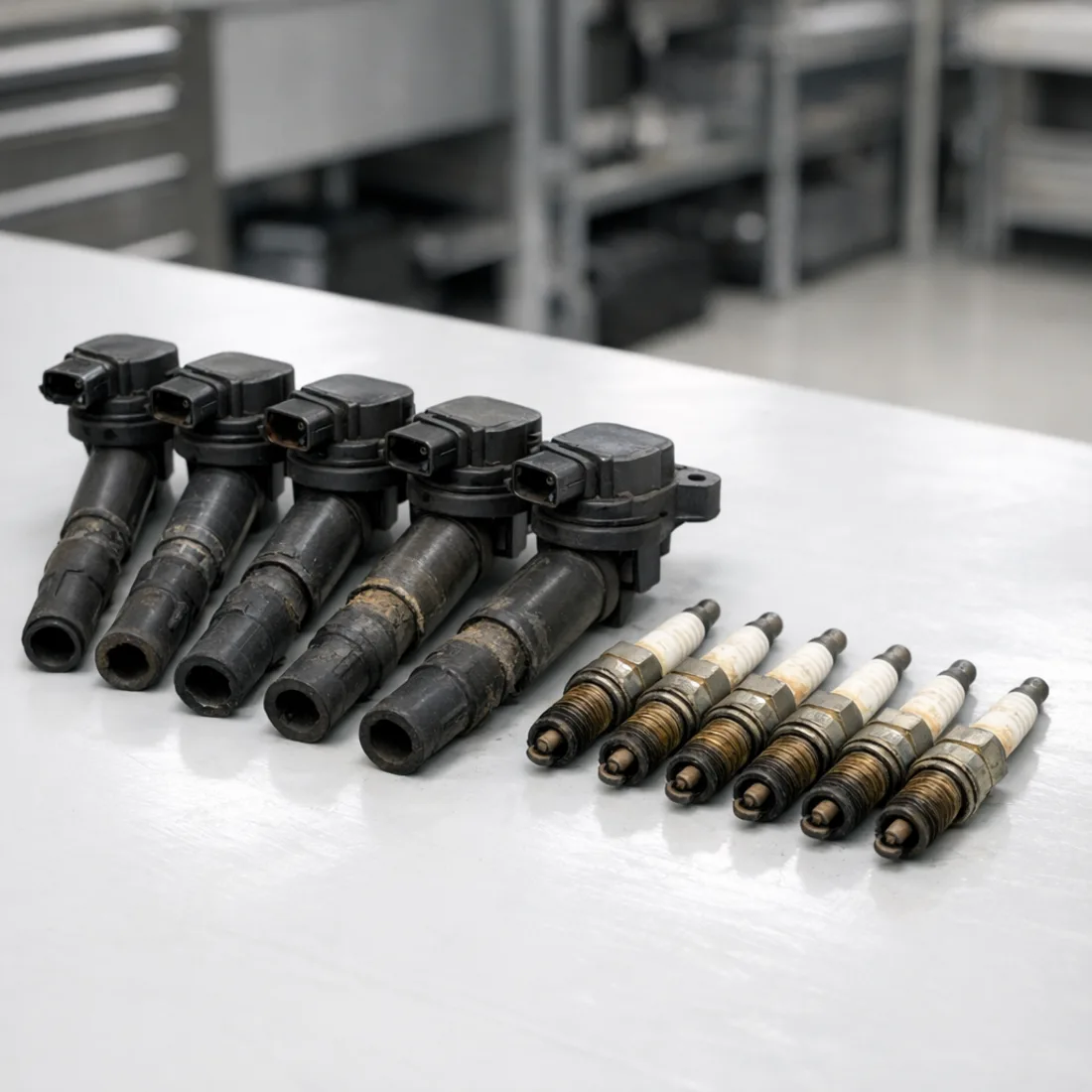
The 4.0 is genuinely robust when it is looked after, but when service is skipped it develops some very specific complaints. The most common thing we see is a rough idle or misfire, and the culprit is almost always ignition coils and worn spark plugs. These get neglected because the car keeps running, just rougher and rougher, until eventually a misfire code lights up and someone pays attention. Fresh plugs and coils make an immediate difference on a 4.0 that has been on original parts for too long.
Compared to the 3.7: the 4.0 shares the same body, the same platform wear patterns, and the same general suspension story. The difference is in the engine's ignition system demands and the fact that the 4.0 owners seem to push their cars harder, which shows up in how the gearbox fluid gets neglected. Compared to the diesel: the 4.0 is simpler from an emissions hardware perspective, no DPF to worry about, but it drinks more fuel and the tune gains are more modest in percentage terms.
Our Stage 1 tune for the 4.0 takes it from 260 hp and 359 Nm to 280 hp and 390 Nm, gains of 20 hp and 31 Nm. That is enough to notice, particularly in mid range pull where these trucks spend most of their time. Pop and bang maps are also available for those who want a bit more theatre.
-
Rough idle and misfires from worn ignition coils and spark plugs
-
42RLE automatic gearbox harsh or delayed shifts from neglected fluid service
-
Cooling system wear including thermostat and water pump
-
Valve cover gasket oil leaks with age
-
Electric power steering faults and body electrical issues at higher mileage
We have seen gearboxes come in that owners assumed were mechanically failing, which turned out to need a proper fluid service and nothing more.
Leave it too long though and you are in different territory.
The 42RLE automatic is worth a mention. It is the same gearbox that turns up across the Chrysler and Jeep family of this era, and it is not a bad unit, but it absolutely needs its fluid serviced on time. Harsh or delayed shifts are almost always a fluid and filter story first. Our gearbox repair and servicing covers everything from fluid changes through to full diagnostic assessment on the transmission control unit.
How to Pick Between Them Used
If you are shopping for a used Nitro, the engine choice matters more than the body or trim level, because each powertrain has a completely different set of things to check.
Your life involves highway kilometres and you genuinely care about fuel costs. The torque is better than either petrol option at low revs, and the tune potential is significant. Check the service history is real, ask about DPF issues specifically, and budget for injector attention if the car is past 150,000 km without documented injector work. A car with a tidy service history and no smoke is a good find.
You want the simplest car to own day to day. The valve seat issue is the one thing you cannot ignore in a pre purchase check. Have the compression tested properly before buying. A car with even intervals and no cylinder head history is fine. A car with a dodgy service record or previous overheating needs a very careful look. The timing chain rattle tells you a lot about how the car was looked after.
You want the most performance from the platform. It costs more to fuel but the gearbox and engine respond well to being looked after. Check whether the gearbox fluid has been done, ask when the plugs and coils were last replaced, and listen for any electrical gremlins. A high mileage 4.0 with fresh plugs, coils and a recent gearbox service is a genuinely good car.
- Best for fuel economy and long distance touring: 2.8 CRD
- Simplest ownership on a tight budget: 3.7 V6 with a clean history
- Best performance and tune potential: 4.0 V6
- Avoid any variant with a patchy service record or signs of overheating
- For any of them, insist on a pre purchase inspection with factory level diagnostics
Servicing the Nitro Family: What Changes and What Does Not
All three Nitros share a platform, so the suspension story is basically the same across the range: bushes, ball joints, and rear axle components all wear at similar mileages and respond the same way to NZ roads. Brake pads and rotors are a straight conversation regardless of which engine sits under the bonnet. Where the service schedules diverge is in the powertrain specifics.
The 2.8 CRD has a fuel filter interval that the petrol engines obviously do not. Glow plugs, EGR cleaning, and DPF monitoring are diesel specific jobs. The diesel also demands the correct diesel grade oil and takes it seriously. The petrol V6 variants share spark plug and ignition coil service items, and both use the same family of automatic transmission. Coolant and gearbox fluid get overlooked on all three variants, and that oversight shows up eventually.
All variants: suspension bushes, ball joints, brake pads and rotors, coolant, gearbox fluid. The 2.8 CRD adds: fuel filter, glow plugs, EGR and DPF service, diesel grade oil. The 3.7 and 4.0 V6 add: spark plugs, ignition coils, drive belts. All variants require factory wiTECH diagnostics, not generic readers. We fit brand new genuine and OEM parts on every job. There is no shortcut on a car where the parts matter as much as the labour. For any mechanical repair on the Nitro we start with a proper read of the car, not an assumption.
Diagnostics Across the Range: Why Factory Tooling Matters
One thing that trips up Nitro owners is walking into a general workshop and getting a partial diagnosis. The Chrysler architecture talks across modules, and a generic OBDII scanner only sees what the powertrain ECU wants to share on the standard port. The transmission control unit, body control module, ABS and airbag systems all have their own fault memories and live data streams that only talk to the correct platform.
For the diesel, that means live injector correction values and DPF differential pressure data that tell us exactly where the fuel system is in its wear cycle. For the petrol variants, it means being able to run guided routines for things like throttle body relearn and transmission adaptation reset after a fluid service. These are not optional steps if you want the repair to actually fix the problem rather than just clear the code.
We also handle the full range of auto electrical faults on the Nitro. Immobiliser faults, key programming needs, body electrical gremlins and sensor replacements all fall within what we do here. If the car needs new keys programmed or a module replaced and coded, that is a straightforward job for us with the right platform. Our auto electrical team handles all of it without sending you somewhere else. The bottom line is that a Nitro diagnosed properly costs less to fix than one that has had three rounds of guesswork parts thrown at it. We start with the data.
Tuning the Nitro: What Each Engine Gains
All three Nitro engines have Stage 1 tuning available through us, and the results are different in character depending on which one you have.
The 2.8 CRD is the standout for percentage gains. Going from 177 hp and 420 Nm to 210 hp and 500 Nm changes the personality of the car meaningfully. The extra torque is what you feel in everyday driving, motorway merges, towing, overtaking on open roads. The ECU is a Bosch EDC16CP31, which is a well understood platform. The tune also has options for EGR and DPF work, swirl flap adjustment, and speed limiter removal for those who want to go further.
The 3.7 V6 goes from 210 hp and 319 Nm to 230 hp and 340 Nm, adding 20 hp and 21 Nm via the Motorola NGC4 ECU. The gains are more modest in absolute numbers, but the tune tightens up throttle response and cleans up the power delivery in a way that feels more rewarding than the raw numbers suggest. Pop and bang maps, decat options, and speed limiter removal are all available.
The 4.0 V6 moves from 260 hp and 359 Nm to 280 hp and 390 Nm, also on the Motorola NCG4, gaining 20 hp and 31 Nm. For a car this size that extra torque in the mid range is genuinely useful. Same additional options as the 3.7: pop and bang, decat, Vmax.
If you want to know exactly what your specific car will gain, talk to us before booking, because condition matters. You can also submit your ECU file directly via our online file service.
Frequently Asked Questions
The questions we get most. Something else on your mind? Get in touch.