Jeep Commander 2.2 CRD: Proper Servicing, Repairs and Tuning in New Zealand
There is something quietly impressive about a Jeep that borrows its heart from Mercedes Benz. The Commander 2.2 CRD runs the OM651 four cylinder diesel, the same family that powered half of Europe's passenger cars for a decade, and it is genuinely capable machinery. But capable does not mean carefree. Like any precision engine that lives under load, the OM651 has its habits, its preferred service intervals and a handful of weak spots that show up predictably once the odometer climbs. Understanding those habits is what separates a workshop that actually knows this engine from one that is reading about it for the first time while your car sits on the hoist.
What the Commander 2.2 CRD Actually Is
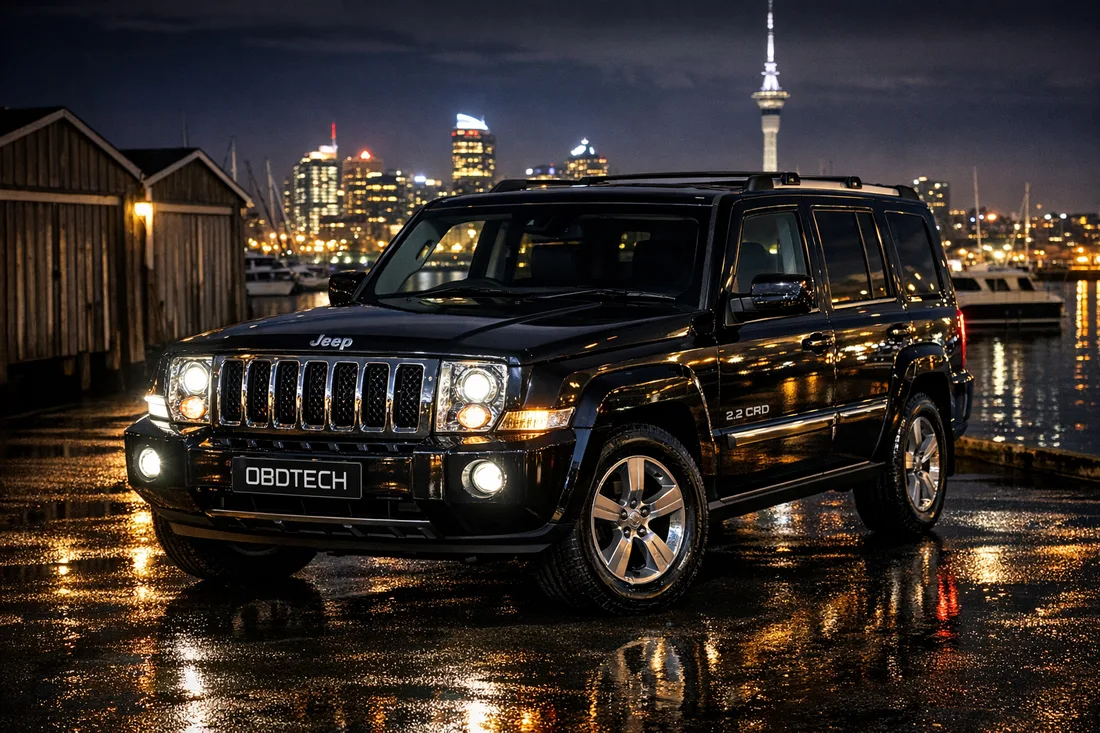
The Jeep Commander landed in New Zealand as a mid size SUV sitting above the Cherokee in the lineup, and the 2.2 CRD variant is the diesel workhorse of the range. Under the bonnet is the OM651, a 2143cc four cylinder with an 83.0 x 99.0 mm bore and stroke, a 16.0:1 compression ratio and a Delphi DCM3.5 CRD2 ECU managing the whole show. From the factory it produces 136 horsepower and 320 Nm of torque, which is modest but usable for everyday driving, school runs and the occasional tow. It is not a sports vehicle, but it earns its keep quietly if it is looked after properly.
Because this engine originated with Mercedes Benz, its failure patterns are well documented. That is both a blessing and a warning: we know exactly where to look, and we have seen most of these on the hoist already.
-
Timing chain rattle and tensioner wear: a faint metallic rattle on cold start that settles after a minute or two is the tell tale sign. Left alone, a worn tensioner allows chain slack that eventually causes misfires, rough running and, in a worst case, catastrophic valve contact.
-
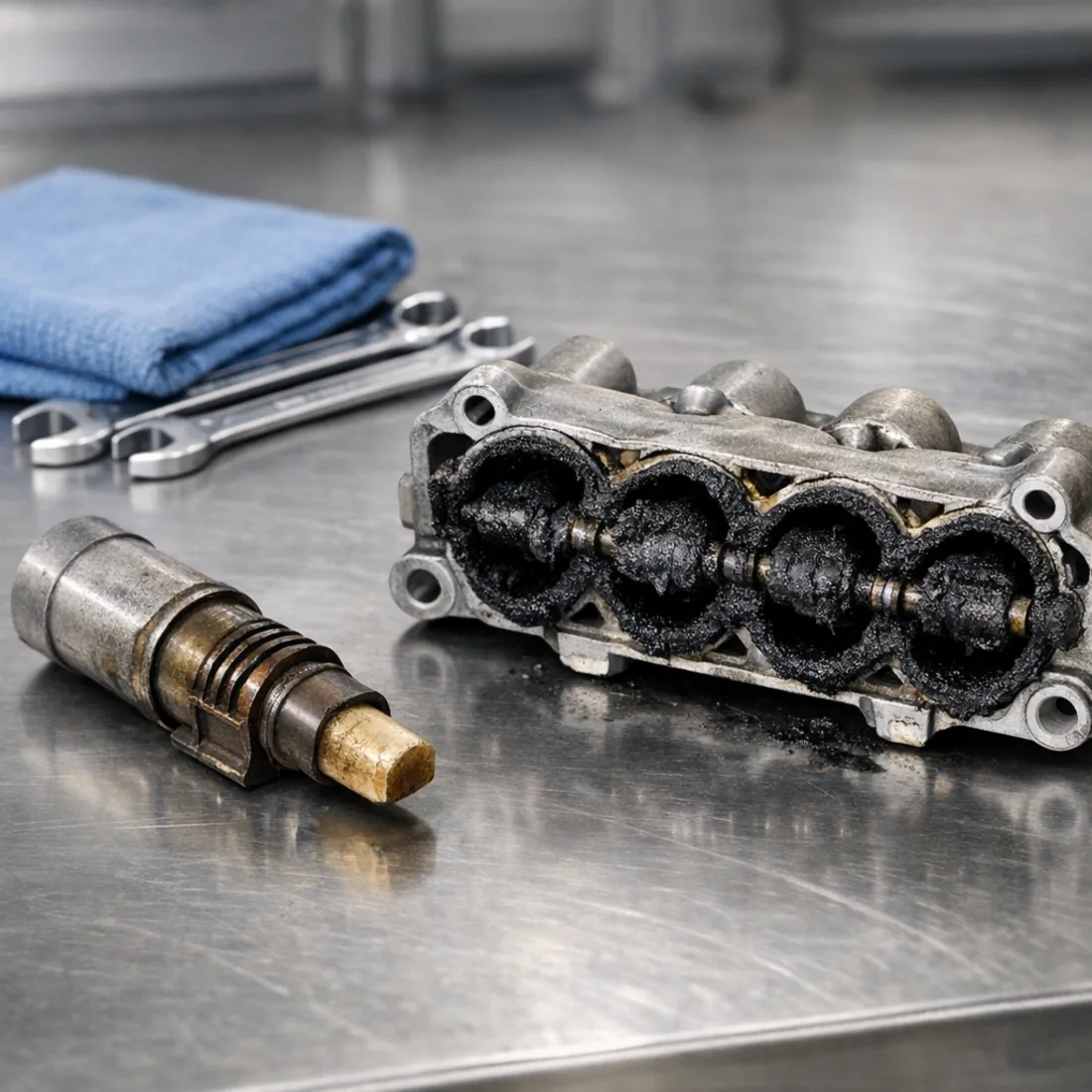
Injector leak off and seat wear: the common rail injectors can develop internal leak off as the nozzle seats wear over time, causing a hard cold start, uneven idle, a white or grey exhaust puff on pull away and sometimes an engine management light.
-
Swirl flaps and intake manifold fouling: carbon deposits build up on the flap shafts until they stick or break. A broken flap dropping into the inlet is a serious event, and the manifold itself furs up with carbon, restricting airflow and dulling throttle response.
-
EGR valve and cooler clogging: recirculated exhaust gas carries soot that bakes onto the EGR valve, cooler passages and throttle body until flow is restricted, causing loss of low end response, increased smoke and an amber warning light.
-
DPF blockage from short trip use: the DPF is designed to regenerate passively on long motorway runs. Auckland short urban trips mean the filter never gets hot enough to burn off accumulated soot, eventually blocking and dropping performance noticeably.
-
Turbo actuator and boost issues: the variable geometry turbo actuator can develop sticking or calibration drift, showing as a flat spot under load, hesitation between 2000 and 3000 rpm, or a boost related fault code flagged by the Delphi DCM3.5 ECU.
A generic scan tool will read surface level codes but will miss the live data streams that actually tell the story.
We work with dealer level diagnostic platforms that communicate fully with both the Jeep chassis modules and the Delphi engine controller.
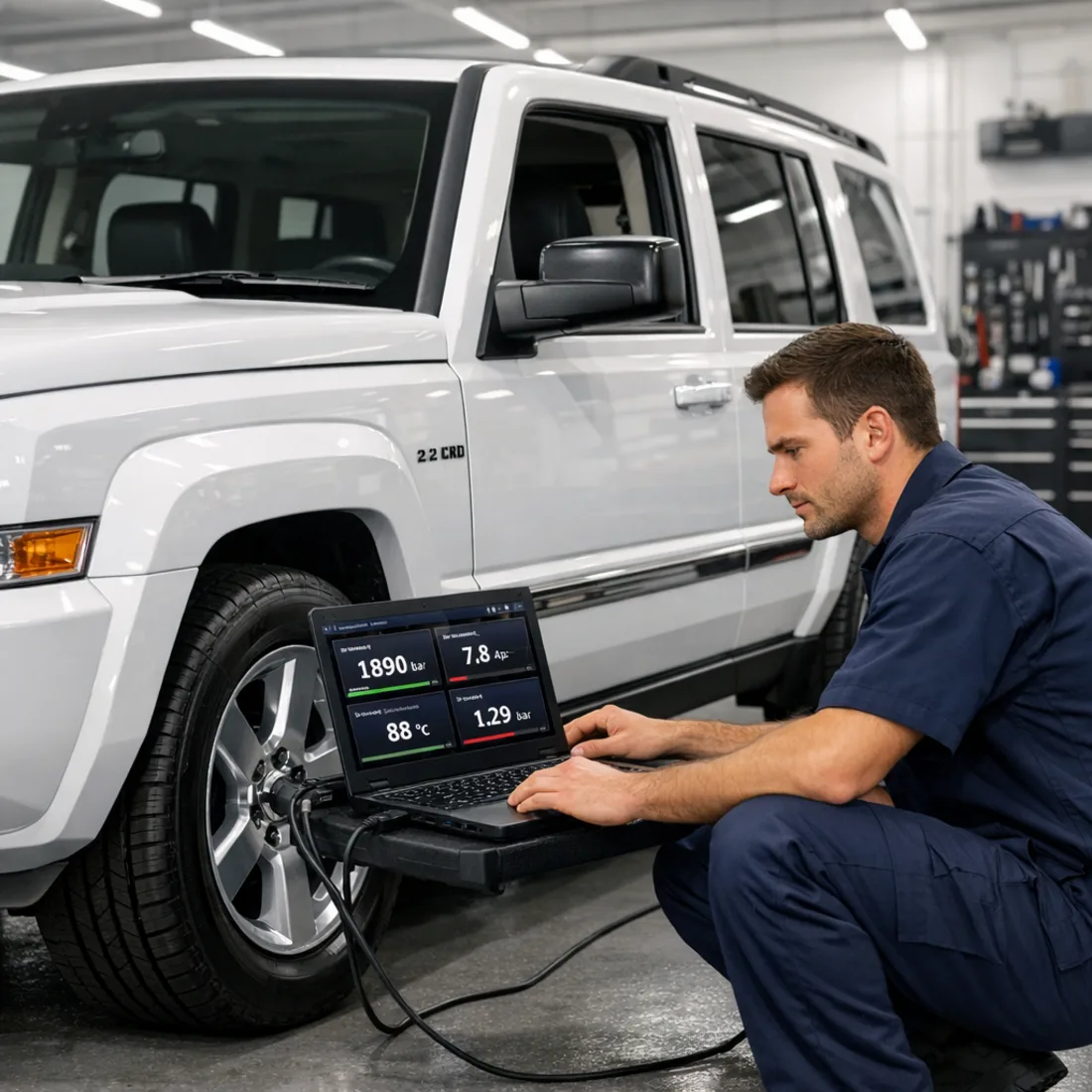
The Commander 2.2 CRD combines Jeep body electronics with a Mercedes sourced powertrain managed by a Delphi DCM3.5 CRD2 ECU. We work with dealer level diagnostic platforms that communicate fully with both the Jeep chassis modules and the Delphi engine controller, reading real time fuel pressure, injector correction values, EGR position, DPF differential pressure and turbo actuator feedback. That is the difference between a fault code that points generally at an area and a diagnosis that names the actual failed component before anything is disassembled. It saves time, saves money and prevents the wrong part being replaced.
A well maintained OM651 is genuinely long lived. Beyond consumables, we address timing chain, injectors, swirl flaps, EGR, DPF, turbo actuator and suspension components including worn bushes, ball joints and shock absorbers that the Commander's weight is hard on over time. Everything we fit is genuine, brand new OEM or OEM grade quality. No second hand parts, no surprises.
Get your Commander booked in with a team that actually knows the OM651.
Service Items Worth Booking on the OM651
The OM651 is particular about its lubricant. It requires a full synthetic low SAPS diesel oil that meets the manufacturer's specification for this engine family. Low SAPS means lower sulphated ash, phosphorus and sulphur content, which protects the DPF from premature blockage. Using a standard diesel oil to save a few dollars is a false economy that accelerates DPF fouling. We use the correct grade every time, no shortcuts.
Routine service work on this Commander covers: full synthetic low SAPS oil and OEM grade filter at each service interval; air filter replacement to protect the turbo and injectors from abrasive particles; fuel filter replacement to maintain injector rail pressure and protect the high pressure pump; cabin filter for clean air into the interior; drive belt inspection and replacement before it leaves you stranded; glow plug condition check, essential for reliable cold starts in Auckland winters; and brake pads and rotors measured and replaced as needed with our full brake inspection and repair service available.
How We Actually Diagnose This Vehicle
We work with dealer level diagnostic platforms that communicate fully with both the Jeep chassis modules and the Delphi engine controller. A full diagnostic session covers: a full module scan across engine, transmission, ABS, airbag and body control modules; live injector correction data to pinpoint leak off or nozzle wear; DPF differential pressure and soot load calculation; EGR valve position and flow comparison against expected values; turbo boost pressure logging under load during a road test; and timing chain condition assessed via cam and crank correlation data.
We log live boost pressure and actuator position data during a road test to confirm whether it is a software calibration issue, a sticking vane, or a failing actuator before recommending a course of action. We also clean blocked DPFs properly, using a forced regeneration cycle where the condition allows it, or a pressure flush where it does not.
Stage 1 Tune: More Than the Factory Left On the Table
The Delphi DCM3.5 CRD2 ECU in this Commander is calibrated conservatively from the factory, partly for emissions compliance and partly to cover a wide range of fuel quality. The OM651's hardware is capable of considerably more, and our Stage 1 remap takes the stock 136 hp and 320 Nm to 180 hp and 380 Nm, a gain of 44 hp and 60 Nm through a calibrated adjustment to fuelling, boost and timing maps.
The real world difference is a noticeably more willing engine from around 1500 rpm, less gear hunting on hills and a more confident overtaking experience without any change to the engine hardware. We write and flash the tune ourselves using the correct tools for the Delphi platform. Related calibration work including EGR off, swirl flap solutions, speed limiter adjustment and AdBlue system work is also available where applicable and legal for the intended use. DPF solutions are available for off road or track use, subject to WOF compliance considerations. Vmax adjustment and DTC management are available where appropriate.
For a complete picture of what the OM651 gains from a properly written remap, see the power gains breakdown for the full numbers, or visit our ECU file service page for details on how we write and flash the tune.
Frequently Asked Questions
The questions we get most. Something else on your mind? Get in touch.