Jeep Renegade 2.0 JTDm: Service, Diagnostics and Repair in Auckland
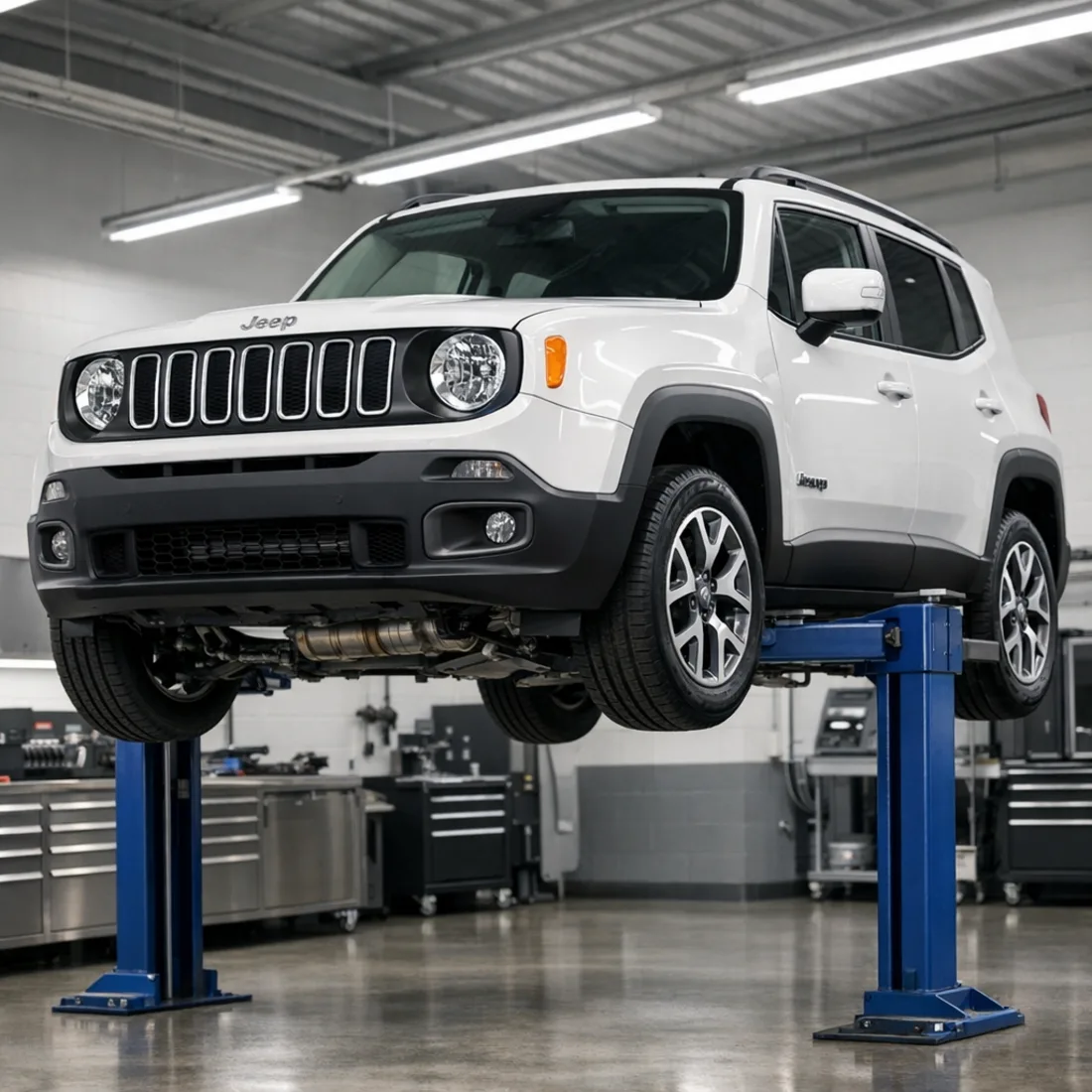
Picture a compact SUV that promises weekend adventure but spends most of its life crawling through Auckland traffic. That short trip diet is exactly where the Renegade's 2.0 JTDm diesel starts to show its personality, and not always in a good way. Short runs mean the engine never fully warms up, soot builds in places it shouldn't, and what started as a capable little diesel quietly turns into a warning light on the dash and a car that feels like it's breathing through a wet sock. We've seen it plenty of times on the hoist. The good news is that every one of those problems is diagnosable, fixable, and largely preventable with the right service regime.

What the Renegade Actually Is in the NZ Fleet
The Jeep Renegade arrived here as Fiat Chrysler's answer to the small SUV boom, and the 2014 to 2018 diesel models came with a single engine option: the 2.0 JTDm Multijet, engine code 55263088. It's a 1956 cc four cylinder turbodiesel, 83.0 mm bore by 90.4 mm stroke, with a 16.5 to 1 compression ratio and a Bosch EDC17C69 ECU managing the whole show. Stock figures are 170 hp and 350 Nm, which is a solid amount of torque for a vehicle this size. On paper, refined and punchy. In practice, only as good as the maintenance behind it.
These are not common cars in NZ but there are enough on the road now that the early examples are hitting mileages where the known weak points start to show up.
-
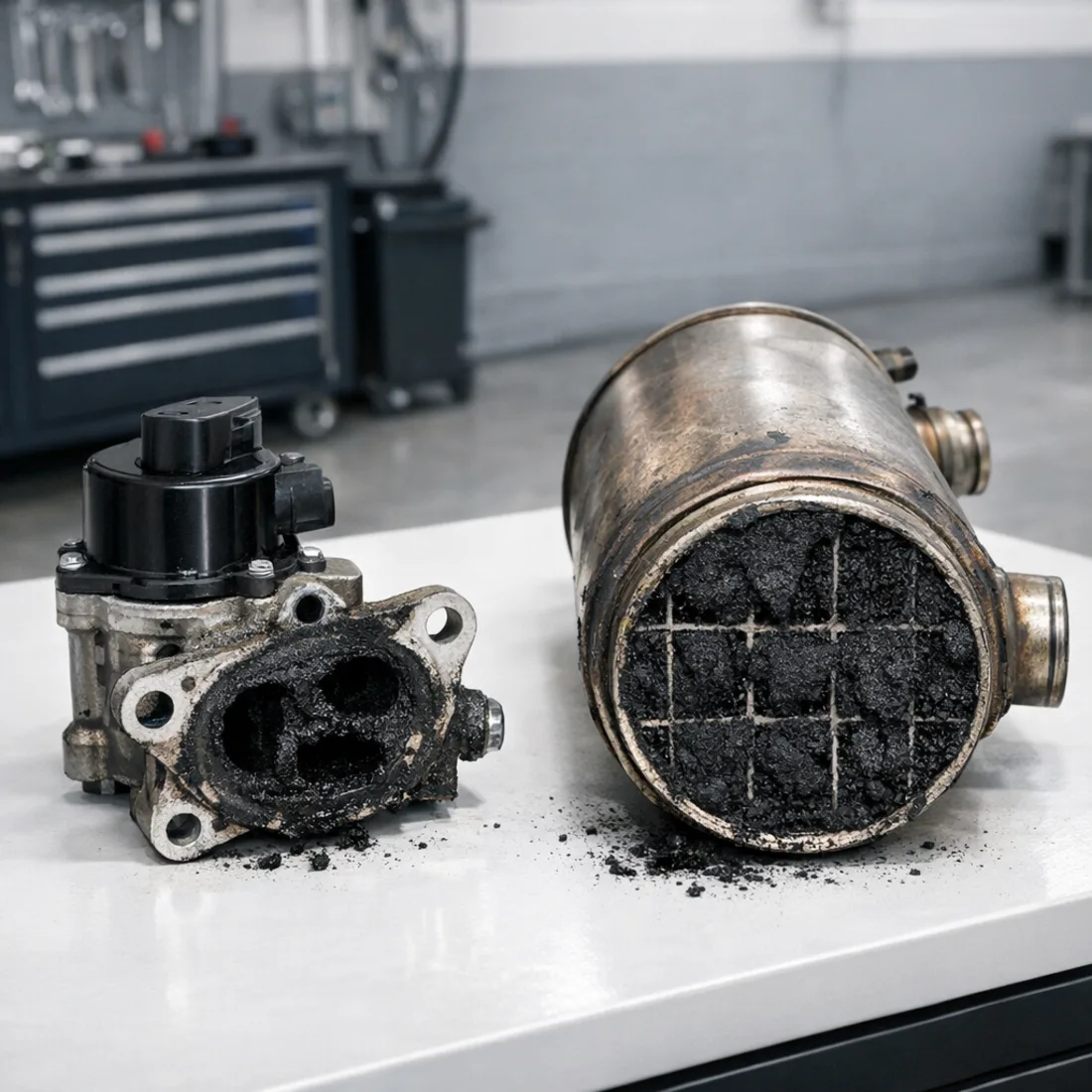
DPF and EGR Soot Loading: Short Auckland commutes mean the DPF regeneration cycle rarely completes properly, soot accumulates, and eventually the amber DPF warning light appears on the cluster. Ignore it long enough and you get a red warning alongside limp mode and a very expensive blocked filter. The EGR valve deposits a thick layer of carbon soot on the valve seat, the intake manifold and the inlet ports, resulting in rough idle, hesitation under load and elevated smoke.
-
Swirl Flap and Intake Problems: The intake swirl flaps on the JTDm are a known failure point across the Multijet family. The actuator mechanism wears, the flap position sensor throws a fault, and the EDC17C69 ECU logs it as a permanent intake flow fault. In the worst case a flap blade breaks free and enters the engine.
-
Injector Wear and Fuel System Drift: The common rail injectors on higher mileage examples start to show return flow drift. The ECU compensates through pilot injection corrections, but once the corrections reach their limit the engine runs rough at idle, fuel consumption climbs noticeably and you may get hard starting on cold mornings.
-
Turbo Actuator and Boost Control Faults: When the actuator sticks or loses calibration, boost pressure falls short of target, the car feels flat above 2000 rpm, and the ECU logs a boost deviation fault. A proper actuator recalibration through the factory diagnostic platform often fixes it without replacing the whole turbocharger unit.
-
Water Pump and Thermostat: On higher mileage Renegades the water pump impeller can degrade, reducing coolant flow without producing an obvious coolant leak. The thermostat sticking open causes the engine to run cooler than it should, fuel consumption creeps up, the heater performs poorly in winter, and long term the emission system efficiency drops.
The difference between a wiTECH diagnosis and a generic code read is the difference between fixing the root cause and replacing parts until something works.
We use wiTECH, the factory level diagnostic platform for Fiat Chrysler vehicles, giving us full access to the Bosch EDC17C69 ECU.
Generic scan tools read generic faults, and on an FCA vehicle that means you often get a code that points at a symptom rather than a cause. We use wiTECH factory diagnostics, the factory level platform for Fiat Chrysler vehicles, which gives us full access to the Bosch EDC17C69 ECU on this car. That means live data streams for injector corrections, boost pressure targets versus actuals, swirl flap position, DPF soot load and differential pressure, EGR duty cycle, coolant temperature accuracy and intake air mass. We can command actuators directly to test their response, carry out proper adaptations after a repair, and reset learned values that a generic reader simply cannot touch.
We fit genuine, brand new OEM and OEM grade parts as standard across every repair and service. No compromises on components in a vehicle where a cheap injector seal or a low quality timing belt kit can end an engine. Whether you need a full car service, a diagnosis of that amber warning light, a DPF clean, a cambelt replacement, or a Stage 1 tune, our Penrose workshop has the tooling, the platform access and the hands on experience with the JTDm to do it properly. Book online or call us at Unit 26, 930 Great South Road, Penrose, Auckland 1061.
Get your Renegade booked in with a proper specialist.
Routine Servicing That Actually Protects the Engine
The JTDm rewards regular, correct servicing more than most diesels, because the emission control systems are sensitive to oil condition and fuel quality. We use full synthetic diesel spec oil that meets or exceeds the factory specification for this engine, paired with a genuine quality oil filter. An air filter in poor condition starves the turbo of clean air and accelerates wear on the intake system; we check and replace it on schedule. The fuel filter is often overlooked but on a common rail system running at very high injection pressures, contaminated fuel is a fast path to injector and pump damage. We replace it as part of a proper service.
The cabin filter, wipers and auxiliary drive belt are the easy wins that get skipped on a lot of these cars. The belt in particular drives the ancillaries and its failure leaves you stranded. More importantly, this engine runs a timing belt rather than a chain, so the cambelt replacement interval is a hard deadline, not a suggestion. A snapped cambelt on a 16.5 to 1 compression diesel causes catastrophic internal damage. If you do not know the history of the belt on your Renegade, booking a check is genuinely important.
Being a diesel there are no spark plugs to worry about, but glow plugs do wear on higher mileage cars and seized ones are a pain to remove once they have been in the head for years. We check them as part of a thorough service. On the braking side, brake pad and rotor condition is part of every visit; the Renegade's weight and all wheel drive configuration put a reasonable load on the front axle. For anything more involved on the braking system we carry that work out in house. Suspension components, wheel bearings and sensors round out the mechanical picture, and our team handles the full scope through our mechanical repairs service.
How We Actually Diagnose This Vehicle
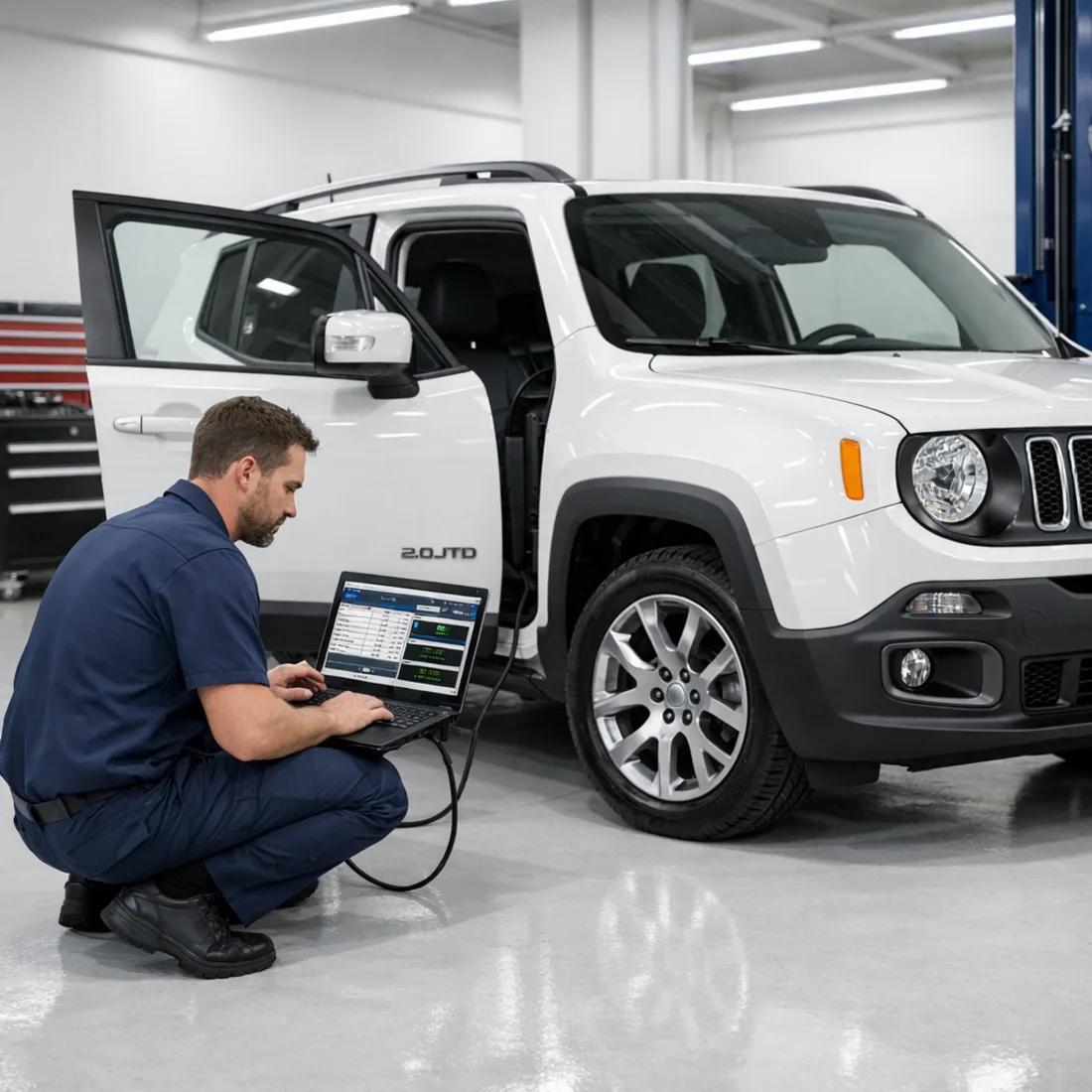
Generic scan tools read generic faults, and on an FCA vehicle that means you often get a code that points at a symptom rather than a cause. We use wiTECH, the factory level diagnostic platform for Fiat Chrysler vehicles, which gives us full access to the Bosch EDC17C69 ECU on this car. That means live data streams for injector corrections, boost pressure targets versus actuals, swirl flap position, DPF soot load and differential pressure, EGR duty cycle, coolant temperature accuracy and intake air mass.
We can command actuators directly to test their response, carry out proper adaptations after a repair, and reset learned values that a generic reader simply cannot touch. The difference between a wiTECH diagnosis and a generic code read is the difference between fixing the root cause and replacing parts until something works.
Stage 1 Tuning: What 35 Extra Horsepower Feels Like
The EDC17C69 ECU in this engine responds well to a calibrated remap. Our Stage 1 tune takes the stock 170 hp and 350 Nm to 205 hp and 425 Nm, gains of 35 hp and 75 Nm delivered through a proper file written for this specific engine code. In a vehicle this size that extra torque transforms the motorway overtake and reduces the constant gearchanging in city driving.
The tune also allows for related calibration work including start stop system disable, speed limiter removal, swirl flap correction and AdBlue or NOx system adjustments where applicable. Everything is done through a bench or OBD flash to the Bosch ECU; no hardware changes, no irreversible modifications.
For the full picture of what the remap delivers, take a look at our power gains page.
Frequently Asked Questions
The questions we get most. Something else on your mind? Get in touch.