Jeep Compass 2.4 Multiair Servicing and Repairs
The Jeep Compass MP is one of those vehicles that looks the part, drives well enough to make a loyal fan base, and then quietly develops a set of gremlins that the owner only hears about when the dashboard lights up. It is not a bad vehicle. It is just one that rewards an owner who stays on top of the small things before they become expensive ones. The 2.4 Tigershark under the bonnet is capable and characterful, but it has a personality, and knowing that personality is half the battle when it comes to keeping one running well in Auckland traffic.

The 2.4 Tigershark: What You Are Actually Dealing With
The Compass MP uses the 2.4 Multiair petrol engine, producing 177 hp. The Multiair name refers to the electrohydraulic valve actuation system on the intake side, which is genuinely clever technology. It lets the engine vary valve lift electronically rather than mechanically, which improves fuel economy and response across the rev range. When it works, it is smooth and punchy. When it starts to go wrong, you notice immediately.
This engine family is sometimes called the Tigershark in FCA circles, and that nickname fits. It has real performance potential, responds well to tuning, and is built to rev. It also has a few known weak points that are worth understanding before you book your next service, or before you buy one second hand.
-
Higher than normal oil consumption is probably the most frequently discussed issue with the Tigershark. The PCV system and valve cover are worth checking early, as early failure here can contribute to both consumption and oil mist entering the intake. A low oil level on an engine with hydraulic valve actuation is a fast track to expensive repairs.
-
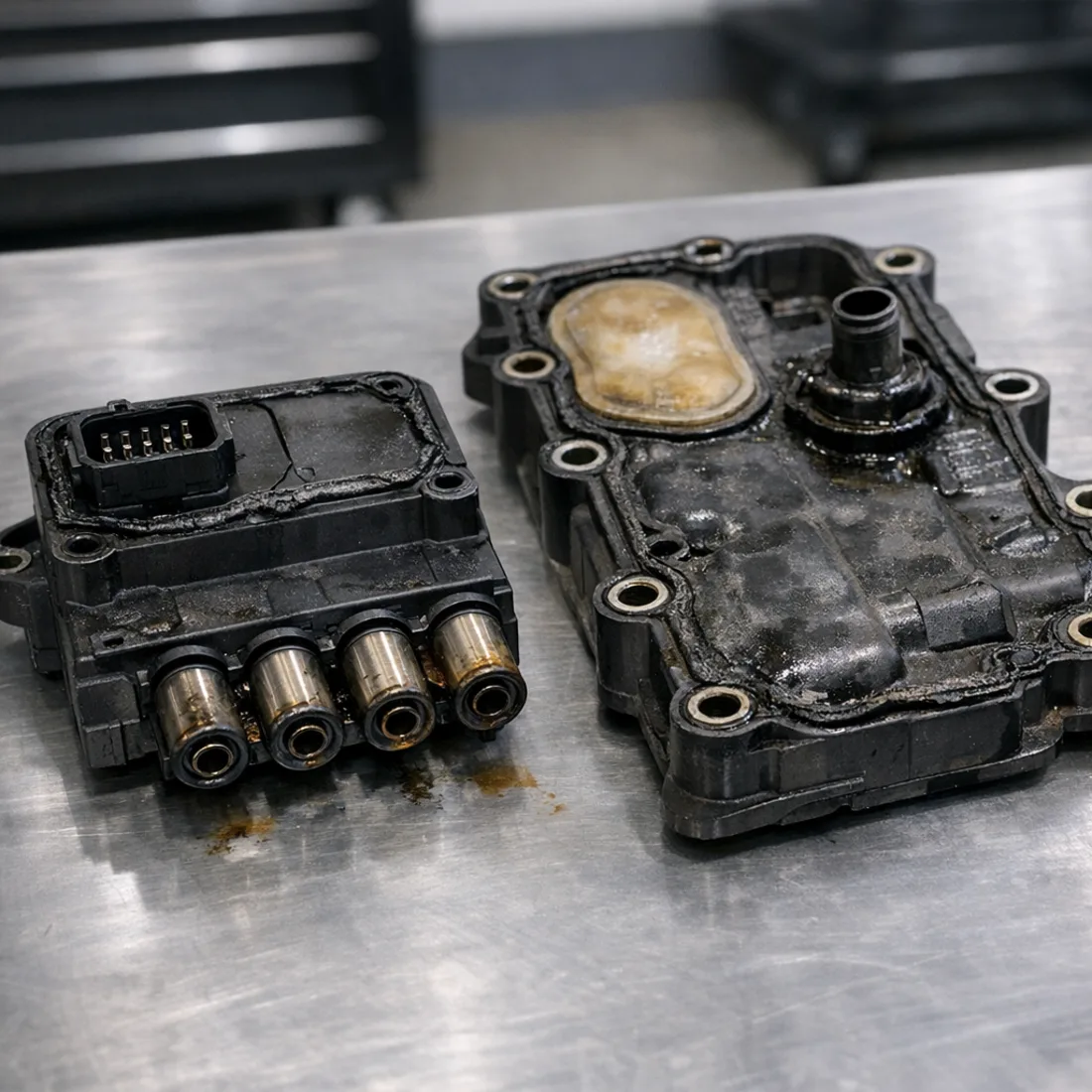
The MultiAir solenoid assembly, often called the MultiAir brick, sits on the intake side of the engine and controls the electrohydraulic valve system. When it starts to fail or develops internal seal issues, the symptoms are rough idle, misfires under load, and a general feeling that the engine is fighting itself. A rough cold start that smooths out with heat is a classic early warning.
-
The electronic throttle body and individual coil packs are worth inspecting whenever driveability is poor on this engine. A single weak coil will misfire intermittently and often stores a specific cylinder misfire fault that points you straight at it.
-
The timing chain on this unit is worth a listen on cold start. A brief rattle on first start that disappears quickly as oil pressure builds is something to monitor. It does not always mean immediate failure, but it means the chain, tensioner, and guides need attention before a rattle becomes a slap.
Left unchecked, a failing brick causes ongoing misfires that can foul spark plugs and stress the catalytic converter.
The fix is replacement of the assembly and a fresh set of NGK or equivalent spark plugs to make sure the engine starts clean.
Generic scan tools read generic faults, and on an FCA platform like this one, that is simply not good enough. We use wiTECH, the genuine FCA/Stellantis dealer level diagnostic platform, to connect to the Compass at the module level. That means we are not just reading a stored fault code and guessing. We are reading live data from the MultiAir system, the throttle position sensor, individual cylinder misfire counters, and the MAP and oxygen sensors in real time. We can see exactly where in the fuel and ignition cycle the fault is occurring, which is the difference between a correct diagnosis and an expensive parts replacement lottery.
For electrical and programming work, including the 9 speed automatic and any module related faults, wiTECH gives us full two way communication with the vehicle's network. That matters when you need accurate calibrations or fault confirmation rather than a best guess. Our auto electrical team handles the full scope of these electrical faults, from sensor failures to module communication issues, using the right tools from the start.

Get your Compass booked in with a proper specialist.
What a Proper Service Includes on the Tigershark
The Tigershark needs full synthetic oil that meets or exceeds the factory specification for the Multiair system. This is not the place to use whatever is on the shelf. The hydraulic valve actuation relies on clean oil at the right viscosity to function correctly, so the correct grade and a quality filter are non negotiable. Every service we do on this engine includes an oil level check protocol and a conversation about consumption if the history suggests it is a concern.
Air filter, cabin filter, wipers, and drive belt all run on a schedule that most owners let slide longer than they should. The cabin filter on the Compass is worth doing on time given Auckland's stop and go traffic. We also service the 9 speed automatic transmission when due, including fluid replacement, which is often skipped at general service centres and contributes to the shift hesitation complaints that are common on this gearbox.
Spark plugs on the Tigershark are a scheduled replacement item, and on an engine with direct acting valve control, a worn plug makes the MultiAir system's job harder. We fit new plugs to the correct specification and gap. MAP sensor and oxygen sensor condition gets checked during any diagnostic visit, and we replace them with OEM grade parts when they are outside tolerance rather than leaving marginal sensors to corrupt fuel trims.
Brakes on the Compass are worth checking at every service. The front rotors and pads carry most of the load, and if the previous owner did a lot of motorway driving the rotors can look fine on visual inspection but be below minimum thickness. We measure them properly. Our brake repair service covers full pad and rotor replacement, caliper inspection, and brake fluid condition testing.
Every job we do uses genuine or OEM grade brand new parts as standard. No workarounds, no used components.
How We Actually Diagnose the Compass
Generic scan tools read generic faults, and on an FCA platform like this one, that is simply not good enough. We use wiTECH, the genuine FCA/Stellantis dealer level diagnostic platform, to connect to the Compass at the module level. That means we are not just reading a stored fault code and guessing. We are reading live data from the MultiAir system, the throttle position sensor, individual cylinder misfire counters, and the MAP and oxygen sensors in real time.
We can see exactly where in the fuel and ignition cycle the fault is occurring, which is the difference between a correct diagnosis and an expensive parts replacement lottery. For electrical and programming work, including the 9 speed automatic and any module related faults, wiTECH gives us full two way communication with the vehicle's network. That matters when you need accurate calibrations or fault confirmation rather than a best guess.

Stage 1 Tuning for the 2.4 Tigershark
For owners who want more from the Tigershark, Stage 1 tuning is available for the 2.4 Multiair. The engine has genuine headroom beyond the stock 177 hp figure, and a proper calibration can make the car noticeably more responsive across the rev range. We talk through what is realistic for your driving before touching anything.
The 2.4 Multiair has genuine performance potential built into its electrohydraulic valve actuation architecture. A Stage 1 calibration unlocks that headroom and delivers a noticeably more responsive engine across the rev range. We always combine tuning with a [[link:car servicing|scheduled service]] to make sure the engine is in the right condition before calibration begins.
We always recommend pairing any tune with a fresh file service to ensure the calibration is built on a solid base.
Frequently Asked Questions
The questions we get most. Something else on your mind? Get in touch.