Grand Cherokee WL & WK2 5.7 HEMI, SRT8 & 3.0 CRD
The Grand Cherokee has been landing on New Zealand driveways for long enough that we now see every generation on the hoist, from the WL 5.7 HEMI through to the WK2 in petrol and diesel flavours. Each generation fixed something the last one got wrong, and each one brought its own fresh set of habits. What ties them all together is that they reward disciplined maintenance and punish neglect, usually at the worst possible moment on a motorway on ramp.


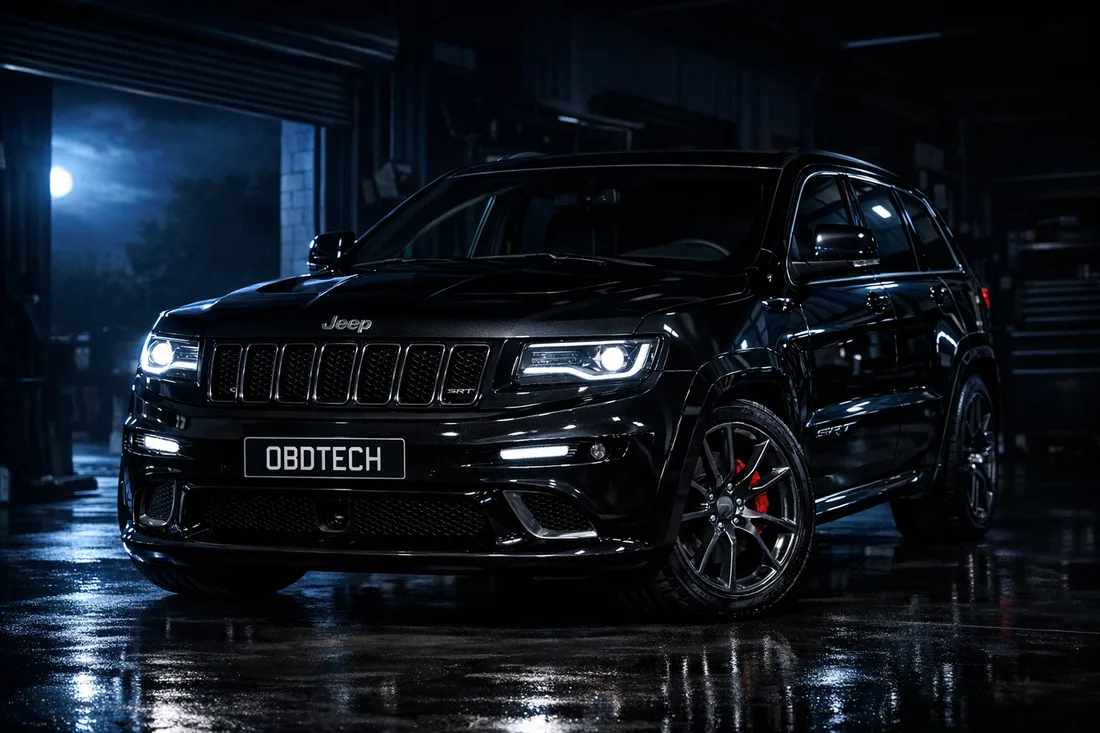

WL Grand Cherokee 5.7 HEMI V8 (364 hp): Where the Grand Cherokee Story Starts for Most Kiwi Owners
The WL was the generation that properly established the Grand Cherokee as a serious luxury SUV rather than just a dressed up off roader. Two and a half tonnes of American SUV, 364 horses from a 5.7 litre pushrod V8, a genuinely quiet cabin. On paper and in person it is a compelling thing. But that 5.7 HEMI introduced Multi Displacement System (MDS) cylinder deactivation, and that system turned out to be the defining mechanical story of this entire engine family across every generation that followed.
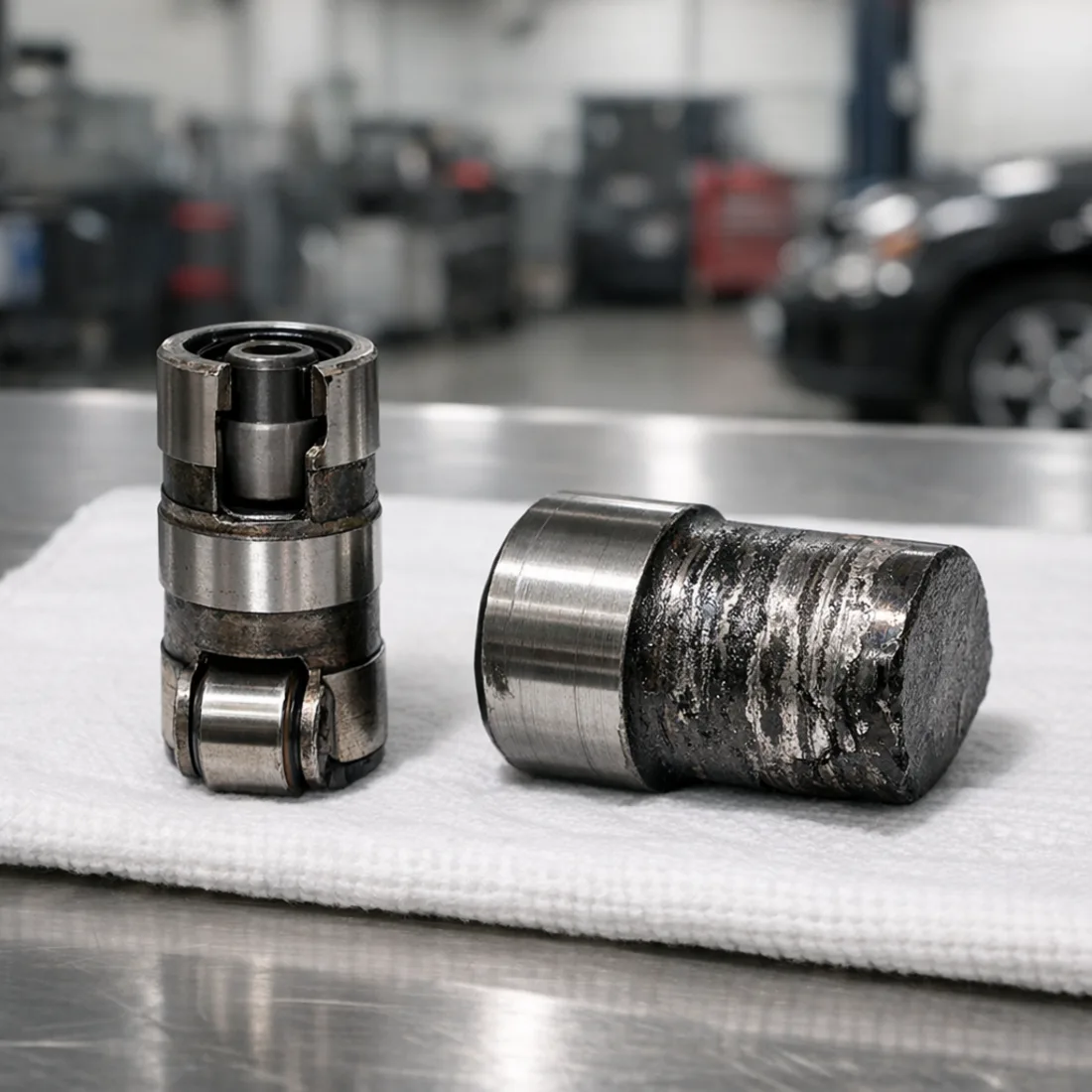
MDS shuts down four of the eight cylinders under light load to save fuel. In theory, clever. In practice, the lifters and camshaft lobes that carry the deactivation mechanism wear faster than the rest of the valvetrain, especially when service intervals slip or when the wrong oil grade goes in. The symptom is a distinctive top end tick that owners often wave away for too long. By the time it becomes impossible to ignore, there is usually misfire history stored across several cylinders and the cam lobe damage is done.
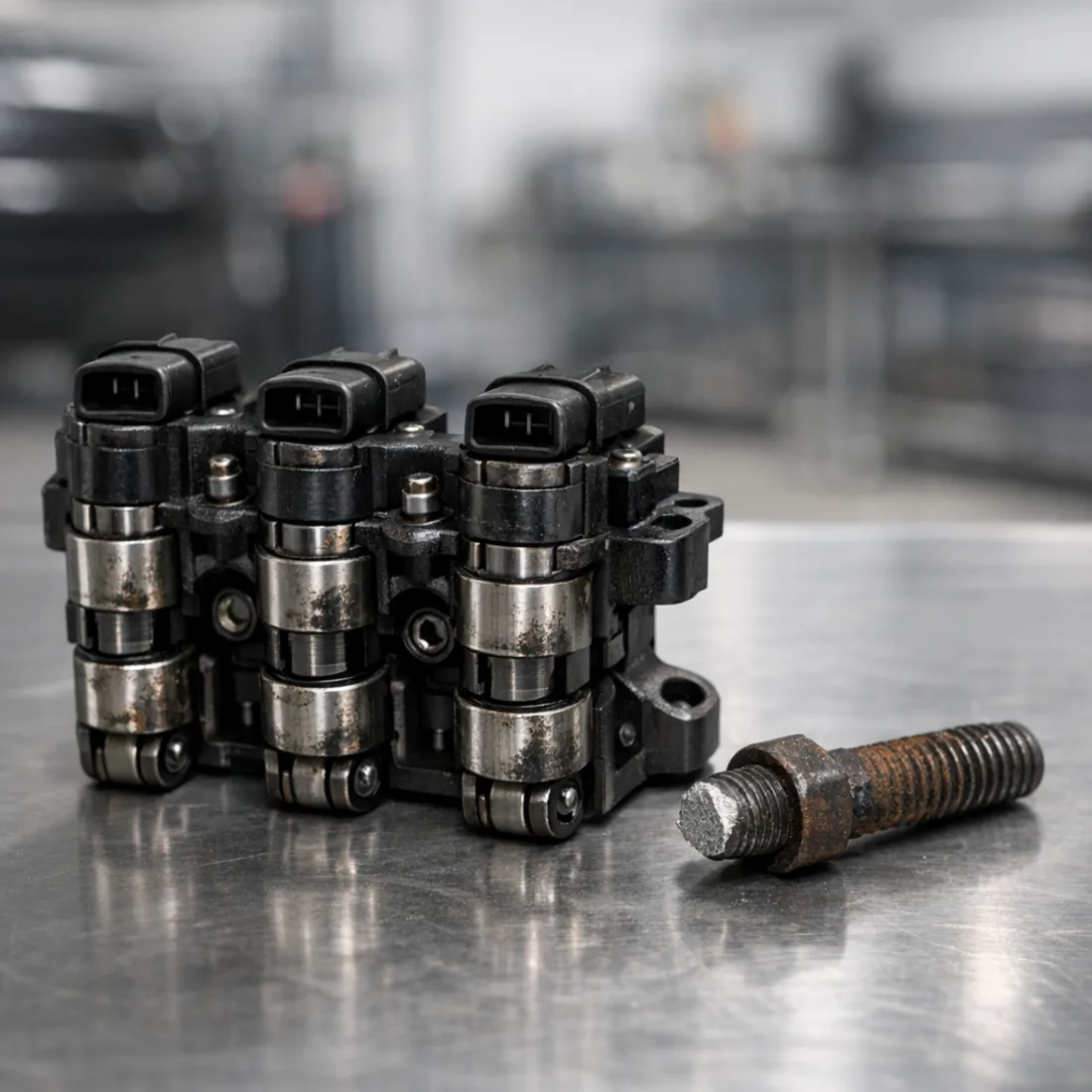
Exhaust manifold bolts are the other WL specific habit worth knowing. The bolts corrode into the head and snap, which leaves a ticking exhaust leak that sounds almost identical to a valvetrain tick at cold start. Getting them confused on a quick inspection is easy. We use the factory wiTECH diagnostic platform on these, not a generic scan tool, so we can read every module, run guided tests and pull proper misfire history rather than just the top level fault codes.
Routine service on a WL means full synthetic oil in the correct grade, air and cabin filters, spark plugs, drive belt inspection, and brake pads and rotors. These are heavy vehicles and the brakes reflect that. If your WL has air suspension, that system needs checking at every visit too. A Stage 1 tune is available to sharpen throttle response and torque delivery if you want more from the engine once the mechanical health is confirmed.
-
MDS lifter collapse and camshaft lobe wear, presenting as a top end tick or misfire
-
Exhaust manifold bolt shear causing a ticking exhaust leak
-
Oil consumption on higher mileage examples
-
Cooling system deterioration
-
Air suspension faults where fitted
The symptom is a distinctive top end tick that owners often wave away for too long.
By the time it becomes impossible to ignore, the cam lobe damage is done.
Get your Grand Cherokee booked in with a proper specialist.
WK2 Grand Cherokee 5.7 HEMI V8 (360 hp): Same Heart, Refined Package, Familiar Faults
The WK2 arrived with a restyled body, a more sophisticated interior and a revised 5.7 HEMI producing 360 hp from 5654 cc. It also got the ZF eight speed automatic, which transformed how the car drives compared to the older box in the WL. Smoother, quicker to respond, more comfortable on long motorway runs. The transmission itself is generally reliable when it is serviced properly, but it does not like being ignored.
Here is the thing though: the engine carried over the same MDS system. Every lesson from the WL applies here. The lifter and camshaft wear pattern is identical, the exhaust manifold bolt shear happens for the same reason, and owners who do not know the history of this fault make the same mistake of dismissing the early tick. On the WK2 the oil cooler housing is an additional known seepage point, so that gets checked at every service visit. The ECU on this generation is the Siemens/Continental GPEC2A, which wiTECH reads properly with full actuation capability.
So what did the WK2 actually fix compared to the WL? The chassis, the interior quality, and the transmission are all meaningfully better. The engine got a modest power revision but the core architecture and its known habits came along for the ride. If you already know the WL 5.7 HEMI story, the WK2 is not going to surprise you under the bonnet. What it does give you is a more polished car around that engine.
Stage 1 tuning on the WK2 5.7 brings output to 380 hp and 550 Nm, a genuine 20 hp and 21 Nm improvement over stock. That is worth doing once the engine is confirmed healthy and properly serviced. Pushing a tired engine harder is not something we encourage.
-
MDS lifter and camshaft wear (same as WL, same early symptom)
-
Exhaust manifold bolt shear and exhaust leak
-
Oil cooler housing seepage
-
Ignition and fuel condition affecting economy on a thirsty engine
-
Air suspension faults
-
ZF eight speed auto service requirements
The chassis, the interior quality, and the transmission are all meaningfully better.
The engine got a modest power revision but the core architecture and its known habits came along for the ride.
WK2 Grand Cherokee SRT8 6.4 HEMI V8 (475 hp): More of Everything, Including the Consequences of Neglect
Picture a school run SUV that also runs the quarter mile quicker than most sports cars. That is the SRT8 in a nutshell. The 6.4 litre naturally aspirated HEMI V8 displaces 6417 cc, runs a 10.9:1 compression ratio, and produces 475 hp and 637 Nm from the factory. The Brembo brake package up front is sized for the job. The ZF eight speed is tuned for performance shifts. It is a properly engineered performance vehicle wearing a family SUV body, and it is genuinely impressive when it is right.
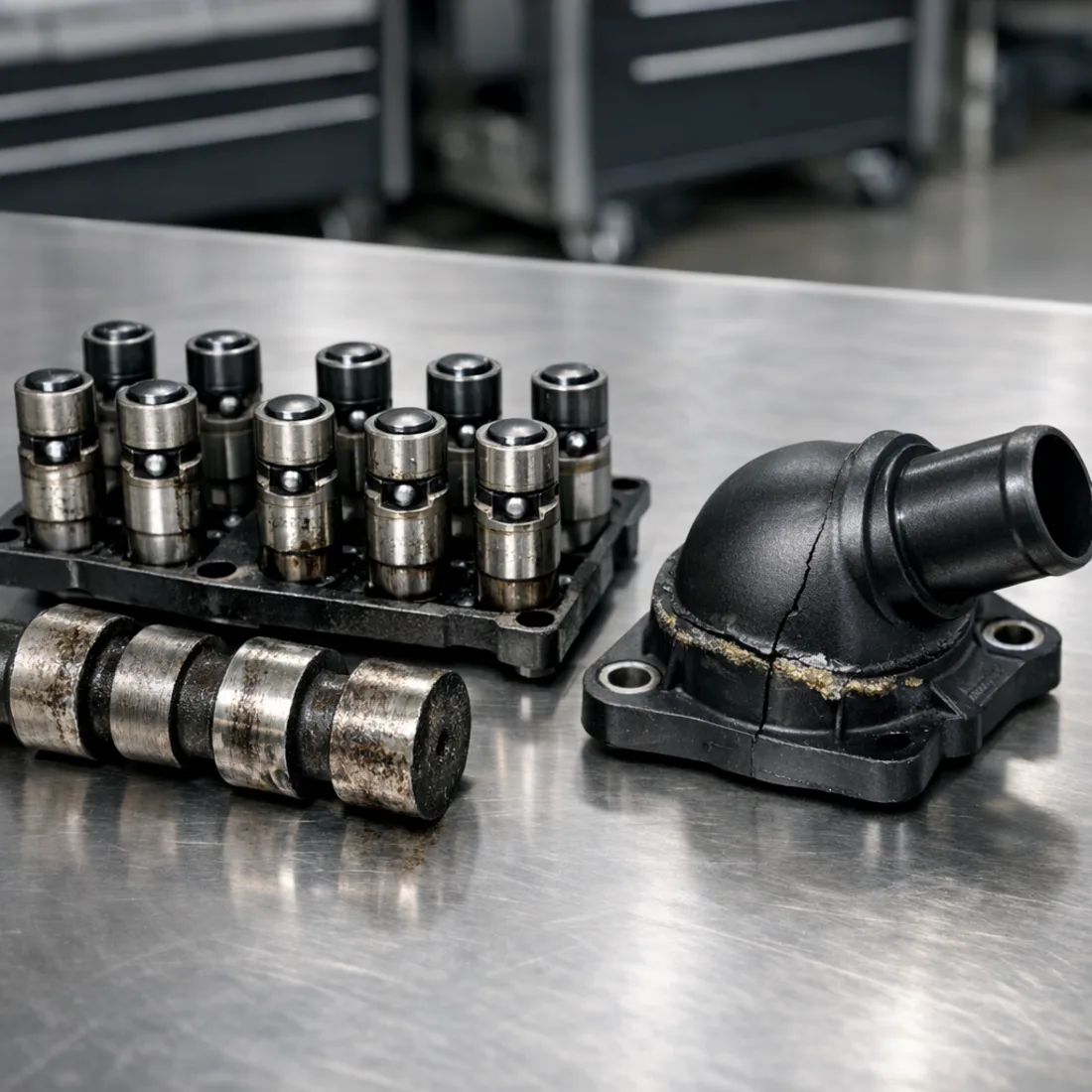
The SRT8 still carries MDS, which surprises some owners given the performance focus. Same lifter and camshaft wear pattern as the 5.7, same early tick, same consequence if it is left too long. The difference is that a 6.4 working harder, running higher compression, and carrying more heat is also a 6.4 that punishes deferred maintenance more severely. The cooling system and thermostat housing are worth checking on higher mileage examples. Spark plugs take serious heat. Oil consumption if service intervals stretch. The Brembo hardware needs proper attention because with this much weight and power, brake fade from worn pads is not just an annoyance.
The ECU here is the Siemens/Continental GPEC2, and wiTECH gives us full access to every module including the SRT specific systems. Stage 1 tuning takes the SRT8 to 495 hp and 655 Nm, a 20 hp and 18 Nm gain. Given this is already a naturally aspirated engine near its comfortable atmospheric limit, those are meaningful numbers. Other options include DTC removal, a pop and bang map, start/stop disable and Vmax adjustment where applicable. We discuss what is appropriate case by case.
-
MDS lifter and camshaft wear, presenting as a top end tick or cylinder misfire
-
Oil consumption on stretched service intervals
-
Thermostat housing cracking and cooling system faults
-
Exhaust manifold and spark plug heat stress
-
Brembo brake wear, faster than a standard Grand Cherokee given the weight and power
-
ZF eight speed transmission service
A properly engineered performance vehicle wearing a family SUV body.
A 6.4 working harder, running higher compression, and carrying more heat punishes deferred maintenance more severely.
WK2 Grand Cherokee 3.0 CRD (250 hp): The Diesel That Changes the Whole Equation
The 3.0 CRD is a completely different machine to the HEMI siblings. Where the petrol cars are about performance and presence, the diesel WK2 is about effortless torque and genuine range. The VM Motori A630 V6 diesel produces 250 hp and 570 Nm from 2987 cc, and it does so with a composure on the motorway that makes long distance driving genuinely relaxed. It is the pick for people who cover real kilometres or tow regularly.
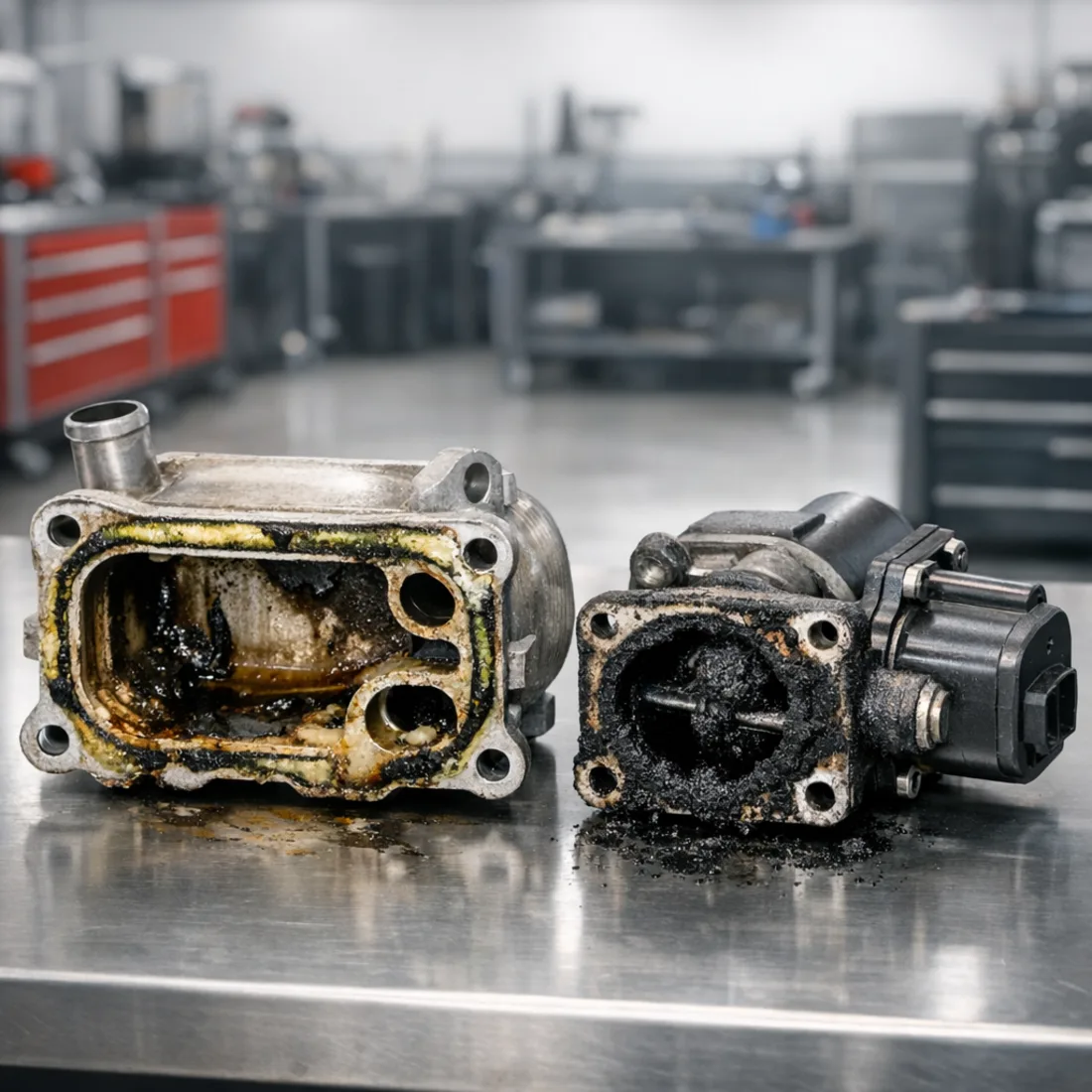
The faults are diesel specific and quite different from anything on the HEMI side of the family. The most talked about issue is the oil cooler and oil filter housing. These can fail in a way that allows oil and coolant to mix, which escalates from an expensive repair to a catastrophic one if it is caught late. It gets checked on every visit. EGR valve and cooler clogging is a natural consequence of diesel combustion chemistry, especially on vehicles doing a lot of short urban trips where the DPF never gets a proper regeneration cycle. Swirl flaps and intake runner actuators can stick or fail on higher mileage cars, and crank sensor faults appear as the kilometres climb. Turbo actuator issues also show up on older examples.
The ECU is a Bosch EDC17C79, and we diagnose using wiTECH rather than a generic reader. That matters with the 3.0 CRD because proper guided tests and actuator commands are the difference between actually diagnosing a fault and just reading a code. Glow plugs, fuel filter, correct low SAPS diesel oil, air and cabin filters are all routine service items. Stage 1 tuning on the CRD delivers 285 hp and 630 Nm, a substantial 35 hp and 60 Nm improvement over stock. For a vehicle often used for towing or loaded travel, that torque gain is genuinely useful.
-
Oil cooler and oil filter housing failure, the most critical fault on this engine
-
EGR valve and cooler clogging, accelerated by short trip driving
-
DPF loading on urban or low speed use cycles
-
Turbo actuator faults
-
Swirl flap and intake runner actuator issues
-
Crank sensor faults on higher mileage examples
-
Air suspension faults (same platform as the petrol WK2)
The most talked about issue is the oil cooler and oil filter housing.
Catching the early signs of seepage is a much cheaper conversation than catching it after coolant and oil have mixed.
Picking Between Them: Which Grand Cherokee Makes Sense for You?
This is a question we get asked a lot, especially from people shopping the used market where all four variants overlap in price and age. Here is the honest breakdown.
You want the most affordable entry point into the Grand Cherokee family. A well maintained WL with documented oil changes and no tick is a decent buy. One with unknown history and a noise is a gamble. The platform is older and it shows, but the engine fault profile is mechanically identical to the WK2.
You want the sweet spot of the range. More refined than the WL, with the ZF eight speed transmission and more capable diagnostics via the updated ECU. The MDS fault is manageable if you buy one with clear service history, get a proper pre purchase inspection and address any top end tick immediately.
Performance is the priority. It is genuinely fast. Be realistic about running costs though. Fuel, tyres, brakes and the cost of sorting MDS faults on a 6.4 are all meaningfully higher than the standard 5.7. Buy one that has been looked after and budget for what ownership actually costs.
You cover real kilometres, tow regularly or find the HEMI's fuel consumption hard to justify. The diesel torque is addictive and the range is excellent. The oil cooler issue is serious but preventable. Get it checked, keep up with servicing, and this engine is very strong.
- WL 5.7: entry level value, older platform, same HEMI habits, good buy with history
- WK2 5.7: the sweet spot, better transmission and refinement, manageable with proper maintenance
- WK2 SRT8 6.4: performance choice, higher running costs, rewards disciplined ownership
- WK2 3.0 CRD: the diesel case, best range and torque per litre, oil cooler is the one to watch
Servicing Across the Grand Cherokee Family
Every Grand Cherokee generation shares one truth: the service intervals are not suggestions. These are heavy, powerful vehicles and the components that wear, oil, transmission fluid, brake fluid, coolant, spark plugs on the petrols and fuel filter plus glow plugs on the diesel, need to be on a real schedule with real parts. We fit genuine or OEM spec components throughout. Nothing second rate goes on a vehicle this complex.
For the petrol HEMI engines the correct full synthetic oil grade is non negotiable. The MDS system's lifter oiling is sensitive to viscosity and oil condition. Stretching the interval or using the wrong grade is one of the most direct routes to the expensive lifter and cam work described above. For the 3.0 CRD the correct low SAPS diesel spec matters for the same reason: the DPF and EGR are affected by oil quality through blowby.
The ZF eight speed automatic fitted to the WK2 generations deserves a proper transmission fluid service at sensible intervals. It is not a sealed for life unit in the real world, especially in a vehicle this heavy. Brake service on all generations is substantial work given the vehicle weight: pads, rotors, caliper condition and brake fluid condition all need attention, including the Brembo hardware on the SRT8.
Routine service items across all generations: engine oil and filter correct spec per engine, air filter and cabin filter, spark plugs (HEMI engines) plus glow plugs and fuel filter (CRD), drive belt inspection, brake pads, rotors and fluid, coolant condition and cooling system check, transmission fluid service, and air suspension inspection where fitted.
How We Diagnose Grand Cherokees: wiTECH, Not a Generic Reader
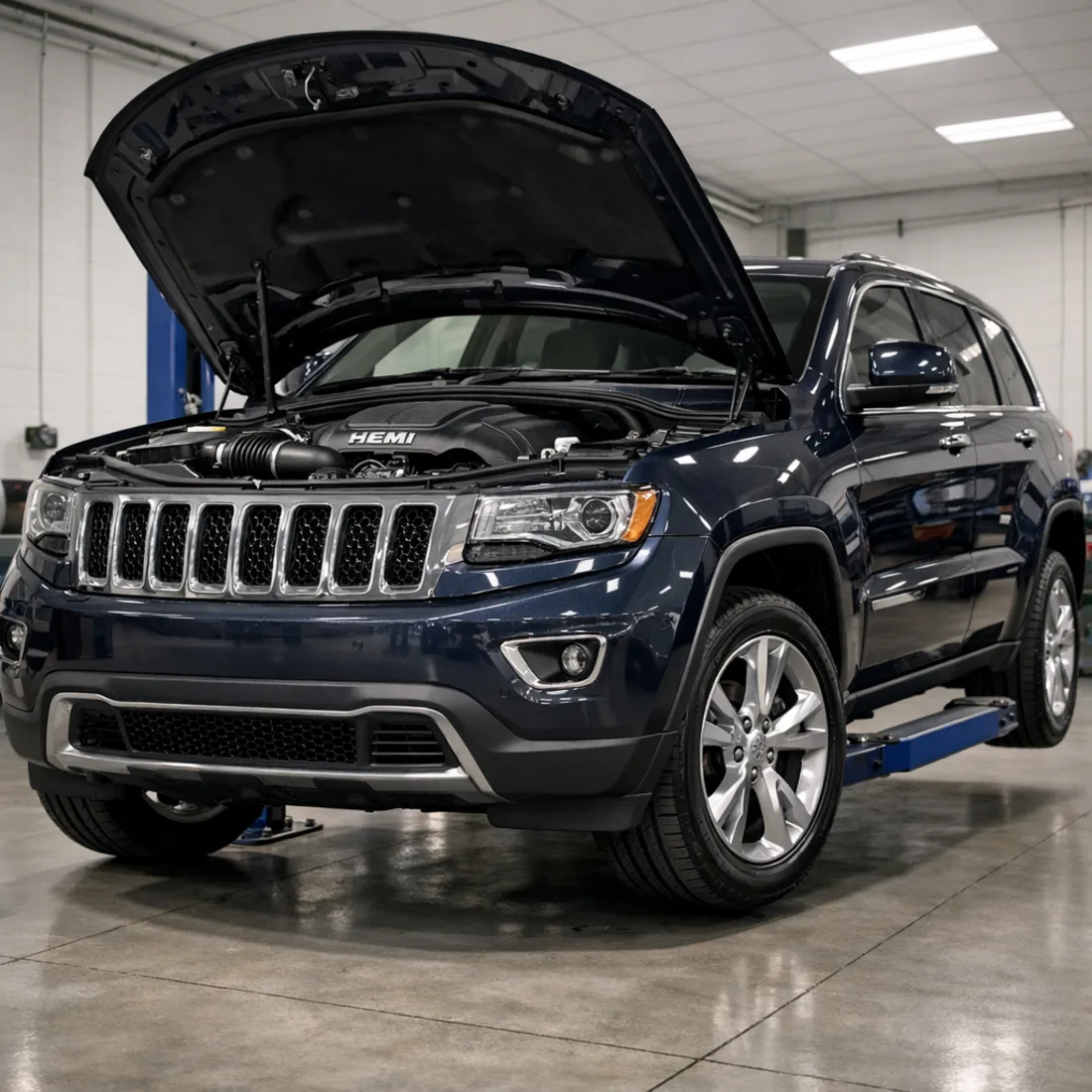
Every generation covered on this page gets diagnosed using the factory wiTECH platform. This is not a preference, it is a capability gap. A generic OBD reader on a Grand Cherokee gives you powertrain codes and not much else. wiTECH reads every module: engine, transmission, ABS, air suspension, body, airbag and the SRT specific systems on the performance cars. It runs guided tests, commands actuators and lets us check the full misfire history across all cylinders rather than just the codes that happened to set a malfunction indicator light.
That matters enormously for MDS diagnosis on the HEMI engines. A top end tick might have intermittent misfire history on two or three cylinders that only wiTECH will surface properly. On the 3.0 CRD, actuating the EGR valve and turbo actuator through wiTECH tells us whether a fault is mechanical or electronic, which changes the repair entirely. Our auto electrical and diagnostics capability extends to module coding and programming when replacement parts need to be initialised to the vehicle.
Tuning the Grand Cherokee: What Is Real and What Is Realistic
All four variants have tuning potential, and the gains are meaningful rather than marginal. The GPEC2A ECU on the WK2 5.7 and the GPEC2 on the SRT8 both respond well to a calibrated Stage 1 file. The 3.0 CRD on Bosch EDC17C79 has the most headroom of the group: 35 hp and 60 Nm from a diesel tune is a substantial real world improvement, particularly useful if you tow.
The GPEC2A ECU responds well to a calibrated Stage 1 file. Available options include DECAT, FLAPS and Vmax adjustment. Tuning is done once the engine is confirmed healthy and properly serviced.
Given this is already a naturally aspirated engine near its comfortable atmospheric limit, those are meaningful numbers. Additional options include DTC removal, a pop and bang map, start/stop disable and Vmax adjustment. Options are discussed case by case.
The most headroom of the group. For a vehicle often used for towing or loaded travel, that torque gain is genuinely useful. Available options include EGR OFF, DPF OFF, DTC removal, pop and bang map, start/stop disable, FLAPS and Vmax.
Tuning only makes sense on a mechanically sound, properly serviced vehicle. If there is MDS fault history, a sheared manifold bolt, an oil cooler weep or a DPF that has not regenerated in months, that gets fixed first. The tune is the reward for getting the fundamentals right, not a substitute for them. See our tuning page for the full picture.
Frequently Asked Questions
The questions we get most. Something else on your mind? Get in touch.