Jaguar E Pace: P300, D200 and D150
The E Pace arrived as Jaguar's compact SUV entry point and it's been offered with a range of Ingenium engines that share more DNA than their names suggest. Whether you're driving the punchy P300 petrol, the mild hybrid D200 diesel or the entry level D150, you're dealing with the same core engine family, the same diagnostic platform and, honestly, a lot of the same recurring faults. Understanding where each variant sits in the story helps you own one smarter.



P300 2.0T: The Petrol That Flatters Until It Doesn't
The P300 is the performance end of the E Pace range, running the 2.0 Ingenium petrol turbo four at 300 hp with all wheel drive. It's a genuinely engaging compact SUV and on a wet Auckland motorway the AWD system earns its keep. But underneath the confident exterior, the Ingenium petrol shares the same foundational characteristics as its diesel siblings, and some of the fault patterns cross over.
Timing chain concerns are the headline issue on early Ingenium petrol units. A cold start rattle is the warning sign. The tensioner condition should be assessed early and not left to chance. Carbon build up on the intake valves is a known Ingenium petrol problem because direct injection means the intake ports and valves don't get the fuel wash that older port injected engines had. On higher mileage P300s, intake carbon inspection is a sensible proactive step.
The wet belt oil pump drive used in some Ingenium petrol configurations is worth calling out separately. This is a system that absolutely depends on clean oil at the correct grade and the correct interval. Stretching an oil change on a P300 isn't just pushing your luck, it's actively degrading a component that's expensive to put right. Don't stretch changes.
-
Timing chain rattle and tensioner wear on cold start, particularly early Ingenium units
-
Carbon build up on intake valves from direct injection operation
-
Coolant loss on higher mileage examples
-
Wet belt oil pump drive: correct oil grade and on time service intervals are critical
-
Suspension bush wear and drivetrain mount clunks as mileage builds
-
Sensor faults across powertrain and AWD systems
Stretching an oil change on a P300 isn't just pushing your luck.
It's actively degrading a component that's expensive to put right.
We diagnose the P300 with Jaguar's factory SDD and Pathfinder platform, the same tooling we use on both diesel variants. Module coding, live data logging and guided routines done properly, not with a generic tool that gives you half the picture. The P300 also responds to Stage 1 tuning for owners who want more torque without changing the car's character.
Routine servicing on the P300 covers oil and filter with the correct Ingenium petrol grade, air filter, cabin filter, spark plugs, drive belts and wipers. Brake pads and rotors, cooling system checks and suspension refresh round out the service picture. Our mechanical repairs team handles the full scope, from routine items to the bigger preventative jobs.
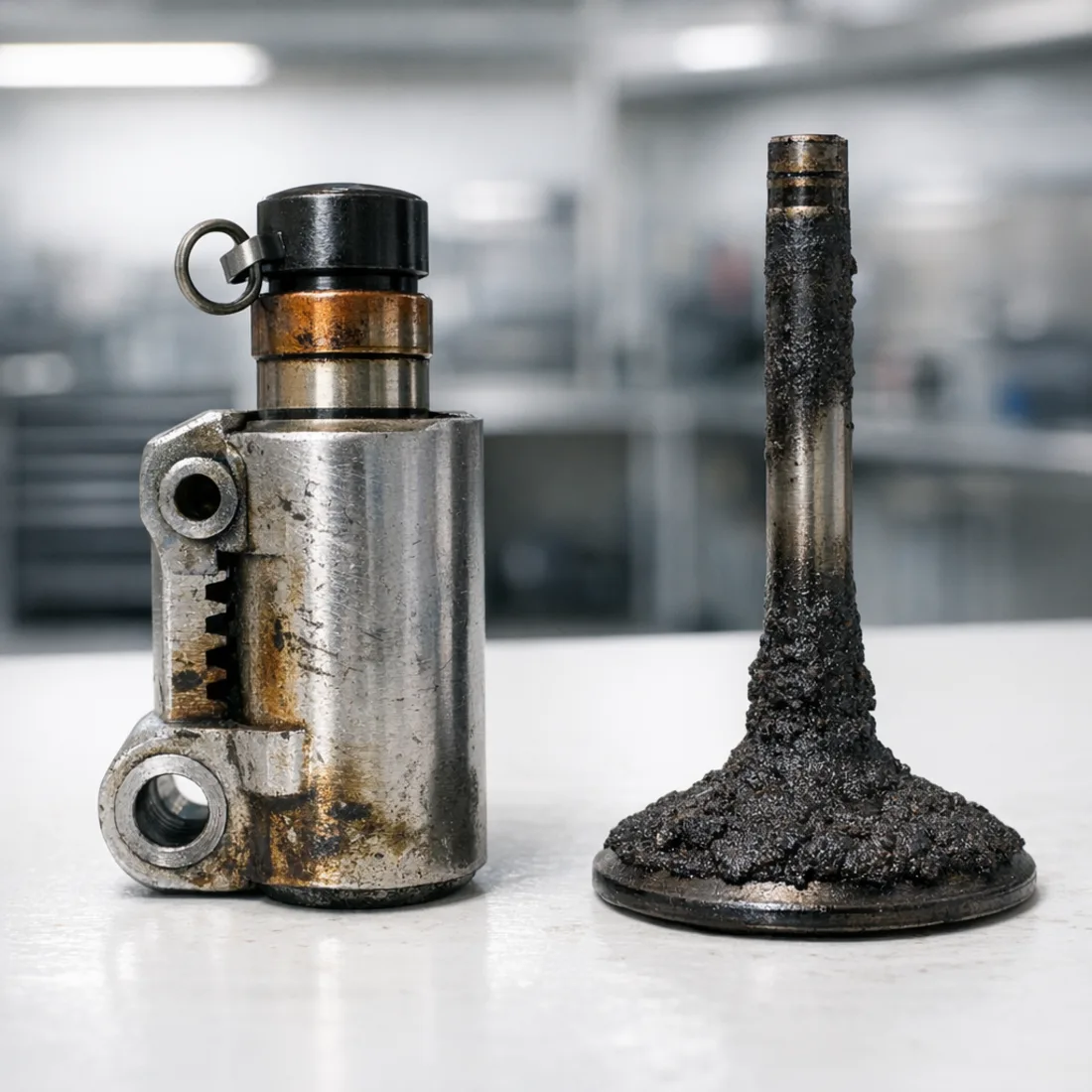
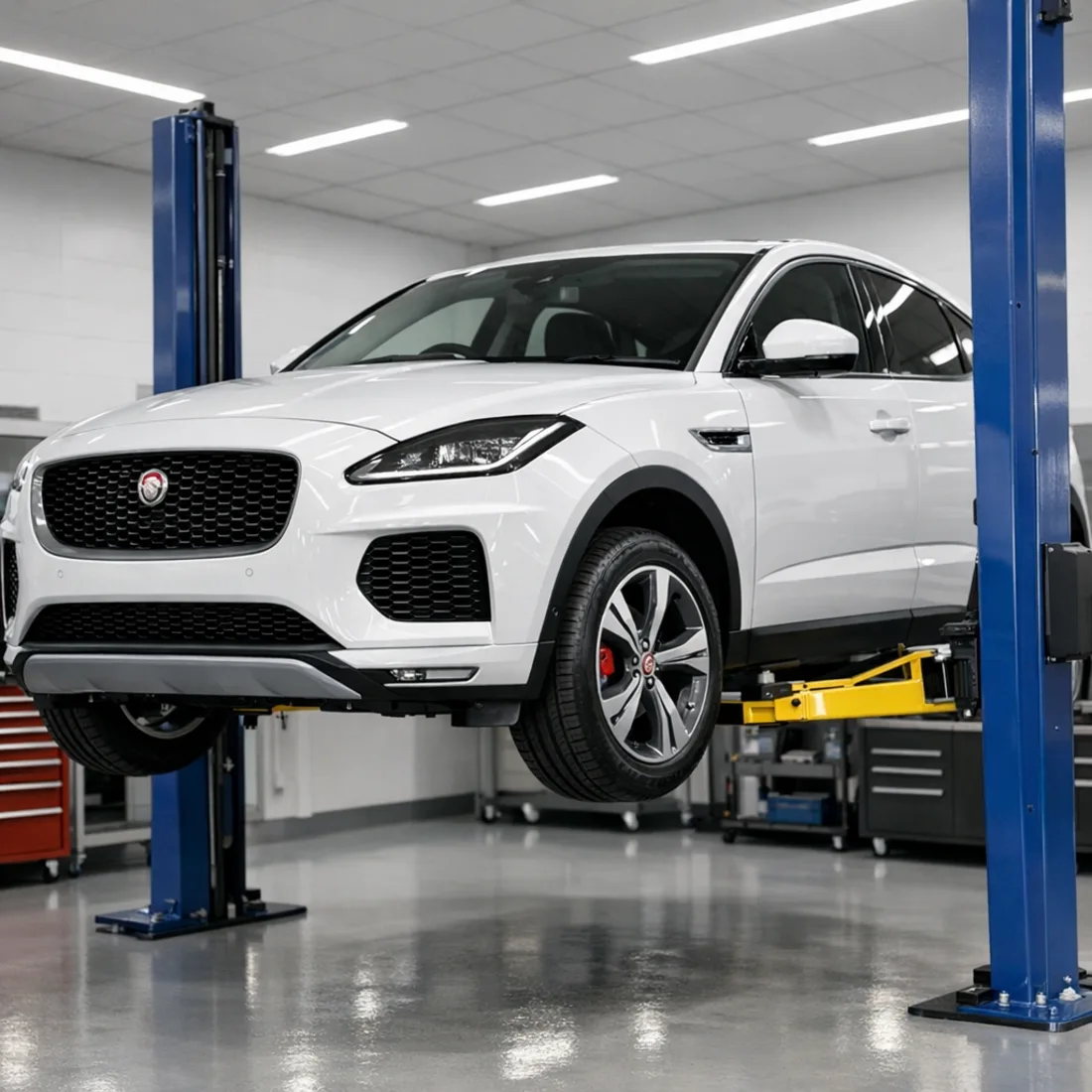
Get your E Pace booked in with a proper Jaguar specialist in Penrose.
D200 2.0D: The Mild Hybrid Diesel With More to Manage
The D200 takes the same Ingenium diesel family and adds 48V mild hybrid assistance, pushing claimed output to 204 hp. It's a genuinely refined package, and it slots neatly into Auckland's mix of motorway and urban driving. But adding a mild hybrid system to an already complex diesel means more systems that can develop faults, and the underlying Ingenium weak points haven't gone away.
Everything that bites the D150 can bite the D200. The timing chain and tensioner remain a priority inspection point, oil service discipline still matters enormously, and EGR, DPF and turbo actuator issues all show up on the D200 with the same frequency. What the D200 adds to that list is the 48V mild hybrid battery and its associated systems, which can throw faults of their own and need proper verification rather than a guess and a reset.
Compared to the D150, the D200 is a more capable car out of the box and the mild hybrid system does make a real world difference in urban driving. But if your D200 has been used mostly for short school run distances and the service history is thin, it'll carry the same risks as any neglected Ingenium diesel. The badge doesn't change the physics.
-
Timing chain and tensioner wear from extended oil intervals
-
EGR valve and cooler faults
-
DPF regeneration issues on short trip vehicles
-
Turbo actuator faults
-
48V mild hybrid battery and system faults
-
Sensor faults across the powertrain and emissions systems
The badge doesn't change the physics.
A D200 with thin service history carries the same Ingenium risks as any neglected diesel.
We diagnose the D200 using the same factory Jaguar SDD and Pathfinder approach as the D150. That matters more on the D200 because of the added mild hybrid modules. A generic tool simply won't see everything, and you can end up chasing faults that aren't fully cleared or misdiagnosed because you're only seeing part of the picture.
Routine servicing covers oil and filter with the correct low SAPS grade, air filter, fuel filter, cabin filter, glow plugs, wipers and drive belt inspection. DPF, EGR and AdBlue attention are part of the ongoing diesel maintenance picture. Where the car suits it, Stage 1 tuning is available on the D200 engine.
D150 2.0D: The Entry Diesel That Introduced a Few Hard Lessons
The D150 is the base diesel E Pace, running the 204DTD Ingenium diesel at 150 hp and 380 Nm from the factory. On paper that's a sensible town SUV. In practice, it's a sophisticated engine that rewards careful ownership and punishes neglect in very specific ways. We see a lot of them come through, and the pattern is consistent.
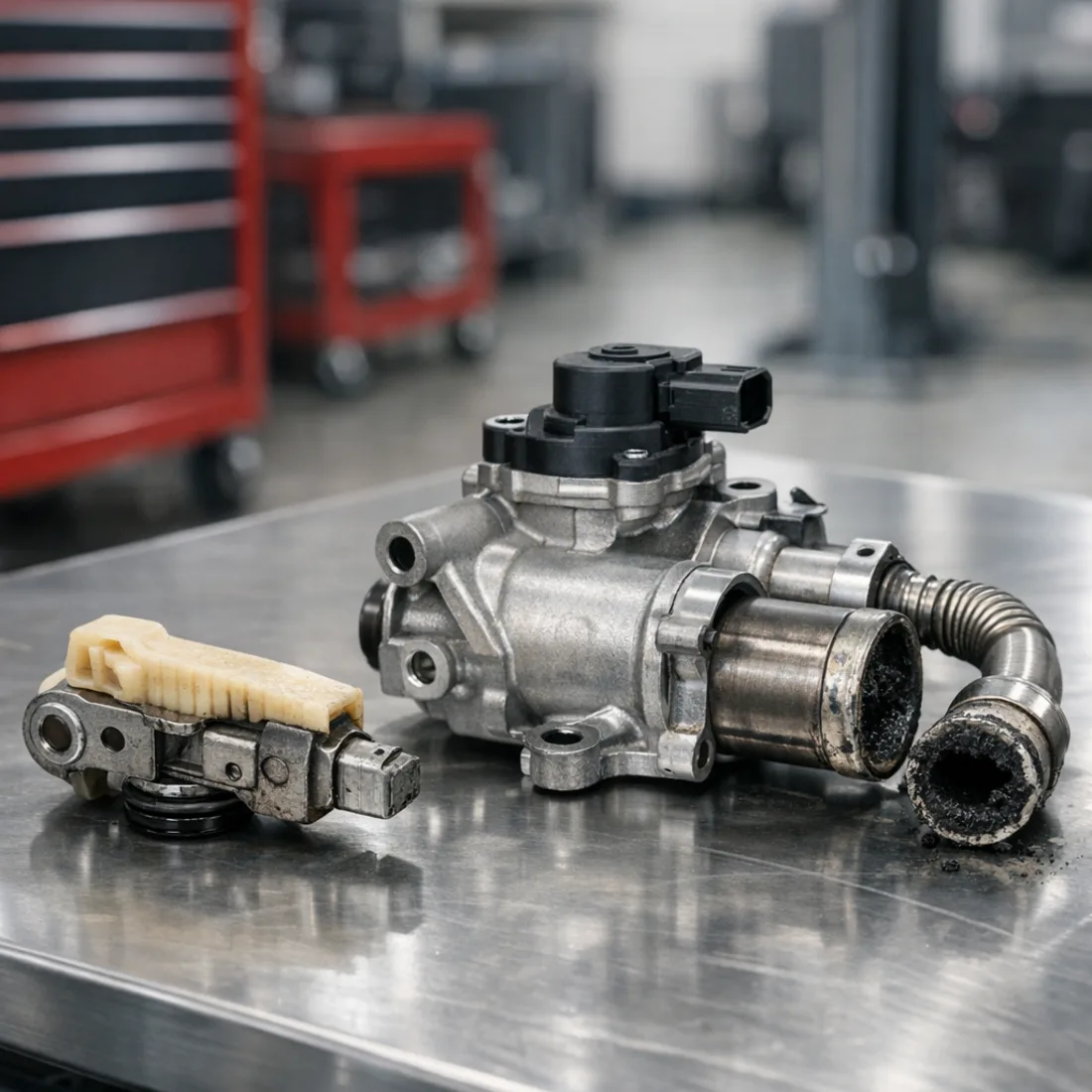
The Ingenium diesel is a precision instrument. The timing chain and tensioner are the first thing to assess on any used D150. Cold start rattle is the giveaway, and if you're hearing it and ignoring it, the repair bill grows quickly. Chain stretch happens when oil changes get stretched or when the wrong oil grade goes in. This engine wants the correct low SAPS diesel oil and it wants it on time, every time.
The ECU on the D150 is a Bosch unit (EDC17C08, EDC17CP55 or MEDC17.9 depending on build), and we diagnose these properly using the Jaguar factory SDD and Pathfinder platforms. Generic scan tools miss module level data on these cars. Factory tooling means we can run guided tests, read live data correctly and clear faults in a way that sticks.
-
Timing chain stretch and tensioner wear, especially on neglected service history cars
-
EGR valve and cooler clogging, particularly on cars used for short runs
-
DPF blockage on town use vehicles that never get a proper run
-
AdBlue and NOx sensor faults triggering warning lights
-
Oil dilution from short trip diesel use
-
Turbo actuator faults affecting power and response
-
Coolant loss that owners have been topping up rather than diagnosing
A well maintained D150 with a Stage 1 tune is a real alternative worth considering.
From 150 hp and 380 Nm, a properly mapped Stage 1 brings it to 210 hp and 490 Nm.
For owners thinking about more performance, the D150 responds well to a Stage 1 tune. Starting from 150 hp and 380 Nm, a properly mapped Stage 1 brings it to 210 hp and 490 Nm. That's a meaningful gain, and it brings the D150 genuinely close to D200 territory. If the D200 feels out of budget on the used market, a well maintained D150 with a Stage 1 tune is a real alternative worth considering.
Routine servicing on the D150 covers oil and filter with the correct grade, air filter, fuel filter, cabin filter, glow plugs, drive belts and wipers. Bigger ticket preventative jobs include timing chain service, brake pads and rotors, suspension components and, where needed, DPF, EGR and AdBlue system repairs.

Picking Between Them: Buying Advice on the Used Market
If you're shopping for an E Pace and trying to choose between the three, here's what actually matters.
You want an E Pace that feels genuinely alive. 300 hp through AWD makes it a different experience from either diesel. A well maintained early P300 with the timing chain already serviced is a better buy than a higher mileage one with question marks. Service history matters just as much here as on the diesels.
You want the sweet spot. The mild hybrid system adds real world refinement, the power is up on the D150 and it still carries all the diesel efficiency advantages. With a clean service history it's the most rounded diesel E Pace. Check DPF condition carefully, especially on lower mileage cars that may have been used mostly in town.
You want the most affordable entry point. The engine is capable and the Stage 1 tuning potential makes it a genuine performance option on a budget. If the records are clean and the timing chain hasn't been neglected, it's a solid buy. If you're not sure about the history, budget for a timing chain assessment before committing.
- Always check for full service history with correct oil grades recorded
- Listen for cold start chain rattle on any Ingenium, petrol or diesel
- On D150 and D200: check DPF condition and regeneration history
- On D200: verify the 48V mild hybrid system has no stored faults
- On P300: ask about intake carbon inspection and any coolant loss history
- Suspension and drivetrain mount inspection matters on higher mileage examples across all three
Servicing the E Pace Family: What Changes and What Doesn't
All three E Pace variants share enough common ground that servicing principles apply across the range. The differences are in the details.
Oil grade discipline is the single most important servicing point across all three. The D150 and D200 need the correct low SAPS diesel grade. The P300 needs the correct Ingenium petrol specification. Putting the wrong oil in or stretching the interval degrades the timing chain and wet belt systems at a rate that shows up in the repair bills later. We fit genuine and OEM spec oil filters, and we always use the correct oil grade for the specific engine.
D150 service items: oil and filter, air filter, fuel filter, cabin filter, glow plugs, drive belt, wipers, brake pads and rotors. D200 service items: same as D150 plus 48V mild hybrid system check. P300 service items: oil and filter, air filter, cabin filter, spark plugs, drive belt, wipers, brake pads and rotors, cooling system check.
Brake servicing is consistent across the range. The E Pace is a reasonably heavy compact SUV and the brakes do real work, particularly in Auckland stop start traffic. Worn rotors or glazed pads should be sorted properly. See our brake repairs service for what's involved.
We carry out all work using brand new genuine and OEM spec parts. No shortcuts on consumables for these engines.
How We Diagnose the E Pace Range
All three E Pace variants are diagnosed using the Jaguar factory SDD and Pathfinder platforms. That's not a marketing point, it's a practical one. These cars have multiple modules talking to each other, including the powertrain, transmission, ABS, SRS, body and, on the D200, the mild hybrid system. A generic scan tool sees a fraction of that. Factory tooling sees everything.
With SDD and Pathfinder we can run guided diagnostic routines, read live data from all modules, carry out module coding after component replacement and clear faults correctly. On the D150 specifically, the Bosch ECU variants (EDC17C08, EDC17CP55 and MEDC17.9) require accurate identification before any tuning or programming work, and the factory platform handles that properly.
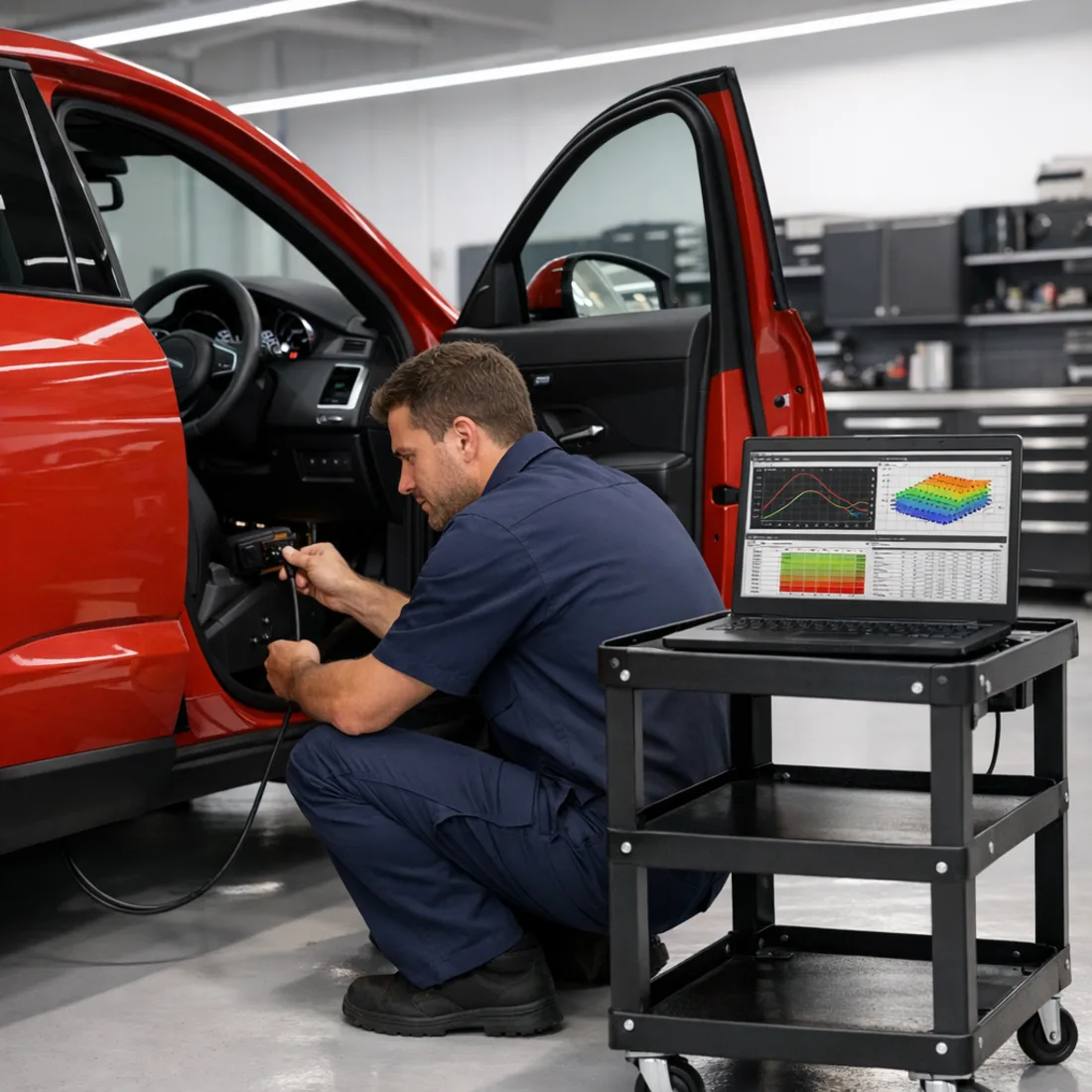
We use the same approach for tuning work. The Stage 1 tune on the D150 is written and loaded via OBD port, bringing the car from 150 hp and 380 Nm to 210 hp and 490 Nm. That's a genuine gain without touching hardware, and it's done with mapped files specific to the engine variant, not a generic flash. For more on what's achievable, our power gains page covers the approach in detail.
Regardless of which E Pace you're bringing in, we treat the diagnostics the same way: factory tools, proper procedure, no guessing.
Stage 1 Tuning on the E Pace Range
The D150 is the strongest tuning proposition in the E Pace range, with a well defined Stage 1 result. The D200 and P300 are also candidates where the car and customer suit it.
The 204DTD Ingenium diesel responds well to a properly mapped Stage 1 tune, bringing it from 150 hp and 380 Nm to 210 hp and 490 Nm. In straight output terms a tuned D150 actually exceeds the stock D200's power figure. The tune is written and loaded via OBD port with mapped files specific to the engine variant, not a generic flash. Related work available includes EGR OFF, DPF OFF, DTC Removal, START/STOP OFF, FLAPS, Vmax and Adblue.
Where the car suits it, Stage 1 tuning is available on the D200 engine. The mild hybrid system means the full setup needs to be verified before tuning work is carried out, which is another reason factory level diagnostics matter here.
The P300 responds to Stage 1 tuning for owners who want more torque without changing the car's character. As with all Ingenium petrol work, timing chain and wet belt condition should be confirmed before loading any tune.
All tuning is carried out with the correct mapped files for the specific ECU variant, loaded properly via the OBD port. See our file service for more detail on how we approach ECU work.
Frequently Asked Questions
The questions we get most. Something else on your mind? Get in touch.