Jaguar F Pace: 3.0D, 2.0 Turbo and 2.0d
The F Pace arrived and did something Jaguar had never quite pulled off before: it made the brand feel genuinely useful without losing the plot dynamically. From the muscular 306DT V6 diesel through to the Ingenium four cylinder family in both petrol and diesel form, each generation brought real capability and, honestly, a fresh set of habits for owners to learn. We have had all three variants on the hoist here in Penrose and this is the full picture, generation by generation, with the buying advice and the honest fault list that the brochure never included.



F Pace 3.0D: The V6 Diesel That Started It All
Three litres, six cylinders, 300 horsepower and 700 Nm of torque. On paper the 306DT is the F Pace to have, and in practice it largely delivers on that promise. It pulls hard, it sounds properly grown up at load, and it gives the F Pace a personality the four cylinder variants have to work harder to match. But it is a complex diesel V6, and complexity has consequences once the kilometres stack up.
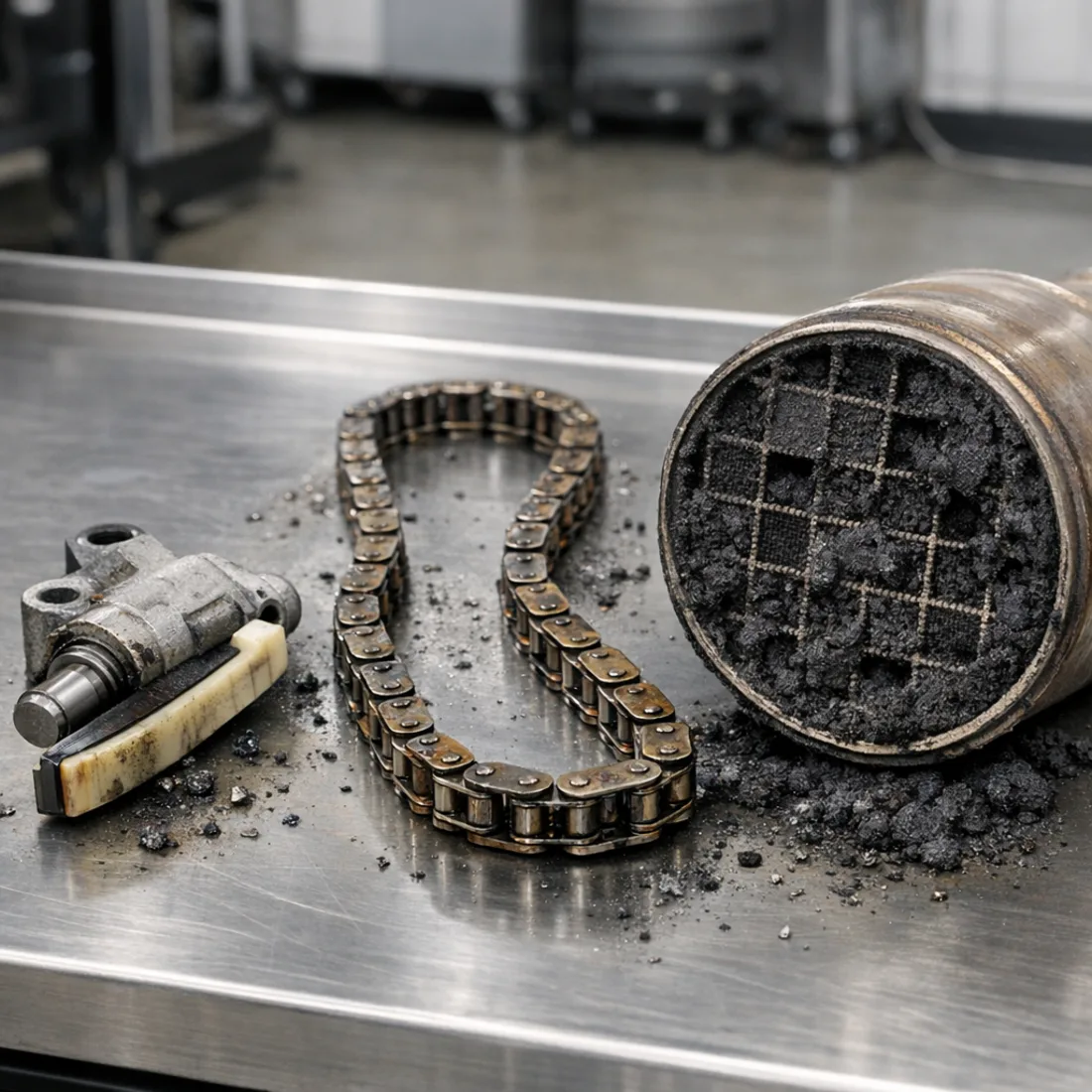
Timing chains are the first thing we check on any 306DT that comes through the door with higher mileage. Cold start rattle is a tell tale sign of stretched chains or worn tensioners, and ignoring it is expensive. The tensioners themselves are a known inspection point. Front pulley and crankshaft bolt condition is worth checking too, particularly on cars that have been through a few New Zealand winters where temperature cycling accelerates fatigue.
The DPF and EGR system on the 306DT needs regular long runs to regenerate properly. Cars that spend their lives doing school runs and short commutes will clog the DPF faster than you might expect for a V6. When that happens, the AdBlue system faults tend to follow shortly after as the emissions management gets confused. We diagnose all of this with the factory Jaguar SDD and Pathfinder platform and the correct interface, not a generic scan tool, which means we can read module level faults, run guided tests and carry out proper adaptations rather than just clearing codes and hoping.
-
Timing chain stretch and tensioner wear, especially on cold start
-
Crankshaft front pulley and bolt condition on higher mileage cars
-
DPF and EGR clogging on short trip vehicles
-
AdBlue system faults and NOx sensor failures
-
Turbo wear and boost related faults
-
Air suspension faults where fitted
The 306DT delivers in a way no four cylinder will.
But it is a complex diesel V6, and complexity has consequences once the kilometres stack up.
Routine service on the 306DT covers oil and filter with the correct low SAPS diesel grade, air filter, fuel filter, cabin filter, glow plugs, drive belts, wipers, and brake pads and rotors. Suspension components including the air suspension where fitted, DPF and EGR cleaning or replacement, AdBlue system repairs, timing chain work and gearbox service are all jobs we handle here.
Get your F Pace booked in with a specialist who knows these engines.
F Pace 2.0 Turbo: The Ingenium Petrol and What to Watch
Jaguar moved away from the V6 petrol offerings and pushed the PT204 Ingenium two litre squarely at the volume market, and it worked. The 250hp, 365 Nm numbers are genuinely usable, the engine is lighter and more efficient than the 306DT, and it suits the F Pace chassis well. But the Ingenium petrol brought its own set of habits, and the most important one is this: it is deeply intolerant of stretched oil change intervals.
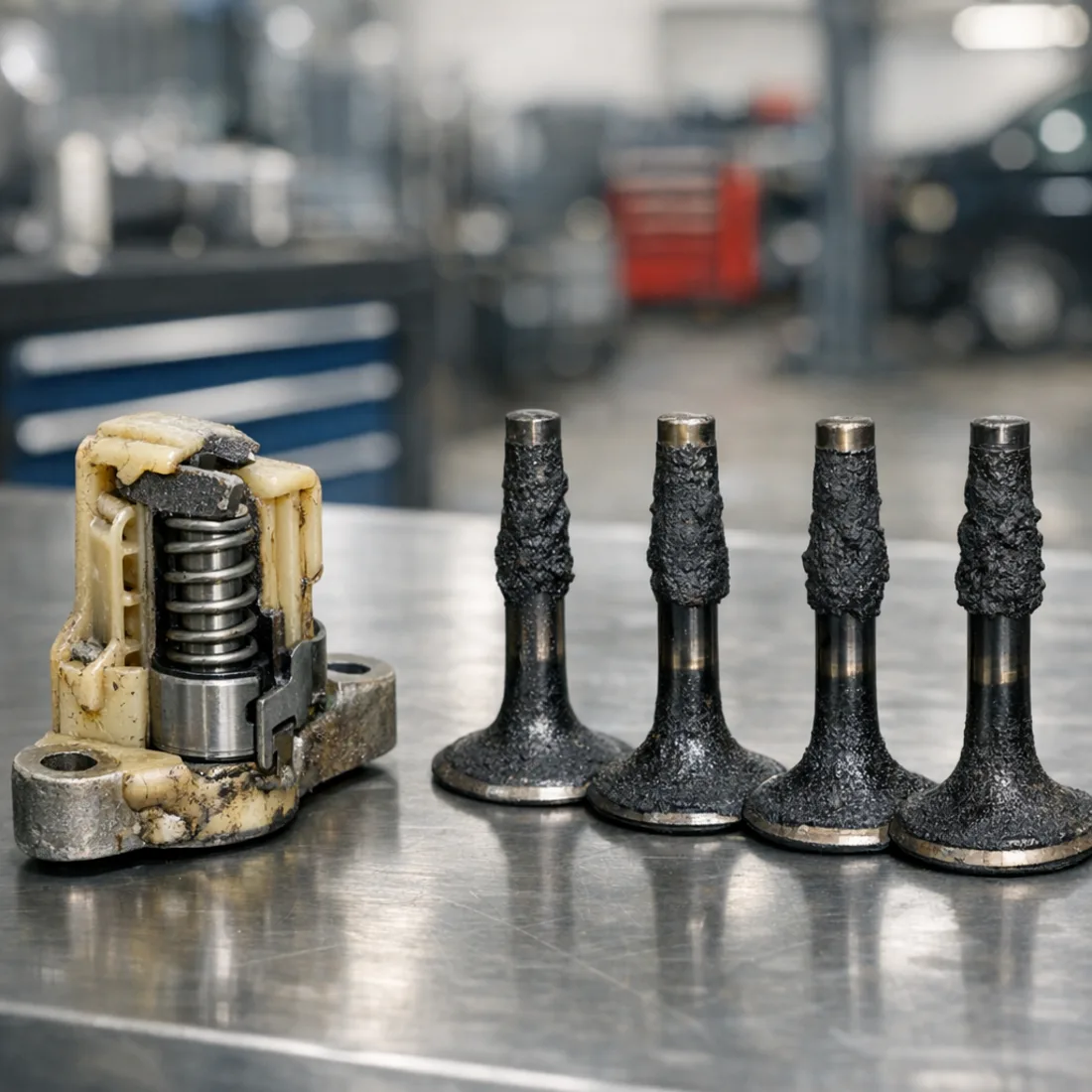
Timing chain wear is the number one concern on the PT204, and it is almost always linked to oil service history. When oil starts breaking down or the level drops and nobody tops it up, the chain tensioners lose their ability to keep things tight and you get cold start rattle. Catch it early and it is a repair. Leave it long enough and it becomes a very different conversation. If you are buying one of these used, the service history is not just paperwork, it is the single most important thing to look at.
The direct injection layout means fuel does not wash the intake valves clean the way a port injection engine does. Carbon deposits build up gradually, and the first signs are usually a slight roughness at idle or a misfire under load. It is not a disaster, but it does need attention. We check valve condition as part of any thorough inspection on this engine.
Coolant system issues are worth tracking too. Water pump and thermostat failures have shown up on PT204 cars with enough regularity that we treat them as inspection points rather than surprises. If coolant level is dropping and there is no obvious external leak, the water pump is a likely culprit.
-
Timing chain wear tied directly to missed or stretched oil changes
-
Carbon build up on intake valves from direct injection, causing rough running or misfires
-
Coolant loss, water pump and thermostat issues
-
Oil consumption and external oil leaks on higher mileage examples
-
High pressure fuel system faults
It is deeply intolerant of stretched oil change intervals.
The service history is not just paperwork, it is the single most important thing to look at.
We diagnose the PT204 with Jaguar SDD and Pathfinder, exactly the same factory platform we use on the 306DT. That matters because module level diagnostics on these cars, especially anything touching the ECU calibration or software version, needs the right tool or you are guessing. Routine service includes oil and filter with the correct low ash grade, air filter, cabin filter, spark plugs, brake pads and rotors, drive belt condition and cooling system health.
F Pace 2.0d: The Facelifted Diesel and Its Habits
The 2.0d arrived with the facelifted F Pace and represents Jaguar's move to an all Ingenium diesel lineup. At 204hp it is not as immediately dramatic as the 306DT, but it is a more modern, lighter architecture and in many ways a more refined daily driver. What it shares with both earlier variants is the Ingenium family's sensitivity to how it is looked after. The 2.0d is not a set and forget engine.
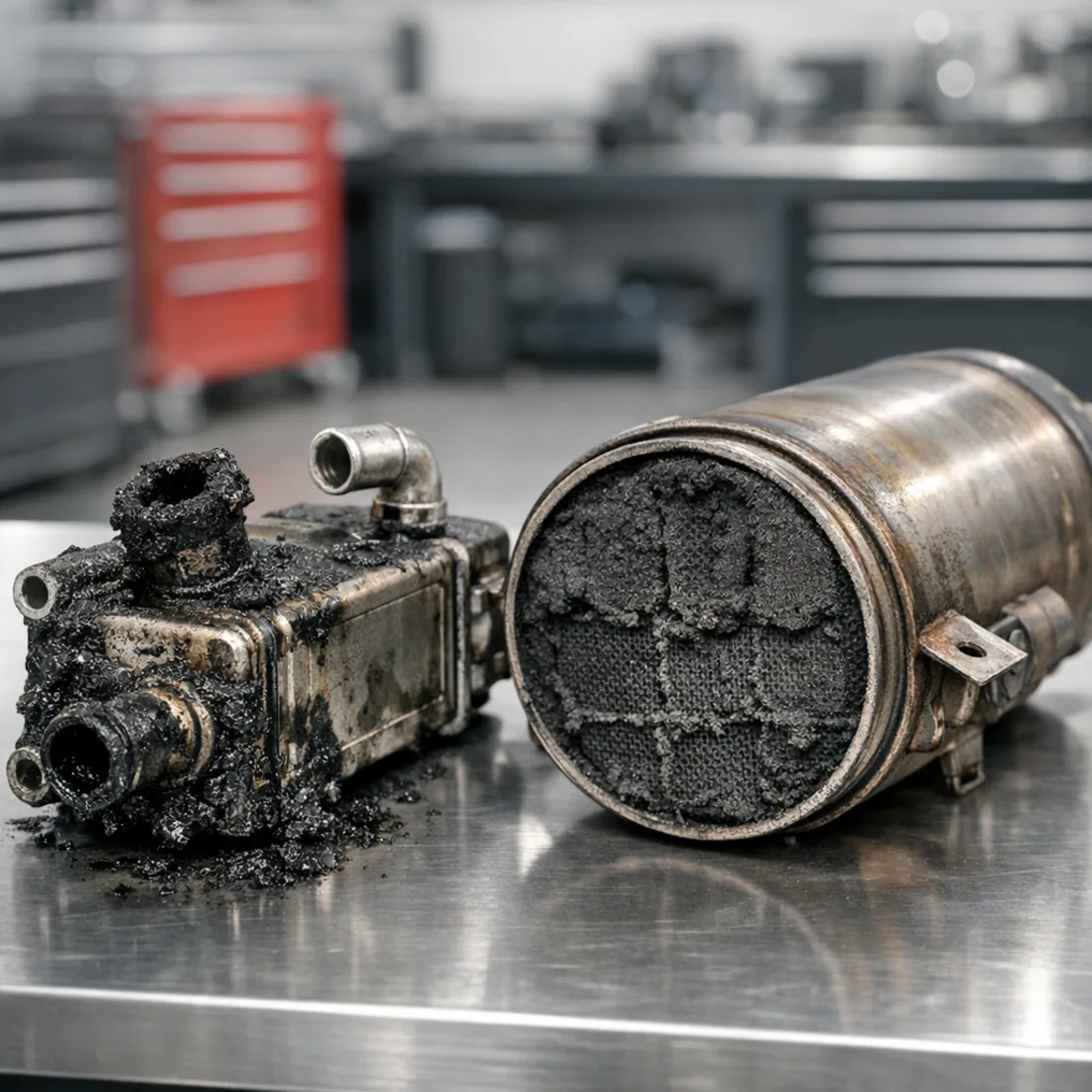
Timing chain wear reappears here, because the Ingenium diesel has the same dependency on clean oil as the PT204 petrol. If the service history has gaps, the chain is the first thing we inspect. EGR cooler fouling and intake carbon build up are consistent themes across the Ingenium diesel range. Short trip driving is the enemy here: the engine never fully warms up, combustion is less complete, and the EGR system circulates partially burnt gases that leave deposits over time.
The AdBlue and NOx system on the 2.0d follows similar patterns to the 306DT. DPF problems and AdBlue faults tend to arrive together, and diagnosing them properly means reading the full emissions module data, not just pulling a fault code. Our auto electrical team handles the sensor and wiring side of these faults, while our mechanical team handles the physical components. Crankcase breather problems are worth checking if you see excessive oil mist or unexplained oil consumption on these engines.
-
Timing chain wear on cars with incomplete service history
-
EGR cooler fouling and intake carbon build up from short trip use
-
DPF regeneration failures on urban duty vehicles
-
AdBlue system faults and crankcase breather issues
-
Glow plug failures affecting cold starts
The 2.0d is not a set and forget engine.
Short trip driving is the enemy here: the engine never fully warms up and the EGR system circulates partially burnt gases that leave deposits over time.
Routine service on the 2.0d covers oil and filter with the correct low SAPS diesel specification, air filter, fuel filter, cabin filter, glow plugs, drive belts, wipers, and brake pads and rotors. We also look at suspension components and general sensor health as part of any thorough inspection. Stage 1 tuning is available on the 2.0d for owners wanting sharper response and better pulling power.
Buying a Used F Pace: Which Generation Makes Sense for You
The honest answer is that all three variants can be excellent used buys, and all three can be expensive headaches. The difference is almost always service history rather than the variant itself. Across all three, we strongly recommend a pre purchase inspection using factory level Jaguar tools. A generic scanner will not read the full picture on any of these variants.
You want the V6 experience and the torque that goes with it. The 306DT delivers in a way no four cylinder will. The flip side is that timing chain and DPF work on a V6 costs more than the same job on a four cylinder Ingenium. Budget accordingly and make sure the car has documented oil changes at sensible intervals.
You want lower running costs and are happy to give up a little torque. It responds very well to Stage 1 tuning, turning it into a surprisingly quick thing for a mid size SUV. The main things to check are timing chain condition and intake valve health. A pre purchase inspection at a workshop with the right Jaguar diagnostic tools will tell you what you need to know before you sign anything.
You want the most refined and modern version of the F Pace. It is also the one with the shortest mileage accumulation in the New Zealand used market, which is both a positive and a reason to be careful: you often cannot tell how it was used in those early years. EGR and DPF health should be your first diagnostic check if the car was doing a lot of city driving.
- Check full service history, correct oil grade and intervals are everything on all three variants
- Listen for cold start timing chain rattle, brief is watchable, persistent needs attention now
- On the 306DT, inspect DPF soot load and AdBlue dosing data with factory tools
- On the PT204, check intake valve carbon condition and cooling system health
- On the 2.0d, check EGR cooler condition and DPF regeneration history
- Use [[link:mechanical repairs|factory level Jaguar diagnostic tools]] for pre purchase inspection, a generic scanner will not read the full picture
What Stays the Same Across the F Pace Range
Despite the differences between the 306DT V6 and the Ingenium four cylinder family, there is more common ground on the servicing side than you might expect. All three variants share a dependence on correct oil specification, which means genuinely using the right grade rather than whatever is cheapest that week. For the diesels that is a low SAPS specification, and for the PT204 petrol it is a low ash grade. Getting this wrong does not cause instant damage, but it accelerates wear on components that are not cheap to replace.
The timing chain is the critical mechanical item across all three variants. It is not a serviceable item you replace on a schedule, but it is something we inspect carefully whenever a car comes in, and something any owner should listen for. Cold start rattle that clears within a few seconds is worth investigating. Cold start rattle that stays for longer needs attention now.
Brake system health is consistent across the range too. The F Pace is a heavy vehicle, and it works its brakes accordingly. We see pad and rotor wear at predictable intervals, and we always fit genuine or OEM specification parts. On the full service side, we cover oil and filter, all filters, spark plugs or glow plugs depending on the variant, drive belts, wipers, and a general check of cooling system, suspension and fluid levels. No second hand components.

How We Diagnose the F Pace: Factory Tools, Not Guesswork
This matters more than most people realise. The F Pace across all three generations uses a multi module electrical architecture where faults in one system can present as symptoms in another. A DPF fault can look like a transmission issue. An AdBlue NOx sensor fault can trigger limp mode in a way that looks like an engine problem. Without the full module level picture, you are chasing shadows.
We use the factory Jaguar SDD and Pathfinder platform with the correct interface for all three variants. That gives us full module access, guided diagnostic tests, live data across all systems simultaneously, and the ability to carry out software updates and calibrations that the car actually needs. Generic scan tools simply do not go deep enough on these vehicles.
For the emissions systems specifically, that means we can read actual NOx sensor values, DPF soot load figures, EGR position feedback and AdBlue dosing data in real time. That is the only way to accurately diagnose whether the DPF needs cleaning, the NOx sensor needs replacing, or the AdBlue dosing injector is the fault. We carry out DPF and EGR cleaning and repair through legitimate servicing, and we handle AdBlue system faults properly rather than masking them.

Stage 1 Tuning Across the F Pace Range
Stage 1 tuning on these vehicles is well within the safe headroom of the engine and drivetrain when the car is in good condition and serviced correctly. We do not tune cars that have unresolved mechanical faults. Each tune uses a calibrated file written for the specific ECU, not a generic map.
The diesel torque curve gets noticeably broader and the throttle response sharpens up considerably. Related work available includes EGR OFF, DPF OFF, DTC Removal, Pop and Bang Crackle map, START/STOP OFF, FLAPS, Vmax and Adblue.
For a two litre four cylinder, those are very meaningful numbers. A Stage 1 tune sharpens throttle and power on this turbo petrol considerably. Related work available includes DTC Removal, Pop and Bang Crackle map, START/STOP OFF, DECAT, FLAPS and Vmax.
Stage 1 tuning is available on the 2.0d for owners wanting sharper response and better pulling power. We assess each car individually before mapping.
Find out more about what is possible on your specific variant via our power gains and tuning page.
Frequently Asked Questions
The questions we get most. Something else on your mind? Get in touch.