Jaguar XE 3.0 V6 Supercharged: Servicing, Repairs and Tuning in NZ
The Jaguar XE arrived with a clear mission: prove that a sports saloon wearing a British badge could actually take the fight to the Germans. In the 3.0 V6 Supercharged form, with the AJ126 engine pushing out 340 hp and 450 Nm, it makes a pretty convincing argument from the moment you press the start button. That supercharger whine, the crisp throttle response, the way the car just sits on the motorway and quietly dismisses the speed limit it is a genuinely great machine. But like any high output petrol engine with a supercharger bolted to it, the XE rewards attentive ownership and punishes neglect. The components working hardest are the ones that wear first, and knowing which ones those are is half the battle.

The AJ126 Engine: What You Are Actually Working With
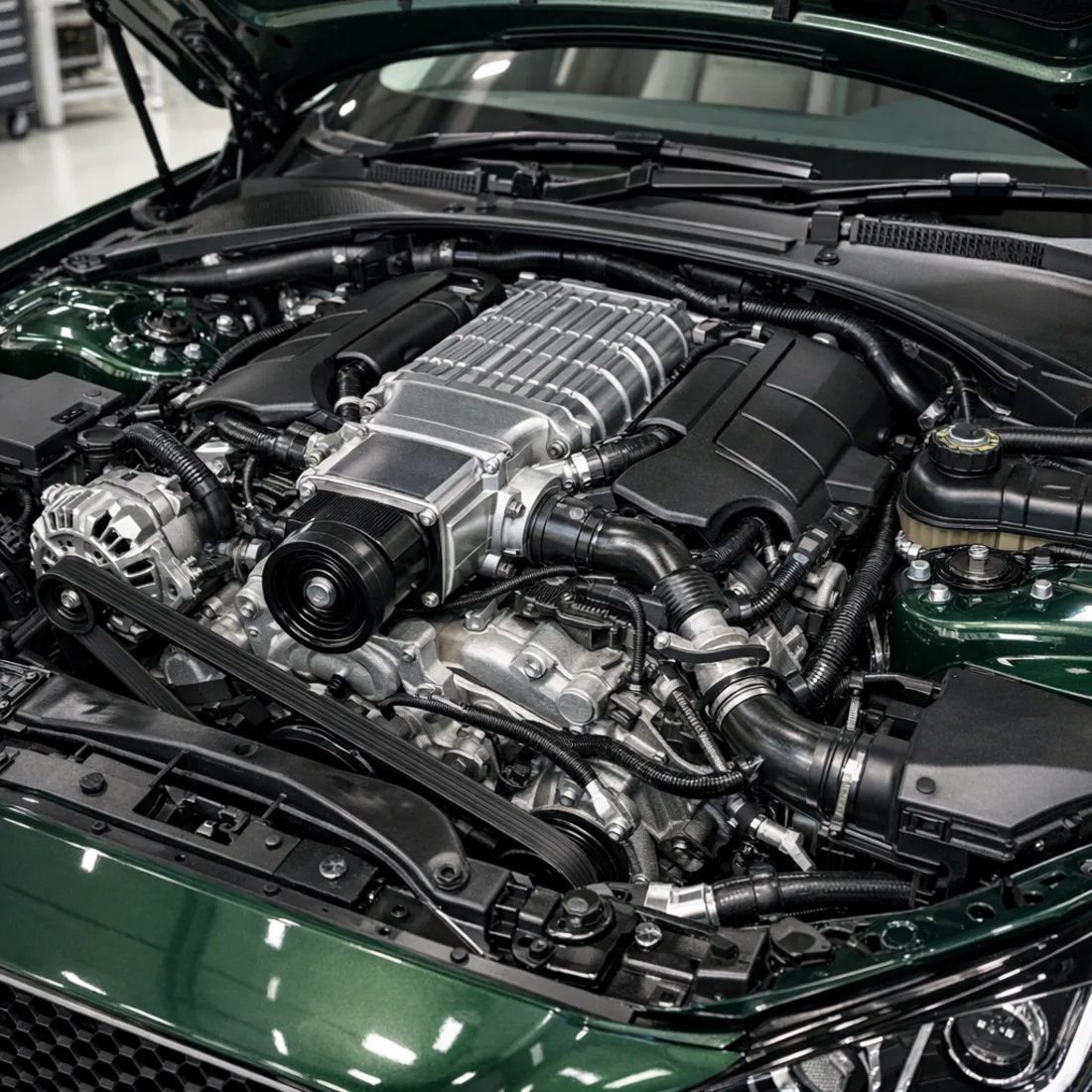
The AJ126 is a 2995 cc aluminium V6 with a 10.5:1 compression ratio and bore and stroke dimensions of 84.5 x 89.0 mm. It runs a Roots type supercharger sitting in the valley of the V, which means intake charge is pressurised mechanically rather than relying on exhaust gas. The practical result is instant torque with no lag, but it also means there is a physically driven component adding heat and mechanical load to the front of the engine. The ECU managing all of this is a Bosch MED17.8.31, a sophisticated unit that handles fuelling, ignition, boost management and a long list of system monitors. It is not the kind of hardware a generic aftermarket scanner reads with any depth. In the XE, this engine makes the car feel fast and alive, and in good condition it is genuinely reliable. The word in good condition is doing a lot of work in that sentence.
-
Supercharger nose bearing wear produces a high pitched whine or grinding tone that changes pitch with engine speed. A bearing that lets go can take the supercharger with it.
-
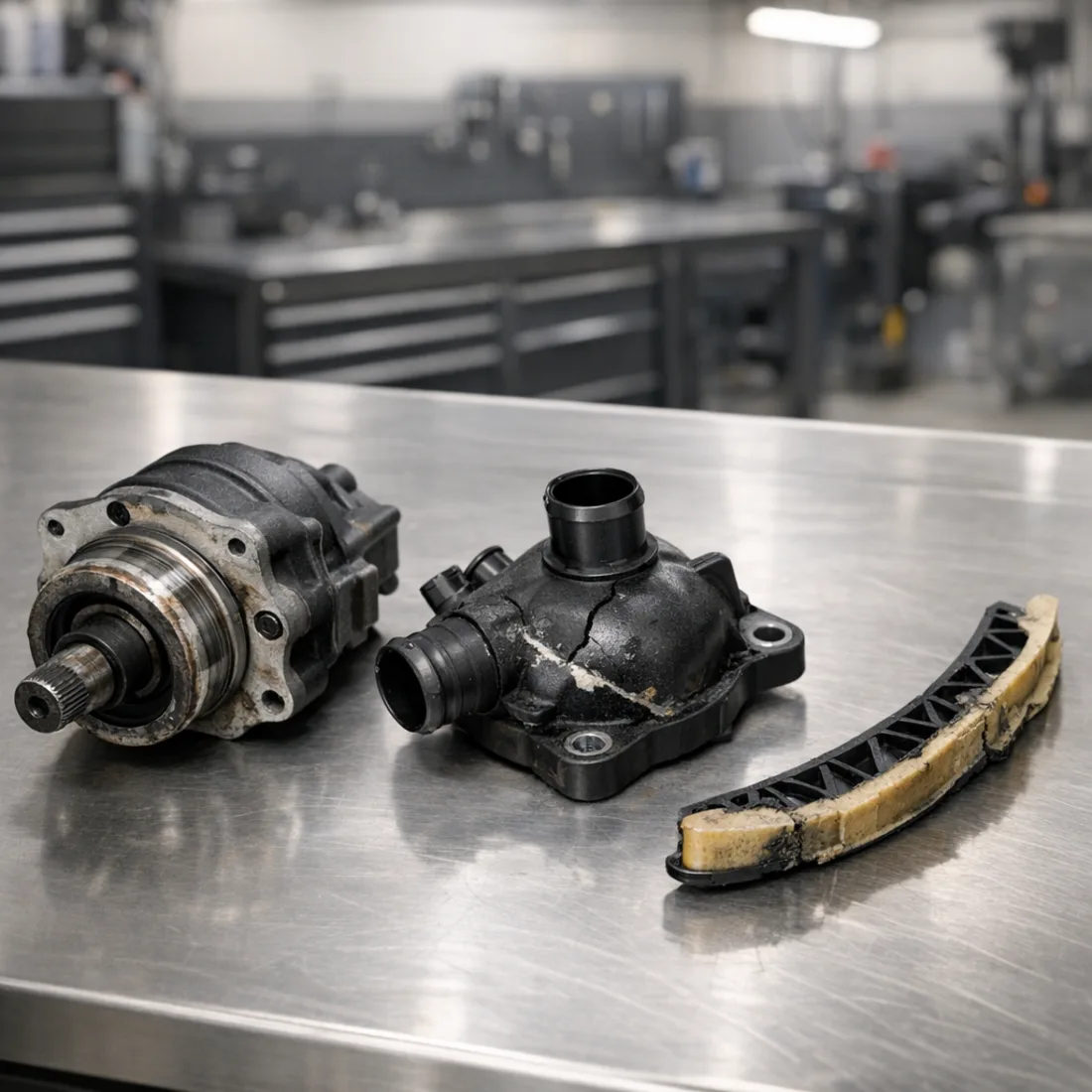
The thermostat housing and water pump are made with plastic components that see constant heat cycling, leading to small weeps that become real leaks. Warning signs include a low coolant message or a faint sweet smell after a run.
-
Timing chain guides and tensioners are worth a close look on higher mileage cars. Worn plastic guides produce a rattling noise on cold start that settles once oil pressure builds, but that rattle is the chain slapping against degraded plastic.
-
Misfires on the AJ126 are most commonly traced to ageing coil packs or spark plugs that are well past their replacement window, presenting as a rough idle, a hesitation under load, or a steady amber engine management light.
-
Carbon build up in the intake ports disrupts airflow over the valve seats, a normal consequence of direct injection engines used on a lot of short urban trips. Fresh plugs, new coil packs and an intake clean can transform the way the car feels.
A bearing that lets go can take the supercharger with it, and that is an expensive afternoon.
Catch the supercharger nose bearing early and it is a manageable repair. Leave it and the conversation changes entirely.
Every engine has its weak points, and the AJ126 is no different. The supercharger nose bearing is the one to watch first. It sits at the snout of the supercharger unit, takes constant mechanical load, and when it starts to wear the tell is a high pitched whine or a grinding tone that changes pitch with engine speed. People sometimes dismiss it as a belt noise and keep driving, which is exactly the wrong call.
The thermostat housing and water pump are the other known soft spots on this engine. Both are made with plastic components that see constant heat cycling, and over time that means small weeps that become real leaks. The warning is usually a low coolant message on the instrument cluster, or a faint sweet smell after a run. Catch it early and it is a straightforward coolant system repair. Leave it until the temperature gauge climbs and you are looking at a much bigger conversation about head gaskets and alloy warping.
Get your XE booked in with a proper Jaguar specialist in Penrose.
Routine Servicing the XE Actually Needs
A supercharged V6 making this kind of power needs oil that is genuinely up to the task. We use full synthetic oil that meets or exceeds the Jaguar factory specification for the AJ126, changed with a fresh filter on a proper interval. Using the wrong grade or stretching the interval too long is a reliable way to accelerate wear on the supercharger bearings and the timing chain tensioners mentioned above. It is a small cost against a large one.
Our routine service for the XE covers engine oil and filter with the correct full synthetic grade, air filter replacement to protect intake charge quality and fuel trim accuracy, cabin filter replacement, spark plug replacement on schedule to prevent misfires and coil pack stress, drive belt and supercharger belt inspection and replacement, and a fuel system service to address carbon and injector deposit build up.
Beyond the fluids and filters, we work through the components that wear with mileage. Coolant system integrity checks, thermostat housing inspection and water pump replacement sit alongside brake pad and rotor assessment, suspension arm and bush condition, and the full sweep of sensor faults the Bosch ECU can flag. The mechanical repair work on these cars runs from the straightforward to the complex, and having the right diagnostic platform means we are not guessing at the starting point.
A car that accelerates this well needs brakes that can match it, and the XE's front rotors and pads wear in proportion to how the car is driven. We inspect brake condition as part of every service visit and carry out full brake pad and rotor replacement when wear limits are reached. Brake fluid condition matters here too as moisture contamination drops the boiling point and introduces spongy pedal feel under hard use.
How We Diagnose the XE Properly
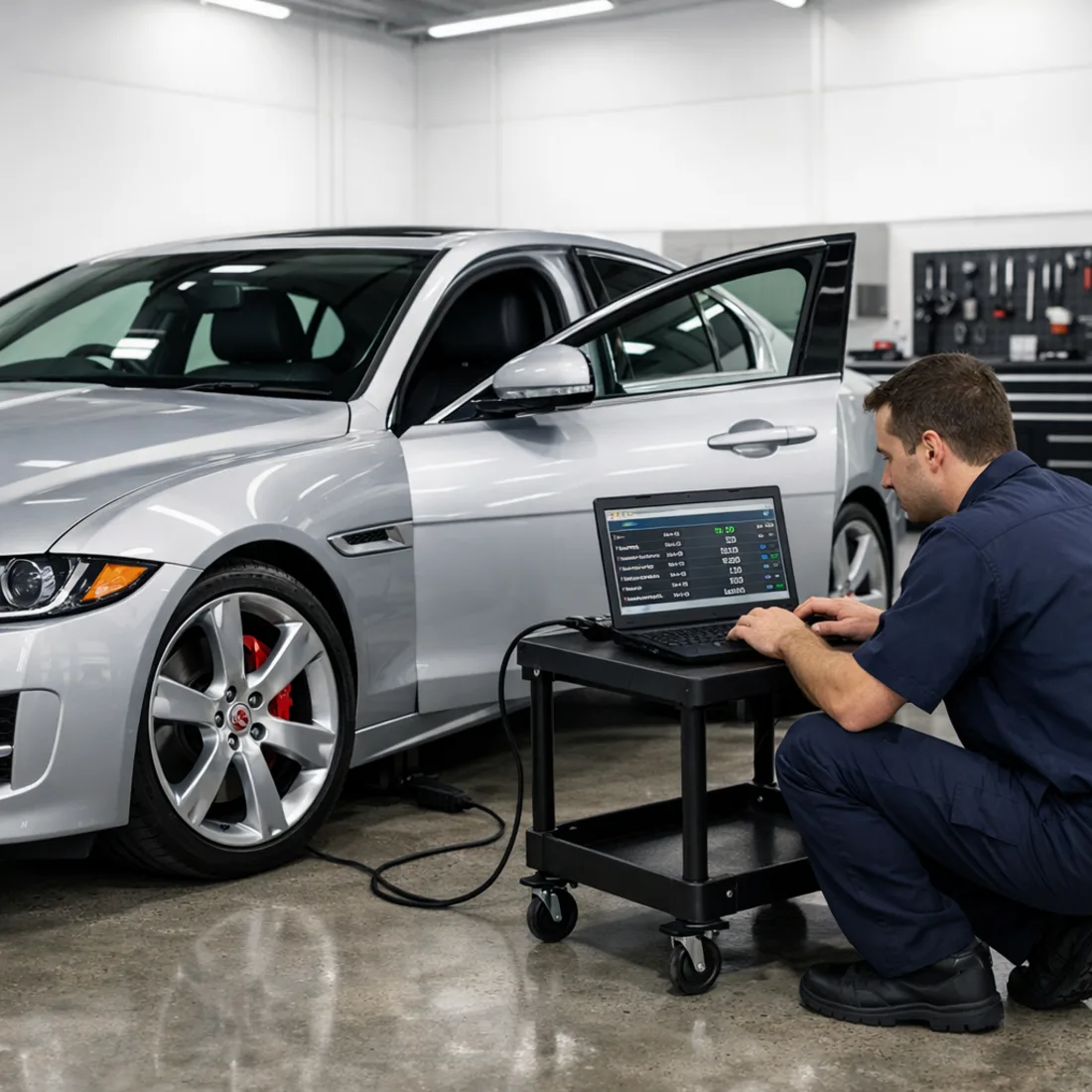
We use Jaguar's own SDD (Symptoms Driven Diagnostics) platform and the Pathfinder system to work on these cars. That matters because the Bosch MED17.8.31 ECU stores data in ways that generic scan tools simply cannot access with any reliability. SDD and Pathfinder let us read live sensor data across the entire vehicle, perform active tests on individual components, reset service functions correctly, and pull fault codes with the full manufacturer context rather than a raw number and a guess.
When we suspect a coil pack, we can isolate individual cylinders under load. When coolant temperature data looks unusual, we can watch the thermostat operating in real time. That depth of diagnosis means we fix the actual fault rather than the most likely candidate. We fit genuine OEM and OEM grade brand new parts as standard across all repair and service work on the XE. No shortcuts on a car this good.
Stage 1 Tuning: More of What the AJ126 Can Actually Do
The Bosch MED17.8.31 ECU in this car left the factory with headroom in it. Jaguar calibrated the AJ126 conservatively across global markets and fuel quality ranges, which means a well executed Stage 1 tune through the ECU can recover that headroom cleanly. Our Stage 1 calibration for the XE 3.0 V6 Supercharged lifts output to 400 hp and 500 Nm, a gain of 60 hp and 50 Nm over stock. The change is felt immediately in throttle sharpness and mid range pull, which is exactly where a supercharged engine should be strongest.
Beyond the core power tune, we also offer a range of additional calibration options for this platform. A Pop and Bang crackle map adds character on overrun. Start Stop disable removes the constant cycling if you find it intrusive. Vmax limiter removal is available for track days. Decat and exhaust flap calibrations are also on the table for cars running aftermarket exhausts. If you are tracking the car, a decat configuration is an option, though it is worth noting that removing emissions components affects WOF compliance on a road registered vehicle, so that conversation happens in full before any work is done.
The full picture of what is possible on this engine is covered on our power gains and tuning page.
Frequently Asked Questions
The questions we get most. Something else on your mind? Get in touch.