Jaguar XF: Service, Repairs and Tuning Across Every Generation
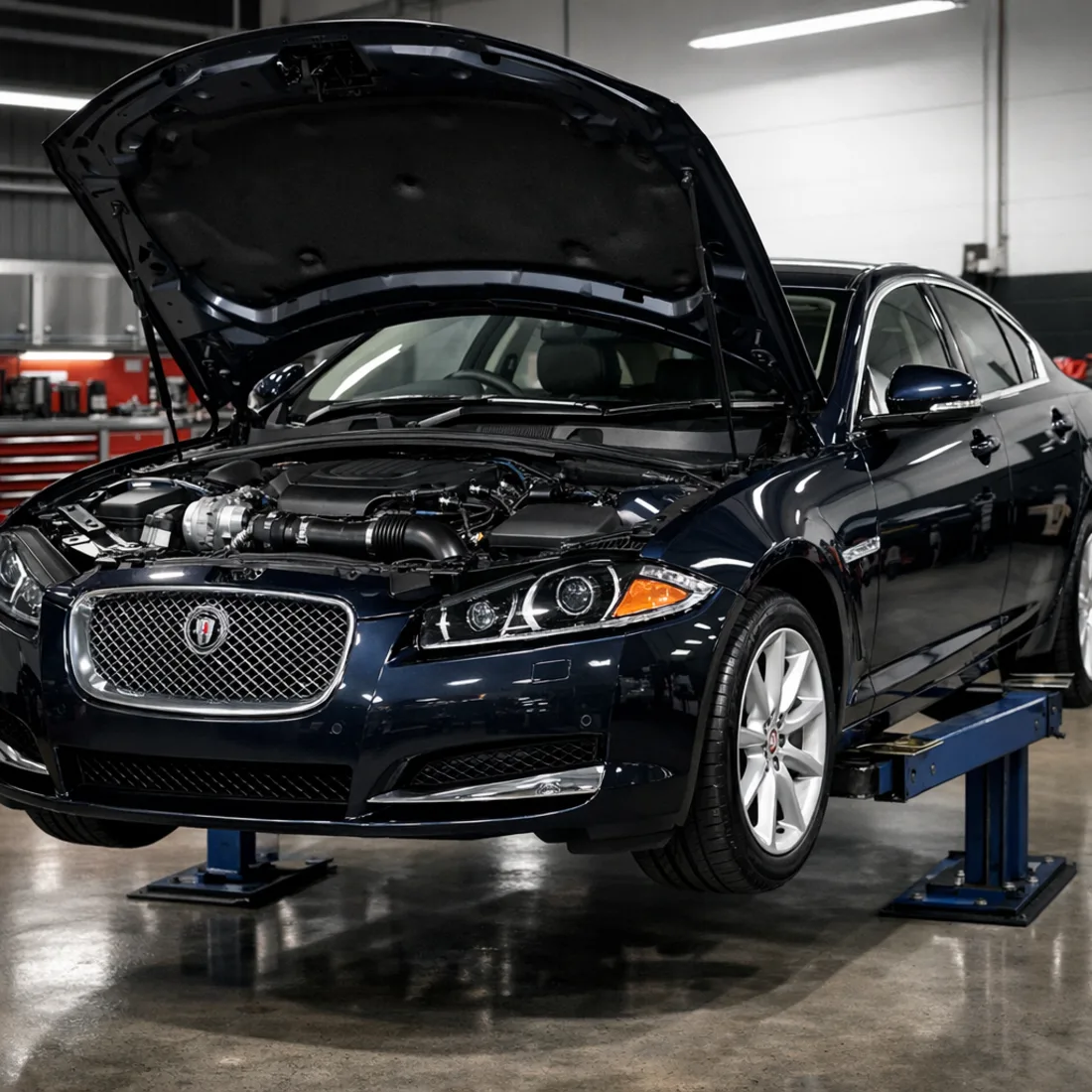
The XF arrived in New Zealand as Jaguar's most important saloon in decades, a genuine alternative to the German establishment, with real style and real engineering behind it. From the original X250's PSA derived diesel through to the facelifted X260's mild hybrid Ingenium family, every generation has its own personality, its own sweet spots, and its own very specific ways of becoming expensive when ignored. We've had every variant of this car on the hoist at our Penrose workshop, and this page tells the whole story.







Jaguar XF 2.2D: The PSA Diesel That Started It All
The 224DT is a PSA sourced 2179 cc four cylinder diesel producing 163 hp and 400 Nm, running a Bosch EDC17CP42 ECU and a compression ratio of 15.8:1. Jaguar didn't develop this engine themselves, but they picked a fundamentally sound unit, and for most owners it's been a reliable long term companion. The key word is "most". Skip services, use the wrong oil grade, or do nothing but short school runs, and the 224DT will show you exactly why precision diesel engines need attention.
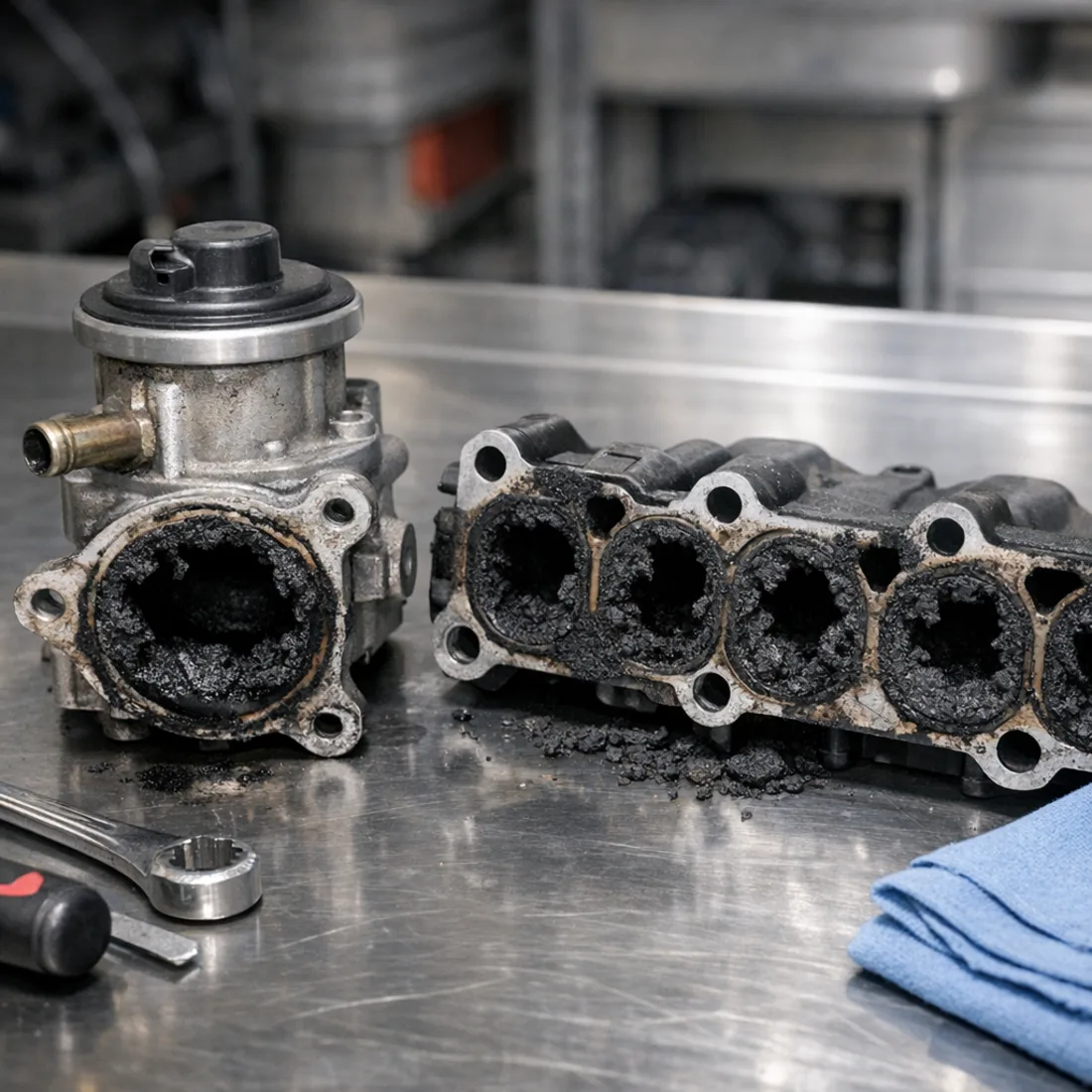
The timing chain is the first thing to check on any high mileage example. A cold start rattle that settles quickly is a warning, not something to ignore and hope goes away. The EGR valve chokes up with carbon over time, and the DPF struggles to regenerate properly on cars that rarely see a decent motorway run. Swirl flap mechanisms and intake carbon build up are worth inspecting above 100,000 km. Turbo actuator faults and boost issues also appear, often showing up as a lack of pull rather than a dramatic warning light.
-
Timing chain stretch and cold start rattle
-
EGR valve clogging and intake carbon build up
-
DPF regeneration failure on short trip cars
-
Swirl flap wear and intake manifold fouling
-
Turbo actuator and boost control faults
A cold start rattle that settles quickly is a warning, not something to ignore and hope goes away.
Catching timing chain wear early makes the difference between a chain service and a much more serious repair bill.
We service this engine with the correct low SAPS diesel grade oil, and routine work covers air, fuel and cabin filters, glow plugs, drive belts, and wipers. Brake pads and rotors, suspension arms and bushes are also regular sellers on X250s of this age.
For owners who want more from those 163 horses, a Stage 1 tune on the EDC17CP42 can lift output to 235 hp and 520 Nm, a genuine transformation in day to day driveability.
Get your Jaguar XF booked in with a proper specialist in Penrose.
Jaguar XF 3.0 TDV6: More Engine, More Reward, More to Go Wrong
If the 2.2D is the sensible choice, the 3.0 TDV6 is the one you actually want. A twin turbocharged 2993 cc diesel making 211 hp and 450 Nm through a Bosch EDC17CP11 ECU, with a 16.0:1 compression ratio. It pulls with real authority from low revs, and on an open motorway it's quietly impressive. It's also a more complex piece of machinery than the four cylinder, and that complexity shows in the fault list.
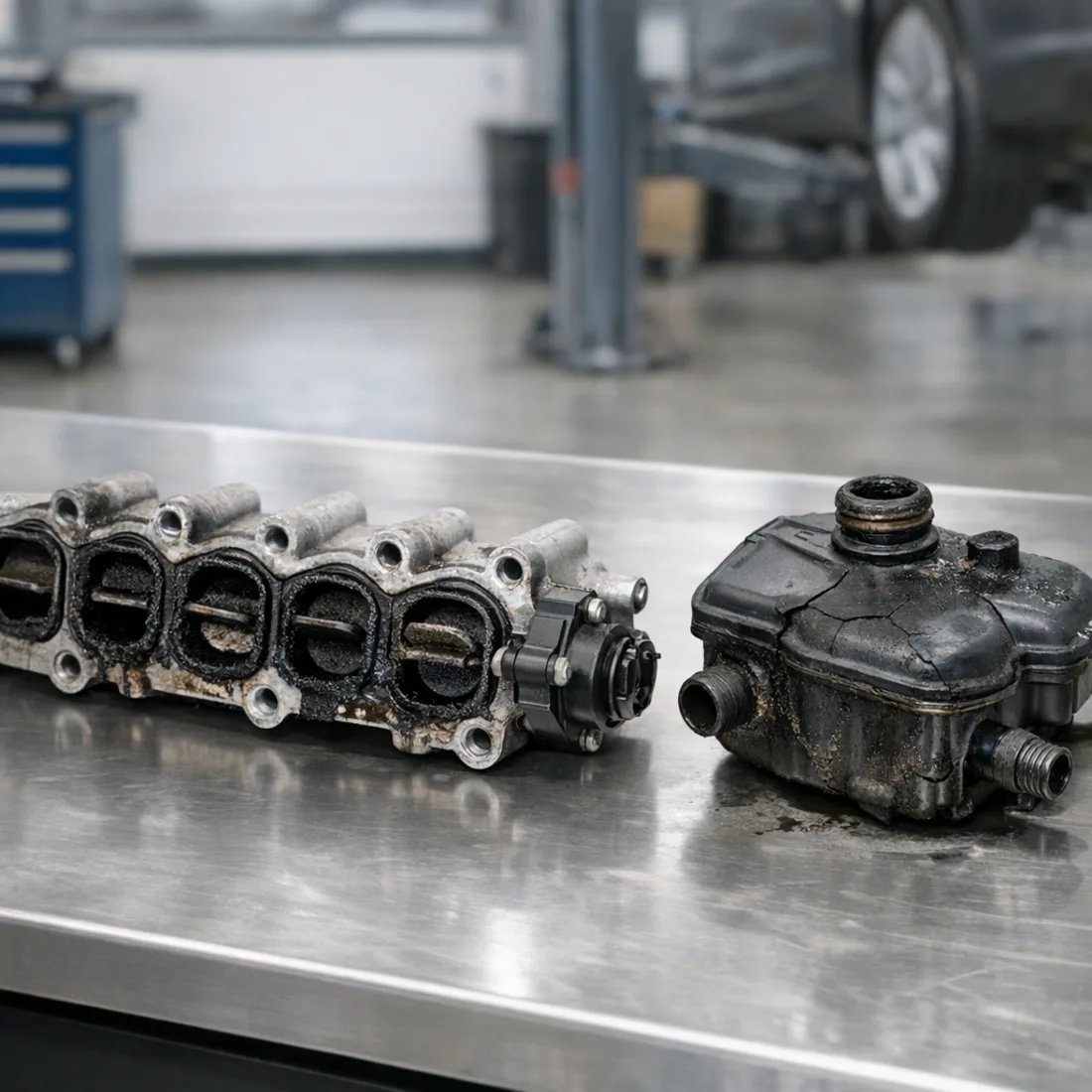
The TDV6 shares the timing chain concern with the 2.2D, but there's an important difference: on this engine the chains run at the rear of the block, which means access is significantly more involved. A rattle on cold start isn't just an annoyance here, it's an early warning you need to act on. Beyond that, the turbo actuators, EGR valve and swirl flaps mirror the four cylinder's weak points, and DPF issues appear on cars used for urban short trips. Crankcase breather and oil separator problems are also worth checking, along with low pressure fuel pump wear on higher mileage examples.
-
Rear mounted timing chains requiring significant access
-
Twin turbo actuator wear and boost faults
-
EGR valve and swirl flap fouling
-
DPF blockage on short run vehicles
-
Crankcase breather and oil separator failure
-
Low pressure fuel pump wear
The TDV6 rewards ownership more but asks more in return.
Keep the service intervals tight, use the right oil grade, and give it a proper run regularly.
Compared to the 2.2D, the TDV6 rewards ownership more but punishes neglect more severely. Keep the service intervals tight, use the right oil grade, and give it a proper run regularly.
A Stage 1 tune on the EDC17CP11 can push output to 290 hp and 570 Nm, which genuinely changes the character of the car without touching the mechanicals.
Jaguar XF 2.0 SC Turbo 240hp: The Ford Rooted Four That Deserves Respect
The 2.0 SC Turbo brought a turbocharged petrol four cylinder to the X250, the 204PT, a 1999 cc engine producing 240 hp and 340 Nm with a 10.0:1 compression ratio, managed by either a Bosch MED17.2 or MED17.9.7 ECU depending on build date. It has roots in the Ford EcoBoost family, which gives it a known engineering pedigree but also a well documented set of failure modes that Jaguar owners sometimes discover the hard way.
Timing chain and tensioner wear is the headline concern on this engine, especially if oil changes have been stretched. The water pump is a known weak point and can fail without much warning, so coolant temperature behaviour and any whiff of coolant smell deserve immediate investigation. Being a direct injection engine, intake valve carbon build up accumulates over time and can affect cold start behaviour and idle quality. Turbo wastegate and PCV issues appear on older examples, and coil packs and thermostat housings are worth checking on higher mileage cars.
Compared to the diesel X250s, this engine is smoother and quieter day to day, but it doesn't forgive stretched service intervals any better. Routine work covers low viscosity oil and filter, spark plugs, air and cabin filters, drive belt and wipers, plus brakes and suspension as the car ages. A Stage 1 tune lifts output to 270 hp and 400 Nm, a modest but noticeable step on an engine that's already well matched to the XF's character.
-
Timing chain and tensioner wear, especially with stretched oil change intervals
-
Water pump failure, often without much warning
-
Intake valve carbon build up from direct injection
-
Turbo wastegate and PCV issues on older examples
-
Coil pack and thermostat housing faults at higher mileage
The water pump is a known weak point and can fail without much warning.
Coolant temperature behaviour and any whiff of coolant smell deserve immediate investigation.
Jaguar XF 3.0 V6 Supercharged: The One With Real Presence
The AJ126 supercharged V6 is the X250 variant that gets noticed. A 2995 cc roots type supercharged petrol V6, 340 hp and 450 Nm, 10.5:1 compression, managed by a Bosch MED17.8.31 ECU. On an open motorway it pulls cleanly and quietly, the supercharger spools almost imperceptibly, and the whole package just flows. This is the XF that makes the case for the nameplate most convincingly. It's also the most complex engine in the X250 family, and it has specific failure modes that less experienced workshops completely miss.
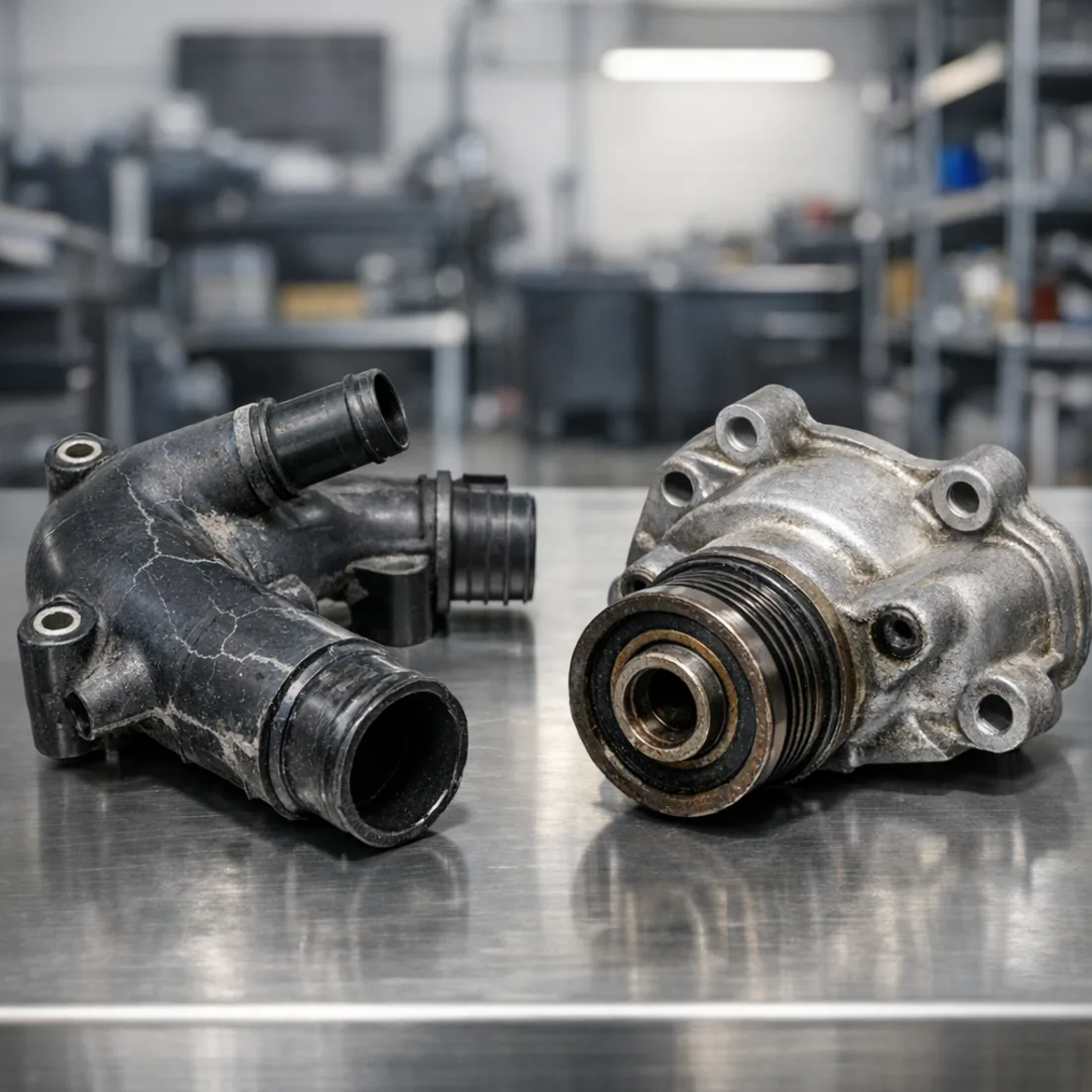
The supercharger nose bearing is a known wear item and produces a distinct whine when it's going. Coolant crossover pipes crack and leak, plastic thermostat housings weep, and the water pump is a common replacement item. Timing chain guides and tensioners need inspection on higher mileage cars. The crank pulley and electronic thermostat are also worth checking. Carbon build up is less aggressive here than on direct injection rivals, but coil packs and spark plugs still fatigue with heat cycles and need regular attention.
Routine servicing uses the correct low ash oil spec, and the service schedule covers plugs, air and cabin filters, drive belts and brakes. For owners wanting more, a Stage 1 tune on the MED17.8.31 can push output to 400 hp and 500 Nm, a meaningful step that changes the feel of the car noticeably on road. The V6 SC is the enthusiast's X250, and it rewards proper care with genuinely special driving.
-
Supercharger nose bearing wear
-
Coolant crossover pipe cracking and leaks
-
Plastic thermostat housing and water pump failure
-
Timing chain guide and tensioner wear at high mileage
-
Coil pack and spark plug fatigue from heat cycles
This is the XF that makes the case for the nameplate most convincingly.
The V6 SC is the enthusiast's X250, and it rewards proper care with genuinely special driving.
Jaguar XF 2.0D 180: Jaguar's Own Diesel Arrives
The X260 generation brought the biggest engineering change in the XF's history: Jaguar's own in house diesel engine, the AJ200D Ingenium. This is a 1999 cc four cylinder diesel producing 180 hp and 430 Nm, with a 15.5:1 compression ratio managed by a Bosch EDC17CP55 or Bosch MEDC17.9 ECU. Compared to the 224DT in the original X250, the AJ200D is lighter, more sophisticated, and more efficient. It's also a completely different engineering proposition when things go wrong, because this is Jaguar's own design, not a shared PSA unit.
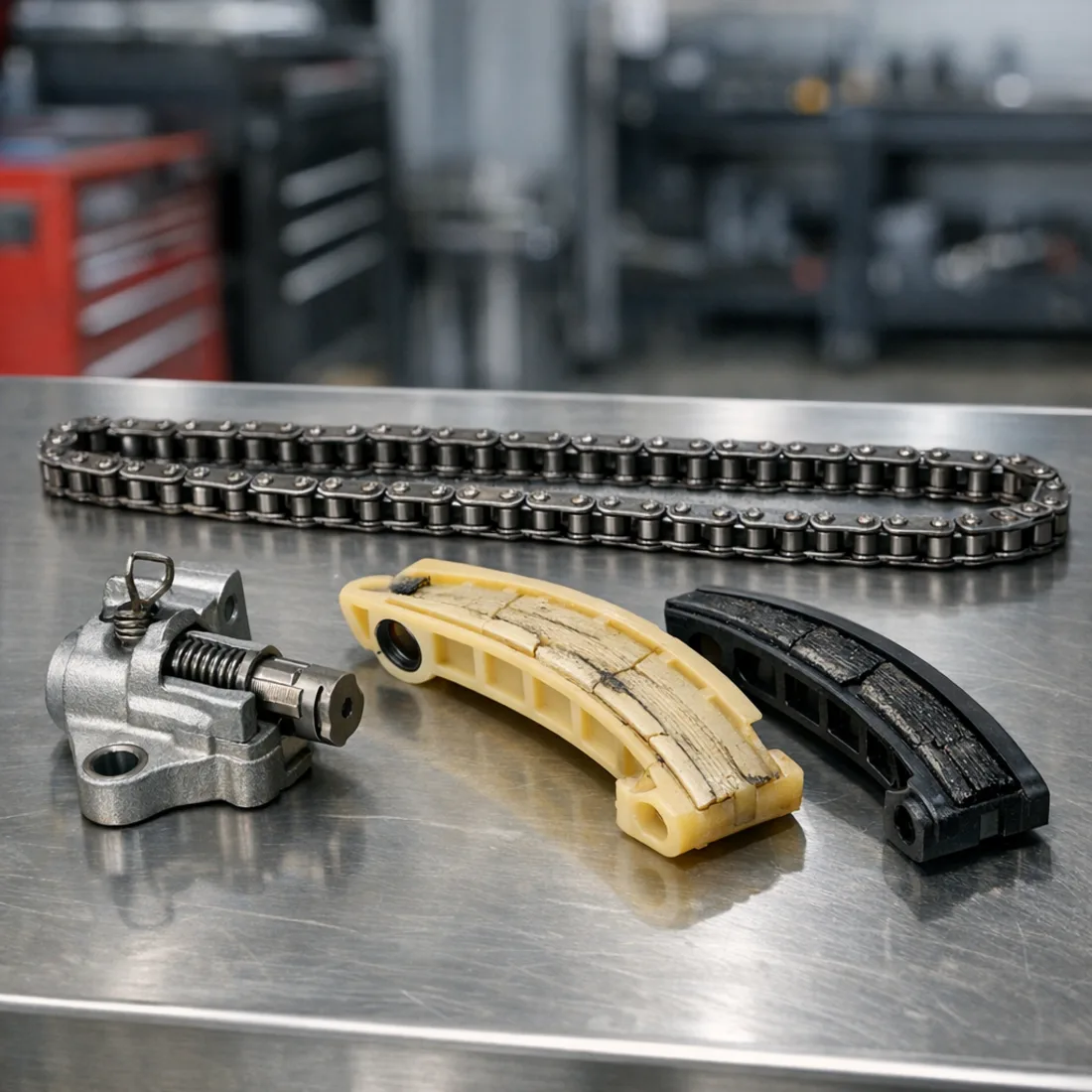
The Ingenium diesel family has a well known issue with timing chain wear and stretch. On poorly serviced examples, the chain can rattle on cold start and, if ignored, cause significant internal damage. This is the single most important thing to check when buying an X260 2.0D used. Oil dilution has also been documented, where fuel finds its way into the oil from injector or fuel system issues, so checking oil condition at service is essential. The EGR and DPF systems behave similarly to the older diesels on short trip cars, and crank breather faults plus injector seal leaks appear on higher mileage examples.
The step up from X250 to X260 brought a genuinely more modern car, but the Ingenium's timing chain weakness means you need to be just as attentive with servicing as you were with the PSA units, arguably more so. A Stage 1 tune lifts the AJ200D to 210 hp and 490 Nm, a worthwhile step for daily driving.
-
Timing chain wear and stretch, the Ingenium's primary weakness
-
Oil dilution from injector or fuel system faults
-
EGR and DPF issues on short trip vehicles
-
Crank breather faults on higher mileage examples
-
Injector seal leaks at higher mileage
This is the single most important thing to check when buying an X260 2.0D used.
On poorly serviced examples, the timing chain can rattle on cold start and, if ignored, cause significant internal damage.
Jaguar XF D200: The Mild Hybrid Diesel Gets Serious
The D200 is the evolved form of the Ingenium 2.0 diesel, now producing 204 hp and wrapped in Jaguar's 48V mild hybrid architecture for the facelifted X260. It's the most technologically complex diesel in the XF family, and it brings a new layer of systems that need careful attention alongside the familiar Ingenium fundamentals.
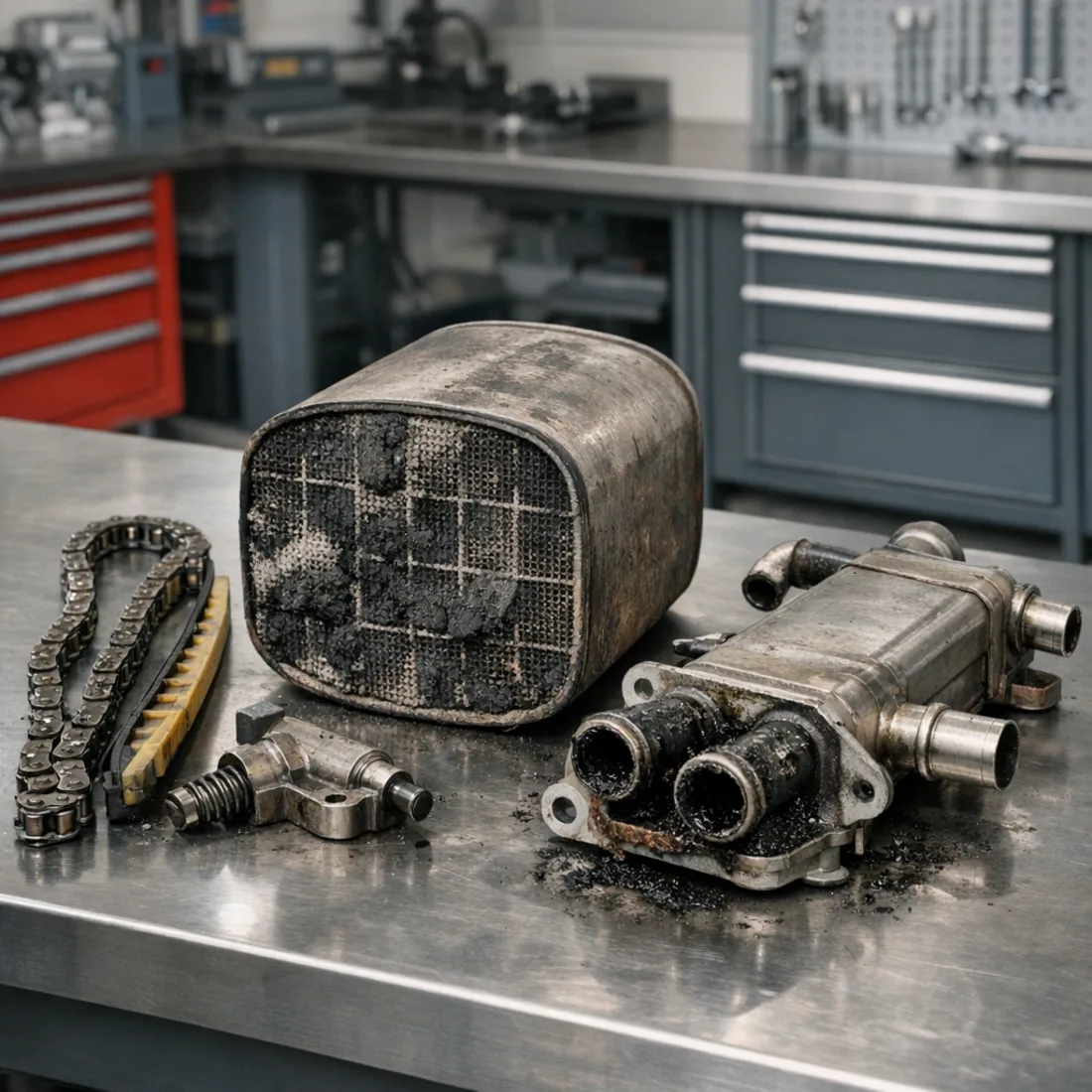
Everything that applies to the 2.0D 180 applies here: timing chain wear is the priority, the Ingenium family's known weakness carries straight across, and the correct low SAPS oil at the right interval is non negotiable. Add to that the 48V mild hybrid starter generator and its drive belt, which introduce an additional system to monitor. The turbo actuator and EGR cooler faults familiar from other Ingenium diesels appear here too, and DPF issues on short trip cars are unchanged. Injector and high pressure fuel system faults are worth investigating on any warning light, and AdBlue dosing plus NOx sensor problems are specific to D200 equipped cars.
The mild hybrid system adds real world efficiency and refinement but it also means a generic scan tool simply won't cut it. All of this car's systems need factory level access to read properly. From the D200 onwards, the XF is genuinely a different beast to diagnose compared to the X250 generation. Routine servicing mirrors the 2.0D 180 but adds the 48V belt and hybrid system checks. Stage 1 tuning is available for owners wanting more from the Ingenium unit.
-
Timing chain and tensioner wear on higher mileage or poorly serviced cars
-
Turbo actuator and EGR cooler faults
-
DPF issues on short urban trip vehicles
-
48V mild hybrid starter generator and belt system faults
-
AdBlue dosing and NOx sensor problems
-
Injector and high pressure fuel system faults
From the D200 onwards, the XF is genuinely a different beast to diagnose compared to the X250 generation.
The mild hybrid system adds real world efficiency and refinement but a generic scan tool simply won't cut it.
Jaguar XF P250: The Ingenium Petrol Rounds Out the Range
The P250 brings a 2.0 litre Ingenium turbocharged petrol four cylinder to the X260, producing 250 hp. Where the X250's 2.0 SC Turbo used a Ford derived 204PT, this engine is Jaguar's own Ingenium petrol unit, sharing its fundamental architecture with the diesel variants in the X260 range. The result is a more cohesive, more modern package that feels well matched to the XF's character.
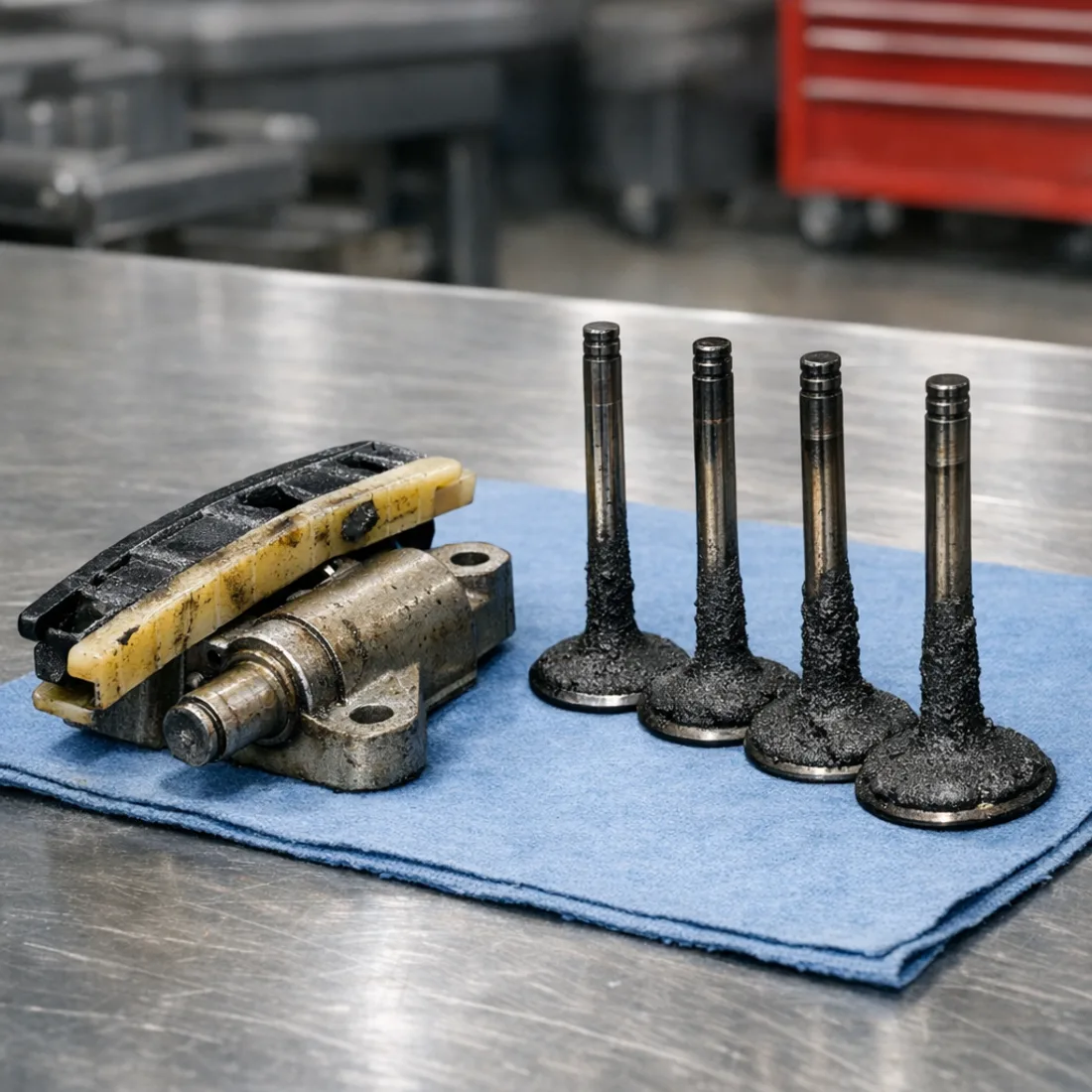
The Ingenium petrol shares the timing chain and tensioner concern that runs through the whole X260 family. Stretch the oil change intervals and you'll hear about it on cold start, potentially expensively. Being a direct injection engine, intake valve carbon build up accumulates over time and can affect idle quality and cold start behaviour at higher mileage. Coolant loss from thermostat or water pump issues is worth watching, and turbo actuator and boost sensor faults appear on higher mileage examples. These are familiar themes across the Ingenium family, petrol or diesel.
Compared to the X250's 2.0 SC Turbo, the P250 is more modern in its engineering and benefits from Jaguar's ownership of the design. Compared to its X260 diesel siblings, it's simpler in its emissions systems with no DPF or AdBlue to manage. Routine servicing covers the correct low ash oil spec, spark plugs, air and cabin filters, drive belt, and brakes and suspension. Stage 1 tuning is available for owners wanting more response from the Ingenium unit.
-
Timing chain and tensioner wear if oil changes are stretched
-
Intake valve carbon build up on this direct injection engine
-
Coolant loss from thermostat or water pump issues
-
Turbo actuator and boost sensor faults at higher mileage
Compared to its X260 diesel siblings, it's simpler in its emissions systems with no DPF or AdBlue to manage.
The P250 is more modern in its engineering and benefits from Jaguar's ownership of the design.
Picking Between Them: Which XF Makes Sense Used?
The XF family spans two distinct engineering eras, and knowing which generation suits your situation matters more than most people realise when shopping used.
You want a solid, manageable entry point into the XF family. Buy one with a documented service history, check for EGR and DPF attention, and listen for timing chain rattle on cold start. A well maintained 2.2D will serve you reliably.
Feel and performance matter but you understand the rear mounted timing chain means any chain related work is a bigger job. It rewards the right owner but punishes neglect more severely.
Performance is the priority and budget allows. The supercharger and cooling system components need checking carefully on any purchase, but this is the X250 that genuinely excites.
You want a more modern, more efficient and better equipped car. The sweet spot is an X260 2.0D 180 or D200 with a verifiable service history and no stretched oil change intervals. The Ingenium timing chain is the one thing to check.
You want the X260 experience without diesel complexity. No DPF or AdBlue to manage, a modern Ingenium petrol engine, and the same refined X260 cabin and suspension.
- Listen for cold start timing chain rattle on every variant before buying
- Verify service history and oil change intervals, especially on all Ingenium engined X260 cars
- Check EGR and DPF service records on all diesel variants
- Inspect coolant condition and look for leaks around the thermostat housing and crossover pipes on V6 SC models
- On the D200, confirm the 48V mild hybrid system and its belt are functioning correctly
- Have any used XF inspected on factory level Jaguar diagnostics before purchase, not a generic scan tool
Servicing the XF Family: What Stays the Same, What Changes
Across both generations, a few principles apply to every XF. Use the correct oil specification, never a generic off the shelf grade. The diesels need a low SAPS oil to protect both the engine internals and the DPF. The petrol engines need a low ash spec. Get these wrong and you accelerate wear in the very components that are already known weak points.
Service intervals on all of these engines should be treated as maximums, not targets. The Ingenium family in the X260 is particularly sensitive to stretched intervals because of the timing chain wear pattern. On the X250 diesels, pushing out oil changes accelerates EGR and DPF fouling as well as chain wear. Our honest advice is to service these cars on time, every time.
On any XF, a proper visit should cover: oil and filter to the correct specification; air filter, fuel filter on diesels, and cabin filter; spark plugs on petrol models or glow plugs on diesel models; drive belts and auxiliary belts including the 48V belt on D200 models; brake pads, rotors and brake fluid condition; suspension arms, bushes and steering components; and cooling system condition including hoses, thermostat and coolant quality.

How We Diagnose Every Generation of XF
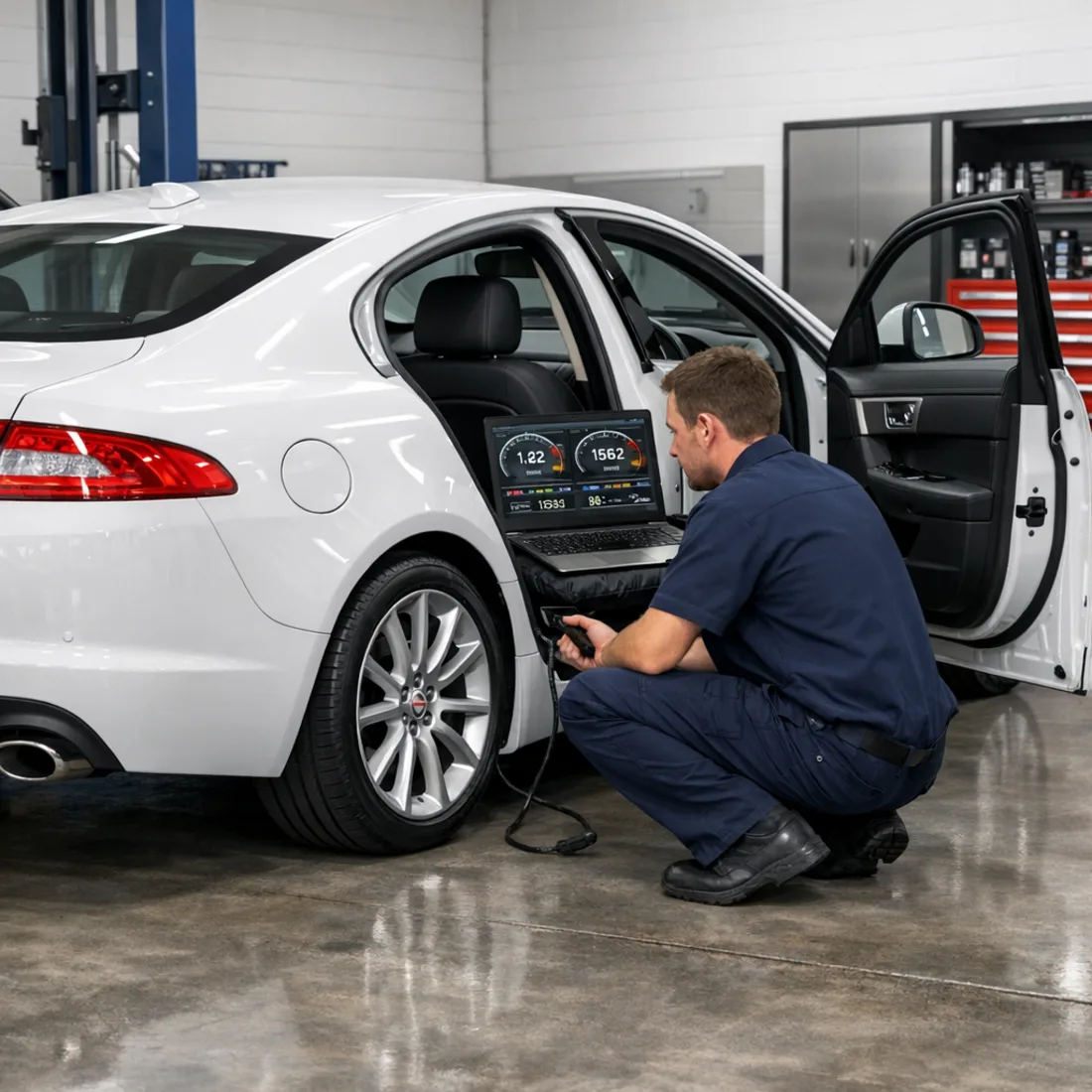
Every generation of XF, from the earliest X250 2.2D to the facelifted X260 D200, requires factory level diagnostic access. We use Jaguar SDD and Pathfinder with proper JLR interfaces, not a generic Bluetooth dongle or aftermarket reader that can see basic fault codes and nothing else. The difference matters enormously in practice.
With proper factory access we can read live data from all modules simultaneously, command component tests on actuators, EGR valves and fuel systems, reset service and adaptation values after parts replacement, and code new components correctly so the car's systems recognise them. A generic tool can tell you there's a fault code. Factory tooling tells you what caused it, whether the component is actually failing or responding correctly, and whether there are related faults in other modules that explain the root cause.
The X260 D200's mild hybrid architecture adds an extra dimension here. The 48V system is invisible to most aftermarket diagnostic tools. Without factory access, a technician working on a D200 is effectively flying blind on a significant part of the car's driveline. We see cars regularly that have had fault codes cleared without the underlying fault being addressed, and the problem returns within weeks. Proper diagnosis avoids that cycle entirely.
For electrical faults, key programming and module coding across both generations, our auto electrical team handles everything from window regulators and central locking through to instrument cluster and module replacement.
Tuning the XF Across Both Generations
Every turbocharged and supercharged engine in the XF range has meaningful tuning potential, and the results vary considerably depending on which variant you're starting with. All tuning work is carried out through the factory ECU on genuine OEM hardware, and the emissions systems remain fully functional.
The 224DT responds well to Stage 1 work via the Bosch EDC17CP42, recalibrating fuelling, boost and torque maps. The result is a genuine transformation in day to day driveability. EGR OFF, DPF OFF, DTC Removal, Pop and Bang Crackle map, START/STOP OFF, FLAPS, Vmax and Adblue options are also available.
The TDV6 gain is even more significant, genuinely transforming the character of the car through the Bosch EDC17CP11. Both results come from recalibrating the ECU's fuelling, boost and torque maps to the correct headroom left in the factory calibration. EGR OFF, DPF OFF, DTC Removal, Pop and Bang Crackle map, START/STOP OFF, FLAPS, Vmax and Adblue options are also available.
The 204PT moves from 240 hp and 340 Nm to 270 hp and 400 Nm with Stage 1 work via the Bosch MED17.2 or MED17.9.7, a modest but noticeable step on an engine already well matched to the XF's character. DTC Removal, Pop and Bang Crackle map, START/STOP OFF, DECAT, FLAPS and Vmax options are also available.
The V6 SC is the standout in the range. Stage 1 via the Bosch MED17.8.31 is a genuinely significant step that changes how the car feels in everyday driving as well as on demand. DTC Removal, Pop and Bang Crackle map, START/STOP OFF, DECAT, FLAPS and Vmax options are also available.
The X260 diesels offer more modest gains given the Ingenium's conservative factory calibration headroom, but the 2.0D 180 delivers a worthwhile step for daily driving. EGR OFF, DPF OFF, DTC Removal, Pop and Bang Crackle map, START/STOP OFF, FLAPS, Vmax and Adblue options are also available.
Stage 1 tuning is available for owners wanting more from the Ingenium mild hybrid unit. EGR OFF, DPF OFF, DTC Removal, Pop and Bang Crackle map, START/STOP OFF, FLAPS, Vmax and Adblue options are also available.
Stage 1 tuning is available for owners wanting more response from the Ingenium petrol unit. DTC Removal, Pop and Bang Crackle map, START/STOP OFF, DECAT, FLAPS and Vmax options are also available.
All tuning work is carried out through the factory ECU, the emissions systems remain fully operational, and we only tune mechanically sound, properly serviced engines. Explore our ECU file service for remote tuning options.
Frequently Asked Questions
The questions we get most. Something else on your mind? Get in touch.