BMW 530d & 5 Series: E60, F10 and G30 Generations
The BMW 5 Series diesel story spans three decades of engineering ambition, from the sharp edged Bangle era E60 with its torquey M57 straight six, through the polished F10 that refined almost everything, to the sophisticated G30 that added quad turbo madness and a twin turbo V8 to the lineup. Each generation fixed some of what came before and introduced its own quirks. If you own any of these cars, knowing where yours sits in that story is the difference between catching problems early and facing cascading repair bills.








BMW 530d E60/E61: The Original M57 Straight Six
The E60 530d is where the modern 5 Series diesel story starts for most New Zealand owners. The M57 306D2 engine produces 218hp and 500Nm from 2993cc, with a bore and stroke of 84 by 90mm and a compression ratio of 17:1. It's a genuinely strong diesel platform that still pulls hard even by today's standards. The problem is that most of these cars are now carrying serious kilometres, and the known weak points are well and truly showing up on the ones coming through our workshop.
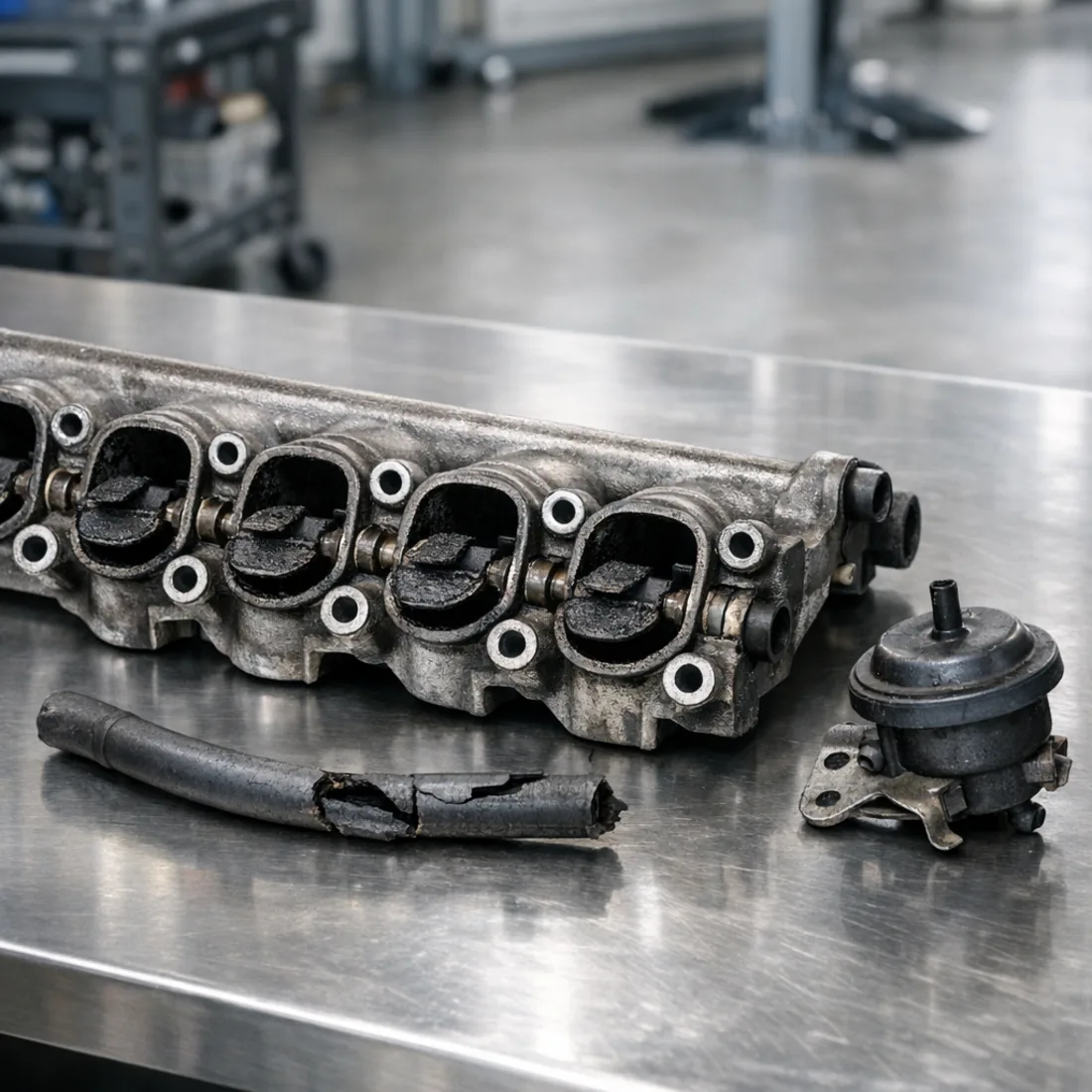
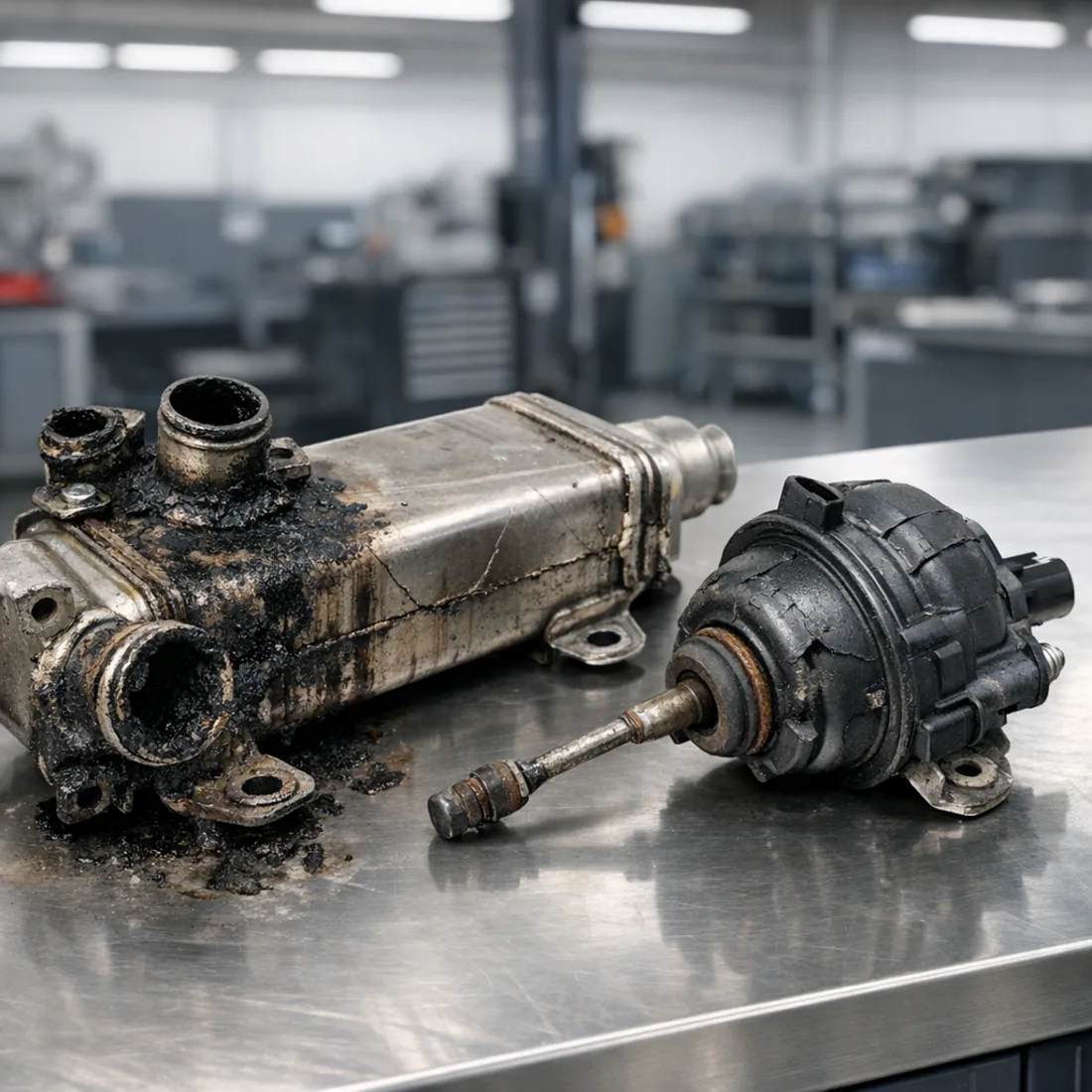
The swirl flaps are the one to watch most closely. When they fail, the plastic actuator arms can break off and get ingested. Catching them before that point makes the repair straightforward. Waiting turns it into an engine out job. The EGR system on these is also a significant soot trap by now, and a blocked EGR cooler will cause coolant loss that looks for all the world like a head gasket problem until you find the actual culprit.
Routine servicing on the 306D2 needs the correct low SAPS diesel grade oil, not whatever generic product a quick lube shop reaches for. We also cover air filter, fuel filter, cabin filter, drive belts, glow plugs, and brake pads and rotors as part of our service schedule on these.
The ECU on this engine is a Bosch EDC16 unit, and we carry a Stage 1 tune that takes output from 218hp and 500Nm up to 250hp and 580Nm, a gain of 32hp and 80Nm. On a car this age, that tune works best once the car is mechanically sorted first.
-
Swirl flap failure in the intake manifold, a classic M57 issue that can drop debris into the engine if left too long
-
EGR cooler and EGR valve clogging with soot, causing running issues and sometimes coolant loss
-
Timing chain and tensioner wear at higher mileage, complicated by the chain sitting at the rear of the engine
-
Turbo actuator and vacuum control problems leading to lost boost or limp mode
-
Cracked intake boots causing unmetered air and rough running
-
Suspension arms and bushes wearing on this chassis
Catching swirl flap failure before that point makes the repair straightforward. Waiting turns it into an engine out job.
The EGR system is also a significant soot trap by now, and a blocked EGR cooler will cause coolant loss that looks for all the world like a head gasket problem.

Get your BMW 5 Series booked in with a proper specialist.
BMW 535d E60/E61: Twin Turbos, More Power, Same Chassis Quirks
The 535d takes the same E60/E61 shell and drops in the twin turbo M57 306D4, pushing output to 286hp and 580Nm. From the outside, both cars look identical. Under the bonnet, the 535d is a noticeably more complex machine, and that complexity comes with its own specific failure modes on top of the ones shared with the 530d.
The twin turbos run sequentially, and the smaller turbo's actuator and vacuum control lines are where things most often go wrong. When those fail, the car loses boost in the lower rev range and typically drops into limp mode. Diagnosing it properly means reading live turbo actuator position and rail pressure data, something a generic scan tool simply can't do. We use BMW ISTA with a genuine ICOM interface, which is why we can tell you exactly which actuator is playing up rather than just swapping parts until something works.
Compared to the 530d, the 535d rewards careful owners significantly more. When it's right, the twin turbo surge is something else entirely. When it's neglected, the repair bills compound quickly because fixing a seized actuator on a car with a dirty EGR, worn glow plugs and a cracked intake boot means addressing all of it at once.
Stage 1 tuning on the 306D4 is genuinely rewarding: 340hp and 680Nm versus the factory 286hp and 580Nm. That's a 54hp and 100Nm gain, which transforms the car's character. We won't tune one that isn't mechanically well, though. The ECU is a Bosch EDC16CP35 or EDC17CP02 depending on build date.
-
Smaller turbo actuator and vacuum line failures causing limp mode and lost low end boost
-
Swirl flaps, shared with the 530d but equally important to check here
-
EGR clogging and carbon build up on the intake tract
-
Crankcase breather issues, particularly in cold New Zealand conditions
-
Injector wear and glow plug condition on higher mileage examples
When it's right, the twin turbo surge is something else entirely. When it's neglected, the repair bills compound quickly.
Between the two E60 diesels, the 530d is the easier long term ownership proposition. The 535d is faster, but the twin turbo system adds meaningful complexity.
Between the two E60 diesels, the 530d is the easier long term ownership proposition. The 535d is faster, but the twin turbo system adds meaningful complexity. If you're shopping used and the price gap is small, the 530d in better condition wins over the 535d that's been ignored.
BMW 523i F10: The Technically Ambitious Naturally Aspirated Six
The F10 generation arrived as BMW's polished answer to what an executive saloon should feel like. The 523i sits at the entry point of that range, but the N53B30 under the bonnet is anything but ordinary. It's a 3.0 litre naturally aspirated straight six with direct injection, producing 204hp and 270Nm from a 2996cc capacity, with an 85 by 88mm bore and stroke and a 12:1 compression ratio. On paper it's lovely. In practice it demands more understanding than most workshops are prepared to give it.
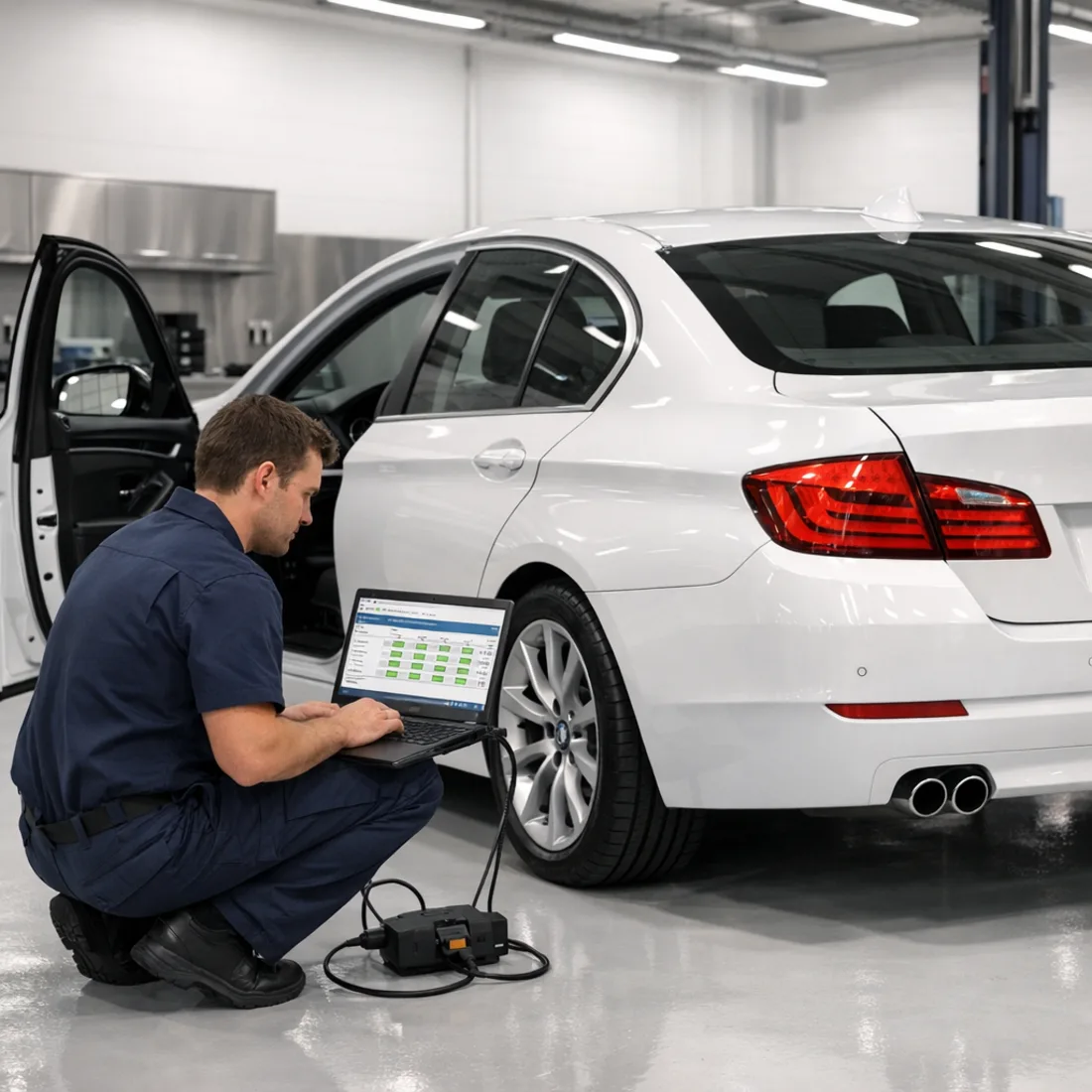
The N53B30 is best known for injector and high pressure fuel pump trouble. The direct injection system operates at pressures that put real stress on both components, and when either starts to fail you get rough running, cold start hesitation and misfires. NOx sensor and mixture adaptation faults are also common and often trigger limp behaviour or emissions test failures. These aren't generic scan tool codes either. Properly diagnosing injector contribution and fuel trim data on this engine requires factory level access.
The step up from the E60 chassis to the F10 is significant in terms of refinement and ride quality. The electrical architecture is more sophisticated, which means coding new parts correctly matters even more here. When we fit new injectors on an N53, we code them in through ISTA so the ECU can adapt fuel delivery correctly, something that doesn't happen with a generic reader.
Stage 1 tuning on this naturally aspirated engine delivers 265hp and 315Nm, a 61hp and 45Nm gain. That's a meaningful change for a car without a turbo, and it suits owners who want the straight six character with a bit more urgency.
-
High pressure fuel pump wear causing rough running and cold start issues
-
Injector faults and contribution imbalance requiring factory coding after replacement
-
NOx and mixture sensor faults triggering limp mode or emissions failures
-
VANOS solenoid faults causing rough idle or hesitation
-
Valve cover and gasket oil leaks
-
Ignition coil and spark plug wear contributing to misfires
-
Timing chain condition worth assessing on higher mileage examples
Properly diagnosing injector contribution and fuel trim data on the N53 requires factory level access. Generic scan tools simply don't cut it.
When we fit new injectors on an N53, we code them in through ISTA so the ECU can adapt fuel delivery correctly.
BMW 520i F10: The Turbo Four with the Timing Chain Habit
The 520i sits alongside the 523i in the F10 range but takes a completely different technical path. Where the 523i uses a naturally aspirated straight six, the 520i's N20B20B is a turbocharged 2.0 litre four cylinder producing 184hp and 270Nm. Same torque figure at the wheels, but the way it gets there is entirely different. The N20 punches well above its displacement on the open road, but it has a specific set of habits that F10 520i owners need to understand.
The timing chain is the headline concern. On higher mileage N20 engines, the chain and guides can stretch and wear, and the first warning is usually a cold start rattle that disappears once oil pressure builds. Ignore that noise and you're looking at a significantly more expensive repair than if you'd caught it early. Oil quality and change intervals matter enormously on this engine because the chain relies on good lubrication to stay in spec.
Compared to the 523i, the 520i is simpler to diagnose in some ways but the timing chain issue is more acute. The 523i's naturally aspirated engine doesn't have a turbo to worry about, but the N20's chain is a known weakness that the N53 doesn't share in the same way. If you're choosing between the two F10 variants, the 523i is arguably the more characterful car; the 520i is more common and parts are plentiful, but the chain history needs checking.
Stage 1 tuning on the N20B20B in the Bosch MEVD17 ECU delivers 240hp and 420Nm, a substantial 56hp and 150Nm gain. That torque increase in particular transforms the driving experience. We carry out a walnut blast intake clean before tuning any direct injection engine to make sure the base fuelling is working from clean valves.
-
Timing chain and guide wear, most obvious as a cold start rattle
-
Oil leaks from the valve cover, oil filter housing gasket and vacuum pump
-
Coolant leaks from the thermostat housing and plastic coolant pipes
-
Carbon build up on intake valves, normal for direct injection but worth cleaning
-
Turbo wastegate rattle and boost faults on tired examples
Ignore that cold start rattle and you're looking at a significantly more expensive repair than if you'd caught it early.
The F10 generation as a whole is a more accomplished car than the E60 it replaced, but the electrical systems are sophisticated enough that shortcutting on diagnostics costs you more in the long run.
The F10 generation as a whole is a more accomplished car than the E60 it replaced. The diesel variants share some of the M57's known faults but the architecture is cleaner, and the petrol engines in the 523i and 520i are genuinely engaging when they're properly maintained. The catch with all F10s is that the electrical systems are sophisticated enough that shortcutting on diagnostics costs you more in the long run.
BMW 530i G30/G31: The Modern Turbo Four Done Well
The G30 generation reset the 5 Series benchmark when it arrived. The interior is genuinely quiet, the ride is composed, and the twin scroll turbocharged B48B20B four cylinder under the bonnet of the 530i makes a strong case for not needing six cylinders. At 252hp and 350Nm from 1998cc, with an 82 by 94.6mm bore and stroke and a 10.2:1 compression ratio, it's a well engineered engine that improves on the N20 in several important ways.
The timing chain concern that plagued the N20 is less severe on the B48, but oil condition still matters and we always inspect the chain on higher mileage cars rather than assuming it's fine. The Valvetronic eccentric shaft actuator and VANOS solenoids are more common fault triggers on the B48, and they can cause rough running or fault codes that put the car into limp mode. Carbon build up on the intake valves is also normal for a direct injection engine of this age and mileage, and it's worth a proper inspection.
The G30 530i's Bosch MG1CS ECU is a more modern platform than anything in the E60 or F10 range, and it requires proper ISTA access to code parts and read adaptations correctly. Generic scan tools read basic codes but miss the live data and module level detail that actually tells you what's going on.
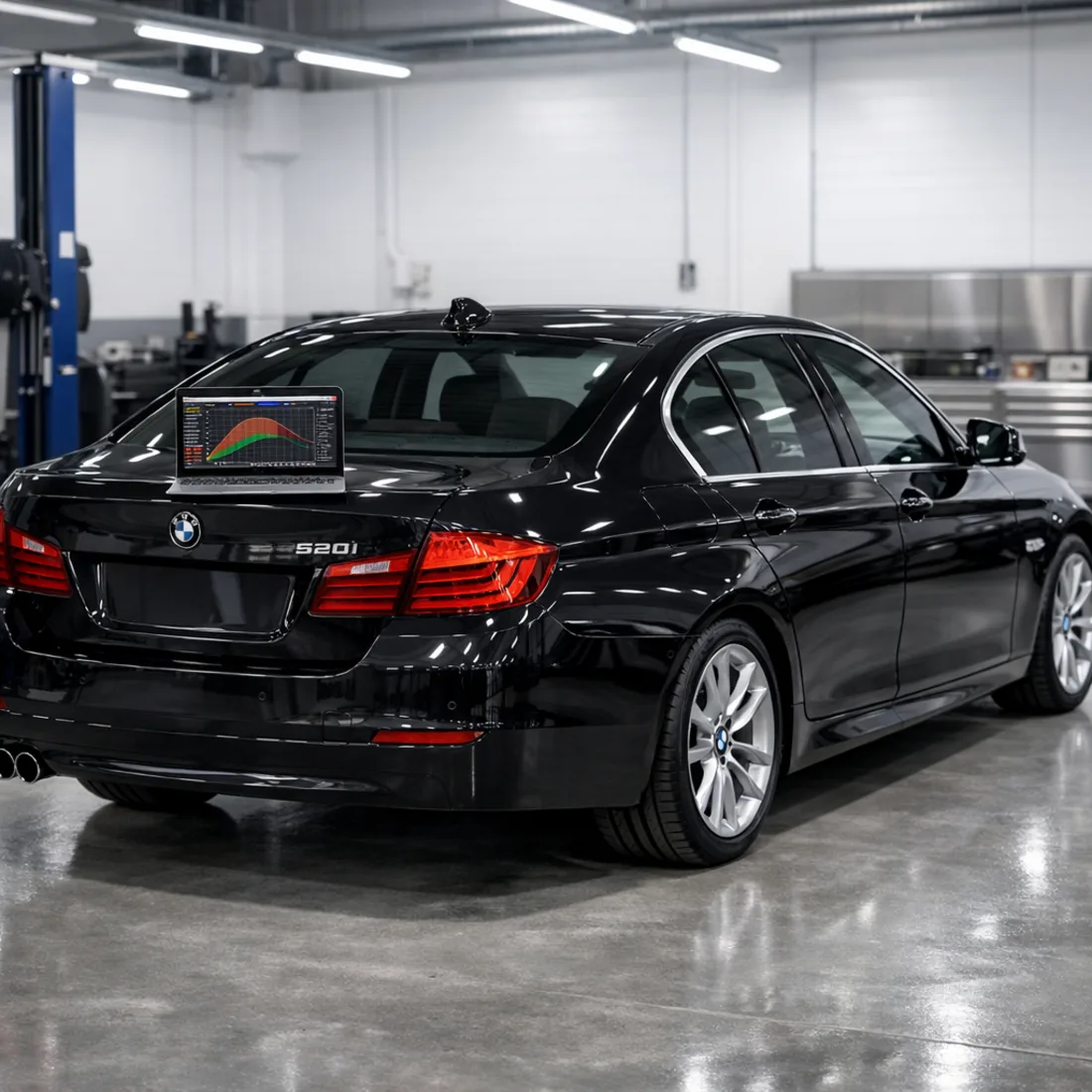
Stage 1 tuning on the B48B20B takes output from 252hp and 350Nm to 287hp and 450Nm, a 35hp and 100Nm gain. It's a clean tune on a well sorted engine and makes the 530i feel noticeably sharper in the mid range.
-
Valvetronic eccentric shaft actuator faults causing rough running or limp mode
-
VANOS solenoid issues affecting idle quality and performance
-
Coolant leaks from the plastic thermostat housing and coolant pipes
-
Carbon build up on intake valves at higher mileage
-
Timing chain worth inspecting, though generally more durable than the N20
The B48B20B makes a strong case for not needing six cylinders, and Stage 1 tuning makes the 530i feel noticeably sharper in the mid range.
Generic scan tools read basic codes but miss the live data and module level detail that actually tells you what's going on.
BMW 530d G30/G31: The B57 Straight Six Diesel
If the 530i is the refined daily driver, the 530d G30 is the long distance weapon. The B57D30M0 produces 265hp and a substantial 620Nm from the same 2993cc displacement as the old M57, but the B57 is a more modern engine with better refinement and a generally more durable timing chain setup. The bore and stroke is the same 84 by 90mm, and the compression ratio is 16.5:1 compared to the old M57's 17:1.
The improvement over the E60 530d is real but not unconditional. The B57 still needs proper attention to the EGR system, swirl flaps and crankcase breather, and the DPF plus AdBlue SCR system adds meaningful complexity for owners who do a lot of short urban trips. The AdBlue system in particular will generate fault codes on cars that don't get enough highway running to complete regeneration cycles properly.
The ECU is a Bosch MD1CP002, a modern platform that requires ISTA with an ICOM NEXT interface for proper diagnostics and coding. Stage 1 tuning on the B57 takes output to 310hp and 720Nm, a gain of 45hp and 100Nm. That extra torque makes the 530d feel more like the M550d in normal driving, and it's a popular choice for owners who want more without the complexity of the quad turbo setup.
Compared to the E60 530d, this car is cleaner, quieter and more capable. Compared to the M550d, it's simpler to maintain while still being genuinely quick. For most owners, the standard G30 530d is the sweet spot of the whole diesel lineup.
-
EGR cooler faults and carbon build up on the intake, a diesel constant
-
Swirl flap issues worth inspecting on higher mileage cars
-
DPF and AdBlue SCR faults, especially on short trip dominated vehicles
-
Injector condition and crankcase breather worth examining
-
Timing chain and tensioner condition to verify on high mileage examples
For most owners, the standard G30 530d is the sweet spot of the whole diesel lineup.
Stage 1 tuning on the B57 takes output to 310hp and 720Nm, making the standard 530d feel much closer to M550d territory in everyday driving.
BMW M550d G30/G31: Four Turbos, 400hp, Maximum Complexity
Four turbos. On a straight six diesel. The M550d is an engineering statement as much as it is a car, and the B57D30C under the bonnet producing 400hp and 760Nm from the same 2993cc block as the standard 530d is genuinely remarkable. The quad turbo setup includes an electric compressor alongside multiple conventional turbos in sequence, and it delivers boost at almost every point in the rev range. In a large executive saloon, the performance is startling.
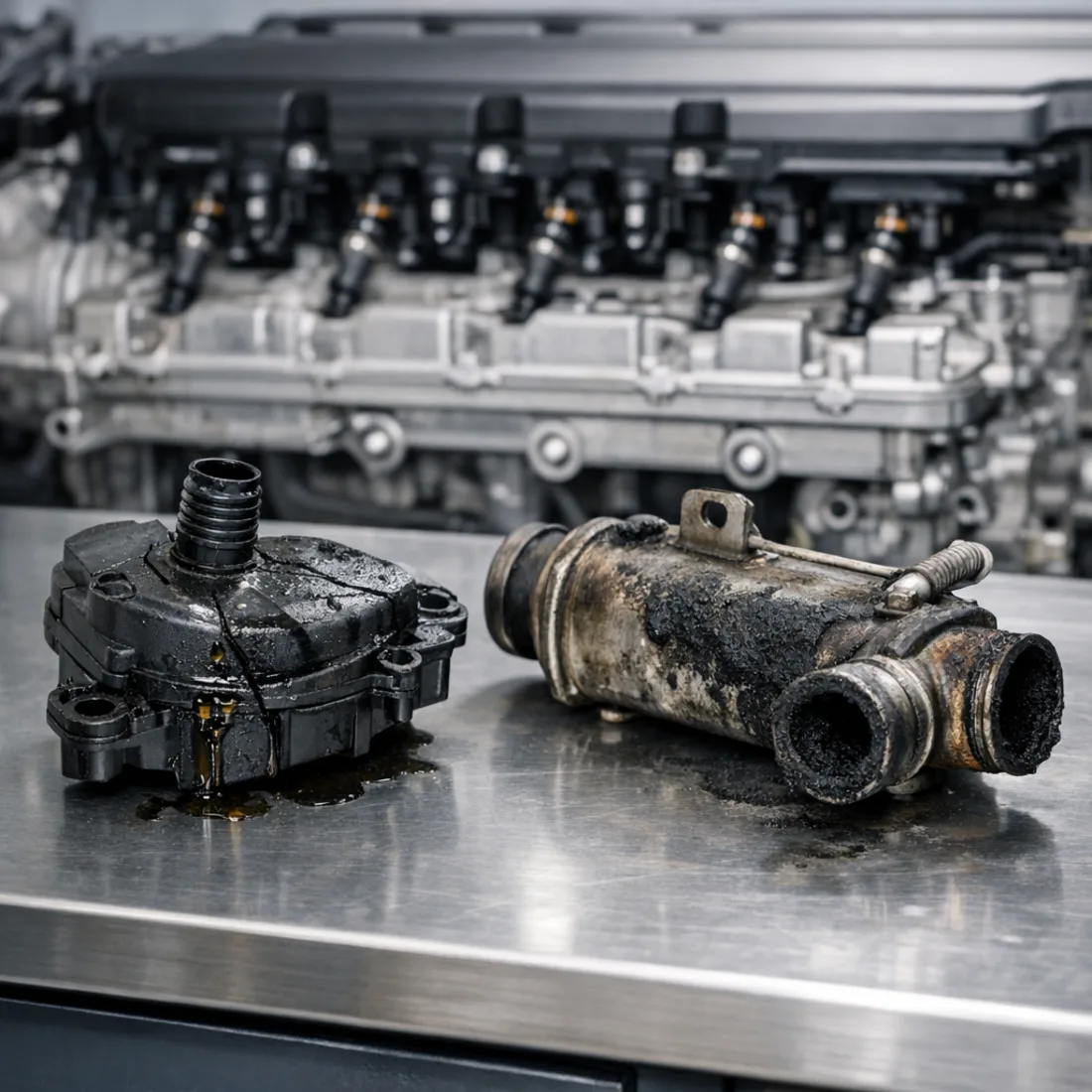
The complexity of that quad turbo arrangement is also where the M550d demands the most respect. The multiple actuators, the electric compressor and the high pressure fuel system all need to be in good order for the car to perform as intended. When any part of that system begins to degrade, the symptoms can be hard to pin down without proper factory level diagnostics.
Routine servicing on the M550d needs the correct low SAPS diesel oil grade, air filter, fuel filter, cabin filter, drive belts, glow plugs, and brake pads and rotors. We also cover the DPF, EGR and AdBlue systems, and transmission servicing on the ZF 8HP gearbox that pairs with this engine.
Stage 1 tuning on the B57D30C takes output to 460hp and 880Nm, a 60hp and 120Nm gain. That's not a trivial number from an already exceptional car, and it makes the M550d genuinely difficult to keep up with on a motorway on ramp. The Bosch MD1CP002 ECU and ZF 8HP combination requires careful, vehicle specific tuning to do it safely.
-
Quad turbo actuator and electric compressor faults causing lost boost or limp mode
-
EGR cooler and DPF/AdBlue SCR faults, particularly on short run cars
-
High pressure fuel system and injector wear under heavy carbon load
-
Timing chain guides worth inspecting on high mileage examples
-
Suspension and air suspension faults where fitted
The M550d is an engineering statement as much as it is a car. Four turbos on a straight six diesel, delivering boost at almost every point in the rev range.
When any part of that quad turbo system begins to degrade, the symptoms can be hard to pin down without proper factory level diagnostics.
BMW M550i G30/G31: The Twin Turbo V8 That Eats School Runs for Breakfast
If the M550d is the engineer's choice, the M550i is the driver's choice. The N63B44O2 is a 4.4 litre twin turbo V8 producing 462hp and 650Nm, with an 89 by 88.3mm bore and stroke and a 10.5:1 compression ratio. In a G30 body, it delivers the kind of performance that makes the motorway feel much shorter than it is. It's also the most complex car on this page from a servicing perspective, and the one that suffers most when maintenance is delayed.
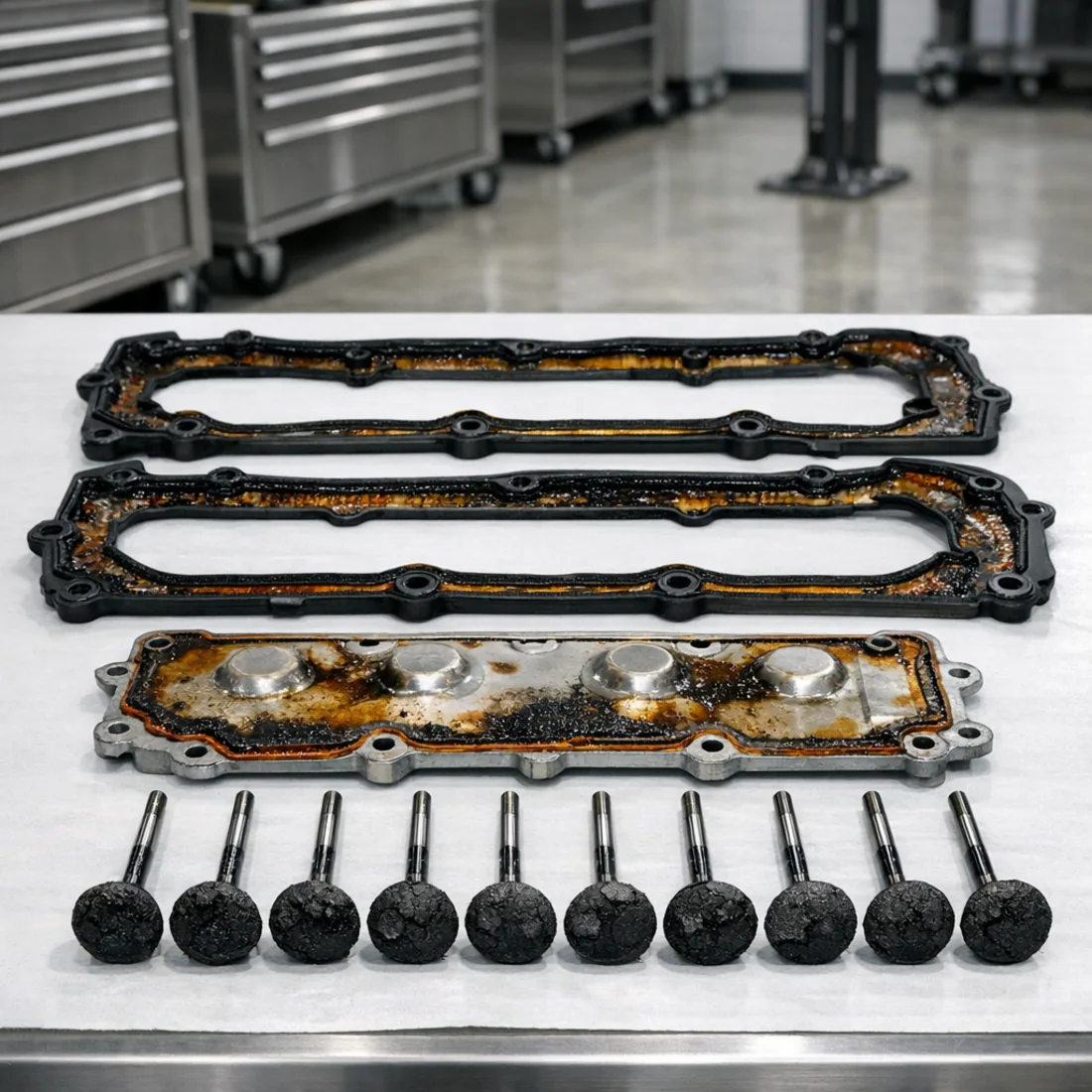
The N63's defining characteristic is that the twin turbos sit inside the hot vee of the V8, which means heat soak is a constant pressure on the coolant hoses, injectors and vacuum lines surrounding them. Oil consumption and leaks from the valve cover gaskets and the valley area are well documented on this engine and need checking at every service. Carbon build up on the intake valves is also more aggressive than on a turbocharged inline engine because of the heat environment.
Routine servicing needs the correct BMW LL-04 specification oil, along with air filters, cabin filter, spark plugs, brake pads and rotors, drive belts and coolant service. The V8 service intervals feel shorter in practice than the car's service indicator suggests, simply because the oil environment is harder. We see N63 engines that have been stretched on their service intervals and the difference in internal condition is obvious.
Stage 1 tuning on the N63B44O2 through its Bosch MG1CS003 ECU takes output from 462hp and 650Nm to 560hp and 830Nm. That's 98hp and 180Nm, which puts the M550i in genuinely fast company. We approach N63 tuning carefully because this is an engine that needs to be mechanically sorted before it absorbs more power responsibly.
-
Oil leaks from valve cover gaskets and the valley area under the intake manifold
-
Oil consumption, higher than most modern engines and worth monitoring between services
-
Coolant hose, injector and vacuum line degradation from heat soak around the hot vee turbos
-
Carbon build up on intake valves from the direct injection system
-
Ignition coil and spark plug wear contributing to misfires at higher mileage
-
High pressure fuel pump and injector issues on higher mileage examples
-
Timing chain condition worth verifying
The N63's twin turbos sit inside the hot vee of the V8, meaning heat soak is a constant pressure on everything surrounding them.
We see N63 engines that have been stretched on their service intervals and the difference in internal condition is obvious.
How to Pick Between the Generations When Buying Used
Owners shopping across this model line face a genuine choice, and the right answer depends on what you're actually going to do with the car.
You want the best value diesel overall. The B57 is newer, cleaner and more refined than the E60, and less complex than the M550d. If the history is there and the DPF and EGR are in good condition, it's the sweet spot of the whole diesel range.
You want the easier long term ownership proposition. The single turbo setup is simpler and parts availability is excellent. The 535d is faster but the twin turbo system needs more careful monitoring.
You want character and the simplicity of the naturally aspirated setup, but only if the injectors and fuel pump are in known condition. The 520i is more common and cheaper to buy, but the timing chain history is non negotiable to check.
You want sensible daily use in the G30 range. The B48 is a strong engine when maintained. The M550i is exceptional but demands thorough servicing and a full oil consumption check before purchase.
The budget for proper maintenance is there. It's a remarkable car when right, and genuinely expensive when it's not. The M550d is the ultimate diesel in the lineup but comes with the complexity to match.
- Check swirl flap and EGR condition on any E60 diesel before purchase
- Verify timing chain history on any F10 520i N20B20B, especially listen for cold start rattle
- Confirm injector and high pressure fuel pump condition on F10 523i N53B30
- Check DPF and AdBlue SCR system status on G30 diesel variants
- Inspect valve cover gaskets and monitor oil consumption on M550i N63B44O2
- Read full module fault history with factory level ISTA, not a generic scanner
- Confirm correct oil grade and change intervals have been followed throughout
Servicing the 5 Series Across All Three Generations
Every generation of 5 Series on this page shares one requirement: the right oil grade, applied on time. The diesels need low SAPS formulations that won't contaminate the DPF. The petrol engines need BMW LL-04 specification. Generic oils from a quick lube shop aren't the same thing, and on a car this sophisticated the difference accumulates over time in internal wear and deposit build up.
Beyond oil, each generation has its service items worth doing properly. The diesel cars across E60, F10 and G30 all need fuel filter changes, glow plug checks, air filter, cabin filter, and periodic attention to the EGR system and DPF. The petrol cars need the correct spark plugs for their specific engine, ignition coil inspection, and on the direct injection engines a walnut blast intake clean when carbon build up is affecting running quality. Our full servicing offer covers all of this with genuine OEM parts throughout.
Brake service across all generations is a regular requirement, and the G30 in particular with its larger brakes and available adaptive chassis needs correct specification components to maintain the system's behaviour properly. We only fit new genuine or OEM brake parts, never sourced second hand.
Suspension refresh is worth budgeting for on any E60 with significant mileage. The F10 and G30 are younger but the F10 examples are now reaching the age where control arm bushes and thrust arms need attention. We handle all of this under our mechanical repair services.
How We Actually Diagnose These Cars
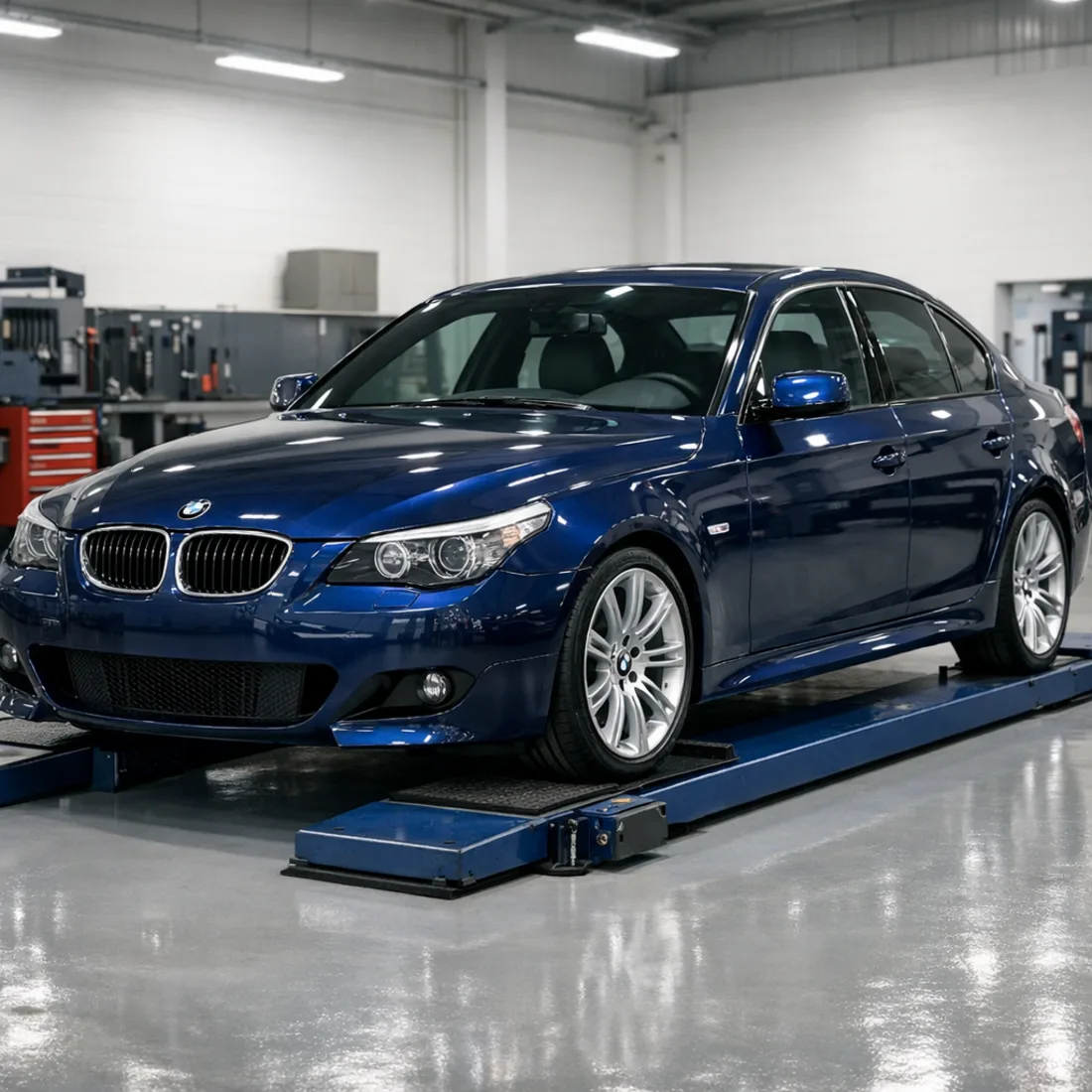
Every generation on this page, from the earliest E60 to the latest G30 M550i, requires factory level diagnostics to work on properly. The ECU platforms range from Bosch EDC16 in the early M57 diesels through to Bosch MG1CS and MD1CP002 in the G30 range, and each one communicates differently with different modules across the car.
We run BMW ISTA and Rheingold using genuine ICOM and ICOM NEXT interfaces. That means we read all modules, not just the engine ECU. Transmission faults, suspension faults, emissions system fault histories and injector adaptation data are all visible when you have the right tools. A generic OBD scanner reads a subset of powertrain codes and misses most of what these cars actually record.
E60 diesels: Bosch EDC16 family ECUs, M57 306D2 and 306D4 specific fault codes and live data for swirl flap position, EGR duty and turbo actuator feedback. F10 petrol: Siemens MSD81 and Bosch MEVD17 ECUs, injector coding and NOx sensor data on the N53, chain and boost data on the N20. G30 range: Bosch MD1CP002 and MG1CS ECUs, full module map including ZF 8HP gearbox, air suspension modules and AdBlue dosing unit data on the M550d.
When we diagnose a fault, we tell you what we found, what caused it, and what the fix involves. No guessing, no unnecessary parts. Our auto electrical and diagnostics team handles all of this in house at our Penrose workshop.
Tuning Options Across the Lineup
Every engine on this page has a Stage 1 tune available, and the gains vary significantly depending on the starting point. We write vehicle specific maps rather than applying generic off the shelf files. Every tune on these cars is done after a full health check, because adding power to a car with a marginal timing chain or worn injectors creates problems rather than solving them.
A useful torque gain on an engine that's been doing it for years. ECU: Bosch EDC16C10 / EDC16C31 / EDC16CP35. Works best once the car is mechanically sorted first.
The twin turbo setup responds very well to tuning when the actuators are in good condition. ECU: Bosch EDC16CP35 / EDC17CP02. We won't tune one that isn't mechanically well.
Impressive for a naturally aspirated engine. ECU: Siemens MSD81 / MSD87.1 / MSV90. Suits owners who want the straight six character with a bit more urgency.
The torque gain here is substantial and transforms the driving character. ECU: Bosch MEVD17.2.4 / MEVD17.2.9. We carry out a walnut blast intake clean before tuning any direct injection engine.
A tidy gain on an already strong engine. ECU: Bosch MG1CS003 / MG1CS201. Makes the 530i feel noticeably sharper in the mid range.
Makes the standard 530d feel much closer to M550d territory in everyday driving. ECU: Bosch MD1CP002. A popular choice for owners who want more without the complexity of the quad turbo setup.
The quad turbo setup has real headroom when approached properly. ECU: Bosch MD1CP002 & ZF 8HP. Makes the M550d genuinely difficult to keep up with on a motorway on ramp.
The largest absolute gain on the page. Requires a mechanically sorted engine before we'll proceed. ECU: Bosch MG1CS003. We approach N63 tuning carefully because of the demanding heat environment.
All tunes are delivered as vehicle specific maps through our ECU file service after a full health check. We don't apply generic off the shelf files, and we don't tune cars that aren't mechanically sorted first.
Frequently Asked Questions
The questions we get most. Something else on your mind? Get in touch.