BMW F01 7 Series: 730d, 740i and 750i
The F01 7 Series is one of the finest large saloons ever built, and it comes in three very different flavours: the torque rich N57 diesel in the 730d, the sweet revving N55 straight six in the 740i, and the fire breathing N63 twin turbo V8 in the 750i. Each one is genuinely impressive in good health. Each one has its own catalogue of known faults that get expensive fast if you ignore them or trust them to someone with a generic scan tool. We work on all three variants every week, and this page tells you exactly what to expect from whichever one is sitting on your driveway.

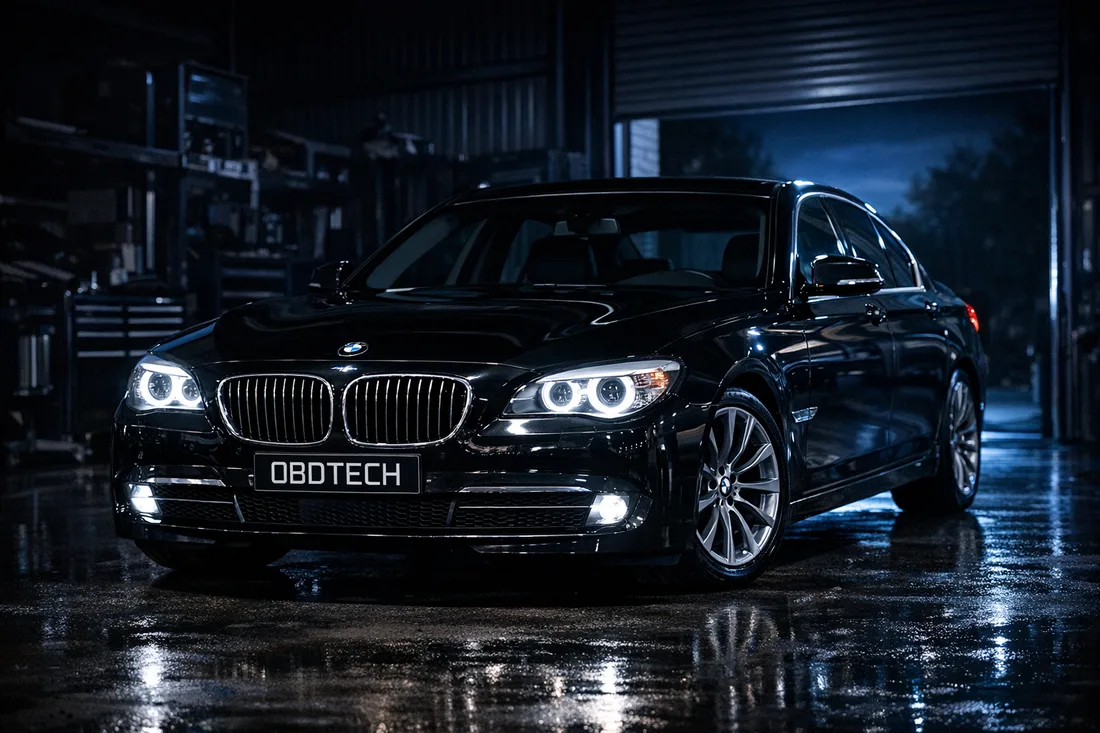

BMW 730d F01: The Diesel Flagship and Its Quiet Faults
Picture cruising down the Southern Motorway in two tonnes of German executive refinement, the N57D30A straight six pulling cleanly from low revs, the air suspension ironing out every bump in the road. That is the 730d at its best. What it does less effortlessly, somewhere around the 100,000 kilometre mark, is quietly develop a handful of faults it was essentially born with. The N57D30A is a 2993cc inline six producing 245 hp and 520 Nm of torque, backed by a Bosch EDC17 ECU. It is a sophisticated piece of engineering, and sophisticated means expensive when things go wrong.
The diesel 7 is the entry point to the F01 range in terms of purchase price, and that makes it the most common one we see. It is also the one where deferred maintenance does the most damage, because the faults compound each other in a way the petrol variants do not quite match.
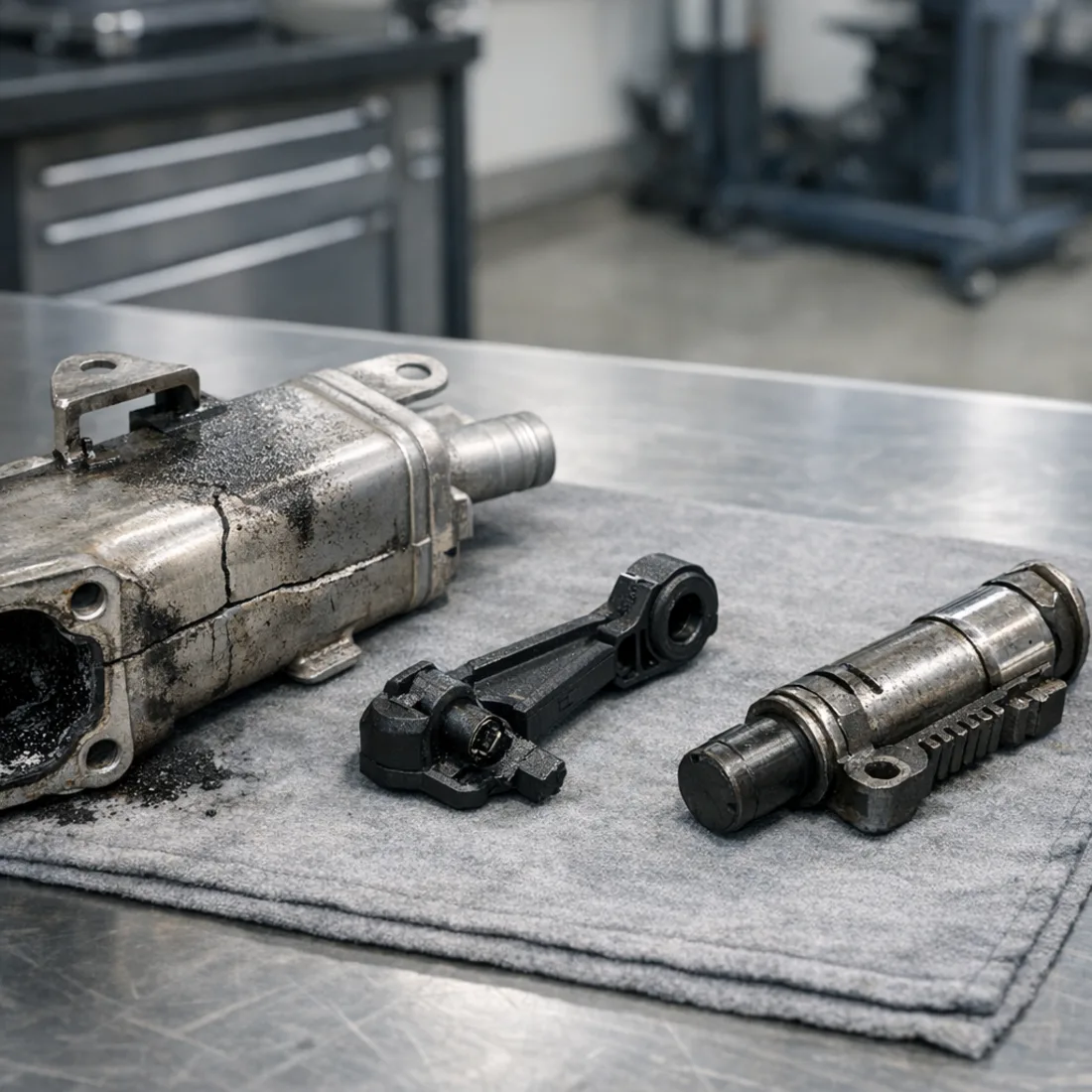
The swirl flap issue deserves a special mention. When these plastic flaps fail, fragments can enter the engine. It is one of the few situations on a modern BMW where doing nothing is genuinely dangerous rather than just inconvenient. If yours has not been inspected and the flaps have not been addressed, that needs to happen before anything else.
The timing chain sits at the rear of the engine on the N57, which is the opposite end from most engines. Getting to it is a substantial amount of labour, so catching chain wear early through proper diagnostics, rather than waiting for the rattle you can hear from outside the car, makes a real difference to the final invoice.
-
Swirl flaps in the intake manifold breaking up and contaminating the engine
-
EGR cooler clogging and failure, causing rough running and stored fault codes
-
Timing chain wear at the rear of the engine, which is a big job to reach
-
DPF blocking on cars used mainly for short urban trips
-
Injector wear causing rough idle and power loss
-
Turbo actuator faults producing limp mode
-
Air suspension faults common across all F01 variants
When these plastic flaps fail, fragments can enter the engine.
It is one of the few situations on a modern BMW where doing nothing is genuinely dangerous rather than just inconvenient.
For routine servicing on the 730d we use the correct BMW long life diesel grade oil, replace air, fuel and cabin filters on schedule, fit glow plugs when needed, and handle brake pads and rotors, suspension bushes and sensor replacement. The EGR and DPF get cleaned or replaced using the right process rather than a shortcut, and we do swirl flap work, timing chain jobs and full cooling system inspections.
A Stage 1 tune on the N57D30A takes output to 300 hp and 600 Nm, gains of 55 hp and 80 Nm over stock. For a car of this size and weight, that extra torque transforms the motorway driving character without touching reliability. We also offer EGR and DPF system work, Start/Stop disable, Vmax removal and swirl flap delete coding where relevant. All tuning work is done on the Bosch EDC17 ECU correctly, not with a generic flash tool.
Get your F01 7 Series booked in with a proper specialist.
BMW 740i F01: The Sweet Spot in the Range
The 740i is arguably the most balanced F01. Six cylinders rather than eight means a lighter nose, slightly less complexity, and a purchase price that sits comfortably below the 750i. The N55B30A is a 2979cc single turbo inline six producing 326 hp and 450 Nm, managed by either a Bosch MEVD17.2.6 or a Siemens MSD87 ECU depending on build date. It is a strong engine when it is healthy, and a source of real frustration when it is not.
Compared to the 730d, the 740i is a step up in everyday response. Compared to the 750i, it is meaningfully simpler under the bonnet. If you are buying used and trying to decide between the three, the 740i often gives you the most usable day to day car once it is sorted, especially if most of your driving is in town rather than long highway runs.
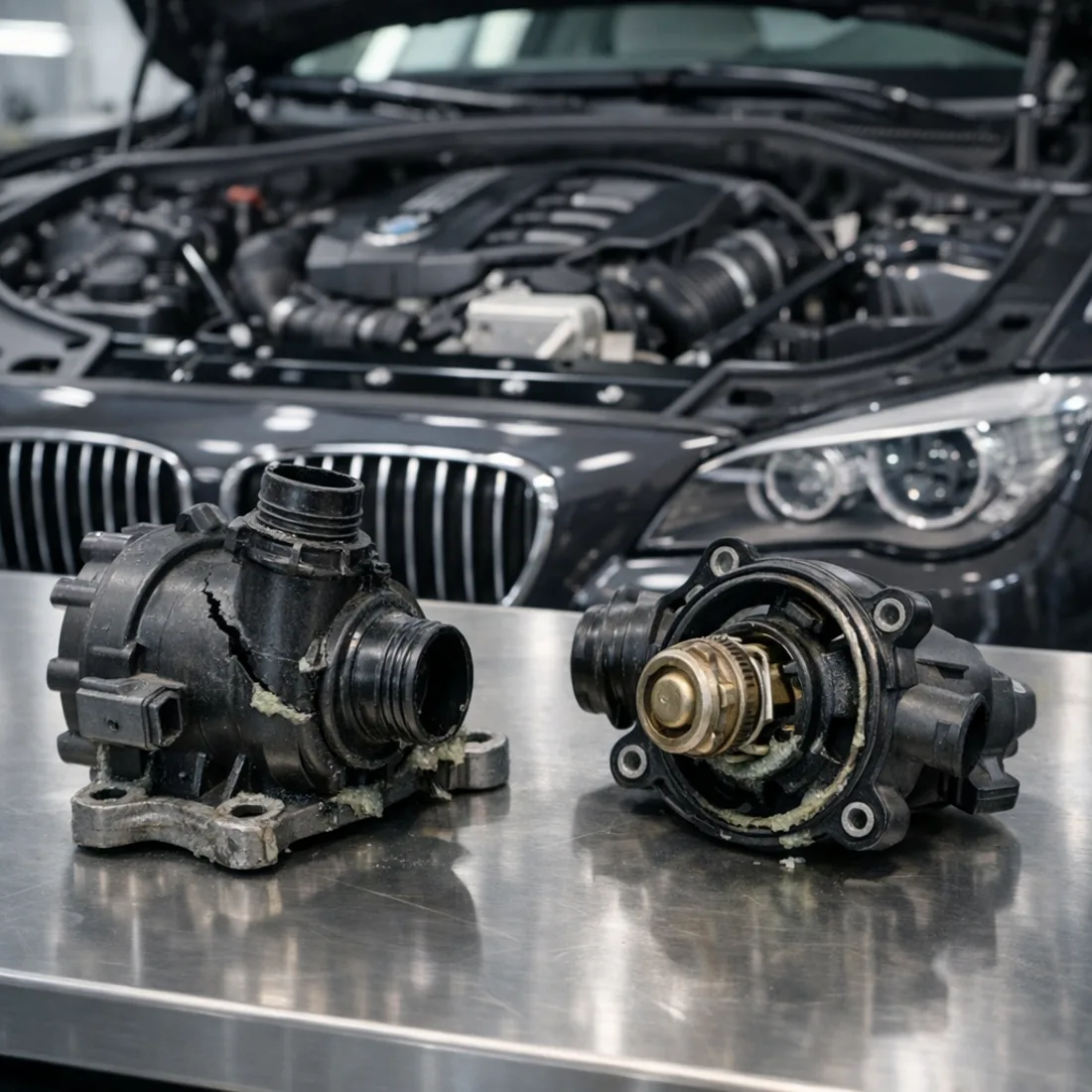
The electric water pump is the fault we see most on the N55 in this car. Unlike a mechanical pump, it gives very little warning before it fails. When it does, the engine can overheat quickly and quietly. Replacing the pump and thermostat together makes sense because the labour overlap is significant and the thermostat housing on these fails at similar mileages.
Carbon build up is an unavoidable consequence of direct injection. Fuel never washes the backs of the intake valves the way a port injected engine does, so carbon accumulates over time. The fix is walnut blasting, which we carry out in house. It restores idle quality, throttle response and fuel economy, and it is noticeably cheaper than chasing misfire codes with parts you may not need.
-
Electric water pump failure, often with little warning before the engine overheats
-
Thermostat housing failure alongside the water pump
-
Valve cover gasket oil leak, sometimes combined with oil filter housing gasket
-
Carbon build up on intake valves due to direct injection, affecting running and economy
-
Wastegate rattle, particularly on higher mileage examples
-
VANOS solenoid faults causing variable cam timing issues
-
Charge pipe and boost pipe failures under load
The 740i often gives you the most usable day to day car once it is sorted.
The N55 is a genuinely good engine when the water pump, cooling system and carbon build up are addressed.
Routine servicing on the 740i follows the same discipline as the rest of the range. Correct BMW approved oil grade, air filter, cabin filter, spark plugs, ignition coils, wipers and drive belt on schedule. We also check the VANOS solenoids and eccentric shaft sensor condition during service because these are cheap to replace preventively and expensive to diagnose reactively.
The Stage 1 tune for the N55 brings output to 370 hp and 520 Nm, gains of 44 hp and 70 Nm. The N55 responds well to tuning and the result is a noticeably sharper car on the open road. We can also add Pop and Bang maps, Vmax removal and Decat coding. All work is done on the correct ECU platform.
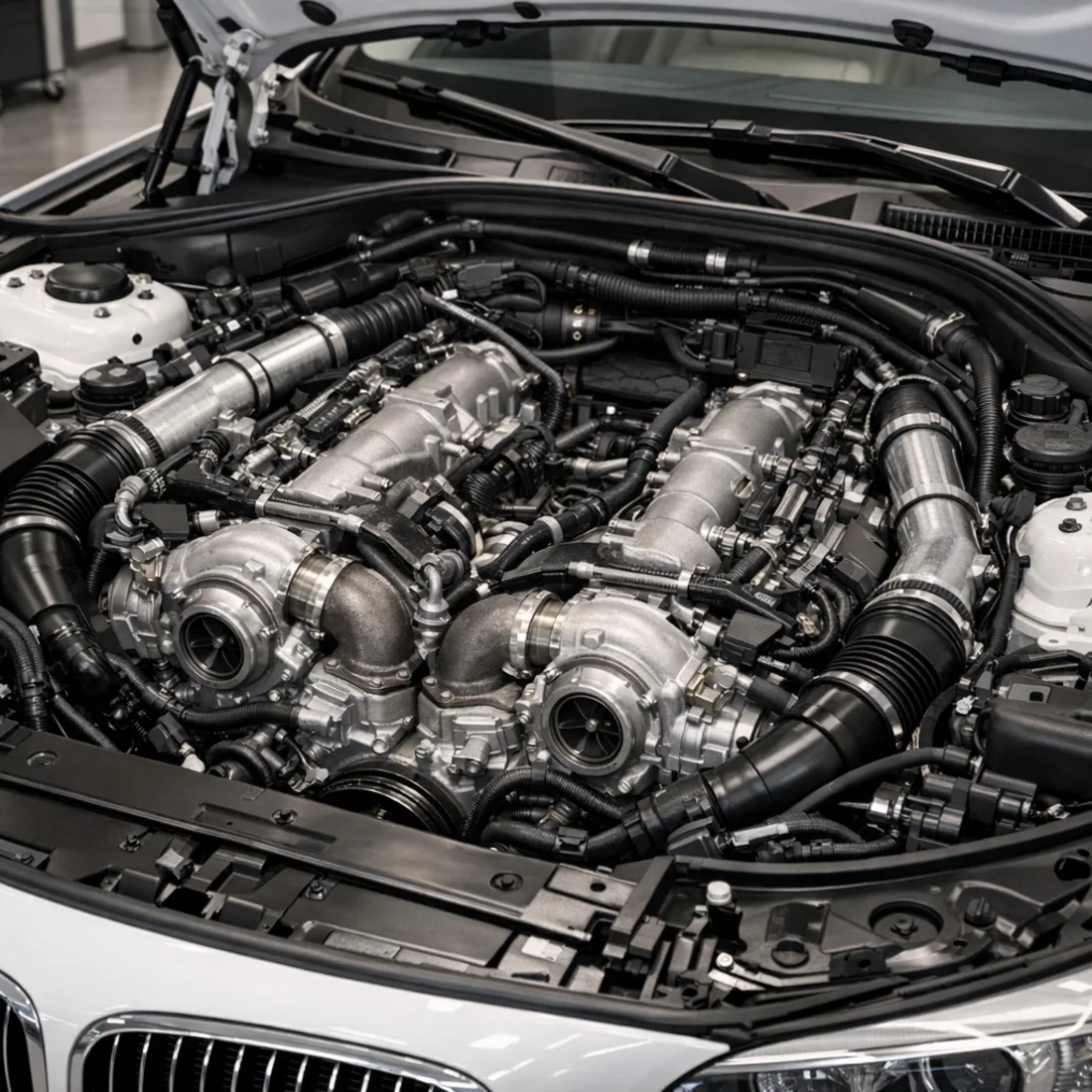
BMW 750i F01: The V8 Flagship and Its Known Demons
The 750i is what happens when BMW decides to build a proper flagship and does not hold back. A 4395cc twin turbo V8 producing 407 hp and 600 Nm, managed by a Siemens MSD85 ECU. Merging onto the motorway in one of these is a properly memorable experience. But the N63B44O0 has a reputation, and that reputation is well earned. BMW even ran a customer care programme for known oil consumption issues on this engine. That tells you everything you need to know about how significant the faults are.
The N63 architecture puts the turbochargers inside the vee of the engine rather than on the outside. This is brilliant for packaging and throttle response, and genuinely problematic for heat management. The valley between the cylinder banks runs extremely hot, and that heat does real damage to seals and components over time.
If you are looking at a used 750i and the service history shows inconsistent oil change intervals or the oil level has never been checked between services, walk away or budget for a full engine assessment before you commit. The valve stem seal job on an N63 is not a quick afternoon of work, and if the timing chain guides have been running on degraded oil, you may be looking at a chain replacement too.
On a properly maintained example though, the 750i is exactly what BMW intended: effortlessly fast, supremely comfortable, and genuinely impressive well over a decade after it left the factory. The key is knowing what to look for and staying ahead of it.
-
Heavy oil consumption, often a litre or more per 1000 km on tired examples
-
Valve stem seals hardening from heat, causing blue smoke on cold start
-
Timing chain guide wear and chain stretch on higher mileage cars
-
Coolant leaks from the valley plate and surrounding hoses
-
Fuel injector failure and low pressure fuel pump faults
-
Battery and charging system issues from the high electrical load
-
Turbocharger wear accelerated by the hot valley location
BMW ran a customer care programme for known oil consumption issues on this engine.
That tells you everything you need to know about how significant the faults are.
Routine servicing on the 750i uses the correct BMW Longlife grade oil without compromise. Given the N63's consumption habits, we also recommend checking the oil level more frequently than the service interval suggests. Beyond oil and filters, we cover spark plugs, drive belts, coolant service, brake pads and rotors, and sensor replacement. Bigger mechanical repairs include timing chain work, cooling system overhaul, valve stem seals and air suspension repairs.
The Stage 1 tune on the MSD85 ECU takes the 750i to 520 hp and 700 Nm. Gains of 113 hp and 100 Nm. At that level this car is genuinely fast by any measure. We also offer DTC removal, Pop and Bang maps, Vmax removal and Decat coding. Everything is done on the correct factory ECU, not a piggyback device.
Which F01 Should You Buy? Honest Advice Across the Range
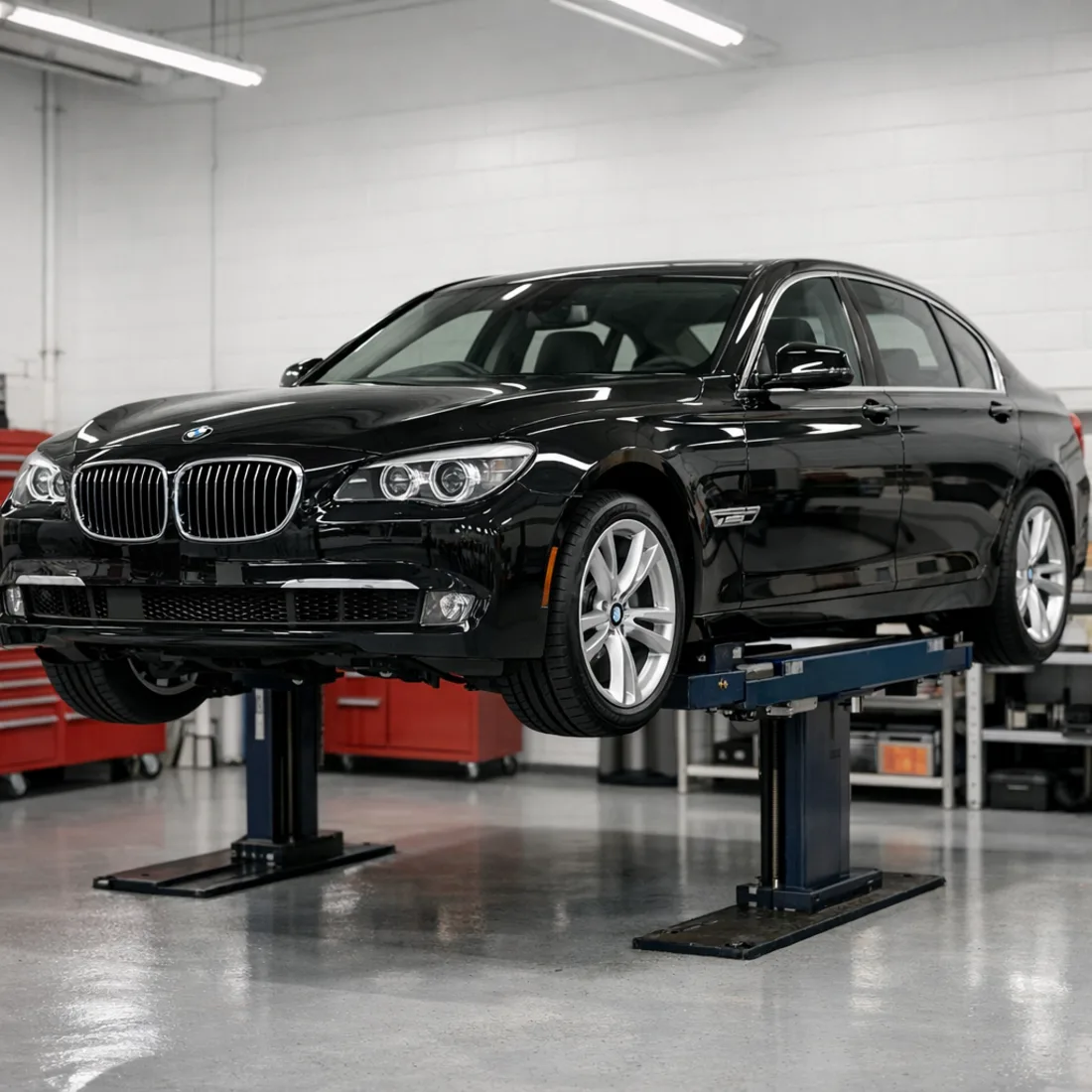
If you are shopping the used market for an F01 7 Series, the three variants suit different buyers. Here is what we actually think after seeing all three on the hoist every week. Across all three, prioritise service history over price. A cheap F01 with no receipts will cost you more than a slightly dearer one with a clear paper trail. These are not forgiving cars when maintenance has been skipped.
You cover motorway kilometres rather than short city trips. Lowest running costs on fuel, but the diesel specific faults (swirl flaps, EGR, DPF, timing chain at the rear) can be expensive. Avoid any example with a blocked DPF or unknown swirl flap history.
You want the sweet spot. Simpler than the V8, cheaper to run than the diesel over time if maintained, and the N55 is a genuinely good engine when the water pump, cooling system and carbon build up are addressed. If you want one F01 that balances cost, performance and reliability, this is usually it.
You want the best experience of the three and are prepared for the highest cost when it is not healthy. Budget for a pre purchase inspection that specifically checks oil consumption, chain noise, smoke on startup and coolant condition. A clean, documented 750i is a brilliant car. An unknown one is a gamble.
- Prioritise service history over purchase price on all three variants
- 730d: confirm swirl flap history and DPF condition before committing
- 730d: ask about timing chain inspection given the rear of engine location
- 740i: test the electric water pump and thermostat during pre purchase inspection
- 740i: check for carbon build up symptoms such as rough idle or poor economy
- 750i: assess oil consumption, smoke on cold start and valley plate coolant condition
- 750i: listen for timing chain noise and check chain guide history
- All variants: check air suspension operation and battery health
Servicing All Three F01 Variants
The F01 platform shares a lot of architecture across all three variants. Air suspension, body electronics, comfort systems, ZF gearbox, DSC and stability systems are broadly common. That means our car servicing process on an F01 covers the shared platform items regardless of which engine is under the bonnet, and then dives into the engine specific checks for whichever variant we have in.
For the 730d we follow BMW's long life diesel schedule with the correct oil grade, fuel filter, glow plugs and DPF condition assessment. For the 740i we add water pump condition, intake valve carbon check and VANOS health. For the 750i we add oil consumption assessment, valley plate coolant inspection and timing chain noise check.
Common service items across all three variants include oil and filter at the correct BMW approved grade for each engine, air filter and cabin and pollen filter replacement, brake pads and rotors front and rear, drive belt inspection and replacement, suspension bushes, arms and air suspension component checks, coolant condition and system pressure test, and battery health test given the high electrical demands of the F01.
Our mechanical repairs team handles the bigger jobs too: timing chains, cooling system overhauls, valve stem seals on the 750i, walnut blasting on the 740i, and swirl flap work on the 730d. We fit genuine or OEM quality new parts only.
How We Diagnose the F01 Range
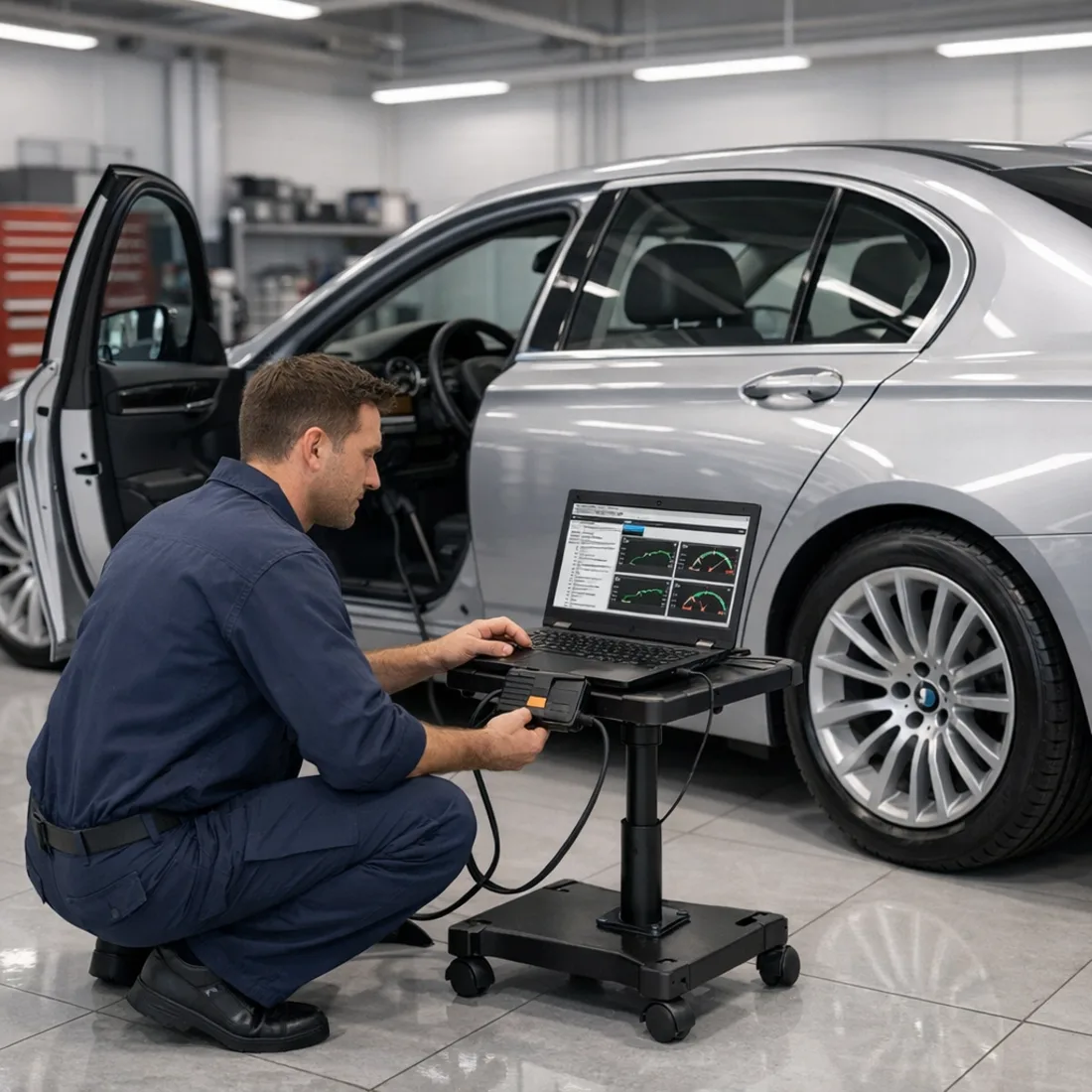
Every F01 that comes through our door gets diagnosed with BMW ISTA / Rheingold running through a genuine ICOM or ICOM NEXT interface. That matters more than it might sound. The F01 has dozens of control modules that talk to each other, and a generic scan tool will read maybe a third of them and miss the context that tells you whether a fault is current, historical or intermittent.
With factory tooling we can read live data from the N57, N55 or N63 ECU, check adaptation values, run actuation tests on solenoids and pumps, program replacement modules and recode the car after parts are fitted. That last part is critical on the F01 because this platform does not simply accept a new part. It needs to know the part is there, and it needs its parameters set correctly.
Our car programming and coding service covers all of this: module replacement and registration, key and immobiliser programming, comfort and convenience feature coding, and post repair adaptations. Whether it is a new battery that needs registering, an air suspension module that needs addressing after replacement, or a new injector that needs coding to the ECU on the 730d, we handle it with the right tool rather than hoping the car figures it out on its own.
Tuning the F01: What Each Engine Can Do
All three F01 variants respond to tuning, and the results are very different in character. If the engine has known mechanical issues, we will tell you before we tune it. A timing chain that is on its way out does not need more boost. Sort the foundations first, then tune.
The torque gain is what you notice most. At motorway speed this diesel goes from composed to genuinely effortless. We also offer EGR and DPF system work, Start/Stop disable, Vmax removal, swirl flap delete coding, and AdBlue and NOx system work where relevant. All tuning is written to the Bosch EDC17 ECU using proper tools.
The N55 picks up throttle response alongside the power figure, which makes it feel sharper all the way through the rev range. We can also add Pop and Bang maps, Vmax removal and Decat coding. All work is done on the correct Bosch MEVD17.2.6 or Siemens MSD87 ECU platform.
This is a different conversation entirely. At those numbers the 750i is seriously fast for a large saloon. We also offer DTC removal, Pop and Bang maps, Vmax removal and Decat coding. Everything is written to the Siemens MSD85 ECU directly, not a piggyback module sitting in the engine bay.
Beyond Stage 1, we offer Vmax removal across all three variants, Pop and Bang maps on the petrol models, DTC removal, and swirl flap and EGR system coding on the diesel. All tuning is written to the factory ECU using proper tools. Submit your ECU details through our file service to get started.
Frequently Asked Questions
The questions we get most. Something else on your mind? Get in touch.