BMW X5 & X6: Three Generations of Diesel Performance Across E70, F15 and G06
From the E70 X5 3.0d that introduced a lot of Kiwi families to the idea of a genuinely fast diesel SUV, through the F15 X5 M50d with its three turbo headline act, to the G06 X6 M50d pushing 400 horsepower from four turbos and a 3.0-litre straight six, this model line has always been about doing more with a diesel than anyone expected. Each generation raised the output, raised the complexity, and raised the cost of getting it wrong. We have worked on all three extensively, and we know exactly where each one bites.



BMW X5 3.0d (E70): The 286hp Diesel That Started It All
The E70 X5 3.0d with the 306D5 engine is where this story starts. On paper, 286 horsepower and 580 Nm from a 3.0-litre straight six diesel in a 2.2-tonne SUV sounds like more than enough. In practice, it is, and then some. The engine is genuinely well engineered, but it came with a set of known weak points that have become very familiar to us after years of seeing these roll in.
The timing chain on the 306D5 runs off the rear of the engine, which means that if it lets go, you are looking at a significant strip down. Listen for any rattle on cold start. If you hear it, book it in before the situation escalates. That rattle is the chain and its guides telling you time is running out.
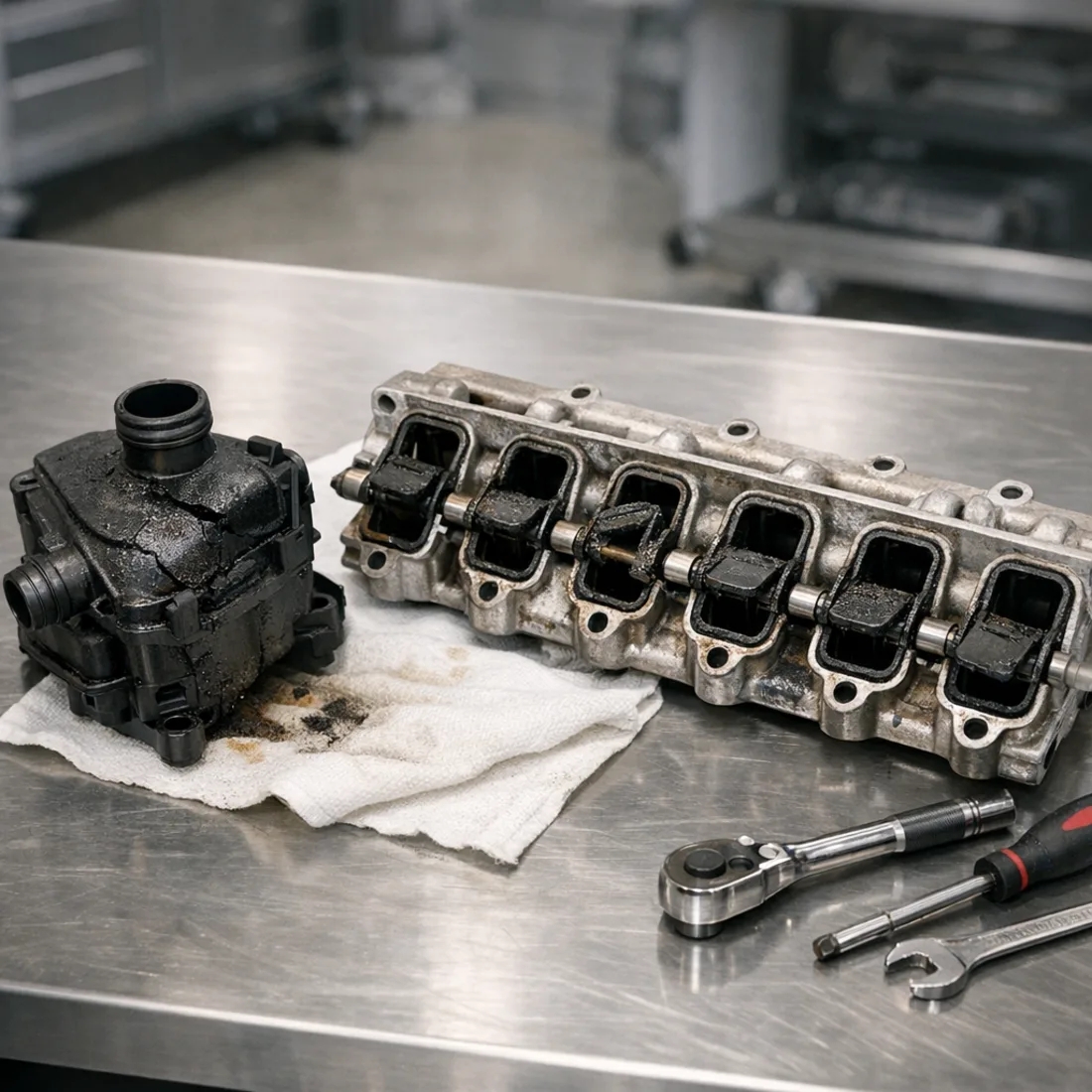
The crankcase breather is worth highlighting because it is one of those jobs that gets ignored until the symptoms become unmistakable. Oil vapour getting into the intake, a slight smoke at idle, an oily film on hoses. It is a relatively affordable fix when caught early and a much messier problem when left. Same story with the swirl flaps. These are plastic components sitting in a diesel intake that runs at high temperatures. They break. When they do, fragments can enter the engine. We replace them with quality components and inspect the intake properly while we are in there.
-
Timing chain and guide wear, announced by cold start rattle
-
Swirl flap failure in the intake manifold, causing rough running and fault codes
-
EGR cooler clogging, leading to overheating and power loss
-
Crankcase breather system failure, causing oil misting and smoke
-
Turbo wear at higher mileages, especially where service intervals were stretched
-
Injector wear, rough idle and uneven fuelling
-
Front control arm bushes and ball joints wearing faster than owners expect
-
Rear air suspension faults, including compressor and bag failures
That rattle is the chain and its guides telling you time is running out.
Caught early it is a significant but manageable job. Left alone it can become an engine rebuild conversation.
Routine servicing on the E70 3.0d includes the correct long life diesel oil and filter, fuel filter changes, brake pads and rotors (this is a heavy vehicle and it eats brakes), glow plugs, and full diagnostics. DPF health and EGR cleaning are both worth checking at every service on a higher mileage example.
The ECU on these is either a Bosch EDC16CP35 or Bosch EDC17CP09 depending on build date. We have full access to both platforms. For owners who want more from the 306D5, we offer a Stage 1 tune that lifts output from 286hp and 580 Nm to 340hp and 680 Nm, a meaningful gain that makes the E70 feel genuinely quick rather than just fast enough.
Get your BMW X5 or X6 booked in with a proper specialist.
BMW X5 M50d (F15): Three Turbos, 381hp, and a Longer List of Things to Watch
BMW took the 3.0-litre diesel formula from the E70 and completely rewrote what it was capable of with the F15 X5 M50d. The N57D30C engine uses three turbochargers working in sequence to produce 381 horsepower and 740 Nm from the same displacement as the old 306D5. It is a fundamentally different machine, more refined, more powerful, and considerably more complicated when something goes wrong.
Where the E70 punished neglect in a handful of predictable ways, the F15 M50d adds the complexity of multiple turbo actuators and a more sophisticated emissions system to the list. Some of the same underlying weaknesses are still there, because physics does not change just because the badge says M Performance.
The turbo arrangement on the N57D30C is where the F15 really differentiates from its predecessor. If an actuator starts playing up, you get inconsistent boost, hesitation under load, and often a limp mode event. Generic scan tools will read a fault code, but they will not give you the live turbo data and actuator feedback you need to properly diagnose which part of the system is at fault. We use BMW ISTA diagnostics with a genuine ICOM NEXT interface, so we can see exactly what each stage of the turbo sequence is doing in real time.
-
Turbo actuator faults across the sequential turbo system, often throwing power loss symptoms before a full failure
-
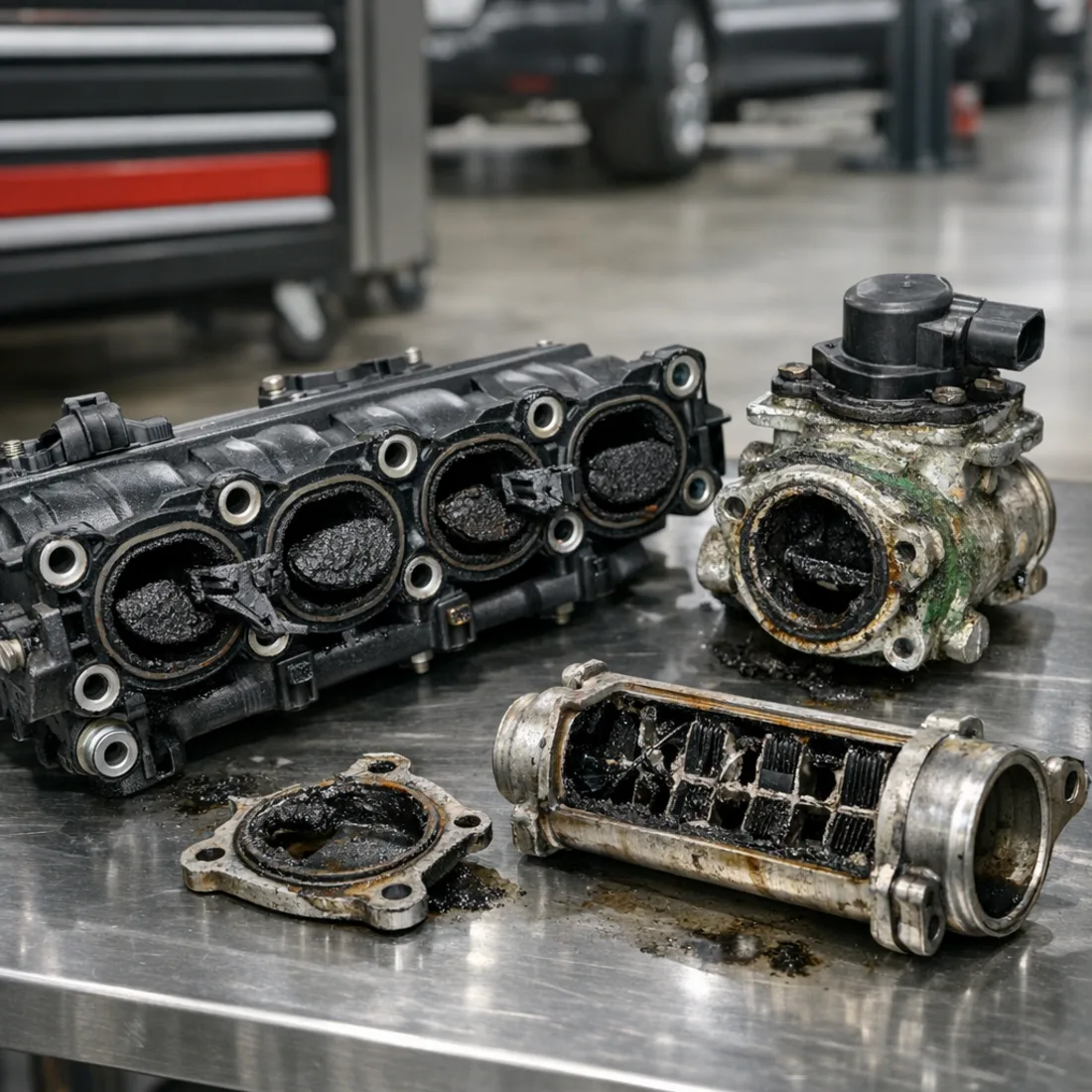
Swirl flap and intake carbon build up requiring decarbon cleaning or flap replacement
-
EGR cooler deterioration, similar to the E70 but in a more complex housing
-
Timing chain and guide wear at higher mileage, same rear of engine access challenge
-
DPF clogging on vehicles used predominantly for short urban trips
-
Injector wear showing as rough idle, increased smoke or uneven cylinder contribution
Reading one fault code and replacing one part is not diagnosis.
Reading live data across all systems simultaneously and understanding how they interact is how you fix these properly the first time.
The DPF on the F15 is also worth watching. A 381hp diesel SUV that spends its life doing school runs and short suburban trips will not complete passive regeneration cycles. The DPF fills up, fuel gets post injected to try and force a regen, and if that does not clear it the car goes into limp mode. We handle DPF diagnostics, cleaning and replacement where required, and we can advise on driving patterns that keep the system healthy.
The ECU options on the F15 M50d are the Bosch EDC17CP45 or EDC17CP49 paired with the ZF 70HP transmission controller. Stage 1 tuning on this platform lifts output from 381hp and 740 Nm to 420hp and 800 Nm. Combined with our gearbox and TCU expertise, there is a lot of room to make the F15 feel substantially sharper than stock without touching the hardware.
BMW X6 M50d (G06): Four Turbos, 400hp, and the Most Complex Version Yet
The G06 X6 M50d takes the M Performance diesel concept further again. Four turbochargers. 400 horsepower. 760 Nm. A sports SUV coupe body that looks like it should not work aerodynamically and somehow does. It is BMW engineering at its most committed to the idea of a diesel that feels nothing like a diesel.
The jump from three turbos in the F15 to four in the G06 adds another layer to the diagnostic picture. More actuators, more potential failure points, more live data streams to read correctly. The Bosch MD1CP002 ECU on this platform is a newer generation unit and requires current ISTA software to interrogate properly. An aftermarket scan tool will get you a fault code. It will not tell you which turbo stage is underperforming, what the actuator duty cycle looks like, or whether you are dealing with a sensor fault or an actual mechanical issue.
The AdBlue and NOx system on the G06 is more involved than on earlier generations. When the system faults, it sets a countdown to engine start lockout if not resolved. We diagnose and repair the dosing system, sensors, pump and SCR catalyst properly rather than leaving the problem to worsen. If the system needs cleaning or component replacement, we use genuine or OEM quality parts only.
-
Turbo actuator wear and failure across the four stage system, often presenting as power loss or inconsistent boost delivery
-
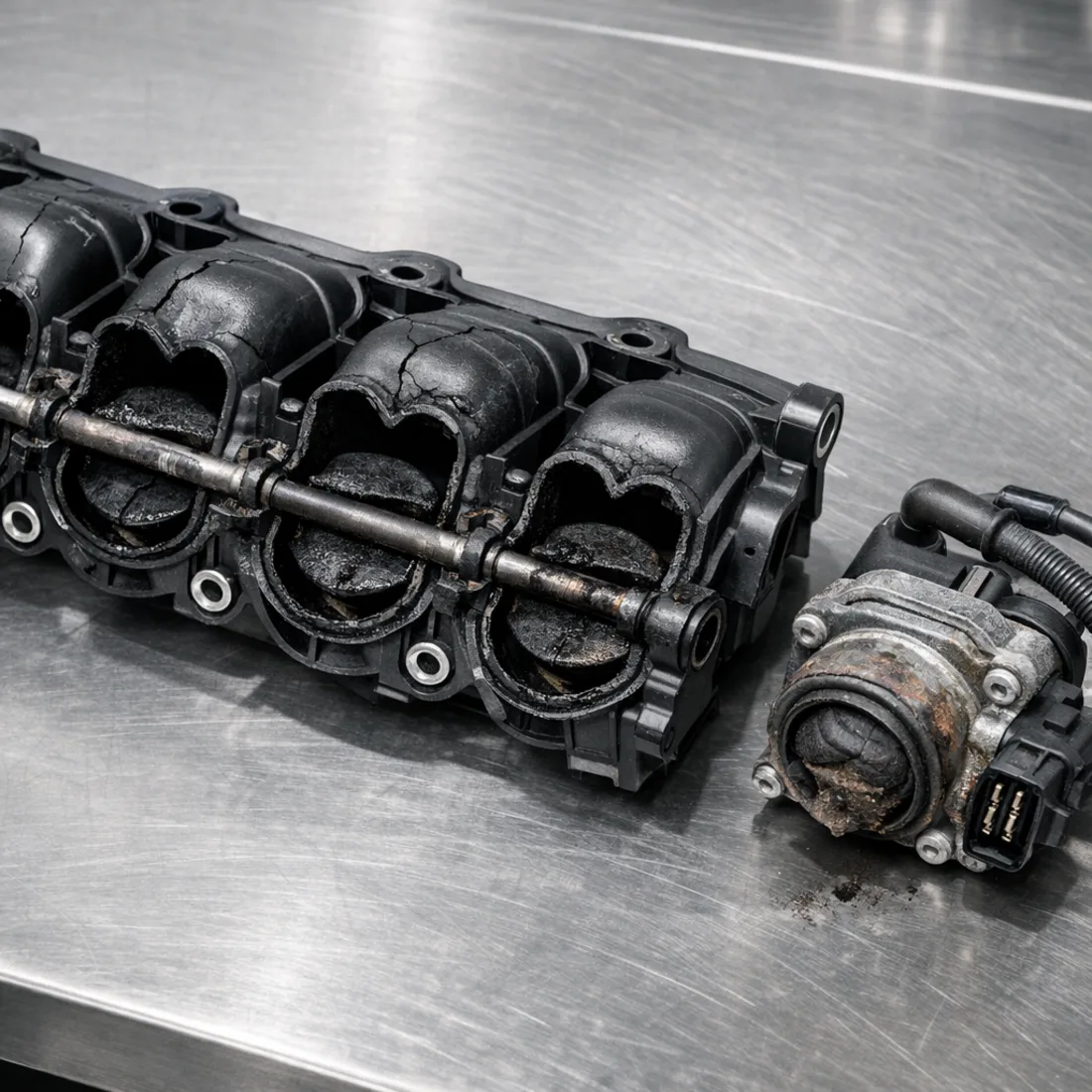
Swirl flap failure with fragment risk, same concern as earlier generations but in a higher load application
-
EGR cooler and valve issues, especially on urban driven examples
-
DPF and AdBlue system faults, with the G06 running a more sophisticated NOx aftertreatment setup than its predecessors
-
Timing chain and guide wear showing at higher mileages
-
Crankcase breather system deterioration with the associated intake contamination
-
Injector wear and contribution imbalance at high mileage
Four turbochargers. 400 horsepower. 760 Nm. BMW engineering at its most committed to the idea of a diesel that feels nothing like a diesel.
The gains are more modest in percentage terms than on the earlier engines, because the G06 is already starting from a higher base, but the delivery improvement across the mid range is noticeable in real world driving.
Routine servicing on the G06 M50d follows the same principles as the earlier models but with stricter oil spec requirements given the tighter tolerances and the more complex emissions hardware. Correct low SAPS oil grade, air filter, fuel filter, cabin filter, glow plugs, brake pads and rotors, and a full systems health check at each service. Air suspension components also feature on these at higher mileage, and the brakes on a 400hp SUV of this weight work hard.
Stage 1 tuning on the G06 M50d moves the needle from 400hp and 760 Nm to 430hp and 820 Nm. Each tune is done on the correct ECU platform for that specific vehicle, not a generic file. We read the car, write to it specifically, and verify the result with live data before it leaves the workshop.
Shopping Used: Which Generation Is the Sweet Spot?
If you are trying to decide between these three on the used market, it is worth being honest about what you are buying into with each one. Whatever generation you are considering, a proper pre purchase inspection with factory level diagnostics is the best money you can spend before signing anything. We can read every module, check live data across the turbo and emissions systems, and give you an honest assessment of what you are looking at.
You want the most accessible entry point. The 286hp 306D5 is a proven engine when it has been looked after. Check cold start timing chain noise, swirl flap condition, crankcase breather health, and the rear air suspension. These are now old enough that service history gaps are common, and the cost of catching up can be substantial.
You want the sweet spot for most buyers. It is newer, more sophisticated, has the three turbo N57D30C that is genuinely impressive to drive, and examples are now at prices where the purchase cost is no longer the scariest number. The maintenance and repair costs on a neglected F15 are very real, so a well documented example with consistent service history is worth paying more for up front.
You want the most complex and newest of the three. It is still commanding significant money on the used market. The additional turbo stage and more sophisticated emissions setup mean the potential repair bills are the highest of the three. It is a remarkable vehicle, but go in with eyes open about what ownership costs look like when something goes wrong.
- Listen for cold start timing chain rattle on the E70 306D5 before any money changes hands
- Confirm swirl flap condition and crankcase breather health on E70 and F15 examples
- Check rear air suspension compressor and bags on all three generations
- Verify DPF health and recent regen history, especially on urban driven examples
- Request a full service history and look for consistent oil change intervals
- On the F15 and G06, confirm turbo actuator function with live data diagnostics
- On the G06, check AdBlue dosing system and SCR catalyst status
- Book a pre purchase inspection with factory level ISTA diagnostics before committing
What Stays the Same Across Generations, and What Changes
The service fundamentals are consistent across the E70, F15 and G06. All three need the correct diesel oil spec for the specific engine, not just any diesel oil. All three have fuel filters that get overlooked. All three have brakes that wear faster than owners expect given how heavy these vehicles are. Our car servicing covers the full routine across all three platforms, with the right fluids and parts for each.
What changes between generations is mostly the complexity of what surrounds the engine. The E70 has a relatively conventional DPF and EGR setup compared to what BMW added in the F15 and G06. The AdBlue and NOx aftertreatment on the G06 adds a system that simply does not exist on the E70. Air suspension is common across all three but the components and calibration differ. Timing chain access is a challenge on all of them given the rear of engine layout, but the workshop time and cost increase with each generation.
On the brake side, all three platforms benefit from regular inspection given the vehicle weights involved. We cover brake repairs across the range using genuine or OEM quality components, not budget grade pads and rotors that compromise the stopping performance a vehicle this heavy demands.

Factory Tools, Not Guesswork: How We Diagnose All Three Generations
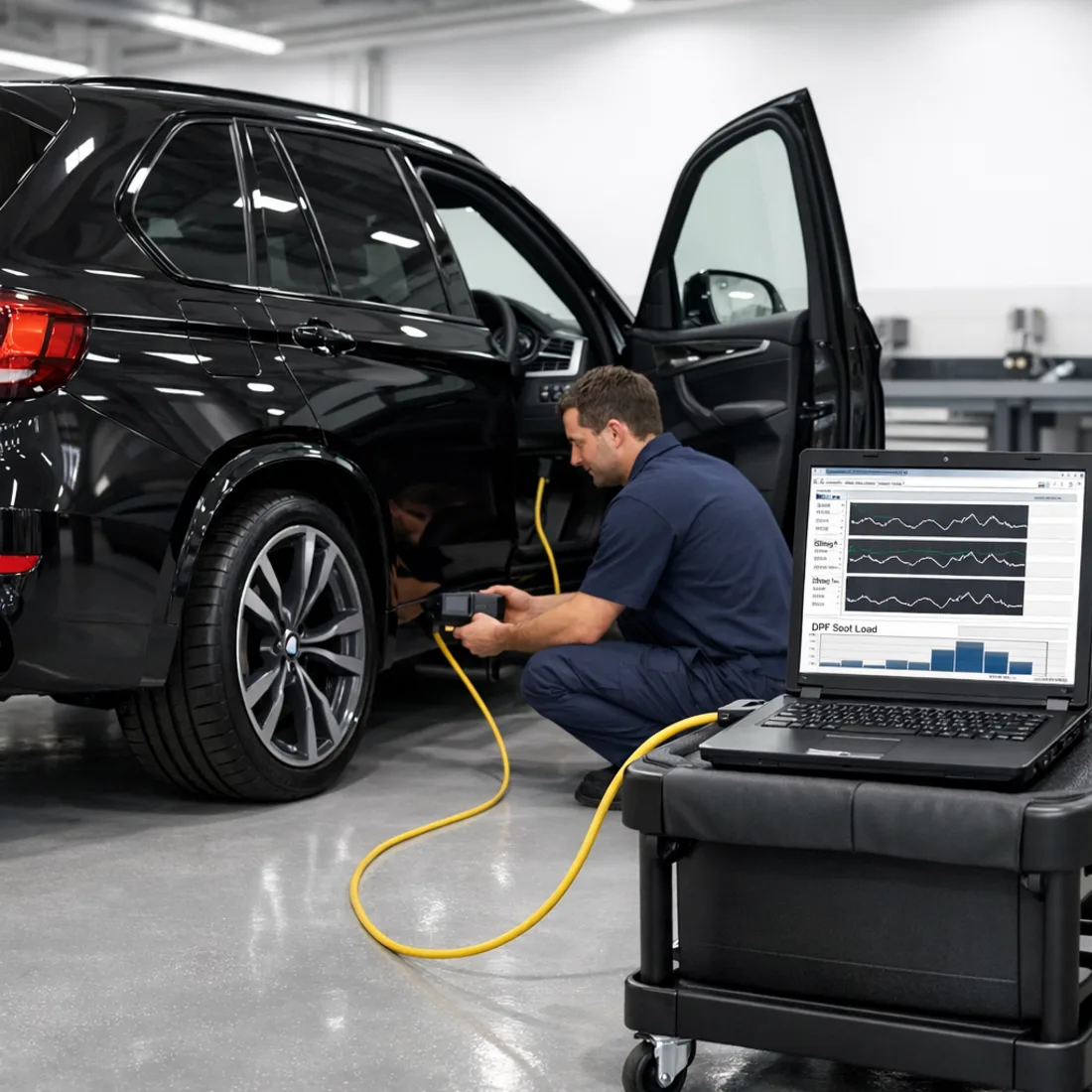
All three generations of this model line require BMW specific diagnostic capability to work on properly. A generic OBD reader will pull fault codes, but it will not give you live turbo boost data across individual stages, DPF differential pressure readings, injector contribution balance, actuator duty cycle feedback, or the ability to code replacement modules. Those are the readings that tell you what is actually happening inside the engine and its control systems.
We use BMW ISTA diagnostics with a genuine ICOM NEXT interface for all three platforms. On the E70, this gives us access to the Bosch EDC16CP35 and EDC17CP09 platforms properly. On the F15, we can interrogate the EDC17CP45 and EDC17CP49 alongside the ZF 70HP transmission controller. On the G06, we work with the Bosch MD1CP002 using current ISTA software versions.
Power loss on a three or four turbo diesel can come from a failed actuator, a dirty EGR valve, a clogging DPF, a lazy injector, a sensor fault, or a combination of several things happening together. Reading one fault code and replacing one part is not diagnosis. For module replacements and software updates, we also handle car programming and coding in house. ECU replacements, module coding after battery disconnection, and feature programming are all done on the same factory platform we use for diagnostics.
Tuning Across the Generations
All three engines in this family respond well to ECU tuning because BMW calibrates them conservatively from the factory, partly to meet emissions standards and partly to maintain separation between trim levels. There is real performance sitting unused in the stock maps on every one of these. Each tune is done on the correct ECU platform for that specific vehicle, not a generic file. We read the car, write to it specifically, and verify the result with live data before it leaves the workshop.
A gain of 54hp and 100 Nm that genuinely transforms how the E70 feels on the road. The ECU is either a Bosch EDC16CP35 or EDC17CP09 depending on build date. Related options include EGR OFF, DPF OFF, DTC Removal, FLAPS delete, Vmax removal and Adblue off.
Stage 1 on the Bosch EDC17CP45 or EDC17CP49 paired with the ZF 70HP transmission controller. Combined with our gearbox and TCU expertise, there is a lot of room to make the F15 feel substantially sharper than stock. Related options include EGR OFF, DPF OFF, DTC Removal, Pop and Bang Crackle map, START/STOP OFF, FLAPS delete, Vmax removal and Adblue off.
The gains are more modest in percentage terms because the G06 is already starting from a higher base, but the delivery improvement across the mid range is noticeable in real world driving. Tuned on the Bosch MD1CP002 using current ISTA software. Related options include EGR OFF, DPF OFF, DTC Removal, Vmax removal and Adblue off.
Tuning on any of these works best when the engine is in good mechanical condition first. A dirty EGR, clogging DPF, or worn injectors will limit what a tune can achieve and may accelerate wear. We will always assess the car's mechanical state before proceeding with any tuning work. For customers who want a remote file service option, get in touch to discuss what is available for your specific ECU platform.
Frequently Asked Questions
The questions we get most. Something else on your mind? Get in touch.