Ford Escape 2.0 EcoBoost: Servicing, Repairs and Diagnostics
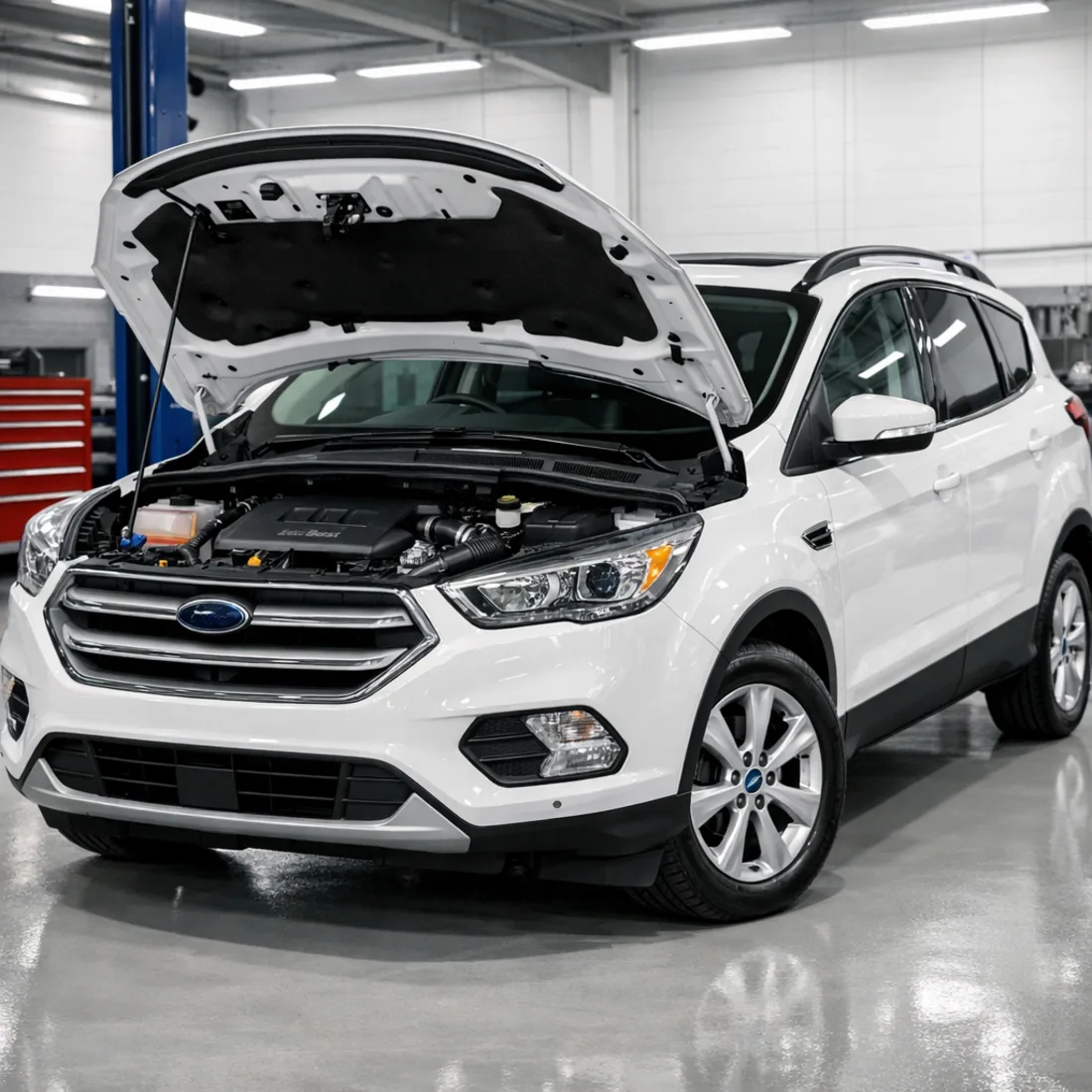
The Ford Escape earned its place in the New Zealand fleet by doing the school run, the weekend away, and the motorway commute all without complaint. The 2017 to 2019 245 hp EcoBoost version raised the stakes a little: genuine performance wrapped in a practical SUV. But even a turbocharged workhorse needs proper attention, and the R9MA engine in this generation has a handful of known quirks that reward early diagnosis rather than wishful thinking.

The Engine You're Working With
The R9MA is a 2.0 litre direct injection turbocharged petrol four cylinder displacing 1999 cc, with an 87.5 mm bore, 83.1 mm stroke, and a 9.3:1 compression ratio. Ford rates it at 245 hp and 373 Nm from the factory, which makes it genuinely quick for a family SUV rather than just adequately powered.
The brain managing all of that is a Bosch MED17.2.2 ECU, a sophisticated unit that handles boost control, fuel delivery, knock correction and a lot more besides. It rewards factory level tools and factory level knowledge in equal measure. Generic aftermarket scan tools can read basic fault codes, but they barely scratch the surface of what this ECU actually knows.
-
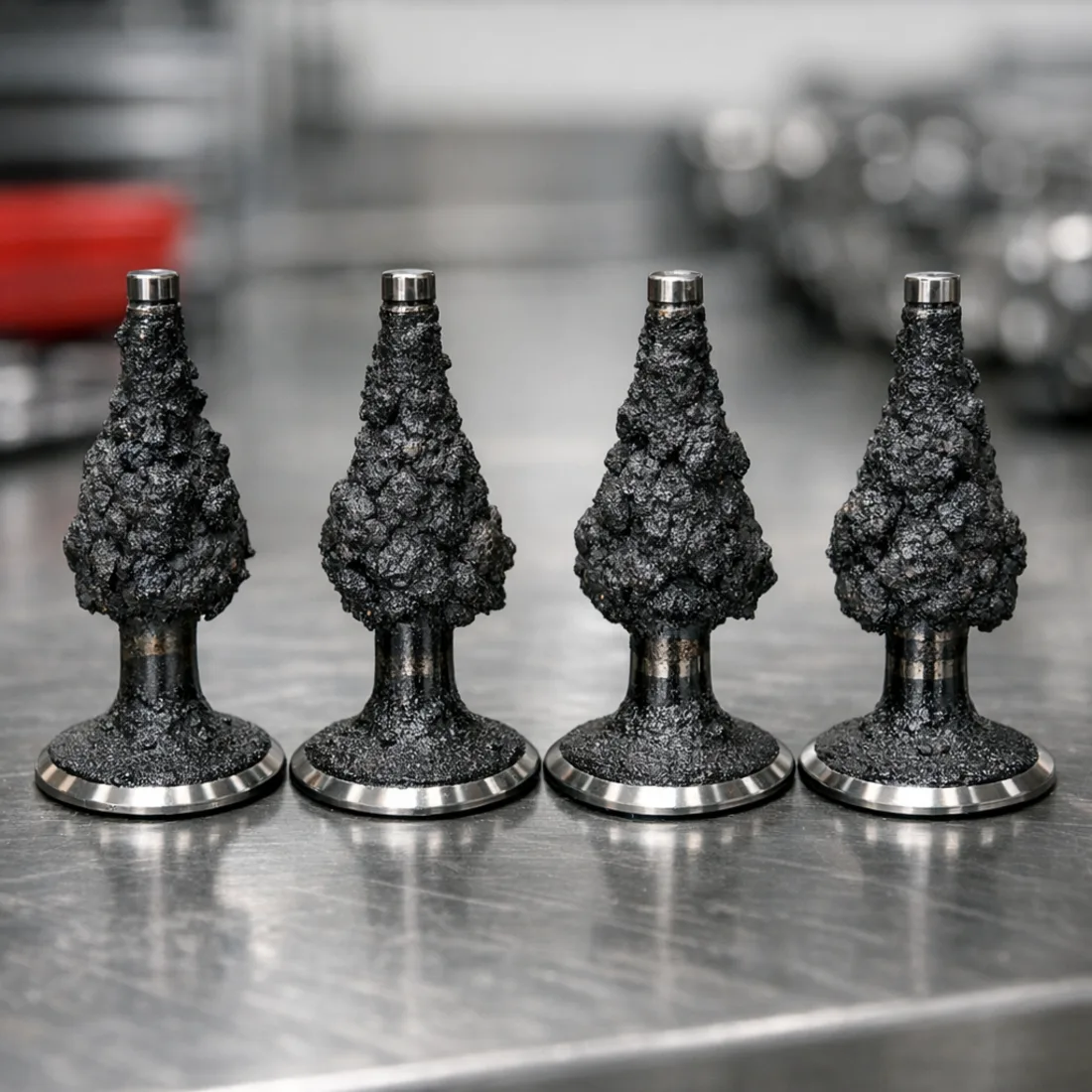
Carbon build up on the intake valves: direct injection engines spray fuel directly into the cylinder, so petrol never washes over the intake valves. Over time, oil vapour from the crankcase ventilation system coats the backs of those valves in a sticky, hard carbon deposit. When the build up gets serious you feel it as a rough idle, hesitation on acceleration, or a misfire that comes and goes.
-
Coolant intrusion: some EcoBoost units in this generation have shown coolant loss that does not show up as an obvious external leak. Coolant finding its way into the combustion chamber is the more concerning scenario: you might notice a sweet smell from the exhaust, milky contamination in the oil, or an engine that runs hotter than it used to.
-
Turbo oil feed restriction: the turbocharger on the R9MA lives on a diet of clean, correctly graded oil. If the oil feed lines restrict or the oil itself is overdue for a change, heat soak during stop start driving starts degrading the turbo bearings quietly. You might not feel anything dramatic until boost drops off or a rattling noise appears at startup.
-
Spark plugs and coil pack misfires: spark plugs and coil packs are the most common misfire culprits on this engine. A failing coil pack typically triggers a P030X misfire code on a specific cylinder, and the amber check engine light will usually come on. The plugs themselves have a finite life and the coil packs on these Ford four cylinders do fail individually.
Generic aftermarket scan tools can read basic fault codes, but they barely scratch the surface of what this ECU actually knows.
We use Ford IDS and FDRS, the same factory level platforms Ford dealerships use.
We use the Ford IDS (Integrated Diagnostic System) and FDRS (Ford Diagnostic and Repair System) platforms. With FDRS connected to the Bosch MED17.2.2 ECU we can read live data streams for boost pressure, fuel trims, knock sensor activity, coolant temperature, and injector pulse width in real time rather than just pulling a stored fault code. We can run active module tests, clear adaptive fuel trims after a repair, and carry out on board module programming if a module needs updating.
This Escape is not a light vehicle. At the weights these SUVs carry, front brake pads and rotors wear quicker than many owners expect, particularly if most driving is urban stop and start. Suspension components including front strut mounts and rear bushes are also regular items on higher mileage examples. If you are booking a service it is worth having us inspect both while the wheels are off. Our brake inspection and repair service covers the full system, not just a visual check of pad thickness.
Get your Ford Escape booked in with a proper specialist.
Routine Servicing Done Properly
The R9MA calls for a full synthetic engine oil that meets or exceeds the Ford specification, in a 5W30 grade. Using the correct oil is not a minor detail on a turbocharged direct injection engine: it directly affects carbon accumulation on the intake valves, turbo bearing life, and cold start wear. We change the oil and filter on interval, fit a fresh air filter, replace the cabin filter, and inspect the drive belt for wear. Spark plugs need replacement on schedule too, and fitting the correct plug type and torquing them properly matters more than many people realise on a high compression turbo engine.
Our full vehicle servicing covers all of the above in a single visit, with a proper road test and visual inspection of brakes, tyres, and steering components included as standard. No guesswork, no skipped items. Service items include: full synthetic 5W30 oil and filter change, engine air filter, cabin pollen filter, wiper blade inspection and replacement, drive belt inspection, spark plug replacement to schedule, and intake valve carbon inspection and clean.
How We Actually Diagnose These Fords
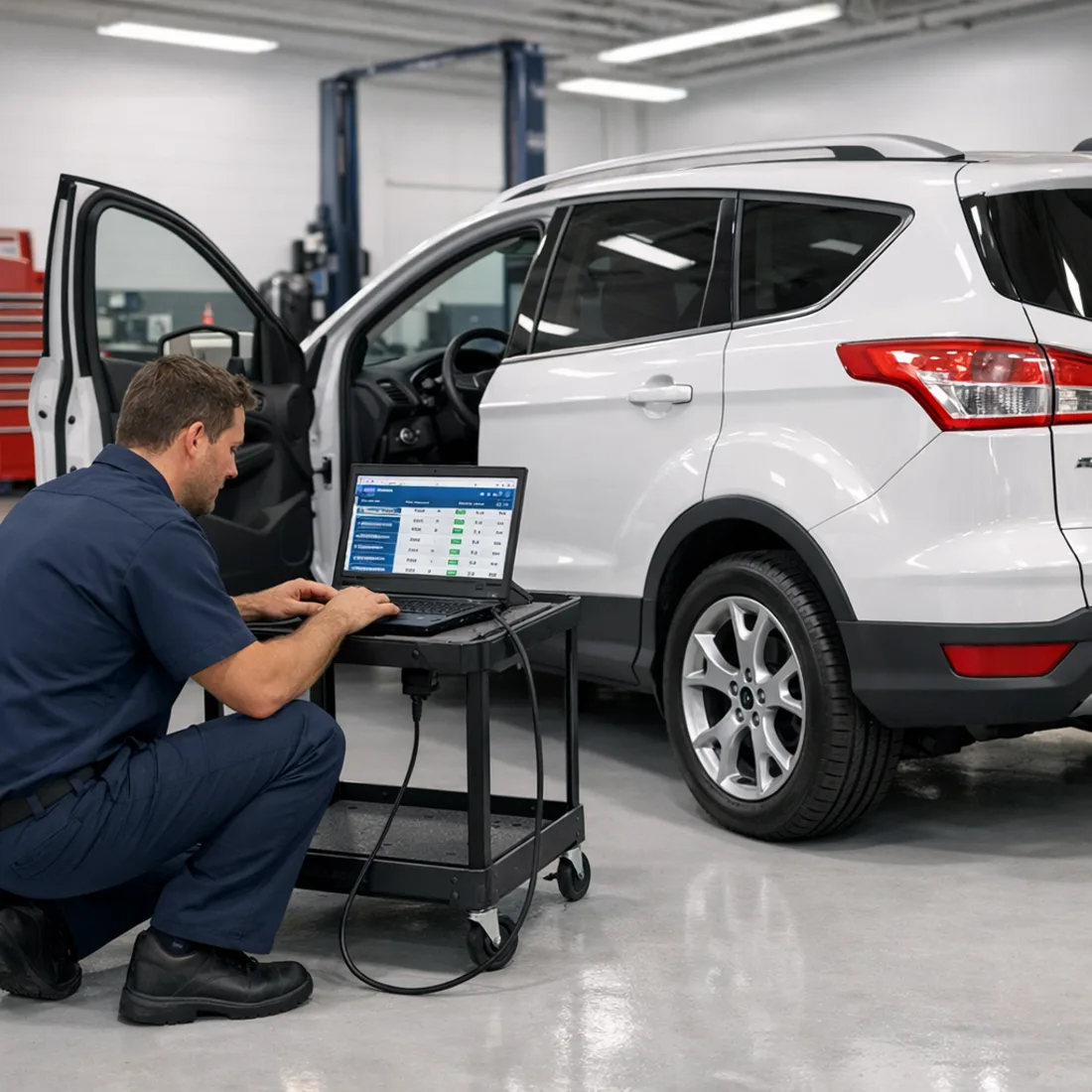
We use the Ford IDS (Integrated Diagnostic System) and FDRS (Ford Diagnostic and Repair System) platforms. These are the same factory level tools Ford dealerships use, and the difference matters. With FDRS connected to the Bosch MED17.2.2 ECU we can read live data streams for boost pressure, fuel trims, knock sensor activity, coolant temperature, and injector pulse width in real time rather than just pulling a stored fault code.
A generic OBD reader tells you something went wrong. These tools tell you exactly what, why, and whether the repair actually fixed it. We also pressure test the cooling system, check for combustion gases in the coolant, and inspect oil condition carefully before drawing any conclusions. Catching coolant intrusion early keeps the repair manageable. Our mechanical repair work covers the full scope of what the diagnostics uncover.
Stage 1 Tuning: More From What's Already There
The Bosch MED17.2.2 ECU in the R9MA is well suited to calibration work. Ford leaves a reasonable amount of performance in reserve from the factory, partly for fuel economy and partly for emissions compliance. A Stage 1 tune on this engine lifts output to 270 hp and 400 Nm, a gain of 25 hp and 27 Nm, by optimising the boost curve, fuel delivery, and ignition timing within the engine's safe operating limits. The real world result is a noticeably sharper throttle response and stronger mid range pull, which is exactly where you feel it most on New Zealand roads.
Tuning work on the Escape starts with a health check of the engine: coolant condition, oil level and quality, spark plug condition, and a live data scan to confirm no underlying faults are present. We do not tune a vehicle that has an active misfire or a failing sensor, because the result would not be accurate and the risk to the engine is not worth it. Once the engine is confirmed healthy, the calibration is loaded and verified on a road test rather than just flashed and handed back. Additional options available include DTC removal and Start/Stop disable. The Start/Stop disable option is popular with owners who find the factory auto start/stop system intrusive in Auckland traffic. The DTC removal option applies only to appropriate situations where a code is genuinely redundant rather than masking an active fault.
For owners who want to handle the file remotely, our ECU file service is also available. Either way, the calibration is specific to your vehicle's actual condition, not a generic map pulled off the internet.
Frequently Asked Questions
The questions we get most. Something else on your mind? Get in touch.