Ford Transit: 2.4 & 2.2 TDCi · EcoBlue & Connect
The Transit has been earning its keep on New Zealand roads for decades, and across every generation it shares one defining trait: it works hard and it doesn't forgive neglect. From the old Mk7 Duratorq barging through Auckland traffic to the cleaner, more sophisticated EcoBlue units and the compact Connect, each engine has its own personality, its own weak spots, and its own quirks that a generic workshop simply won't know about. This page covers the whole family in one place, so wherever your van sits in the Transit story, you'll know what to watch for, what it'll cost, and what genuinely good servicing looks like.




The Mk7 2.4 TDCi: The Original Heavy Lifter
The Mk7 Transit with the 2.4 TDCi Duratorq is the old guard of the Transit family. Engine codes PHFA and PHFC, 2402cc, a compression ratio of 17.5:1, and a conservative 100hp with 285Nm from the factory. It was built to haul, not to thrill, and in that role it does a solid job provided the maintenance is there. The Visteon DCU102 ECU is a robust unit but it has its limits, and the engine around it has a handful of well known failure points that show up as vans age and kilometres climb.
The dual mass flywheel and clutch are the first thing to budget for on a loaded or high mileage Mk7. These vans get driven hard, and the DMF takes the punishment. When it starts to rattle on cold start or the clutch pedal feels wrong, it's time to address both together. Injector health is the next concern: poor quality diesel and infrequent filter changes cause wear and lean off issues that show up as rough running and hard starting. Leak off testing is always worth doing before assuming the worst.
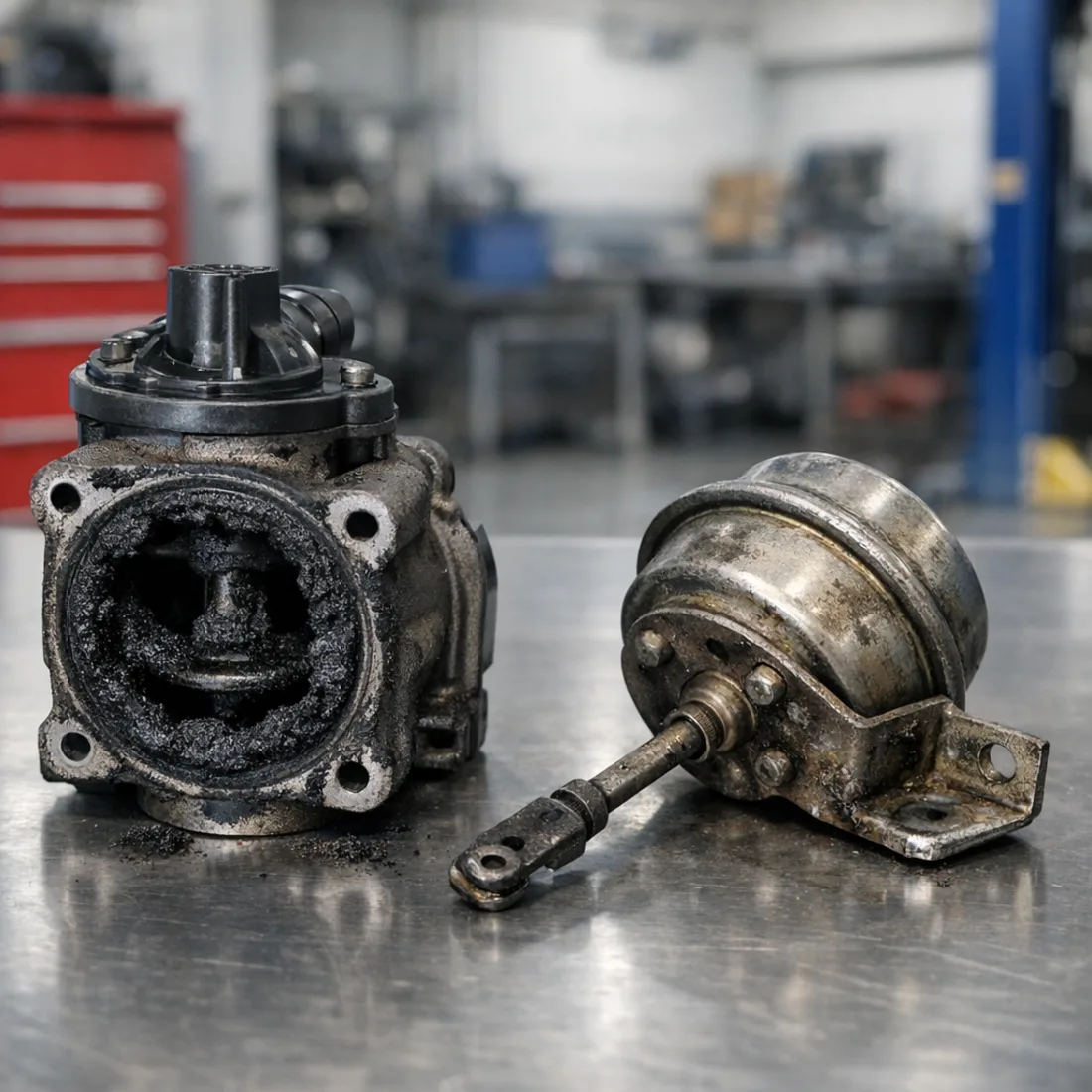
EGR valve sooting is a classic Mk7 complaint. Carbon builds up over time, especially on vans that do a lot of short, low load runs around town, and the result is limp mode and a power loss that baffles owners because there's no obvious smoke or noise. The turbo actuator is related, it sticks or fails to respond properly when the EGR has been choking the intake, and the two faults often arrive together. Oil pump pickup concerns and wet belt timing issues can also surface when servicing has been skipped, so we pay close attention to oil condition and service history on any Mk7 that comes in with mileage on it.
-
Dual mass flywheel wear and clutch failure on loaded vans
-
Injector wear and fuel system issues from filter neglect
-
EGR valve sooting causing limp mode and power loss
-
Turbo actuator sticking or failing alongside EGR problems
-
Oil pump pickup concerns on high mileage, poorly serviced units
A generic code reader will pull a fault code, but it won't let you run live injector data, test the turbo actuator in real time, or properly reset service items.
That difference matters when you're chasing an intermittent limp mode on a van that has work to do tomorrow morning.
We diagnose these with Ford IDS and FDRS via a genuine VCM interface. A generic code reader will pull a fault code, but it won't let you run live injector data, test the turbo actuator in real time, or properly reset service items. That difference matters when you're chasing an intermittent limp mode on a van that has work to do tomorrow morning.
Routine service on the 2.4 TDCi covers oil and filter with the correct diesel grade, fuel filter, air filter, cabin filter, drive belts, glow plugs, wipers, brake pads and rotors, and suspension wear. For owners who want more from the van, a Stage 1 tune on the Visteon DCU102 takes outputs to 130hp and 335Nm, a gain of 30hp and 50Nm that makes a real difference when the van is loaded or towing.
Get your Transit booked in with a proper specialist.
The 2.2 TDCi: More Power, Same Family Traits
Ford's answer to operators wanting more grunt was the 2.2 TDCi Duratorq. At 2198cc with a bore of 86.0mm and the same 94.6mm stroke as the 2.4, it's clearly a related engine, but the jump to 140hp and 350Nm is meaningful in a loaded Transit. The ECU moved to a Siemens/Continental SID208 or SID209, a more capable platform that unlocks more tuning potential and handles the extra outputs without breaking a sweat.
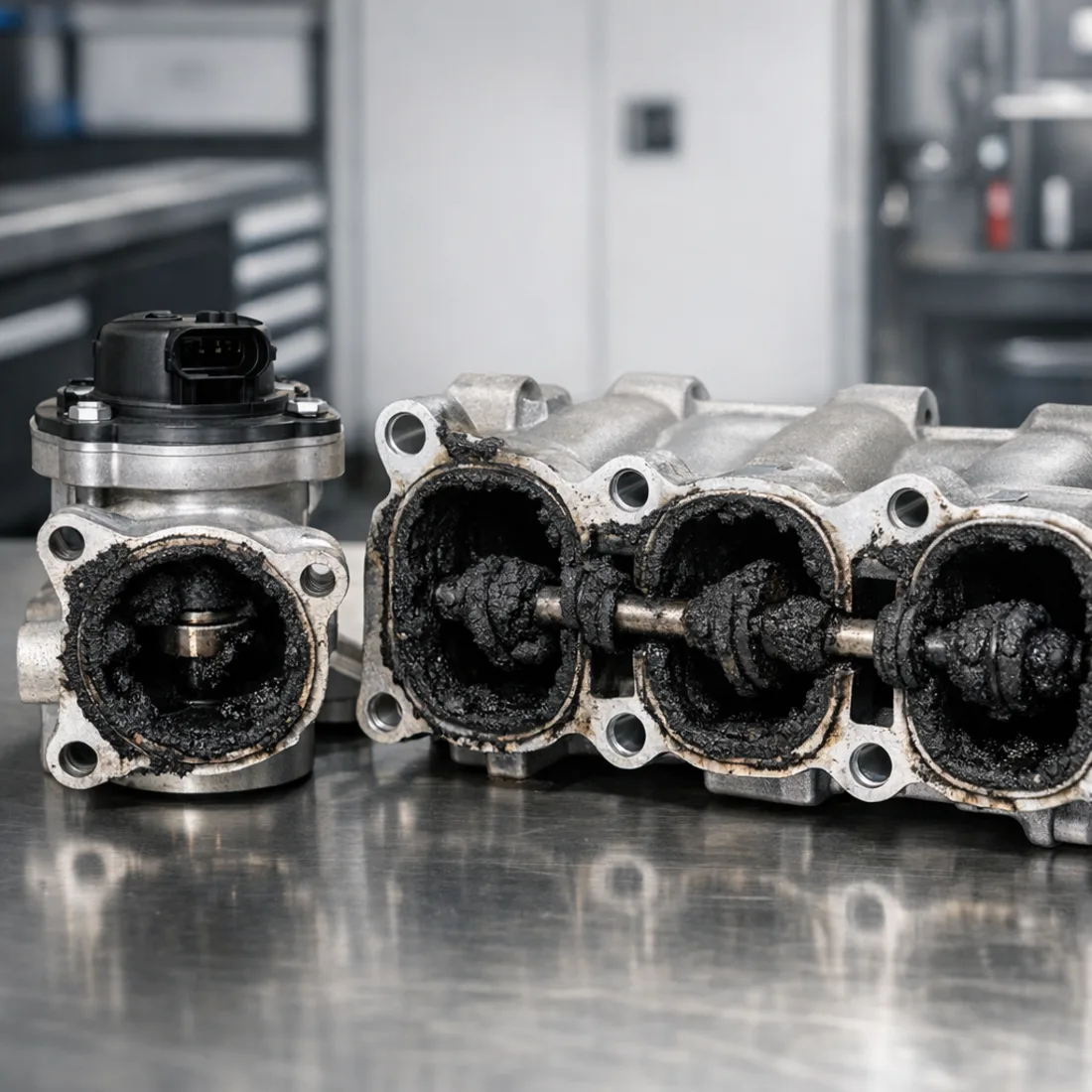
In terms of character, the 2.2 TDCi is a refinement of the 2.4's formula rather than a reinvention. That means some familiar faults carried over. EGR valve clogging is just as common here, and if anything the stop start delivery cycle so many of these vans live on makes it worse. DPF blockage is a regular visitor on vans doing short suburban runs that never get warm enough to complete a passive regen. Swirl flaps are another known trouble spot on these engines, they carbon up, seize, and in worst cases break off into the intake.
Injector issues and high pressure fuel system wear are also part of the 2.2 TDCi story on higher mileage examples. Rough running, extended cranking on start, and uneven idle are the usual symptoms. Turbo actuator and boost control faults show up as limp mode, often accompanied by a DTC that a generic reader will misidentify, which is why we always use Ford IDS and FDRS with a genuine VCM interface. Live data and injector coding capability are not optional on these vans, they're how you find the real cause rather than just chasing symptoms.
-
EGR valve clogging and intake sooting, especially on urban delivery vans
-
DPF blockage from short run stop start cycles
-
Swirl flap carbon build up and failure
-
Injector and high pressure fuel system wear on high mileage units
-
Turbo actuator and boost control faults causing limp mode
Compared to the 2.4, the 2.2 is generally the better choice if you're looking at used vans.
The SID208/209 ECU platform means a Stage 1 tune is worth considering, taking it from 140hp and 350Nm to 180hp and 450Nm.
Compared to the 2.4, the 2.2 is generally the better choice if you're looking at used vans, and the SID208/209 ECU platform means a Stage 1 tune is worth considering. We can take it from 140hp and 350Nm to 180hp and 450Nm, a gain of 40hp and 100Nm that transforms how the van feels under load. For a plumber or electrician with a van consistently carrying weight, that extra torque is not a toy, it's a working tool.
Standard service items are the same family as the 2.4: correct grade oil and filter, fuel filter, air filter, cabin filter, drive belts, glow plugs, brake pads and rotors, and suspension components as they wear. Belt and chain service, clutch replacement, and DPF and EGR cleaning are the bigger jobs we quote regularly.
The 2.0 TDCi EcoBlue: The Modern Transit Done Properly
The EcoBlue generation is a genuine step forward. Engine codes YNF6 and YNFS, 1996cc, a lower compression ratio of 16.5:1, and a stock output of 170hp with 405Nm. The ECU is a Siemens/Continental SID208 or SID211, and the whole package is quieter, cleaner, and more responsive than the old Duratorq family it replaced. If you're driving one for the first time after years in a 2.2, the difference is immediately obvious.
But here's the thing: the EcoBlue introduced new complexity while solving the old problems. The most significant is the wet timing belt, a belt in oil design that runs in the engine's lubricant rather than dry in a housing. When it's fresh and the oil is clean, it works well. When it's overdue or the oil has broken down, it can shed material that contaminates the sump strainer, and belt integrity becomes a genuine concern. This is a critical service item that must be done at interval, not deferred.
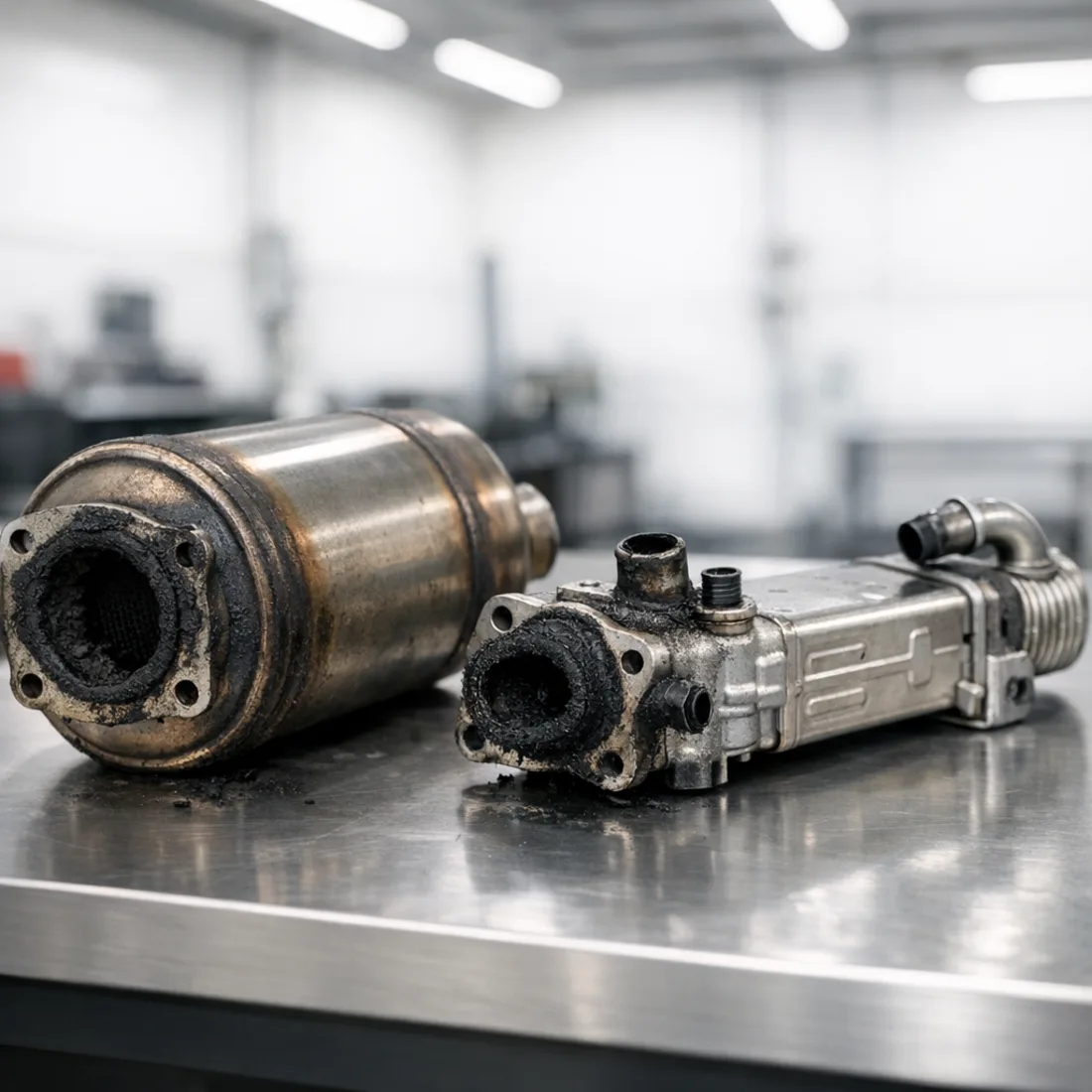
The EGR cooler is another EcoBlue specific issue. Rather than just the valve sooting up as on the older Duratorqs, the cooler itself can develop faults that cause coolant contamination or coolant loss. DPF blockage remains a fact of life for any urban delivery Transit, and injector wear shows up on hard worked higher mileage examples. Turbo actuator issues and boost leaks also appear on vans with a lot of kilometres, resulting in the familiar limp mode.
The AdBlue system is also part of the EcoBlue package on many examples. These systems need proper diagnosis and genuine repair when they fault, not shortcuts. We handle AdBlue and NOx system faults correctly, diagnosing the actual cause before touching anything.
-
Wet timing belt degradation, a non negotiable service item
-
EGR cooler faults causing coolant contamination or loss
-
DPF blockage from urban stop start delivery routes
-
Injector wear on high mileage units
-
Turbo actuator issues and boost leaks causing limp mode
The EcoBlue introduced new complexity while solving the old problems.
The wet timing belt is a critical service item that must be done at interval, not deferred.
We use Ford IDS and FDRS with factory level tooling on these vans, which means we can run forced DPF regens, code injectors properly, and read live data that a generic scan tool simply can't access. Stage 1 tuning takes the EcoBlue 170 to 190hp and 450Nm, a gain of 20hp and 45Nm. It's a modest gain in percentage terms, but on a van that's already at the top of the Transit power range, it sharpens the delivery and makes loaded motorway running noticeably more relaxed.
For a full picture of what a professional service on this engine involves, our car and van servicing page sets out what we include and why the correct oil grade matters more on a wet belt diesel than almost any other vehicle.
The Transit Connect 1.5 TDCi: Small Van, Big Responsibility
The Connect is the compact end of the Transit family, and the 1.5 TDCi that powers the post-2016 version is a different engine entirely from the big van Duratorqs. Engine code XWGB, 1499cc, a compression ratio of 16.0:1, 120hp and 270Nm from the factory. The ECU is a Bosch EDC17C70 or Bosch MD1CS005, a well regarded platform that supports a solid range of calibration options. This is a van that sole traders and small businesses use hard: short runs, multiple drops, loaded every day, rarely warmed up properly.
That usage pattern is exactly what creates problems. The wet timing belt on the 1.5 TDCi is the single most critical maintenance item on this engine. It runs in oil, and if the belt is past its service interval or the oil has been left too long, the consequences of a failure are severe. There's no forgiving it on a diesel with a 16:1 compression ratio. This is not a job to defer.
EGR clogging and DPF blockage are the daily reality for a Connect doing urban delivery work. Short cold runs mean the DPF never reaches temperature for a passive regen, so it blocks up slowly and then fails to complete an active regen when the van finally gets onto a longer run. Glow plug wear causes hard cold starts that owners often ignore until the engine is genuinely struggling. Turbo actuator faults and boost leaks from couplings are regular faults on higher mileage Connects.
-
Wet timing belt neglect, the highest risk fault on this engine
-
EGR clogging from short run urban use
-
DPF blockage on delivery vans that never fully warm up
-
Glow plug wear causing hard cold starts
-
Turbo actuator faults and boost leaks on higher mileage examples
For a sole trader whose Connect is regularly carrying a full load of tools or stock, that extra torque from lower in the rev range genuinely changes the driving experience.
Stage 1 tuning takes the 1.5 TDCi from 120hp and 270Nm to 150hp and 330Nm, gains of 30hp and 60Nm.
We diagnose the Connect with Ford IDS and FDRS, not a generic reader. The Bosch ECU platform on this van responds well to factory level diagnostics, and forced DPF regens and injector data only come through properly with the right tools. Stage 1 tuning takes the 1.5 TDCi from 120hp and 270Nm to 150hp and 330Nm, gains of 30hp and 60Nm. For a sole trader whose Connect is regularly carrying a full load of tools or stock, that extra torque from lower in the rev range genuinely changes the driving experience and reduces wear from overworking the engine.
The Connect also supports more tuning options than the larger Transit vans, including a pop and crackle map, start/stop disable, and Vmax adjustment, all handled through the Bosch ECU with legitimate calibration files rather than off the shelf tunes.
Picking Between Them: Which Transit Is the Right Used Buy?
If you're shopping for a used Transit and trying to work out which generation makes the most sense, here's the honest breakdown.
You want the cheapest entry point and you're prepared to budget for a DMF and clutch inspection, injector leak off testing, and EGR cleaning as part of the purchase cost. If it's been looked after, it'll work hard for a long time. If it hasn't, repairs will eat the price difference quickly.
You want the sweet spot. It's more powerful than the 2.4, uses a more capable ECU platform, and the jump to 180hp and 450Nm with a Stage 1 tune is genuinely significant if you're doing loaded work. Swirl flap and EGR attention is part of the purchase inspection, but there's no new complexity over the 2.4. For most tradespeople buying a Transit to work, this is the generation to pick.
You want the most modern, capable Transit and you're prepared to service it properly. The wet timing belt is non negotiable and must be tracked carefully. The EGR cooler is a more involved repair than the simpler valve only jobs on older Duratorqs. But the power delivery, refinement, and torque from the factory are genuinely better, and if the AdBlue system is healthy, running costs are reasonable.
Your work needs a compact, agile van rather than a big cargo hauler. The Connect is excellent in its class, but that wet belt service history is the first thing to check when buying one used. A Connect with no record of a belt change at interval is a risk, full stop.
- Check DMF and clutch condition on any Mk7 2.4 TDCi with mileage on it
- Inspect EGR valve and intake manifold on both the 2.4 and 2.2 TDCi
- Verify wet timing belt service history on the EcoBlue 2.0 and Connect 1.5 TDCi
- Confirm DPF condition and last forced regen on any urban delivery van
- Ask for injector leak off test results on high mileage Mk7 and 2.2 TDCi units
- Check EGR cooler for coolant contamination on EcoBlue examples
- Confirm AdBlue system health on EcoBlue vans before purchase
- Verify swirl flap condition on 2.2 TDCi units
Servicing the Transit Family: What's the Same and What's Different
Across all four generations, the fundamentals of good Transit servicing are consistent. These are diesel common rail engines that live on correct oil grade, clean fuel, and filters that are actually changed on schedule rather than whenever the van happens to be in. Low SAPS oil is mandatory on any Transit with a DPF, and that covers most examples in the NZ fleet. Using the wrong grade doesn't just void the maintenance record, it shortens the DPF's life and accelerates injector wear.
Glow plugs are a routine consumable on all of these engines. They don't last forever, and on a diesel that's starting cold in an Auckland winter and then sitting idle on a job site, worn glow plugs add cranking stress that accelerates starter motor wear over time. A glow plug check is part of every service we do on a Transit.
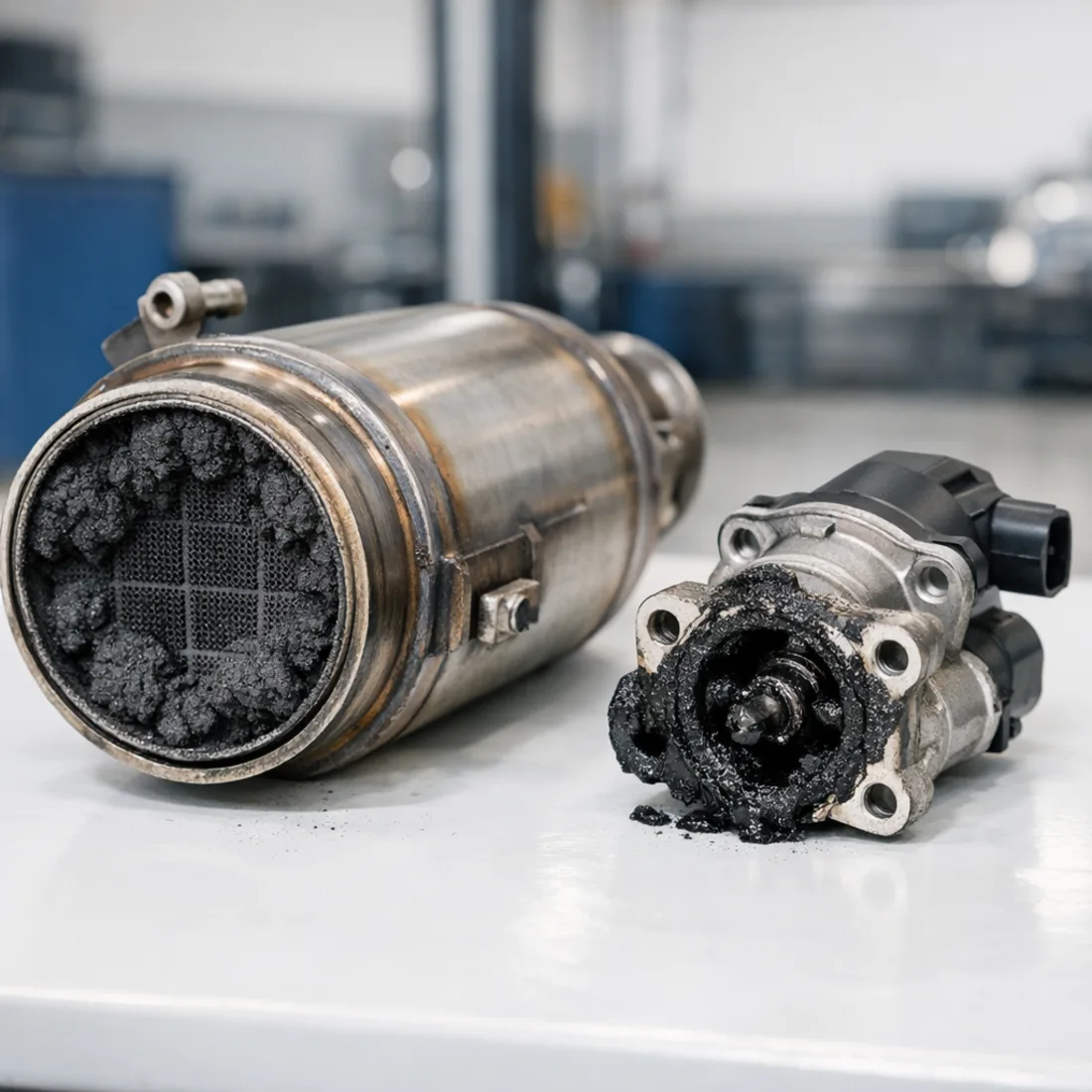
The EGR system is common to all four generations, but the severity of the fault varies. The 2.4 and 2.2 TDCi vans tend to soot up the EGR valve and intake manifold gradually. The EcoBlue adds an EGR cooler into the equation. The Connect's smaller displacement means the EGR is under proportionally higher thermal stress during cold urban running. On every generation, we clean and inspect the EGR system at service rather than waiting for a limp mode fault code.
The DPF story is the same across all: short urban runs kill DPFs. Every Transit doing delivery or trade work in Auckland traffic is at risk. The difference is how you manage it. Correct oil, regular filter changes, and periodic longer runs at operating temperature keep DPFs alive. When blockage has already occurred, we use a proper diagnostic regen cycle first, and move to component cleaning or replacement only if the regen doesn't restore function. Our approach to mechanical repairs on Transit vans always starts with a proper diagnosis, not assumptions.
How We Diagnose Transit Vans Across Every Generation
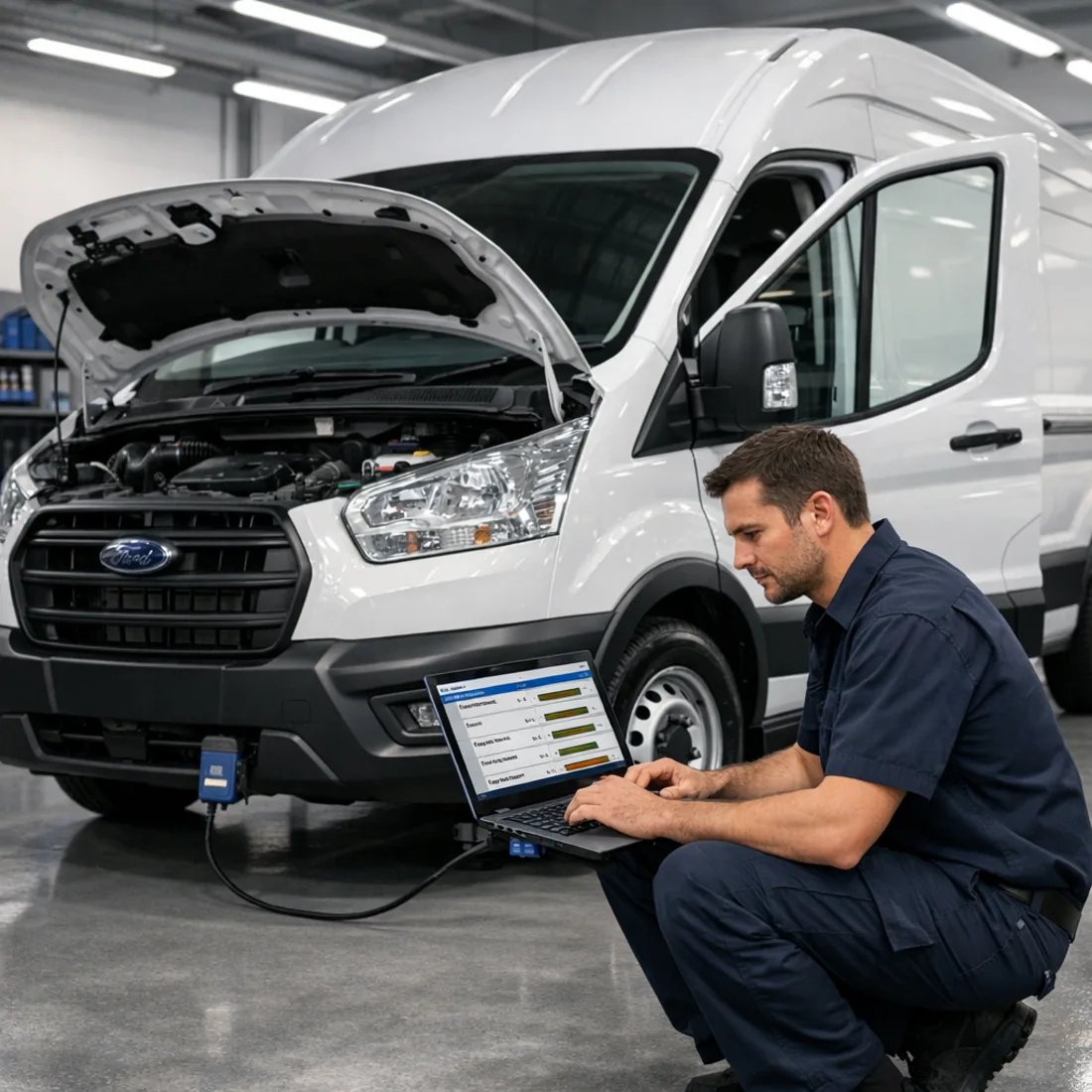
Every generation of Transit in this page uses Ford IDS and FDRS as the factory diagnostic platform, accessed through a genuine VCM interface. That's not a detail for the brochure, it's the difference between actually understanding what's happening in the van and guessing from a fault code.
A generic scan tool will pull a P code from any of these Transits. What it won't do is run a live injector balance test on the 2.4 TDCi, force a DPF regeneration cycle on the EcoBlue, code replacement injectors on the 2.2, or read real time boost and actuator data on the Connect's Bosch ECU. Those functions require factory level access, and they're often the only way to confirm whether a component actually needs replacing or whether the fault is upstream.
The ECU platforms across the generations are meaningfully different. The Visteon DCU102 in the 2.4, the SID208/209 in the 2.2 and EcoBlue, and the Bosch EDC17C70 and MD1CS005 in the Connect all behave differently and require different calibration and diagnostic approaches. We work across all of them. On the tuning side, our power gains and tuning service covers the full range of Transit ECU platforms with custom files rather than generic maps, so the tune matches the actual van rather than an average of the production run.
When a Transit comes in with a fault we haven't seen before, we work through the live data methodically rather than replacing parts on a hunch. That approach takes a little longer upfront but saves a lot of money in parts that turn out not to be the problem.
Tuning Options Across the Transit Range
Every generation covered here has a Stage 1 tune available, and for a working van the gains are not cosmetic. The 2.2 TDCi delivers the biggest absolute gains of any Transit generation we tune, and it's worth the investment if the van is regularly loaded. The EcoBlue's gains are more modest in percentage terms but the van is already at the top of the power range, so the improvement in driveability is real even if the headline numbers aren't the biggest.
The Visteon DCU102 responds well to a proper Stage 1 calibration. Gains of 30hp and 50Nm make a real difference when the van is loaded or towing, and the tune is matched to the specific vehicle's ECU rather than an average map.
The SID208/209 platform unlocks the biggest absolute gains in the Transit family: 40hp and 100Nm. For a plumber or electrician with a van consistently carrying weight, that extra torque is not a toy, it's a working tool.
The EcoBlue 170 is already at the top of the Transit power range, so the Stage 1 gain of 20hp and 45Nm sharpens delivery and makes loaded motorway running noticeably more relaxed rather than chasing headline numbers.
The Connect's Bosch ECU also supports additional options beyond Stage 1, including a pop and crackle map, start/stop disable, and Vmax adjustment, giving it the broadest range of legitimate calibration options in the Transit family.
All tuning we do uses custom files written for the specific vehicle, not off the shelf maps. Emissions systems on all these vans are diagnosed and repaired, not deleted. If a DPF or EGR system is faulting, we find out why and fix it correctly. That's the only approach that keeps the van legal and running properly long term. You can find out more about our approach on the file service page.
Frequently Asked Questions
The questions we get most. Something else on your mind? Get in touch.