Ford Tourneo Connect 1.6T EcoBoost Servicing and Repairs Done Right in Auckland
The Tourneo Connect has always been one of those unassuming workhorses that gets overlooked until something goes wrong. It slips into the school run, the tradesperson's kit run, the weekend market haul, and it just gets on with it. The 1.6T EcoBoost petrol variant, built between 2014 and 2018, adds a turbocharged twist to that story. Ford squeezed 150 horsepower and 240 Nm from a 1597 cc direct injection engine carrying the JQGA code, and for a compact people mover that is genuinely useful performance. What it also comes with, like most boosted direct injection engines of that era, is a specific set of quirks you want to know about before something strands you.

What You Are Actually Dealing With Under the Bonnet
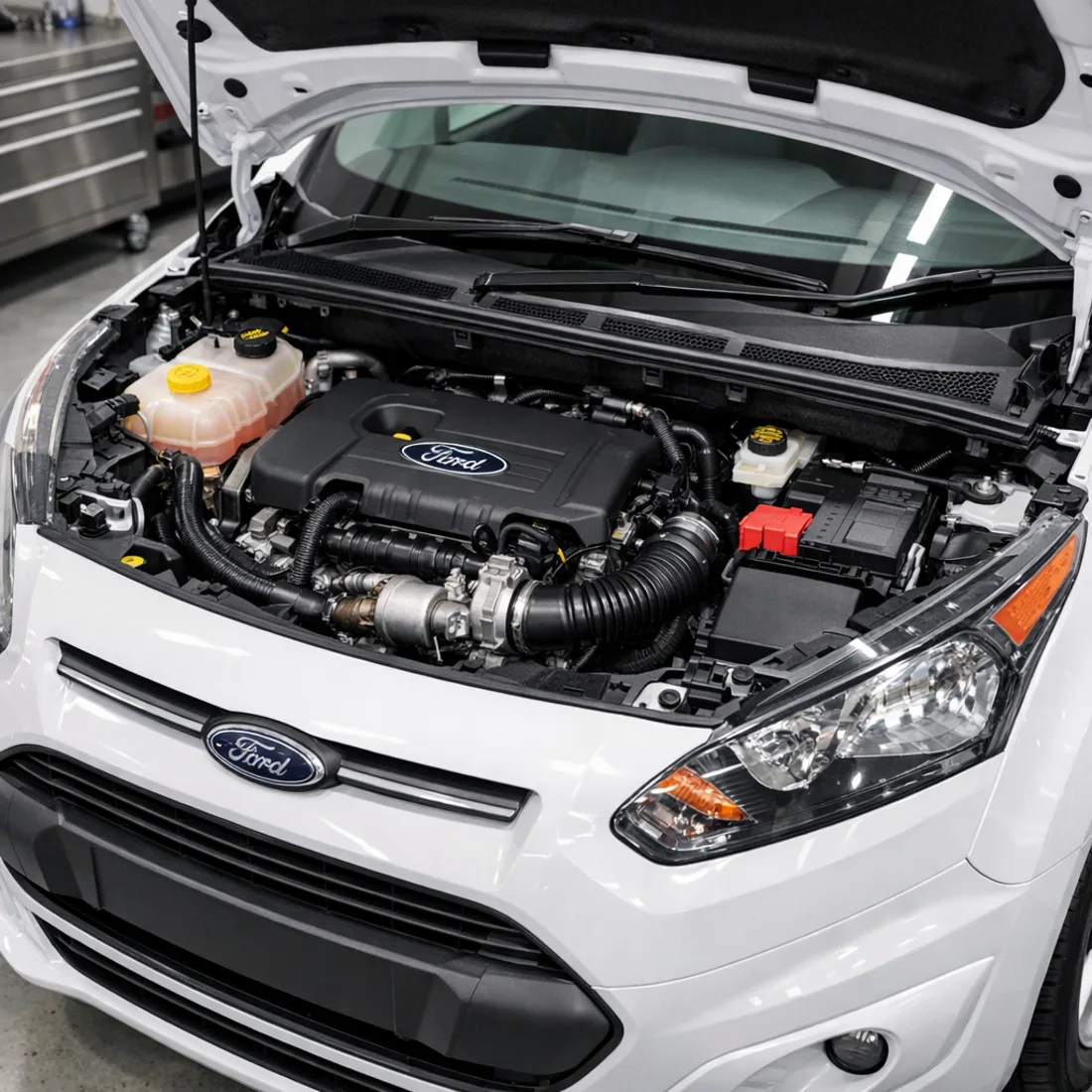
The JQGA unit is a four cylinder turbocharged direct injection petrol engine with a 79.0 mm bore, 81.4 mm stroke, and a 10.0:1 compression ratio. It sits on a Bosch MED17.2.2 ECU, which is a capable and well understood platform. Ford used versions of this EcoBoost family across a wide range of vehicles through this period, which is both a blessing and a curse: parts availability is good, but the shared weak points are well known across the fleet. The Tourneo Connect uses it in a front wheel drive, manual gearbox configuration, and the engine bay packaging is reasonably tight, which matters when you are chasing a coolant leak or pulling an ignition coil.
-
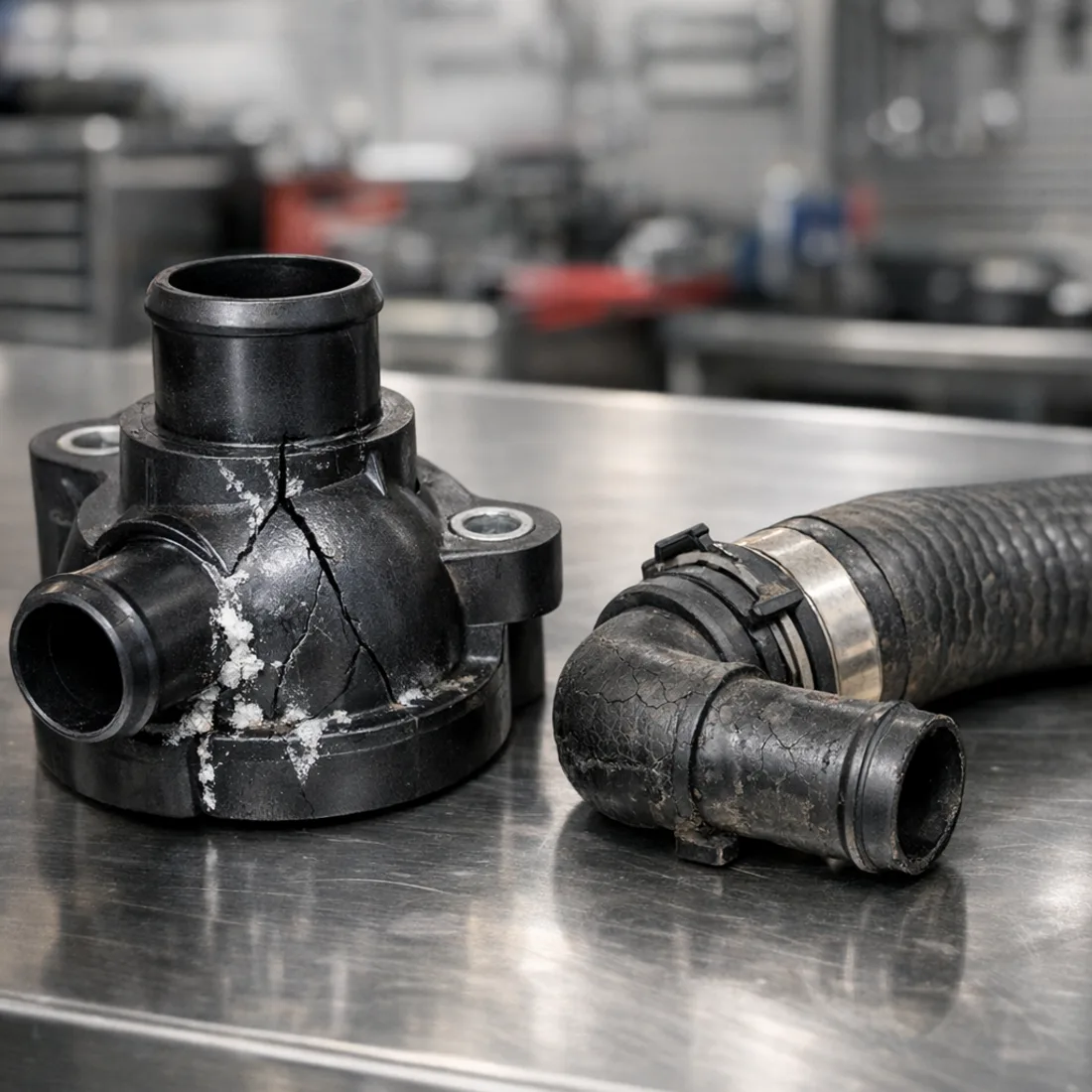
Coolant loss from plastic coolant pipes and thermostat housing that fatigue, crack and weep over time, risking an overheating event on a turbocharged direct injection engine.
-
Carbon build up on the intake valves from crankcase oil vapour baking on over tens of thousands of kilometres, causing rough idle, hesitation, cold start misfires and P030X series codes.
-
Ignition coil and spark plug wear, with coils working harder past plug service life, leading to rough idle, flashing engine management light or single cylinder misfire codes.
-
Turbo actuator and boost control solenoid faults presenting as a yellow engine light alongside a flat spot under acceleration or the engine pulling back from its power band early.
Ignore the coolant warning and you are heading toward an overheating event, which on a turbocharged direct injection engine is a very expensive conversation.
We inspect the full cooling circuit and replace failing components with proper parts before it escalates.
Direct injection means fuel never washes over the intake valves. That sounds like a technical footnote until you realise what it means in practice: oil vapour from the crankcase ventilation system coats the valves, bakes on with heat, and over tens of thousands of kilometres builds into a hard carbon crust that restricts airflow. The symptoms are a rough idle, hesitation under load, a misfire at cold start, and sometimes a P030X series misfire code against one or more cylinders. The fix involves a proper intake valve clean. It is not a quick job, but it restores the idle quality and throttle response you remember from when the vehicle was new.
The ignition system on this engine works hard. The JQGA runs a relatively high compression ratio for a turbocharged unit, and if the spark plugs are past their service life the coils compensate by working harder, shortening their own life in the process. A rough idle, a flashing engine management light, or a single cylinder misfire code are the typical signs. We replace plugs as a set on schedule rather than waiting for a misfire to develop. The turbo actuator and boost control solenoid are also worth attention if you are seeing a yellow engine light alongside a noticeable flat spot under acceleration or the engine pulling back from its power band early. These are not catastrophic failures on their own, but left undiagnosed they mask what the engine is actually doing. We handle these faults as part of our regular work on this model.
Get your Tourneo Connect booked in with a proper specialist.
How We Actually Diagnose These Fords
A generic scan tool reads generic faults. That is not how we work on these vehicles. We use Ford IDS (Integrated Diagnostic Software) and Ford FDRS (Ford Diagnostic and Repair System), the same factory level platforms a Ford dealer uses. That means we can access every module on the vehicle, not just the powertrain, run guided diagnostic tests, check live data streams from the MAP sensor, boost pressure readings, fuel trims, and coolant temperature, and validate a repair properly before handing the keys back.
On the Bosch MED17.2.2 ECU this matters especially, because the ECU logs a rich set of live parameters that tell the real story of what the engine has been doing. Reading fault codes alone is just the starting point. Our auto electrical and diagnostics capability covers full module access, guided test routines for coil, injector and sensor faults, root cause confirmation before any parts are ordered, and post repair verification to confirm the fault is genuinely resolved.

Routine Servicing That Keeps It Running the Way It Should
A turbocharged direct injection petrol engine rewards regular, correct servicing more than almost anything else you can do for it. The oil is the starting point: the JQGA needs a full synthetic engine oil that meets or exceeds the Ford WSS M2C913 or equivalent specification for this engine family. Using the wrong viscosity or a lesser oil in a boosted engine with a turbocharger running hot oil through its bearings is a false economy. We use the correct grade, every time, with a fresh filter.
Beyond the oil service, the air filter matters more on a direct injection engine because a restricted intake raises the conditions for carbon build up. Cabin filter, spark plugs on schedule, wiper blades, and a drive belt inspection round out the standard service items. The drive belt on this engine is worth checking at every service: the tensioner and belt condition are easy to overlook until a squeal or a snap makes the point for you. Brake servicing and repairs are part of what we do on this vehicle as a matter of course, because the Tourneo Connect is heavier than it looks when loaded and worn pads that have gone past their service indicators score the rotors. We also handle suspension components and clutch work on the manual variant, and we can take care of any sensors, cooling system components, or wiring concerns that surface during a full service inspection.
More From the JQGA With a Proper Calibration
If you want more from the JQGA engine, the Bosch MED17.2.2 ECU responds well to a proper calibration. Our Stage 1 tune takes the engine from its stock 150 hp and 240 Nm to 190 hp and 310 Nm, gains of 40 horsepower and 70 Nm of torque, achieved through a revised ECU file without hardware changes. In a vehicle the size and weight of the Tourneo Connect, that extra torque makes a genuine difference to how it drives with a full load.
A revised ECU file on the Bosch MED17.2.2 with no hardware changes required. Additional options on this ECU include a pop and bang crackle map, Start/Stop disable, Vmax adjustment, and decat configuration for off road or track use. Note that decat work affects emissions compliance and may have implications for WOF certification, so it is suited to dedicated off road or track applications rather than road use.
For a full picture of what the JQGA can do with a proper calibration, take a look at our power gain results and tuning options.
Frequently Asked Questions
The questions we get most. Something else on your mind? Get in touch.