Proper Servicing and Repairs for the Coyote V8
There is a reason the Mustang has outlasted every trend, every fuel crisis, and every attempt to replace it with something sensible. The S550 generation GT with its 5.0 Coyote V8 is genuinely quick, genuinely involving, and genuinely rewarding to drive. But even a 449 horsepower muscle car needs someone who actually knows what is under the bonnet. Bring it to a generic workshop and you will get generic results. These cars deserve better than that.
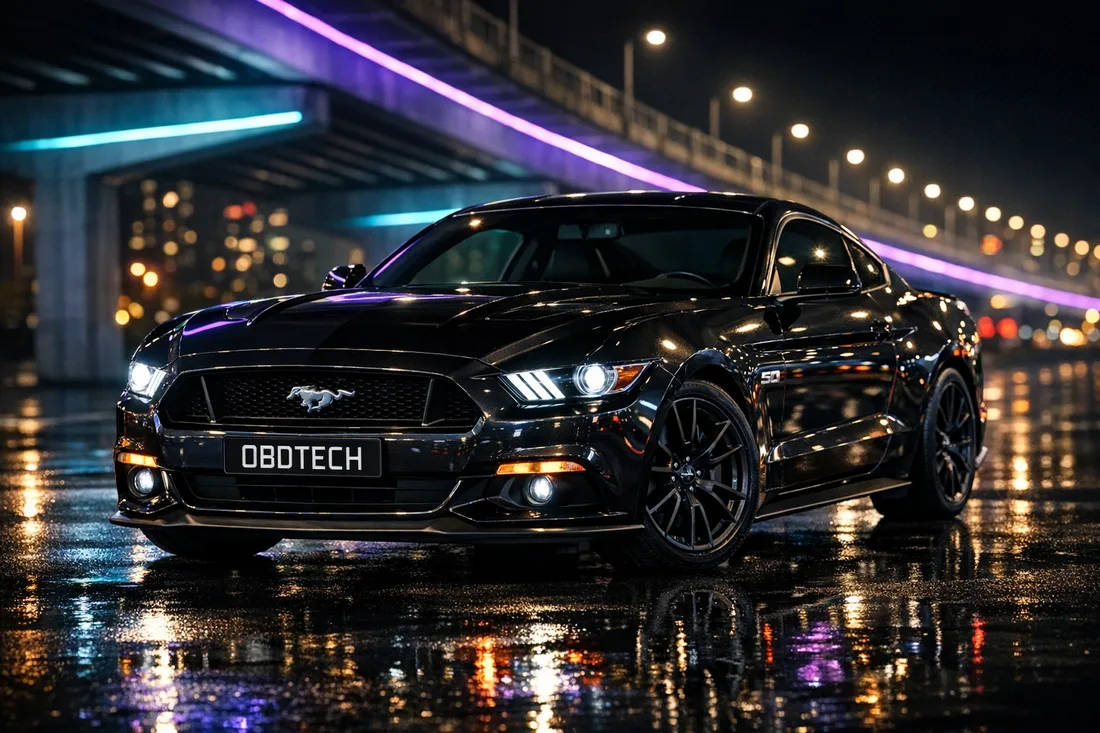
The Coyote V8 Faults That Actually Bite
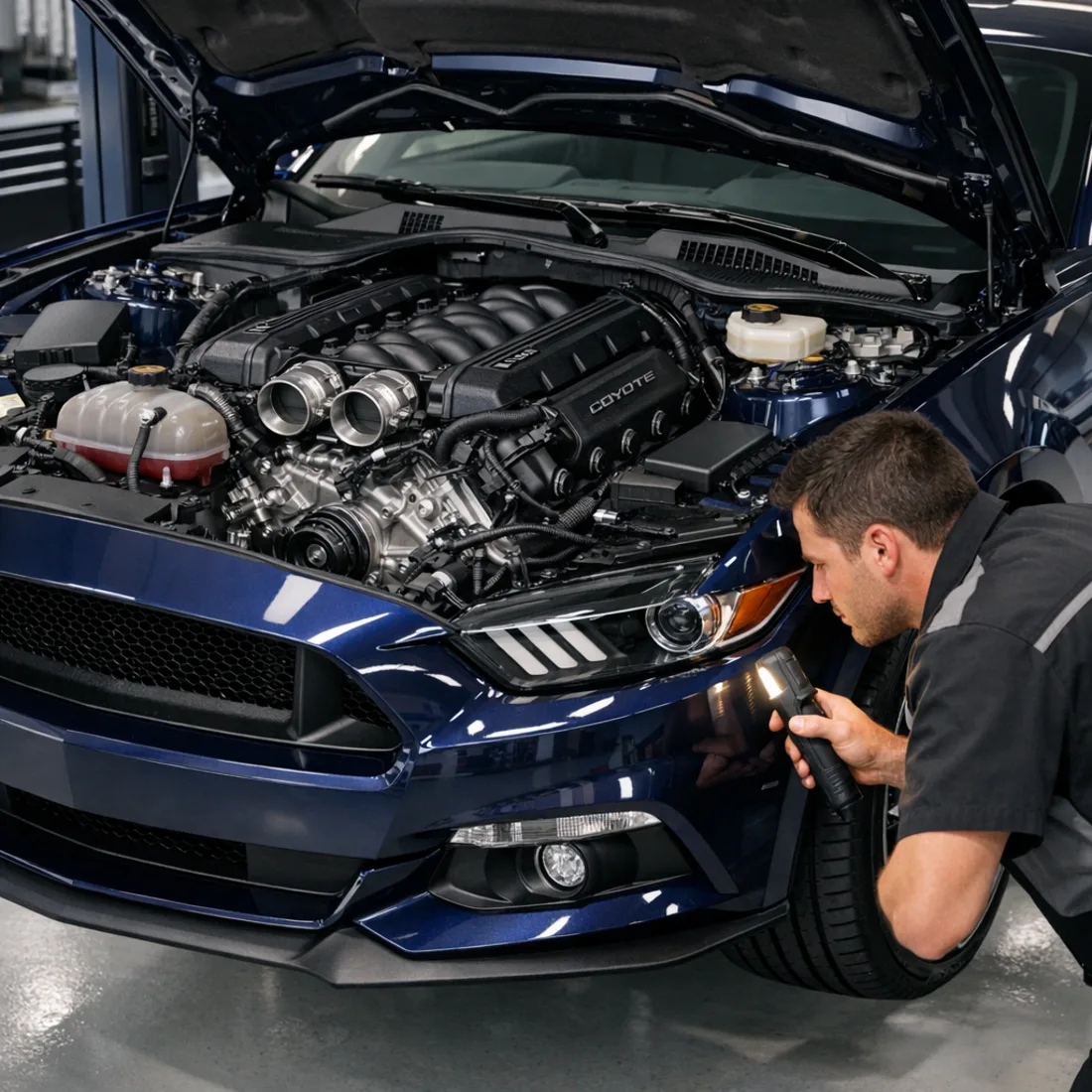
The 2018 onwards Mustang GT runs the Coyote 5.0 litre V8, displacing 4949cc with a bore and stroke of 92.2 x 92.7mm and an 11.0:1 compression ratio. Ford rates it at 449hp and 529Nm in New Zealand specification. It is a high strung, naturally aspirated V8 that rewards proper maintenance and absolutely punishes neglect. Our team has had plenty of these on the hoist, and the patterns are consistent enough that we know exactly where to look first.
Oil consumption is the first conversation we have with most Mustang GT owners who drive their cars hard. The Coyote runs tight tolerances and a fairly aggressive cam profile, and when the engine sees sustained high rpm on a track day or spirited back road run, consumption goes up. The fix is straightforward: the correct oil spec matters enormously here. Ford specifies 5W20 full synthetic that meets or exceeds the factory requirement, and skimping on grade or change interval makes the problem worse. We see engines brought in with the wrong viscosity oil that has been left in too long, and the wear tells the story clearly.
Timing chain noise is the second issue worth talking about honestly. The Coyote uses a complex variable cam timing system with cam phasers on both intake and exhaust camshafts on each bank. When the chain guides wear or the phasers start to lose their tension control, you get a rattle on cold start that clears as oil pressure builds. Ignore it and you are looking at a full timing system job rather than a targeted repair. The tell is a metallic rattle in the first few seconds after a cold start, typically gone within thirty seconds. If it is still there when warm, that is a different and more urgent conversation.
-
Oil consumption on track driven or hard used engines, worsened by wrong viscosity or extended change intervals
-
Timing chain guide wear and cam phaser rattle on cold start, clearing within thirty seconds as oil pressure builds
-
Cam phaser fault codes triggering the amber check engine light, requiring factory level live data to diagnose accurately
-
Coil pack and spark plug wear causing misfire codes and idle roughness, most noticeable at traffic lights
-
Ten speed automatic hesitation, clunky low speed gear changes and confused downshift behaviour from degraded transmission fluid
-
MT82 manual notchy cold shifts and synchro wear on second and third gear on enthusiastically driven cars
-
Brake rotor lipping and pad glazing under spirited or track use on a 449hp rear wheel drive car weighing over 1700kg
A Stage 1 tune on a properly maintained Mustang GT does not stress the engine.
The compression ratio, bore and stroke, and internal components are designed for this kind of output and the factory tune is not pushing the limits of the hardware.
The ten speed automatic that most New Zealand Mustang GTs came with is genuinely clever engineering, but it is sensitive to fluid condition. The valve body controls shift logic hydraulically, and degraded fluid leads to hesitation, clunky low speed gear changes, and occasionally confused downshift behaviour under hard acceleration. A fluid service with the correct specification is not just routine maintenance on these, it is preventive work that keeps the transmission behaving as Ford intended.
The MT82 six speed manual tells a different story. Its reputation for notchy cold shifts is well earned, and the synchros on second and third can wear prematurely on cars driven enthusiastically from cold. If second gear is catching or crunching when you push it, that is the synchros telling you something. A clutch and gearbox assessment is worth doing proactively rather than waiting for the problem to progress.
Get your Mustang GT booked in with a proper Coyote V8 specialist.
Routine Servicing That Actually Protects the Engine
The 5.0 V8 is not a fragile engine, but it does reward consistent, correct maintenance. Engine oil and filter changes with full synthetic oil meeting or exceeding the Ford 5W20 specification are the foundation. Air filter replacement matters more than people expect on a naturally aspirated engine where every cubic centimetre of air flow contributes to power. Cabin filter, wipers, and a drive belt inspection round out the regular items.
Spark plugs and coil packs deserve a separate mention. The Coyote has eight coil packs and eight plugs, and a single tired coil or worn plug shows up as a misfire code and a slight roughness at idle that most owners notice first at a traffic light. We swap these as a set on high mileage cars because chasing individual coil failures one at a time costs more over time than doing the job properly once. For the full scope of what a proper service on your GT covers, see our car servicing page.
A 449hp rear wheel drive car weighing over 1700kg requires brakes that are actually up to the task. The stock front and rear setup is adequate for road use but gets a workout fast on track days or mountain roads. We see heavily lipped and scored rotors on Mustangs that have seen even moderate spirited driving, and brake fade from glazed pads is a real safety issue on a car this powerful. We supply and fit uprated brake pads and discs for Mustang GT owners who want more stopping confidence without going full race spec. Suspension bushes and dampers deserve attention on cars that have seen track use or rough road surfaces. Worn front suspension bushes affect steering precision in a way that creeps up on you gradually. For everything brake related, our brake repairs page covers what we offer in full.
Diagnosing It Properly with Ford IDS and FDRS
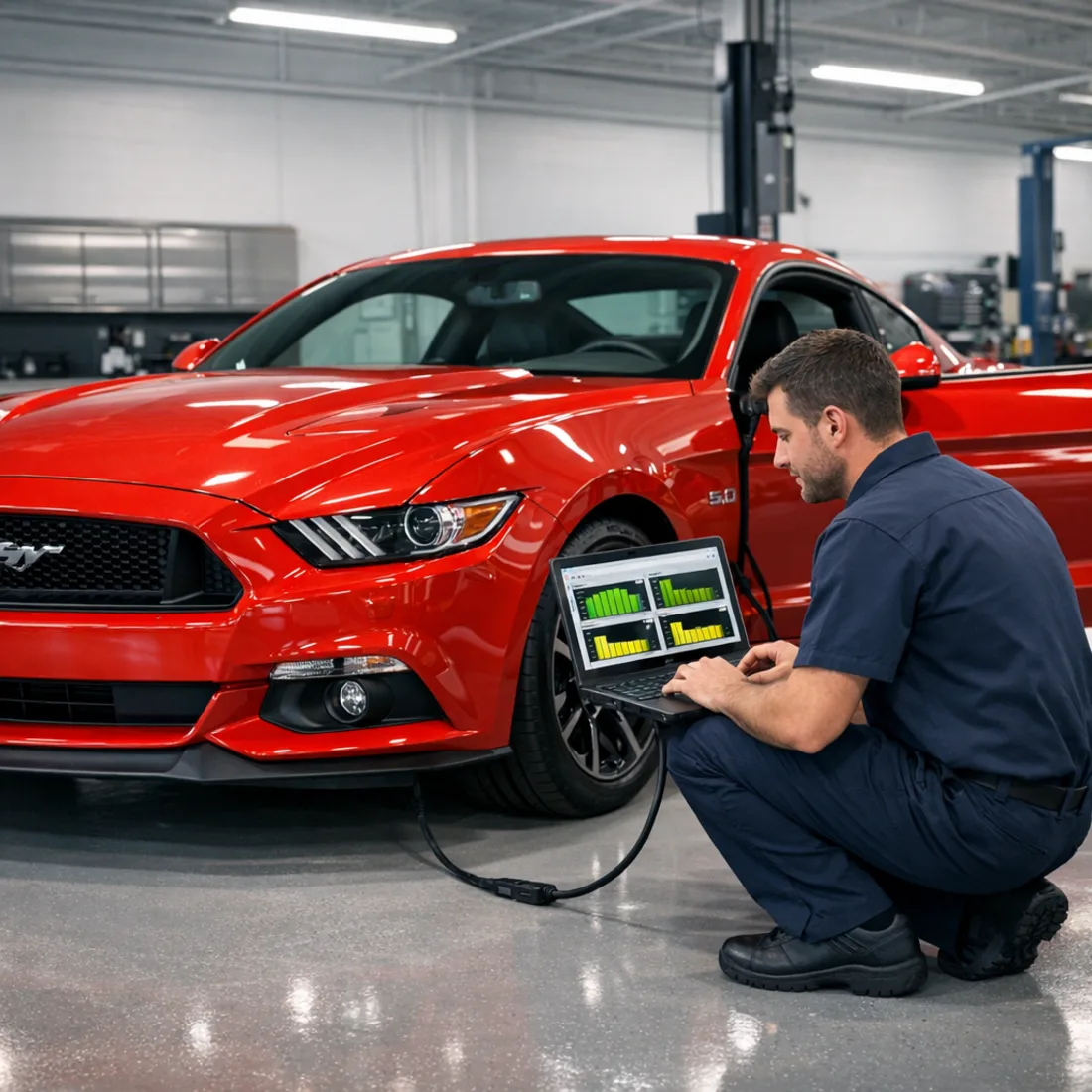
The Bosch MG1CS019 ECU in the Mustang GT is not a unit you can read properly with a generic scan tool. The cam phaser codes, the transmission adaptive data, the ABS and stability control modules, the PATS immobiliser: they all talk to each other and need a proper factory level interface to read and clear accurately. We use Ford IDS and FDRS, which is the same diagnostic platform the authorised dealerships use, to access every module on the car. That means live data from the cam phaser solenoids, actual transmission fluid temperature and shift timing data, and the ability to carry out module programming when components are replaced.
This matters in practice. A cam phaser rattle with a stored fault code could point to the phaser itself, the solenoid, low oil pressure at that circuit, or simply the wrong oil grade. Reading the live data tells us which one it actually is, rather than guessing and replacing parts until something works. That is how we diagnose rather than how we guess.
When the amber check engine light comes on in a Mustang GT, the most common causes we see are cam phaser related codes, misfires tied to coil pack condition, and evaporative emissions codes from fuel cap or purge valve issues. The amber light means something needs attention but the car is still drivable. A flashing amber light or a red warning is a different matter entirely and means you stop driving and call us. Ford IDS lets us pull the full freeze frame data alongside the code so we understand the exact conditions when the fault triggered, which is far more useful than a bare code number.
Stage 1 Tuning: More From What Is Already There
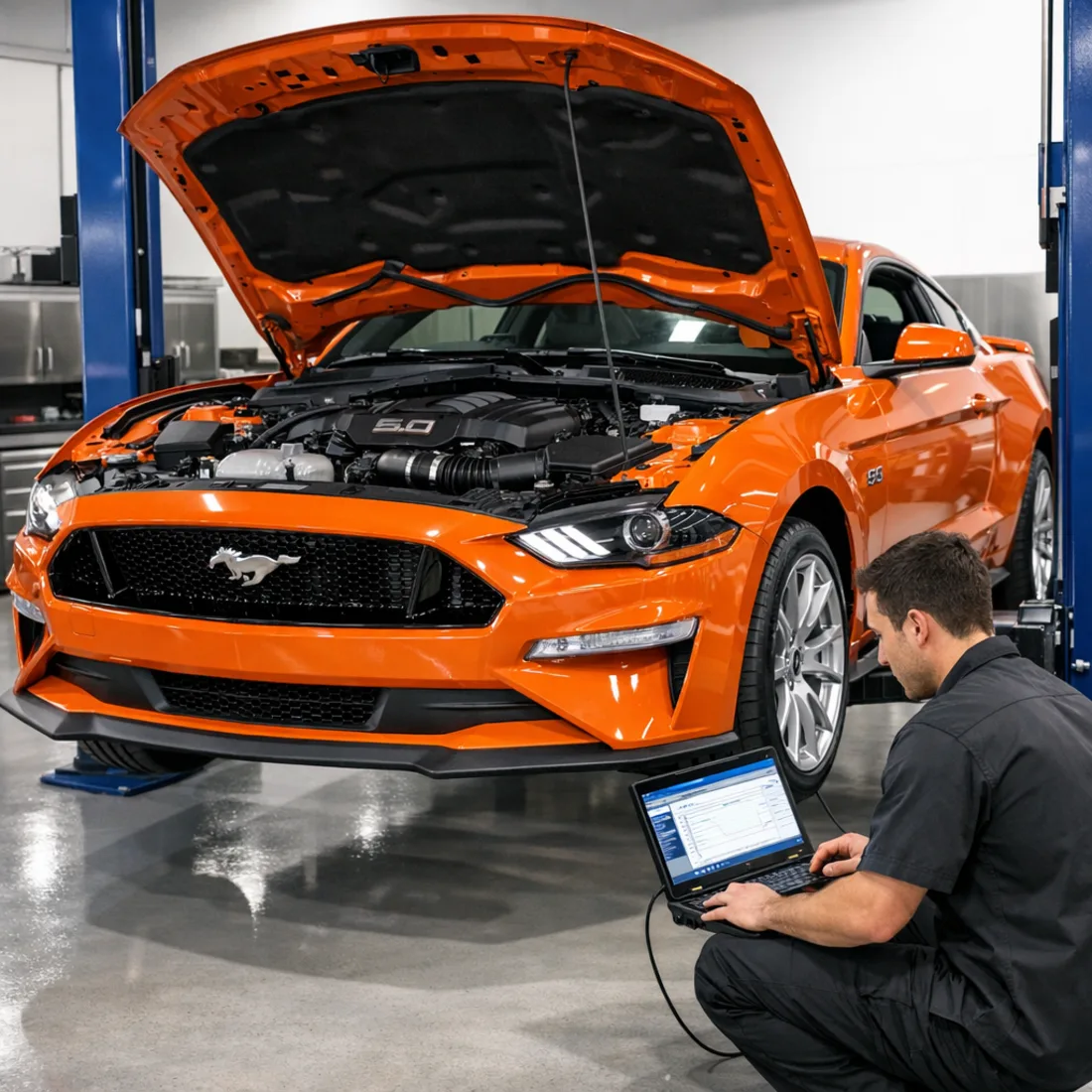
The Mustang GT's Bosch MG1CS019 ECU holds calibration maps for ignition timing, fuelling, and cam phaser control that Ford set conservatively to suit a wide range of fuel quality and ambient conditions. A Stage 1 tune recalibrates those maps for New Zealand 98 octane fuel, properly accounting for the intake and exhaust combination on your specific car. The result is 470hp and 560Nm, gains of 21hp and 31Nm over stock. The improvement is felt most strongly in the mid range where the engine pulls hardest in daily driving, and throttle response sharpens noticeably because the calibration is no longer hedging against conditions that do not apply to your car.
Recalibrated ignition timing, fuelling and cam phaser maps for New Zealand 98 octane fuel. Sharpened throttle response and stronger mid range pull. DTC removal carried out where applicable and legally appropriate. Intake and exhaust upgrades can be advised to complement the tune. On a well serviced car running correct oil and quality fuel, it is a straightforward improvement.
A Stage 1 tune on a properly maintained Mustang GT does not stress the engine. The compression ratio, bore and stroke, and internal components are designed for this kind of output and the factory tune is not pushing the limits of the hardware. On a car with tired plugs, a borderline coil, or the wrong oil, we will tell you to sort those items first, because a tune amplifies both the good and the bad in an engine. The full picture of what is possible is on our tuning page, where you can see the options laid out clearly.
Frequently Asked Questions
The questions we get most. Something else on your mind? Get in touch.