Ford Everest 2.0 EcoBlue: Servicing, Repairs and Tuning in New Zealand
Picture a big, capable diesel wagon eating up a long weekend drive to the Coromandel. The Ford Everest plays that role well, and the 2.0 EcoBlue engine under the bonnet is genuinely good at it. But diesel complexity is the price of that capability. Bi turbo plumbing, a wet timing belt, a DPF, an EGR circuit and a Bosch MEDG17.0 ECU all working in concert means there is quite a lot that needs attention as the kilometres climb. Our Penrose workshop sees these regularly, and what follows is the honest picture of what the Everest 2.0 EcoBlue needs to stay healthy.
The Engine Behind the Badge
The 2.0 EcoBlue is a 1996 cc four cylinder diesel with an 84.0 mm bore, a 90.0 mm stroke and a 16.5:1 compression ratio. Ford rates it at 180 hp and 420 Nm in Everest spec, and a bi turbo arrangement is what gets it there. The Bosch MEDG17.0 ECU manages fuelling, turbo boost, EGR flow and DPF regeneration cycles, so when something goes wrong the fault trace runs through that module.
It is a capable, modern diesel, but it rewards owners who stay on top of oil quality and filter changes far more than it tolerates neglect.
-
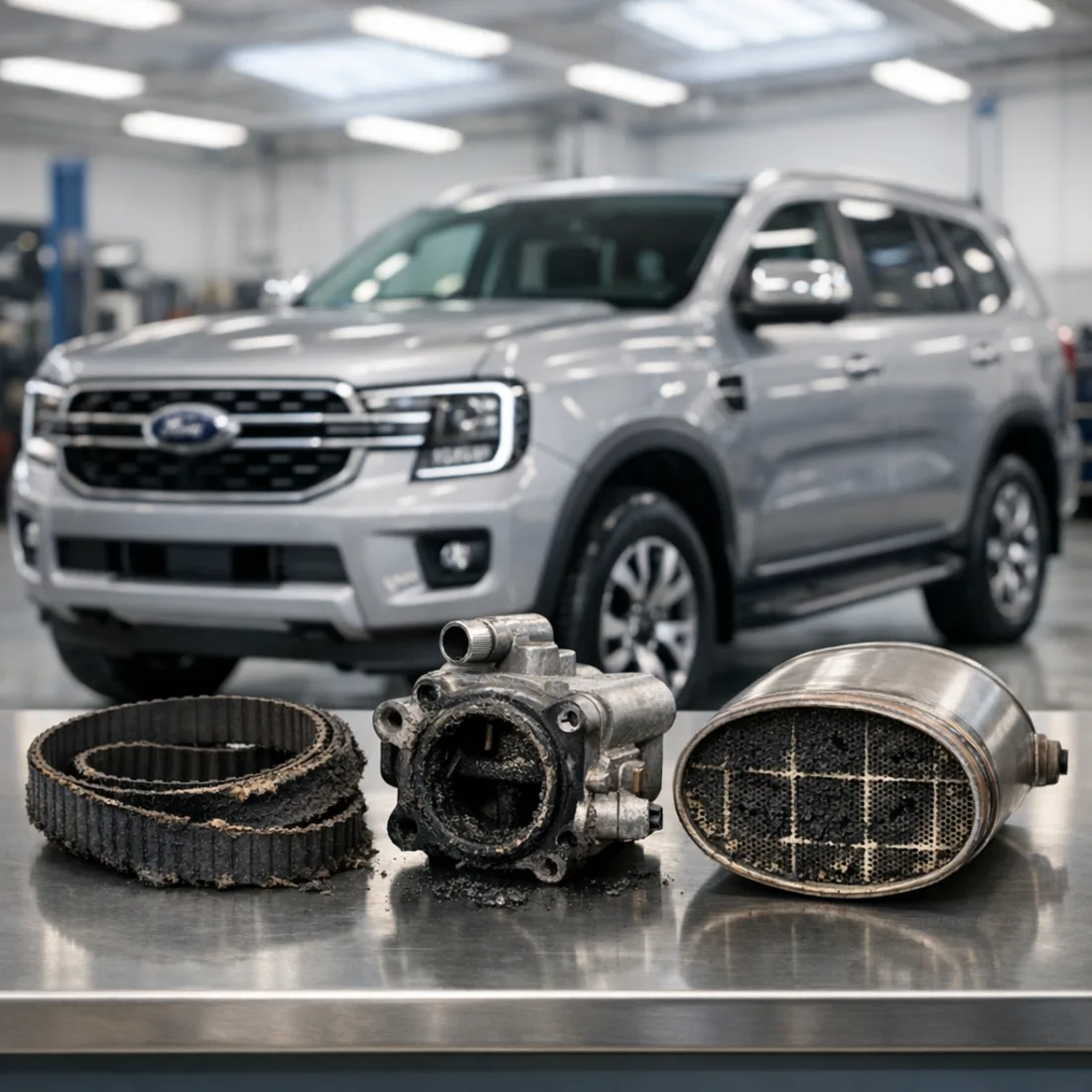
Wet timing belt shedding rubber particles into the sump, clogging the oil pickup strainer and causing oil pressure drop
-
EGR valve clogging from carbon deposits, causing rough idle, increased smoke on light throttle and loss of low end response
-
DPF regeneration failures from interrupted cycles, leading to an amber warning light and, if left unaddressed, reduced power mode
-
Turbo actuator position faults on higher mileage examples, causing the ECU to limit boost and a flat mid range
-
Injector wear showing as hard cold starts, uneven idle and white smoke on startup
-
Glow plug failures causing cold morning misfires, with individual cylinder contribution codes separating them from injector issues
A generic tool can tell you a fault code exists. Ford IDS and FDRS tell you why.
We use factory diagnostic platforms to read live data from the MEDG17.0 ECU in real time, watching injector pulse width, EGR valve position, DPF differential pressure and boost pressure simultaneously.
These are the specific problems we diagnose and fix on the Everest 2.0 EcoBlue, not a generic list of diesel ailments. The MEDG17.0 logs specific actuator position deviation codes rather than vague boost faults, which tells us whether it is the actuator itself, the linkage or a sensor issue before anything comes off the car.
When we suspect a wet timing belt issue, we do not just pull the belt cover and look. We check oil quality for contamination, inspect oil pressure readings from the live data stream and correlate those with belt condition on the inspection. That joined up approach is what stops the same fault recurring after the repair.
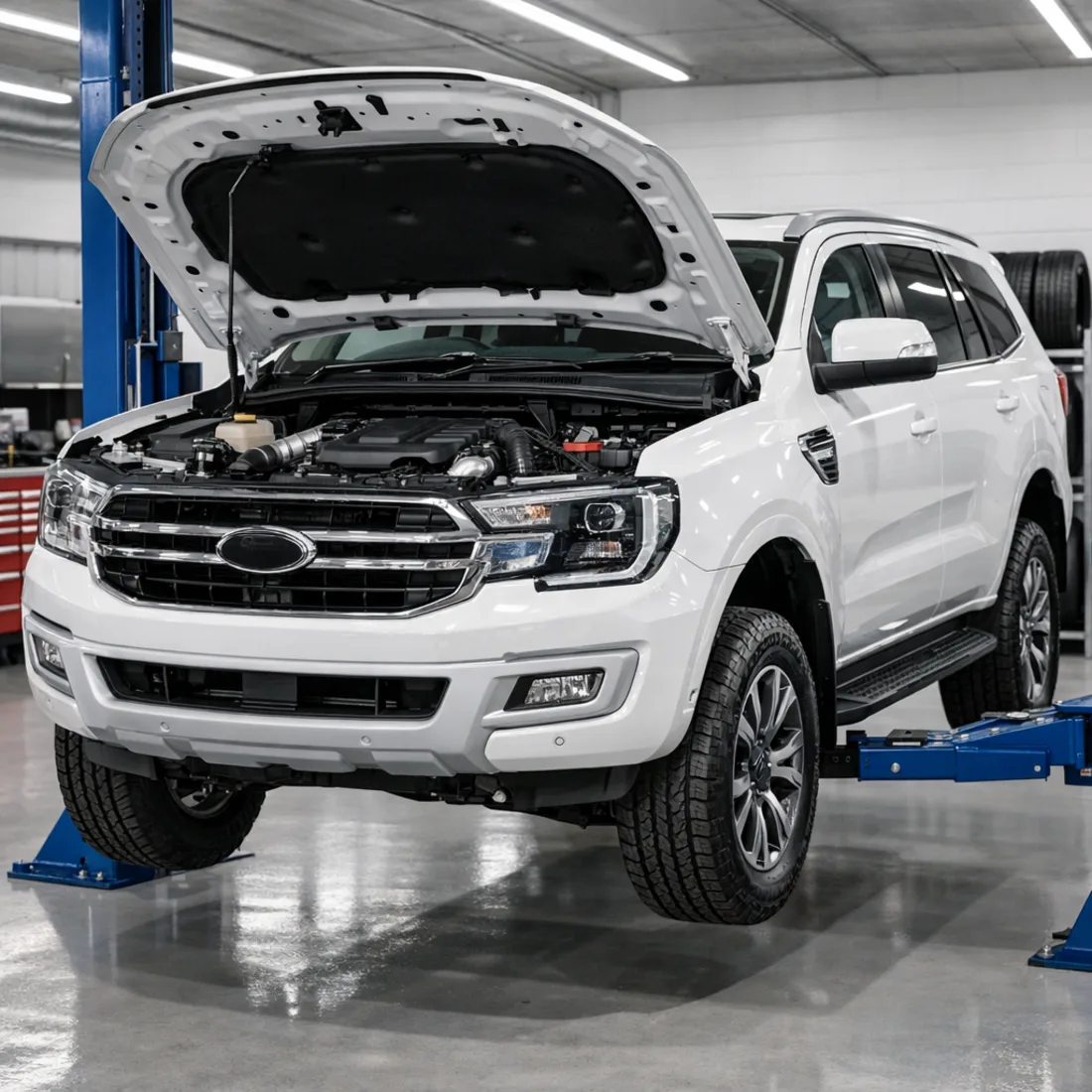
Book your Everest in with a proper specialist in Penrose.
Routine Servicing Worth Staying on Top Of
A well maintained Everest 2.0 EcoBlue is a genuinely reliable vehicle. Our full vehicle servicing schedule for this model covers engine oil and filter using a full synthetic low SAPS diesel grade that meets or exceeds Ford's specification for the MEDG17.0 engine, air filter replacement which directly affects turbo inlet efficiency and combustion quality on a forced induction diesel, fuel filter service critical for protecting the high pressure injection system from contamination, cabin filter for the climate system, wiper blades, drive belt inspection and replacement on schedule, and wet timing belt service at the correct interval with genuine parts.
On the diesel specific side, we service the EGR valve, carry out DPF cleaning and forced regeneration where needed, and replace glow plugs as a set when wear patterns suggest it. Our team also handles brake pad and rotor replacement on the Everest, including the rear electric park brake calibration that requires factory software rather than a manual wind back tool. Suspension components, wheel bearings and sensors get inspected and replaced as they wear.
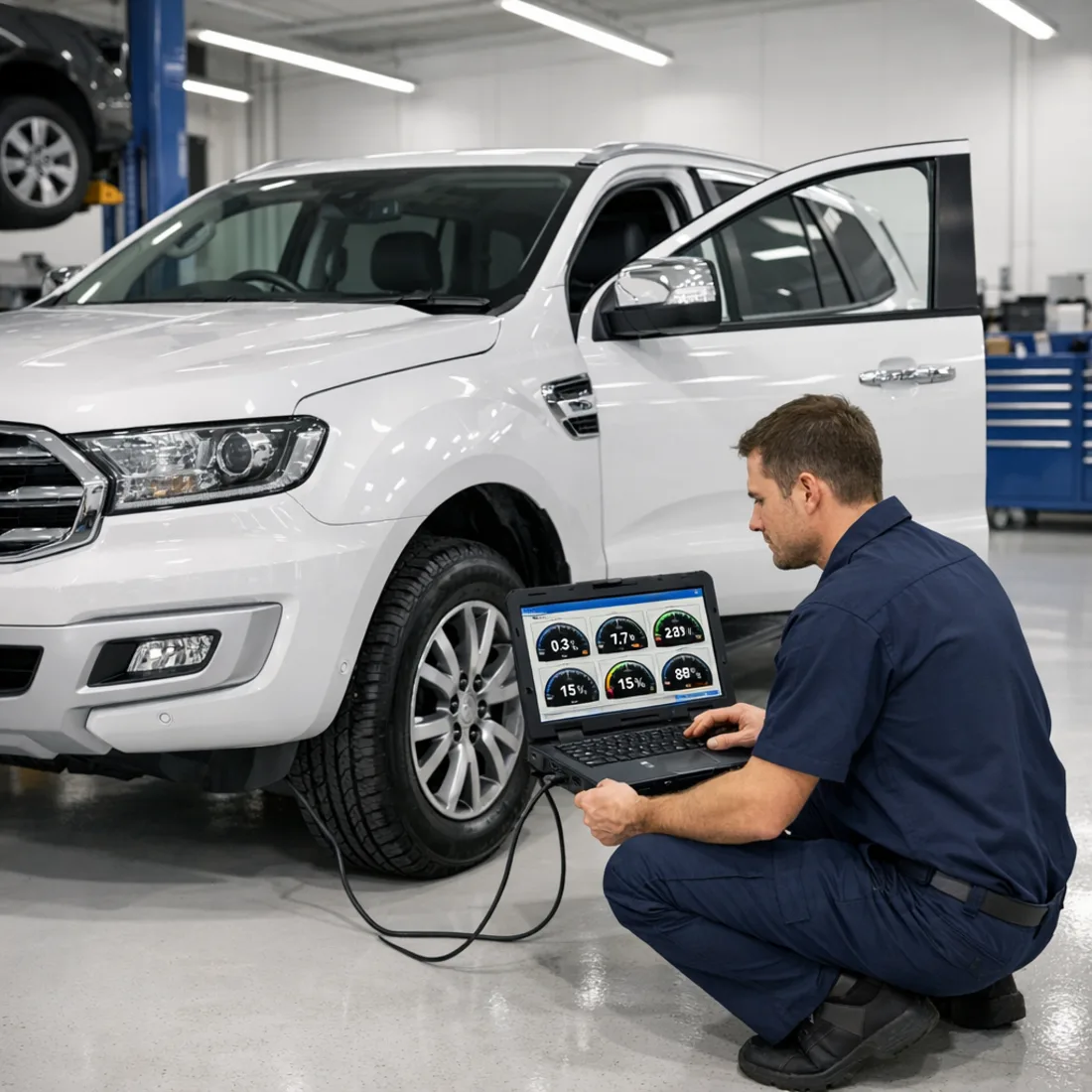
How We Actually Diagnose It
We use Ford IDS and FDRS, the same factory diagnostic platforms a Ford dealer uses, rather than a generic scan tool that reads a fraction of the available data. That distinction matters enormously on a vehicle like this. IDS lets us read live data from the MEDG17.0 ECU in real time, watching injector pulse width, EGR valve position, DPF differential pressure, boost pressure from both turbo stages and coolant temperature simultaneously.
FDRS handles module programming, forces a controlled DPF regeneration cycle and allows us to code new components correctly so the ECU accepts them. A generic tool can tell you a fault code exists. These platforms tell you why.
Stage 1 Tuning for the 2.0 EcoBlue
The Bosch MEDG17.0 has genuine headroom beyond its factory calibration. Our Stage 1 tune takes the Everest from 180 hp and 420 Nm to 190 hp and 450 Nm, a gain of 10 hp and 30 Nm achieved through revised fuelling and boost mapping rather than hardware changes. In a vehicle of the Everest's weight and size, that additional torque improves towing confidence and reduces the need to downshift on long motorway inclines. Throttle response feels sharper because the calibration removes the factory hesitancy built in for emissions certification margins.
Revised fuelling and boost mapping via the MEDG17.0 interface. Improved towing and overtaking torque in the mid range, sharper throttle response from idle, and all results verified with live MEDG17.0 data logging before handover. No hardware changes required.
The tune is written and loaded via the MEDG17.0 interface using a calibrated file service approach, which means we can verify the result with live data logging before the car leaves. Any emissions system work we carry out is explained honestly: cleaning and legitimate repair is our default. Off road or track only configurations that affect compliance items are noted clearly for what they are, including their impact on WOF eligibility.
Frequently Asked Questions
The questions we get most. Something else on your mind? Get in touch.