Ford Mondeo Mk5 2.0 EcoBoost: Servicing, Faults and Tuning (238hp and 203hp)
The Mondeo has always been the sensible choice that quietly over delivers. A genuine European feeling driver's car, a comfortable cabin, and a turbocharged 2.0 EcoBoost petrol engine that punches well above its badge price. Two distinct outputs have made it into the New Zealand fleet: the 238hp version and the later Mk5-specific 203hp TNCD variant. They share the same direct injection family DNA, the same rewards for attentive ownership, and the same consequences for neglect. This page covers both, what they have in common, where they differ, and exactly what we see when they come through our workshop.


The 238hp EcoBoost: Strong Performer, Known Weak Spots
Think of the 238hp EcoBoost Mondeo as business class at economy fares. The engine is genuinely punchy, the platform handles well, and for the money these cars can be bought for on the used market, the performance per dollar is hard to argue with. But the complexity underneath that performance is real, and skipping a service interval on one of these is a bit like ignoring a slow puncture on the motorway: manageable right up until it isn't.
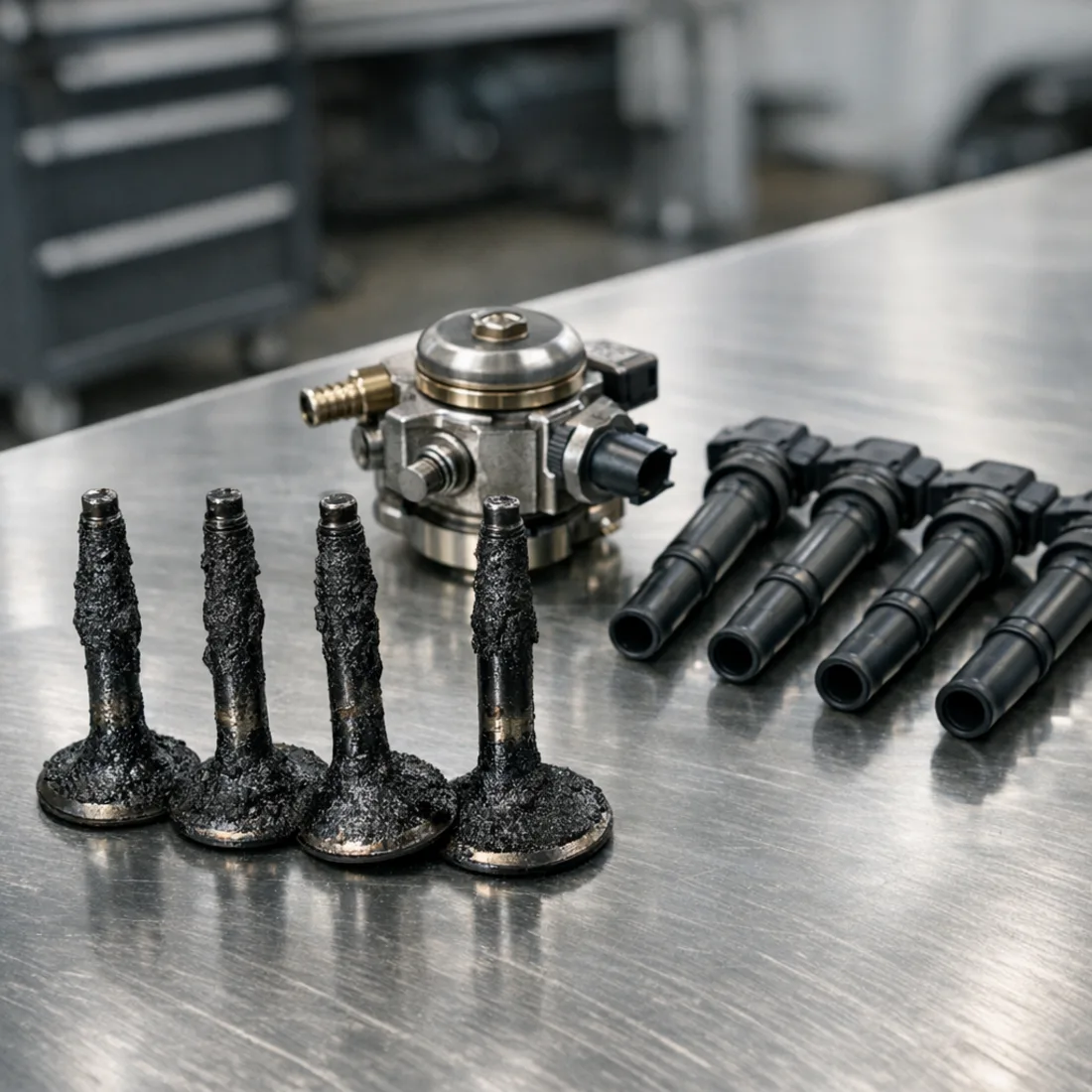
The biggest issue we see repeatedly on this variant is carbon build up on the intake valves. Direct injection means fuel never washes the back of the intake valves the way port injection does, so over time you get a thick layer of carbon deposits that restricts airflow, causes a rough idle, and eventually triggers misfires. It doesn't happen overnight, but by the time owners notice the symptoms the build up is usually well established.
Coolant intrusion and water pump problems have been reported across EcoBoost variants, so we always check the cooling system carefully when one of these comes in for diagnostics or a service. The high pressure fuel pump is another item worth inspecting when driveability complaints show up, and ignition coils on these engines don't always fail dramatically. Sometimes it's just a gradual misfire under load that a generic scanner won't pinpoint properly.
We diagnose these with Ford IDS and FDRS using a genuine VCM interface. That matters because it lets us read live data and module level faults the way Ford intended, not a generic scan tool's best guess. For mechanical repairs and electrical faults alike, getting the right data up front saves everyone time and money.
-
Carbon build up on intake valves causing rough idle and misfires
-
Coolant intrusion and water pump issues
-
High pressure fuel pump wear
-
Ignition coil and spark plug failures
-
Timing chain condition concerns on higher mileage examples
Skipping a service interval on one of these is a bit like ignoring a slow puncture on the motorway.
Manageable right up until it isn't.
Routine servicing on the 238hp car includes oil and filter with the correct Ford spec grade, air filter, cabin filter, fuel filter, wipers, and drive belt inspection. Spark plugs, brake pads and rotors, and suspension work round out the regular jobs we carry out.
Stage 1 tuning is available on this EcoBoost and delivers a meaningful increase in power and torque for everyday driving.
Get your Mondeo EcoBoost booked in with a proper Ford specialist.
The 203hp Mk5 TNCD: Refined but Still Needs the Right Attention
The Mk5 Mondeo's 203hp variant runs the TNCD engine code with a 1997cc capacity, an 87.5 x 83.1mm bore and stroke, and a 10.0:1 compression ratio. It sits on a Bosch MED17.0, MED17.2.2, or MEDG17.0 ECU depending on the build, and produces 203hp and 345Nm from the factory. That's a little down on the older 238hp version, but the platform it sits in is more refined, and the tuning headroom is excellent.
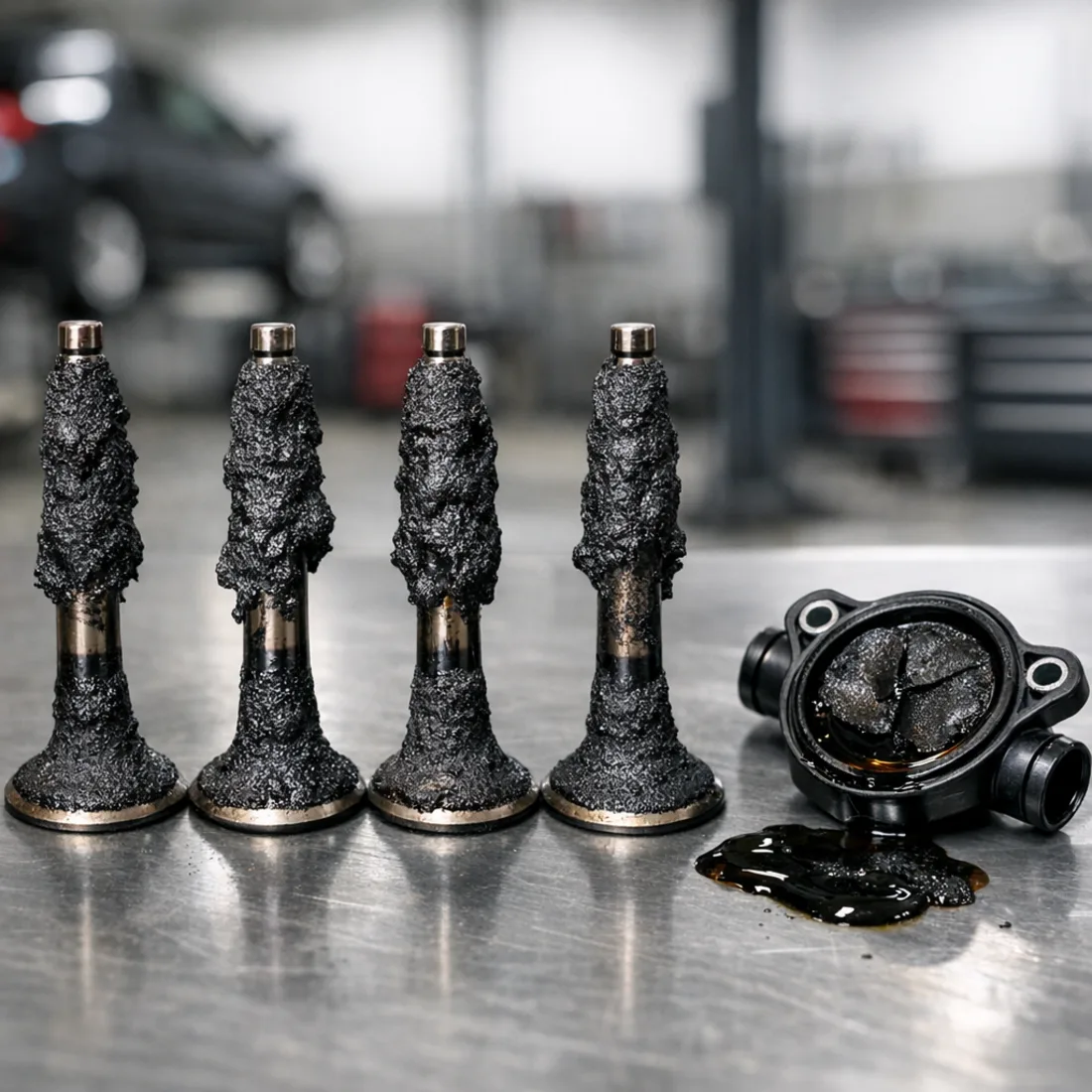
Here's the honest comparison: the TNCD doesn't fix every weakness the older EcoBoost had. Carbon build up on the intake valves is still very much a thing. Direct injection is direct injection regardless of which iteration of the engine you're looking at, and by the time these Mk5s are at typical used car mileage in New Zealand, the valves often need attention. Rough idle, misfires under load, and a slight hesitation on acceleration are the usual symptoms.
What the Mk5 does add to the fault list is the PCV system and turbo actuator. The PCV on these can cause oil consumption and rough running when it starts to go, and a sticking or faulty turbo actuator shows up as poor boost response or a limp mode event. Neither fault is catastrophic if caught early, but both are easy to miss on a generic scanner that doesn't have full access to the Bosch ECU's live data.
The cooling system deserves the same respect here as on the older car. Water pump and thermostat housing leaks are a genuine pattern on these Ford petrol units, and a slow coolant leak left unattended has a way of turning into something far more expensive.
-
Carbon build up on intake valves (same as the 238hp, same cause)
-
Water pump and thermostat housing leaks
-
Ignition coil and spark plug wear causing misfires
-
PCV system issues causing oil consumption and rough running
-
Turbo actuator faults causing poor boost response or limp mode
-
Coolant intrusion concerns across the EcoBoost family
A sticking or faulty turbo actuator shows up as poor boost response or a limp mode event.
Neither fault is catastrophic if caught early, but both are easy to miss on a generic scanner.
Routine servicing on the Mk5 follows much the same list as the older car: correct spec oil and filter, air and cabin filters, fuel filter, drive belt, spark plugs and coils, and a cooling system inspection. Brake pads and rotors, suspension arms and bushes, and a timing setup check are also regular items at higher mileage.
We fit brand new genuine and OEM parts throughout, every time.
Which One Should You Buy? A Straight Comparison
If you're shopping the used market and trying to decide between an older 238hp EcoBoost Mondeo and a later Mk5 203hp TNCD, here's the honest take.
You want more factory power from the outset and are happy with a slightly older platform. The gap narrows quickly once the Mk5 has a Stage 1 tune applied, but the 238hp car has fewer additional fault areas around the PCV and turbo actuator.
You want the more refined drive and the better equipped cabin. The sweet spot is a car with a clear service history and no evidence of coolant system neglect. A Stage 1 tune makes it genuinely quick for a family car.
- Both engines share the carbon build up weakness inherent to direct injection, so factor in a valve clean on either car if service history is patchy
- The Mk5 TNCD adds PCV and turbo actuator as fault areas not commonly seen on the older variant
- On either generation, full service records and proof of correct grade oil use matter more than low mileage alone
- The Mk5 with a Stage 1 tune is genuinely quick for a family car and both generations are easy to live with day to day when the maintenance is on top of it
Servicing Across Both Generations
Both EcoBoost variants share the same basic service philosophy: use the right oil, change it on time, don't let the cooling system develop a slow leak, and pay attention to what the spark plugs and coils are telling you. The direct injection architecture means the intake valves need monitoring regardless of which version you have.
Our car servicing for these Mondeos covers the full list: correct Ford spec oil and filter, air and cabin filters, fuel filter, drive belt, coolant inspection, and a check of the major wear items. We also inspect the timing setup and PCV on higher mileage examples because those are the items that tend to be overlooked at independent shops without Ford specific knowledge.
Service items covered: oil and filter with the correct Ford spec grade; air filter, cabin filter, fuel filter; spark plugs and ignition coils; drive belt inspection; cooling system and coolant renewal; brake pads, rotors and brake system inspection; suspension arms, bushes and steering components; timing setup and PCV check on high mileage cars.
We fit brand new genuine and OEM parts only. No compromises on quality for a car this complex.

How We Diagnose These Cars
Generic scan tools won't cut it on either EcoBoost variant. The Bosch ECU in the Mk5 TNCD (MED17.0, MED17.2.2, or MEDG17.0 depending on build) and the ECU in the older 238hp car both hold far more data than a generic OBD reader can access. We use Ford IDS and FDRS with a genuine VCM interface, which is the same factory diagnostic environment Ford technicians use.
That means we can read live sensor data to catch intermittent faults that don't always set a stored code, access module level diagnostics across the powertrain, body, and chassis systems, and carry out proper calibrations after parts replacement. It's the difference between guessing and actually knowing what's going on. On both Mondeo variants, that matters especially for cooling system diagnosis, turbo actuator assessment, and PCV system checks where the fault might only show under specific load conditions.

Tuning the EcoBoost Mondeo
Both EcoBoost variants respond well to tuning, but the Mk5 TNCD has the most detailed figures available. The older 238hp variant also supports Stage 1 tuning with useful gains in power and torque.
Stage 1 tuning is available on the 238hp EcoBoost and delivers a meaningful increase in power and torque for everyday driving. These are applied through the ECU using proper file based tuning, not piggyback modules or quick fix devices that compromise the factory calibration.
From a factory 203hp and 345Nm, a Stage 1 tune brings it to 270hp and 400Nm. That's a gain of 67hp and 55Nm, which transforms the car's character on the road without requiring any hardware changes. Additional options available on the Mk5 TNCD include DTC removal, a pop and bang crackle map, start/stop disable, and Vmax adjustment.
We only tune what we've serviced and diagnosed properly, so you know the base car is in the right condition before any power increase goes in. If you want to understand what's actually possible on your specific car, our file service has the full picture.
Frequently Asked Questions
The questions we get most. Something else on your mind? Get in touch.