Defender TD4 & L663 D200 Service, Repairs and Diagnostics
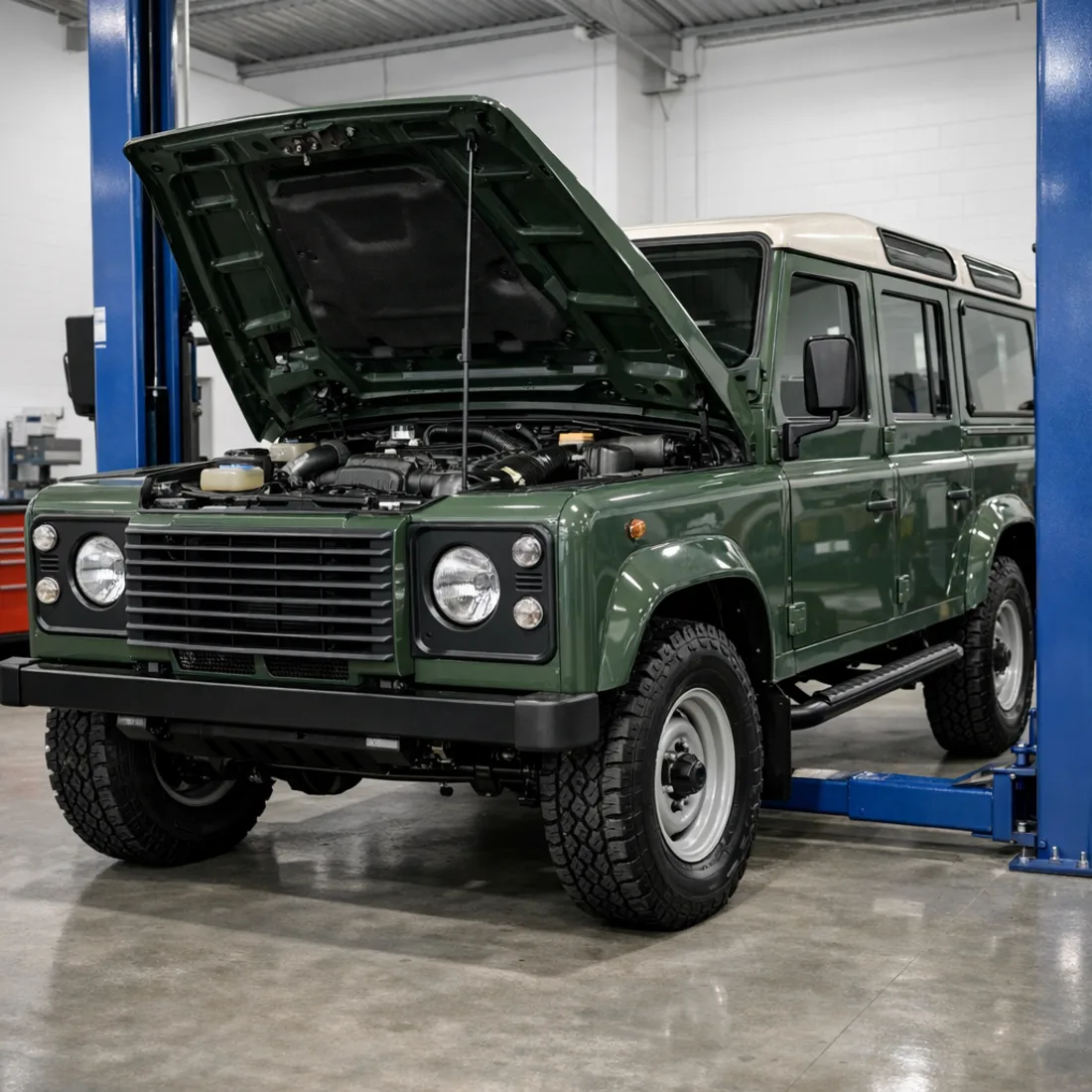
The Defender name has meant tough, capable and uncompromising since the original. But the truck that waded through Waikato paddocks on a Ford derived diesel and the one sitting in your driveway now with air suspension and a 48V mild hybrid system are almost entirely different machines. Knowing which generation you have, what it is prone to, and how to treat it correctly is what separates a long lived Defender from an expensive headache. This page covers both: the proven 2.4 TD4 Puma diesel that ran from 2007 to 2011, and the modern L663 D200 in both 2.0 and 3.0 straight six Ingenium diesel form.


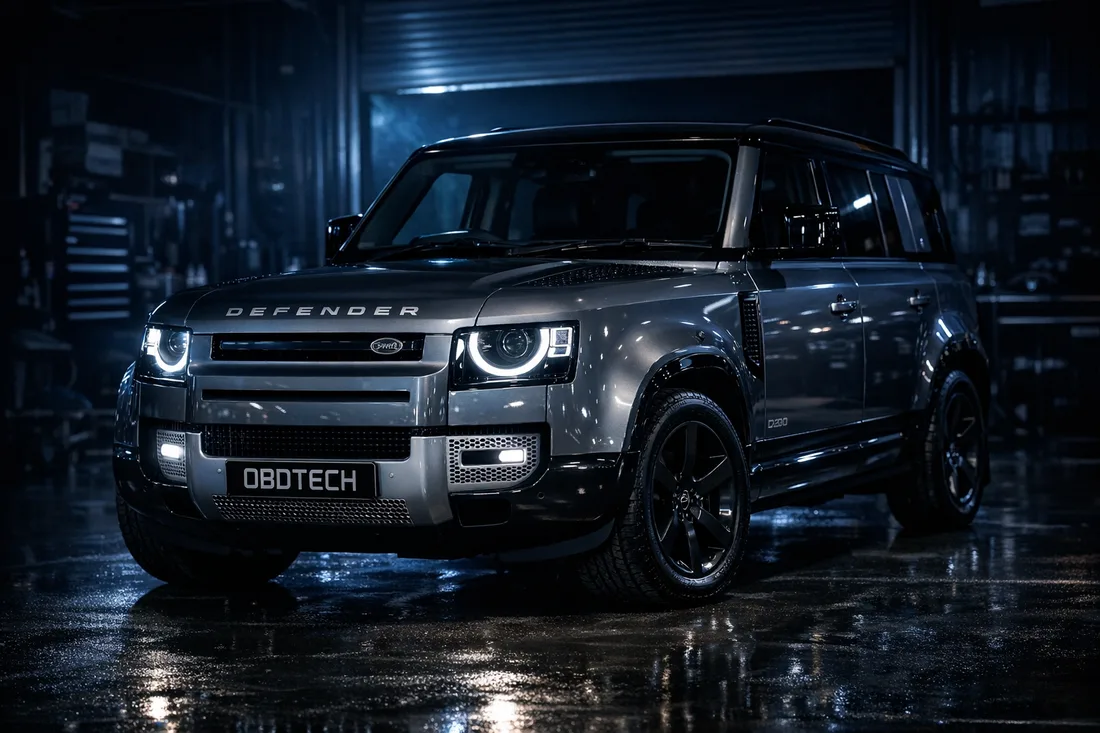
Defender 2.4 TD4: The Puma Diesel Generation
This is the Defender that replaced the old Td5 and brought proper common rail diesel technology to the platform. The 2.4-litre DT244 engine is Ford Puma derived, displacing 2401cc with a bore and stroke of 89.9 x 94.6 mm and a compression ratio of 17.5:1. Factory output is 122 hp and 360 Nm, which is enough for serious work, especially once you consider how these trucks actually live their lives: farm gates, river crossings, loaded trailers, and then straight back onto the motorway.
The engine management sits across a few ECU variants, specifically Motorola MEMS3, Visteon DCU102 and Visteon DCU106 depending on the build. That matters for diagnostics, because plugging in a generic scan tool and expecting complete coverage is wishful thinking. We use Land Rover SDD and Pathfinder with the correct interface, which means we actually talk to all modules and get the fault data out properly rather than a best guess read from a consumer tool.
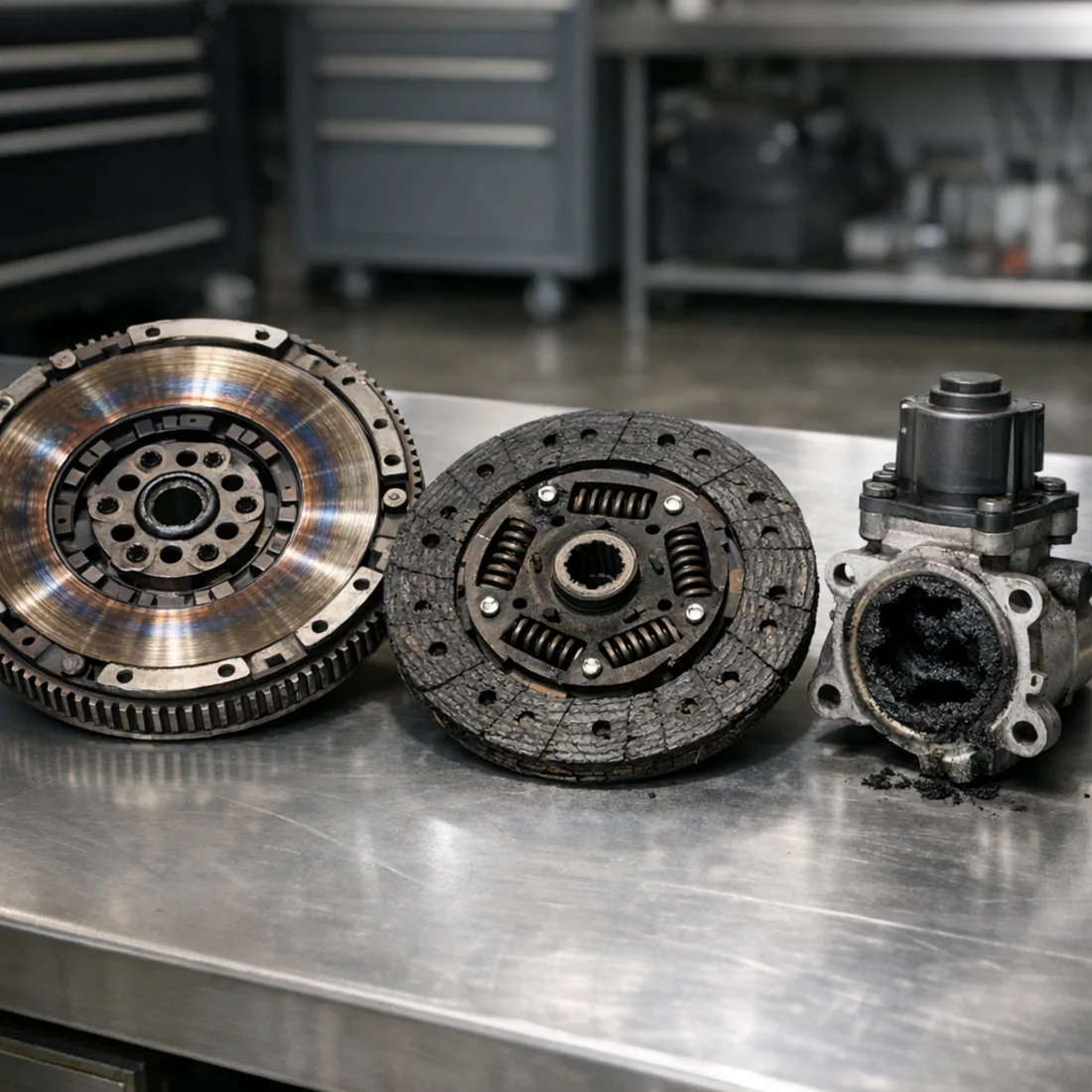
The dual mass flywheel is probably the most common bigger job on this generation. Hard use accelerates wear, and by the time you notice the shudder or the rattle at idle the DMF is usually well past its best. We replace it with new genuine components while the gearbox is out, doing the clutch at the same time since the labour overlap makes it sensible.
EGR and intake sooting is worth addressing before it becomes a performance complaint. If the truck has been used on lots of short runs the EGR passages and intake manifold collect deposits that progressively restrict airflow. Cleaning these properly restores the running quality and takes pressure off the turbo.
-
Dual mass flywheel and clutch wear, especially on trucks used for towing or off road work
-
EGR valve sooting and intake carbon buildup reducing power and causing rough running
-
Injector issues and turbo wear at higher mileage
-
Oil leaks from the front cover and rear main seal on older examples
Compared to what came after, the TD4 is relatively straightforward.
Fewer modules, no air suspension, no mild hybrid system. It rewards basic mechanical attention and proper servicing intervals.
Routine servicing on the TD4 covers oil and filter with the correct diesel grade, air filter, fuel filter, cabin filter, wipers, drive belts and glow plugs. The timing belt interval is something TD4 owners genuinely need to stay on top of. Miss it and the consequences are expensive. We also cover brake pads and rotors and suspension bushes and shocks, which take real punishment on a Defender used the way most are.
Compared to what came after, the TD4 is relatively straightforward. Fewer modules, no air suspension, no mild hybrid system. It rewards basic mechanical attention and proper servicing intervals more than it demands specialist software work, though the ECU variants still mean correct tooling matters. If you are shopping between this and the L663, know that the TD4 is simpler to work on but older, and the consequences of deferred maintenance have had years to accumulate.
Get your Defender booked in with a proper specialist.
Defender L663 D200 2.0 Ingenium: Modern Electronics, Modern Problems
When Land Rover brought the Defender back as the L663, they made one thing very clear: this is not the old truck with a new body. The 2.0-litre D200 Ingenium diesel displaces 1999cc, runs a 15.5:1 compression ratio with a bore and stroke of 83.0 x 92.4 mm, and produces 200 hp and 430 Nm from the factory. The ECU is a Bosch MEDC17.9, and that detail alone tells you this is a sophisticated, calibration dependent system. Think of it less like a classic Land Rover and more like a premium SUV wearing one.
The platform carries air suspension on most variants, multiple driver assistance modules, Pivi Pro infotainment, and a twin turbo setup on the diesel. Software faults are as common as mechanical ones on these, and diagnosing them correctly requires factory level tooling. We use SDD and Pathfinder with an approved JLR interface. Generic code readers simply cannot address module coding and calibration on this architecture, and attempting it with one creates more problems than it solves.
The Ingenium diesel family has a known relationship with timing chain wear. It does not happen early on a well serviced truck, but skip oil changes or let the oil level drop and the chain tensioner suffers. By the time there is a rattle on cold start, the tensioner is already worn and the chain is not far behind. Catching it early with correct oil service intervals saves a significant repair bill.
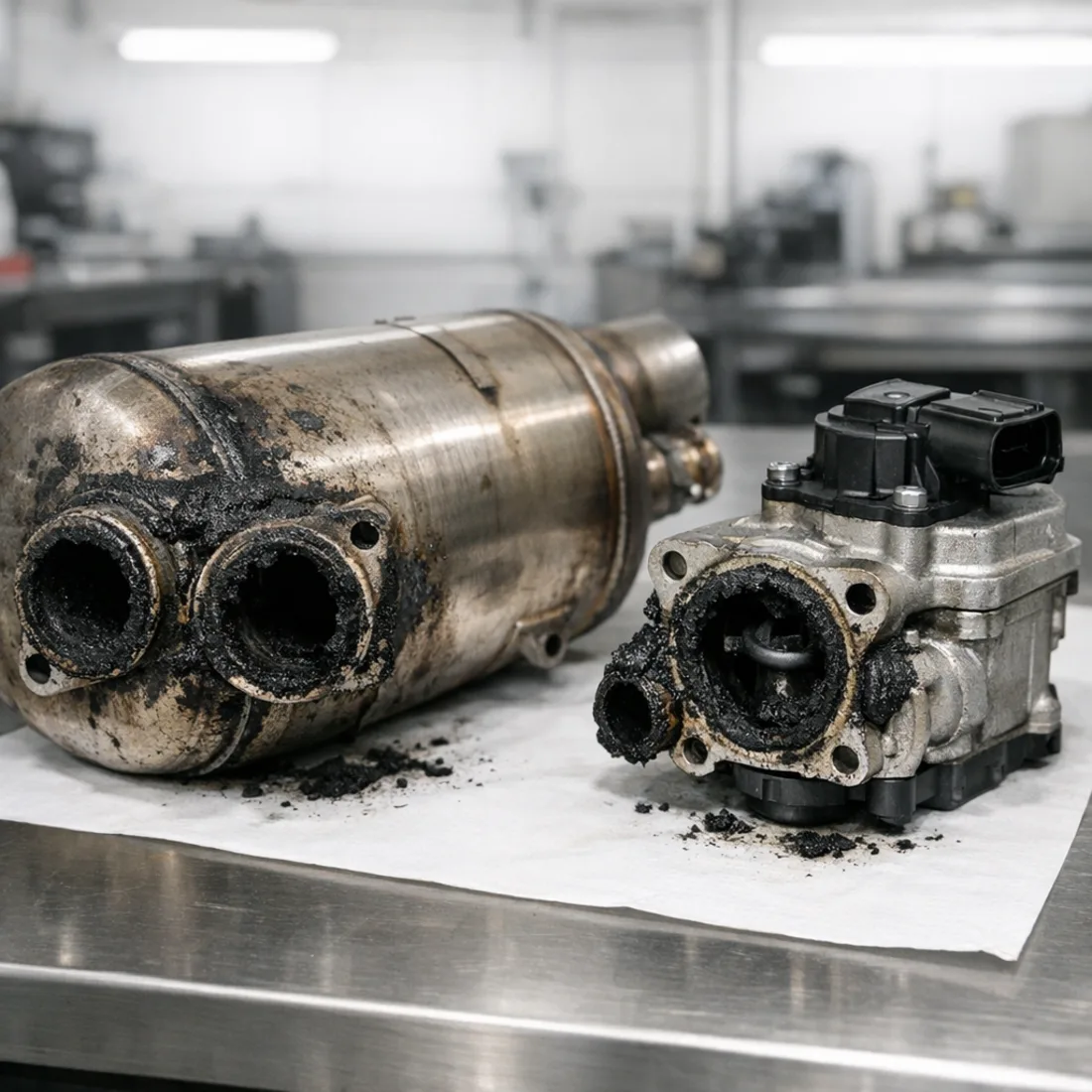
DPF and EGR issues are common to any modern diesel used predominantly on short runs. The Defender is often bought for capability but used for school pickups, and the emissions hardware suffers for it. We diagnose these properly, clean and repair the components where possible with genuine parts, and make sure the regeneration strategy is working as it should.
-
Timing chain wear on higher mileage examples, listen for rattle on cold start
-
EGR and DPF issues, particularly on trucks that spend a lot of time in city traffic or short runs
-
Oil dilution from insufficient regeneration cycles if short trip driving dominates
-
AdBlue system faults and NOx sensor errors triggering warning lights
A Stage 1 tune for the D200 2.0 takes output to 225 hp and 480 Nm.
The sharpened throttle response and extra torque transform the driving experience without changing anything that affects reliability when done correctly.
A Stage 1 tune for the D200 2.0 takes output to 225 hp and 480 Nm, gains of 25 hp and 50 Nm. The sharpened throttle response and extra torque transform the driving experience without changing anything that affects reliability when done correctly.
Related service work on the L663 2.0 includes low SAPS oil and filter, fuel filter, air filter, cabin filter, glow plugs, drive belt inspection, brake pads and rotors, air suspension components, and DPF and AdBlue servicing as needed.
Defender L663 D200 3.0 Ingenium: Straight Six Sophistication
The 3.0-litre straight six D200 is the more refined end of the L663 range, and in many respects the more complex one. Factory output sits at 200 hp and the architecture adds a 48V mild hybrid system with a belt driven integrated starter generator alongside the straight six Ingenium diesel. The platform is the same L663 architecture as the 2.0, which means the same Pivi Pro infotainment, the same air suspension setup on most variants, and the same absolute dependency on proper factory diagnostic tools.
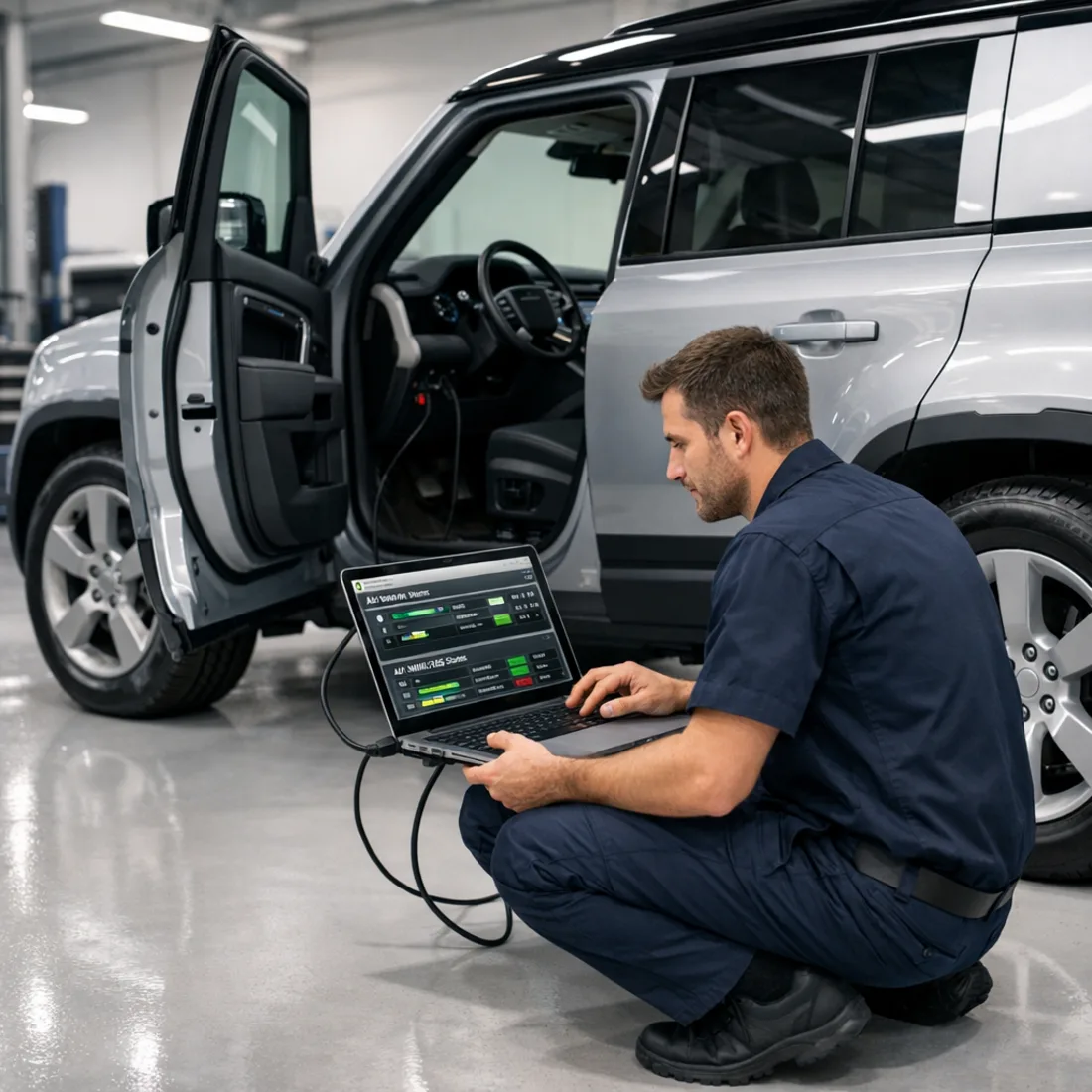
Where the 3.0 differs from the 2.0 is in the mild hybrid system. Stop start complaints, charging faults and belt starter generator issues all point to the 48V architecture when they come through the door. These need factory tooling to diagnose properly, full stop. You cannot read a 48V system fault accurately with a generic reader, and calibrating components after replacement requires guided routines that only SDD and Pathfinder provide.
Air suspension faults are worth taking seriously on both L663 variants. The system is sophisticated and capable, but when a compressor or air spring fails the vehicle can sit unevenly or drop to a limp ride height. We replace failed components with new genuine parts and recalibrate the system, so the ride height and levelling behaviour returns to factory spec rather than just clearing the fault code and hoping.
Stage 1 tuning is available for the 3.0 D200, and the EGR off and DPF off calibrations are options we can discuss for vehicles where the emissions hardware has failed and replacement is the alternative. We handle DPF and AdBlue diagnosis, cleaning and legitimate repair, and can advise on the best path forward for your specific situation. For DPF and EGR system cleaning and repair, it is always worth a proper diagnosis first to know exactly what you are dealing with.
-
Infotainment and Pivi Pro software glitches, often requiring module updates
-
Air suspension faults and warning lights, including compressor and air spring failures
-
DPF, EGR and AdBlue faults common to short run diesel use
-
48V mild hybrid system faults affecting stop start and charging behaviour
You cannot read a 48V system fault accurately with a generic reader.
Calibrating components after replacement requires guided routines that only SDD and Pathfinder provide.
Routine service work on the 3.0 D200 includes low SAPS oil and filter, fuel filter, air filter, cabin filter, glow plugs, drive belt inspection, brake pads and rotors, air suspension components, and DPF and AdBlue servicing as needed.
Our auto electrical work on these vehicles goes well beyond fault code reading. Wiring diagnosis, module replacement and coding, sensor calibration and system configuration all fall within what we do on the Defender platform. When a warning light comes on, we trace it to the actual cause rather than clearing it and returning the vehicle.
Picking Between Them: TD4 vs L663 D200
If you are shopping for a used Defender in New Zealand and weighing up the generations, here is the honest version.
You want a simpler, mechanically more forgiving Defender that is cheaper to service day to day. The dual mass flywheel and clutch are the main wallet risk, and oil leaks on older examples are worth checking carefully. A well maintained TD4 with documented service history at known intervals is a solid buy. Confirm the timing belt above everything else.
You want modern capability and on road refinement and are committed to specialist servicing. The 2.0 D200 suits most use cases. Look for service history at a workshop that can actually talk to all modules, not just clear codes. No unresolved warning lights and documented oil changes at correct intervals are the key checks.
You want the most refined L663 and are comfortable with the added complexity of the 48V mild hybrid system. The 3.0 is impressive when healthy, but adds another layer to the diagnostic picture when things go wrong. The sweet spot is a well serviced example with no unresolved warning lights.
- Confirm the timing belt has been done at correct intervals on the TD4
- Check for dual mass flywheel shudder on TD4 examples used for towing or off road
- Look for unresolved warning lights on any L663, these indicate deferred specialist attention
- Verify oil changes have been done with the correct low SAPS grade on L663 Ingenium diesels
- On L663 examples, confirm air suspension operates correctly and holds ride height
- On 3.0 D200 examples, check stop start and 48V mild hybrid system function
- Ask for documented service history at a workshop with proper JLR factory tooling
- Listen for cold start timing chain rattle on higher mileage Ingenium diesels
Servicing Across the Defender Family
Across all generations the core servicing rhythm is the same: correct oil grade on time, filters replaced, and attention paid to the items that actually fail on each model. Where the generations diverge is in what correct means.
The TD4 uses a conventional diesel oil specification for the DT244 engine. The L663 Ingenium diesels, both 2.0 and 3.0, require a low SAPS grade oil. Using the wrong specification does not just void goodwill, it accelerates wear on the engine and particulate filter. It is worth confirming this every time you service one of these, not just the first time.
TD4: oil and filter, fuel filter, air filter, cabin filter, glow plugs, drive belt, timing belt at correct intervals, brake pads and rotors, suspension bushes and shocks. L663 D200 2.0 and 3.0: low SAPS oil and filter, fuel filter, air filter, cabin filter, glow plugs, drive belt inspection, brake pads and rotors, air suspension components, DPF and AdBlue servicing as needed.
For a full car servicing appointment on any Defender, bring the service book if you have it. Knowing what was done and when tells us a lot about what needs attention now.
How We Diagnose Defenders: Factory Tools, Not Guesswork
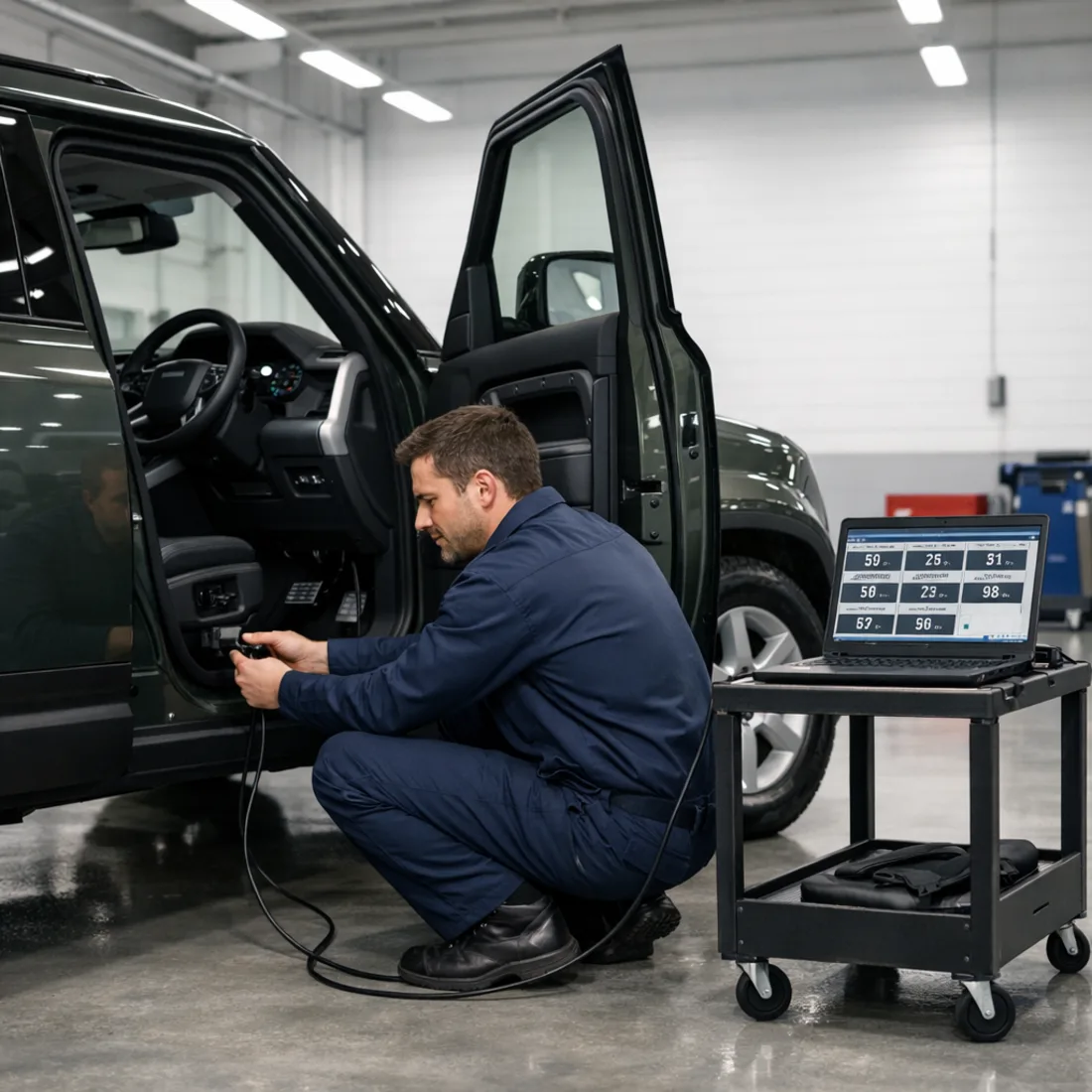
Across every generation of Defender we work on, the single biggest difference between a correct diagnosis and a parts swapping exercise is the tooling. Generic OBD readers will pull basic engine fault codes on any of these, but that is maybe twenty percent of what is actually stored in the vehicle. The remaining modules, the air suspension ECU, the transfer case, the body control modules, the 48V system on the 3.0 D200, will not give you their data without proper factory software.
For the TD4 we run Land Rover SDD with the correct JLR interface. For both L663 D200 variants we use SDD and Pathfinder. Pathfinder is Land Rover's current factory platform and it handles the newer module architectures, guided diagnostic routines, and the calibrations required after component replacement. Without it, replacing a sensor or module and then finding the car still does not behave correctly is a common and frustrating outcome.
Our auto electrical work on these vehicles goes well beyond fault code reading. Wiring diagnosis, module replacement and coding, sensor calibration and system configuration all fall within what we do on the Defender platform. When a warning light comes on, we trace it to the actual cause rather than clearing it and returning the vehicle.
Stage 1 Tuning for the Defender TD4 and D200
On the tuning side, the TD4 offers the biggest percentage gain at Stage 1, 33 hp and 60 Nm on top of a 122 hp base, and the improvement to towing and off road pulling is very noticeable. The L663 D200 2.0 Stage 1 adds 25 hp and 50 Nm to a platform that already drives well, and the real improvement is in throttle sharpness and mid range torque. Stage 1 tuning is also available for the 3.0 D200. Either way, a proper ECU tune done with the right tools on a healthy engine is very different from a map pushed onto a car with underlying faults.
Stage 1 tuning for the TD4 takes it from 122 hp and 360 Nm to 155 hp and 420 Nm. That is a gain of 33 hp and 60 Nm, which makes a noticeable difference on a truck that spends time towing. We also offer EGR off calibration and DTC removal as part of our tuning work for this generation. The key is doing it correctly on an engine that is in good shape.
A Stage 1 tune for the D200 2.0 takes output to 225 hp and 480 Nm, gains of 25 hp and 50 Nm. The sharpened throttle response and extra torque transform the driving experience without changing anything that affects reliability when done correctly. Related work available includes EGR off, DPF off and DTC removal.
Stage 1 tuning is available for the 3.0 D200 straight six. EGR off and DPF off calibrations are also options we can discuss for vehicles where the emissions hardware has failed and replacement is the alternative. Contact us to discuss the best approach for your specific vehicle.
A Stage 1 tune on a Defender with deferred servicing, an underlying fault or a worn injector is not a good idea. On a properly maintained example the gains are real and reliable. We also offer file service for workshops needing a calibration for the TD4 or D200 ECUs.
Frequently Asked Questions
The questions we get most. Something else on your mind? Get in touch.