Range Rover Sport: 2.7 TDV6, 3.0 TDV6 and 2.0 Si4
The Range Rover Sport has always sold a compelling story: serious off road pedigree wrapped in a body that looks at home outside a city restaurant. But across three distinct powertrain generations, from the 2.7 TDV6 that launched the nameplate to the turbocharged 2.0 Si4 Ingenium that replaced both of them, the engineering underneath has changed enormously. What hasn't changed is that each one develops its own patterns of wear, its own known faults, and its own quirks that reward owners who stay on top of them, and punish those who don't.



Range Rover Sport 2.7 TDV6: Where the Story Begins
The 2.7 TDV6, built around the 267DT engine code, is the generation that put the Range Rover Sport on the map as a genuinely usable everyday vehicle in New Zealand. Two point seven litres, 2720 cc to be exact, with a bore of 81.0 mm, a stroke of 88.0 mm and a compression ratio of 18.0:1. Factory figures sit at 190 hp and 440 Nm of torque, which feels modest on paper but delivers the kind of low end pull that makes towing and motorway cruising feel effortless. The ECU is a Siemens/Continental SID201 or SID204 depending on the variant.
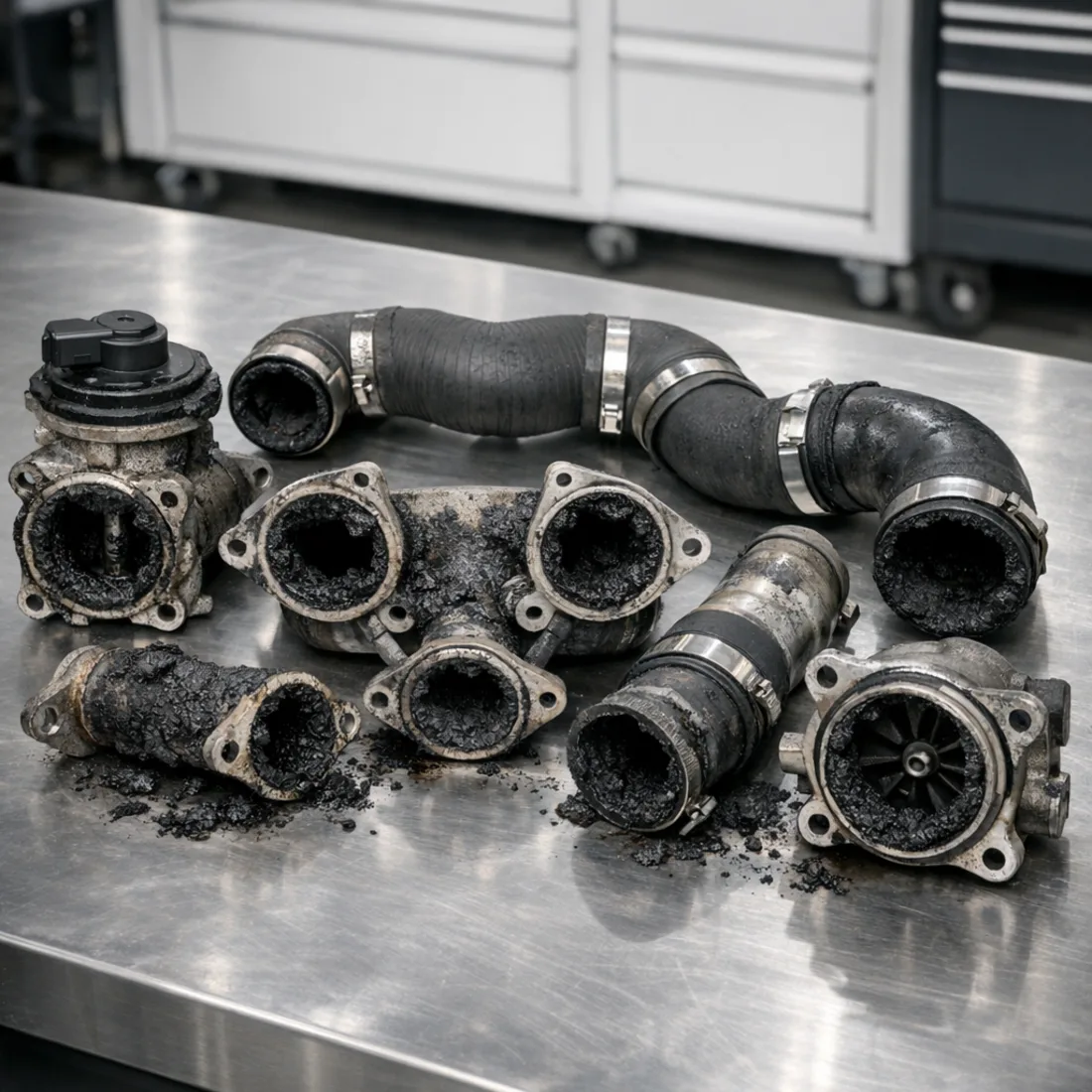
Here's the honest version though: this engine is old now, and the ones we see in our workshop carry the marks of that age. Timing chains and their tensioners are the first thing to check. Chain stretch and tensioner wear show up as a cold start rattle, and if that's been ignored across oil change intervals, you're looking at a more serious job. The EGR system gets heavily sooted over time, particularly on cars that have spent their lives doing short city runs rather than open road kilometres. That soot finds its way into the intake, causes smoke on throttle, and can push the vehicle into limp mode without warning.
The air suspension is the other headline. These Range Rovers were fitted with air bags and an air compressor, and both age. Sagging on one corner, slow self levelling and a compressor that runs constantly are all signs the system needs attention. We replace compressors and bags with genuine new components, not shortcuts.
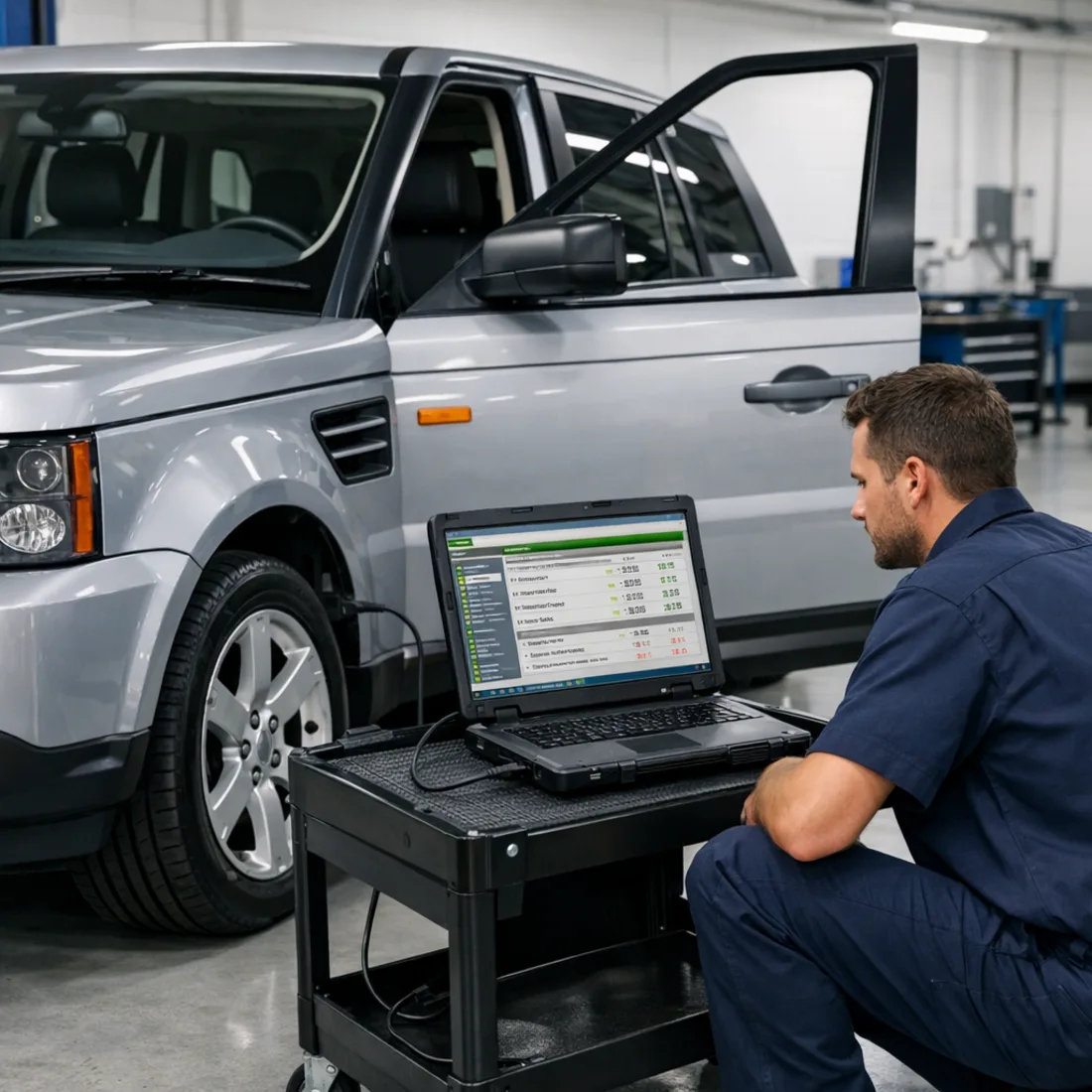
Diagnostics on the 2.7 TDV6 require proper factory tooling. We use the Land Rover SDD and Pathfinder platforms with a genuine JLR interface. A generic scanner will read basic fault codes but won't communicate with the full module network or allow correct coding of replacement parts. That matters on a vehicle this complex.
-
Timing chain and tensioner stretch, especially on high mileage or poorly serviced examples
-
EGR system carbon buildup causing smoke, limp mode and rough running
-
Turbocharger sooting and reduced boost
-
Crankcase breather and oil cooler leaks
-
Injector seal weeping on higher mileage fuel systems
-
Air suspension sagging, compressor faults and air leaks
Chain stretch and tensioner wear show up as a cold start rattle, and if that's been ignored across oil change intervals, you're looking at a more serious job.
The EGR system gets heavily sooted on short city runs and can push the vehicle into limp mode without warning.
For tuning, the SID201 and SID204 ECUs respond well. A Stage 1 remap on the 2.7 TDV6 lifts output to 240 hp and 520 Nm, gains of 50 hp and 80 Nm over factory. That's a meaningful improvement in everyday driveability, particularly if you're towing.
Get your Land Rover SPORT generations booked in with a specialist.
Range Rover Sport 3.0 TDV6: More Power, Same DNA
The 3.0 TDV6 is what Land Rover built when they wanted more of everything the 2.7 offered. Displacement climbed to 2993 cc, bore opened to 84.0 mm, stroke extended to 90.0 mm, and compression stayed high at 16.1:1. The result was 258 hp and 600 Nm of torque from the factory. The ECU is a Bosch EDC17CP55, a far more capable unit than the Siemens setup in the 2.7, and the whole engine felt like a genuine step forward when it arrived.
And in many ways it was. But the 3.0 TDV6 didn't magically fix every problem, it just rearranged them. The timing chain arrangement is the one that catches owners off guard most often. On this V6, the chains sit at the rear of the block. On a front engined car, that means the engine effectively has to come out or be heavily displaced to access them. A timing chain rattle on cold start is never a cheap fix, but on the 3.0 TDV6 it's a particularly significant job. Listen very carefully on a cold morning before buying one of these.
The internal oil pump belt is the item we find most commonly overlooked. It lives inside the sump and drives the oil pump. There's no external indicator that it's wearing, and many owners have never heard of it. If it fails, the engine loses oil pressure and the damage is serious. We include this in our service interval checks and replace it on schedule.
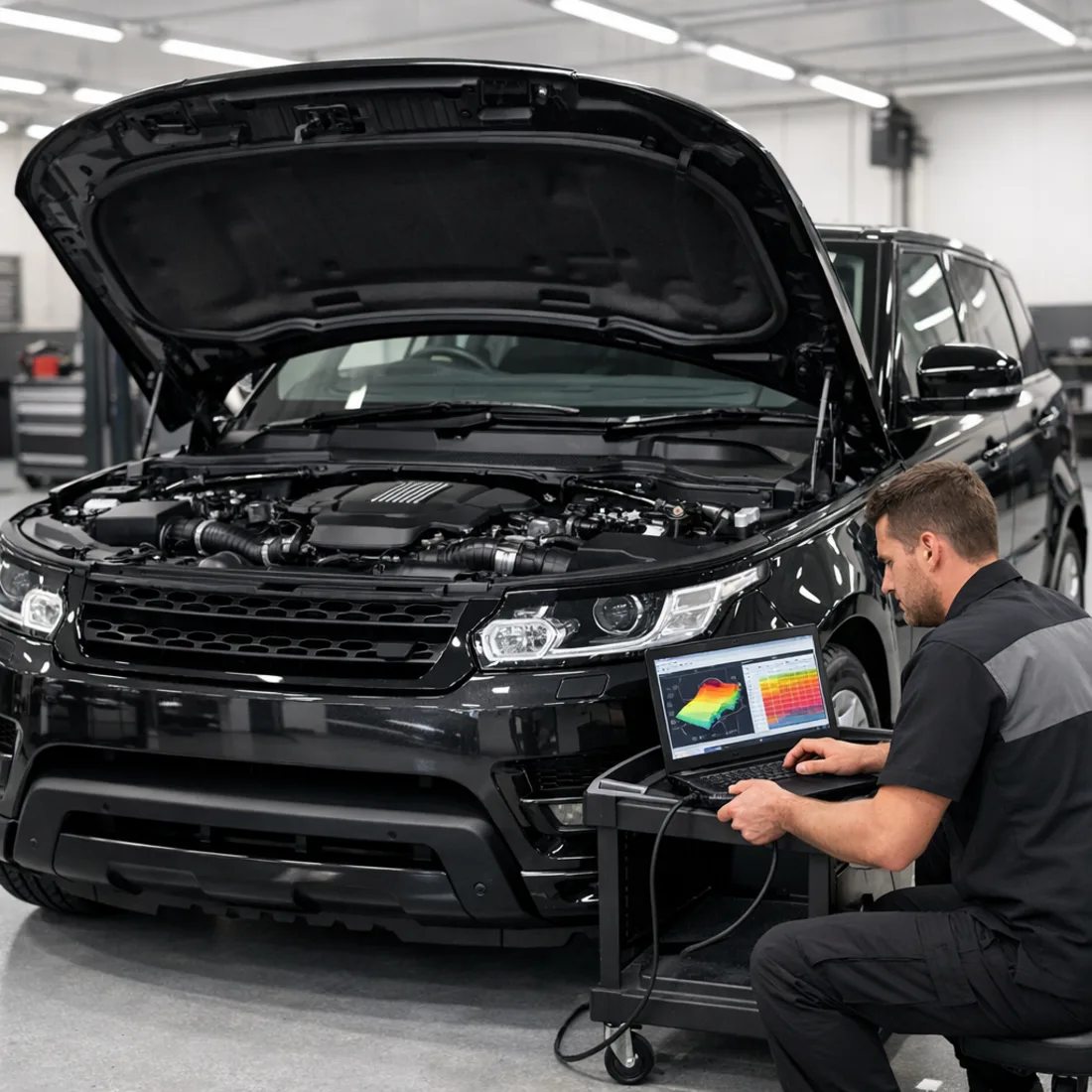
The Bosch EDC17CP55 ECU is well supported by our factory diagnostic setup. SDD and Pathfinder read the full module network on these, including the air suspension ECU, the terrain response system, and all body modules. That matters for fault tracing on a vehicle where multiple systems talk to each other constantly.
-
Rear of block timing chains with expensive access requirements
-
Crankcase breather and oil separator failures causing oil consumption and smoke
-
Turbo actuator faults causing limp mode and reduced boost
-
EGR cooler failures and sooting on short trip vehicles
-
Internal oil pump drive belt, a critical and often missed service item
-
DPF blockage on vehicles running urban duty cycles
-
AdBlue and NOx sensor faults on later emissions setups
On this V6, the chains sit at the rear of the block. A timing chain rattle on cold start is never a cheap fix, but on the 3.0 TDV6 it's a particularly significant job.
The internal oil pump belt lives inside the sump and drives the oil pump. If it fails, the engine loses oil pressure and the damage is serious.
Stage 1 tuning on the 3.0 TDV6 takes output to 300 hp and 650 Nm, gains of 42 hp and 50 Nm. If you're running this engine in good health, the tune sharpens throttle response and makes the torque curve noticeably flatter through the mid range.
Range Rover Sport 2.0 Si4: The Ingenium Engine Changes Everything
The 2.0 Si4 is the most polarising Range Rover Sport of the three. It carries the PT204 Ingenium engine code, it's petrol not diesel, and it displaces just 1997 cc. Bore is 83.0 mm, stroke is 92.0 mm, compression is 10.5:1. The output is genuinely impressive: 300 hp and 400 Nm from a two litre four cylinder. If you'd said that in the era of the 2.7 TDV6, people would have laughed. The PT204 is modern, sophisticated engineering.
The trade off is that modern sophisticated engineering has its own failure modes. The timing chain on early Ingenium engines can stretch and produce a cold start rattle, an immediate concern flag on any inspection. Some Ingenium variants also run a wet timing belt in addition to the chain, and that requires its own service attention on a defined schedule. Don't skip it.
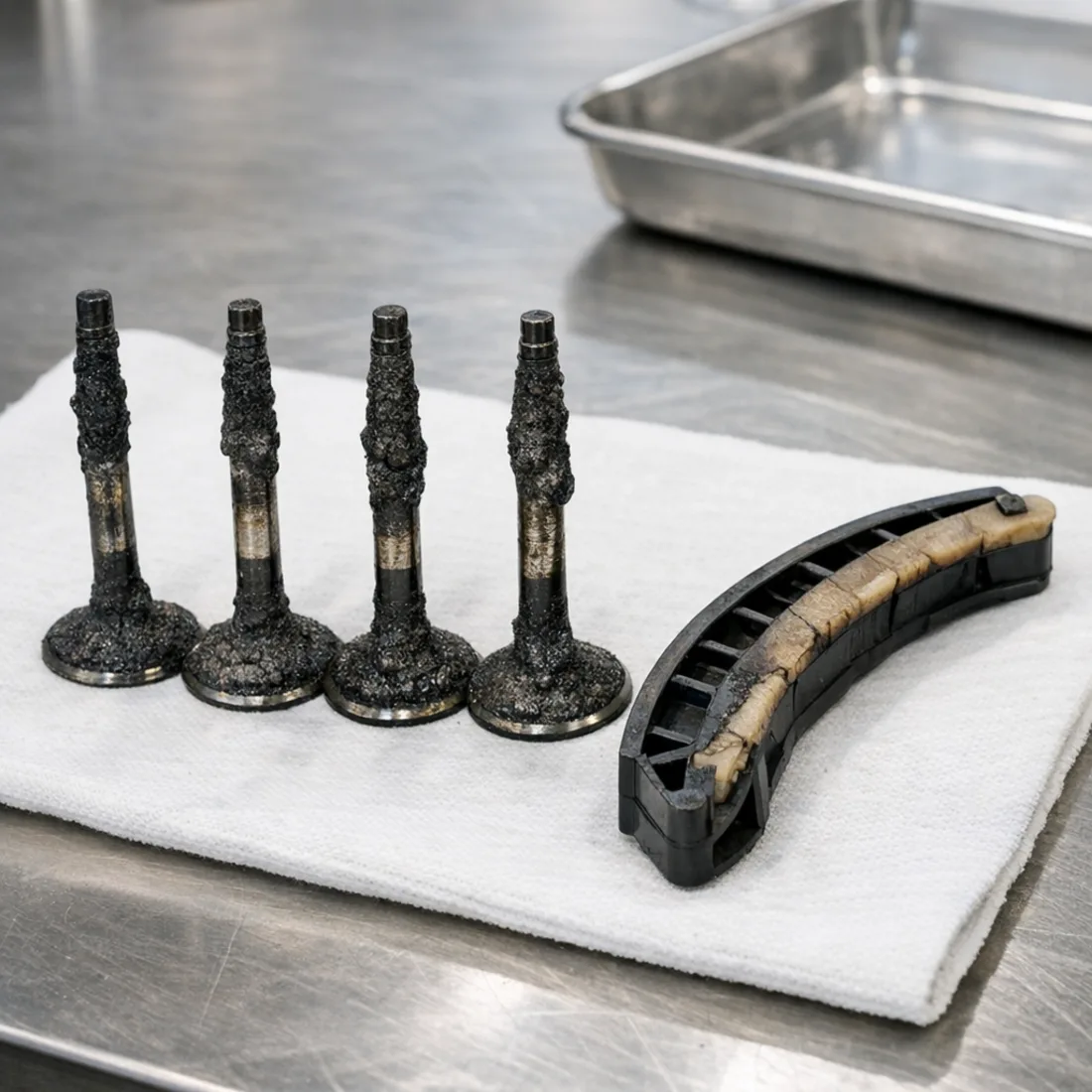
Carbon buildup on the intake valves is the other recurring theme we see in the workshop. Because the PT204 is a direct injection engine, fuel doesn't wash over the intake valves the way it does in a port injection setup. Oil vapour from the crankcase coats them instead, and over time the deposits restrict airflow, cause a rough idle and produce misfires. The fix is an intake decarbonising service, and we use proper equipment to do it properly.
The good news is that the Si4 responds well to attention. Diagnose it with the JLR Pathfinder platform, use genuine parts on the fixes, keep up with the service intervals, and it's a very capable engine.
This generation also brings a more complex electronic architecture than the earlier TDV6 models. The terrain response, air suspension, active rear locking and driver assistance systems all communicate across a broader module network, and reading any of it properly means using the factory Pathfinder setup with a genuine JLR interface, not a third party scanner that only scratches the surface.
-
Timing chain stretch and cold start rattle on early PT204 units
-
Intake valve carbon buildup from direct injection, causing rough idle and misfires
-
Wet timing belt requiring scheduled replacement
-
Coolant loss and oil consumption on higher mileage examples
-
Turbo actuator faults affecting boost and response
-
Coil on plug failures causing misfires
300 hp and 400 Nm from a two litre four cylinder. If you'd said that in the era of the 2.7 TDV6, people would have laughed.
Oil vapour from the crankcase coats the intake valves, and over time the deposits restrict airflow, cause a rough idle and produce misfires.
Stage 1 tuning lifts it to 320 hp and 450 Nm, modest gains of 20 hp and 50 Nm, but the improvement in low end response on an already punchy engine makes the daily drive noticeably better. Check out our power gains page to see what's possible.
Picking Between Them: Buying Advice Across the Three Generations
If you're shopping used and weighing up which generation to buy, the honest answer depends on what you want the car to do and how much mechanical complexity you're comfortable managing.
You want the most affordable entry point. Well serviced it's a genuinely enjoyable vehicle, but it's also the oldest. Budget for a timing chain inspection, EGR cleaning and an air suspension check before or immediately after purchase. If those are in reasonable shape, it's a solid buy.
You want the sweet spot for most buyers. It's more powerful, the Bosch ECU is better supported, and the engine itself is more refined than the 2.7. The rear mounted timing chain is the one thing that can turn a good deal into a very expensive one, so get a proper cold start listen and a diagnostic session before committing.
You want the most modern option. The running costs on the right example are competitive, and the Ingenium engine is genuinely impressive when it's healthy. The intake valve carbon issue is real but fixable. Check service history for evidence of timing chain and belt work, and listen for any cold start noise.
- 2.7 TDV6: most affordable, check chains, EGR and air suspension on inspection
- 3.0 TDV6: best all rounder, check rear timing chains specifically on cold start
- 2.0 Si4: most modern, check for cold start rattle and intake carbon history
- All three: air suspension is a known cost across the range, budget accordingly
- All three: service history quality matters enormously on these vehicles
Servicing Across All Three Generations
Whatever generation you're running, the service fundamentals matter. These are complex, heavy vehicles with sophisticated systems, and cutting corners on service intervals costs significantly more later than doing things properly now.
On the diesel models, oil quality is non negotiable. Both the 2.7 and 3.0 TDV6 require a low SAPS diesel grade oil, and using the wrong specification will cause DPF issues and accelerate engine wear. We use the correct grade every time. On the Si4, the same principle applies with the correct low ash petrol specification.
Across all three generations, our full vehicle servicing covers oil and filter to the correct specification for each engine, air filter, fuel filter (diesel models), cabin filter, spark plugs (Si4) or glow plugs (TDV6 models), drive belts, wipers and brake pads and rotors, coolant condition and coolant service where due, timing chain and timing belt inspection and replacement where required, air suspension compressor and bag condition check, and a full diagnostic scan across all modules at each service.
The diagnostic scan at every service is something we consider essential, not optional. These vehicles carry faults in body modules, suspension ECUs and drivetrain systems that won't trigger a dashboard warning light but will affect reliability and resale value. Catching them early is always cheaper than waiting for a symptom.
Our workshop is at Unit 26, 930 Great South Road, Penrose, Auckland 1061, and we're set up specifically for vehicles with this level of complexity.
Diagnostics and Electrical Work Across the Range
All three Range Rover Sport generations we work on are diagnosed using the factory Land Rover platform, SDD and Pathfinder, with a genuine JLR interface. That distinction matters more than it might sound. A generic OBD2 scanner reads engine fault codes. The factory tools read the full module network: the air suspension ECU, the terrain response controller, the body control module, the active exhaust, the transmission, all of it. On a vehicle where multiple systems are constantly talking to each other, that level of access is the difference between finding the actual fault and chasing symptoms.
Our auto electrical services cover the full range of electrical work these vehicles need, including sensor replacement, wiring faults, module programming and immobiliser work. Coding a replacement module correctly requires the factory platform, and we don't cut that corner.
For gearbox concerns, which show up on all three generations as the vehicles age, our team handles diagnosis and repair through our dedicated TCU and gearbox repair service. Transmission fault codes on these vehicles often look like engine issues until you dig into the TCU data properly.
Tuning Options: What Each Generation Can Do
All three generations of Range Rover Sport we work on have tuning options available, and the gains vary meaningfully between them. In every case, tuning only makes sense on an engine that's mechanically healthy. A remap on a tired engine with a stretched timing chain or blocked EGR isn't going to give you the gains, and it's not going to help the engine either. Sort the mechanical foundation first.
The SID201 and SID204 ECUs respond well to a remap. Gains of 50 hp and 80 Nm deliver a significant improvement in everyday driveability, particularly if you're towing. Related work available includes EGR OFF, DPF OFF, DTC Removal, FLAPS, Vmax and Adblue.
The Bosch EDC17CP55 Stage 1 tune sharpens throttle response and makes the torque curve noticeably flatter through the mid range. Related work available includes EGR OFF, DPF OFF and DTC Removal.
The absolute numbers are more modest on the PT204, but on an already responsive petrol engine the improvement in low end feel is worthwhile. Related work available includes DTC Removal, START/STOP OFF, DECAT and Vmax.
All tunes are written for the New Zealand market, on the correct fuel grades available here, and applied using the factory ECU communication path rather than third party hardware that can leave the calibration compromised. You can also submit your ECU file directly via our online file service.
Frequently Asked Questions
The questions we get most. Something else on your mind? Get in touch.