Velar P250, D200 and D240: Service, Repairs and Tuning in Auckland
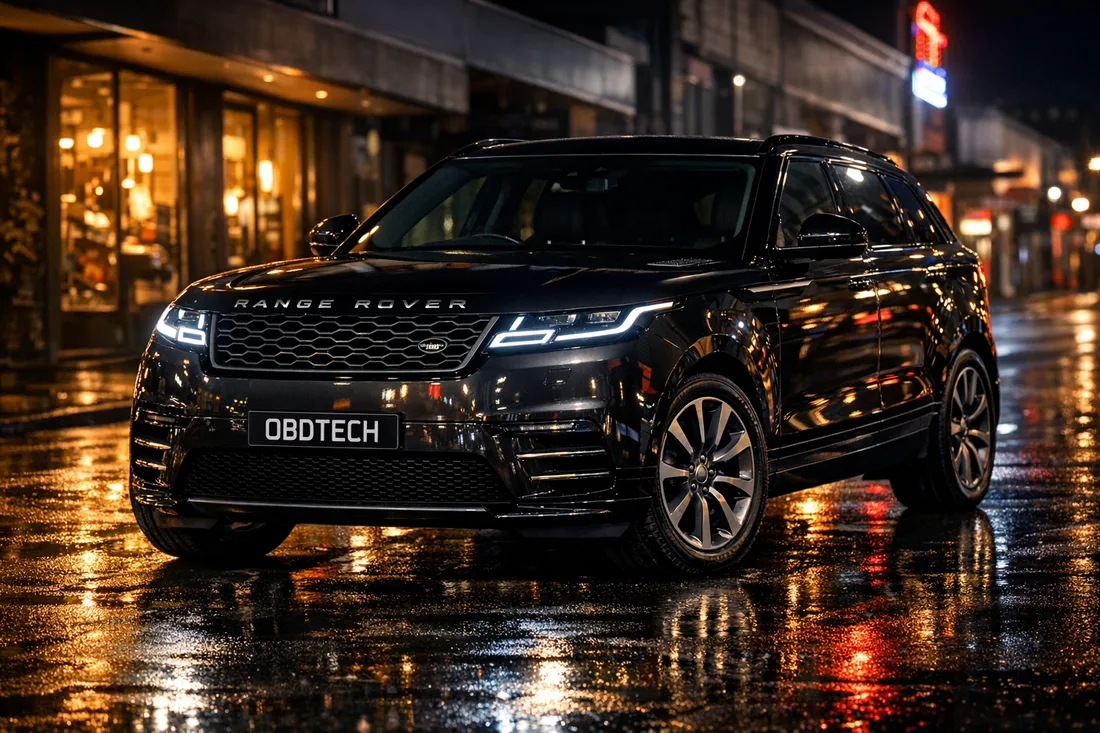
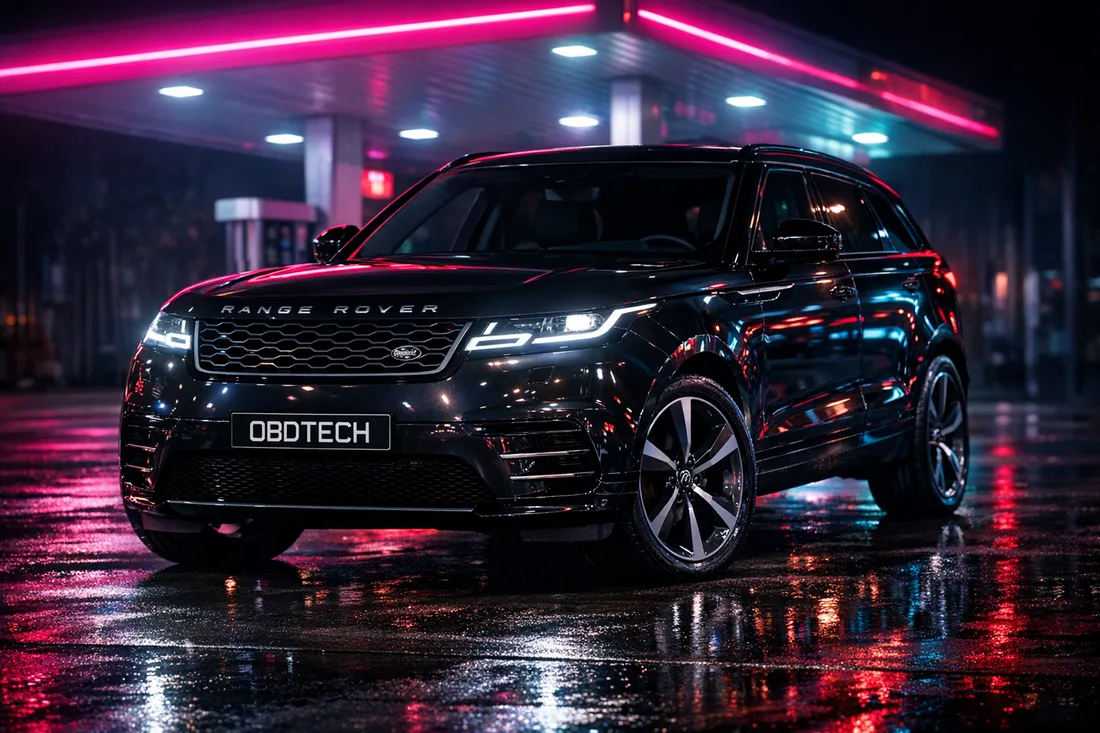
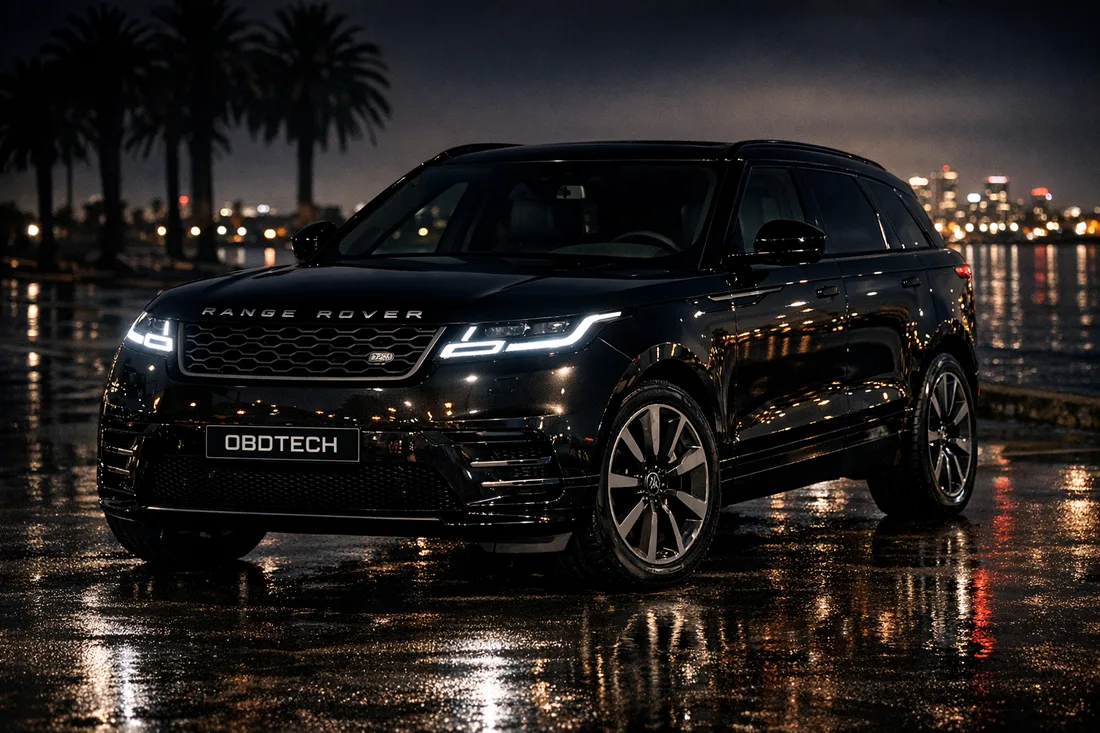
The Velar arrived looking like a concept car that somehow slipped through Land Rover's boardroom and made it onto the road. Low roofline, flush door handles, a dashboard that belongs in a design studio, and underneath all of that, three distinct drivetrains each with their own character and their own gremlins. The P250 petrol, the D200 mild hybrid diesel and the twin turbo D240 diesel share a platform and a family of Ingenium engines, which means they share some common weak points too. Knowing which variant you have, and what it tends to do at certain mileages, is half the battle.
Velar P250 2.0T: The Petrol Sweet Spot
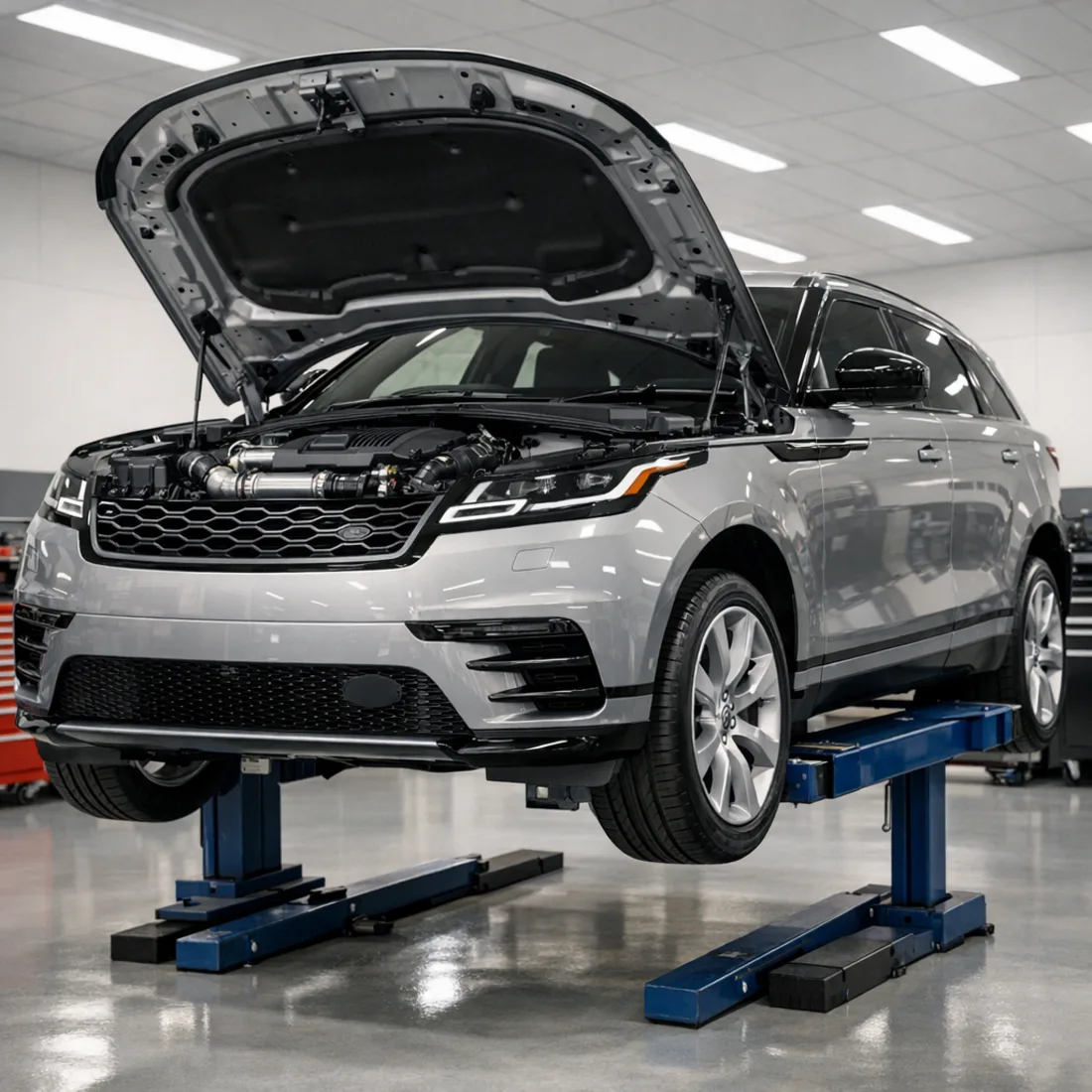
The P250 runs the 2.0-litre turbocharged Ingenium petrol four producing 250 hp. It's the most accessible Velar in terms of purchase price, and it's genuinely quick and refined enough to justify itself every day. It also turns up on our hoist regularly once the kilometres start stacking up, because the Ingenium petrol has a set of known habits you want to stay ahead of.
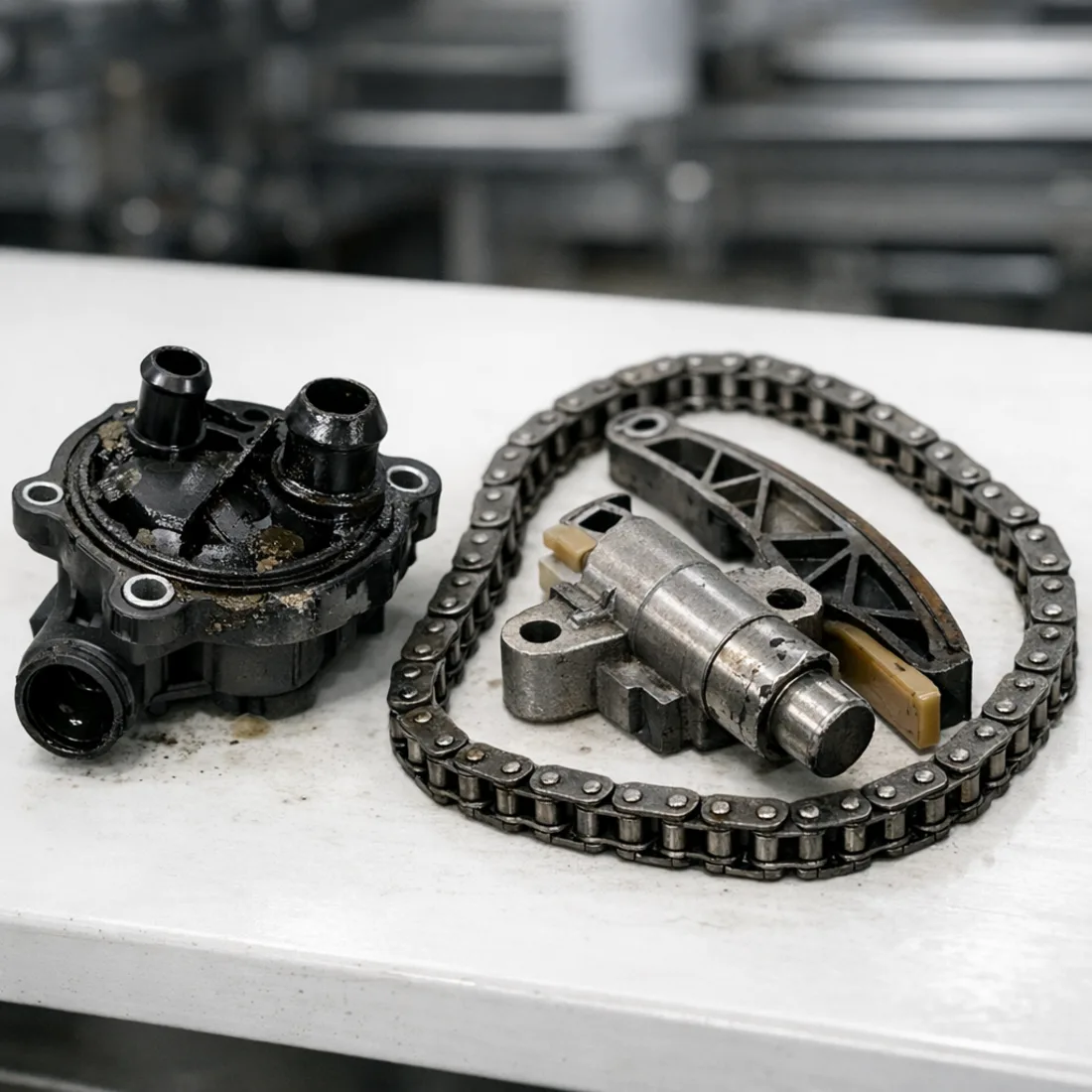
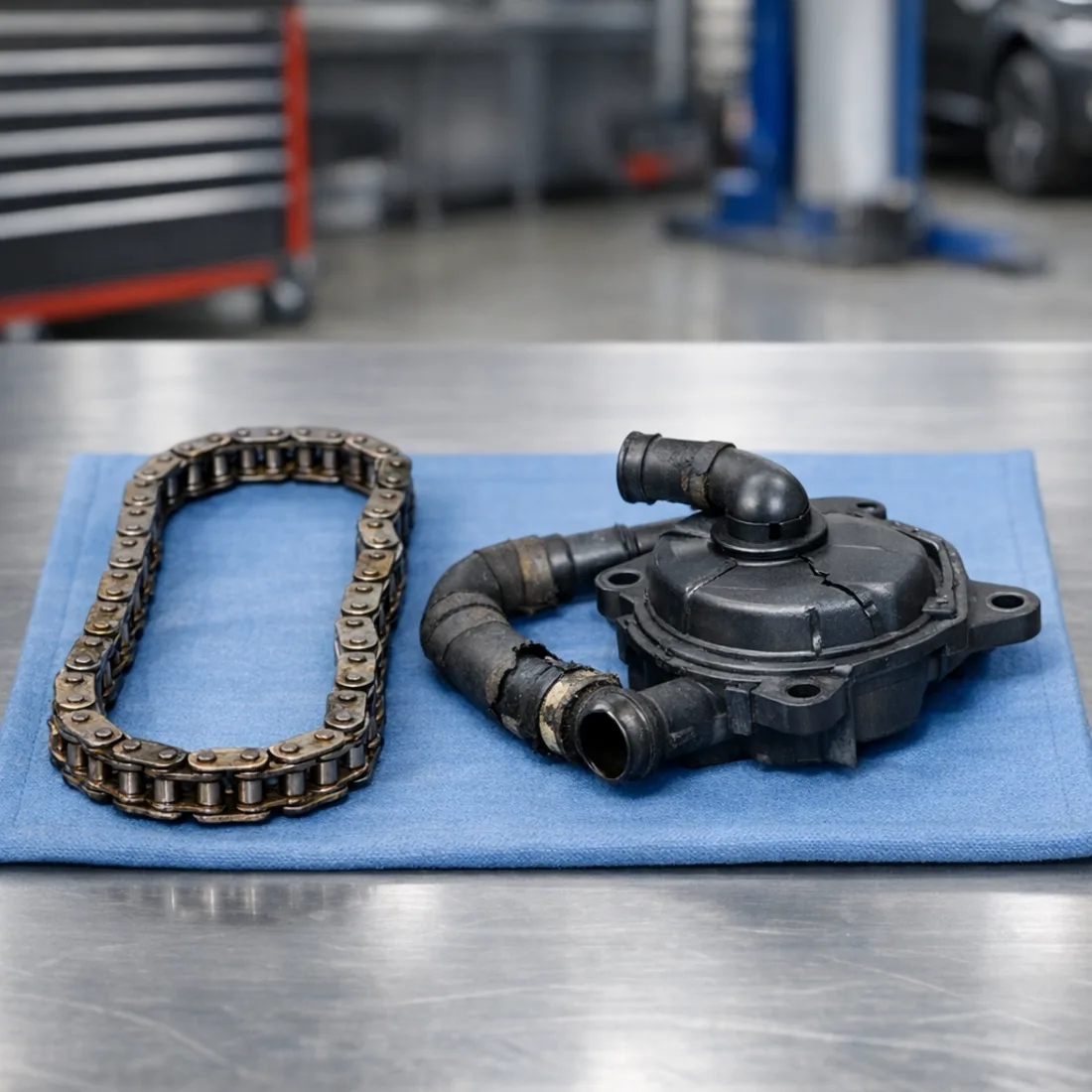
Timing chain wear is the one that catches people off guard. On higher mileage P250s, listen for a rattle on cold start. That's the chain and tensioner telling you it's time. Leave it and you're looking at a much bigger repair bill. The direct injection layout also means carbon builds up on the intake valves over time, something a port injection engine wouldn't suffer. It's gradual, but by the time it's causing misfires and rough idle, the valves need a proper clean rather than a quick flush.
The PCV system is another one. When the crankcase breather valve starts failing, you get oil mist pushed through the intake and oily deposits building up where they shouldn't be. Turbo actuator faults follow a similar pattern, showing up as boost inconsistency and a check engine light that a generic scanner won't fully decode. We use the factory Land Rover SDD and Pathfinder platforms with an approved JLR interface, which means we can read the data those actuator faults are actually generating rather than guessing from a generic code.
The infotainment and electrical side of the Velar is sophisticated, and that sophistication has a price. Software gremlins, module resets and coding work come up regularly. It's worth having a proper software health check done alongside any service, especially on cars that have had battery replacements or module swaps without the correct coding follow up.
-
Timing chain rattle and tensioner wear on higher mileage engines
-
Carbon build up on intake valves from the direct injection setup
-
PCV and turbo actuator faults causing boost and oil consumption issues
-
Coolant loss from plastic coolant pipework and fittings
-
Electrical gremlins and infotainment software glitches
Timing chain wear is the one that catches people off guard.
On higher mileage P250s, listen for a rattle on cold start. That's the chain and tensioner telling you it's time.
Stage 1 tuning is available on the P250 for owners who want more from the 2.0T. The Ingenium petrol responds well, and it's a good option if you want sharper throttle response and stronger mid range pull without changing anything physical.
Routine servicing on the P250 covers oil and filter with the correct low SAPS petrol grade, air filter, cabin filter, spark plugs, drive belts, wipers, brake pads and rotors, and suspension components including air suspension where fitted. Cooling system repairs, sensors and any electrical or coding work are all things we handle in house.
Get your Velar booked in with a proper Land Rover specialist.
Velar D200 2.0D: The Diesel Daily Driver
The D200 is the 2.0-litre Ingenium diesel producing 204 hp. Later builds come with a 48V mild hybrid system, which adds a layer of sophistication and, when something goes wrong, a layer of diagnostic complexity. If you're looking at a used D200, it's worth knowing which build you have and having the 48V system health checked properly, not just assumed to be fine.
The Ingenium diesel engine family shares most of its core weak points with the P250 petrol, just in a diesel context. Timing chain wear is the headline concern. Oil dilution is a real problem on D200s that spend most of their life on short Auckland runs, because the engine never gets hot enough long enough to boil off the fuel that seeps past the injectors into the sump. Short run diesels age faster than their mileage suggests.
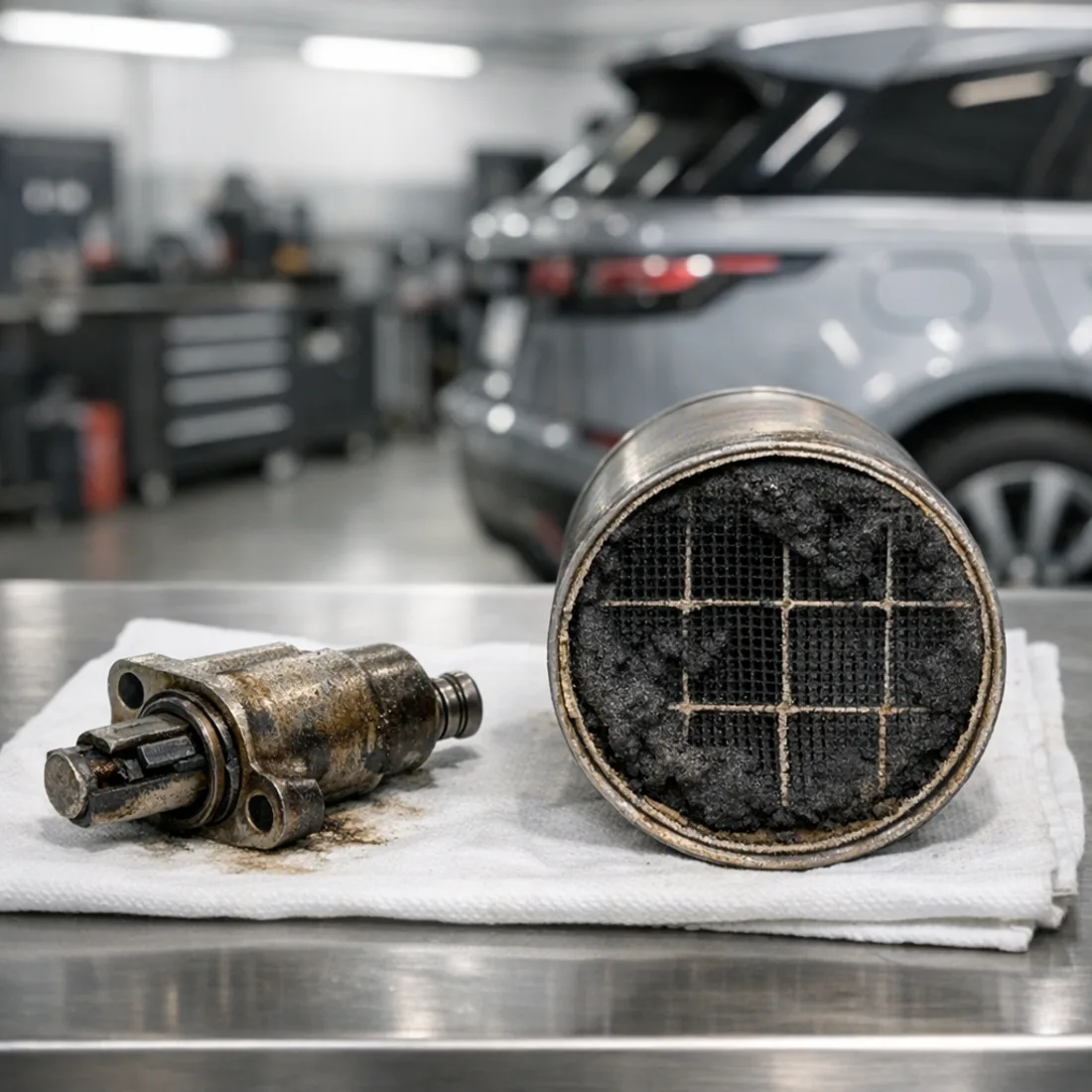
The EGR and DPF on the D200 are sensitive to driving patterns. A car that mostly does school runs and supermarket trips will have a DPF that struggles to regenerate properly, leading to a blocked filter and an engine that eventually goes into limp mode. EGR clogging follows a similar trajectory. We handle DPF and EGR cleaning and repairs on these engines, diagnosing the root cause before throwing parts at it.
AdBlue faults are another recurring theme on the D200. Crystallisation in the injector or dosing system, NOx sensor failures and system warnings that won't clear without proper coding all come through our workshop. Again, the factory JLR tooling is what separates a proper fix from a reset that leaves the underlying issue in place.
Compared to the P250, the D200 is a stronger long haul proposition. The torque is there from low revs and motorway cruising suits it well. But it demands more attentive maintenance than the petrol, and it really needs genuine low SAPS diesel oil changed on schedule.
-
Timing chain and tensioner wear, especially on urban cycle cars
-
Oil dilution from frequent short trips
-
Turbo actuator faults and boost irregularity
-
EGR and DPF clogging on town driven examples
-
AdBlue injection faults and crystallisation issues
-
48V mild hybrid system faults on later builds
Short run diesels age faster than their mileage suggests.
Oil dilution is a real problem on D200s that spend most of their life on short Auckland runs.
Stage 1 tuning is available for D200 owners who want more torque and better drivability without stepping up to the D240.
Routine servicing on the D200 adds fuel filter, glow plugs, AdBlue top up and system check, and a DPF health assessment to the standard service list. On cars with a history of mostly urban use, we check oil dilution at every service because it shortens engine life if it goes unnoticed.
Velar D240 2.0D: The Twin Turbo Flagship Diesel
The D240 is the twin turbo version of the same 2.0-litre Ingenium diesel, badged internally as the 204DTA. At 240 hp and 500 Nm from 1999 cc, it's a genuinely impressive number for a four cylinder, and the performance backs it up. The ECU options across the D240 range include the Bosch EDC17C08, EDC17CP55 and MEDC17.9, which matters when it comes to tuning and diagnostic work because the interface requirements differ.
The D240 has more performance on tap than the D200, but it also has more stress on the same fundamental Ingenium architecture. Timing chain wear is, if anything, more of a concern here than on the D200. The chain and tensioner on the 204DTA stretch earlier than the service intervals suggest, and we've seen chains at mileages that should still be fine. The crankcase breather system is another one to watch. When the breather starts failing, it creates pressure imbalances that stress seals and push oil where it shouldn't go. Combined with turbo actuator faults from both turbos working under load, the D240 rewards proactive inspection rather than waiting for a warning light.
The DPF, EGR and AdBlue systems on the D240 are the same basic architecture as the D200, just under higher load. The NOx sensor faults in particular need proper diagnosis rather than a parts swap, because a sensor replaced without the correct calibration and coding won't perform correctly even if it's brand new. We fit genuine OEM parts and follow the full coding procedure every time.
Compared to the D200, the D240 is the right choice if performance matters and you're willing to maintain it properly. Compared to the P250 petrol, the D240 gives you far more torque and better fuel economy on mixed driving, at the cost of more emissions system complexity. If you want the most engaging Velar diesel, this is it. Just don't skip the timing chain inspection.
-
Timing chain and tensioner wear on the 204DTA, sometimes earlier than expected
-
Crankcase breather failure and associated oil and seal issues
-
Turbo actuator faults across both turbos
-
Oil dilution and coolant loss
-
DPF and EGR clogging from urban use patterns
-
AdBlue and NOx sensor faults requiring proper factory level coding to resolve
The D240 rewards proactive inspection rather than waiting for a warning light.
The chain and tensioner on the 204DTA stretch earlier than the service intervals suggest, and we've seen chains at mileages that should still be fine.
Stage 1 tuning on the D240 takes it from the stock 240 hp and 500 Nm to 260 hp and 550 Nm. That's a useful gain in the mid range where you actually feel it during overtaking and uphill pulls. The ECU mapping is done on the correct Bosch platform for whichever ECU variant your car runs, and the tune is mapped to work within the factory safety parameters.
Routine servicing on the D240 covers oil and filter with the correct low SAPS diesel grade, air filter, fuel filter and cabin filter renewal, glow plugs, drive belts, wipers, brake pads and rotors, and suspension and air suspension components where fitted.
Picking Between Them: Which Velar Makes Sense Used
If you're shopping used, the sweet spot depends entirely on what you need the car to do. All three variants share enough Ingenium DNA that the servicing and fault patterns overlap, but the differences matter. Whichever variant you're considering, a proper pre purchase inspection using JLR factory tooling is worth every cent. Generic scan tools don't see the full fault history on these cars, and there's a lot of history a motivated seller might not volunteer.
You do a lot of short urban trips. No DPF to block, no AdBlue to top up, no glow plugs. The intake valve carbon build up is manageable with the right service interval. Timing chain and PCV health checks are the main pre purchase priorities. If your driving is mostly short Auckland runs, the P250 is genuinely the better fit.
You want more torque than the P250 and better fuel economy on longer runs. You take on the full diesel maintenance list, and the mild hybrid system on later builds is worth having checked before purchase, not because it's inherently troublesome, but because an issue there adds cost and complexity.
Performance matters and you're willing to maintain it properly. The twin turbo 204DTA has noticeably more performance and the Stage 1 tuning options make it even stronger. If you're covering meaningful distance on open roads and want the most capable Velar diesel, this is it. Just go in with your eyes open about timing chain inspection and emissions system maintenance.
- Listen for cold start timing chain rattle on any variant
- Check 48V mild hybrid system health on later D200 builds
- Assess DPF condition if the car has mostly done urban Auckland driving
- Check for oil dilution on any diesel with a short trip history
- Verify correct module coding following any battery or module replacement
- Request a full fault history scan using JLR factory tooling, not a generic OBD reader
- Inspect crankcase breather and turbo actuator condition on the D240
Servicing All Three Variants
The Velar family shares a service foundation across all three variants, with the diesels adding a few extra items. Our full vehicle servicing covers everything from oil and filter through to the less obvious items that often get skipped at cheaper workshops.
For the P250 petrol, every service includes the correct low SAPS petrol grade oil, air filter, cabin filter, spark plugs at the right interval, drive belts, wipers and a full check of the coolant system. We inspect the PCV system, check timing chain tension where accessible, and do a software health scan.
For the D200 and D240 diesels, the service list adds fuel filter, glow plugs, AdBlue top up and system check, and a DPF health assessment. On cars coming in with a history of mostly urban use, we check oil dilution at every service because it's a real issue on these engines and it shortens engine life if it goes unnoticed.
Brake servicing is part of the picture too. The Velar runs larger brakes appropriate to its weight, and worn pads left too long lead to rotor damage that costs significantly more to fix than a timely pad replacement. We fit genuine OEM parts only, no budget replacements that compromise the system.
Air suspension, where fitted across all three variants, is another area that needs the right tools to diagnose and calibrate properly. Height sensor faults, compressor wear and air line issues all show up on these cars at higher mileage.
How We Diagnose These Cars
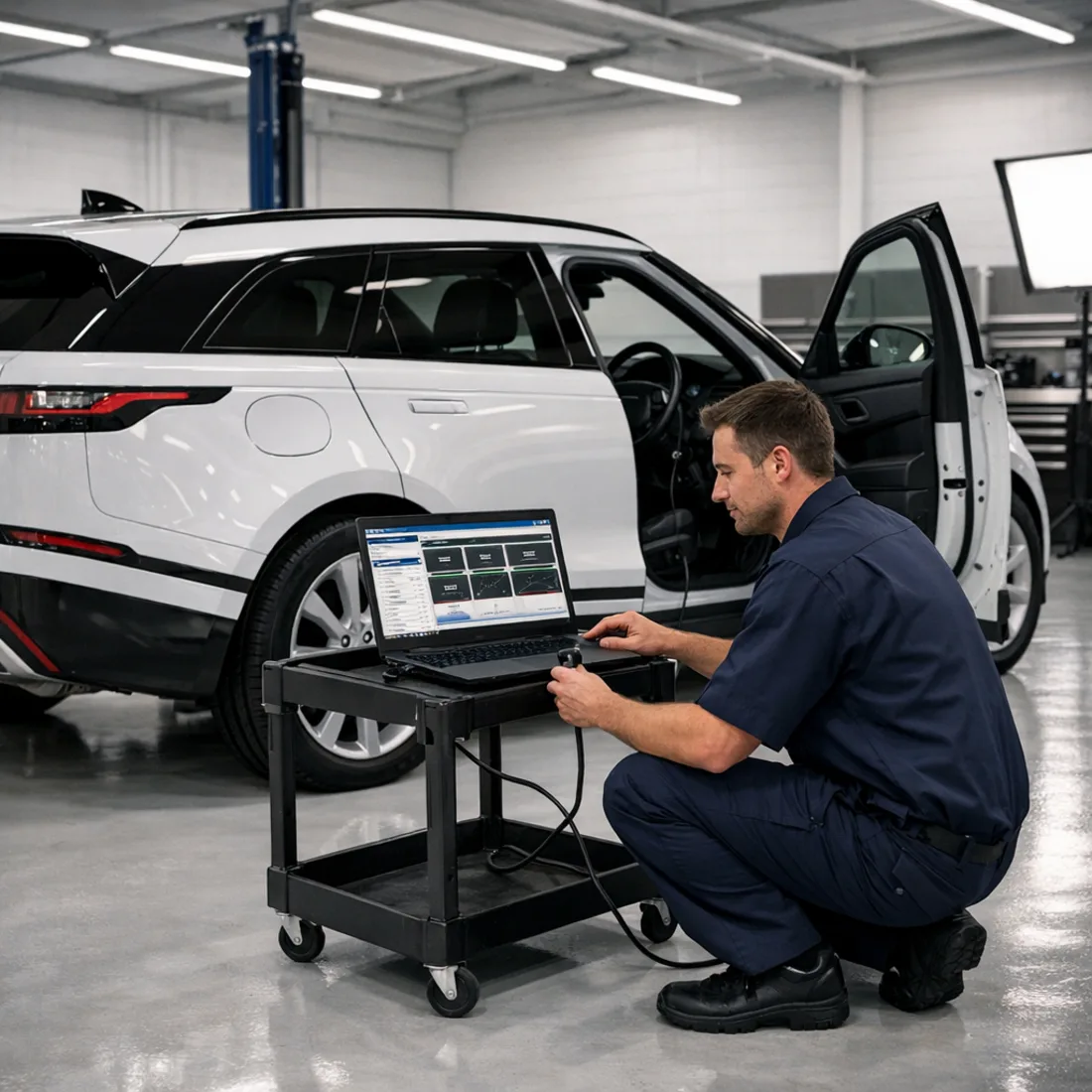
All three Velar variants, the P250, D200 and D240, need the factory Land Rover diagnostic platforms to be diagnosed properly. We use SDD and Pathfinder with an approved JLR interface, not a generic OBD tool. The difference matters more than people realise.
Generic scanners will pull basic fault codes off these cars, but they won't see the full fault history, won't run the live data streams that let you watch turbo actuator behaviour or monitor chain timing offset in real time, and won't execute the module programming and coding functions that many repairs on these cars require. A fault code on a Velar is often the start of the diagnostic process, not the end of it.
For the D240 in particular, with its Bosch EDC17 ECU family, correct identification of which ECU variant the car is running affects both the diagnostic approach and any tuning work. The three ECU options across the D240 range aren't interchangeable in terms of interface and calibration files, and getting that wrong is costly.
Programming, coding and module replacement work is handled by our auto electrical team. Whether it's a replacement ECU needing VIN alignment, a battery replacement requiring coding, or an infotainment module update that's resolved a P250 software glitch, the programming and coding is done with the correct factory tooling every time.
Tuning the Velar Family
Stage 1 tuning is available on all three variants. The P250 petrol and the D200 diesel both respond well to a remap, delivering stronger mid range pull and better throttle response without any hardware changes. The D240 is the standout option: starting from 240 hp and 500 Nm, a Stage 1 tune brings it to 260 hp and 550 Nm. That extra 50 Nm is exactly where you feel it on the road, in the mid range on motorway overtakes and in the torque delivery from low revs in town.
The Ingenium petrol responds well to a Stage 1 remap, delivering sharper throttle response and stronger mid range pull without any hardware changes.
Stage 1 tuning on the D200 delivers more torque and better drivability, a strong option for owners who want more without stepping up to the D240.
Tuning on the D240 is done to the correct ECU variant for your specific car, whether that's the Bosch EDC17C08, EDC17CP55 or MEDC17.9. The file is written to work within the factory engine's safe operating parameters and maintains all the standard engine protections. No shortcuts.
For owners specifically interested in what's achievable across the power range, our tuning team can walk you through the options for your variant before anything gets booked. See our full ECU file service for more detail on what's involved.
Frequently Asked Questions
The questions we get most. Something else on your mind? Get in touch.