Range Rover Sport L494: Every Engine, Every Fault, One Workshop
The L494 Range Rover Sport arrived in New Zealand as one of the more convincing large performance SUVs on the market, and over its production life it came with a genuinely diverse engine lineup. You could get a turbocharged 2.0 petrol four, a supercharged 3.0 petrol V6, or one of three distinct 3.0 SDV6 diesel tunes ranging from 249 to 306 horsepower. Each engine has its own character, its own strengths, and its own well documented weak spots. This page covers all of them, honestly, based on what we see in the workshop rather than what the brochure said.




2.0 Si4 300hp: The Engine Nobody Expects
Pull up next to someone in a Sport and tell them it's a 2.0 four cylinder producing 300 horsepower and 400 Nm, and they'll probably look at you sideways. The PT204 Ingenium petrol is that convincing. Bosch MED17.9.9 runs the show, compression sits at 10.5:1, and with a bore of 83mm and stroke of 92mm it's a fairly long stroke unit tuned for usable torque rather than outright revs. On paper and on the road, it does exactly what Land Rover promised.
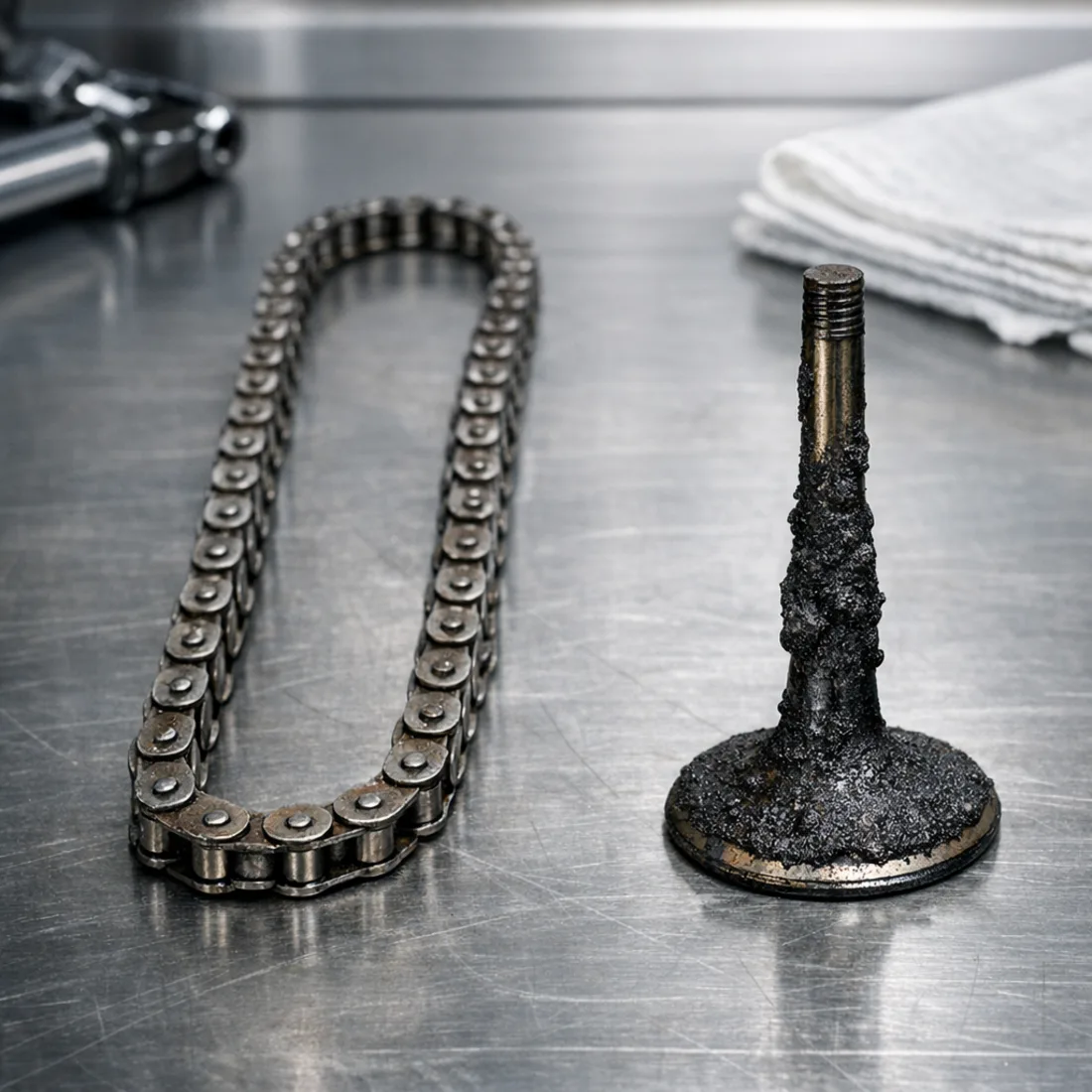
In the workshop, though, a different story starts to emerge once the kilometres stack up. Direct injection means the intake valves never see fuel wash, so carbon builds up on the backs of the valves and eventually causes rough running and misfires. This isn't unique to Land Rover, it's a known trait of GDI engines generally, but the PT204 can be particularly stubborn once the deposits are established. Walnut blasting or a proper chemical clean is the fix, not a bottle of injector cleaner.
The timing chain is the one to take seriously. Listen for a brief rattle on a cold start, especially when it's been sitting overnight. If you catch chain stretch early the tensioner and chain replacement is manageable. Leave it, and you're looking at a much bigger job. This is also one of those engines where a generic scan tool will only tell you half the story. We run the factory Land Rover platforms, SDD and Pathfinder, which means we can read all modules, perform proper calibrations, and code replacement parts correctly rather than just clearing codes and hoping.
If you're coming from the older SDV6 diesels in this page, the Si4 is the cleaner, simpler daily driver. No DPF to manage, no AdBlue to top up, no EGR soot to deal with. The trade off is you're watching for timing chain health and intake valve carbon instead. Neither engine is trouble free, they just have different conversations with the workshop.
-
Timing chain rattle on cold start, chain stretch on higher mileage examples
-
Carbon fouling on intake valves causing misfires and rough idle
-
Coolant loss from thermostat housing weeps and water pump
-
Turbo actuator and boost control faults triggering limp mode
-
Coil pack and spark plug wear causing intermittent misfires
The timing chain is the one to take seriously.
If you catch chain stretch early the tensioner and chain replacement is manageable. Leave it, and you're looking at a much bigger job.
Routine servicing on the PT204 means the correct Ingenium spec oil and filter, air filter, cabin filter, spark plugs, drive belt, brake pads and rotors, and periodic coolant service. Get the oil spec wrong and you're accelerating wear on an engine that's already working hard for its displacement. We fit genuine and OEM spec parts throughout.
For those who want more, the PT204 responds well to a Stage 1 tune: 320hp and 450 Nm from the stock 300hp and 400 Nm. That's a 20hp and 50 Nm gain with no hardware changes, just proper calibration of the Bosch MED17.9.9. We also offer DTC removal, Start/Stop disable and Vmax adjustments on this platform.
Get your Range Rover Sport booked in with a proper specialist.
3.0 SDV6 249hp (30DDTX): The Entry Level Diesel That Isn't Really Entry Level
The 249hp tune of the 3.0 SDV6, coded 30DDTX, runs a Bosch EDC17C55, a slightly different ECU family to the higher output variants. Compression is 16.1:1, same bore and stroke as its siblings at 84x90mm, and it delivers 600 Nm of torque. In reality it drives very close to the 275hp car, and most owners wouldn't feel a meaningful difference in everyday use.
What they do feel eventually, if left unattended, is the cost of the SDV6's known weak spots. The crankshaft and timing chain assembly wear on higher mileage examples, and the front timing cover and oil cooler area are classic oil leak locations. We've seen cars that have been leaking quietly for a long time before the owner noticed anything wrong. By that point there's usually a good clean needed before any further diagnosis.
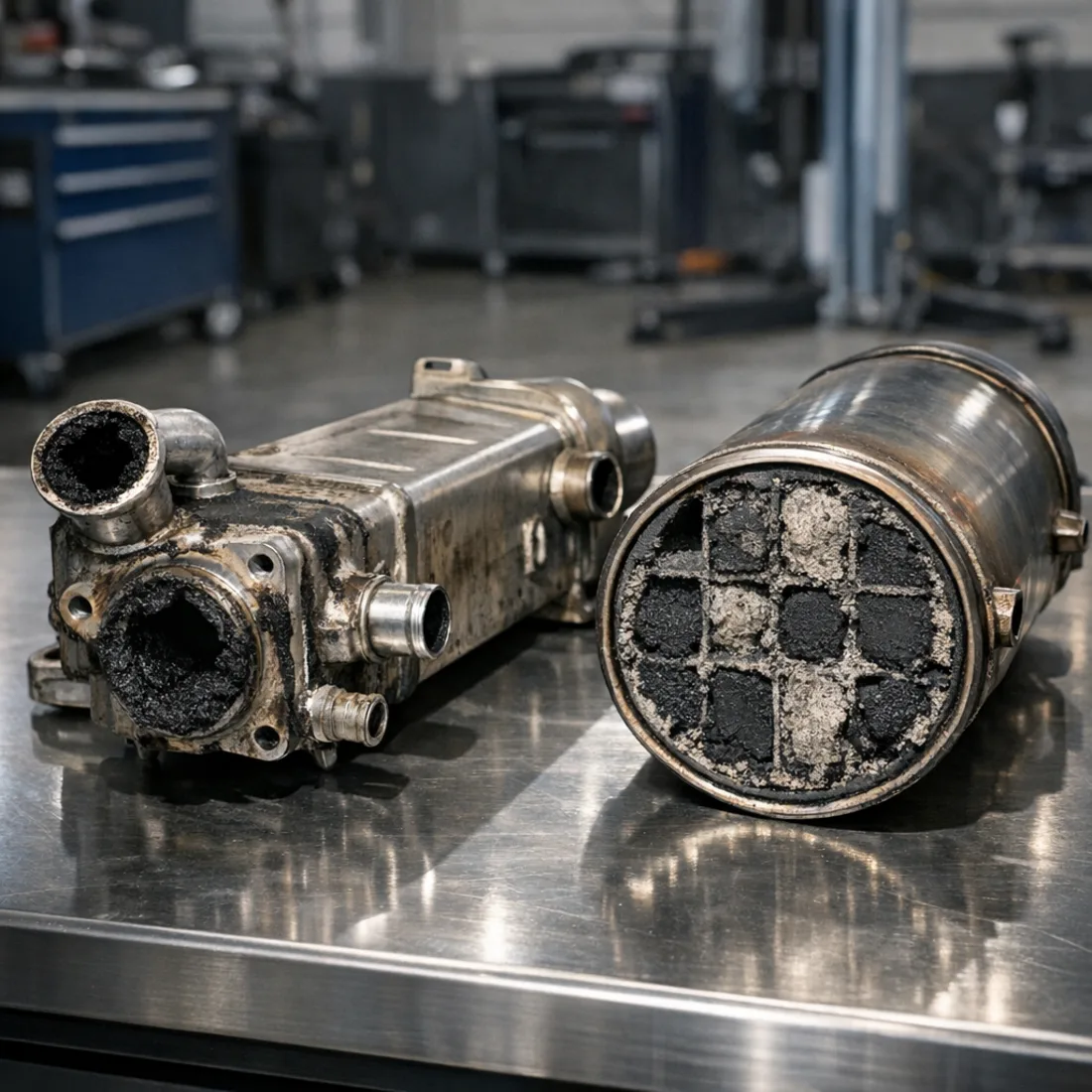
The DPF story on this engine is worth spelling out. If the car spends most of its life in Auckland city traffic, the DPF rarely gets hot enough to complete a passive regeneration. Active regens kick in but eventually the filter loads up faster than it can clean itself. The fix isn't aggressive, it's proper diagnosis of regen frequency, soot load readings from factory diagnostics, and either a forced regen or a clean depending on what the data shows. Don't let anyone skip the data and just throw parts at it.
-
Timing chain wear and front timing cover oil leaks
-
Oil cooler seeps from the front of the engine
-
Turbo actuator faults and reduced power events
-
EGR cooler clogging, especially on urban short trip cars
-
DPF regeneration failures and DPF pressure differential faults
-
AdBlue and NOx sensor faults on later emissions configurations
Don't let anyone skip the data and just throw parts at it.
Proper diagnosis of regen frequency and soot load readings from factory diagnostics is what determines the right fix.
Routine servicing: correct low SAPS diesel oil and filter, air filter, fuel filter, cabin filter, drive belts, glow plugs and glow plug control module, brake pads and rotors. The glow plug control module is one of those parts people skip and then wonder why cold starts are rough in winter.
On Stage 1 tuning, the 30DDTX has the most headroom of the three SDV6 tunes: 305hp and 675 Nm from the stock 249hp and 600 Nm is a 56hp and 75 Nm gain, which is genuinely noticeable.
3.0 SDV6 275hp: The Tri Turbo Diesel in Its Element
The 275hp SDV6 runs a Bosch EDC17CP55 and produces 625 Nm from the same 2993cc V6 architecture. Where the 249hp car uses a twin scroll arrangement, the 275hp variant's tri turbo setup is what gives the SDV6 name its reputation for effortless, broad band torque delivery. It's the version most people picture when they think L494 diesel.
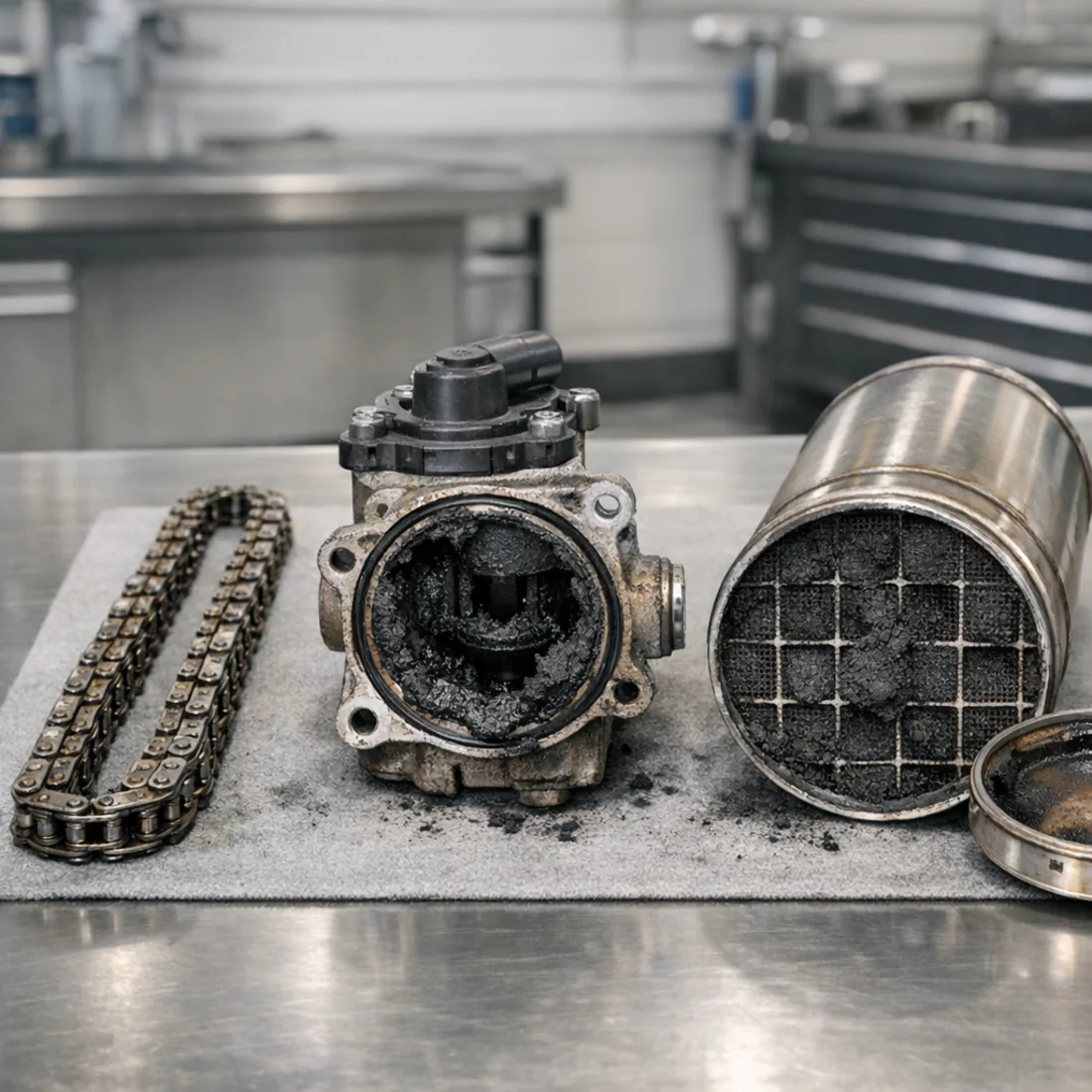
The fault pattern overlaps significantly with the 249hp car because the fundamental architecture is the same. Timing chains sit at the rear of the engine, which means when they do need attention it's a substantial undertaking. You want to catch this one early. A cold start rattle that disappears after a minute is worth investigating properly rather than ignoring. Crankcase breathers and oil coolers cause oil consumption and can mask other issues, and the EGR system on these tri turbo cars gets carboned up on urban duty cycles.
The air suspension is something we check on every L494 that comes through, regardless of engine. The compressor and air springs wear with age and Auckland's stop start traffic doesn't help. A car that sits noticeably lower at one corner overnight has a leak. We pressure test the system and identify which component is at fault before recommending any parts, rather than guessing.
Stage 1 tuning on the 275hp SDV6 takes it to 305hp and 675 Nm, a 30hp and 50 Nm gain. That extra torque is felt immediately in the mid range where these cars spend most of their time.
-
Timing chain rattle and stretch, especially rear chain on higher mileage
-
Crankcase breather and oil cooler issues causing oil consumption
-
EGR system clogging leading to rough running and fault codes
-
DPF blocking on short trip vehicles
-
Turbo actuator faults across any of the three turbo units
-
Air suspension compressor failure and air spring leaks
-
Intake swirl flap actuator faults
A cold start rattle that disappears after a minute is worth investigating properly rather than ignoring.
Timing chains sit at the rear of the engine, which means when they do need attention it's a substantial undertaking.
3.0 V6 Supercharged 340hp: The Petrol That Punches Hardest
The AJ126 supercharged 3.0 V6 is a different beast entirely. Where the SDV6 diesels pull with torque from low revs, the supercharged petrol builds pressure through the rev range and rewards driving it properly. 340 horsepower and 450 Nm from 2995cc, with the Bosch MED17.8.32 or MG1CS028 managing fuelling depending on the specific build. Compression sits at 10.5:1 and the bore/stroke is 84.5x89mm, slightly oversquare compared to the Ingenium four.
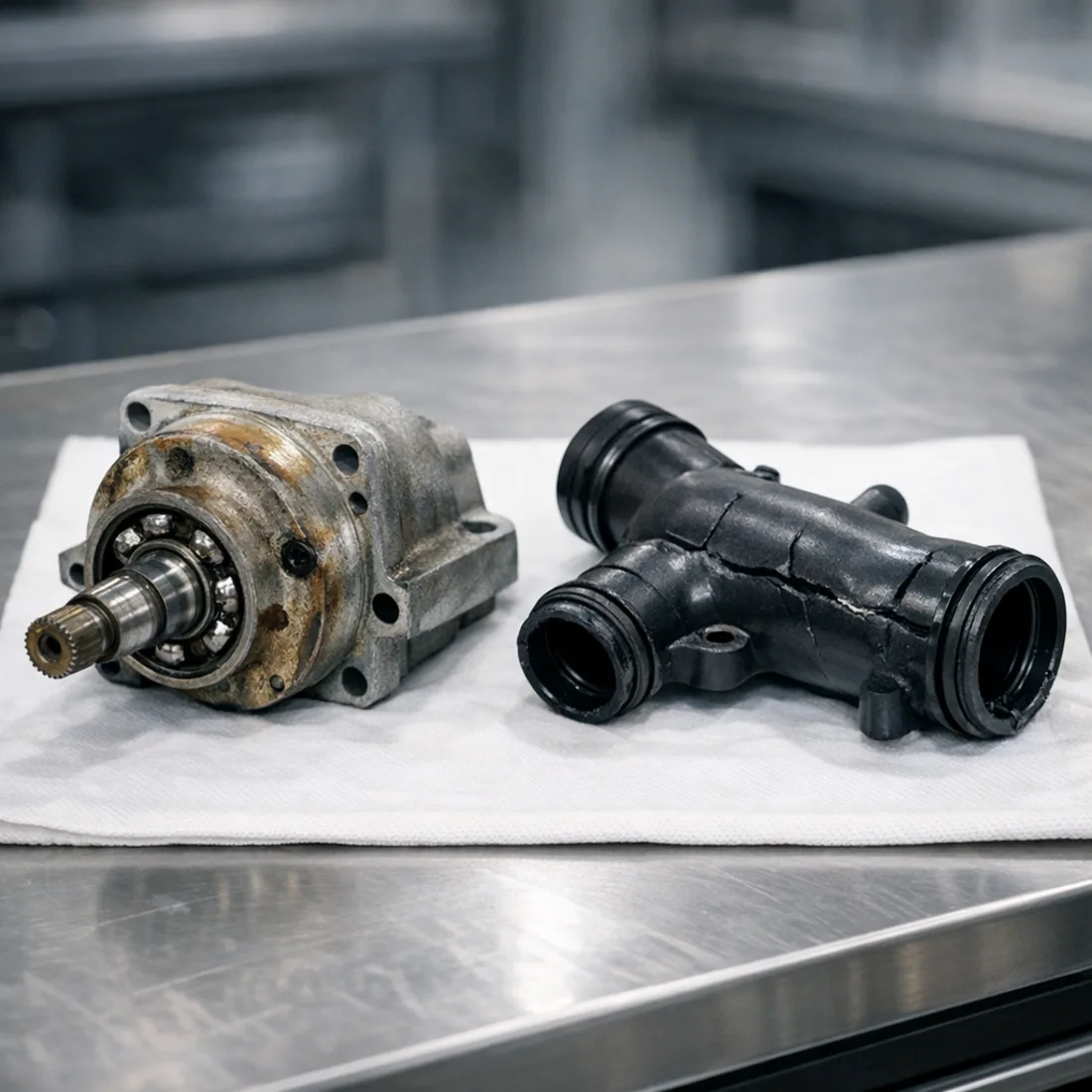
This engine has its own set of known failure points, distinct from either the SDV6 diesels or the PT204 four. The supercharger nose cone bearing is the one most owners don't see coming. When it goes, it can start as a whine that gets attributed to other things, and by the time it's obviously wrong it can cause collateral damage. Related to this, the coolant crossover pipe on the AJ126 is a known weak point. It cracks, often quietly, and the coolant loss that follows can overheat the engine before warning lights catch up with what's happening.
Compared to the SDV6 cars on this page, the supercharged V6 is simpler in one respect: no DPF, no EGR, no AdBlue. You're not managing diesel aftertreatment systems or soot loads. What you are managing is a pressurised induction system and a cooling circuit that needs to stay honest. The trade off is a higher fuel bill, but for owners who want the petrol driving experience in an L494, this is the engine to have.
Stage 1 tuning takes the AJ126 to 400hp and 500 Nm, a 60hp and 50 Nm gain. On an engine that already pulls this hard, that's a meaningful step up. We also offer DTC removal on this platform.
-
Supercharger nose cone bearing failure causing whine and potential damage
-
Cracked coolant crossover pipe and associated coolant loss
-
Timing chain and tensioner wear on higher mileage examples
-
Water pump and thermostat housing leaks
-
Air suspension compressor and air spring wear
-
Spark plug and coil pack wear as routine items
The coolant crossover pipe cracks, often quietly, and the coolant loss that follows can overheat the engine before warning lights catch up.
Check the coolant crossover pipe carefully and ask about any history of coolant loss.
3.0 SDV6 306hp (306DT): The Most Capable Diesel in the Range
The 306DT is the top spec diesel in the L494 lineup and it shows: 306hp and 700 Nm from the same 2993cc V6 package the other SDV6 tunes run. The ECU configuration on this variant is notably more complex, covering Bosch EDC17CP55, MED17.5.4, MED17.8.32 and MG1CS028 depending on build date and specification. That matters for diagnostics because you need the right tooling to talk to the right module correctly, and generic scan tools frequently can't navigate the full module network on these cars.
The 306DT has its own specific weak spots on top of the shared SDV6 fault pattern. The crankshaft damper and front pulley are known to fail on this engine code, and when they go they can throw the accessory belt or cause vibration that gets misdiagnosed. EGR coolers and DPF issues follow the same pattern as the lower output SDV6 cars, but with 306hp on tap this engine is often driven harder, which can actually help DPF regeneration on open road runs. The timing chains still deserve attention on high mileage examples.
The crankshaft damper failure is worth highlighting because it's the one that catches people off guard. The damper is a rubber bonded component and the rubber separates with age and heat cycling. You might notice a new vibration through the steering wheel or floor, or nothing at all until the belt comes off. On a car with this level of ancillary drive loading, losing the belt is not a minor inconvenience. We check the damper visually and by feel on every service booking.
Stage 1 tuning on the 306DT delivers 330hp and 750 Nm, a 24hp and 50 Nm gain. The torque figure in particular is substantial for towing or motorway work.
-
Crankshaft damper and front pulley failure causing vibration or belt loss
-
Timing chain rattle and tensioner wear on higher mileage cars
-
EGR cooler clogging on urban use vehicles
-
DPF pressure differential and regeneration faults
-
Turbo actuator faults across the multi turbo system
-
AdBlue system and NOx sensor faults where fitted
-
Air suspension compressor and spring wear
Losing the belt is not a minor inconvenience.
We check the crankshaft damper visually and by feel on every service booking on the 306DT.

Picking Between Them: Which L494 to Buy Used
If you're shopping the used L494 market and haven't committed to an engine yet, here's the honest breakdown from a workshop perspective.
You want the youngest, most modern architecture in this lineup and do most of your driving in the city. No diesel aftertreatment to manage, and the petrol character suits Auckland driving well. Watch the timing chain and check for intake valve carbon history. A compression test and a factory level diagnostic scan will tell you most of what you need to know. Avoid anything with a cold start rattle that the seller explains away.
You want diesel torque and economy. The output level (249, 275 or 306hp) matters less than the service history and how the car was used. A 249hp car with honest highway history and a clean DPF is a better buy than a 306hp car that spent five years doing school runs. The 306DT is the premium choice if condition is equal, given the additional torque headroom and the Stage 1 tuning potential. Whatever SDV6 you're looking at, pay for a pre purchase inspection that includes a factory diagnostic scan, a timing chain rattle check on cold start, DPF soot load reading, and an air suspension leak down test.
Fuel economy isn't a priority and you want the petrol character with more displacement and pressure than the Si4. Check the coolant crossover pipe carefully, ask about any history of coolant loss, and listen for any supercharger whine that changes with throttle. A clean example that's been properly maintained is genuinely rewarding to own.
- Cold start rattle check on all variants for timing chain health
- Factory diagnostic scan across all modules, not just the engine
- DPF soot load reading on every SDV6 diesel
- Air suspension leak down test and compressor duty cycle check
- Coolant crossover pipe inspection on the AJ126 supercharged V6
- Intake valve carbon history on the PT204 Si4
- Crankshaft damper visual check on the 306DT
- Full service history review with attention to oil spec used
Servicing Across the L494 Family
Every engine in the L494 range has specific oil specifications, and getting this wrong is one of the most common mistakes we see from general service centres. The SDV6 diesels require a low SAPS oil grade to protect the DPF and the turbochargers. The PT204 Ingenium and the AJ126 supercharged V6 each have their own viscosity and additive requirements. Putting the wrong oil in doesn't immediately blow anything up, but over time it accelerates wear and can compromise emissions system performance. We use genuine and OEM specification fluids throughout.
Across all variants, our vehicle servicing covers the full schedule: engine oil and filter, air filter, fuel filter where applicable, cabin filter, spark plugs or glow plugs depending on the engine, drive belts, coolant service, brake fluid, and brake pads and rotors. The air suspension system gets a check on every visit because it's the same hardware across the range regardless of engine, and it wears on all of them.
We also handle suspension arms, wheel bearings, driveshafts and the broader mechanical work these vehicles need as they age. The L494 is a sophisticated platform and the mechanical side matches the electrical complexity, so having both under one roof matters.

How We Diagnose the L494: Factory Tools, Not Guesswork
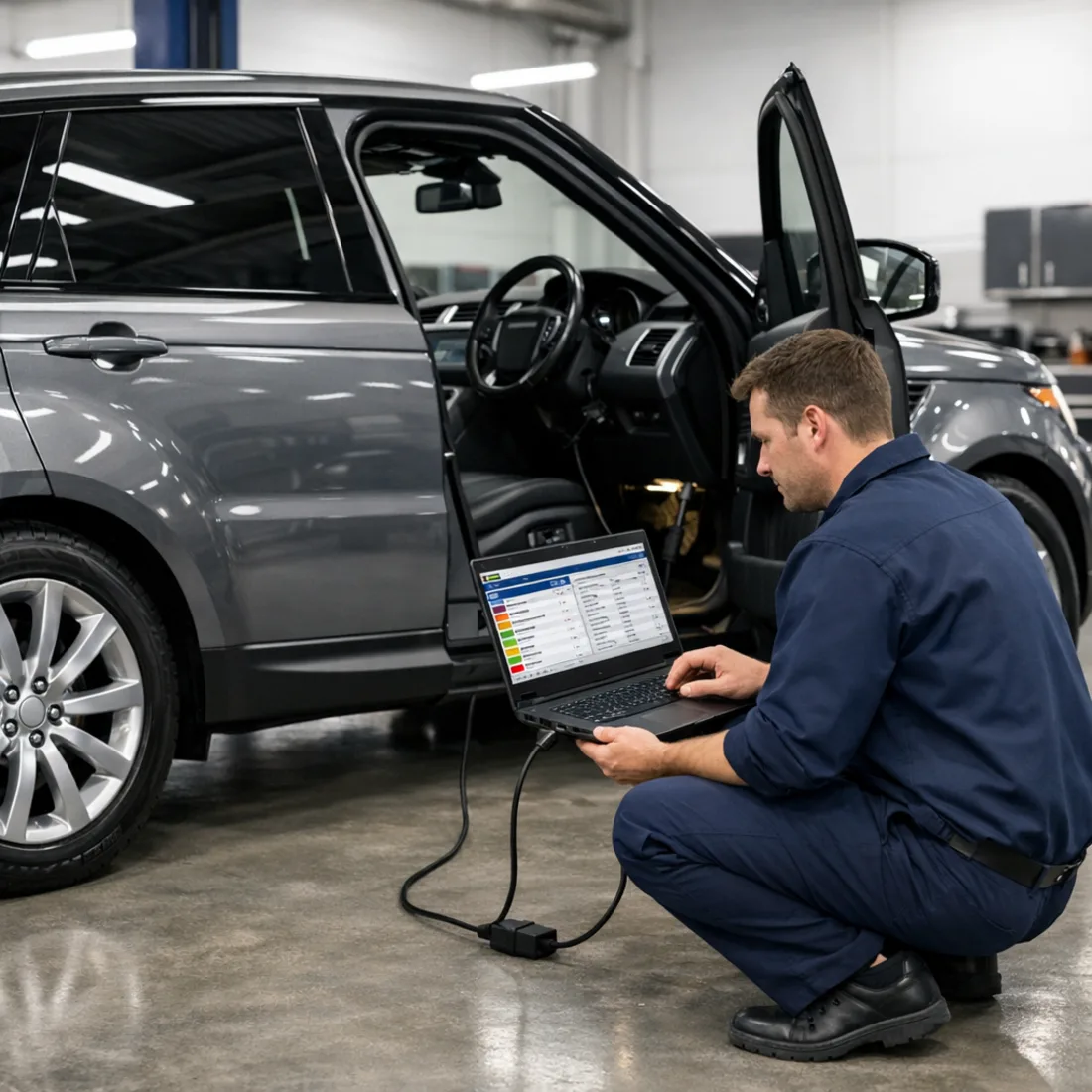
Every L494 that comes through our workshop gets diagnosed on the factory Land Rover platforms, SDD and Pathfinder. This isn't a minor detail. The L494 has a significant number of control modules spread across the vehicle, covering the engine, transmission, air suspension, transfer case, body systems, and more. A generic Bluetooth OBD reader will see the engine module if you're lucky. Factory tools see all of them, read live data properly, and let us carry out calibrations, adaptations and module coding that generic tools simply can't do.
The difference shows up clearly in situations like air suspension calibration after a component replacement, or gearbox adaptation reset after a service, or programming a replacement EGR valve or turbo actuator. These aren't optional steps, they're what makes the repair actually work rather than just clearing a code until the fault returns. Our auto electrical and diagnostics work covers the full scope of what the L494 needs.
Common diagnostic jobs we see across the range: full multi module scan to find stored and pending faults before they become obvious; live data analysis for boost pressure, fuel trim, EGR position and DPF soot load; timing chain condition assessment via oil pressure and cam timing data; air suspension module interrogation for leak history and compressor duty cycles; turbo actuator position and response testing under load; and AdBlue and NOx sensor plausibility checks on later SDV6 variants.
Tuning the L494 Range Rover Sport
Every engine in the L494 lineup has meaningful tuning headroom, and the gains aren't token numbers. Here's what Stage 1 looks like across the range, all from our ECU tuning service with no hardware changes required.
Calibrated via Bosch MED17.9.9. We also offer DTC removal, Start/Stop disable and Vmax adjustment on this platform.
Calibrated via Bosch EDC17C55. The biggest relative gain in the range. EGR OFF, DPF OFF, DTC removal and Start/Stop disable also available.
Calibrated via Bosch EDC17CP55. That extra torque is felt immediately in the mid range where these cars spend most of their time. EGR OFF, DPF OFF, DTC removal and Start/Stop disable also available.
Calibrated via Bosch MED17.8.32 or MG1CS028 depending on build. A number that changes the character of the car noticeably. DTC removal also available.
Calibrated via the full ECU range for this build: EDC17CP55, MED17.5.4, MED17.8.32 and MG1CS028. The torque figure is substantial for towing or motorway work. EGR OFF, DPF OFF, DTC removal and Start/Stop disable also available.
The diesel tunes all shift torque delivery lower in the rev range, which is exactly where you feel it most in a heavy SUV. Any emissions system work, whether EGR, DPF or AdBlue, is approached through proper diagnosis, cleaning and legitimate repair first. Where software options are discussed, they're covered in full with the customer before any work is done. For remote tuning options, ask about our file service.
Frequently Asked Questions
The questions we get most. Something else on your mind? Get in touch.