Audi A5 & S5: B8 2.0 TDI, B8 S5 3.0 TFSI and Mk3 3.0 TDI
The A5 line has always been one of those cars where the shape stays beautiful and the engineering underneath gets progressively more ambitious with each generation. From the first B8 2.0 TDI diesel that quietly won over commuters, through the supercharged S5 that made the coupe genuinely exciting, to the Mk3 3.0 TDI V6 that delivers near supercar torque from a diesel, these cars share a bloodline and, honestly, some recurring themes. Carbon build up, EGR and DPF headaches, timing concerns that reward attention, and a platform that punishes generic scan tools. We know all three well.
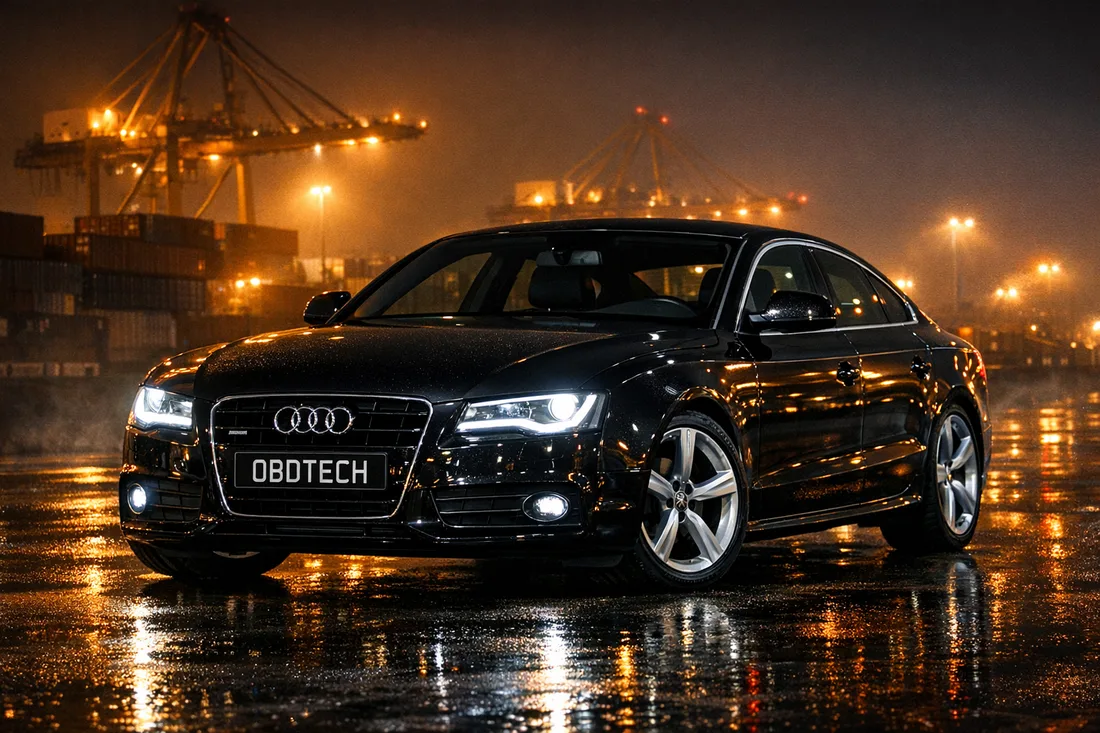
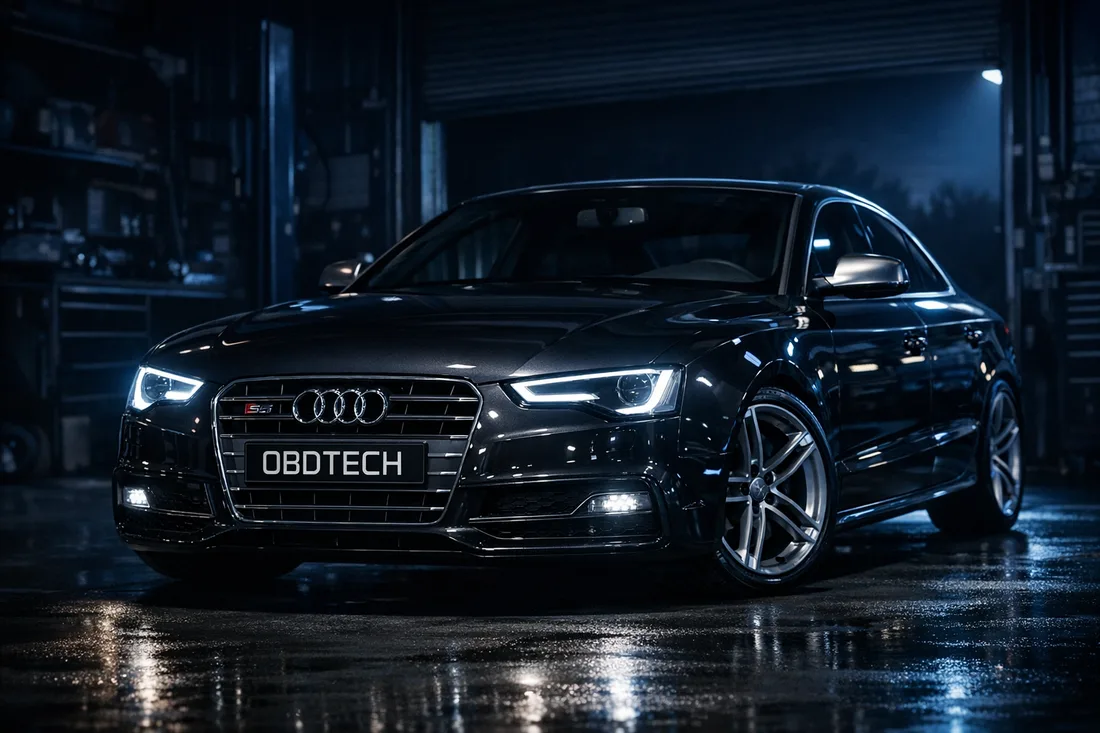
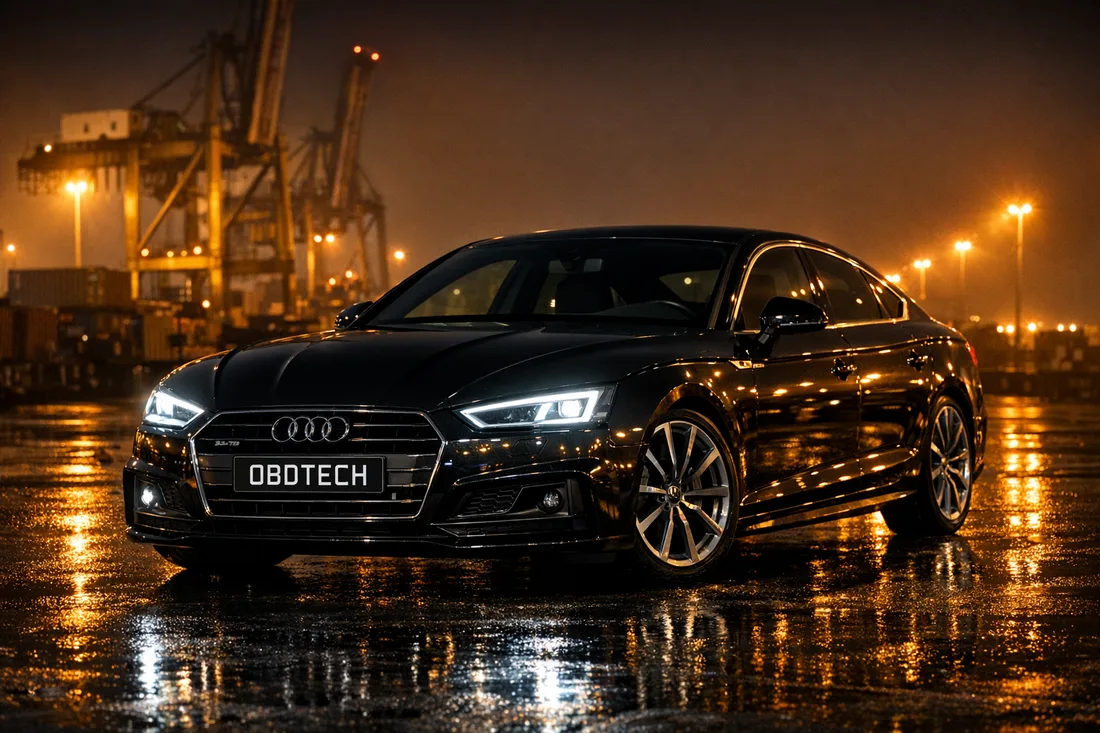
Audi A5 B8 2.0 TDI CR 170hp: The One That Started It All
The first generation A5 8T with the CAHA 2.0 TDI common rail diesel is a genuinely good car. One thousand nine hundred and sixty eight cubic centimetres, 170 horsepower, 350 Nm, and that long low roofline that still gets second looks. It sold well in New Zealand and there are plenty of them still doing solid daily kilometres. Which means plenty of them are now at the age where the well documented weak points start showing up.
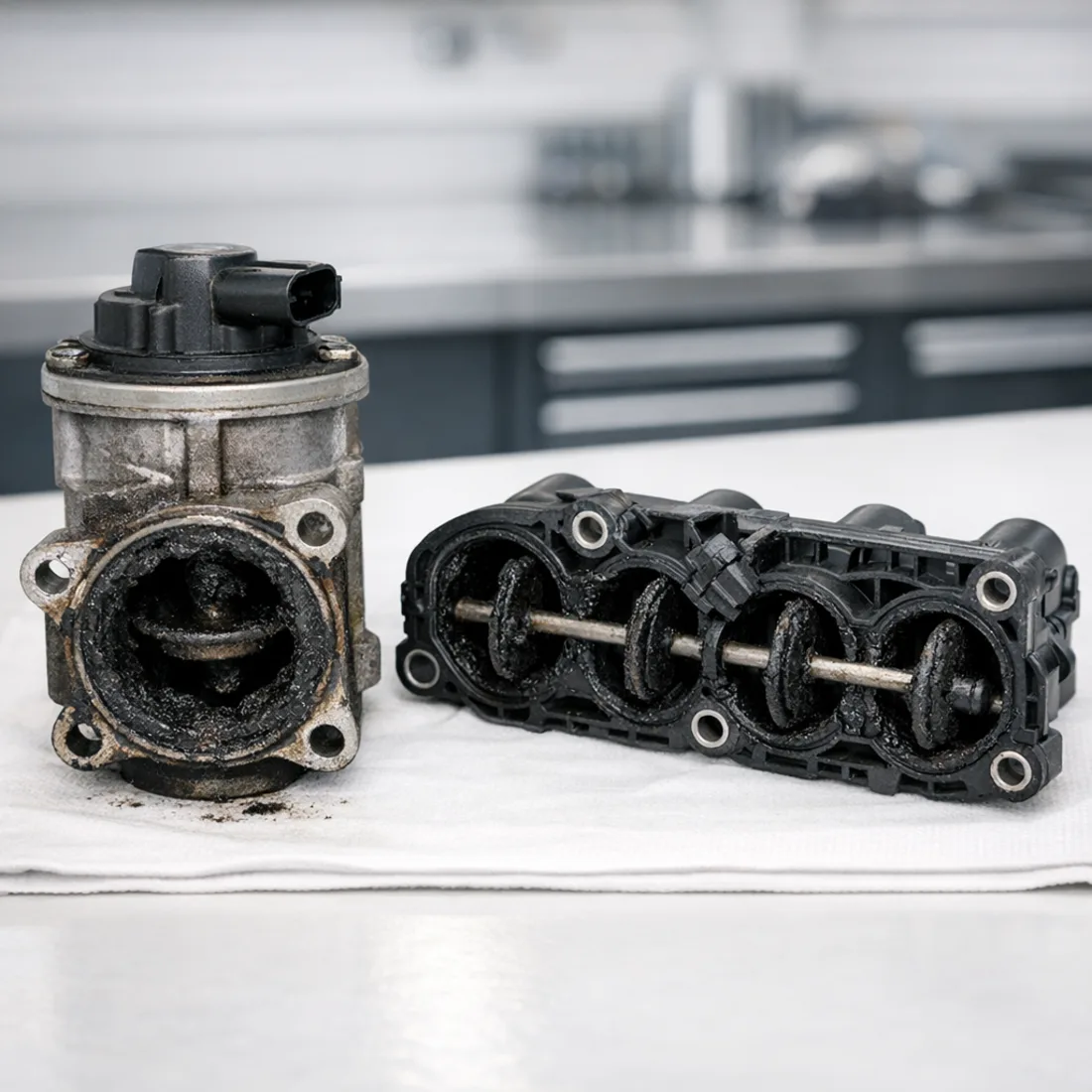
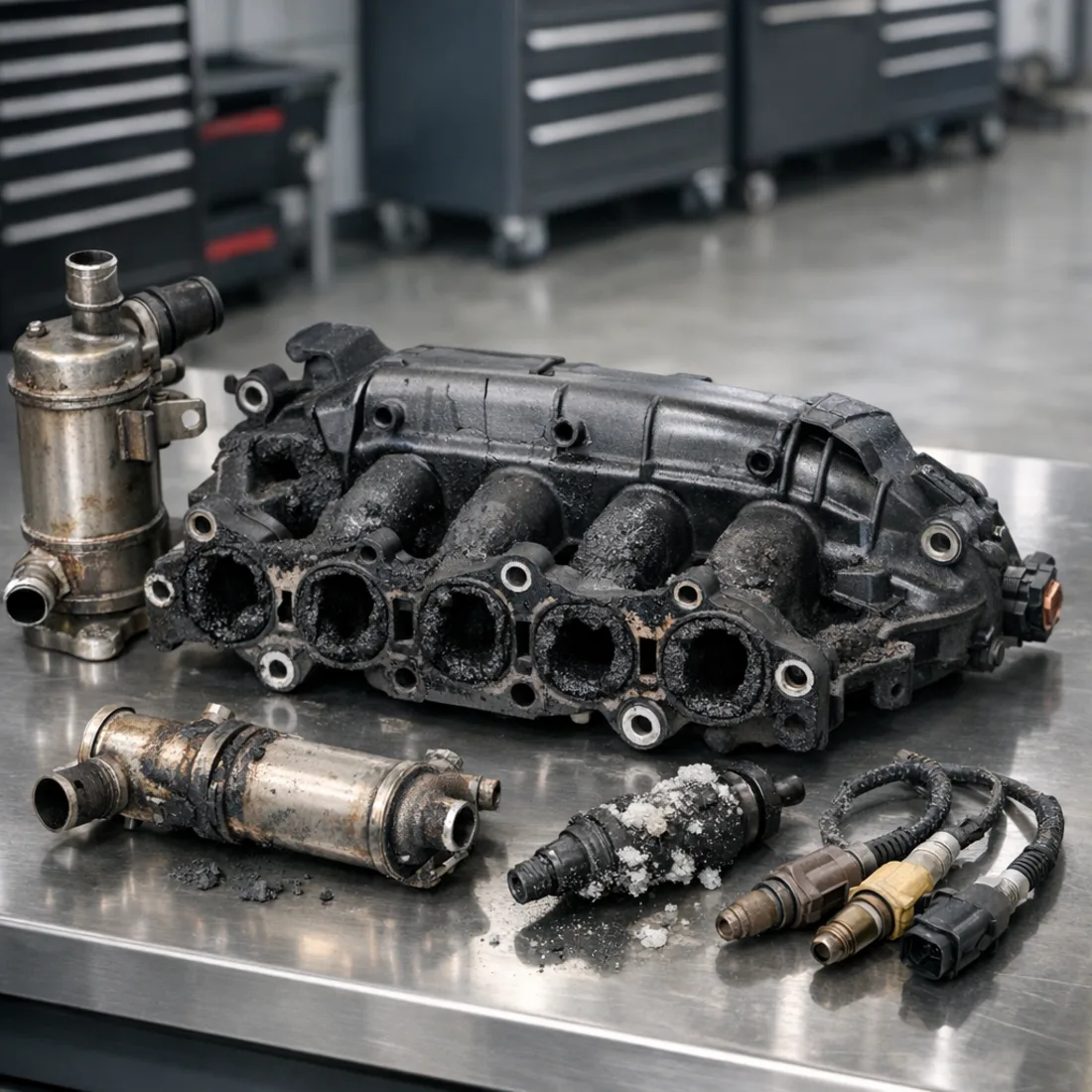
The EGR valve and cooler are the first thing to watch. Auckland stop start traffic is exactly the kind of use pattern that accelerates carbon build up, and once the EGR starts clogging, rough idle and loss of power follow. Closely related is the intake manifold with its swirl flaps: they carbon up too, and when a flap breaks free it can travel somewhere you really don't want it to go. We see both regularly.
The DPF is another recurring story. If this A5 has spent most of its life on short suburban runs, it may never have completed a proper regeneration cycle, and a blocked DPF is an expensive fix compared with a clean and reset done early. The turbo actuator can also start playing up on higher mileage cars, showing up as flat spots or over boost faults. And the dual mass flywheel, well, it's not a question of if, it's a question of when.
One thing that matters a lot on this platform: the CAHA is cambelt driven, not chain driven. Miss that belt interval and the consequences are immediate and catastrophic. We replace the cambelt and water pump together, using new genuine parts, and we log it properly so there's no ambiguity next time around.
Compared with the later Mk3 3.0 TDI, the 2.0 CAHA is simpler and cheaper to work on. There's no AdBlue system to worry about, the rear of engine timing chain isn't a factor, and parts availability is good. It's the entry point to the A5 family and, properly maintained, it's a very satisfying one.
-
EGR valve and cooler clogging, rough running and fault codes
-
Intake manifold swirl flap carbon build up and mechanical failure
-
DPF blocking on cars used mostly for short trips
-
Turbo actuator wear and boost control issues at higher mileage
-
Dual mass flywheel rattle and clutch judder as they wear
-
Cambelt and water pump service at the manufacturer interval
-
Glow plug failure, especially in colder months
The CAHA is cambelt driven, not chain driven. Miss that belt interval and the consequences are immediate and catastrophic.
We replace the cambelt and water pump together, log it properly, and use new genuine parts throughout.
Stage 1 tuning on the CAHA with the Bosch EDC17CP14 or EDC17CP20 ECU takes output from 170 hp and 350 Nm to 205 hp and 430 Nm, a genuine real world gain that transforms the drive without compromising reliability on a healthy engine.
We also offer EGR work, DPF cleaning and diagnosis, start/stop disable, swirl flap correction and Vmax adjustment.
Get your A5 or S5 booked in with a proper VAG specialist.
Audi S5 B8 3.0 TFSI 333hp: The Supercharged Sweet Spot
The B8 S5 with the CAKA 3.0 TFSI sits at the emotional peak of this generation. Three litres, a Roots type supercharger bolted into the V of the engine, 333 horsepower and 440 Nm delivered without any turbo lag whatsoever. It is a brilliant driving experience. It is also a complex piece of German engineering that has a few well known weaknesses once the kilometres stack up.
The supercharger snout bearing is the one to know about. It wears over time and when it goes, the noise it makes is hard to ignore. A worn snout bearing doesn't fix itself. Getting it sorted before it turns into a supercharger replacement job is the sensible move, and we fit new genuine parts when we do it. The water pump is another common wear item on this engine, and given how much trouble a cooling system failure causes on any performance engine, it makes sense to replace it proactively when you're already in there.
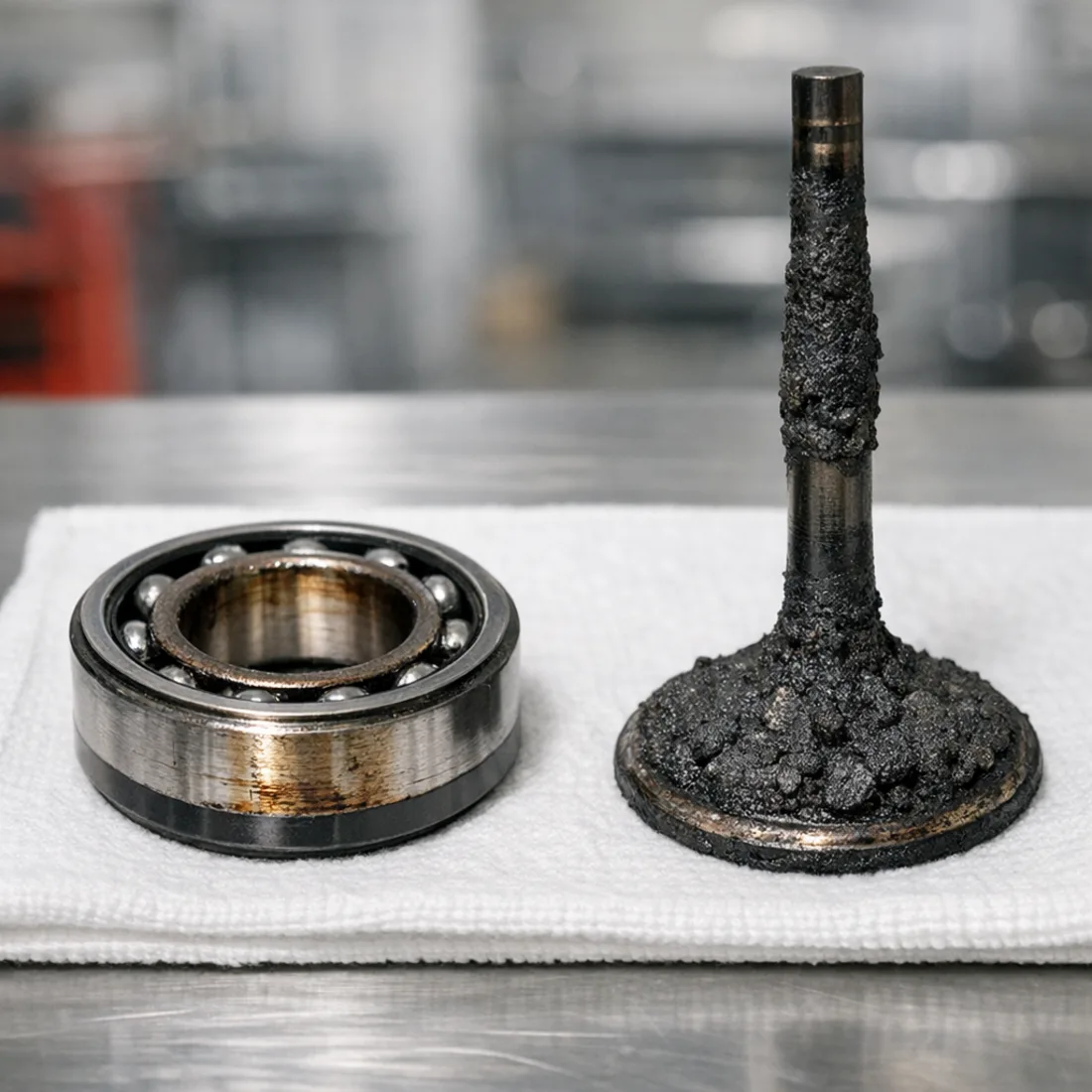
Carbon build up on the intake valves is a reality for any direct injection engine, and the CAKA is no exception. Because fuel is injected directly into the cylinder rather than past the intake valves, there's nothing washing the back of those valves clean. Over time, carbon accumulates and starts affecting flow and combustion. It's not a crisis, but it's something that should be addressed before it gets heavy.
Compared with the 2.0 TDI in the same B8 generation, the S5 is more expensive to service and the labour on some jobs is significantly more involved. But the driving experience is in a different league, and a well maintained CAKA engine is genuinely long lived. The S5 is also the most popular car in this family for Stage 1 tuning, and for good reason.
-
Supercharger snout bearing wear, noise on acceleration
-
Water pump failure and coolant leaks
-
Carbon build up on intake valves from direct injection
-
Timing chain and tensioner wear on higher mileage cars
-
Thermostat faults and coolant system leaks
-
Oil consumption and PCV breather system issues
A harsh grinding or rattling noise from the supercharger, especially on light throttle or at idle, is the snout bearing starting to fail.
Catch it early and it's a bearing replacement. Leave it and you may be looking at a full supercharger replacement.
On the Siemens/Continental Simos 8.4 or 8.5 ECU, Stage 1 tuning takes the CAKA from 333 hp and 440 Nm to 435 hp and 520 Nm. That's a 102 horsepower gain on a supercharged V6, and it feels every bit as dramatic as it sounds.
We also offer pop and bang maps, start/stop disable, decat, Vmax and DTC removal where applicable. The S5 is genuinely one of the most rewarding cars we tune in the workshop.
Audi A5 Mk3 3.0 TDI 286hp: The One That Feels Almost Unfair
The Mk3 A5 with the DCPB 3.0 TDI V6 under the bonnet is what happens when Audi decides that a diesel coupe should genuinely embarrass sports cars. Two hundred and eighty six horsepower and 620 Nm of torque from a diesel V6. It's extraordinary. It's also a more complex car than either of its predecessors, and the extra capability comes with a few things worth knowing before you buy or before you start ignoring service intervals.
The timing chain on the DCPB lives at the rear of the engine. That's the first thing to understand, because accessing it is a major job. A cold start rattle that goes away once the engine warms up is not something to file away as 'probably fine.' It's the chain and tensioner telling you something, and catching it early is the difference between a chain service and an engine out job. We take it seriously.
The AdBlue and SCR system is new to this generation and it's where many owners get caught out. NOx sensor faults, incorrect dosing, low AdBlue warnings that weren't topped up on time: these can stack up and leave the car in limp mode. The system needs factory level tooling to diagnose and reset properly, not a generic reader. We carry out AdBlue top up, NOx sensor replacement and SCR system diagnosis as part of our routine work on this car.
The EGR cooler and intake carbon story is familiar from the 2.0 TDI generation, but on a V6 the labour to access and service those components is higher. That makes preventative cleaning worthwhile rather than waiting for a fault code to force the issue. The DPF can also load up on short trip cars, and the Mk3 A5 deserves the occasional open road run to complete a full regeneration cycle.
Against the 2.0 TDI, this car is noticeably more complex and more expensive to service. Against the S5, it trades the theatre of the supercharger for sheer torque and diesel efficiency. For someone who covers serious kilometres and wants genuine performance without petrol costs, the DCPB is a compelling proposition.
-
Timing chain rattle on cold start, tensioner wear
-
EGR cooler clogging and intake carbon build up
-
AdBlue and SCR system faults, NOx sensor failures, dosing issues
-
Oil leaks from cam covers and oil cooler
-
DPF loading on short trip vehicles
-
Limp mode from AdBlue related fault stacking
Taking a car already producing 620 Nm to 750 Nm changes how it feels in every gear, at every speed.
Stage 1 on the Bosch MD1CP004 adds 64 hp and 130 Nm on an engine that was already brisk.
Stage 1 tuning on the Bosch MD1CP004 ECU takes the DCPB from 286 hp and 620 Nm to 350 hp and 750 Nm. On a car this heavy and this torquey, the gain is immediately obvious from the moment you put your foot down.
We also offer EGR work, DPF and AdBlue system diagnosis, start/stop disable, Vmax and DTC removal. Check our DPF, EGR and emissions system cleaning page for detail on how we approach that work.
How to Pick Between Them on the Used Market
All three of these cars can be a brilliant used buy or a money pit, depending almost entirely on how the previous owner treated the service history. Here's how we'd think about it. Across all three, the consistent advice is the same: full service history beats low mileage with gaps every time. These are complex German cars that reward methodical maintenance and punish neglect, often at the worst possible moment.
You want the most accessible entry point. Parts are plentiful, the cambelt service is well understood, and the car is simpler than the other two. Look for a documented cambelt replacement and no history of short trip urban use that would have hammered the DPF. Check the EGR and swirl flaps and factor remedial work into the price if they've been neglected.
You want the driver's choice and the tuner's choice. A well kept example with a service history that shows the water pump and supercharger snout bearing have been attended to is worth paying more for. Avoid high mileage examples with sketchy history and evidence of oil consumption that hasn't been addressed. Listen for supercharger whine or bearing noise on the test drive.
You cover serious kilometres and want genuine performance without petrol costs. Buy one with a verified service record and have a workshop familiar with the platform check the chain on cold start, the AdBlue system and the EGR before you commit. A pre purchase inspection on this one is genuinely worth the cost, given the rear timing chain access alone means any chain related work is a significant job.
- Documented cambelt and water pump replacement on the B8 2.0 TDI
- Supercharger snout bearing and water pump service history on the S5
- Cold start timing chain rattle check on the Mk3 3.0 TDI
- EGR and swirl flap condition on both diesel variants
- DPF history and urban use pattern for both diesel variants
- AdBlue and NOx sensor service record on the Mk3 3.0 TDI
- Oil consumption check on the S5 3.0 TFSI
- Full service history with correct oil specification documented throughout
Servicing Across the A5 Family
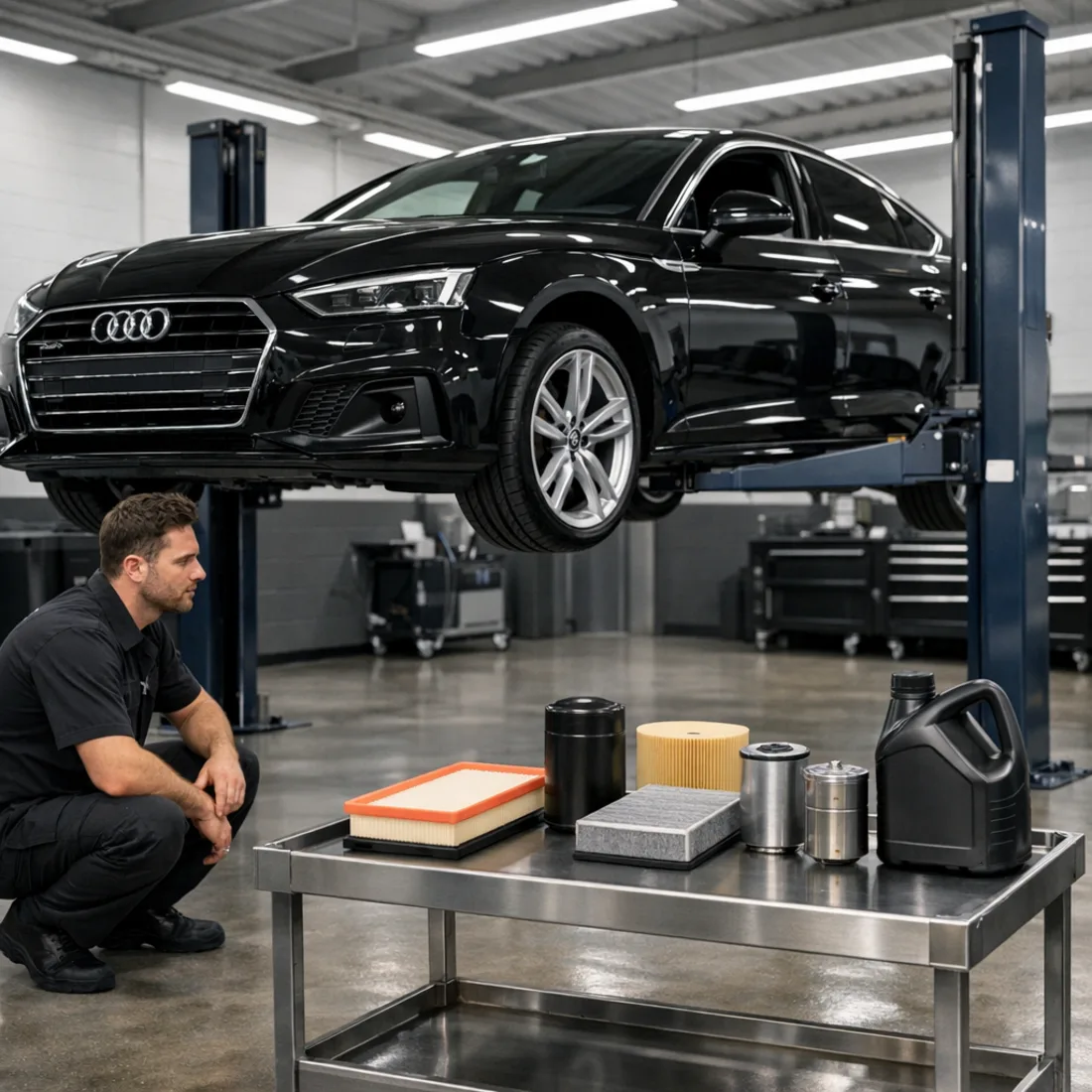
The service schedules across these three cars differ more than most owners expect. Getting the oil spec right is the first thing, and it matters more on these engines than on most. The 2.0 TDI and the Mk3 3.0 TDI both require a low SAPS diesel grade oil to protect the DPF and keep the after treatment system working correctly. The S5 3.0 TFSI needs an oil meeting the VW 502 or 504 specification. Using the wrong spec is one of the most common and most damaging mistakes we see on these platforms.
We handle scheduled maintenance across all three variants in house at our Penrose workshop, using new genuine and OEM parts throughout, and logging everything properly so the service history stays intact and verifiable. Routine work includes oil and filter service with the correct specification oil, air filter, fuel filter on diesel cars, cabin filter, spark plugs on the S5 TFSI, glow plugs on both diesel variants, cambelt and water pump on the B8 2.0 TDI, timing chain inspection on the Mk3 3.0 TDI, AdBlue top up and NOx sensor service on the Mk3, drive belts, wipers and suspension arms and bushes across all three generations.
Brakes deserve a specific mention. All three cars carry meaningful weight and, in the case of the S5 and Mk3 3.0 TDI, meaningful power. The factory brake hardware is good but it wears, and worn sensors triggering warning lights are a common reason owners come in between services. We cover brake servicing and repairs across all three generations, from pad and rotor replacement through to caliper work.
Diagnostics: Why Factory Tooling Matters on These Cars
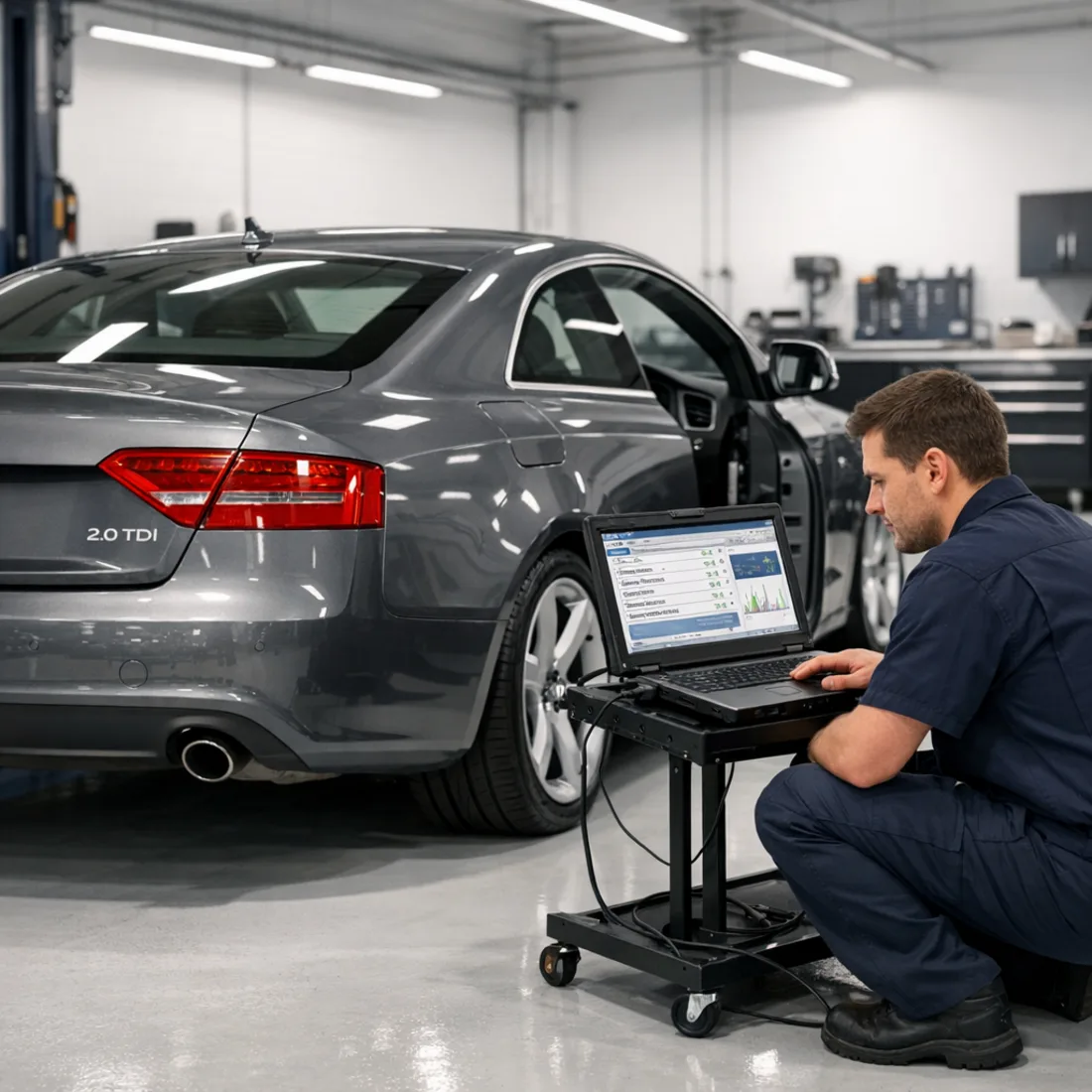
All three of these cars are diagnosed with ODIS, the factory level VAG diagnostic platform. That matters because the difference between ODIS and a generic Bluetooth scan tool is not marginal. On any of these A5 and S5 variants, ODIS can run guided test plans, access live data channels that a generic tool won't see, carry out service resets and adaptations, and code new components correctly after replacement.
On the B8 2.0 TDI, that means correctly diagnosing whether an EGR fault is the valve itself, the cooler, or a wiring or sensor issue, rather than just throwing a new valve at it. On the S5, it means properly reading the supercharger and cooling system data to understand what's actually happening. On the Mk3 3.0 TDI, it means servicing the AdBlue and SCR system the way it was designed to be serviced, resetting adaptations after NOx sensor replacement and confirming the system is dosing correctly.
Any gearbox or transmission work on these platforms also requires proper coding. The S5 in particular, with its torque split all wheel drive system, needs adaptation resets done correctly after gearbox or transfer case work. The short version: these cars reward a workshop that understands the platform. Generic tooling gets generic results, and on a complex German performance car that's rarely good enough.
Tuning Across the A5 and S5 Family
All three of these cars respond well to Stage 1 tuning, and the gains across the family are some of the more impressive numbers we work with. The jump is particularly striking on the S5, where the supercharged 3.0 TFSI goes from 333 hp to 435 hp. But the Mk3 3.0 TDI is arguably the most transformative in real world terms: taking a car already producing 620 Nm to 750 Nm changes how it feels in every gear, at every speed. Each tune is written for the specific hardware in the car, not a generic map. The car needs to be in healthy mechanical condition before we tune it. We check that before we start.
Tuned on the Bosch EDC17CP14 or EDC17CP20 ECU. A real world gain that transforms the drive without compromising reliability on a healthy engine. EGR work, DPF diagnosis, start/stop disable, swirl flap correction and Vmax are also available.
Tuned on the Siemens/Continental Simos 8.4 or 8.5 ECU. One hundred and two horsepower on a supercharged V6, and it feels every bit as dramatic as it sounds. Pop and bang crackle map, start/stop disable, decat, Vmax and DTC removal are also available.
Tuned on the Bosch MD1CP004 ECU. On a car this heavy and this torquey, the gain is immediately obvious from the moment you put your foot down. EGR work, DPF and AdBlue system diagnosis, start/stop disable, Vmax and DTC removal are also available.
Additional options vary by model. The S5 can have a pop and bang/crackle map added, which suits the character of the car well. The diesel variants have swirl flap correction and start/stop disable available. Vmax is available across all three. We carry out full diagnosis, cleaning and legitimate repair of DPF, EGR and AdBlue systems where the car is a candidate for that approach. Submit your car details via our file service to get started.
Frequently Asked Questions
The questions we get most. Something else on your mind? Get in touch.