Audi S4 & A4 Across Four Generations: B9, B8 and B7 Servicing, Diagnostics and Repairs in Penrose, Auckland
From the B7 3.2 FSI that put naturally aspirated V6 smoothness front and centre, through two very different B8 variants sharing the same platform but divided by fuel type and character, to the B9 S4 3.0 TDI that somehow made a diesel feel like a sports car, this is a family of cars that rewards owners who stay on top of them and quietly punishes those who don't. Each generation carried forward Audi's engineering ambition and each one brought its own specific set of things that wear, clog, stretch or fail. We've worked through all of them, and this page tells you exactly what to watch for and where these cars sit relative to each other.




Audi A4 B7 3.2 FSI: The Naturally Aspirated Benchmark
The B7 is where this particular branch of Audi's history starts for us. The BKH V6 is a 3123 cc naturally aspirated petrol engine running a 12.5:1 compression ratio, 256 hp and 330 Nm, managed by a Siemens Continental Simos 6.2 ECU. No turbo, no mild hybrid system, just a high compression V6 that needs to breathe cleanly and fire precisely to feel like it should. When everything's right it's a genuinely lovely engine. When it isn't, the symptoms are very specific.
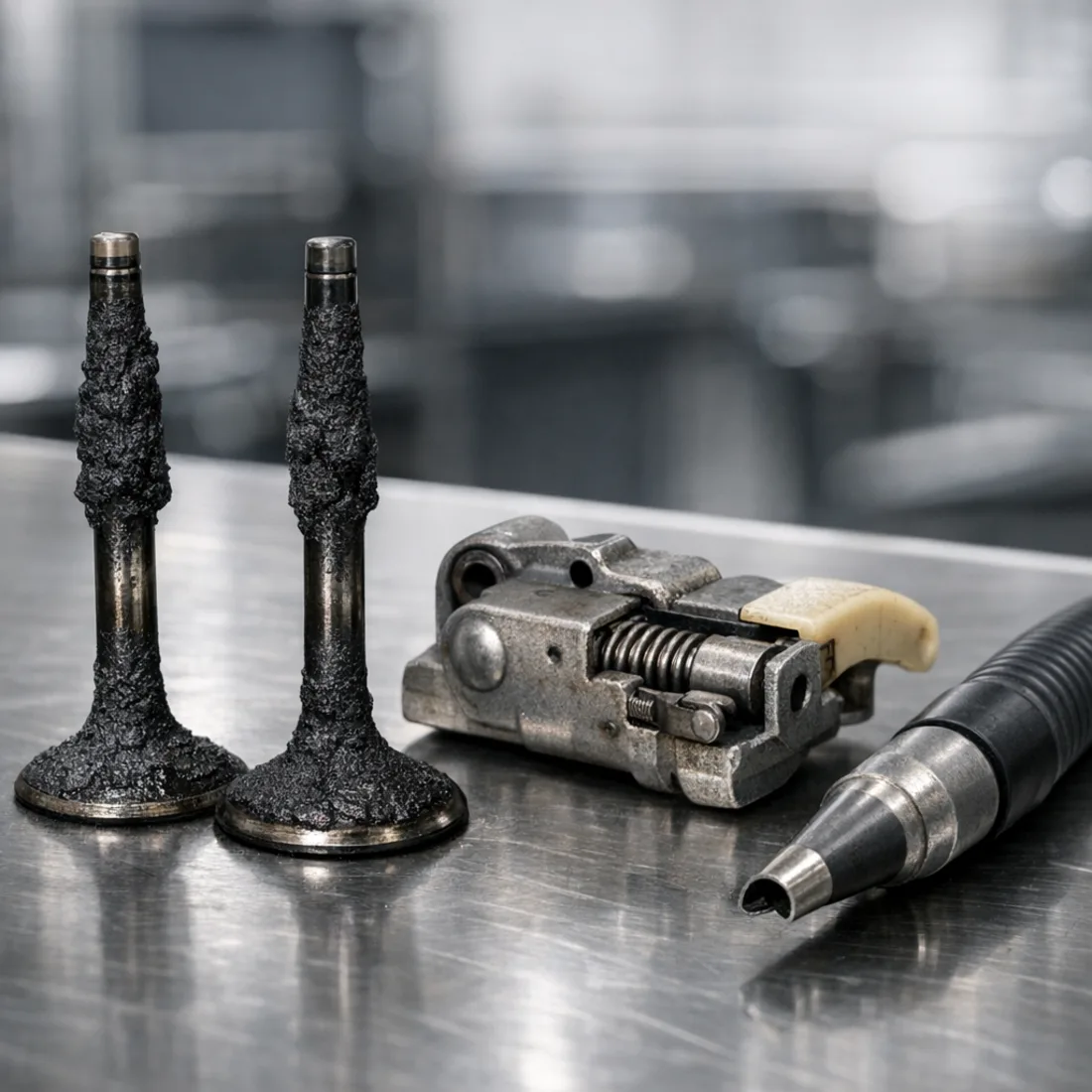
The single biggest issue on the BKH is carbon build up on the intake valves. Direct injection means fuel never washes the back of the valves the way a port injected engine does, so deposits accumulate over time and they do it silently. You might notice a rough idle first, then occasional misfires under load, then a car that just feels softer than it used to. By the time most owners bring it in, the build up is significant. Walnut blasting is the proper fix, and it makes a real difference to how the engine pulls.
The timing arrangement on this V6 runs a chain at the rear of the block, which means when the chains, tensioners or guides start to wear the repair is a substantial one. Catching it early when there's rattle on cold start is far better than leaving it until something breaks. Oil consumption and coolant leaks are worth monitoring as these cars age, and ignition coils and spark plugs need to be in good condition for the engine to fire cleanly at that compression ratio.
-
Carbon build up on intake valves (walnut blast recommended)
-
Rear of block timing chain, tensioner and guide wear
-
Ignition coil and spark plug condition critical at 12.5:1 compression
-
Oil consumption and coolant leaks as mileage increases
-
Suspension control arm bushes wearing on this chassis
By the time most owners bring it in, the build up is significant.
Walnut blasting is the proper fix, and it makes a real difference to how the engine pulls.
On the tuning side, the Simos 6.2 ECU does allow a Stage 1 remap, taking the BKH to 275 hp and 350 Nm. The gains are modest compared to what a turbocharged engine can do with boost pressure, but on a naturally aspirated V6 a Stage 1 tune sharpens throttle response and fills in the midrange in a way the factory map leaves on the table. It's worth it if the engine is already in good health.
Routine servicing on the B7 covers oil and filter with the correct grade, air filter, cabin filter, fresh spark plugs, wipers and drive belts. We also handle brake pads and rotors, suspension and control arm bushes which wear on this chassis, and sensor faults. We both service the car and fix the faults listed above under one roof.
Get your Audi booked in with our team in Penrose.
Audi A4 B8 2.0 TFSI: The Turbo Petrol That Punishes Neglect
The B8 platform arrived with a completely different engine philosophy. The CFKA variant of the EA888 2.0 TFSI is a 1984 cc turbocharged four cylinder running 9.6:1 compression, 180 hp and 320 Nm from the factory, managed by a Bosch MED17.1 or Siemens Continental Simos 18.1 ECU depending on the spec. Where the B7 3.2 FSI rewarded you for maintaining it, the B8 2.0 TFSI punishes you for not. The faults are more aggressive, the consequences more expensive.
The timing chain tensioner is the headline issue on earlier EA888 variants and it's not something to sit on. A stretched chain or failed tensioner can cause serious engine damage, and the warning signs, a rattle on cold start or slightly off timing at idle, don't always give you much notice. If you own one of these and haven't had the tensioner inspected, that's the first conversation to have.
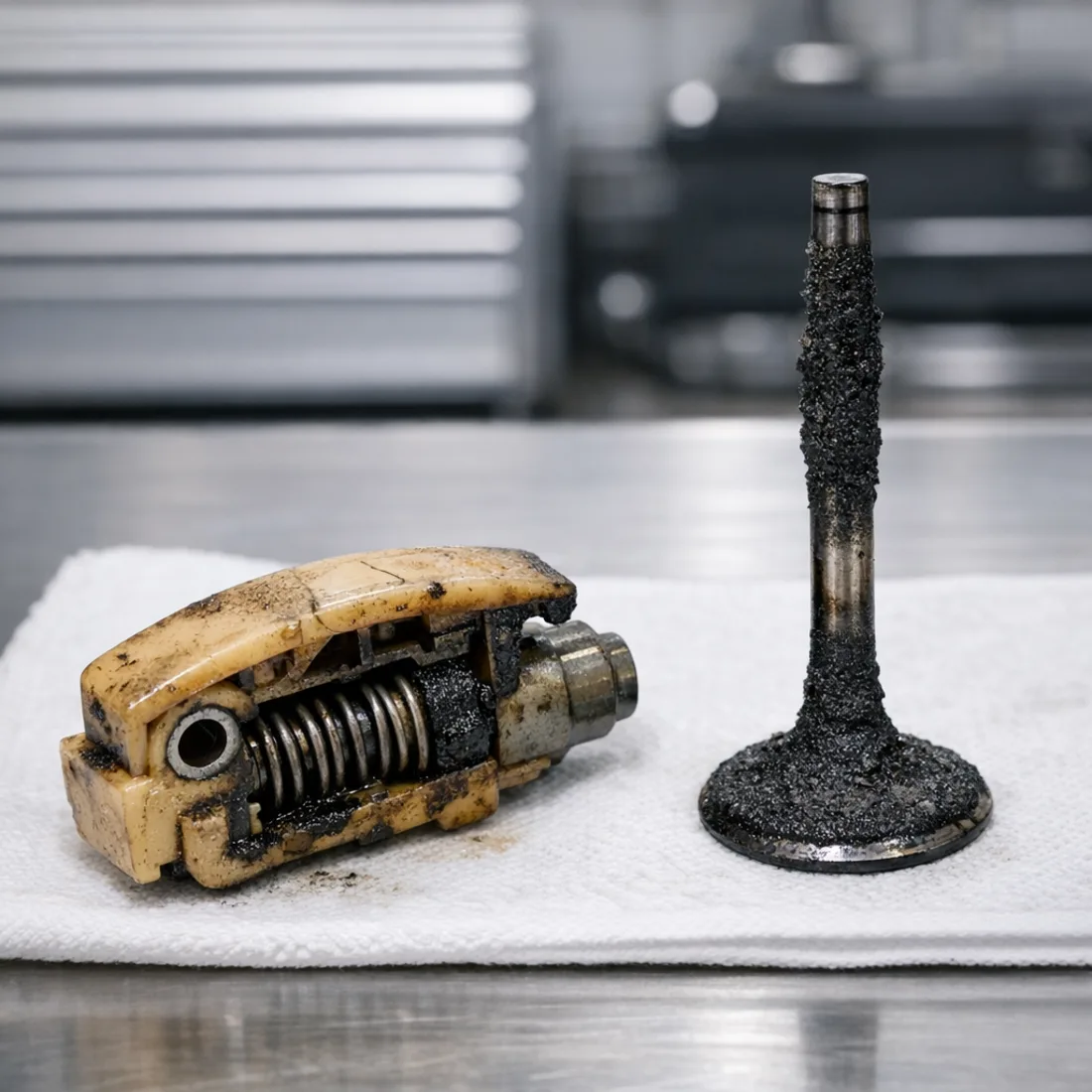
Oil consumption on the earlier versions of this engine is a well documented problem, usually traced back to piston rings and the PCV system. The crankcase ventilation valve is worth checking on any B8 2.0 TFSI with mileage on it. And just like the B7 before it, the direct injection design means carbon build up on the intake valves is an inevitability rather than a possibility. The B8 didn't fix what the B7 started in that regard.
-
Timing chain tensioner failure on earlier EA888 variants
-
Excessive oil consumption via piston rings and PCV system
-
Carbon build up on intake valves (direct injection, same story as the B7)
-
Water pump and thermostat housing failures
-
Coil pack and spark plug wear affecting smoothness
A Stage 1 tune on the CFKA takes output to 260 hp and 400 Nm, a gain of 80 hp and 80 Nm.
That's a genuine transformation, and it's one of the better value tuning propositions in this family.
The turbo is where the B8 TFSI pulls well clear of the old naturally aspirated B7. The ECU options here also open the door to features like pop and bang maps, Start/Stop disable and speed limiter adjustment. But get the engine fundamentals sorted first, tuning a tired engine with worn piston rings or a stretched chain is not the right order of operations.
Routine work we can sell includes oil and filter with the correct VW 502.00 grade, air filter, cabin filter, fuel filter, wipers, drive belts, spark plugs and coil packs, plus brake pads and rotors. On this chassis we also look after the timing chain, PCV valve, water pump, clutch or DSG service where fitted, and suspension components.
Audi A4 B8 3.0 V6 TDI: The Diesel That Carries a Rear of Block Secret
Same platform as the 2.0 TFSI, completely different character. The CCWB 3.0 V6 TDI is a 2967 cc common rail diesel running a 16.8:1 compression ratio, 211 hp and 500 Nm of torque managed by a Bosch EDC17CP14 ECU. That torque number tells the real story, this is an engine that pulls hard from very low in the rev range and makes the B8 feel substantially more effortless than the 2.0 TFSI on anything other than a back road blast. A lot of them landed in New Zealand as fleet or company cars and they're well into their second decade now, which means their service histories are telling a range of stories.
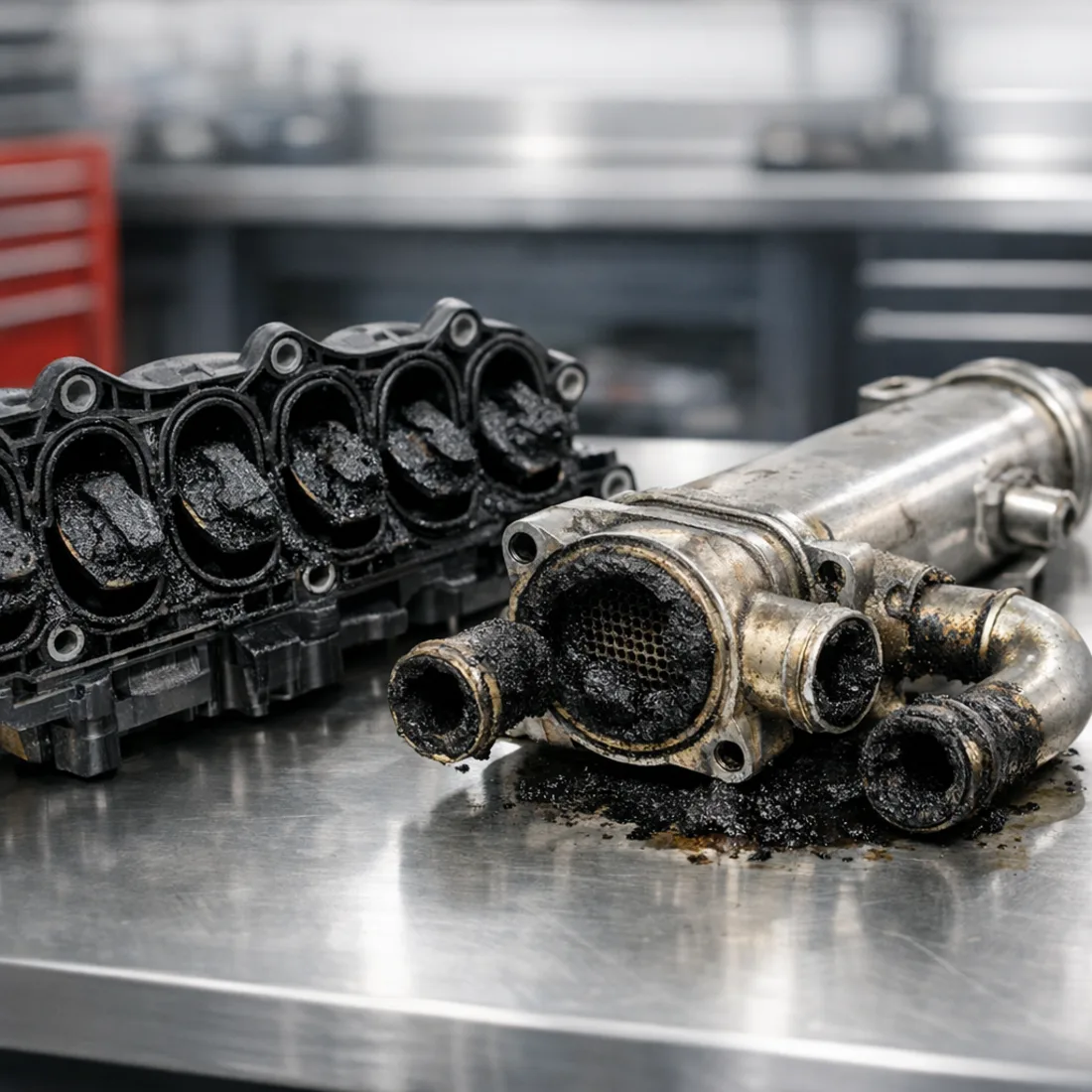
The rear of block timing chain arrangement is shared with the B7 3.2 FSI V6, and the CCWB has the same vulnerability. Chain and tensioner wear on a diesel V6 doing regular highway kilometres is a serious concern, and because the work involves dropping the engine out to properly access the rear, it is an expensive job if you leave it until something lets go. Carbon build up on the intake is common on these common rail diesels, and swirl flap issues are a recurring theme. The swirl flaps can fail and drop fragments into the intake manifold, which is exactly as bad as it sounds.
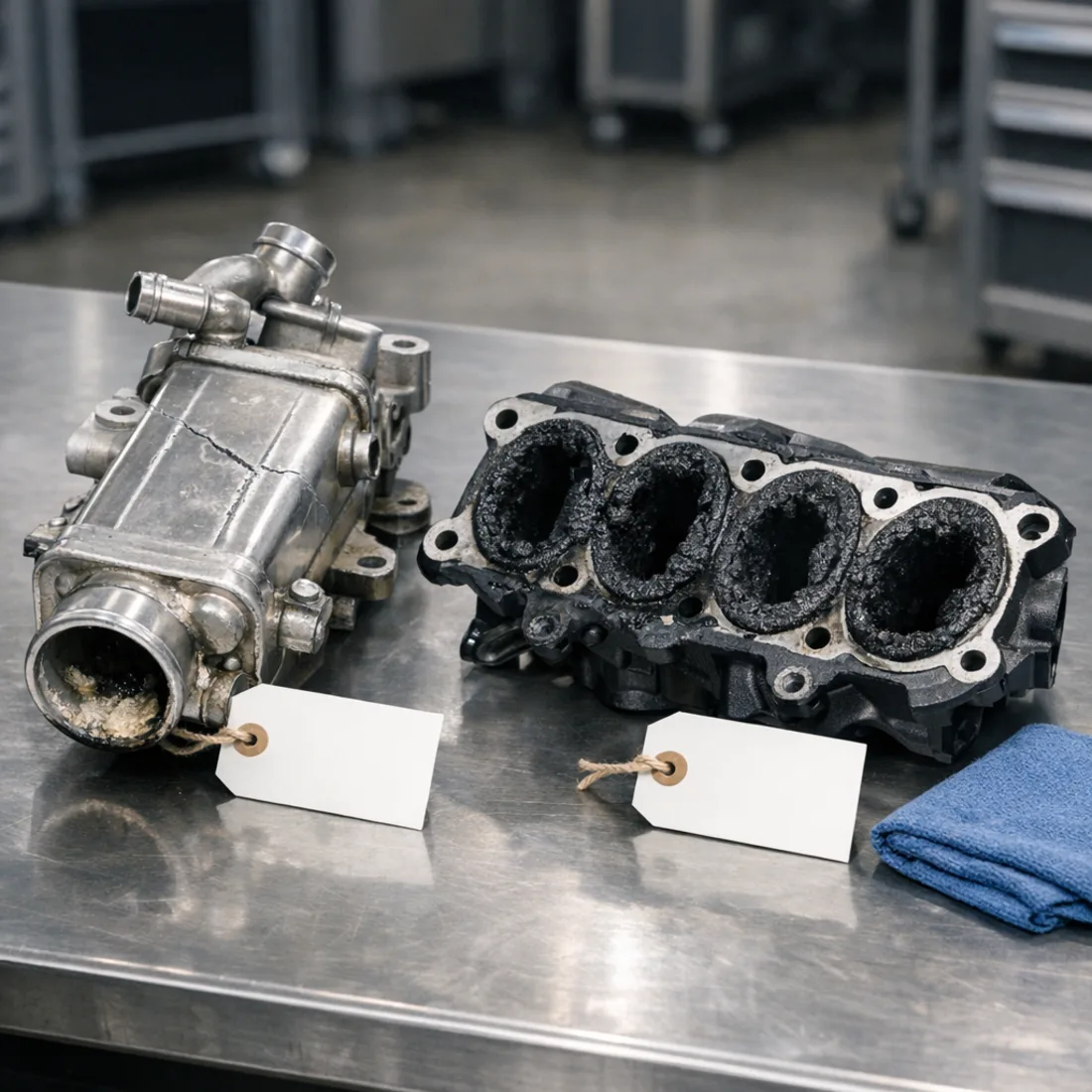
EGR cooler failures and DPF clogging are the other major areas on these. Cars that do a lot of short urban trips don't give the DPF a proper regeneration cycle, and the result is an increasingly restricted filter that eventually sets off warning lights and triggers limp mode. If you're seeing high DPF differential pressure readings or the car feels sluggish, that filter needs attention. The EGR cooler can develop cracks and push coolant where it shouldn't be. Oil consumption via the vacuum pump and oil cooler seals also appears with age.
-
Rear of block timing chain and tensioner wear (shared with B7 V6)
-
Swirl flap failure and intake manifold contamination
-
EGR cooler cracking and coolant contamination
-
DPF clogging on short trip driving cycles
-
Oil consumption via vacuum pump and oil cooler seals
-
Boost, MAP and NOx sensor faults
The swirl flaps can fail and drop fragments into the intake manifold, which is exactly as bad as it sounds.
Catching timing chain noise early is far better than leaving it until the repair involves dropping the engine.
Stage 1 tuning on the CCWB takes it to 290 hp and 625 Nm, a gain of 79 hp and 125 Nm. On a diesel V6 with that torque baseline, the result is a car that feels significantly stronger in everyday driving. The Bosch EDC17CP14 is a well understood ECU and the tune is clean. As with any diesel tune, make sure the DPF and EGR system are in good health before going near the ECU.
Routine work worth doing includes oil and filter with the correct low SAPS diesel grade, air filter, fuel filter, cabin filter, wipers, drive belts, glow plugs, and brake pads and rotors. On the driveline and emissions side we cover DPF and EGR cleaning or replacement, timing chain work, clutch or dual clutch service, suspension arms and bushes, and sensor faults such as boost, MAP and NOx.
Audi S4 B9 3.0 TDI: When Audi Fitted a 48V System to a Diesel Sports Car
The B9 S4 3.0 TDI is where everything gets more interesting and more complex simultaneously. The engine itself shares its basic 2967 cc V6 diesel architecture and that 83.0 x 91.4 mm bore and stroke with the B8 CCWB, but the resemblance stops there in terms of system complexity. Audi wrapped it in a 48V mild hybrid architecture with an electrically driven compressor and a Bosch MD1CP004 ECU, pushed output to 347 hp and 700 Nm, and called it an S4. On the road it backs that billing up completely. But the diagnostic landscape is categorically different from anything in the earlier generations.
The 48V system introduces a starter generator and an electric powered compressor that fills in boost before the turbocharger comes fully on song. When it's working it feels seamless. When it develops a fault, boost can feel flat and the EPC circuit will often be where the diagnostic trail starts. Hybrid faults from the 48V system need proper factory level diagnosis, and generic scan tools simply don't read the full module map on this car.
The EGR cooler is still here, still capable of cracking, and the DPF loading issue is the same as it was on the B8 3.0 TDI, arguably worse because this is a car people use as a sports car and then sometimes drive it to the corner dairy. Short trips don't regenerate the DPF. The AdBlue dosing and NOx sensor system adds another layer of emissions equipment to maintain, and oil dilution and carbon build up on the intake side carry forward from the earlier diesel generations. Timing chain wear at high mileage is still a watch item.
-
48V mild hybrid system and electric compressor faults affecting boost
-
EPC circuit issues when boost feels flat
-
EGR cooler cracking (same vulnerability as the B8 3.0 TDI)
-
DPF loading on short trip urban driving
-
AdBlue dosing and NOx sensor faults
-
Oil dilution and intake carbon build up
-
Timing chain wear over higher mileage
On an engine that already makes 700 Nm stock, that extra torque is felt immediately in real world driving.
The MD1CP004 is one of the more current Bosch ECU generations, and getting the tune right requires proper tooling and a clean, healthy base car.
Stage 1 tuning on the MD1CP004 takes the S4 to 380 hp and 840 Nm, gains of 33 hp and 140 Nm over the factory calibration. The MD1CP004 is one of the more current Bosch ECU generations, and getting the tune right requires proper tooling and a clean, healthy base car.
Diagnosing this car properly means reading the full 48V hybrid module map, the electric compressor control, the AdBlue dosing system and the Bosch MD1CP004 ECU as a connected system. We use the factory VAG platform ODIS for programming, coding and adaptation after any component replacement, because a generic tool on that car will tell you there's a fault where ODIS will tell you what the fault actually is and guide the repair.
How to Pick Between Them If You're Shopping Used
Each of these generations has a different ownership proposition and it's worth being clear eyed about that before you hand over money.
You want naturally aspirated V6 character and the least complex electronics in the group. Budget for carbon clean and timing chain inspection upfront, and price accordingly. Don't expect tuning gains to transform it.
You want the most common variant and the strongest tuning return. The sweet spot is a later facelift example with a documented oil consumption check and evidence the timing chain tensioner has been looked at. The tuning potential is genuinely strong.
You do real distance. The torque advantage over the 2.0 TFSI is felt every day on the open road, and Stage 1 tuning takes it to a point where it genuinely embarrasses much newer cars. Check the DPF history, swirl flap condition and ask about timing chain work.
You want simply the most capable car in this group. It's the youngest, the most expensive to buy, and the most complex to diagnose properly. The 48V system, electric compressor, AdBlue circuit and MD1CP004 ECU all need factory level tooling. Don't try to run one of these on a budget workshop.
- B7 3.2 FSI: intake valves cleaned or budget for walnut blast, rear timing chain noise check, ignition coils and plugs fresh
- B8 2.0 TFSI: documented oil consumption check, timing chain tensioner inspected, no history of low oil levels or stretched intervals
- B8 3.0 V6 TDI: DPF history and condition, swirl flap inspection, timing chain noise on cold start, EGR cooler integrity
- B9 S4 3.0 TDI: DPF and AdBlue system health, 48V system and electric compressor function, full ODIS scan of all modules
- All variants: correct oil specification confirmed in service history, brake condition, suspension arm bushing condition
Servicing Across the Family: What Changes and What Doesn't
The service requirements across these four variants share a common thread but the specifics matter. Oil specification is not interchangeable. The petrol engines use VW 502.00 grade oil. The diesel variants require the correct low SAPS diesel grade, VW 507.00 on the B9 S4. Using the wrong oil in any of these engines accelerates wear and can cause long term issues with emissions systems.
Petrol B7 and B8 2.0 TFSI: oil and filter, air filter, cabin filter, spark plugs, coil packs, drive belts, wipers. Diesel B8 3.0 TDI and B9 S4: oil and filter with low SAPS diesel grade, fuel filter, air filter, cabin filter, glow plugs, drive belts, wipers. All variants: brake pads and rotors, suspension arms and bushes, timing chain inspection at appropriate mileage. Diesel variants: DPF and EGR system cleaning and inspection, AdBlue system on the B9 S4. B8 TFSI and B8 TDI: clutch or DSG dual clutch service where fitted.
Brake wear varies quite a bit across the range. The B9 S4 especially, with its performance bias and higher kerb weight from the 48V system, can go through brake components faster than owners expect.
How We Diagnose These Cars: Factory Tooling, Not Guesswork
Every generation here, from the B7 on the Simos 6.2 ECU to the B9 S4 on the Bosch MD1CP004, gets diagnosed with the factory VAG platform ODIS. That distinction matters more than it might sound. Generic scan tools read generic fault codes. ODIS reads the full module map across every control unit in the car, runs guided fault finding procedures specific to each system, performs adaptation resets and lets us code replaced parts correctly so they're actually registered to the vehicle.
On the B9 S4 in particular, that means properly interrogating the 48V mild hybrid modules, the electric compressor control, the AdBlue dosing system and the Bosch MD1CP004 ECU as a connected system rather than in isolation. A generic tool on that car will tell you there's a fault. ODIS will tell you what the fault actually is and guide the repair.
The same applies when we're coding new parts. A replaced EGR valve, a new NOx sensor, a replacement ECU, all of these need to be correctly registered and adapted to the car's systems. Without ODIS doing that work, you'll often find the fault light returns or the new part doesn't operate correctly. For car programming and coding after component replacement, factory tooling is the only way to do it properly. It's not a detail, it's the difference between a repair that holds and one that doesn't.
Tuning Across the Generations: Real Gains, Honest Expectations
The tuning story across these four variants is one of the more interesting comparisons you can make. The B7 3.2 FSI on the Simos 6.2 gives you a Stage 1 gain of 19 hp and 20 Nm. That's a meaningful improvement to how the engine drives, particularly in throttle response and midrange pull, but it's the nature of naturally aspirated tuning that the headline numbers are modest. The B8 2.0 TFSI on MED17.1 or Simos 18.1 is the polar opposite: 80 hp and 80 Nm from a Stage 1 remap is a substantial transformation that makes a real difference every time you pull out of a junction. The diesel V6s tell their own story.
The Simos 6.2 ECU supports a Stage 1 remap and while the output gains are modest compared to a turbocharged engine, the improvement in throttle response and midrange delivery is noticeable in everyday driving. Make sure the engine is healthy first, particularly the ignition system and intake valves.
The CFKA on MED17.1 or Simos 18.1 is one of the better value tuning propositions in this family. The ECU options also open the door to pop and bang maps, Start/Stop disable and speed limiter adjustment. Sort the engine fundamentals first.
The Bosch EDC17CP14 is a well understood ECU and the tune is clean. On a diesel V6 with that torque baseline, the result is a car that feels significantly stronger in everyday driving. Confirm DPF and EGR system health before proceeding.
On an engine that already makes 700 Nm stock, that extra torque is felt immediately in real world driving. The MD1CP004 is one of the more current Bosch ECU generations, and getting the tune right requires proper tooling and a clean, healthy base car.
On all diesel variants, we diagnose and clean the DPF and EGR system before any tuning work. A restricted DPF or a failing EGR cooler and a fresh tune is not a combination that ends well. Get the emissions system healthy first, then talk to us about a file service for your generation.
Frequently Asked Questions
The questions we get most. Something else on your mind? Get in touch.