Audi Q7 & SQ7: 4L, 4M and SQ7 | All Engines, All Generations
The Q7 family covers a lot of ground under one nameplate. You've got the original 4L bodystyle with the 3.0 TDI, then the 4M platform which runs three very different powertrains, from the 50 TDI diesel through to the 55 TFSI petrol and the full fat SQ7 V8. These aren't different generations in the way people sometimes assume. The 50 TDI, 55 TFSI and SQ7 all share the same 4M body. What you're choosing between is the engine, the output and the complexity that comes with it. Our Penrose workshop looks after all of them, and this page covers each model properly.
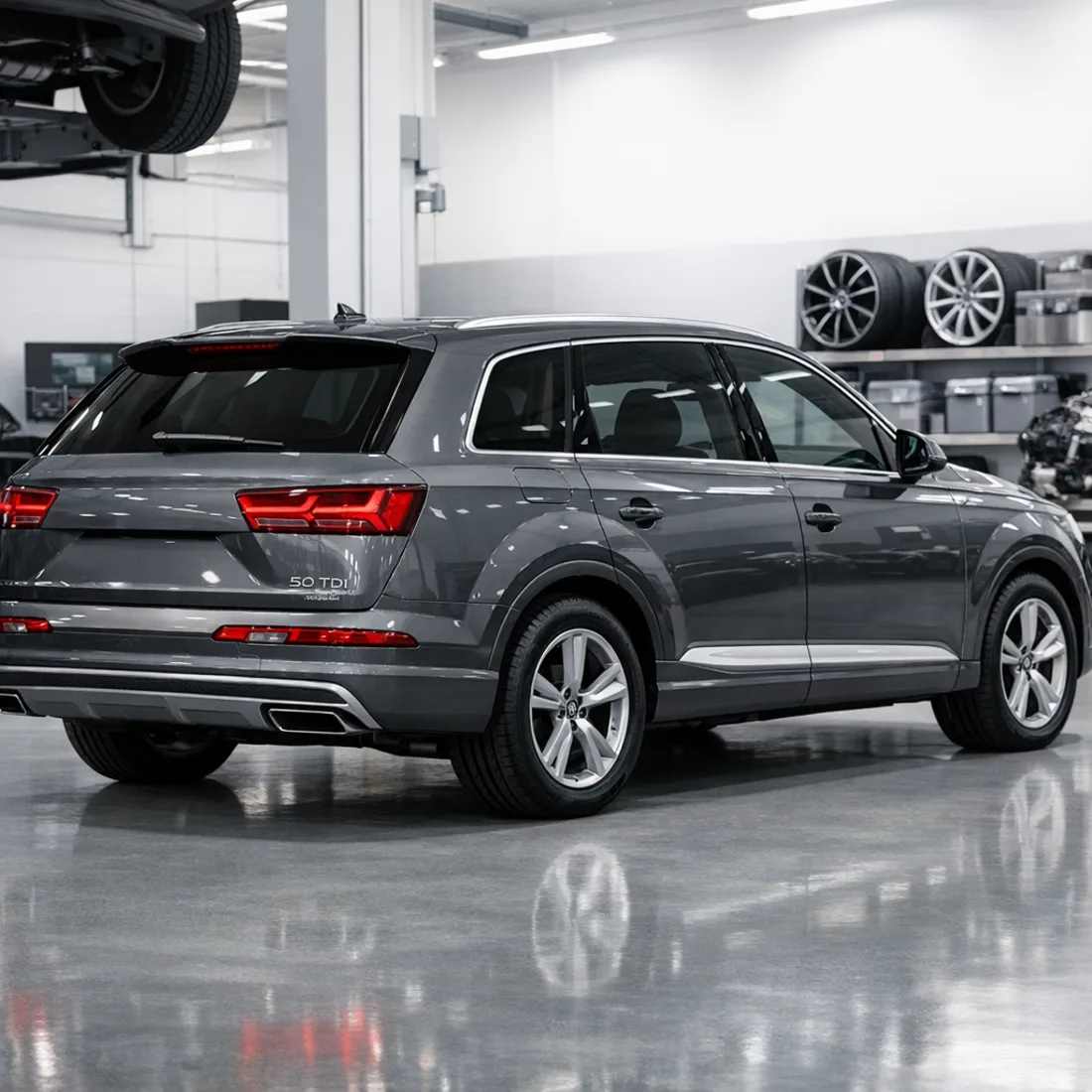

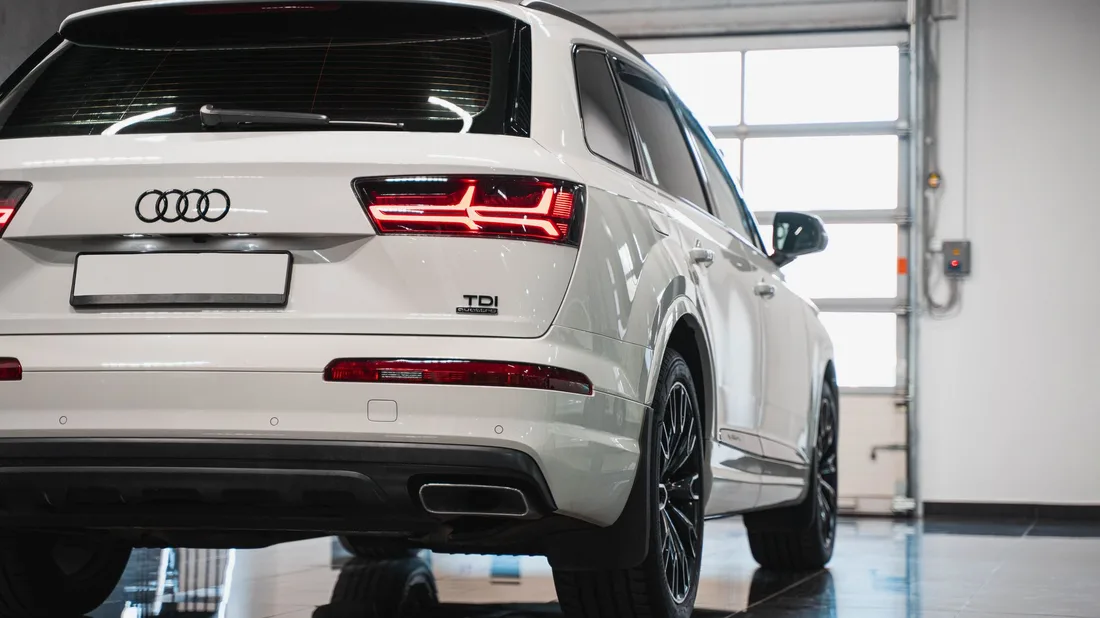

Q7 3.0 TDI (4L) | CLZB V6 | 245hp / 550Nm
The 4L Q7 is the one that set the template: a big, imposing diesel SUV that could genuinely carry seven people while pulling hard enough to surprise most things on the road. The CLZB is a 2967cc V6 diesel producing 245hp and 550Nm, and in the facelift 4L spec it's managed by a Bosch EDC17CP44 ECU. This is a well engineered unit but it has real weak points you need to know about before buying.
The single most discussed item on the CLZB is the timing chain. It lives at the rear of the engine, which means access is the opposite of convenient. Stretch or tensioner wear shows up as a rattle on cold starts, and if you own a 4L Q7 and haven't had that chain inspected, it's overdue. Oil consumption and sludge are also in the conversation on higher mileage examples, and the oil cooler has a known tendency to seep. Turbo actuator faults crop up too, usually presenting as a loss of power or boost irregularity under load.
Beyond the drivetrain, the EGR valve and intake tract carbon up progressively on any diesel used for short urban trips. The DPF needs regular high speed runs or active regens to stay healthy. Where AdBlue is fitted, the SCR system adds another layer of fault potential. The air suspension on this model is genuinely capable but the compressor and struts do wear, and when they go the car drops uncomfortably.
-
Timing chain and tensioner wear at the rear of the engine
-
Oil sludge and elevated oil consumption
-
Oil cooler seepage
-
Turbo actuator faults causing power loss
-
EGR valve and intake system carbon build up
-
DPF clogging on short trip duty cycles
-
Air suspension compressor and strut wear
If you own a 4L Q7 and haven't had that chain inspected, it's overdue.
The chain lives at the rear of the engine, which means access is the opposite of convenient.
We diagnose the 4L with the factory VAG platform ODIS, not a generic scan tool. That matters because ODIS lets us run guided functions, force a DPF regen, read live injection data and perform coding properly. A generic reader will pull fault codes but won't tell you why they're there.
Routine service on the CLZB covers oil and filter with the correct low SAPS grade, air, fuel and cabin filters, glow plugs, drive belts including the auxiliary belt, wipers, brake pads and rotors. We also handle timing chain work, DPF and EGR cleaning or replacement, AdBlue repairs where applicable, and gearbox servicing for the automatic transmission.
Get your Q7 or SQ7 booked in with a specialist who knows the platform properly.
Q7 50 TDI (4M) | 3.0 V6 TDI | 286hp / 620Nm
The 4M is a proper step up from the 4L. The car lost significant weight, the interior quality went up a notch, and the 3.0 V6 TDI in 50 TDI tune makes 286hp and 620Nm managed by a Bosch MD1CP004 ECU. Same displacement as the CLZB at 2967cc, but a revised compression ratio of 16.0:1 and meaningfully more power and torque. If you're deciding between the two diesel Q7s, the 4M 50 TDI is the one to have.
The timing chain concern didn't go away with the 4M. It's still at the rear of the engine, still expensive to access, and still something to check carefully on any used example. The oil cooler and thermostat housing have a tendency to seep on these too, which is a familiar story from the 4L. What's new on the 4M is a more involved AdBlue SCR setup. The NOx sensors and SCR catalyst add fault complexity, and the EGR can trigger persistent warning messages if it's carboned up or starting to fail. DPF clogging on short trip driving is exactly the same story as the 4L: the car needs proper regen cycles to stay clean.
Air suspension compressor and strut wear is, if anything, more of a talking point on the 4M because the car is heavier on its feet than it looks and the system works hard. Higher mileage 4M Q7s regularly need compressor attention.
-
Timing chain and tensioner wear (rear of engine)
-
Oil cooler and thermostat housing seepage
-
AdBlue SCR system faults and NOx sensor codes
-
EGR carbon build up and failure
-
DPF clogging on low speed or short trip use
-
Air suspension compressor and strut wear
-
Intake carbon deposits typical of direct injection
Stage 1 tuning on the 4M 50 TDI: 345hp and 710Nm from a stock 286hp and 620Nm.
The mid range pull becomes properly addictive.
ODIS is again the right tool here. The 4M has more control units to read than the 4L, including the transmission controller, air suspension module and the AdBlue system, and a generic reader simply won't reach all of them correctly. Service items are similar to the 4L: low SAPS diesel grade oil and filter, fuel filter, air and cabin filters, glow plugs, drive belts, wipers. We also cover brake pad and rotor work, suspension and air spring servicing, EGR and DPF work, and AdBlue and NOx sensor repairs.
Stage 1 tuning on the 4M 50 TDI is one of the highlights of this model: 345hp and 710Nm from a stock 286hp and 620Nm, a gain of 59hp and 90Nm. The mid range pull becomes properly addictive.
Q7 55 TFSI (4M) | EA839 3.0T V6 | 340hp / 500Nm
The 55 TFSI is the petrol option in the 4M family and it's a fundamentally different animal. The EA839 3.0T V6 is a turbocharged petrol unit at 2995cc, 340hp and 500Nm, running a dual ECU setup across a Temic AL552 and a Bosch MG1CS002. Many of these cars also carry a 48V mild hybrid system with a belt alternator starter unit, which adds genuine complexity that most workshops aren't set up to diagnose correctly.
Coming from the diesel Q7s, the absence of DPF, EGR soot and AdBlue drama feels like a relief. But the EA839 has its own list. Carbon build up on the intake valves is the most common issue, inherent to direct injection petrol engines because fuel isn't washing the backs of the valves on every stroke. On higher mileage examples this progressively robs throttle response and idle quality. The water pump and coolant thermostat are worth watching too, and the timing chain should be listened to for tensioner noise as the car accumulates mileage.
The 48V mild hybrid system is genuinely clever but adds a layer of fault potential the 50 TDI doesn't have. Belt alternator starter issues, 48V subsystem faults and related warning lights are something we see on these regularly. Reading all of this properly needs ODIS: the dual ECU architecture means a generic tool will often miss half the picture.
-
Intake valve carbon deposits from direct injection
-
Water pump and coolant thermostat failure
-
48V belt alternator starter system faults
-
Timing chain tensioner noise at higher mileage
-
Air suspension compressor and strut wear
Stage 1 takes it from 340hp and 500Nm to 410hp and 600Nm.
That puts it well clear of the stock 50 TDI on paper, and the petrol delivery character makes it feel even sharper at the top of the rev range.
Service on the 55 TFSI calls for oil and filter to the correct VW 508 00 or 504 00 specification, air and cabin filters, spark plugs on the proper change interval, drive belts and wipers. We also cover brake pad and rotor work, coolant and thermostat service, 8-speed Tiptronic gearbox oil changes, air suspension, and sensor faults across all modules including the 48V system.
The tuning case for the 55 TFSI is strong. Stage 1 takes it from 340hp and 500Nm to 410hp and 600Nm, a gain of 70hp and 100Nm. That puts it well clear of the stock 50 TDI on paper, and the petrol delivery character makes it feel even sharper at the top of the rev range.
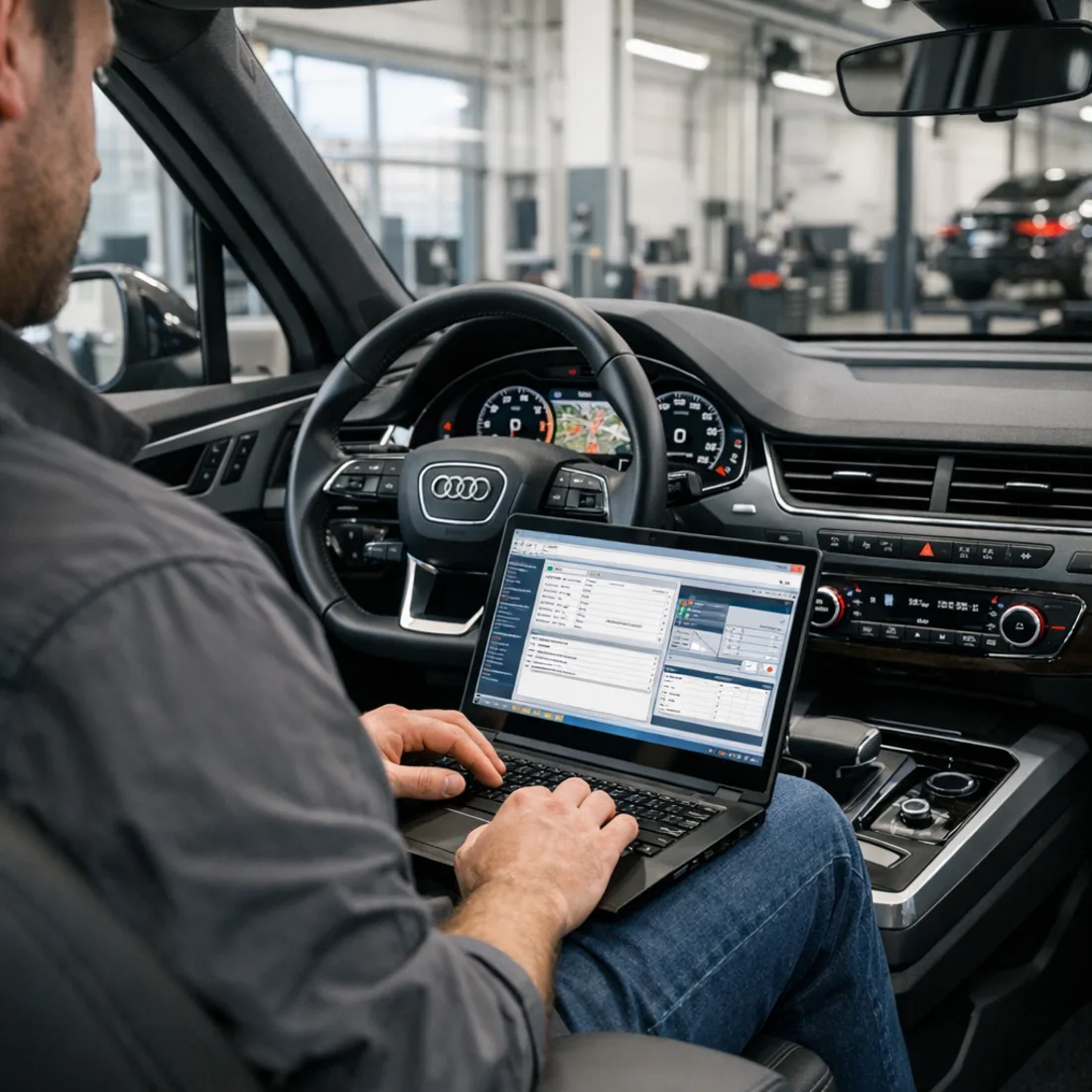
SQ7 4.0 TDI (4M) | CZAC V8 Bi Turbo | 435hp / 900Nm
Then there's the SQ7. Same 4M platform, same seven seats, same air suspension, but the CZAC is a 3956cc V8 diesel producing 435hp and 900Nm. The torque figure alone sets it apart from everything else in the family. It achieves that number through a triple charging setup: two conventional turbos plus an electrically driven compressor running off the 48V subsystem, which fills the lag gap before the big turbos spool. It's genuinely clever and genuinely complex, and most workshops in Auckland have never seen one properly.
The electric compressor and 48V system are the first thing to understand. Faults here can present as reduced power or warning lights that look unrelated, and reading the 48V control unit correctly requires ODIS. Oil leaks are common on higher mileage CZAC engines, and high pressure fuel system wear is worth checking on any used example. Carbon build up on the intake is the same direct injection story as the 55 TFSI, and the EGR, DPF and AdBlue SCR setup on this engine is as complex as it gets in the Q7 family. The timing chains live at the rear of the block, exactly like the V6 diesel models.
-
Electric compressor and 48V subsystem faults
-
Oil leaks from the V8 engine at higher mileage
-
High pressure fuel system wear
-
Intake carbon build up from direct injection
-
EGR, DPF and AdBlue SCR system faults
-
Coolant and oil cooler leaks
-
Timing chain rattle and tensioner wear (rear of block)
-
Air suspension compressor and strut wear
At 500hp and 1000Nm it makes more torque than most anything else on New Zealand roads.
Most workshops in Auckland have never seen an SQ7 properly. We have the tools and the experience.
ODIS is non negotiable on the SQ7. The number of control units, the 48V architecture and the triple charging setup mean a generic scan tool will miss critical fault data. We use ODIS to read all modules, run guided functions and carry out any necessary coding after repairs.
Routine service includes the correct spec long life oil and filter, air and fuel filters, cabin filter, glow plugs, drive belts, wipers, brake pads and rotors. We cover AdBlue, DPF and EGR servicing, sensor faults across all modules, and air suspension diagnosis and repair. Stage 1 tuning takes the CZAC from 435hp and 900Nm to 500hp and 1000Nm, a gain of 65hp and 100Nm.
How to Pick Between Them: Buying Advice Across the Range
If you're shopping the Q7 range used, here's the honest picture. These are four distinct models, not four generations. Three of them share the 4M body and are built around very different powertrains. Only the 4L stands apart as its own earlier bodystyle.
The 4L is the most affordable entry point, and it's genuinely good value if the timing chain and oil cooler have been attended to. Walk away from any 4L that rattles on cold start or has an incomplete service history.
The 4M 50 TDI is the sweet spot of the diesel range: meaningfully more capable than the 4L, lighter, better built inside, and with a stronger tuning result available. Budget for timing chain inspection and air suspension attention as part of your ownership cost and you'll be fine.
The 55 TFSI is the right choice if you do a mix of short and long trips and prefer petrol delivery, or if you want to avoid the AdBlue and DPF management that comes with the diesels. Just expect to deal with intake carbon cleaning at some point and factor in spark plug intervals.
The SQ7 is a different proposition entirely: it's a performance machine that happens to have seven seats, and it commands a premium that reflects its complexity. It's spectacular when right, but it needs a workshop that knows the CZAC and the 48V system properly.
- On any diesel Q7 (4L or 4M), listen for cold start timing chain rattle before purchase
- Check oil cooler and thermostat housing for seepage on 4L and 4M diesel models
- Verify full AdBlue and DPF service history on 4M 50 TDI and SQ7
- On 55 TFSI, expect intake valve carbon cleaning at some point in ownership
- On SQ7, check 48V system and electric compressor function with ODIS before buying
- All models: inspect air suspension compressor and struts, particularly on higher mileage cars
- Confirm correct oil specification has been used throughout the service history
What Every Q7 and SQ7 Model Needs
Across all four models there are common threads. Every Q7 needs oil and filter changes on the correct specification for its engine, not generic supermarket shelf oil. The 4L and 4M diesels need low SAPS diesel grade oil to protect the DPF. The 55 TFSI needs the correct VW approval grade to protect the engine and 48V system. Use the wrong spec and you're shortening the life of components that are expensive to replace.
All four models have air suspension, and all four will eventually need compressor or strut attention. This isn't a fault so much as a wear item on a heavy SUV that works its system hard. Catching a compressor early, before it fully fails and leaves the car on bump stops, saves time and money.
The diesel models (4L, 50 TDI and SQ7) all need DPF and EGR attention if the car has been used predominantly in urban stop start conditions. Regular motorway runs or periodic active regens are the best prevention. Where that hasn't happened, cleaning or replacement is the fix. We fit genuine and OEM quality parts across all Q7 models. Our full car servicing covers all Q7 and SQ7 variants.
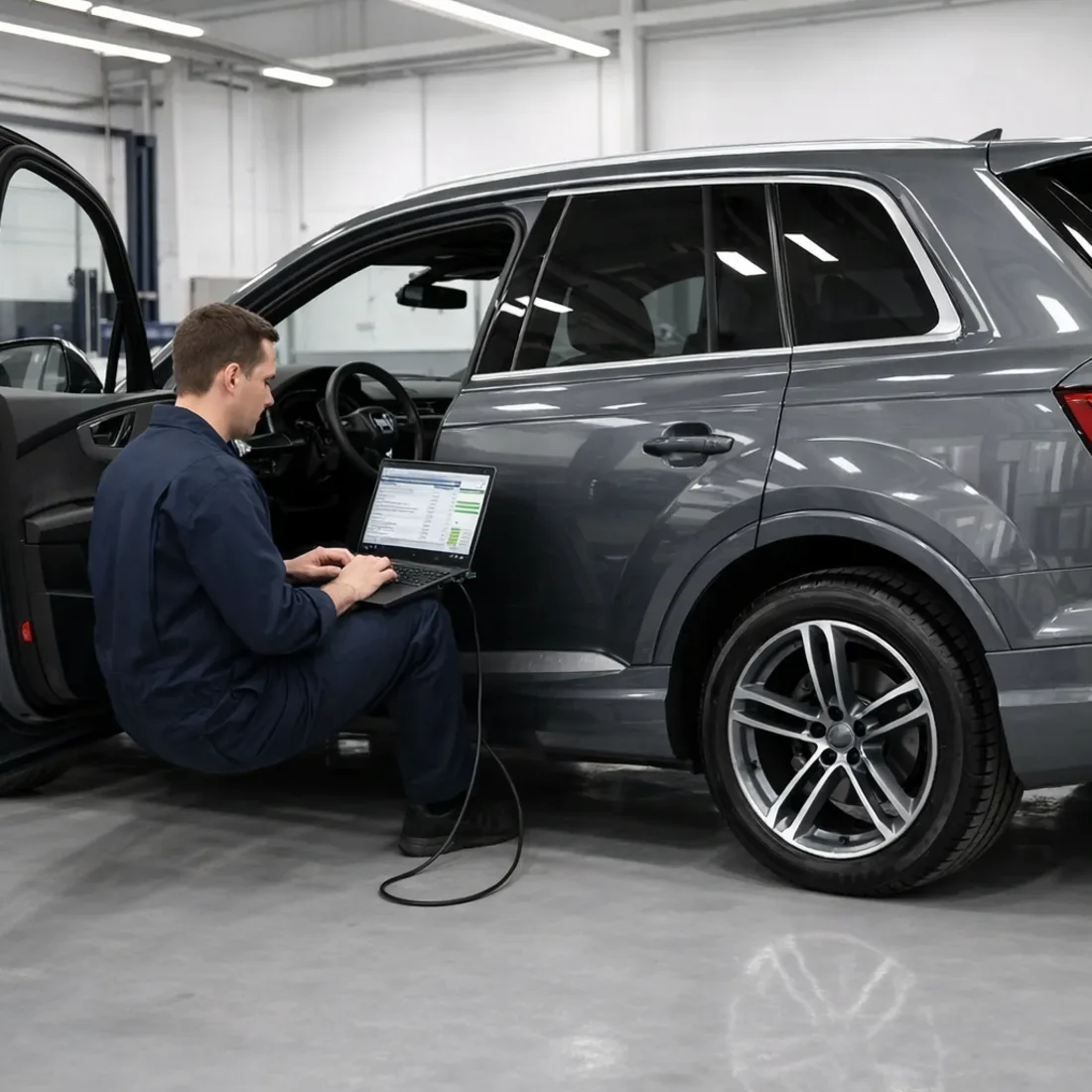
How We Diagnose Every Model Properly
Every Q7 model we work on gets diagnosed with the factory Audi platform ODIS. This isn't a preference, it's a requirement. The 4L runs a Bosch EDC17CP44, the 4M 50 TDI runs a Bosch MD1CP004, the 55 TFSI uses a dual ECU arrangement with a Temic AL552 and a Bosch MG1CS002, and the SQ7 CZAC runs a Bosch MD1CP014. Each of those requires ODIS to read guided functions, access all control units, run live data correctly and perform coding after any repair or update.
A generic scan tool can pull a fault code from the engine module. ODIS can tell you whether that EGR code is a stuck valve, a wiring fault, a sensor reading or a software condition, and it can run the guided function to confirm the repair before the car leaves. That distinction matters on a platform this complex. It's also what lets us correctly programme replacement components, update software where needed and carry out car programming and coding on any Q7 variant.
Tuning the Q7 and SQ7: What Each Model Gains
Every model in this family has real tuning potential, and the gains from a properly calibrated Stage 1 remap are more than just numbers on a dyno sheet. They translate directly to better mid range response, improved towing ability, and in the diesel cars, smoother torque delivery that makes the car feel far more effortless in day to day driving.
One of the most cost effective ways to improve the 4L's real world response without touching hardware. The CLZB responds well to a Stage 1 remap via the Bosch EDC17CP44.
Stage 1 on the 4M 50 TDI is one of the highlights of this model. The mid range pull becomes properly addictive, and the improvement in towing and overtaking response is immediately noticeable.
The 55 TFSI's dual ECU setup across the Temic AL552 and Bosch MG1CS002 is accounted for in the calibration. That puts it well clear of the stock 50 TDI on paper, and the petrol delivery character makes it feel even sharper at the top of the rev range.
The SQ7's 48V system and triple charging architecture are accounted for in the calibration. At 500hp and 1000Nm it makes more torque than most anything else on New Zealand roads.
All tuning is done via file service using the car's existing ECU. We write to the correct control unit for each model, and where the 55 TFSI's dual ECU setup requires co ordination across both controllers, that's factored into the calibration. This isn't a one size fits all map loaded blind, it's specific to your car, your model and your ECU.
Frequently Asked Questions
The questions we get most. Something else on your mind? Get in touch.