Audi RS4 Across Three Generations: B7, B8 and B9 Service, Repairs and Diagnostics
Three generations, two engine architectures, one unbroken mission: shove 420-plus horsepower through all four wheels while looking like a sensible family car. The RS4 story runs from the screaming naturally aspirated V8 of the B7 and B8 right through to the twin turbo V6 of the B9, and each one has its own personality, its own weak points, and its own rewards for the owner who actually maintains it. We've had all three on the hoist in Penrose, and this page covers what you need to know about every generation.
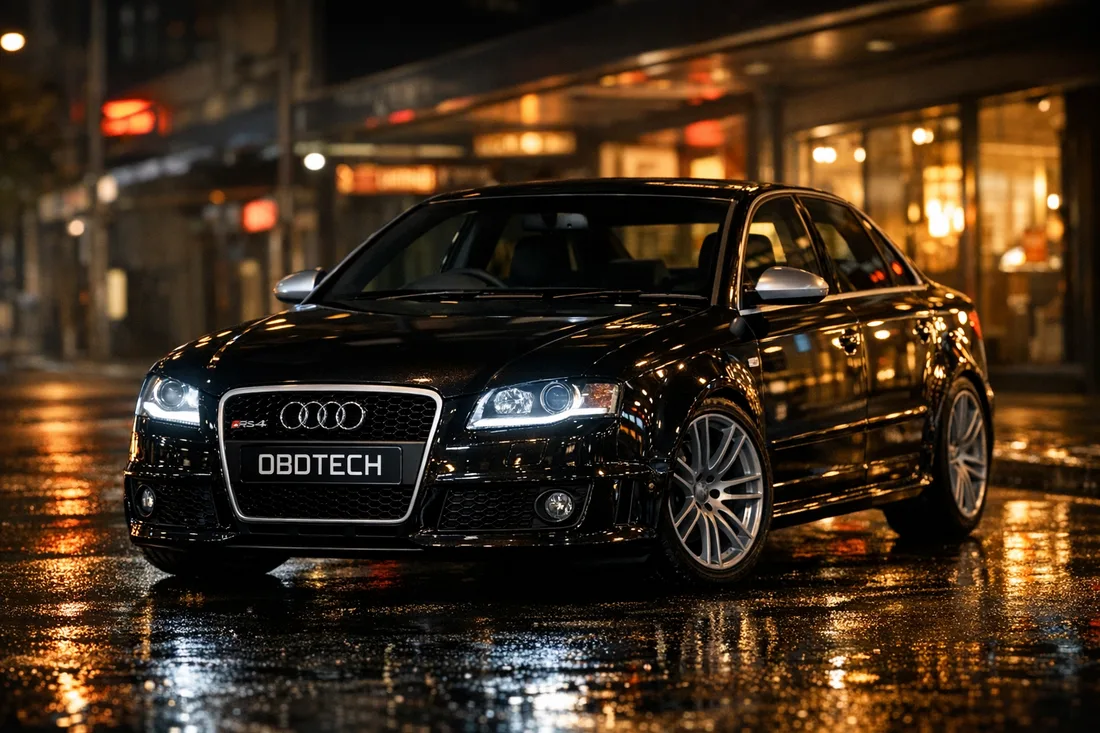
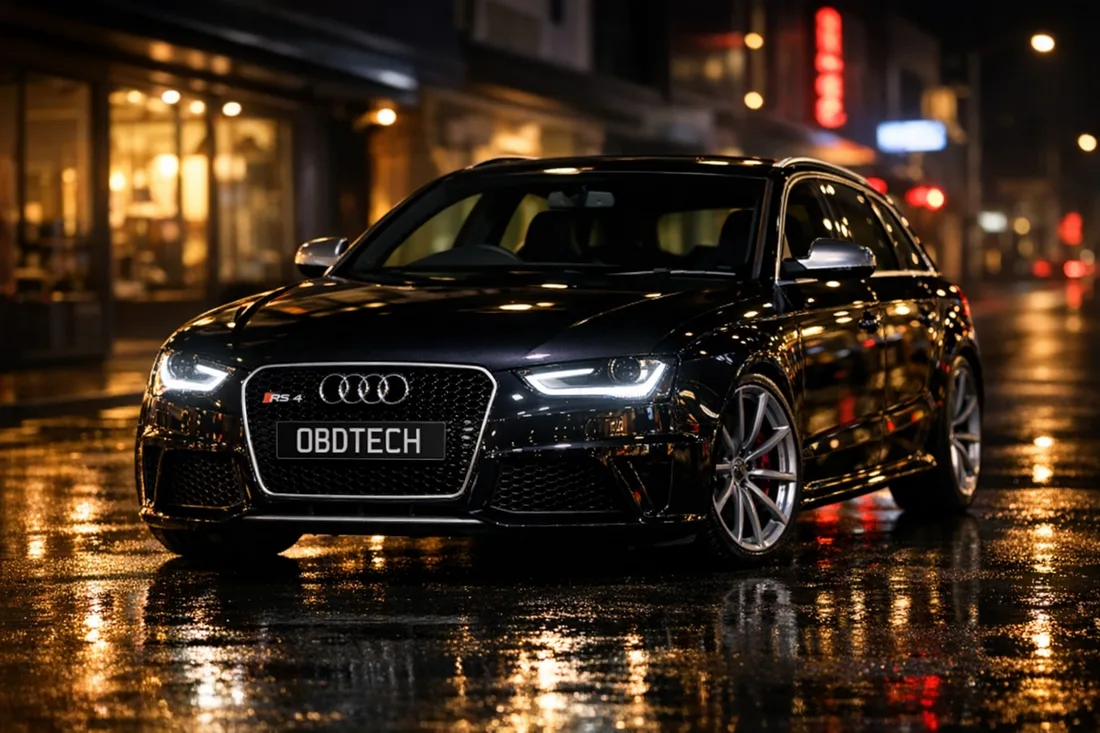

RS4 B7 4.2 FSI V8: The Original High Revving Icon
The B7 RS4 is where the modern RS4 legend really took hold. Picture 420 horsepower wrapped in what looks, from the outside, like a fairly sensible Audi estate or saloon. It revs past 8,000 rpm, sounds like nothing else on a New Zealand road, and rewards the owner who looks after it properly. The catch is that looking after it properly means understanding what the BNS engine actually needs.
The 4.2 FSI V8 displaces 4,163 cc with an 84.5 x 92.8 mm bore and stroke, runs a 12.5:1 compression ratio, and makes its 420 hp and 430 Nm through a free revving, naturally aspirated architecture. The ECU is a Bosch MED9. That high compression ratio is part of why this engine sounds so special, and it's also part of why it demands premium fuel and clean internals.
The cam follower issue is the one that catches people out most often. The mechanical high pressure fuel pump sits on the camshaft and the follower between them can wear rapidly if oil changes are stretched. By the time it shows up as a fuel pressure fault, damage is often already done. We inspect these as a matter of course on any B7 that comes in for a service.
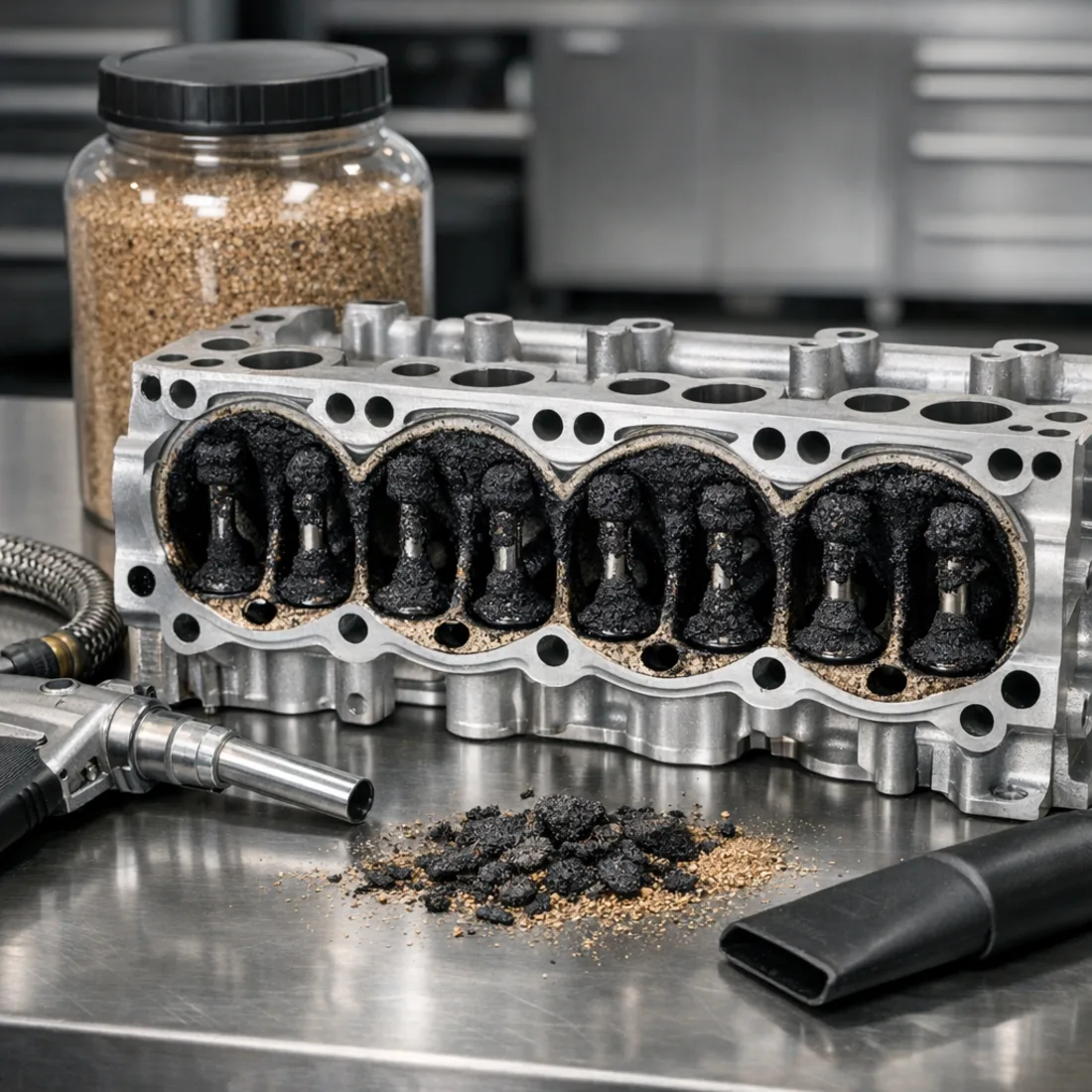
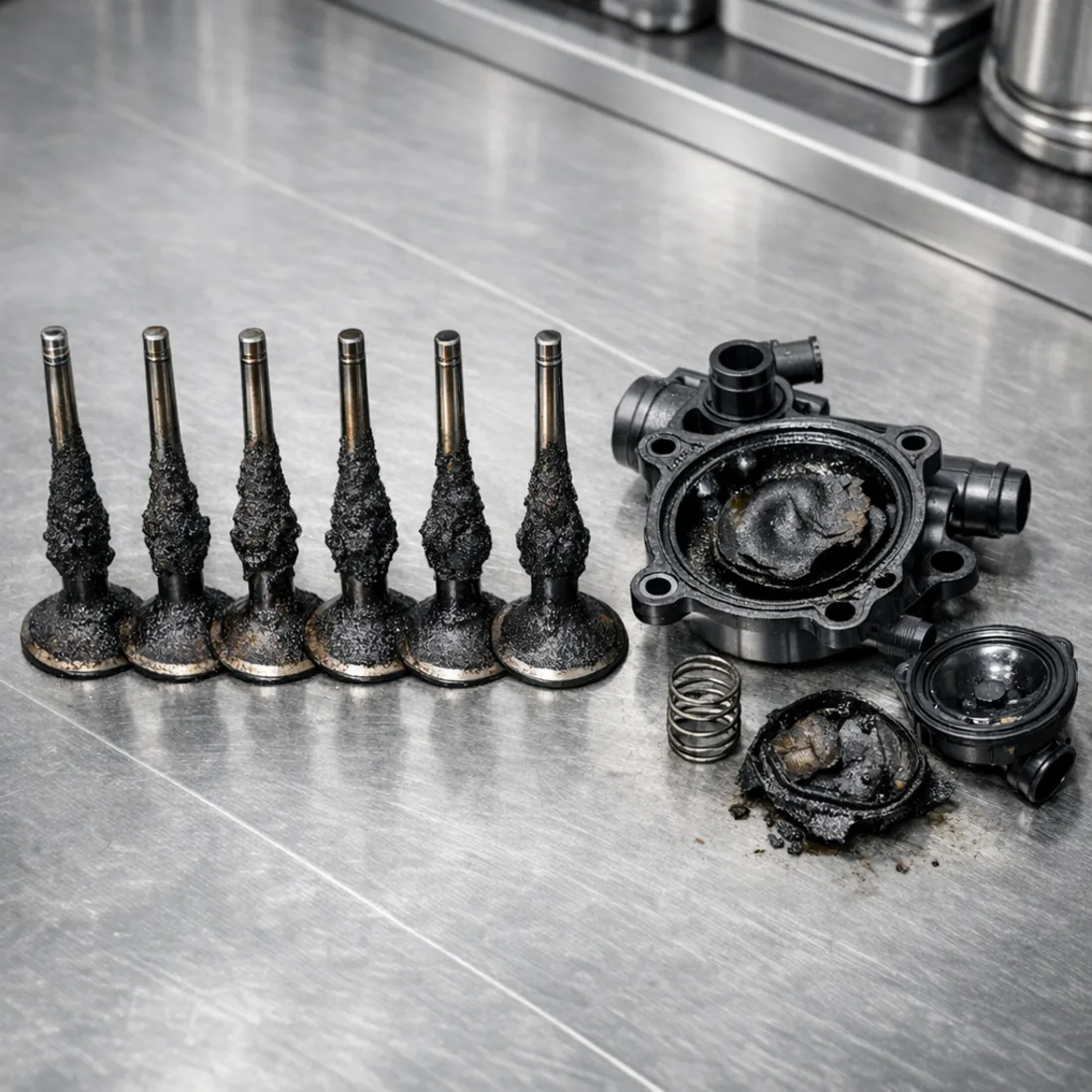
Carbon on the intake valves is the other big one. Because this engine uses direct injection, fuel never washes over the valves, and oily blowby deposits accumulate over time. When it gets bad enough, idle quality drops, cold start misfires appear, and power falls off. Walnut blasting the intake ports is the proper solution, and it makes a noticeable difference.
-
Carbon build up on intake valves from direct injection, walnut blasting is the fix
-
FSI mechanical fuel pump and cam follower wear, worth inspecting at every major service
-
Timing chain rattle on cold start, check for any slack before it becomes expensive
-
Oil consumption and tired PCV components on higher mileage examples
-
Intake flap and cam adjuster sensor faults that trigger warning lights
-
Suspension bushes, control arms and dampers that wear under spirited use
-
Spark plug condition, these high compression cylinders are unforgiving of old plugs
It revs past 8,000 rpm, sounds like nothing else on a New Zealand road, and rewards the owner who looks after it properly.
The BNS engine is not forgiving of deferred maintenance.
We diagnose the B7 using the factory VAG platform ODIS rather than a generic scanner. That matters because all the control modules, cam adjuster adaptations, fuel trim data and ignition system status read correctly through the factory platform in a way a cheap code reader simply won't show you. If a B7 comes in with a misfire or a rattle and someone's already been through it with a generic tool without finding the cause, we're not surprised.
Routine B7 servicing covers the correct grade oil and filter, air and cabin filters, drive belts, spark plugs and a full brake service with pads and rotors matched to the RS specification. If there's a Stage 1 tune on your radar, the BNS engine does respond, gaining around 20 hp and 25 Nm with a proper remap, and we can layer in options like pop and bang, start/stop off and Vmax removal at the same time.
Get your RS4 booked in with a proper specialist.
RS4 B8 4.2 FSI V8: The Last Naturally Aspirated Hurrah
The B8 RS4 arrived with the same 4.2 FSI V8 architecture as the B7 but with a different engine code, CFSA, a Bosch MED17.1.1 ECU, and the output pushed up to 450 hp with the same 430 Nm. The compression ratio dropped slightly to 11.0:1 versus the B7's 12.5:1, and bore and stroke remained 84.5 x 92.8 mm. It still revs to 8,250 rpm and it's still a screamer, but the fuelling and management system are a step more modern, which makes factory diagnostics and adaptation resets more involved.
The B8 inherited the B7's carbon build up problem because it's still a direct injection V8. The FSI cam follower wear issue carried over too, though the CFSA spec addresses some of the worst tendencies of the older BNS. Timing chain and tensioner wear at higher mileage became more of a talking point on the B8 specifically, and camshaft wear is worth investigating on any high mileage example that's been run on poor oil or stretched service intervals.
The timing chain situation is something to take seriously on a B8 with significant kilometres. A worn tensioner will rattle briefly on a cold start, and if that's what you're hearing, don't ignore it. The chain itself and the guides are all accessible but it's not a cheap job, and catching it before the chain jumps is a very different proposition to dealing with the aftermath.
Compared to the B7, the B8 feels slightly more refined and its ECU responds well to tuning. Stage 1 on the CFSA picks up around 25 hp and 30 Nm, modest gains on a naturally aspirated engine but the throttle response and overall character sharpens noticeably. We can also add pop and bang mapping, start/stop deactivation and Vmax removal in the same session.
-
Carbon build up on intake valves, the same walnut blast remedy as the B7
-
Timing chain and tensioner wear, listen for any cold start rattle
-
Camshaft and cam follower wear, especially on cars with irregular servicing
-
Coil pack failures causing misfires, worth checking all eight at once
-
Oil consumption, check levels between services and note the rate
-
Brake wear, the RS spec brakes work hard and pads and rotors don't last as long as on a standard A4
The B8 is the sweet spot for many buyers. It's the last naturally aspirated RS4, which means it holds a certain cultural value among enthusiasts.
A sorted B8 is a brilliant car that hasn't yet hit the sharp end of depreciation recovery that the B7 has.
We use ODIS on the B8 just as we do on the B7 and B9. The MED17.1.1 ECU supports guided functions and adaptation resets that are essential after work like throttle body cleaning, coil pack replacement and cam adjuster servicing. Getting those adaptations wrong leaves the car running rough even after a perfectly good mechanical repair, so factory tooling isn't optional on these.
One practical note on brakes: the RS4 B8 can be fitted with carbon ceramic brakes from the factory, and these need specific attention. Standard brake pad compounds aren't appropriate for ceramic discs, and the wear characteristics are completely different. If you're not sure what's on your car, bring it in and we'll confirm before quoting any brake work.
RS4 B9 2.9 TFSI Bi Turbo: Modern Muscle, New Fault Set
The B9 RS4 is a genuine departure. Where the B7 and B8 were defined by their naturally aspirated V8 character, the B9 switches to the 2.9 TFSI EA839 bi turbo V6, engine code DECA. It's shared with the RS5, managed by a Bosch MG1CS002 ECU, displaces 2,984 cc with an 84.5 x 86.0 mm bore and stroke, and runs a 10.0:1 compression ratio. Stock output is 450 hp and 600 Nm, and that torque figure tells you everything about how this engine operates differently from the V8 cars. Where the B7 and B8 required revs to make power, the DECA shoves 600 Nm at you from low in the rev range. It's a different kind of fast.
Does this mean the B9 is the better car? Depends what you want. The B9 is quicker in a straight line, more comfortable to daily, and its twin turbo architecture means more tuning headroom. The V8 cars have a character and a soundtrack that the B9 simply doesn't replicate. They're complementary rather than comparable.
The PCV system on the DECA is worth keeping an eye on. When it starts to fail, you'll often see increased oil consumption, a rough idle, and sometimes a fault for boost or vacuum leaks before the real cause is identified. A generic scanner will give you a code but won't necessarily point you straight to the breather system. ODIS lets us dig properly into boost control and fuel trim data to understand what's actually happening.
The coolant system is another one. Thermostat housing leaks on the B9 RS4 tend to start small, weeping quietly until something more dramatic happens. If you're seeing any coolant smell or a slight drop in coolant level, get it looked at. We replace with genuine OEM parts only, so there's no repeat visit for a substandard aftermarket housing failing six months later.
-
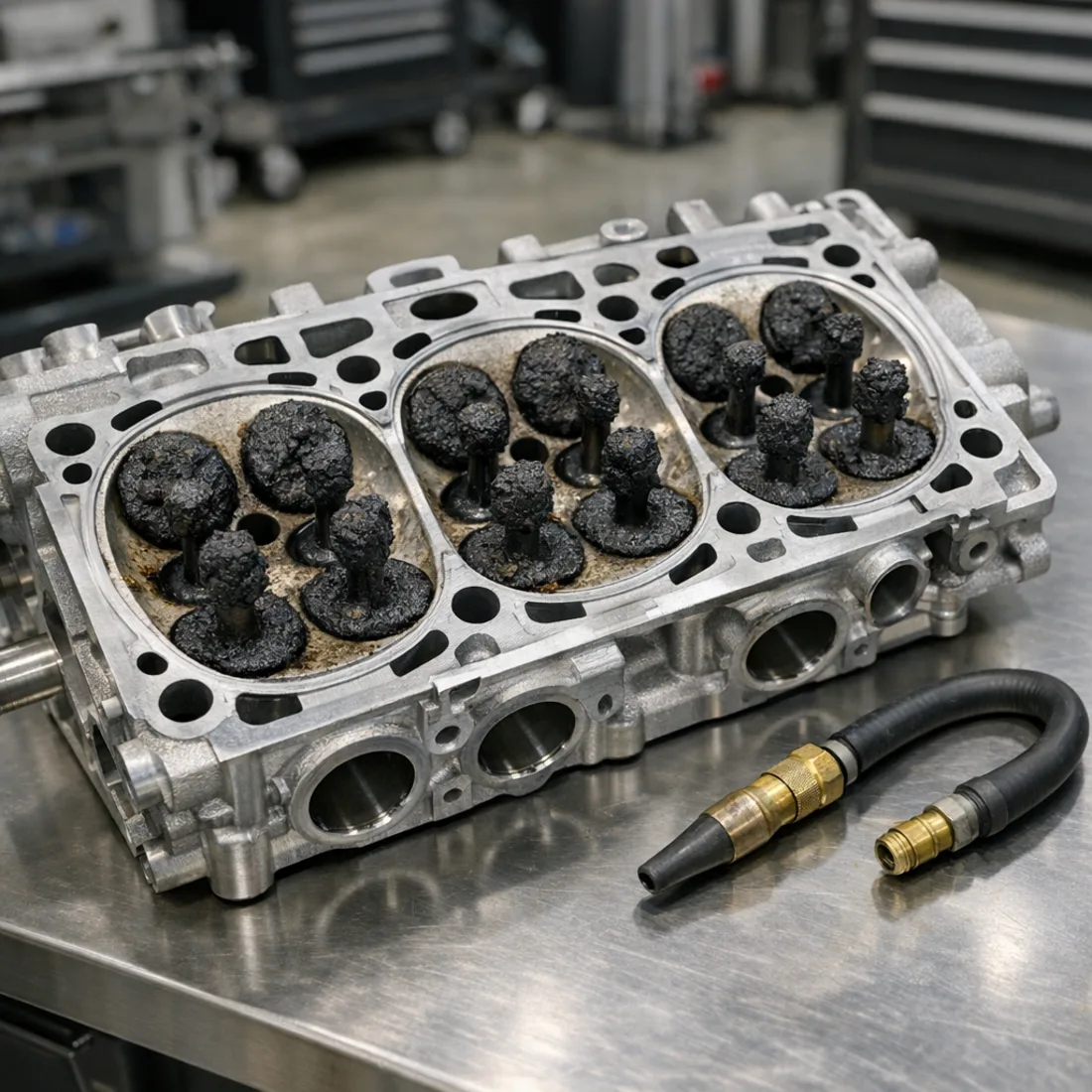
Carbon build up on intake valves, still direct injection, still needs periodic walnut blasting
-
PCV and breather system faults causing oil consumption and rough running
-
Coolant and thermostat housing leaks, catch them before they become overheating events
-
High pressure fuel pump and injector wear at higher mileage
-
Quattro driveline and eight speed gearbox checks, confirm correct fluid and operation
-
Oil consumption, monitor between services and note any increase
Stage 1 on the DECA brings output to 510 hp and 780 Nm, gains of 60 hp and 180 Nm over stock.
That's a substantial step, achieved on a completely stock hardware setup.
Tuning the B9 is where things get genuinely exciting. Stage 1 on the DECA brings output to 510 hp and 780 Nm, gains of 60 hp and 180 Nm over stock. That's a substantial step, and it's achieved on a completely stock hardware setup. The twin turbo V6 architecture has real headroom, and the Bosch MG1CS002 ECU is well supported. We can combine the power tune with DTC removal, pop and bang mapping, start/stop deactivation, intake flap control and Vmax removal in one calibration session. Our tuning service covers all of this properly, with files written to your specific car rather than generic off the shelf maps.
Diagnostics on the B9 use ODIS at factory level. The MG1CS002 ECU requires the correct diagnostic platform for live data, adaptation resets after mechanical work, and module coding. After a gearbox fluid service, for instance, the transmission needs to relearn its adaptation values through a guided function. That's not something a generic scanner can initiate. The same applies to battery replacement coding, throttle body adaptations, and injector quantity corrections after injector replacement. Routine B9 servicing covers the correct grade oil and filter, air and cabin filters, spark plugs on the correct OEM specification, brake pads and rotors matched to the RS setup, drive belt inspection, and coolant and gearbox fluid where due. If you're bringing in a B9 that hasn't had a specialist look at it before, we'll do a full check of the PCV system, coolant circuit and fuel system health at the same time.
Picking Between Them: Which RS4 Makes Sense Used?
If you're shopping for a used RS4 and you're weighing up the generations, here's the honest breakdown from a workshop perspective rather than a car review.
You want the most character rich RS4. These cars are now well into their second decade and a well sorted B7 with documented service history, a recent cam follower inspection, clean intake valves and a healthy timing chain is a genuinely special car. A neglected one can be an expensive project. Insist on a proper inspection before purchase. The BNS engine is not forgiving of deferred maintenance.
You want the sweet spot. It's the last naturally aspirated RS4, which means it holds a certain cultural value among enthusiasts, but it's also a step more modern than the B7 in terms of electronics and refinement. The CFSA engine has most of the same traits as the BNS but in a slightly more developed package, and parts availability is good. Watch for timing chain condition and cam follower history, and budget for an intake walnut blast if it hasn't been done.
Outright pace and refinement matter more to you than character. The B9 is the most modern, the most powerful in stock form, and the easiest to live with daily. It also has the lowest mechanical drama risk if it's been serviced correctly, because the bi turbo architecture is robust when maintained. The trade off is that you're paying more for a newer car, and the V8 soundtrack is simply gone.
- B7: buy it for the character, budget for maintenance, insist on a pre purchase inspection
- B8: the sweet spot, last of the naturally aspirated V8 RS4s, strong parts availability
- B9: quickest in stock form, biggest tuning headroom, easiest daily, no V8 soundtrack
Servicing the RS4 Family Properly
All three generations share one requirement: they need the right oil, the right intervals and the right diagnostic platform. None of these cars should be run on a generic supermarket oil, and none of them should have their service intervals stretched beyond what the factory specifies. The high compression, high revving nature of the V8 engines and the twin turbo demands of the DECA all mean that oil condition matters more than it does on an ordinary A4.
Our car servicing for the RS4 family covers the specific requirements of each generation. For the B7 and B8, that means the correct full synthetic grade for a high compression FSI V8, OEM spec filters, NGK or OEM spark plugs at the right interval, and a check of the cam follower condition as standard practice. For the B9, it means the correct low viscosity oil for the turbocharged EA839, correct spark plugs for the DECA, and a PCV and coolant system check at each visit.
Across all three generations, brake servicing is more demanding than a standard A4 because the RS setup works harder. Pads and rotors wear faster, and the spec matters. We stock and fit genuine OEM brake components only, which means the pad compounds and rotor metallurgy are correct for the RS4's operating temperatures. Fitting budget parts to a car this powerful is a false economy.
Gearbox and driveline servicing is worth calling out separately. The B7 and B8 are available in manual and automatic configurations, and the manual cars have clutch and flywheel wear to consider at higher mileage. The B9 runs an eight speed unit whose fluid and adaptation health is worth checking, particularly on cars that have covered serious kilometres or been driven hard. Fresh fluid and an adaptation reset through ODIS makes a real difference to shift quality.
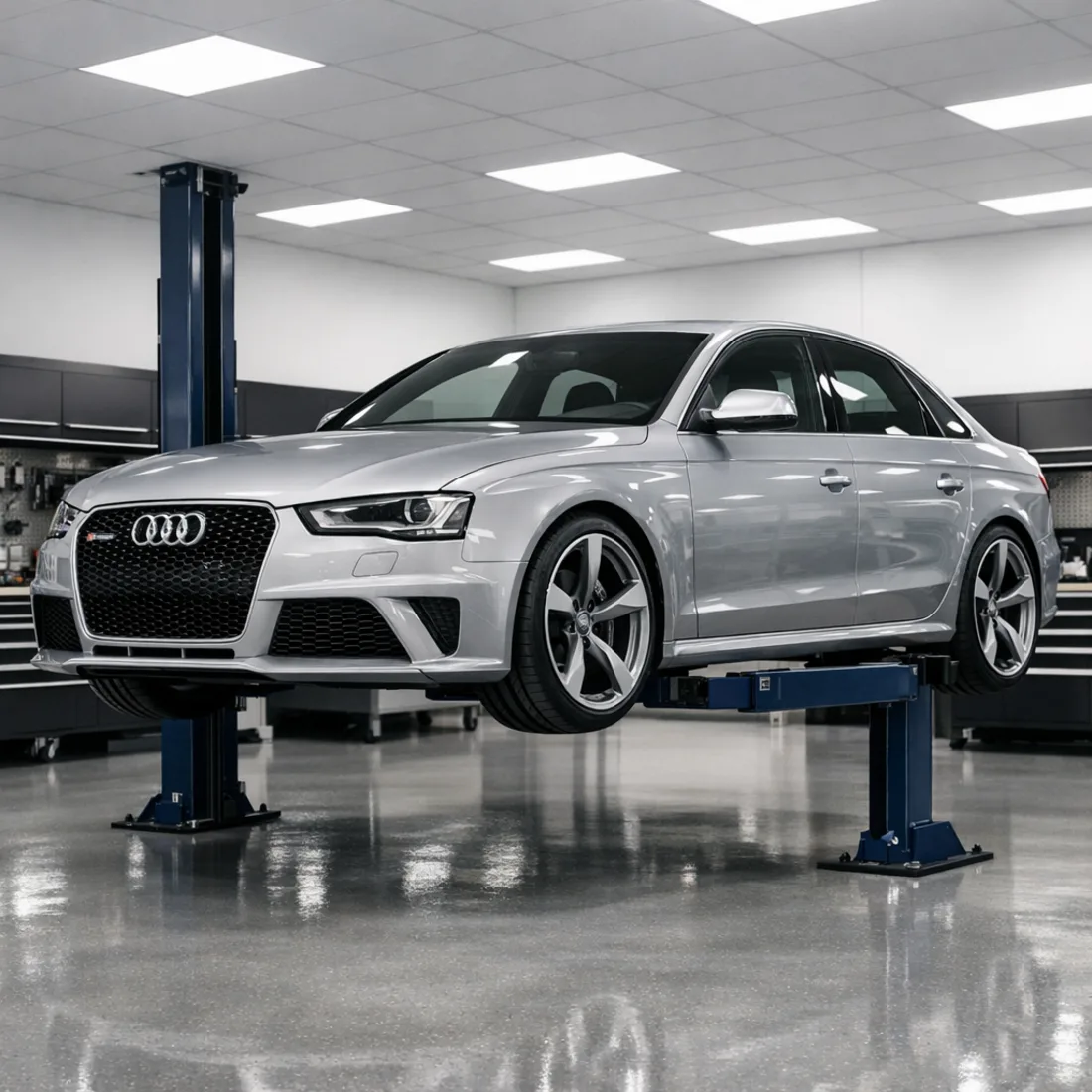
How We Diagnose RS4s: Factory Tooling, Not Guesswork
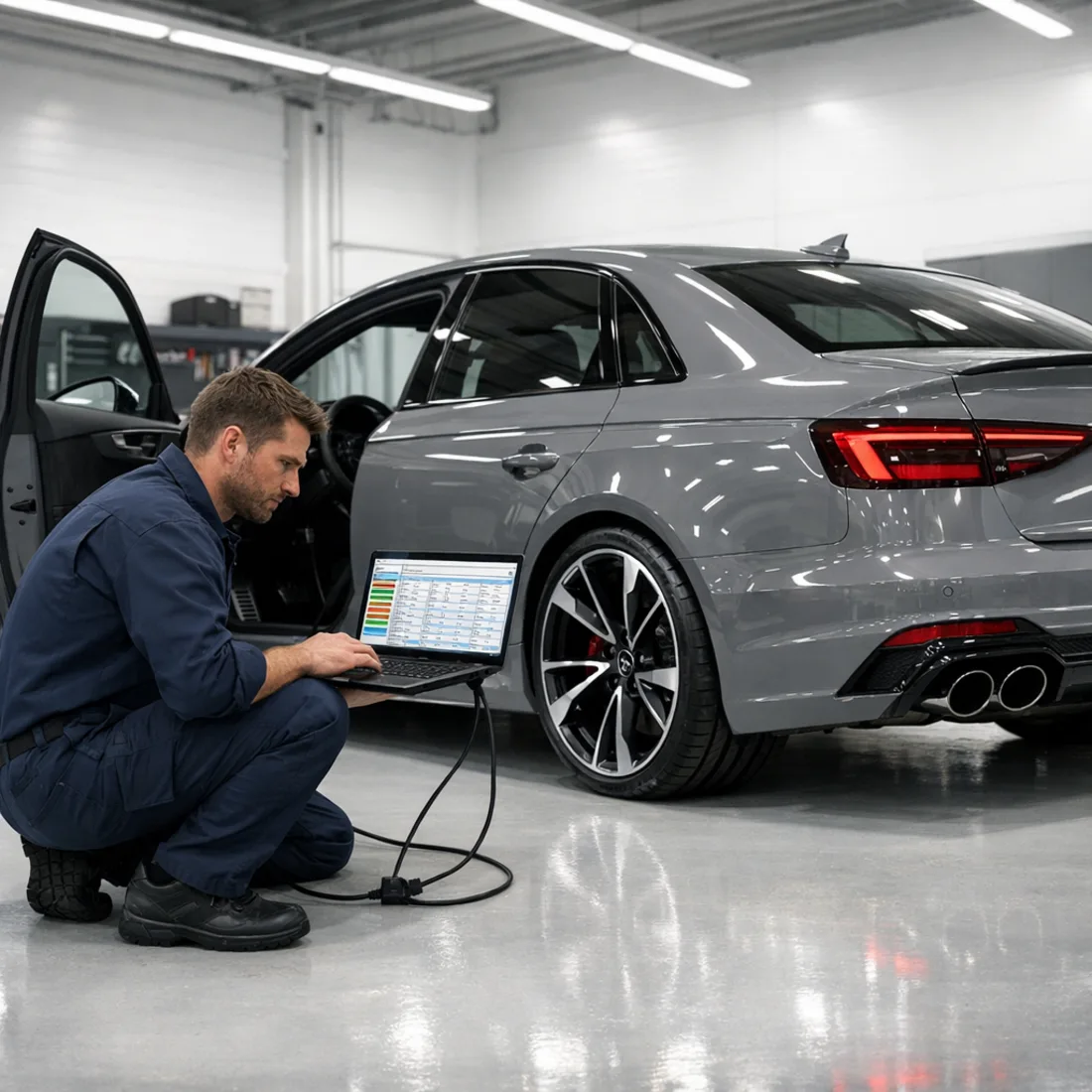
All three RS4 generations are diagnosed using the factory ODIS platform. The Bosch MED9 in the B7, the MED17.1.1 in the B8, and the MG1CS002 in the B9 all require proper factory level access to read correctly. Generic scan tools will pull basic fault codes, but they won't give you live fuel trim and injector data in the detail needed to diagnose a misfiring V8, they won't run guided functions after mechanical work, and they won't let you perform adaptation resets for throttle bodies, cam adjusters or transmission relearn procedures.
When a B7 comes in with a hesitation and codes that don't clearly point to one system, we use ODIS to look at cam adjuster timing values, fuel trim across banks, misfire counters per cylinder, and compression related data before we start pulling parts. On a B9 with a boost concern, we read the actual boost targets and actual values across both turbos, the wastegate duty cycle, and the fuel pressure against target. That's how faults get found properly the first time.
Our car programming and coding service covers module coding, variant coding and software updates across all three RS4 generations. After any module replacement, the coding has to be correct for the car to function properly. After battery replacement on the B9, the battery management system needs coding to the new battery's specification. These aren't optional steps, and they require ODIS to do correctly.
Tuning the RS4 Family
All three RS4 generations respond to Stage 1 tuning, though the numbers and the character of the gains differ considerably. Every tune is written to the specific car on the day, using the actual ECU file read directly from the vehicle, not a generic base map. If your RS4 has had any previous modifications or a prior tune, we read the current state of the ECU before we write anything new.
On a naturally aspirated engine, that's a meaningful sharpening of throttle response and top end pull. What you're doing with a B7 Stage 1 tune is optimising ignition timing, fuel delivery and throttle mapping for sharper, cleaner response across the rev range. Anti lag mapping is also available on the B7. Additional options include DTC removal, pop and bang crackle mapping, start/stop deactivation, intake flap control and Vmax removal.
Similar character to the B7 gains, it's about refinement and response more than transforming the power delivery. The throttle response and overall character sharpens noticeably. Additional options include DTC removal, pop and bang crackle mapping, start/stop deactivation, intake flap control and Vmax removal.
The bi turbo architecture means the headroom is genuinely large, and 780 Nm is a substantial real world step forward. Stage 1 is a software only calibration, no hardware changes required. We read the ECU, optimise the map for the DECA's specific fuelling, boost targets and ignition, and write it back. The gains are achieved on completely standard hardware. Additional options include DTC removal, pop and bang crackle mapping, start/stop deactivation, intake flap control and Vmax removal.
One thing worth understanding about the naturally aspirated V8 cars: the gains are modest compared to a turbo car because there's no boost pressure to increase. The B9's torque surge is a different kind of improvement entirely. All tunes are available via our file service for those with their own flashing setup.
Frequently Asked Questions
The questions we get most. Something else on your mind? Get in touch.