Audi SQ5 Across the Generations: 8R 3.0 TDI, FY 3.0 TDI and FY 3.0 TFSI
The SQ5 started life as a fast performance diesel SUV and has evolved into both a refined turbodiesel hybrid and a petrol V6 stormer, all while keeping that same promise: family hauler looks, sports car urgency. Each generation brought more power and more complexity, which means more to go wrong if you don't stay on top of it. Here's the full story from the 8R all the way through to the FY petrol, including the real faults we see in our Penrose workshop and what separates a well sorted example from a money pit.



8R SQ5 3.0 TDI Bi Turbo (326 hp)
This is where the SQ5 name started, and it's still a genuinely impressive machine. The 8R uses the CGQB engine, a 2967cc V6 turbodiesel with twin turbos producing 326 hp and 650 Nm. That torque figure is the headline: it arrives early and it's relentless. Audi managed the fuelling through a Bosch EDC17CP44 ECU paired with a ZF AL551 gearbox controller, and when both are working correctly the drivetrain is cohesive and very fast.
But these cars are getting on in years now, and there are some recurring problems our team sees regularly.
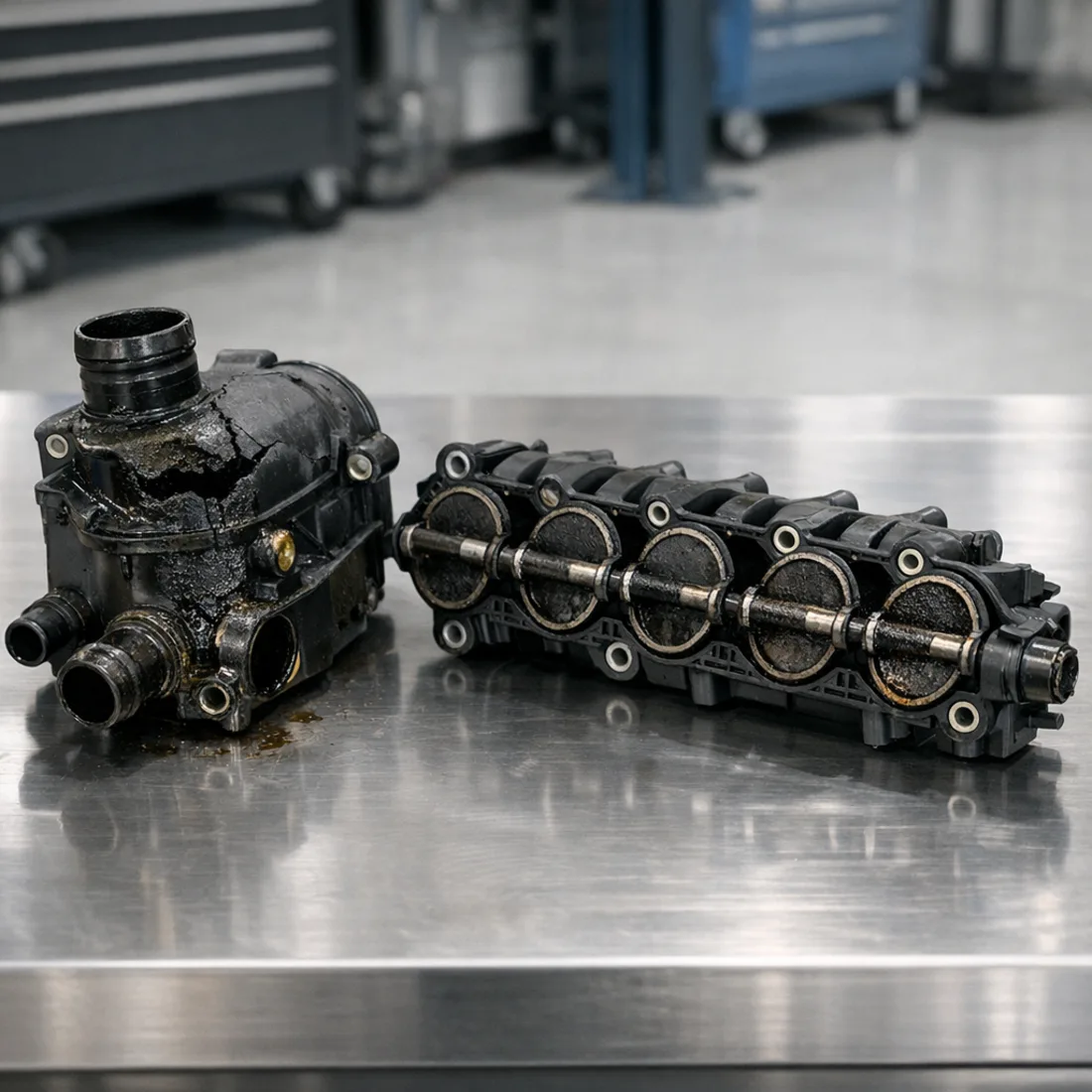
The crankcase breather fault is probably the most common one we pull in. When the oil separator fails, oily vapour recirculates into the intake, coats the swirl flaps and valves, and eventually trips faults for intake irregularities and smoky startup. Sorting it properly means replacing the separator unit with new genuine parts and cleaning the intake while everything is apart. Doing one without the other is a short term fix.
The bi turbo setup works well when healthy, but the smaller turbo's VGT actuator is a known weak point. If you're noticing a lag in mid range response or the car occasionally drops into reduced power mode, that actuator is the first thing we check after reading the live boost data through ODIS.
Timing chain rattle on cold start is worth taking seriously on any of these V6 TDI engines. The chain sits at the rear of the engine, which means the job is involved if you leave it too long. Keep the oil changes tight with the correct grade oil and don't ignore early cold start rattles.
-
Crankcase breather and oil separator failure, which causes oil misting into the intake and sooty inlet runners
-
Swirl flap wear and carbon build up in the intake ports, leading to rough idle and reduced power
-
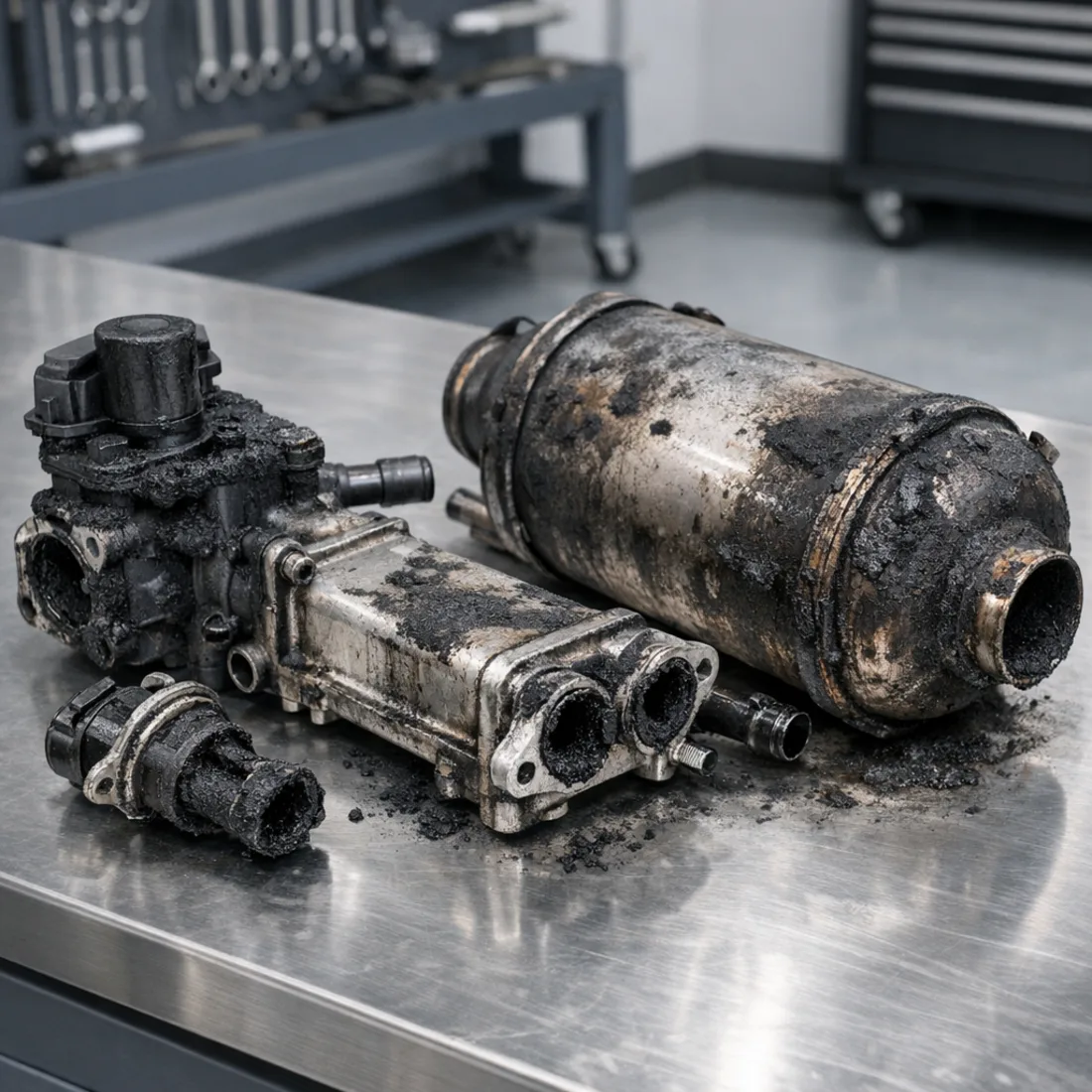
EGR cooler and EGR system carboning, sometimes to the point of sticking valves and boost leaks
-
Twin turbo actuator faults, typically on the smaller variable geometry turbo, causing slow spool or limp mode
-
Timing chain and tensioner wear at the rear of the engine, worth catching early before it becomes a full chain job
-
High pressure fuel system concerns and injector wear on higher mileage cars
The crankcase breather fault is probably the most common one we pull in.
Sorting it properly means replacing the separator unit with new genuine parts and cleaning the intake while everything is apart.
Routine servicing on the 8R covers oil and filter with the correct long life spec, air filter, fuel filter, cabin filter, glow plugs, drive belts, brake pads and rotors. The DPF and AdBlue system also need attention on New Zealand roads where short runs are common, since DPF loading on a car that never gets a proper highway run is a recurring issue we see.
On the tuning side, the CGQB responds very well to a Stage 1 remap. We can take it from the factory 326 hp and 650 Nm to around 380 hp and 800 Nm. That's a meaningful real world difference, particularly in overtaking and towing, and it's done without touching hardware.
Get your SQ5 booked in with a proper specialist.
FY SQ5 3.0 TDI (341 hp, 48V Mild Hybrid)
The FY generation diesel SQ5 is a significant step up in sophistication from the 8R. Power climbs to 341 hp and torque to 700 Nm, and the car gains a 48V mild hybrid system with a belt driven starter generator that handles stop start more smoothly and recovers braking energy. Most notably, there's an electrically powered compressor that fills the turbo lag gap at low revs before the main turbo comes in. In daily driving, the result is almost seamless response from idle upwards. The ECU setup is more complex too, with a Bosch MD1CP004 primary engine ECU, a ZF AL552 gearbox unit, and a Bosch MD1CS014 also in the mix.
The FY diesel fixed some of the 8R's rougher edges but introduced its own watch points.
The AdBlue system on the FY diesel deserves specific attention. These cars can enter a countdown to no restart if an SCR fault isn't cleared in time, and generic tools can't properly interrogate the full fault tree. We use the factory ODIS platform to read every module, run guided diagnostics and carry out proper resets and coding after repairs. There's no shortcut here.
The 48V system is genuinely clever but it does add another layer of electrical complexity. A fault in the starter generator or its control module can show up as everything from rough idle to warning lights that seem unrelated. Proper diagnosis matters more than ever on this generation.
-
EGR cooler and valve carboning remains a persistent issue, carried over from the 8R with similar consequences
-
DPF loading on cars used mainly for short urban trips, triggering regeneration warnings and eventually limp mode
-
AdBlue and SCR dosing faults that can cause no restart warnings if the AdBlue level gets critically low or the dosing system malfunctions
-
48V mild hybrid electrical faults from the belt driven starter generator, often showing up as charging system warnings or rough stop start behaviour
-
Electric compressor faults on the low end response side, noticeable as flat initial throttle response
-
Timing chain wear, same rear of engine location as the 8R: tight oil change intervals and genuine oil spec are essential
These cars can enter a countdown to no restart if an SCR fault isn't cleared in time.
Generic tools can't properly interrogate the full fault tree. We use the factory ODIS platform to read every module.
Servicing the FY diesel follows a similar pattern to the 8R but with some additions. Oil spec is critical here as it directly affects timing chain life and the mild hybrid starter generator. We also cover fuel filter, air filter, cabin filter, glow plugs, drive belts, brake pads and rotors, and the DPF and AdBlue system. The 8-speed tiptronic and quattro driveline are part of our scope too. Our gearbox and TCU repair work covers the ZF AL552 unit if you're experiencing shift quality issues.
Stage 1 tuning on the FY diesel takes the car to around 390 hp and 800 Nm. The gain is slightly smaller in percentage terms than the 8R but the starting point is already higher, and the real world improvement in motorway response and towing is very noticeable.
FY SQ5 3.0 TFSI (354 hp, Petrol)
The petrol SQ5 sits alongside the FY diesel in the same body generation but it's a completely different mechanical proposition. Out goes the diesel with its torque first character, in comes the EA839 3.0 TFSI, a 2995cc petrol V6 with a compression ratio of 11.2:1, making 354 hp and 500 Nm. The ECU is a Bosch MG1CS002 with a Siemens/Continental Simos 8.5 and the ZF AL552 gearbox controller. It's a more complex software environment than either diesel generation.
The EA839 engine is a known quantity in Audi's lineup and it has specific faults that owners should understand before buying or after purchasing.
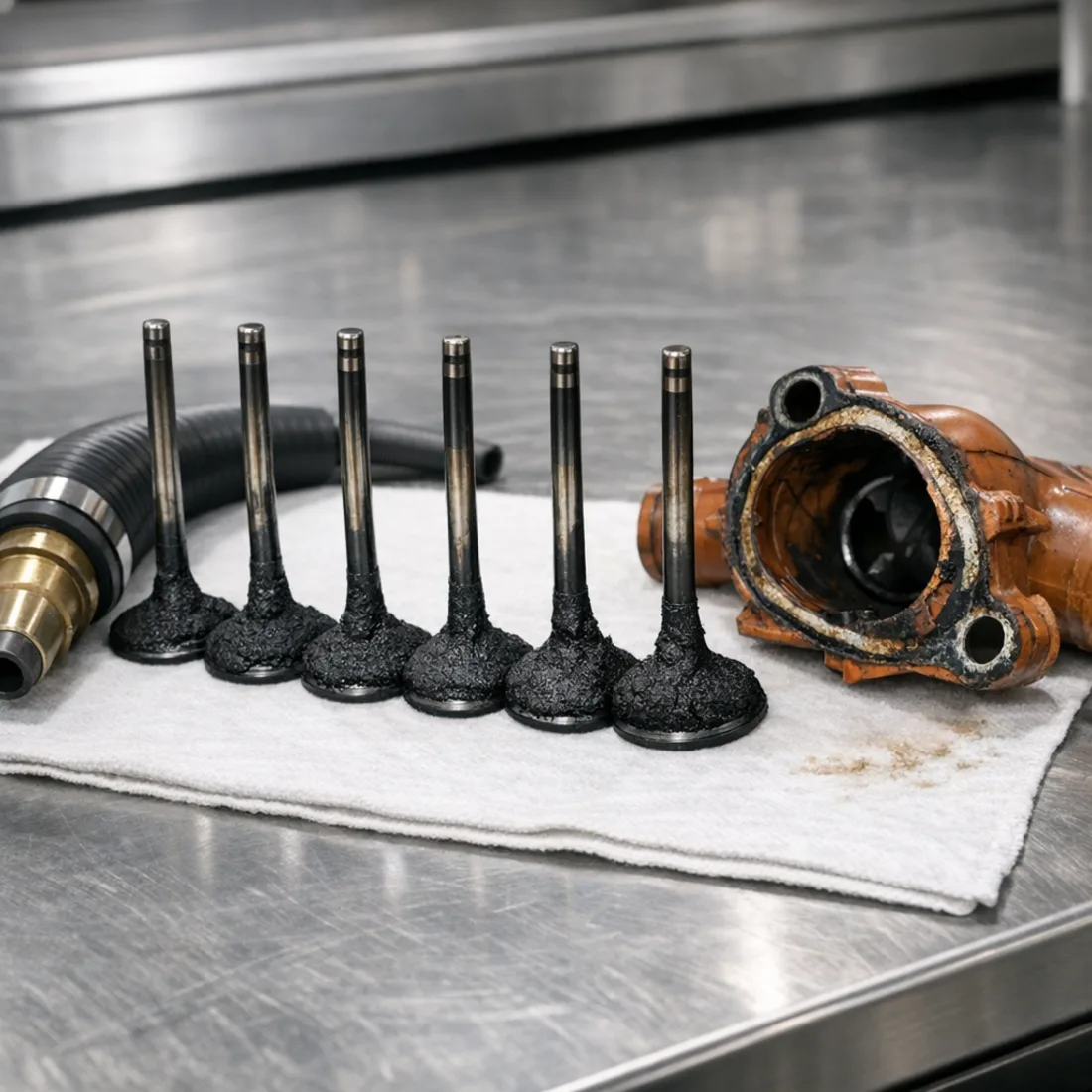
The intake valve carbon issue is the one that catches most petrol SQ5 owners off guard. Direct injection means fuel never washes over the back of the intake valves, so carbon gradually cakes up. The fix is a walnut blasting service to physically remove the deposits. We do this properly with the inlet manifold off and the correct abrasive media, using new genuine gaskets on reassembly. It makes a real difference to idle quality and throttle response.
Timing chain wear on the EA839 is worth treating seriously at purchase. Listen for any cold start rattle and make sure the service history shows proper oil change intervals with the correct grade. If there's any doubt, a full chain inspection is money well spent.
The cooling system on these engines has a reputation for water pump and thermostat housing failures. Unlike some engines where you get plenty of warning, these can fail relatively quickly. If you're seeing any temperature irregularities or finding coolant around the engine bay, get it checked before it becomes a bigger job.
-
Timing chain and tensioner wear, a known concern on the EA839 family that should be on every pre purchase checklist
-
Carbon build up on intake valves from direct injection, since there's no port injection wash to keep them clean
-
Water pump and thermostat housing failures, sometimes leading to coolant leaks before any warning light triggers
-
Valley pan and PCV system oil weeping over time, which can be a slow leak that escapes notice at routine service
-
High pressure fuel pump and injector concerns on higher mileage cars
The intake valve carbon issue is the one that catches most petrol SQ5 owners off guard.
Direct injection means fuel never washes over the back of the intake valves, so carbon gradually cakes up.
Routine servicing on the petrol SQ5 covers oil and filter with the correct low SAPS spec, air filter, cabin filter, spark plugs and coils, brake pads and rotors, wipers and drive belts. We also handle cooling system repairs, DSG servicing and clutch pack work, and suspension including air suspension components.
Stage 1 tuning on the TFSI is strong, taking the car from 354 hp and 500 Nm to around 405 hp and 610 Nm. That extra 110 Nm in torque is particularly noticeable in everyday driving. For brake servicing across any SQ5 generation, our team handles the full job including the larger SQ5 spec rotors and pads.
How to Pick Between Them: Buying Guide Across Generations
If you're shopping for an SQ5 and trying to decide between generations, here's the honest version. Across all three, a car with ODIS verified service history and no outstanding fault codes is worth paying more for. Generic service stamps tell you very little about the real condition of these systems.
You want the most affordable entry point into the SQ5 range. It's the oldest and cheapest to buy but needs the most scrutiny. Check the crankcase breather system, look for swirl flap wear and listen for turbo actuator hesitation. A good one with solid service history is a genuinely rapid car for the money, but deferred maintenance on these engines stacks up quickly. Budget for a proper inspection and potentially some intake and EGR cleaning work.
You want the sweet spot for most buyers. More power, better refinement, the electric compressor makes it feel genuinely effortless in normal driving, and the 48V mild hybrid adds a layer of smoothness the 8R doesn't have. The AdBlue and SCR system adds complexity, but on a car with good history it's manageable. Watch for DPF issues on cars with a city heavy service pattern.
You want a petrol character and the highest power output. It's less torquey down low than the diesels but it revs more freely and doesn't carry any DPF or AdBlue complexity. The EA839 timing chain concern is real so pre purchase inspection matters, and budget the intake valve walnut blast into your first year running costs if it hasn't been done.
- Verify ODIS service history rather than relying on generic service stamps
- Check for outstanding fault codes across all modules before purchase
- On the 8R: inspect crankcase breather system and listen for turbo actuator hesitation
- On FY diesel: check DPF and AdBlue system status, particularly on city use cars
- On FY TFSI: listen for cold start timing chain rattle and confirm correct oil change history
- Budget intake and EGR cleaning work into first year costs on any higher mileage 8R
- Budget walnut blast intake service into first year costs on any FY TFSI if not recently done
Servicing All Three Generations Properly
All three SQ5 variants share some common servicing principles, even though the hardware differs significantly between diesel and petrol and between the 8R and FY platforms.
Oil spec is non negotiable on all of them. The wrong oil grade shortens timing chain life on all three engines and causes additional problems in the 48V mild hybrid system on the FY diesel. We only use correct grade genuine oil on every service.
Brake servicing matters more on performance SUVs than on regular family cars. These are heavy, fast vehicles and the brakes work hard. Brake fluid condition and pad compound choice are both worth attention at every service interval.
The quattro driveline and gearbox need their own service schedule too. The ZF AL552 in the FY models and the ZF AL551 in the 8R both benefit from transmission servicing at proper intervals, not just the manufacturer's claimed lifetime fill. We see gearbox shift issues that resolve completely after a proper service on cars that have been running on degraded fluid for too long.
Why Factory ODIS Diagnostics Matter on the SQ5
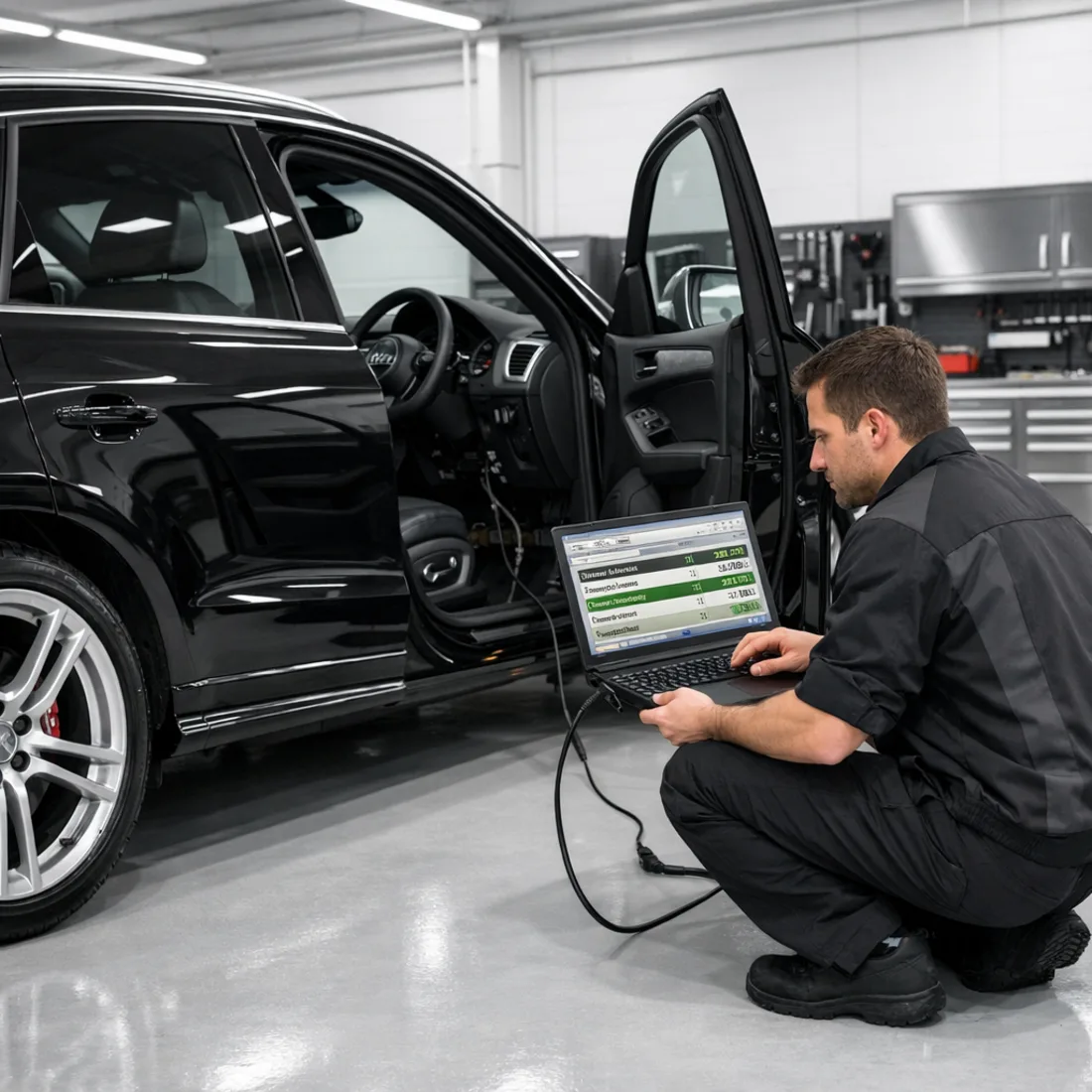
Diagnostics across all generations is done with ODIS, the factory Audi platform. ODIS lets us read live data from every control module, run guided fault finding procedures, carry out service resets and code replacement parts properly.
A generic code reader gets the P codes but misses the sub fault trees and the live data that tells you whether a fault is current, intermittent or historical. On a car as software dependent as the FY SQ5 especially, proper tooling is the difference between a correct repair and a parts lottery.
Tuning the SQ5: What's Available Across the Range
All three SQ5 variants have a proper tuning solution available, and the gains are substantial enough to be worth doing on any car that's being kept long term. All tuning work is preceded by a full diagnostic check. We won't put a tune on a car that has underlying faults, and we only write files against verified healthy hardware.
The power delivery character improves too: the torque curve fills in earlier and the mid range pull is noticeably stronger. It's done entirely in software via the Bosch EDC17CP44 ECU. Related work available includes EGR OFF, DPF OFF, DTC Removal, START/STOP OFF, FLAPS, Vmax and Adblue.
The gain is slightly smaller in absolute terms but the starting torque is already very high, and the electric compressor and mild hybrid system interact well with the remapped fuelling strategy. The Bosch MD1CP004 ECU is the primary target here.
That 110 Nm torque gain on the petrol is the headline number: it transforms the mid range response and makes the car feel considerably more urgent in real world conditions. The Bosch MG1CS002 ECU handles the primary calibration. Related work available includes DTC Removal.
See our full tuning service for more detail on what's involved.
Frequently Asked Questions
The questions we get most. Something else on your mind? Get in touch.