Audi SQ8 and Q8 50 TDI: Every Generation Covered in Penrose, Auckland
The Audi Q8 family has always been about doing the impossible with a straight face: fitting genuine performance into a large, comfort focused SUV, then engineering it with enough sophistication to make a simple fault into a multi system puzzle. Whether you're running the fire breathing SQ8 with its twin turbo 4.0 TFSI V8 or the refined diesel grunt of the Q8 50 TDI V6, both share that same DNA of 48V mild hybrid tech, air suspension, and ECUs that will tell a generic scan tool almost nothing useful. Our team works with factory Audi ODIS diagnostics on both, so we read the full picture across every module, not just the obvious stuff.
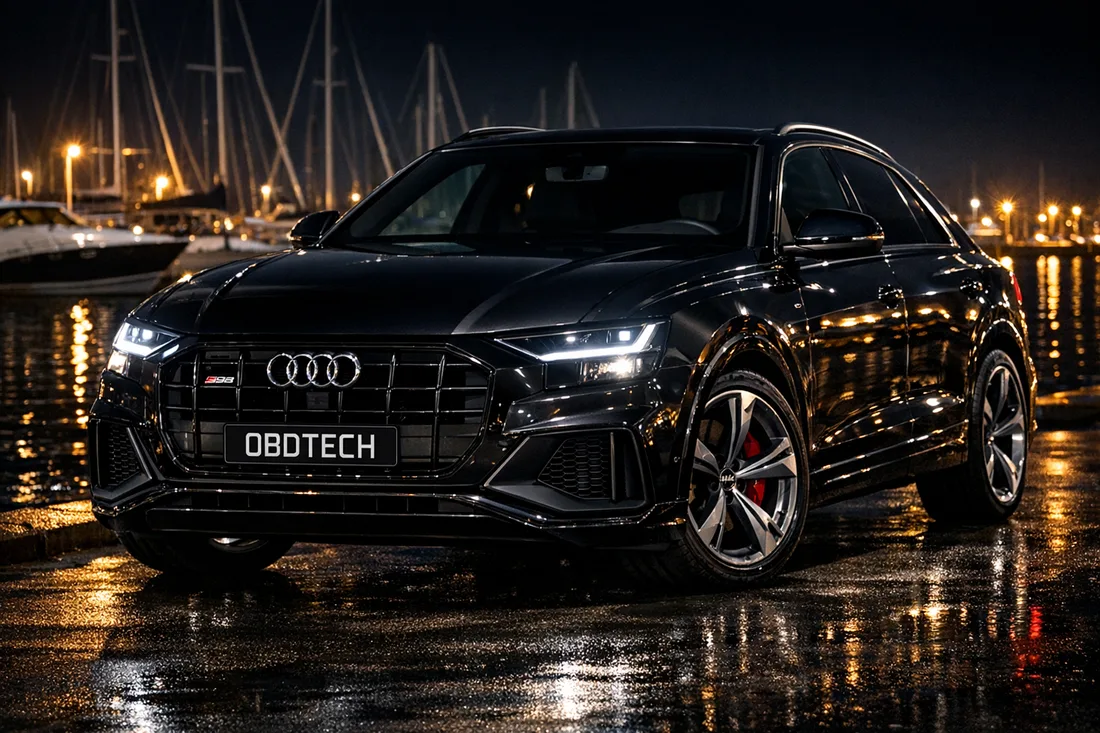

Audi SQ8 4.0 TFSI: 507 hp Twin Turbo V8
The SQ8 is the one that makes no apologies. A 3993 cc twin turbocharged V8 producing 507 hp and 770 Nm of torque, in an SUV you could happily take on the school run. The compression ratio sits at 10.1:1, bore and stroke at 84.5 x 89.0 mm, and the whole thing is managed by a Bosch MG1CS008 ECU paired with a ZF AL552 transmission controller. Add the 48V mild hybrid system, active anti roll bars, and air suspension, and you've got a machine with more going on under the skin than most cars twice as complex looking on the outside.
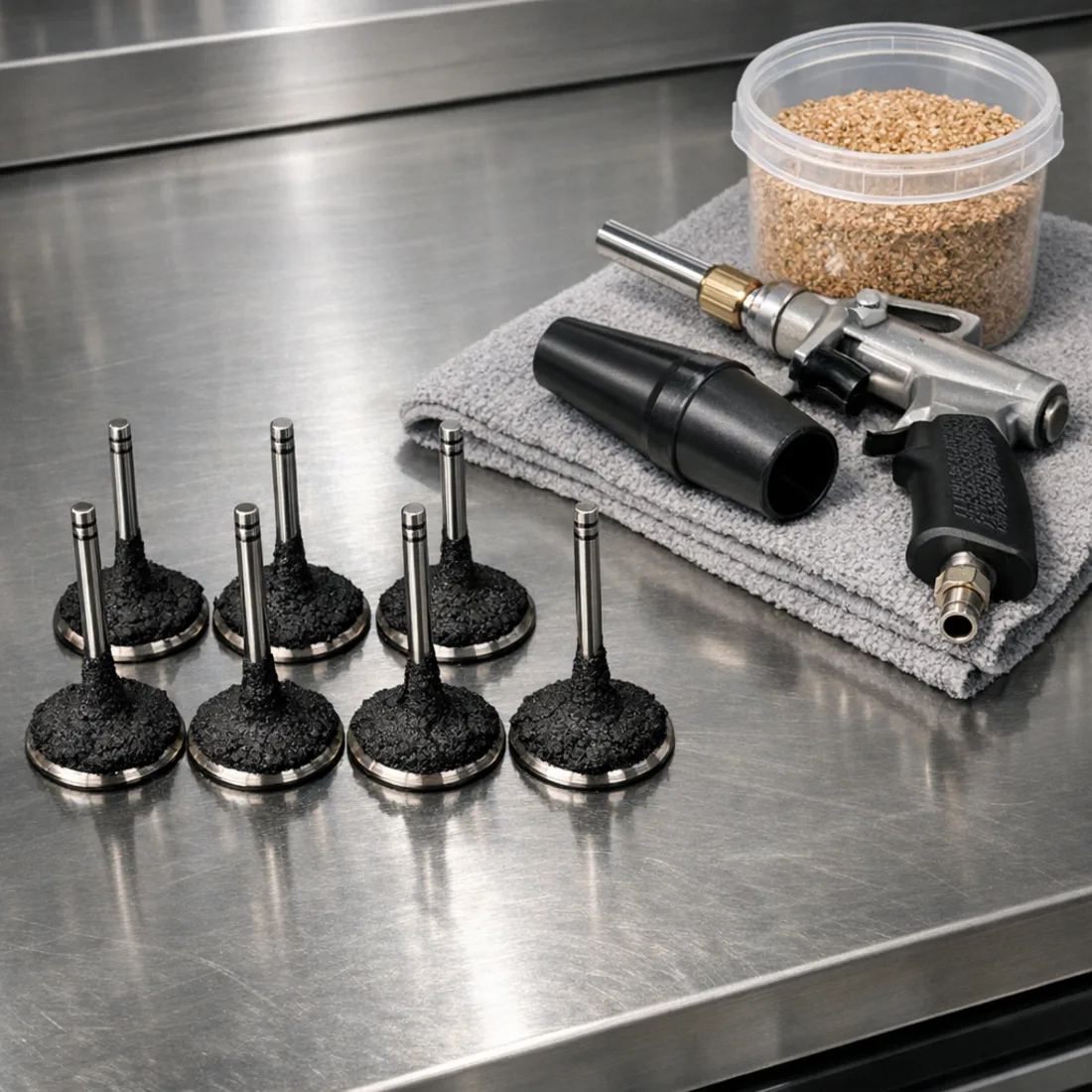
What makes the hot vee V8 layout clever is also what makes it a handful at higher mileage. The turbos and their associated charge piping sit in the valley of the engine, which is great for spool response but means heat soaks everything nearby. The first thing that starts playing up is usually carbon build up on the intake valves. Because the 4.0 TFSI uses direct injection, the intake valves never get a fuel wash, so over time they accumulate carbon deposits that hurt throttle response, cause rough cold start behaviour, and in worse cases contribute to misfires. Walnut blasting or mechanical cleaning gets them back to spec.
Oil and coolant leaks in the valley area are another one we see regularly. The PCV system and oil separator on this engine take a beating from the heat and pressure cycles, and when they start weeping it's usually subtle at first. Left too long, you'll be looking at oil contamination in the intake and a collection of fault codes across the engine module. The twin turbo oil feed lines are also worth checking on any car that's been running hard or has covered meaningful distance.
The ignition coils and plugs are often overlooked because the car still pulls hard even when they're degraded. Under full load you'll feel it, but around town the V8 masks a lot. Plugs on this engine have a specific service interval and the correct grade matters. We fit brand new genuine or OEM parts only, so nothing off the shelf that might not hold up to the load this engine generates.
Diagnostics on the SQ8 need to be done on factory Audi ODIS. The Bosch MG1CS008 ECU has guided fault finding procedures and module coding that a generic scanner simply won't access. If you've had a warning light looked at elsewhere and come away with a vague answer, that's usually why.
-
Carbon build up on intake valves from direct injection, causes rough idle and misfires
-
PCV and oil separator failure, oil leaks in the valley area
-
Coolant leaks around the valley and water pump circuits
-
Turbocharger oil feed line wear on higher mileage cars
-
Ignition coils and spark plugs under the load of 507 hp, need monitoring
-
48V mild hybrid system faults, active anti roll bar and air suspension issues
-
Timing chain guide wear worth checking during major services
On a car that already does what this one does from the factory, the difference on a motorway on ramp is genuinely surprising.
Stage 1 tuning on the SQ8 4.0 TFSI takes the Bosch MG1CS008 ECU to 660 hp and 950 Nm, a gain of 153 hp and 180 Nm over factory.
Routine servicing on the SQ8 covers oil and filter with the correct Audi spec grade (this engine is particular about viscosity), air and cabin filters, spark plugs, brake pads and rotors sized for a heavy performance SUV, drive belt checks, and coolant service. The brakes on this car do serious work given the weight and performance, so pad and rotor wear is something to stay on top of. Our team handles all of this in one visit, and if you're thinking about a Stage 1 tune, the SQ8 responds very well indeed.
Stage 1 tuning on the SQ8 4.0 TFSI takes the Bosch MG1CS008 ECU to 660 hp and 950 Nm, a gain of 153 hp and 180 Nm over factory. That's not a small increment. On a car that already does what this one does from the factory, the difference on a motorway on ramp is genuinely surprising. The tune works within the hardware's capabilities, so you're not stressing parts that weren't designed for the load.
Get your SQ8 or Q8 50 TDI booked in with a proper specialist.
Audi Q8 50 TDI: 3.0 V6 Diesel, the Refined One
Where the SQ8 is all about outright performance, the Q8 50 TDI takes a different approach. The 2967 cc 3.0 V6 TDI with its 11.2:1 compression ratio and 83.0 x 91.4 mm bore and stroke produces 286 hp and 600 Nm from the factory. That's not modest. For most driving, the torque is available earlier and more naturally than the petrol, and the fuel economy justifies the drivetrain's complexity. The ECU here is a Bosch MD1CP004, and like the SQ8 it pairs with a 48V mild hybrid system that handles the belt alternator starter and manages stop start and energy recovery functions.
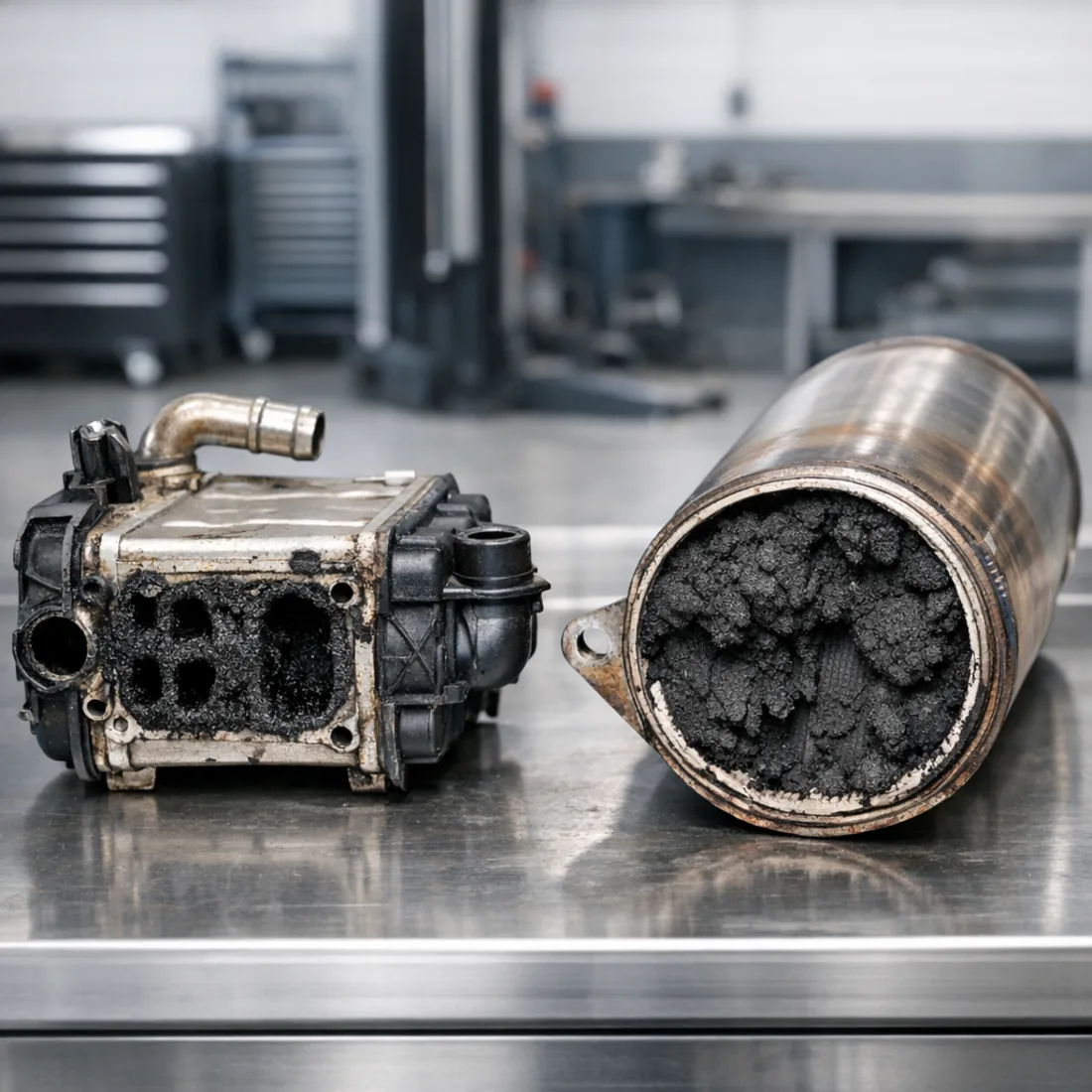
The Q8 50 TDI's common fault list is a different conversation from its petrol sibling, though the 48V system and air suspension issues do carry across. The big ones on the diesel are EGR and DPF related, which is partly an architecture issue and partly a usage pattern issue. Cars that spend most of their time in town, short runs, lots of stopping and starting, will clog the DPF much faster than cars that get a decent motorway run regularly. EGR cooler and intake carbon build up is common on the V6 TDI, restricting airflow and causing rough running, especially noticeable when cold.
The AdBlue and SCR system is a significant one on this generation. The AdBlue metering pump and NOx sensors are a known failure point, and when they go, the car will count down to a restricted start condition. You get warnings first, but they can be easy to dismiss. Once the counter runs out, the car won't start until the fault is resolved. We diagnose and repair the full AdBlue and NOx system properly, which means addressing the root cause rather than just clearing codes.
Compared to the SQ8, the Q8 50 TDI's fault profile is more about emissions system management than engine internals. The V6 TDI block itself is generally robust. What catches owners out is the layered complexity of the emissions hardware and the 48V system sitting on top of an already sophisticated drivetrain.
-
EGR cooler failure and intake carbon fouling, common on town duty cars
-
DPF blockage and regeneration failures, especially without regular longer runs
-
AdBlue metering pump faults and NOx sensor failures causing restricted start warnings
-
48V mild hybrid belt alternator starter faults tied to stop start and electrical issues
-
Air suspension component wear shared with the SQ8
-
Glow plug failure affecting cold start behaviour
-
Timing chain wear worth monitoring on higher mileage units
On a diesel, 120 Nm of additional torque in the mid range transforms the way the car feels in traffic and on open roads.
Stage 1 tuning on the Q8 50 TDI moves the Bosch MD1CP004 ECU to 350 hp and 720 Nm, gains of 64 hp and 120 Nm.
Routine servicing on the Q8 50 TDI covers oil and filter to the correct long life spec (the diesel and petrol use different grades, which matters), fuel filter, air and cabin filters, glow plugs, drive belts, wipers, and brake pads and rotors. This is a heavy SUV and the brakes reflect that. We also look at the DPF condition, EGR system health, and AdBlue level and system function as part of any major service visit. If there are stored faults related to emissions, better to find them during a routine visit than when the car's counting down to a no start.
Stage 1 tuning on the Q8 50 TDI moves the Bosch MD1CP004 ECU to 350 hp and 720 Nm, gains of 64 hp and 120 Nm. On a diesel, torque is the number that matters most in daily driving, and 120 Nm is felt clearly in the mid range. The response between 1500 and 3000 rpm, where you spend most of your time, gets noticeably stronger.
How to Pick Between Them if You're Shopping Used
If you're deciding between an SQ8 and a Q8 50 TDI on the used market, the choice really comes down to what you're going to do with it and what kind of ownership experience you want. Here's the honest version.
The SQ8 4.0 TFSI is the driver's choice. The V8 twin turbo is a genuinely special engine and the Stage 1 tuning headroom is enormous. But it drinks premium petrol, and the hot vee design means higher mileage cars need closer attention to intake cleaning, PCV, and oil system health. Check the service history carefully, particularly whether correct oil specs were used and whether spark plugs were changed on schedule.
The Q8 50 TDI is the more practical daily driver. Diesel torque suits motorway commuting, fuel costs are lower, and the engine itself is robust. The watch outs are the emissions system: EGR, DPF, and AdBlue faults are common on cars that haven't been driven appropriately for a diesel. A city car that never gets a long run will have a partially blocked DPF. Get the DPF and AdBlue system checked before you buy.
- Both have air suspension. On either model, budget for air suspension wear if the car has covered serious distance. The compressors and air bags are not cheap to replace, but they're serviceable and failure is usually gradual enough to catch early if you're paying attention.
- The sweet spot on either model is a well serviced, slightly lower mileage example where the previous owner used it as intended. A lightly used Q8 50 TDI with a full service history and no warning lights is a genuinely excellent buy.
- The SQ8 rewards buyers who find one that's been properly maintained and hasn't been thrashed on a generic oil for 20,000 km between changes.
- Check that the correct oil grade was used throughout the service history. We see cars where this has been mixed up, usually without obvious short term symptoms but with longer term consequences for turbo and engine health.
Servicing Across the Q8 Family
Both the SQ8 and the Q8 50 TDI share the same large SUV platform, the same 48V mild hybrid architecture, and the same air suspension setup. That means some of the service tasks and wear patterns are common across the range, regardless of which engine is under the bonnet. Air suspension compressors, ride height sensors, and the air spring bags themselves all follow similar failure modes and service intervals on both models. If you're coming in for one issue, it's worth having the whole suspension system checked while we're underneath the car.
The 48V mild hybrid system is present on both, but the failure symptoms differ. On the SQ8, you'll more often see 48V issues show up alongside active anti roll bar faults. On the Q8 50 TDI, the belt alternator starter is a more common culprit, tied closely to stop start misbehaviour and electrical warning lights. Both need ODIS level diagnostics to pin down properly, because the 48V system communicates across multiple modules and a fault in one place can show up as an error somewhere else entirely.
Oil service intervals on both cars shouldn't be stretched. The petrol V8 and the diesel V6 run very different oil specs, and using the wrong grade will cause issues faster than most owners expect. If the car came in with a full service history from a dealer, check that the correct grade was used. We see cars where this has been mixed up, usually without obvious short term symptoms but with longer term consequences for turbo and engine health. All our servicing uses correct manufacturer specified fluids and parts, nothing generic.
How We Diagnose the Q8 Family
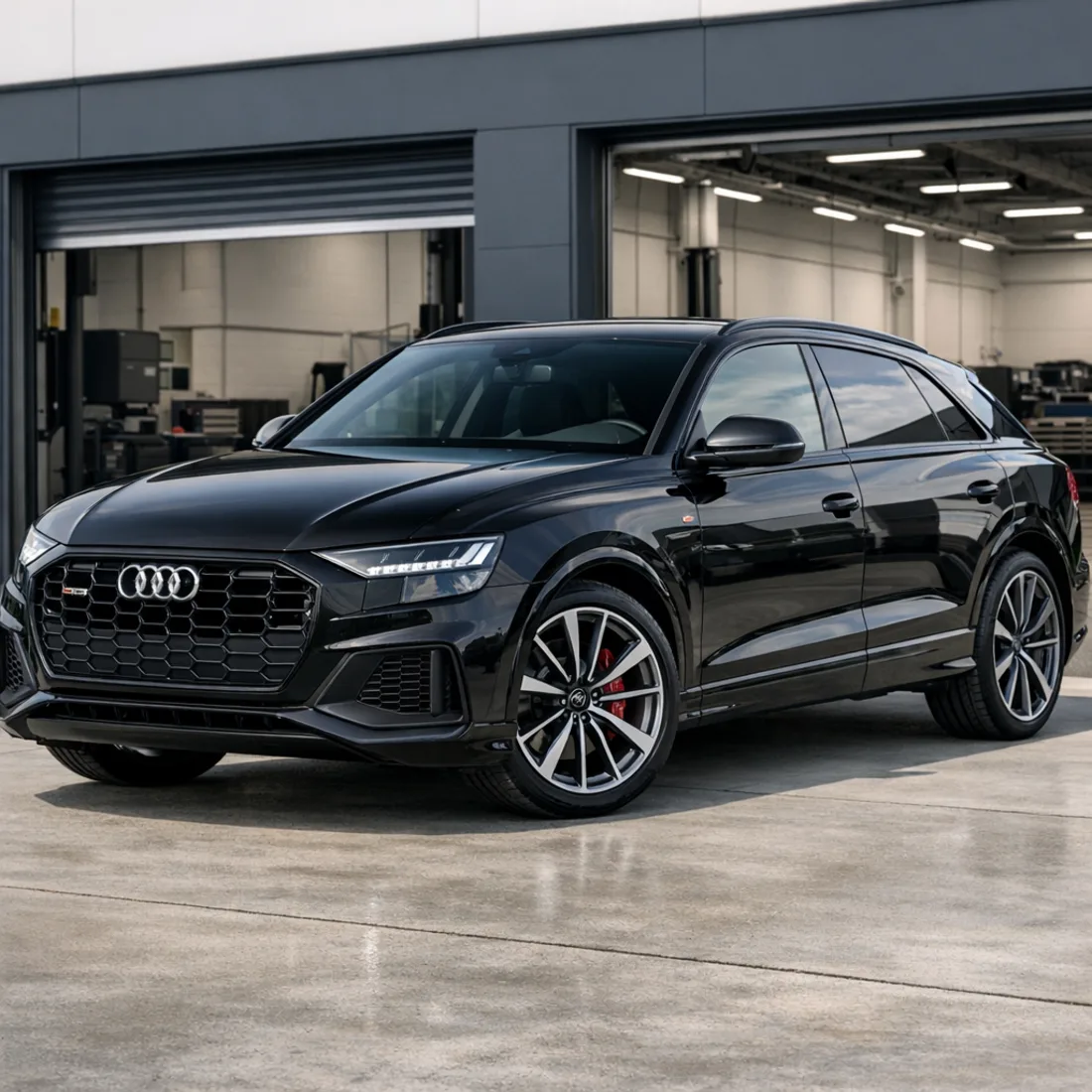
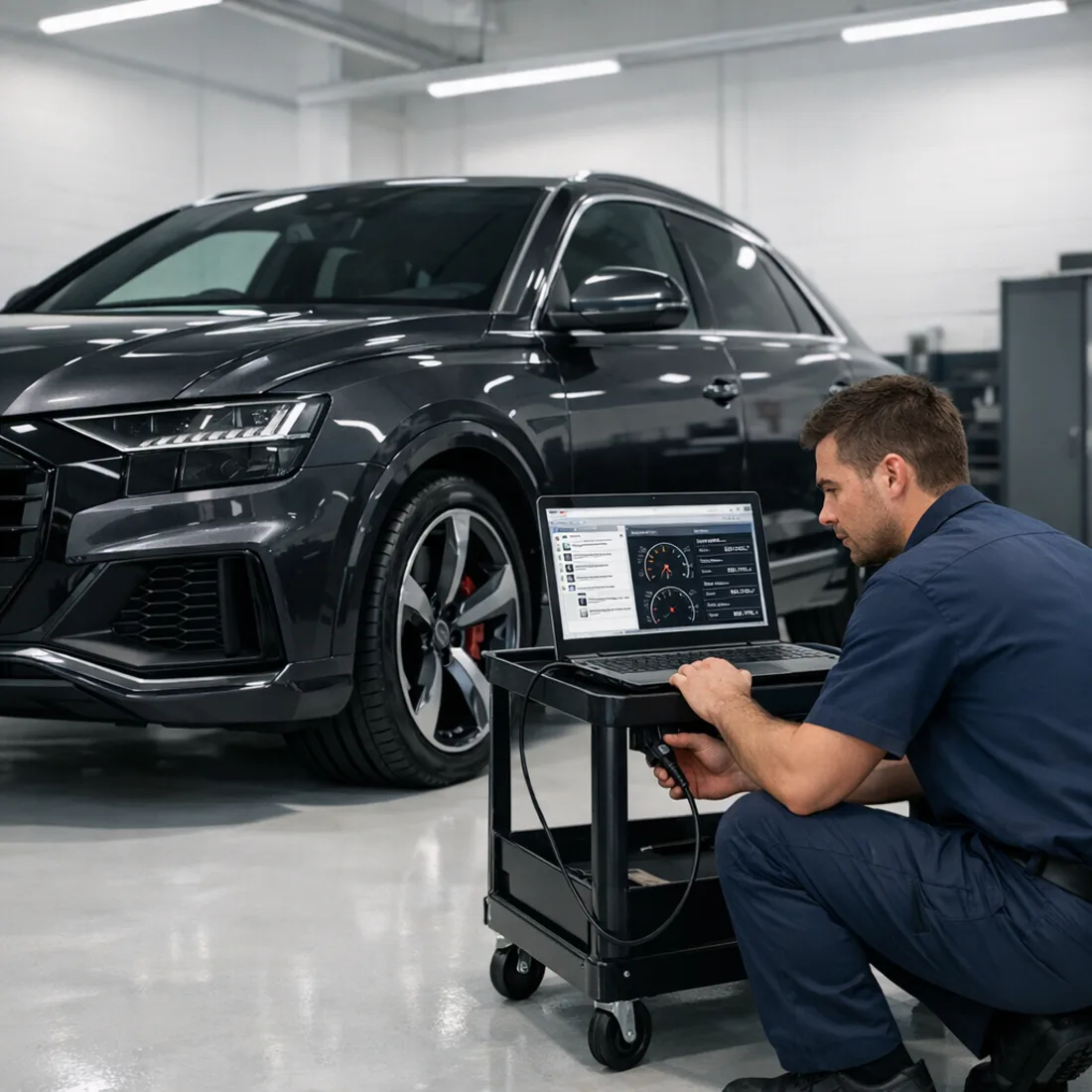
Both the SQ8 and the Q8 50 TDI run ECUs that need factory level tooling to diagnose properly. The SQ8 uses a Bosch MG1CS008 and the Q8 50 TDI uses a Bosch MD1CP004. Both communicate across a large number of modules including the engine, transmission, 48V system, suspension, body electronics, and safety systems. A generic scan tool will pull some codes from some modules, but it won't run guided diagnostics, access live data correctly across the 48V network, or perform the coding and adaptation routines that Audi requires after certain repairs.
We use the Audi ODIS factory diagnostic platform, which is the same system the Audi dealer network uses. That means when we're reading faults on your car, we're seeing everything the ECU is reporting, in the correct context, with the guided fault finding procedures that the manufacturer designed. It also means that when we replace a component that needs coding, we do it properly, not just clear a code and hope the car adapts.
For electrical and module level faults, this matters especially on the Q8 50 TDI's AdBlue and NOx system, where a genuine fault in one sensor can create cascading warnings across multiple modules. We trace the root cause rather than throwing parts at the symptoms.
Tuning the SQ8 and Q8 50 TDI
Both models have meaningful Stage 1 tuning available, and both respond well. The numbers are very different, but both represent a genuine step up in real world feel.
The SQ8 4.0 TFSI goes from 507 hp and 770 Nm to 660 hp and 950 Nm via the Bosch MG1CS008 ECU. A gain of 153 hp and 180 Nm is a substantial step, and on a car that already moves like this one, it's the kind of difference you feel every time you put your foot down. The Stage 1 tune works through the ECU without hardware changes, optimising fuelling, boost, and ignition timing within what the factory hardware supports.
The Q8 50 TDI goes from 286 hp and 600 Nm to 350 hp and 720 Nm via the Bosch MD1CP004 ECU. On a diesel, 120 Nm of additional torque in the mid range transforms the way the car feels in traffic and on open roads. For a car you're using as a daily driver, this is often the more satisfying tune in everyday conditions because you notice it constantly rather than only at full throttle.
Both tunes are written to work with factory hardware, no modifications required. DTC removal is also available on both models where applicable. Talk to our team about a file service or book in for a Stage 1 tune when the car is ready.
Frequently Asked Questions
The questions we get most. Something else on your mind? Get in touch.