A45 AMG, A250 and A220 CDI: The W177 & W176 Story
From the oil burning OM651 diesel of the W176 to the hand built M139 monster sitting under the A45 AMG's bonnet, the modern Mercedes Benz A Class spans three very different powertrains with one common thread: they all reward proper care and punish corner cutting. This page covers every version we see regularly, what each one gets wrong, how they compare as used buys, and what it actually takes to keep them healthy in New Zealand conditions.
Mercedes Benz A220 CDI (W176): The Diesel That Started It All
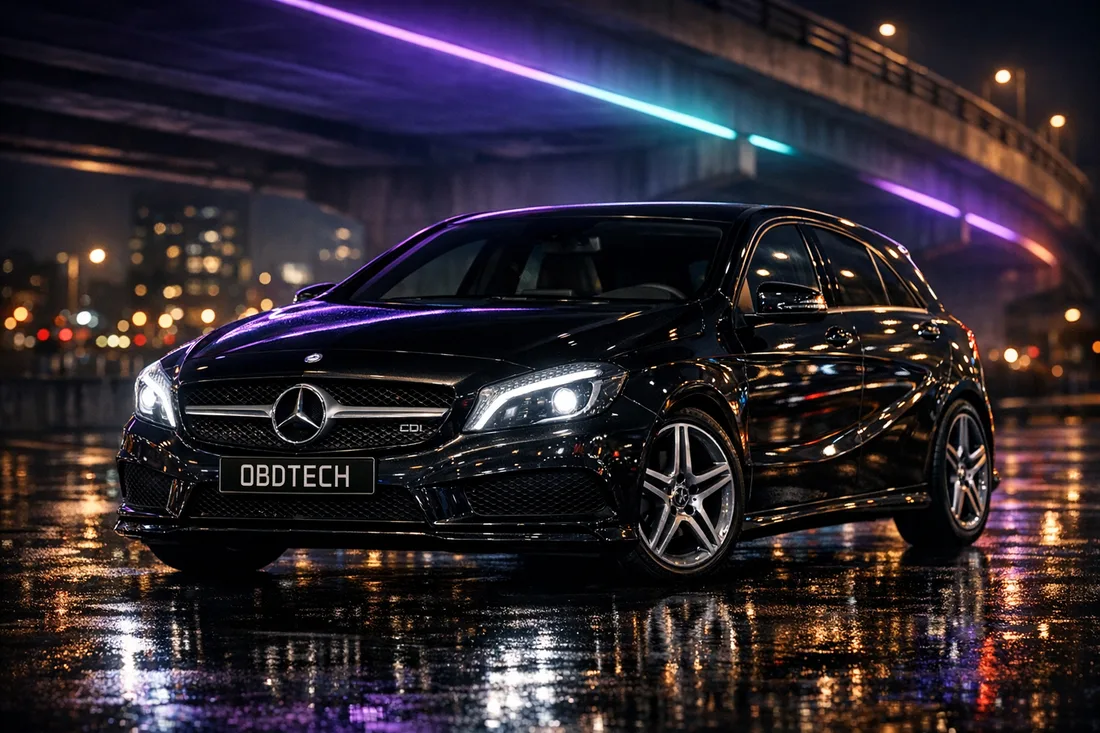
The W176 A220 CDI is the oldest of the three cars we're covering here, and it's where a lot of the A Class's reputation for complexity really took root. Power comes from the OM651 DE 22 LA, a 2143cc four cylinder diesel producing 177hp and 350Nm. On paper it's an excellent engine. In practice it has some well documented weak spots that every potential buyer or current owner needs to understand.
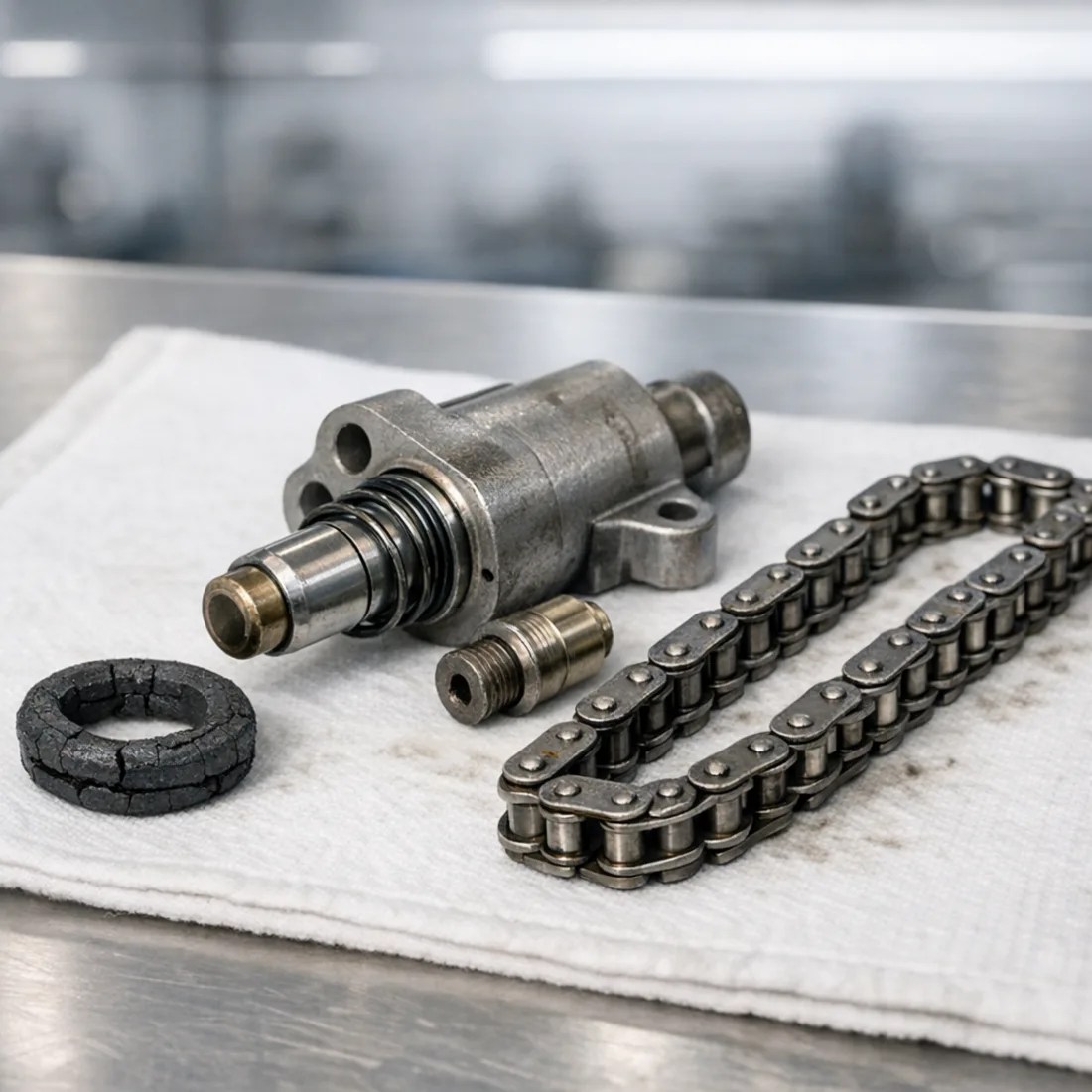
The most talked about issue is the injectors. The OM651's injectors wear over time and the seals around them can fail, causing rough cold starts, uneven idle and sometimes a noticeable diesel knock. Ignoring it doesn't make it cheaper. If anything, a neglected injector seal leads to carbon tracking in the head, and that's a significantly bigger bill. The timing chain and its tensioner are the other item that needs honest attention. Chain stretch develops on cars that have been pushed past service intervals, and once you hear rattle on startup you're already behind the curve.
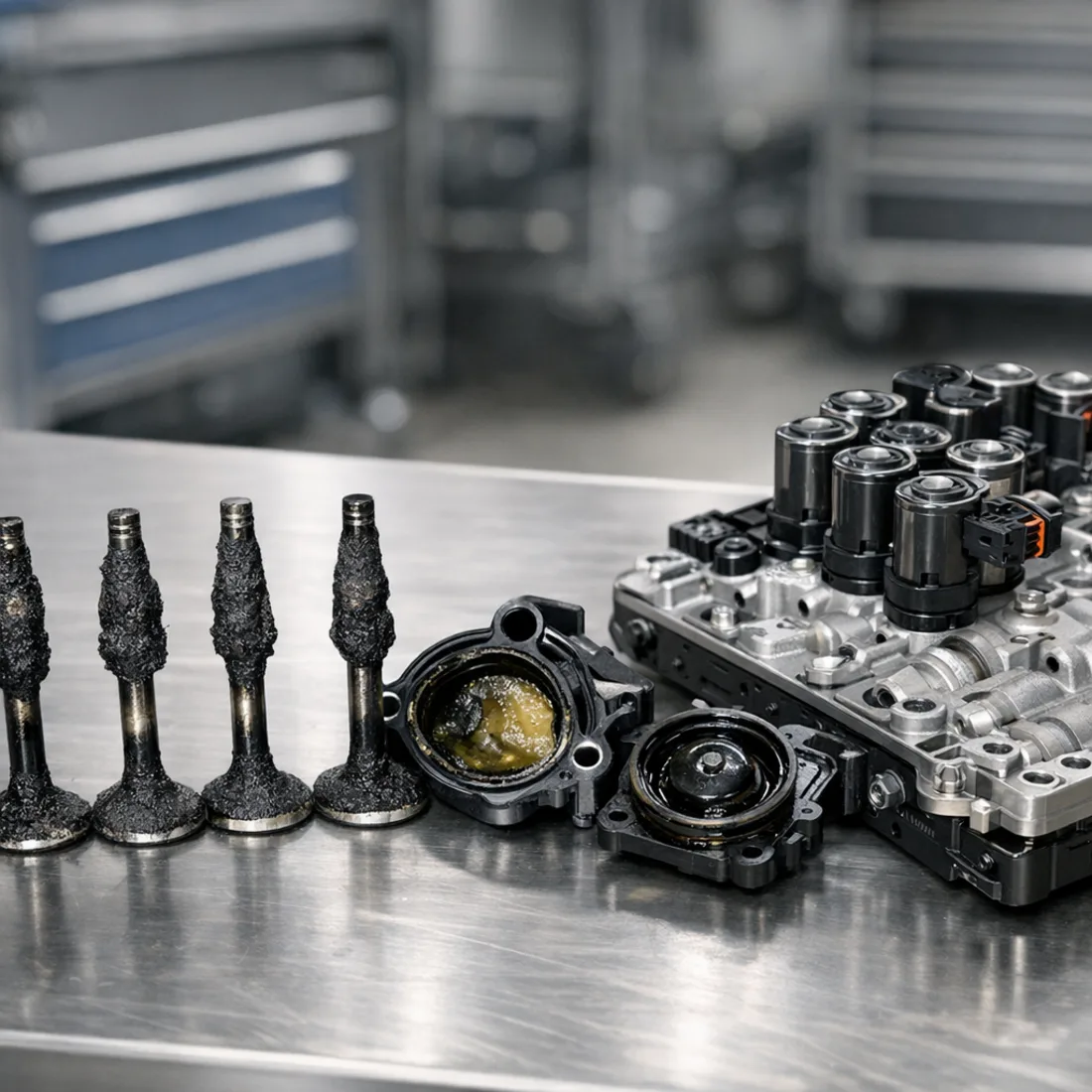
Short trip driving is the OM651's enemy. The swirl flaps in the intake collect carbon, the EGR valve clogs progressively, and the DPF struggles to complete regeneration cycles when the car never gets a proper run. We see W176s come in with all three of these issues at once, usually from owners who've done mostly urban commuting. On automatic cars the 7G DCT dual clutch can also develop hesitation and mechatronic faults as fluid degrades.
Diagnosis on these cars needs to go through genuine Mercedes XENTRY and DAS with a proper C4 or C6 interface. A generic scan tool will pick up some codes but it won't give you guided tests, live injection quantity values or the full control unit picture. That's where misdiagnosis happens. We run the full factory platform so we know what we're actually dealing with before we start ordering parts.
Compared to the W177 cars that followed, the W176 is the more mechanically demanding ownership proposition. The diesel powertrain needs more frequent attention to specific items and doesn't tolerate lazy servicing the way a simple petrol might. But it's also been around long enough that its faults are completely understood, parts are well supported, and a well maintained example is a genuinely capable and efficient car.
-
Injector wear and injector seal failure, rough running and hard starts
-
Timing chain and tensioner stretch, especially on stretched service cars
-
Swirl flap carbon build up restricting intake flow
-
EGR valve clogging on short trip use
-
DPF regeneration failures on urban only cars
-
7G DCT hesitation and mechatronic faults on automatic variants
Short trip driving is the OM651's enemy.
Swirl flaps collect carbon, the EGR clogs progressively, and the DPF can't complete regeneration cycles when the car never gets a proper run.
Routine servicing on the OM651 should include the correct low ash oil and filter, air filter, fuel filter, cabin filter, drive belts, glow plugs and brake pads and rotors as needed. If the car is getting on in mileage and hasn't had a timing chain inspection, that's worth adding to the list.
Stage 1 tuning is also available on the OM651, lifting output to around 210hp and 420Nm, a useful gain that transforms what is already a reasonably quick diesel.
Get your A Class booked in with a proper specialist.
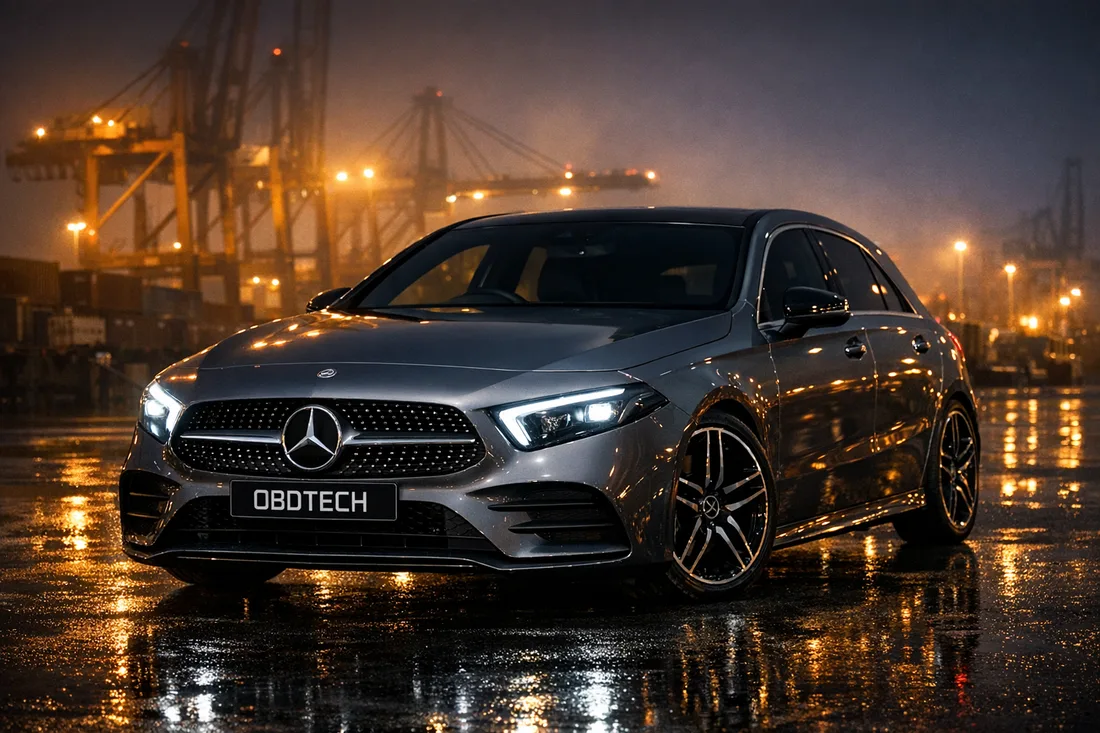
Mercedes Benz A250 (W177): The Sweet Spot in the Range
The W177 A250 represented a proper generational leap over the W176. The platform is stiffer and more refined, the interior jumped to a completely different level with the MBUX dual screen setup, and the M260 DE20 LA 2.0 litre turbo petrol is a cleaner, more accessible engine than the OM651 diesel that came before it. At 224hp and 350Nm it's not slow, and in everyday driving it feels more than its numbers suggest.
The M260 shares its bore and stroke with the A45's M139 (83.0 x 92.0mm) but it's built to a much more relaxed state of tune, with a compression ratio of 10.5:1 compared to the AMG's 9.0:1. That means it's working far less hard at normal road use, but it's still a direct injection petrol and it still builds up carbon on the intake valves over time. The PCV system contributes to this and we see M260s coming in with roughness and hesitation that traces straight back to carbon accumulation and a tired PCV valve.
The 7G DCT dual clutch is the other item worth monitoring. Low speed shift quality degrades noticeably when the transmission fluid hasn't been serviced at appropriate intervals. Jerky, clunky behaviour in city traffic is often the first sign owners notice. The mechatronic unit can develop faults as well. Compared to the W176's DCT issues, the A250's transmission tends to respond well to a proper fluid service if it's caught before the symptoms become severe.
Diagnosis uses the same XENTRY and DAS platform with a genuine C4 or C6 interface that we use on all Mercedes Benz vehicles. The A250 has a Bosch MED17.7.7 ECU, and reading it properly means guided tests and live data, not just a generic fault code list. Electrical quirks and MBUX faults in particular need the factory software to trace correctly.
If you're choosing between the W176 diesel and this car, the A250 is the easier daily driver. It's more refined, has fewer mechanical watch points, and its faults are less likely to become expensive if you're on top of servicing. The diesel makes more sense if you're covering serious motorway kilometres. If you're mostly doing Auckland city and suburban driving, the M260 petrol is the better fit.
-
Carbon build up on M260 intake valves from direct injection and PCV oil vapour
-
PCV valve wear contributing to intake and oil consumption issues
-
7G DCT jerky low speed shifts when fluid service is overdue
-
MBUX infotainment and electrical quirks on early W177 builds
-
Occasional water ingress on some examples
-
Suspension arm and bush wear on higher mileage cars
The A250 is the sweet spot in the range.
Refined powertrain, MBUX interior, and a fault profile that's manageable if you stay on top of servicing.
Standard servicing on the M260 covers the correct low ash oil and filter, air filter, cabin filter, spark plugs at the right interval, wipers, drive belt inspection, brake pads and rotors, and a timing chain check on older examples. Coolant refresh and DCT fluid service round out the sensible maintenance schedule.
Stage 1 tuning lifts the A250 to around 250hp and 400Nm, which is a worthwhile improvement for the effort involved.
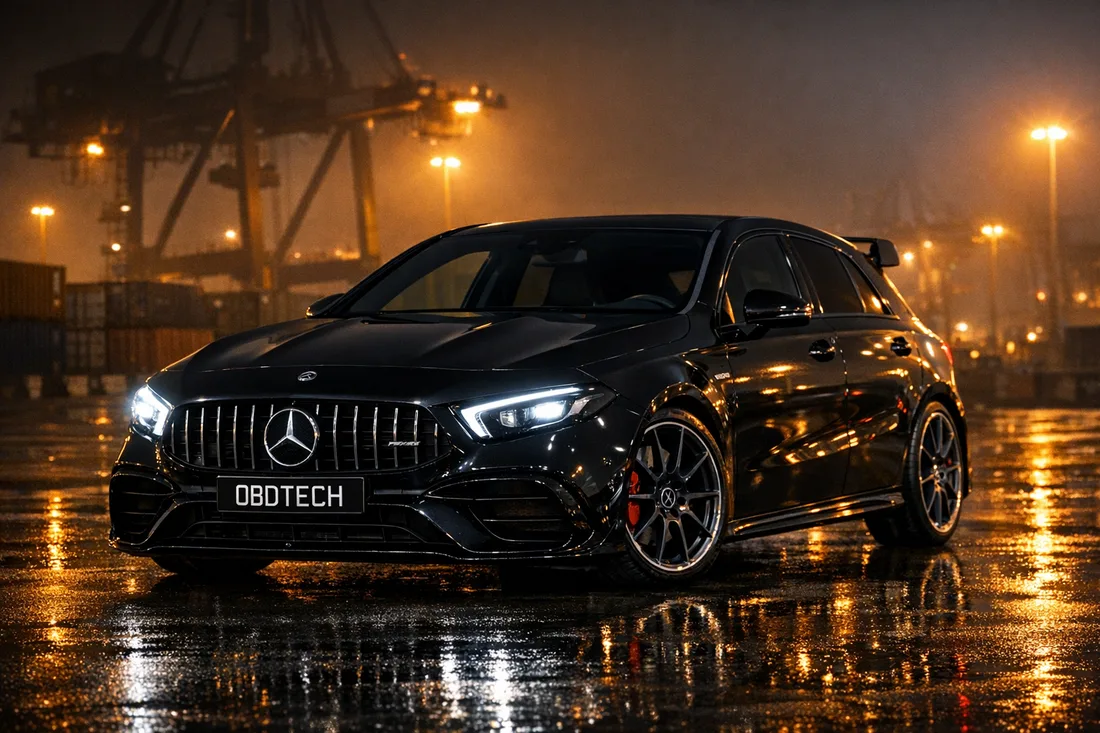
Mercedes Benz A45 AMG (W177): 387 Horsepower from Two Litres
The A45 AMG uses the M139, a hand built 1991cc turbo four assembled at Affalterbach that produces 387hp and 480Nm in standard form. It is currently the most powerful series production four cylinder engine ever made, and it shares almost nothing with the M260 in the A250 beyond displacement and bore and stroke measurements. The compression ratio drops to 9.0:1 to suit the boost pressures involved, the turbocharger is a ceramic coated unit, and every component is built and matched to tighter tolerances than the standard production line.
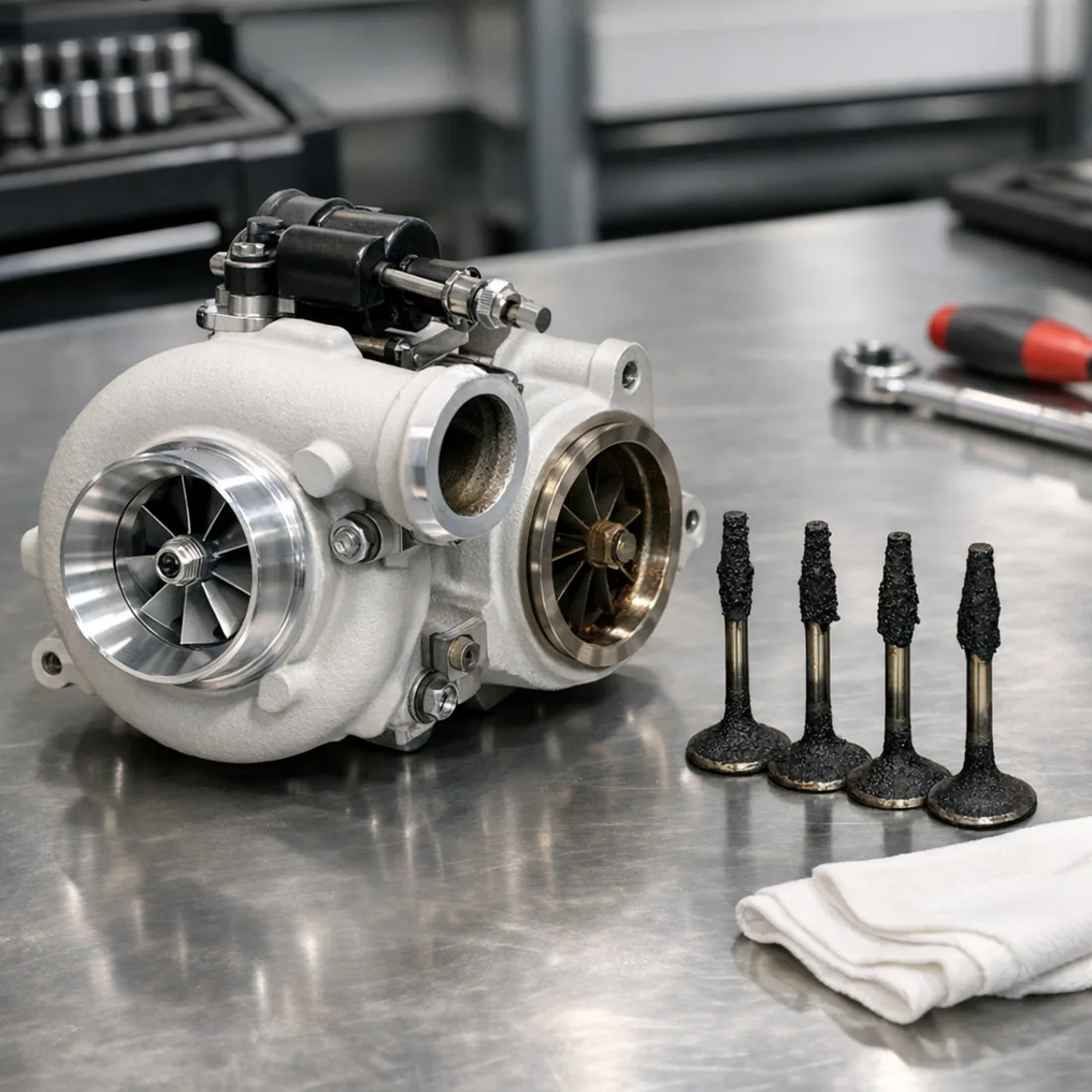
That hand built reputation is real, but it comes with a very clear message: this engine requires strict oil discipline, and it requires a proper cool down after hard driving. The turbocharger is expensive to replace and heat soaking it by shutting off immediately after a spirited run is one of the fastest ways to shorten its life. Oil temperature under track use runs high, and oil quality matters more here than on any other A Class variant. This isn't an engine you can maintain with whatever grade happens to be on special.
Carbon build up affects the M139 just as it does the M260, and the coil packs and spark plugs work significantly harder at this output level. The AMG SPEEDSHIFT DCT transmission and the 4MATIC AWD system both see serious stress under enthusiastic driving, and the brakes, tyres and clutch wear at a pace that surprises owners coming from more conventional hatchbacks. None of these are design faults as such, they're the natural consequence of extracting this much from a two litre engine.
Diagnosis on the A45 goes through XENTRY and DAS with a genuine C4 or C6 interface, reading the full control unit picture including the Bosch MG1CP002 engine ECU and the Getrag VGS2-FDCT transmission control unit. You need to see all of that to understand what's actually happening, especially when an intermittent fault shows up after a hard run. Generic tools simply don't have the depth here.
Compared to the A250, the A45 is a different ownership commitment. The parts are more expensive, the tolerances are tighter, and the consequences of neglect arrive faster. It's a spectacular machine when maintained properly, but if you're buying one used, verify the service history meticulously and budget for the fact that everything on it costs more than you expect.
-
Turbocharger heat damage from insufficient cool down after hard driving
-
High oil temperature under sustained performance use
-
Carbon build up on intake valves over time
-
Coil pack and spark plug wear at AMG output levels
-
Accelerated brake, tyre and clutch wear compared to standard A Class variants
-
DCT and AWD system stress under track or spirited road use
387 horsepower from two litres, built by hand at Affalterbach.
The M139 is the most powerful series production four cylinder engine ever made, and it demands the maintenance regime to match.
Routine servicing covers AMG approved oil and filter, air filter, cabin filter, spark plugs and coils, drive belt, and brake pads and rotors sized for the AMG braking system. DCT clutch and fluid service, cooling and intercooler performance checks, and suspension and mount inspection all belong on the schedule.
Stage 1 tuning on the M139 lifts output to around 470hp and 620Nm, a genuine step up that makes the already rapid A45 significantly more serious.
Picking Between Them: Used Buying Advice Across the Generations
If you're shopping the used market across all three of these cars, each one suits a different buyer profile. A pre purchase inspection using genuine XENTRY is money well spent regardless of which you choose. We can read every control unit, run guided tests, and flag any stored or pending faults before you commit. It's the best insurance available when buying any of these cars used.
You want the most entertaining thing on New Zealand roads and have a thorough AMG specific service history to verify. Buy one with documented history, verify turbo health, and be realistic about running costs. A poorly maintained A45 can become very expensive, very quickly.
You want the most balanced package, with a refined powertrain, the MBUX interior, and a fault profile that's manageable if you stay on top of servicing. The carbon and DCT issues are real but not catastrophic when addressed at the right time. Pre purchase, check for jerky low speed transmission behaviour and ask about the service history on the spark plugs and gearbox fluid.
You're a high kilometre motorway user who wants diesel efficiency and doesn't mind the more involved maintenance picture. The key pre purchase checks are injection quality data via XENTRY, any timing chain rattle on cold start, and evidence of proper DPF regeneration history. A W176 with a full, correctly spaced service history and no injector or chain concerns is a sound car.
- Check for jerky or clunky low speed gearbox behaviour on the A250 and A220 CDI
- Ask for service history on spark plugs, gearbox fluid and timing chain inspection
- Listen for timing chain rattle on cold start on the W176 A220 CDI
- Verify injection quality data via XENTRY on the OM651 diesel
- Confirm DPF regeneration history on the W176, especially on urban use cars
- Check turbo health and AMG specific service records on the A45 AMG
- Book a pre purchase inspection through XENTRY before committing to any of these cars
Servicing These Cars Properly
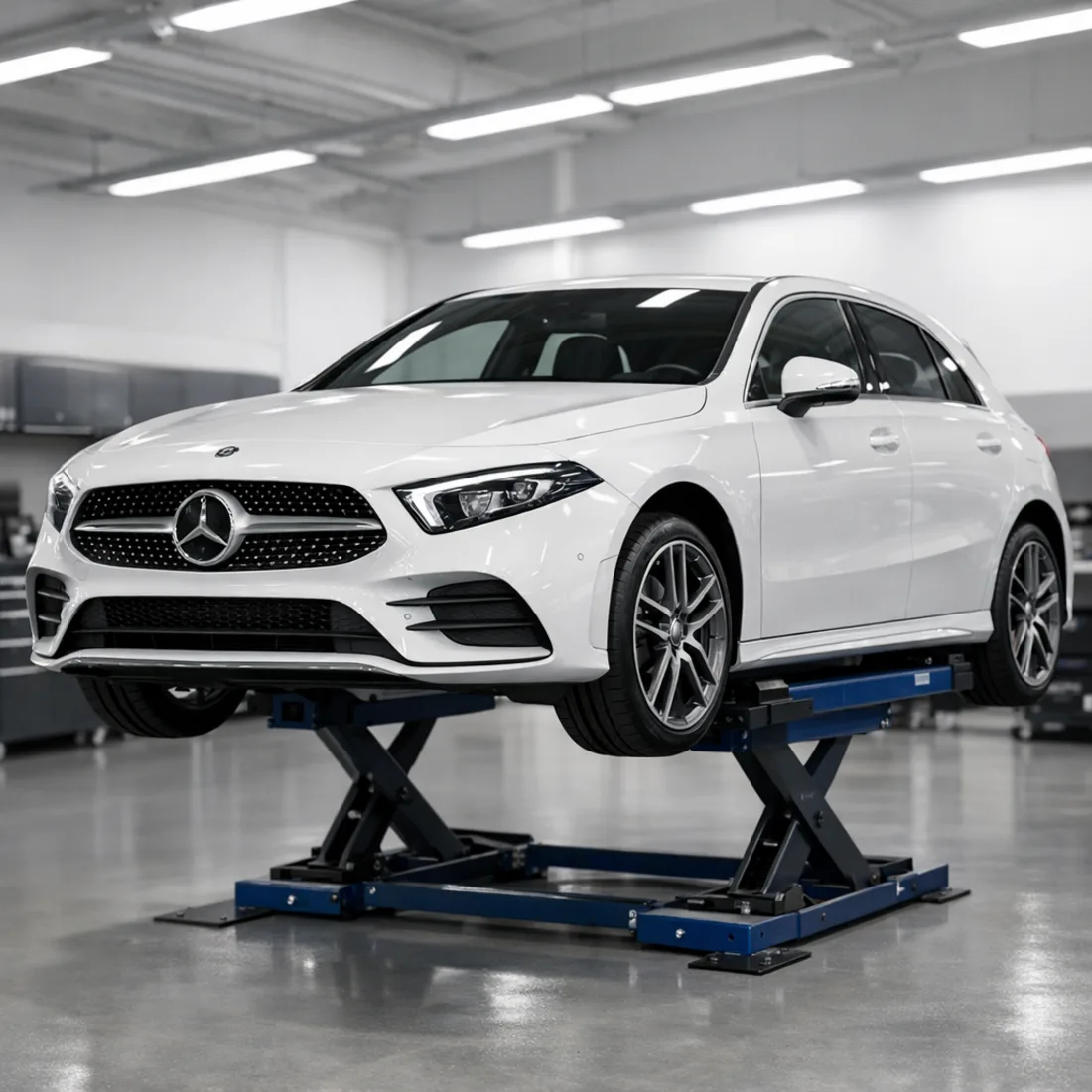
All three of these cars share one fundamental requirement: they need the right oil grade, the right service interval, and the right parts. None of them respond well to being treated like a generic hatchback at a generic workshop. We fit brand new genuine and OEM spec parts across the board. No shortcuts on filters, plugs or fluids.
The OM651 diesel in the W176 needs a low ash oil to protect the DPF, a fuel filter change that's often skipped, and glow plug inspection as the car ages. The petrol engines in both W177 variants need the correct specification oil for their respective states of tune, with the M139 being particularly specific about grade and change frequency given the thermal loads involved.
DCT transmission service is relevant to all three cars. The W176 diesel can have the 7G DCT, the A250 uses it as standard, and the A45 has its own AMG SPEEDSHIFT variant. All of them benefit from fluid changes at appropriate intervals. The mechatronic unit on these transmissions is sensitive to degraded fluid and heat cycling, so don't wait until you notice shift quality problems.
Our car servicing covers everything from the standard A service through to the bigger scheduled items and the fault driven work that comes with mileage. Book in and we'll go through the car's history and work out what it actually needs rather than what a generic service schedule says.
How We Diagnose These Cars
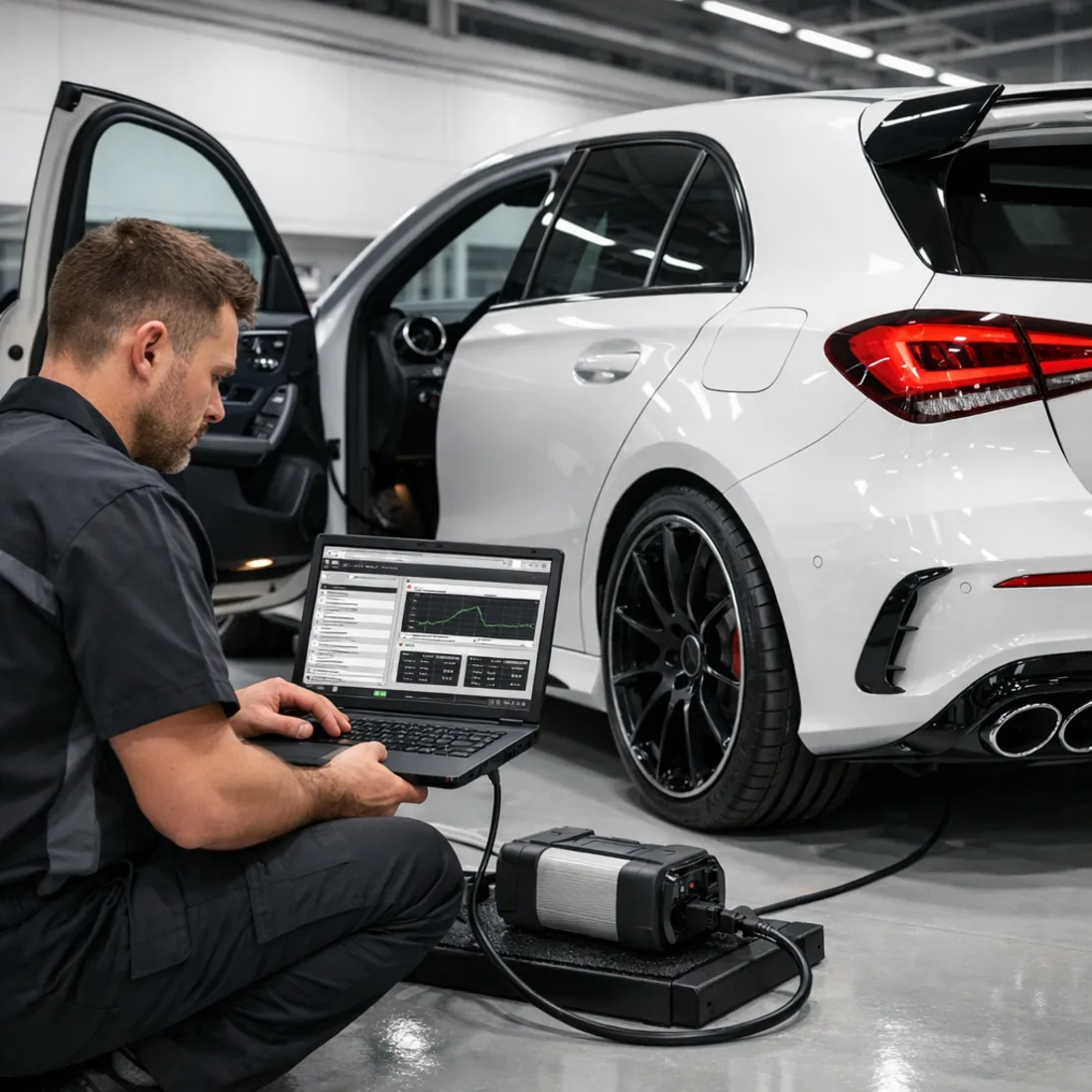
All three of these cars, the W176 A220 CDI, the W177 A250 and the W177 A45 AMG, are diagnosed exclusively with genuine Mercedes XENTRY and DAS using a proper C4 or C6 interface. That's not a marketing claim, it's a practical necessity. These cars have dozens of control units talking to each other, and a generic OBD scanner picks up maybe ten percent of what's actually available.
XENTRY gives us guided test procedures, live data from every sensor in the car, and the ability to run activation tests on individual components. On the OM651 diesel that means we can check actual injection quantities per cylinder and identify injector wear before it causes a no start. On the M260 and M139 petrol engines we can monitor boost, fuelling, ignition timing and transmission behaviour in real time. On the DCT we can read mechatronic adaptation values and clutch wear data that simply doesn't appear on aftermarket tools.
The W177's MBUX system in particular needs factory level access to diagnose electrical and infotainment faults properly. The architecture is more network heavy than older Mercedes Benz platforms and tracing a fault to its actual source, rather than just the module throwing the warning, requires the full toolset.
When you bring any of these cars to us, we scan the full control unit picture before we recommend anything. That's how misdiagnosis gets avoided and how you get an accurate quote for the actual problem rather than a guess based on symptoms.
Tuning Across the A Class Range
All three of these platforms respond well to calibration work when it's done properly. The gains available vary significantly by engine, and the approach differs between the petrol and diesel variants. All tuning work on these cars is carried out with the transmission and AWD data in mind, not just the engine ECU in isolation.
The M139 offers the most dramatic numbers in the range. Stage 1 takes the car from 387hp and 480Nm to around 470hp and 620Nm, gains of 83hp and 140Nm that are substantial even by AMG standards. Available options alongside the base tune include DTC removal, a pop and bang map, start/stop disable, Vmax adjustment and DECAT calibration support where relevant.
The A250's M260 can be tuned to approximately 250hp and 400Nm at Stage 1, a worthwhile step from the stock 224hp. Available options alongside the base tune include DTC removal, a pop and bang map, start/stop disable and Vmax adjustment.
The OM651 diesel can be lifted from 177hp and 350Nm to around 210hp and 420Nm at Stage 1. That's a meaningful improvement in real world driveability, particularly in the mid range torque that makes a diesel feel effortless. EGR related calibration work is available alongside tuning where EGR issues are diagnosed. Available options include EGR off, DPF off, DTC removal, FLAPS, Vmax and AdBlue.
The key is making sure the base car is healthy, serviced correctly and not carrying any underlying faults before tuning. We check all of that before we write anything to the ECU. For remote tune options, see our file service.
Frequently Asked Questions
The questions we get most. Something else on your mind? Get in touch.