C 200, C43 AMG and C 300d
The W206 C Class is three very different cars wearing the same badge. You get a mild hybrid petrol commuter, a four cylinder sports saloon pushing supercar numbers, and a refined diesel motorway machine, all sharing the same platform and all leaning heavily on 48V electrification. That sophistication is exactly what makes them rewarding to drive and exactly what catches owners off guard when something goes wrong. Our Penrose workshop works on all three variants regularly, with factory Mercedes XENTRY diagnostics, genuine parts and the knowledge to tell you what a fault code actually means rather than just reading it off a screen.
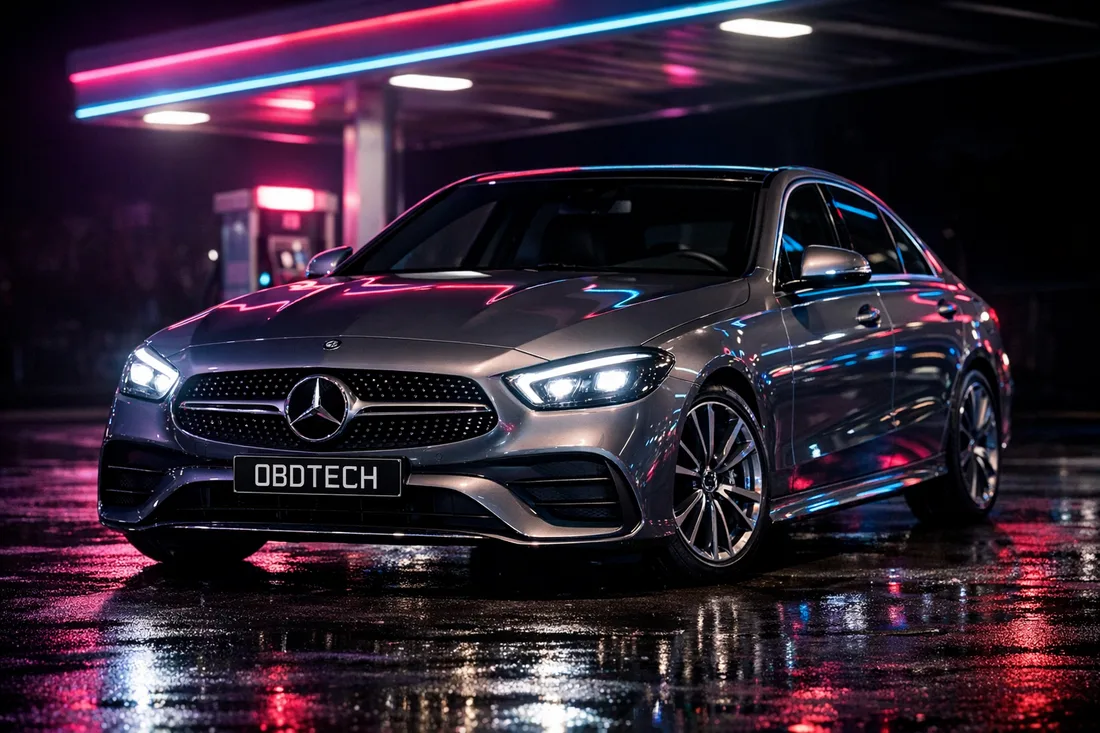
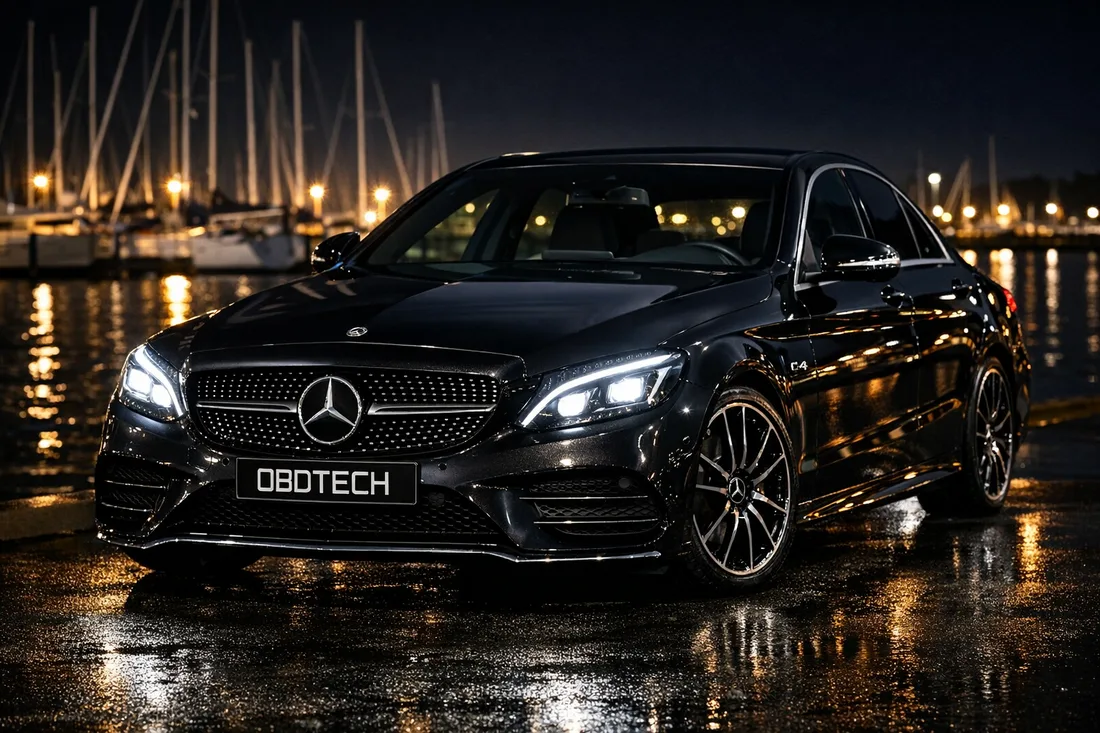
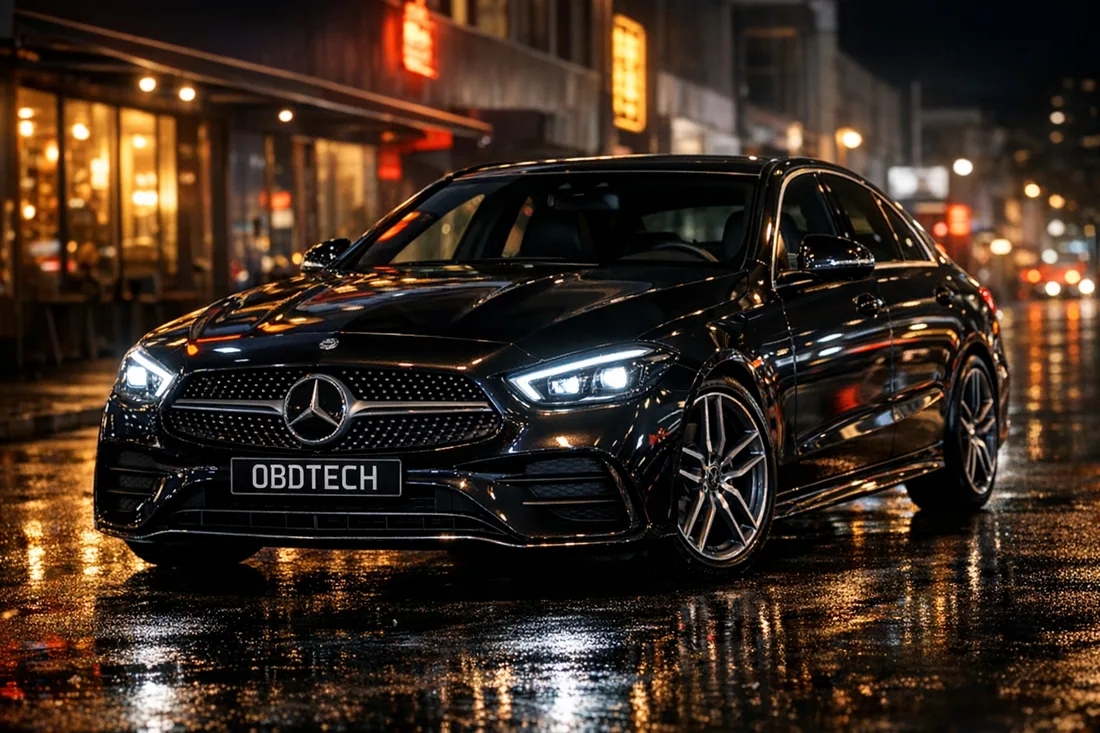
C 200 (M254 1.5T): The One That Started the Conversation
The W206 C 200 arrived as Mercedes Benz's benchmark for what a modern compact exec should feel like. Under the bonnet sits the M254 1.5-litre turbocharged petrol producing 204 horsepower, paired with a belt driven integrated starter generator running on a 48V architecture. The promise is seamless, whisper quiet restarts and a car that never really feels like it has stopped. When it's working properly, that promise holds up. When it isn't, you know about it immediately.
The ISG and 48V system are where most of the early grief shows up. Owners report rough or delayed starts, mild hybrid warning messages on the MBUX screen and occasional restart hesitation, especially on cold Auckland mornings. These aren't engine problems in the traditional sense, they're electrical and software problems that need proper diagnosis rather than a guess and a generic scan tool.
-
Rough or hesitant starts and mild hybrid warning messages traced to the ISG and 48V system
-
Coolant weeping from the electric water pump and thermostat housing
-
Turbo actuator behaviour and carbon build up as mileage climbs
-
Software related driveability niggles that respond to XENTRY updates
-
48V battery health degrading silently, worth checking at every service
These aren't engine problems in the traditional sense, they're electrical and software problems that need proper diagnosis.
A generic scan tool won't give you what you need on this platform.
The M254 uses a chain driven timing setup, so there's no cam belt to sell you. What we do watch for is any tensioner rattle creeping in, which is worth catching early. The electric auxiliary pump and coolant circuit need attention on schedule, and front suspension arms and bushes are worth inspecting as these cars age and accumulate Auckland's mix of motorway and urban kilometres.
For routine car servicing, the C 200 needs oil and filter with the correct low ash approved grade, air filter, cabin filter, spark plugs, brake pads and rotors, and a proper look at the 48V system health. A Stage 1 tune on the 1.5T is available for owners who want a more responsive car without changing what makes it refined.
Get your W206 C Class booked in with a proper specialist.
C43 AMG (M139l): Four Cylinders, Zero Apologies
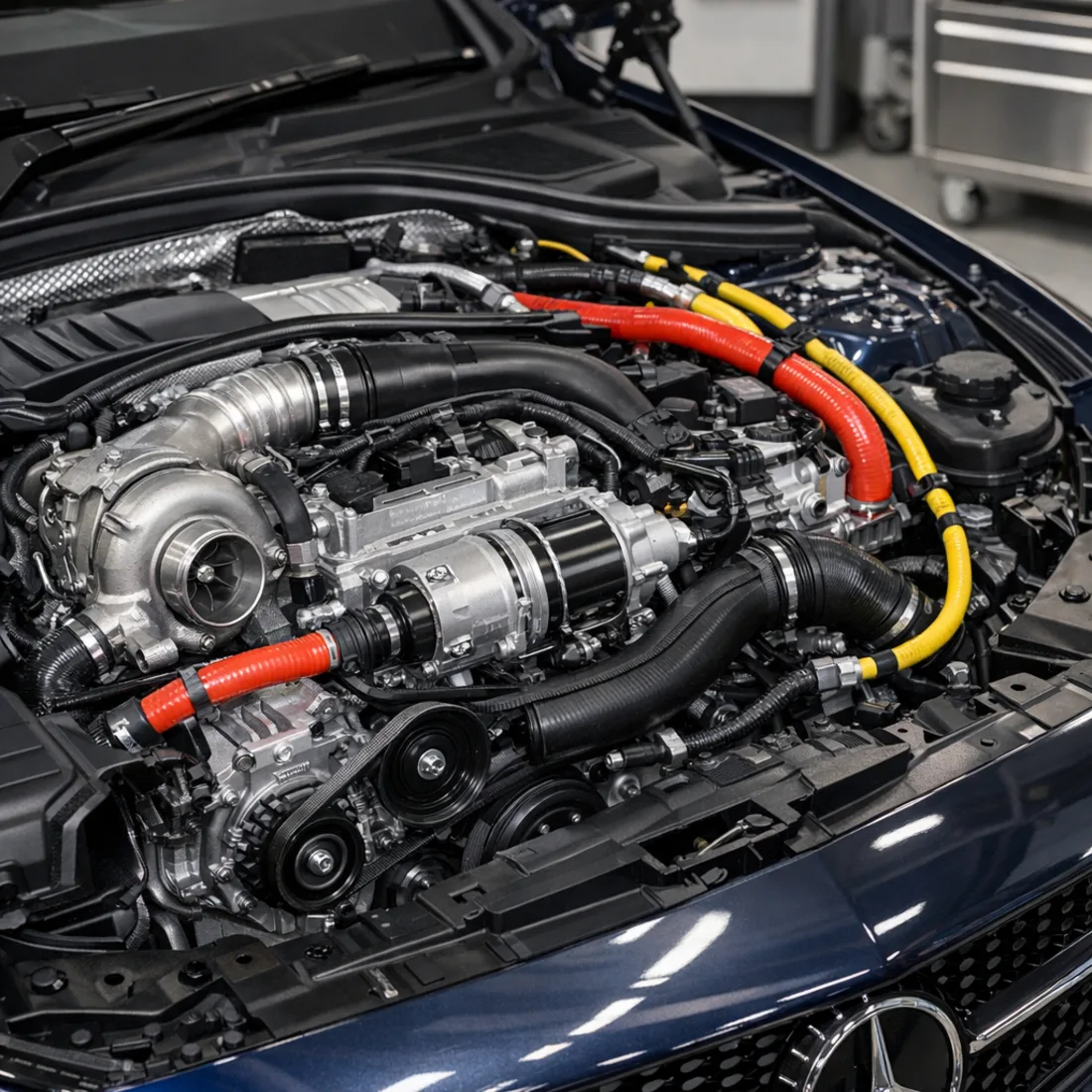
If the C 200 surprises you with how much is happening under the surface, the C43 AMG takes that and multiplies it. Four cylinders. 408 horsepower. An electrically assisted turbocharger alongside the 48V mild hybrid belt system. This is not the old twin turbocharged V6 that wore the 43 badge before, and it behaves nothing like it. The M139l is one of the most highly developed four cylinder petrol engines in production, and it runs at a level of stress that demands proper servicing, not shortcuts.
The transition from the V6 43 models to this four cylinder unit was divisive at first, but in practice the M139l is a more sophisticated piece of engineering. What it does share with the C 200 is that 48V architecture, and many of the same electrical fault patterns apply. Where it differs is the intensity: cooling system performance matters more here because the engine runs hotter, oil condition degrades faster, and the turbo and electric turbo actuator are under greater sustained load.
-
Cooling system performance, this engine runs hard and heat management is critical
-
Turbo and electric turbo actuator behaviour under load
-
Oil condition, the AMG approved low SAPS grade on the correct interval, not extended
-
48V starter generator and belt system faults showing up as electrical or start stop niggles
-
Brake wear, AMG brakes work harder and rotors need checking more often than on the C 200
Compared to the C 200, the C43 demands more attention but rewards it more noticeably.
If you're running one of these, treat it like the performance machine it is.
Servicing the C43 properly means oil and filter on the right AMG approved grade, air filter, cabin filter, spark plugs suited to this turbo four cylinder, drive belt inspection and brake pads and rotors on a shorter cycle than the standard models. Suspension components and sensors round out the list. The M139l responds very well to a Stage 1 tune given its turbo setup, and we map these carefully, keeping the gains within what the hardware can reliably sustain.
Compared to the C 200, the C43 demands more attention but rewards it more noticeably. If you're running one of these, treat it like the performance machine it is, not like a standard C Class that happens to be fast.
C 300d (OM654 2.0D): The Diesel That Earns Its Keep
The C 300d sits at the opposite end of the W206 personality spectrum from the C43 AMG, but it's no simpler under the skin. The OM654 2.0-litre four cylinder diesel makes 265 horsepower and carries the same 48V mild hybrid architecture as the petrol variants. On the motorway it's exceptional: refined, economical, and effortless in a way that makes you wonder why anyone buys a petrol. Short trip urban driving is where the complications start.
The OM654 is a genuinely good diesel engine, but the emissions hardware around it is where problems tend to cluster. Cars used predominantly for short trips don't give the DPF a chance to complete a proper regeneration cycle, which leads to blockages and warning lights. The AdBlue metering system and NOx sensors are worth watching, and the EGR cooler and valve accumulate carbon build up that eventually affects performance and fuel economy. These aren't unique to the W206, but the sophistication of the MBUX system means you see the fault logged quickly and clearly, which is actually helpful when you're diagnosing with the right tools.
-
DPF regeneration problems on cars used for short urban trips
-
AdBlue metering and NOx sensor faults
-
EGR cooler and valve carbon build up affecting performance and economy
-
48V belt driven starter generator and DC DC converter faults
-
Timing chain wear worth checking on higher mileage OM654 units
Where the C 200 and C43 AMG are petrol cars learning to be hybrids, the C 300d is fundamentally a diesel car doing the same thing.
The fault patterns on the diesel side are their own world.
Unlike the petrol variants, the C 300d runs glow plugs rather than spark plugs, and the fuel filter is a service item that can't be ignored. Oil and filter on the correct low SAPS diesel grade, air filter, fuel filter, cabin filter, drive belt inspection and brake pads and rotors cover the routine work. NOx sensors and other emissions components are serviceable and replaceable where needed. Stage 1 tuning is available on the OM654 for owners who want more from this platform, and there's meaningful headroom in the tune without compromising reliability.
Don't assume a workshop that knows the petrol variants automatically knows the diesel, the emissions system alone requires a different diagnostic conversation.
Picking Between Them: Buying Advice Across the W206 Range
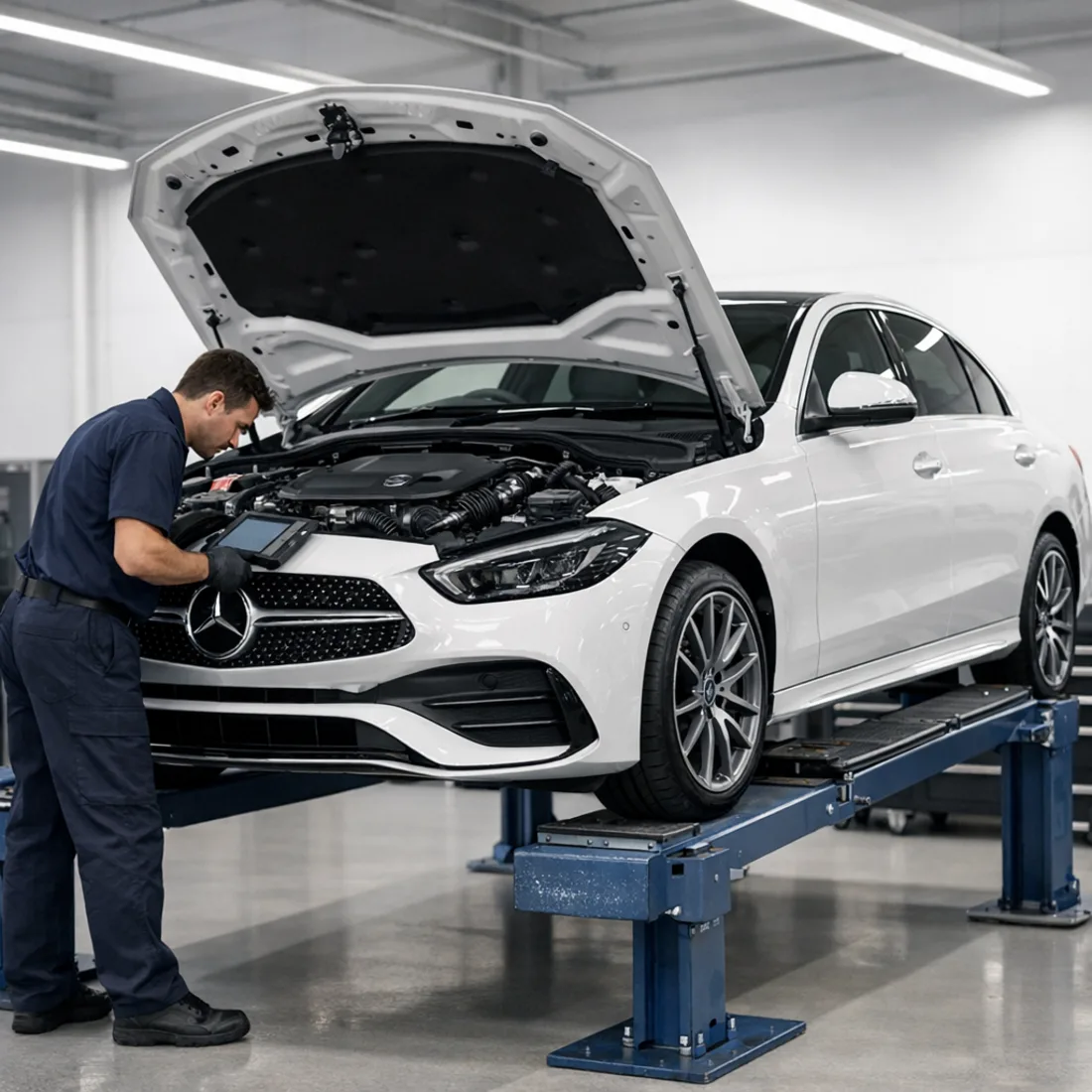
If you're shopping the W206 range used, the choice really comes down to what you use the car for. Across all three, any W206 without a proper service history is a gamble. These are sophisticated machines and the 48V systems in particular need expert attention, not corner cutting.
You want the most accessible entry point with lower running costs and a manageable powertrain. The sweet spot in the range for most buyers is a well maintained C 200 with documented service history. Check for any history of mild hybrid warning messages and ask about the 48V battery health.
You want performance and are committed to proper servicing. A C43 with patchy oil change history or extended intervals is a risk, because the M139l does not forgive neglect. Look for AMG grade service records and check the cooling system and brake wear carefully before buying.
You do genuine motorway driving. If it's been used as a city car with short trips and no highway runs, the DPF history becomes critical. A C 300d that has been through several warning light cycles for DPF issues has likely accumulated internal damage that goes beyond a simple clean. Get the XENTRY history read before committing.
- Check for any history of mild hybrid warning messages and ask about the 48V battery health on the C 200
- Look for AMG grade service records on the C43 and check cooling system and brake wear carefully
- On the C 300d, confirm DPF history and whether the car has been used predominantly for short trips
- Any W206 without a proper service history is a gamble, these cars need expert attention
- Have the XENTRY fault history read before committing to any W206 purchase
Servicing Across the W206 Family
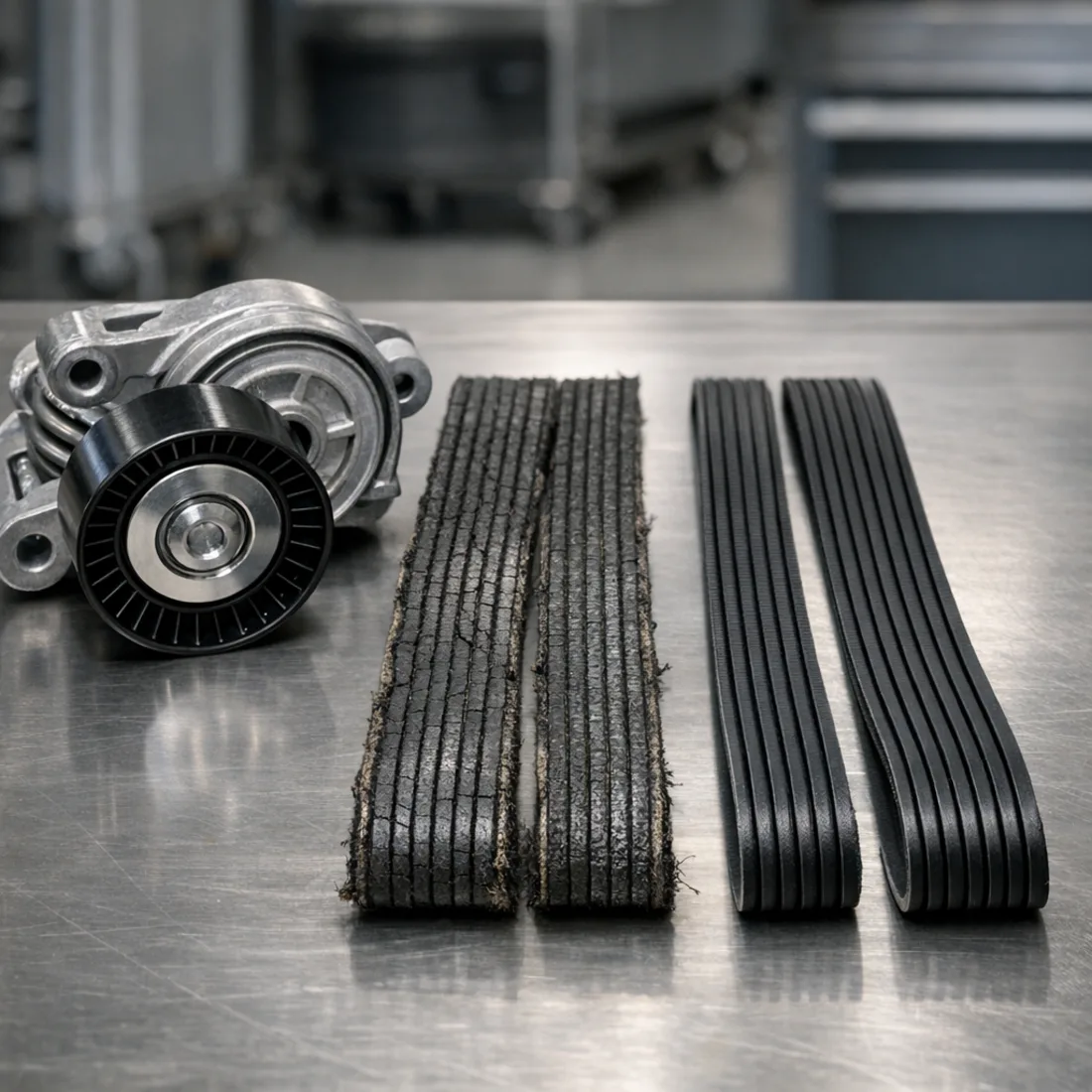
All three W206 variants share a platform and an electrical architecture, which means the servicing philosophy is consistent even where the specifics differ. Every one of them needs the right approved oil grade, not a generic substitute. Every one of them has a 48V system that should be checked at each service, not just when a warning appears. And every one of them has suspension and brake components that wear at their own rate depending on how the car is driven.
Our car servicing for W206 models covers the full routine: oil and filter, filters, plugs or glow plugs depending on the variant, brakes, coolant, and a proper inspection of the 48V system health. We use genuine OEM parts throughout, because these cars are engineered to close tolerances and substituting lower grade components is where reliability problems start. For brake work specifically, our brake repairs service covers the C43 AMG's faster wearing setup just as well as the standard C 200, with the same genuine parts standard across the board.
How We Diagnose W206 C Class Models
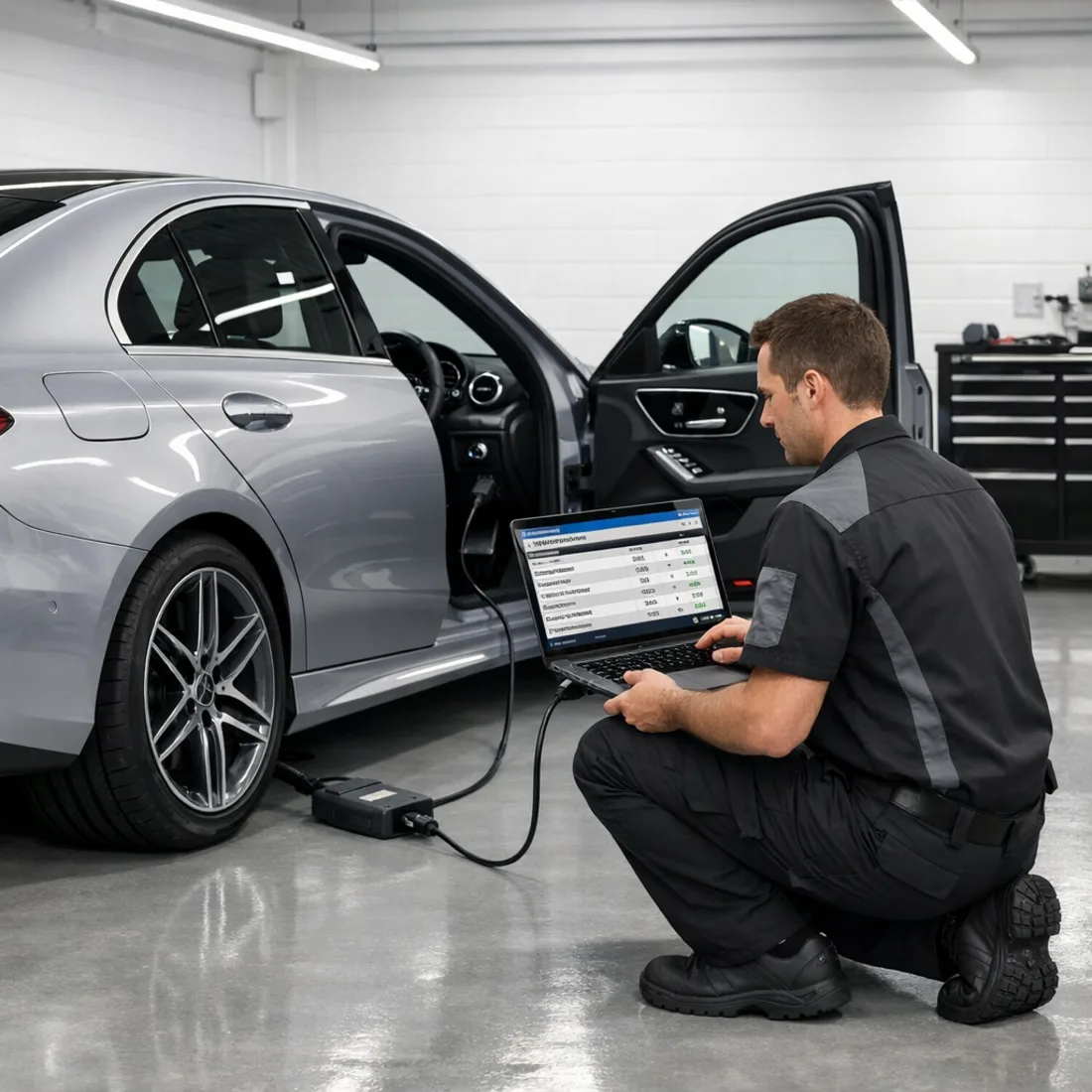
The W206 platform is not friendly to generic scan tools. The 48V mild hybrid system, the ISG, the electric turbocharger on the C43 AMG, the AdBlue and NOx systems on the C 300d, and the gateway and transmission modules across all variants are designed to communicate fully only with the factory Mercedes XENTRY and DAS platform using a genuine C4 or C6 interface. A generic reader will pull some codes. It won't give you the live data, guided tests and coding capability you need to actually fix the problem.
We work with XENTRY and DAS as standard. That means we can read all control units properly, run guided diagnostic tests, check the 48V battery state of health, verify ISG and electric turbo actuator function, and code replacement components so they're recognised by the vehicle. When a fault clears and comes back, we have the data to understand why, rather than starting from the beginning each visit. For any work involving new control units, sensors or modules, proper coding is non negotiable. Our car programming and coding capability covers the full range of W206 components, so replacements are fitted and initialised correctly rather than just bolted on and hoped for.
Tuning the W206: What's Available and What's Realistic
All three W206 variants have tuning headroom. The key word is well executed. The 48V systems and electric turbo hardware on these cars mean that tuning needs to account for the full powertrain, not just the combustion side. We map these conservatively enough to be reliable and ambitiously enough to be worth doing.
The M254 1.5T in the C 200 responds to a Stage 1 map with a meaningful lift in throttle response and mid range pull. We keep gains realistic on the C 200, accounting for the 48V and ISG systems when mapping.
The M139l in the C43 AMG has the most room to work with given its turbo setup, and a well executed Stage 1 map on this engine is genuinely transformative. We account for the 48V and electric turbo systems when mapping the C43, and we keep gains within what the hardware can reliably sustain.
The OM654 diesel in the C 300d responds well to a Stage 1 tune, with the torque gains feeling particularly strong on a motor that's already strong in that department. There's meaningful headroom in the tune without compromising reliability.
If you want to understand what the gains look like before committing, our power gains page goes into the specifics of what's achievable on turbocharged platforms like these.
Frequently Asked Questions
The questions we get most. Something else on your mind? Get in touch.