X Class, Vito, Viano, V Class & Sprinter One Family, Two Engines, Every Fault Covered
From the premium ute that shares its bones with a Nissan to the V6 workhorse hauling refrigerated goods across Auckland before sunrise, the Mercedes Benz commercial and people mover lineup is a fascinating mix of shared platforms, shared engines, and very different jobs. The OM651 four cylinder diesel threads through the Vito, Viano, V Class and X Class like a common language, while the OM642 3.0 V6 does the heavy lifting in the Sprinter. Each generation has its own character, its own weak points, and its own story of what happens when kilometres stack up on a van or ute that never really gets a day off.

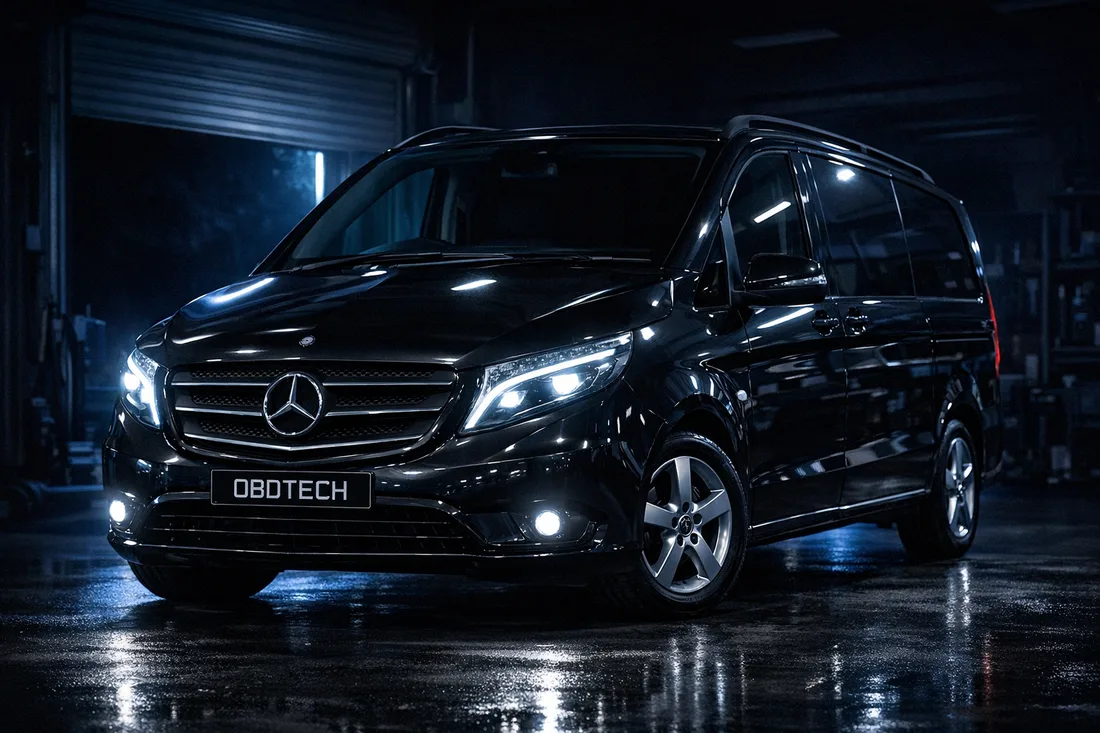
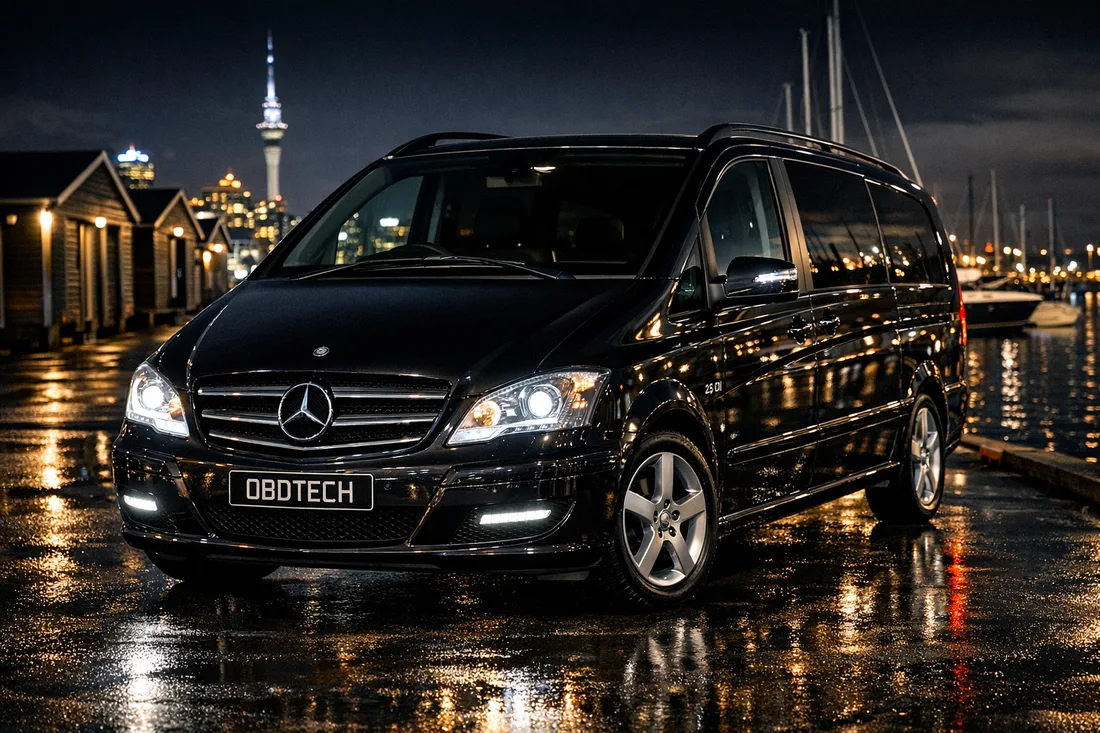



The Premium Ute with a Split Personality
Picture a ute with a three pointed star on the nose and a Nissan Navara underneath. That is the X Class 220d in a nutshell, and it is a genuinely interesting machine for it. Mercedes brought their badge, their cabin refinement and their ECU calibration. Nissan brought a proven ladder frame and four wheel drive mechanicals. The result sits in a lot of Auckland driveways and does real work, towing trailers to the Coromandel or running construction site runs from South Auckland every morning.
The 220d is the entry point of the range, powered by the 2.3-litre OM699.300 diesel making 163 hp and 403 Nm. That engine code is unique to the X Class and not shared with the Vito, Viano or V Class, which is an important distinction when you are chasing parts or fault codes. The ECU here is a Siemens/Continental SID310, not the Bosch units found across the van family, so diagnostics require a different approach and calibration.
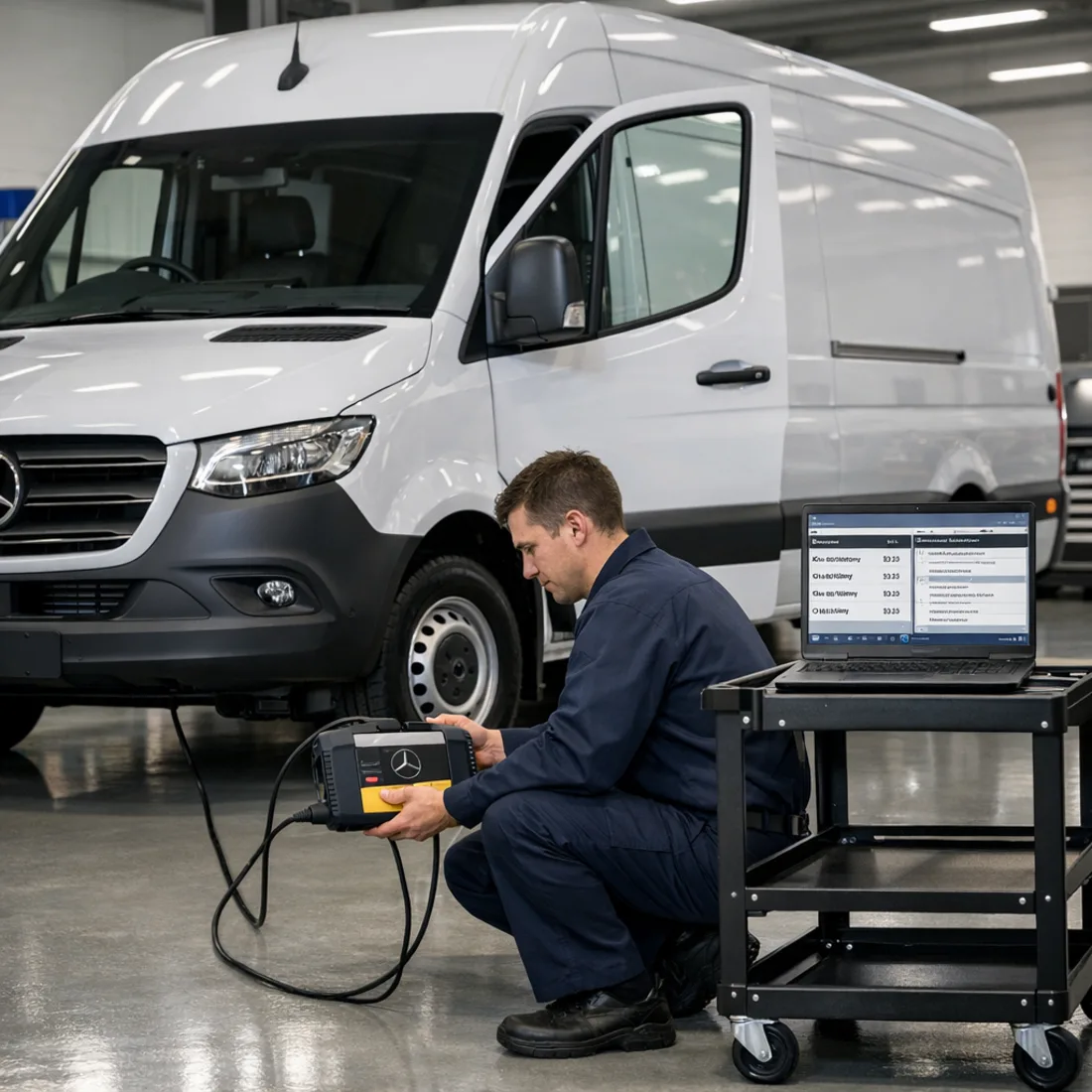
Because the driveline borrows from Nissan, some faults track back to that shared platform rather than pure Mercedes engineering. That shared DNA is actually one of the more useful things about owning one, because certain mechanical components are straightforward to source. But the Mercedes specific electronics and the SID310 ECU mean you still need factory grade diagnostics. We use genuine Mercedes XENTRY and DAS with a C4 or C6 interface, not a generic scan tool, so we can read live data, run guided tests and reset service and adaptation data correctly.
For routine servicing we cover oil and filter with the correct diesel spec grade, air filter, fuel filter, cabin filter, wipers, drive belts and glow plugs. Brake pads and rotors, suspension components, sensors, and DPF and EGR cleaning or replacement are all part of the regular work we do on these utes. Stage 1 tuning is also available, lifting output to 190 hp and 460 Nm for a solid gain in towing torque.
-
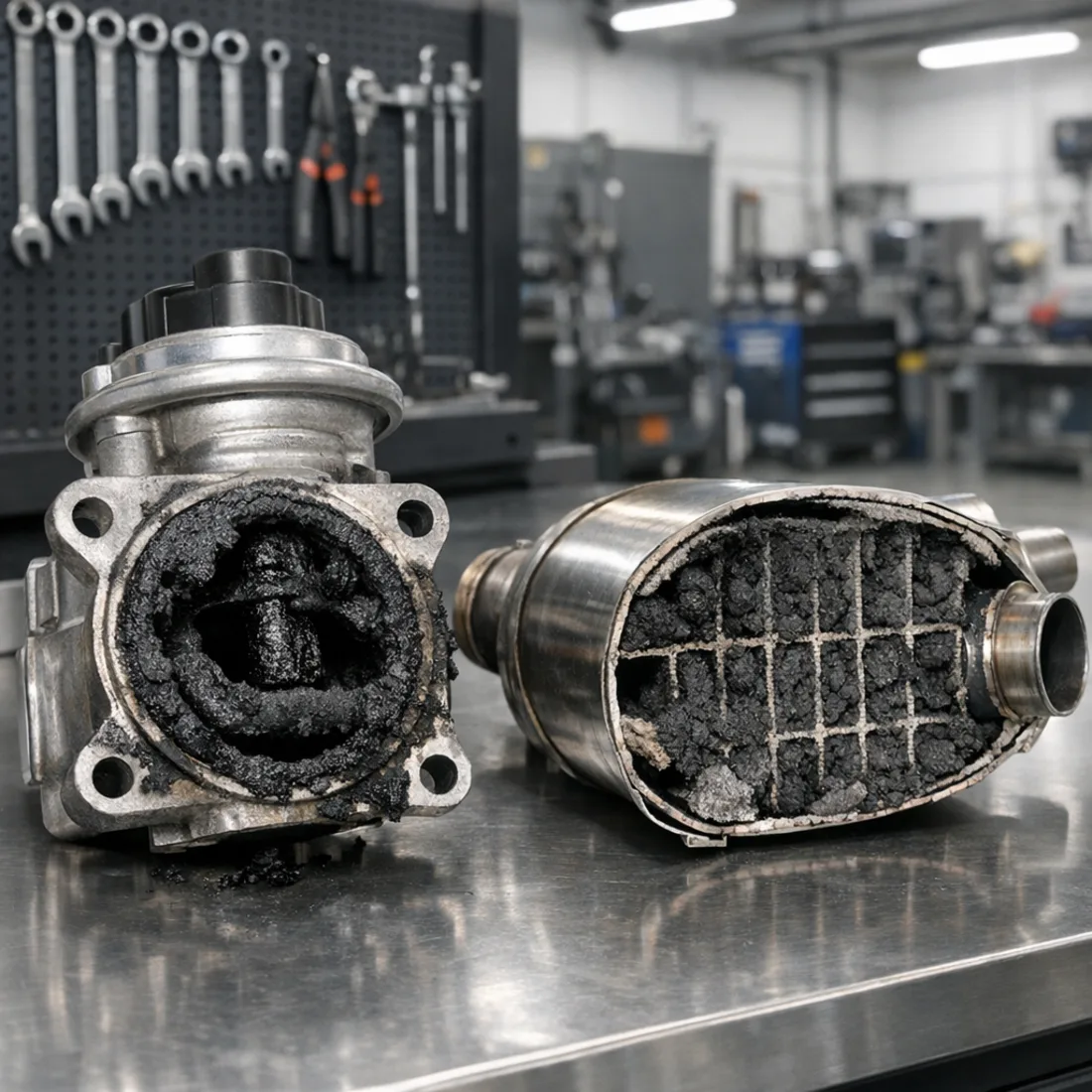
EGR valve clogging and carbon build up in the intake
-
DPF regeneration failures, especially on short trip vehicles
-
Glow plug and glow plug relay faults causing cold start issues
-
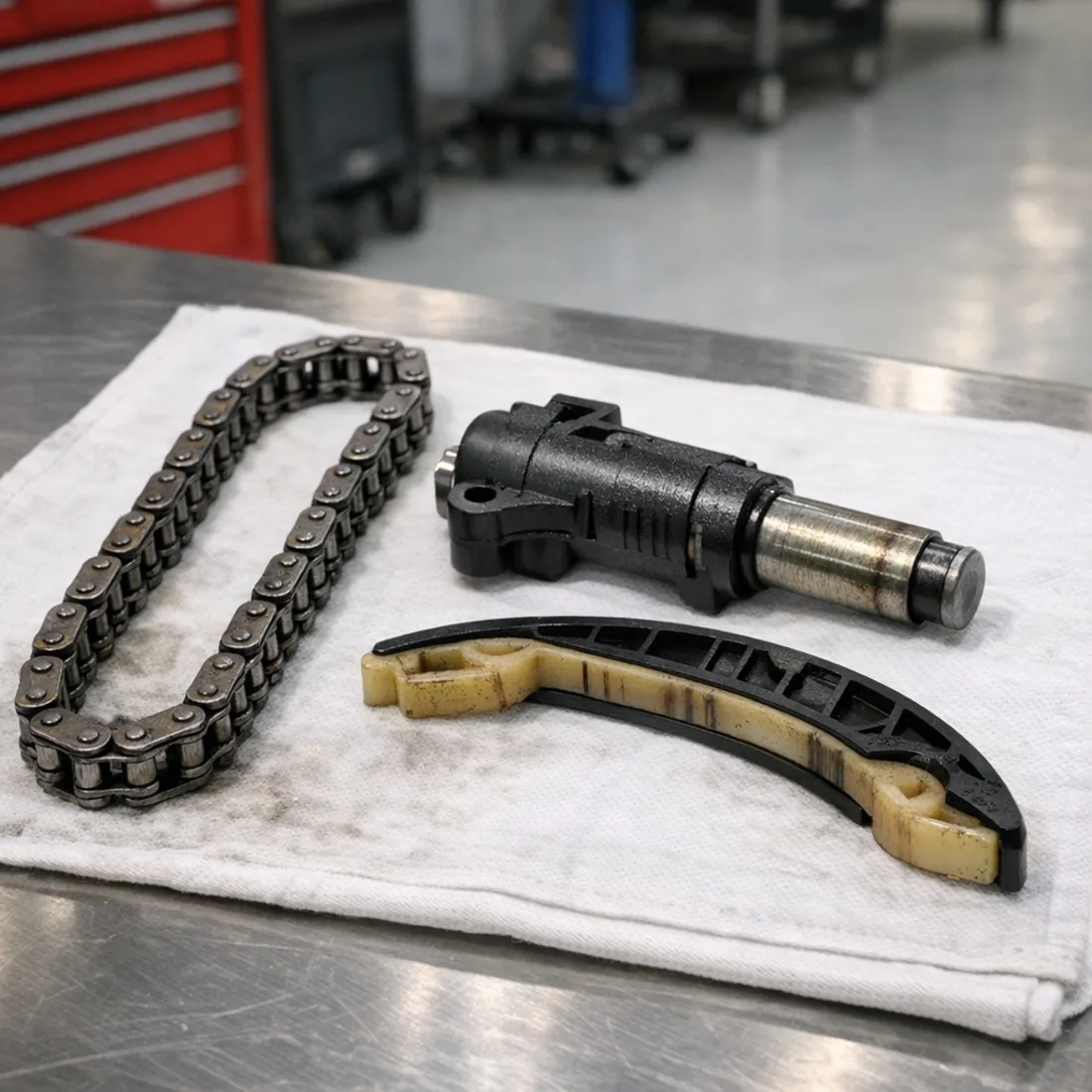
Timing chain rattle on cold start
-
Turbo actuator faults and reduced boost
-
Fuel filter contamination and injector wear on higher mileage examples
The OM699.300 and SID310 ECU are unique to the X Class and require Mercedes factory tooling for proper diagnostics.
Do not assume a Navara specialist can cover the Mercedes specific systems.
Get your Mercedes van or ute booked in with a proper specialist.
Auckland's Hardest Working Van
The Vito W447 is everywhere in Auckland. Tradies, shuttle operators, small businesses running parts across town at all hours. They buy the 116 CDI because the OM651 2.1-litre diesel is punchy, reasonably frugal and carries a load without drama. The engine code here is OM651 DE 22 AL, 2143cc, with a Bosch EDC17C66 ECU managing 163 hp and 380 Nm. What owners sometimes discover later is that this engine has a handful of well known weak points that get expensive fast if you ignore the early signs.
The OM651 is also the engine in the Viano and V Class, and many of the fault patterns are shared across that family. If you own any of these three, the timing chain story will sound familiar. Cold start rattle on a high mileage Vito means the timing chain and tensioner are due for attention, and ignoring it turns a routine job into a much bigger one. The other chronic issue is injector sealing: copper washers weep, injector wiring looms degrade, and the symptoms show as rough idle, smoke on overrun and poor economy.
Vans doing constant short urban runs never get warm enough to complete a proper DPF regeneration cycle, and the filter quietly blocks until the amber warning light becomes a red one and power drops away. We see this constantly. A Stage 1 tune brings the Vito to 215 hp and 490 Nm, which is a genuine transformation in throttle response and load carrying ability, and it is the biggest relative gain in the OM651 family we work on.
-
Timing chain and tensioner stretch causing cold start rattle
-
Injector copper washer leaks and wiring loom faults
-
EGR valve clogging and swirl flap actuator failure
-
DPF blockage from constant short urban runs
-
Turbo actuator faults and boost leaks
-
Delivery unit faults affecting fuel pressure and starting
Cold start rattle on a high mileage Vito means the timing chain and tensioner are due for attention.
Ignoring it turns a routine job into a much bigger one.
The Family Hauler That Punishes Neglect
The Viano does a lot of heavy lifting. Family hauler, airport run, tradesperson's carry all, occasional camping trip with the rear seats folded flat. It is a proper working vehicle dressed up in Mercedes clothes. The OM651 DE 22 LA four cylinder diesel produces 163 hp and 360 Nm from 2143cc, and depending on the build year the ECU is a Bosch EDC17C66, a Bosch EDC17CP57 or a Delphi CRD2.x. That ECU variation matters, because the calibration approach differs across those units and generic scan tools simply cannot keep up with them.
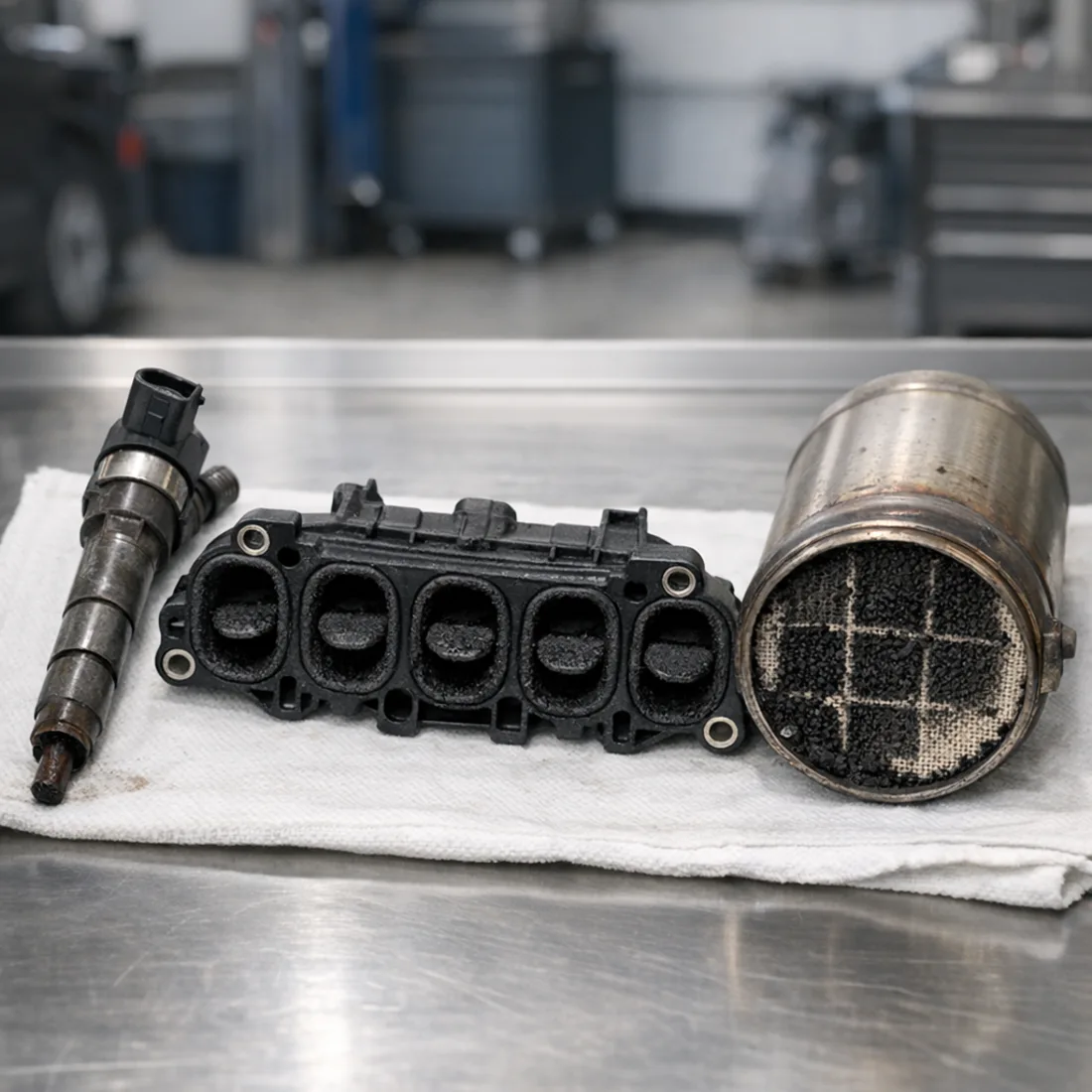
The Viano shares its engine family with the Vito and V Class, so the timing chain and injector story is the same one. Earlier piezo type injectors are a particular weak point, and injector failure on a neglected example can send debris downstream and create a much larger repair bill. The swirl flaps and intake manifold carry heavy carbon build up on vans used primarily in town, and turbo actuator faults and EGR clogging follow the same pattern we see on the Vito. The Viano does tend to stay in service longer as a family vehicle, which means higher mileage timing chain issues are very common by the time it arrives on our hoist.
Stage 1 tuning brings the Viano to 200 hp and 440 Nm, a 37 hp and 80 Nm gain that transforms a heavily loaded family van into something that actually keeps pace with traffic on the motorway on ramp. We handle the full servicing schedule alongside the mechanical repairs, so you are not splitting the work across two workshops.
-
Injector failure, particularly early piezo units
-
Timing chain and tensioner wear on higher mileage examples
-
Intake manifold and swirl flap carbon build up
-
EGR valve and DPF blockage on urban use vehicles
-
Turbo actuator faults reducing power
Earlier piezo type injectors are a particular weak point, and injector failure on a neglected example can send debris downstream.
The Viano tends to stay in service longer, which means timing chain issues are very common by the time it arrives on our hoist.
The People Mover with Real Weak Spots
The W447 V Class 220d is what happens when Mercedes take the Vito platform and build something that genuinely drives more like an executive car than a van. Load eight people in from the airport, pull onto the Southern Motorway, and it feels composed and quiet. The 220d produces 163 hp and 380 Nm from a 1950cc engine with a Bosch MD1CS002 ECU and a 15.5:1 compression ratio, making it the smallest displacement diesel in the family covered on this page. That slightly different specification means the tuning headroom is also different, and Stage 1 brings it all the way to 220 hp and 480 Nm, the largest percentage torque gain in the OM651-adjacent family.
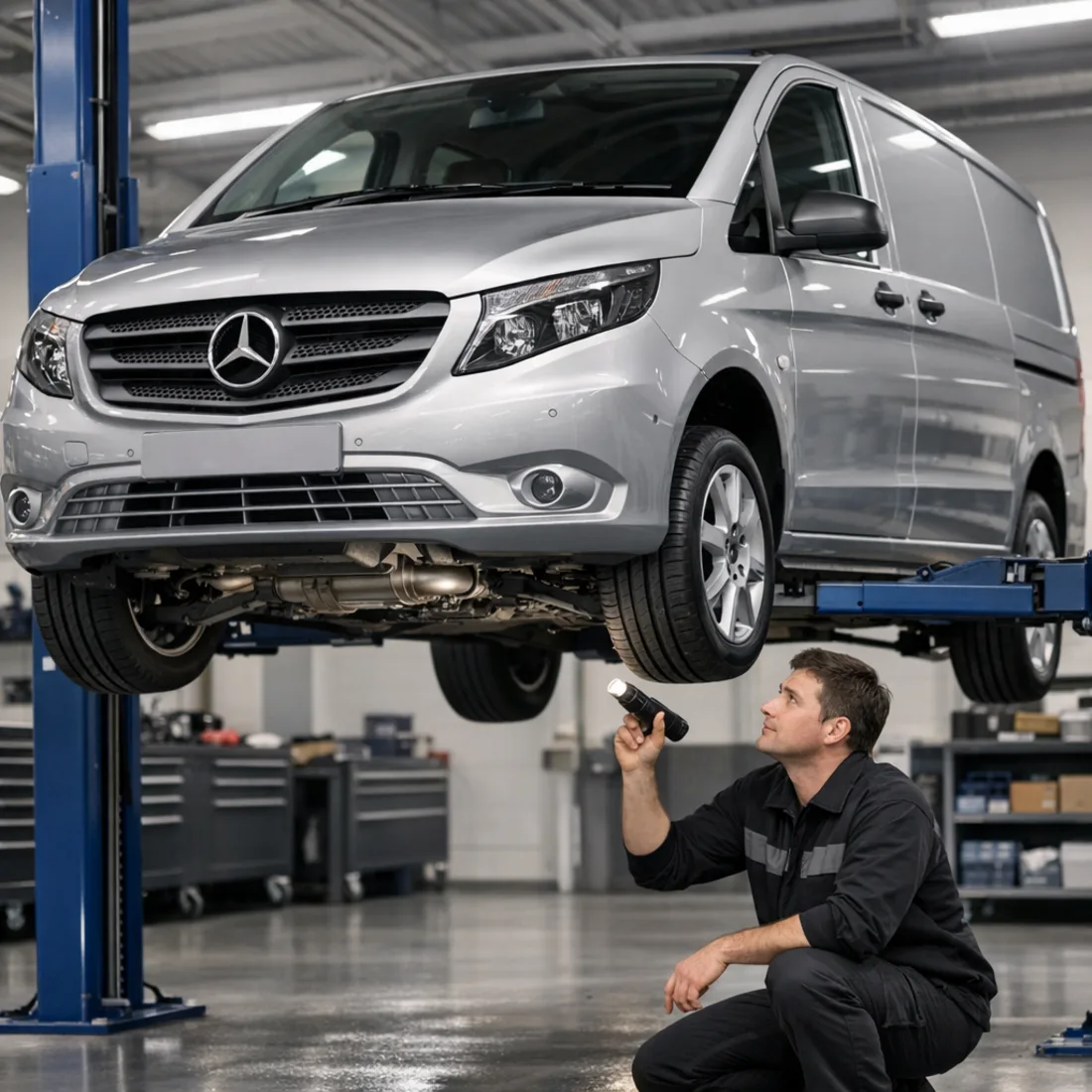
Because the V Class is often used as an airport shuttle or passenger transfer vehicle, it is doing exactly the kind of work that kills DPF filters: stop start urban running, short trips, lots of idle time. The DPF never gets a sustained run at operating temperature to complete a passive regeneration, and a blocked filter is one of the most common faults we diagnose on these vans. Timing chain and tensioner wear, injector leak off, swirl flap faults and EGR clogging all follow the same pattern as the Vito and Viano, because the engine family is closely related.
Oil leaks from the timing cover and sump gasket are also worth watching on higher mileage examples. None of these are catastrophic if caught early. All of them become expensive if ignored. We use Mercedes XENTRY and DAS with a genuine C4 or C6 interface to read guided test data and reset adaptations correctly, then fit genuine and OEM quality parts to fix what we find.
-
Timing chain and tensioner wear on higher mileage examples
-
Injector wear and leak off problems
-
Swirl flap faults on the intake
-
EGR valve clogging and DPF regeneration issues on short trip vehicles
-
Turbo actuator faults
-
Oil leaks from the timing cover and sump gasket
A blocked DPF filter is one of the most common faults we diagnose on V Class vans used for airport shuttles and passenger transfers.
The DPF never gets a sustained run at operating temperature to complete a passive regeneration.
When the OM642 V6 Gets Serious Kilometres
Step up from the four cylinder family and the Sprinter 319 BlueTEC is a different conversation entirely. The OM642 DE 30 LA is a 2987cc V6 diesel making 190 hp and 440 Nm, managed by a Bosch EDC17CP01 or EDC17CP46 depending on the build. Where the OM651 vans are compact and urban, this Sprinter hauls refrigerated goods through Auckland before sunrise, runs back to back airport transfers and idles in stop start traffic while its diesel particulate filter quietly struggles to regenerate. Smooth and torquey for its class, but the OM642 has specific weak points that show up hard once the kilometres stack up.
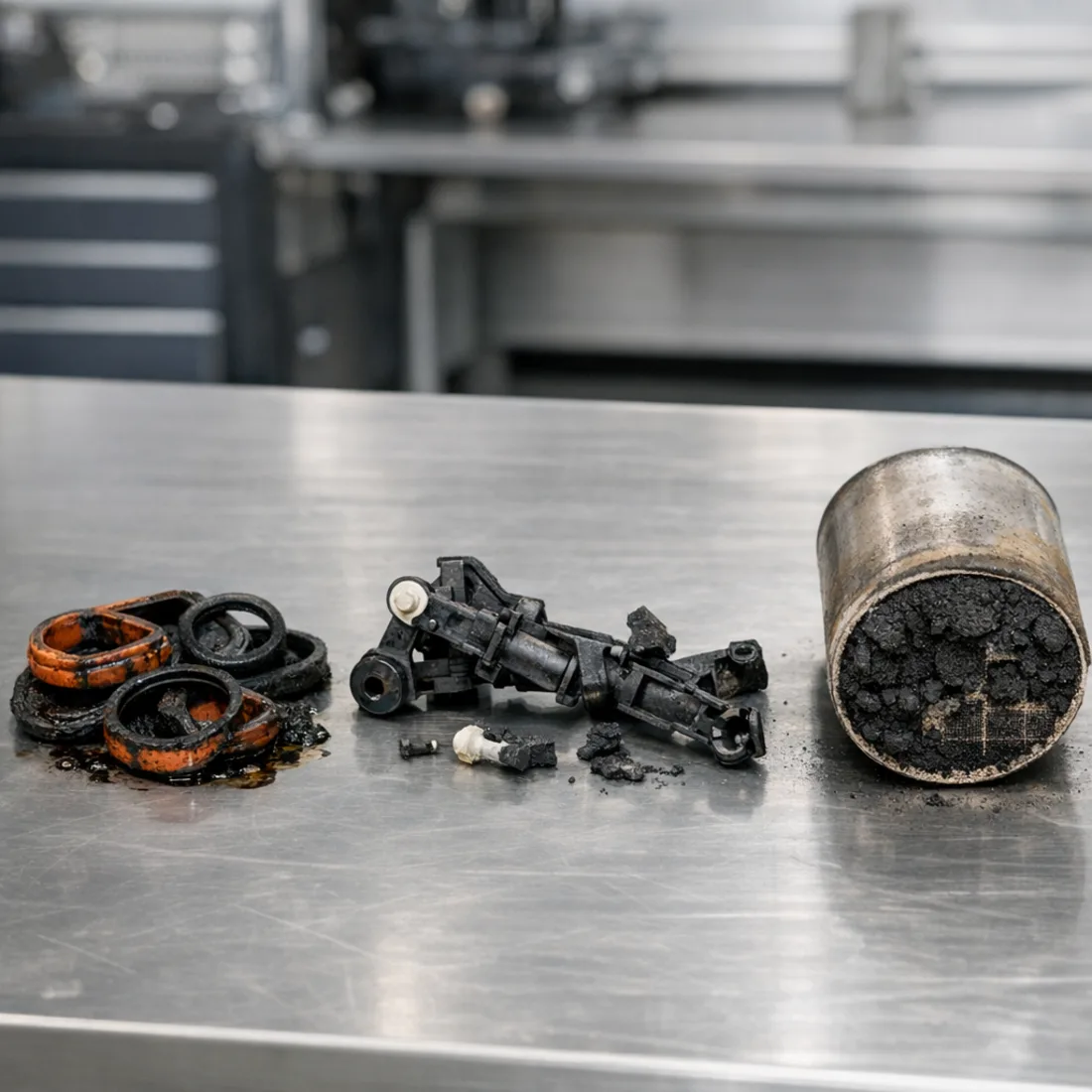
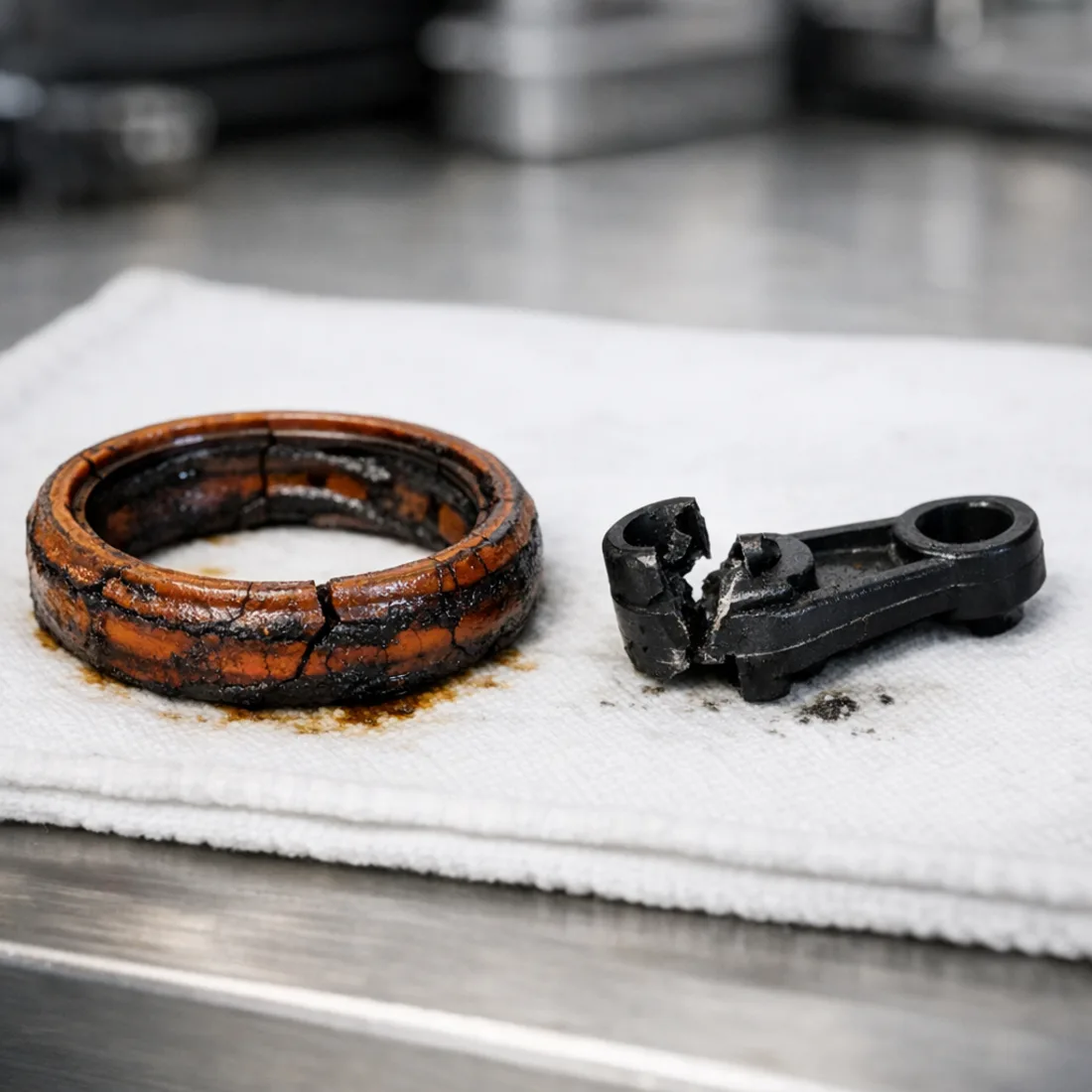
The oil cooler seal failure is the fault that surprises owners most. Oil seeps into the valley of the V6 and can contaminate coolant passages, and the repair involves pulling significant ancillary components to reach it. Catch it at the leaking stage and it is manageable. Let it progress and it becomes a workshop stay measured in days, not hours. The AdBlue SCR system adds another layer of complexity that requires proper factory tooling to diagnose correctly. Stage 1 tuning takes the BlueTEC to 260 hp and 540 Nm, which for a loaded delivery Sprinter makes a real practical difference in how it handles hills and full loads.
-
Oil cooler seals leaking oil into the engine valley
-
Swirl flap actuator linkage failure and intake carbon build up
-
EGR cooler and valve sooting up
-
DPF regeneration failures on stop start delivery routes
-
AdBlue SCR system faults including dosing and NOx sensor issues
-
Injector wear and cracked exhaust manifolds on high mileage examples
-
Turbo actuator faults reducing boost
Catch the oil cooler seal leak early and it is manageable. Let it progress and it becomes a workshop stay measured in days, not hours.
The AdBlue SCR system adds another layer of complexity that requires proper factory tooling to diagnose correctly.
Third Generation, Same Core Challenges
The W907 Sprinter is the most recent generation, and on paper it is more refined, better connected and more capable than its predecessors. Under the bonnet the engine story is familiar: OM642 DE30LA, 2987cc V6, 190 hp and 440 Nm, though the ECU options expand to include the Bosch EDC17CP10, EDC17CP46 and EDC17CP57 depending on variant. The 319, 419 and 519 CDI variants all share the same core engine, just with different payload ratings and body configurations.
Here is the honest assessment: the W907 inherits virtually all the OM642 fault patterns from the BlueTEC generation before it. Oil cooler seals, swirl flap actuators, EGR sooting, DPF blockage on stop start work, AdBlue SCR metering pump and NOx sensor faults, they all show up on the newer platform. The W907 adds more complex electronics and a more sophisticated emissions architecture, which means the diagnostic task is actually more involved, not less. XENTRY and DAS with a genuine C4 or C6 interface is non negotiable here. A generic scan tool cannot actuate SCR components, run guided tests or code replacement parts correctly on this generation.
Suspension bushes and shock absorbers wear faster on the heavier 419 and 519 variants, and timing chain wear checks are worth scheduling alongside the major service on high mileage examples. Stage 1 tuning lifts output to 230 hp and 540 Nm on the W907. That is a more conservative gain than the BlueTEC because the W907's ECU calibration starts from a different baseline, but the 100 Nm torque gain is still meaningful for a van that spends its days loaded and towing.
For mechanical repairs on the W907 we handle everything from oil cooler seals and intake cleaning through to full brake and suspension work, all with genuine and OEM quality parts fitted as standard.
-
Oil cooler seals leaking oil onto the valley of the engine
-
Swirl flap actuator and intake runners carbonning up
-
Turbo actuator or resonator issues
-
EGR cooler and DPF clogging on stop start delivery work
-
AdBlue SCR metering pump and NOx sensor faults
-
Timing chain wear on high mileage examples
The W907 adds more complex electronics and a more sophisticated emissions architecture, which means the diagnostic task is actually more involved, not less.
A generic scan tool cannot actuate SCR components, run guided tests or code replacement parts correctly on this generation.
How to Pick Between Them on the Used Market
If you are shopping the used market across this family, a few honest pointers help narrow it down.
You want a premium ute with real cabin quality and genuine four wheel drive capability. Check EGR, DPF and timing chain history carefully. The OM699.300 engine is unique to the X Class, so verify Mercedes specific service records and remember the SID310 ECU requires Mercedes factory tooling.
You want the most common and best understood van in the family. More service history data exists in New Zealand than for any other model in this lineup. A timing chain inspection is the key pre purchase check on any example with significant kilometres.
You need the family space and flexibility. Budget for a timing chain inspection and watch for early piezo injector failure on higher kilometre examples. The swirl flaps and intake manifold carbon build up are worth factoring into the first service budget.
You want the most premium option in the OM651 group. DPF health is critical on ex shuttle vehicles. Expect the same OM651 fault patterns as the Vito, and be prepared to check timing chain, swirl flap and EGR service history before committing.
You want the higher tuning ceiling, lifting to 260 hp versus 230 hp on the W907. An oil cooler seal check is non negotiable before purchase. If the oil cooler has not been done and the van has high kilometres, factor that repair into your offer price.
You want the latest and most capable generation. Budget for proper factory diagnostics. Oil cooler and AdBlue system history are essential to check. The 419 and 519 variants also benefit from a suspension bush inspection given the heavier payload loads.
- X Class 220d: check EGR, DPF and timing chain history, unique engine so verify Mercedes specific service records
- Vito 116 CDI: most common in NZ, well understood fault patterns, timing chain inspection is the key pre purchase check
- Viano 2.2 CDI: great family capacity, watch for early piezo injector failure and timing chain wear on higher kilometres
- V Class 220d: most premium, same OM651 faults as Vito, DPF health is critical on ex shuttle vehicles
- Sprinter 319 BlueTEC: higher tuning ceiling, oil cooler seal check is non negotiable before purchase
- Sprinter W907 319/419/519 CDI: latest and most capable, budget for proper factory diagnostics, oil cooler and AdBlue history essential
The Right Oil, the Right Intervals, No Shortcuts
Despite the different engine codes and ECU variants, the servicing philosophy across this lineup is consistent. Use the correct oil specification, replace consumables on schedule, and do not let DPF or EGR issues sit unaddressed hoping they will resolve themselves. They will not.
For the OM651 vehicles (Vito, Viano, V Class and X Class) the correct low SAPS diesel grade is essential. Running the wrong oil accelerates DPF loading and can cause premature filter failure. For the OM642 Sprinters the MB 229.51 or 229.52 specification applies. We only ever fit genuine or OEM quality parts, full stop.
Routine items across the family include engine oil and filter, air filter, fuel filter, cabin filter, drive belts, wipers and glow plugs. Add to that brake pads and rotors, suspension components and sensors at the appropriate intervals. For scheduled servicing on any of these vehicles we use the correct factory service data and reset the service indicator through XENTRY, not through a third party tool that leaves the van's on board records incorrect.
The bigger interval jobs that get skipped are the ones that turn into expensive surprises: timing chain inspection on OM651 vehicles, oil cooler seal inspection on OM642 Sprinters, AdBlue metering pump and NOx sensor checks on the BlueTEC and W907. Book these in proactively and they are manageable. Wait until the warning lights force the issue and the repair scope doubles.
Factory XENTRY and DAS, Not a Generic Code Reader
Every vehicle in this family gets diagnosed on the factory Mercedes XENTRY and DAS platform, using a genuine C4 or C6 interface. That distinction matters more than it sounds. Generic scan tools can read basic fault codes on these vehicles. What they cannot do is run guided function tests, actuate individual components like swirl flap motors or AdBlue dosing pumps, read the live SCR and DPF delta pressure data, or code a replacement ECU, injector or NOx sensor correctly.
The Viano's multiple ECU variants (Bosch EDC17C66, EDC17CP57 and Delphi CRD2.x depending on year) are a good example. The calibration approach differs across those units, and coding a new injector on the wrong platform variant produces incorrect adaptation values that leave the engine running poorly even after a correct mechanical repair. The same applies to the W907 Sprinter's expanded ECU options. Getting the platform identification right before starting work is not a formality, it is the foundation of an accurate repair.
For anything involving programming, key coding or ECU replacement across this family, our car programming and coding service uses the same factory tools we run for diagnostics, so there is no handoff to a separate specialist.
Stage 1 Gains Across the Entire Lineup
Every vehicle in this lineup has a Stage 1 tune available, and the gains are meaningful for working vehicles, not just bragging rights on a spec sheet. All tuning is done on the original ECU using a file based approach calibrated for the specific vehicle, engine and ECU combination. We do not use generic off the shelf maps.
A solid gain in towing torque for a ute that already earns its keep. The SID310 ECU is calibrated specifically for the X Class, and the tune is written to match. EGR OFF, DPF OFF, DTC Removal, START/STOP OFF, FLAPS, Vmax and Adblue work are also available.
The largest relative gain in the OM651 family we work on, making it a worthwhile upgrade for trade vans that spend time on the motorway loaded. A genuine transformation in throttle response and load carrying ability. Pop and Bang Crackle map, EGR OFF, DPF OFF, DTC Removal, START/STOP OFF, FLAPS, Vmax and Adblue work available.
Transforms a heavily loaded family van into something that actually keeps pace with traffic on the motorway on ramp. ECU variants (EDC17C66, EDC17CP57, Delphi CRD2.x) are identified correctly before calibration. Pop and Bang Crackle map, EGR OFF, DPF OFF, DTC Removal and more available.
The largest percentage torque gain in the OM651-adjacent family. A meaningful improvement for an airport shuttle or people mover that spends its life on the Southern Motorway loaded. EGR OFF, DPF OFF and DTC Removal available.
The largest absolute gain in the lineup. For a loaded delivery Sprinter doing hills and full loads, 540 Nm transforms the driving experience. Pop and Bang Crackle map, EGR OFF, DPF OFF, DTC Removal, START/STOP OFF, FLAPS, Vmax and Adblue work available.
A more conservative power gain than the BlueTEC because the W907's ECU calibration starts from a different baseline, but the 100 Nm torque gain is still meaningful for a van that spends its days loaded and towing. EGR OFF, DPF OFF, DTC Removal and START/STOP OFF available.
All files are prepared using a file service approach calibrated to the specific vehicle, engine code and ECU variant. We do not use generic maps, and we identify the ECU correctly before any calibration begins.
Frequently Asked Questions
The questions we get most. Something else on your mind? Get in touch.