W211 & W212 E Class: Servicing, Repairs and Tuning
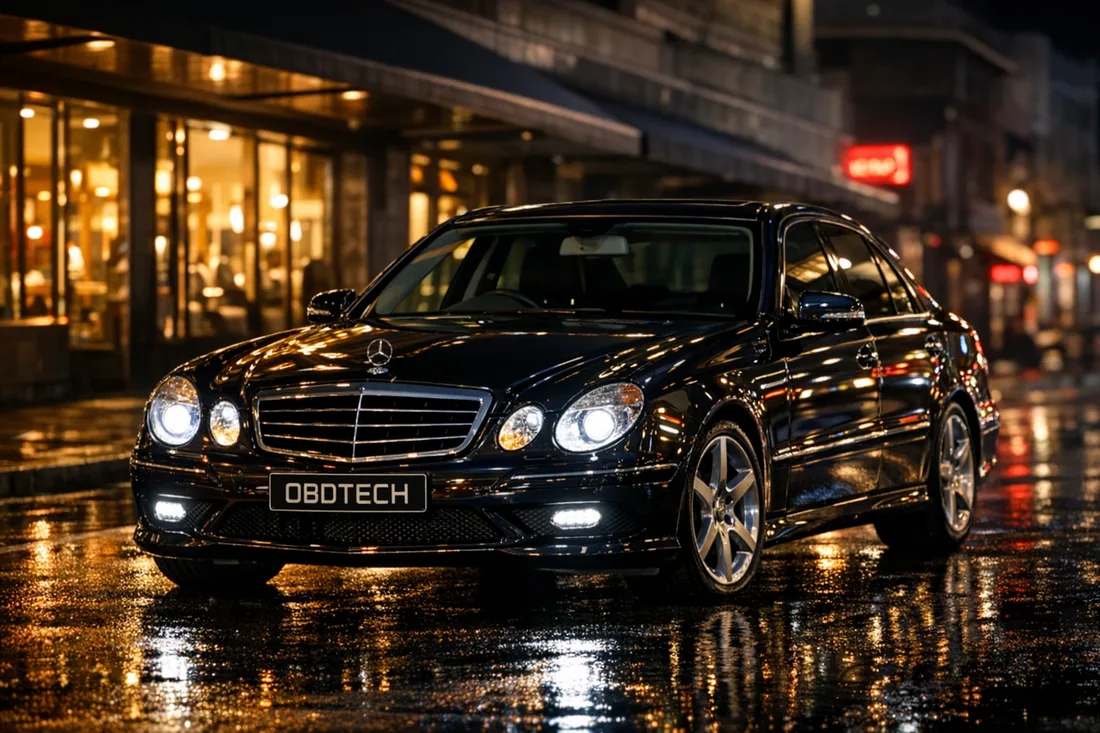
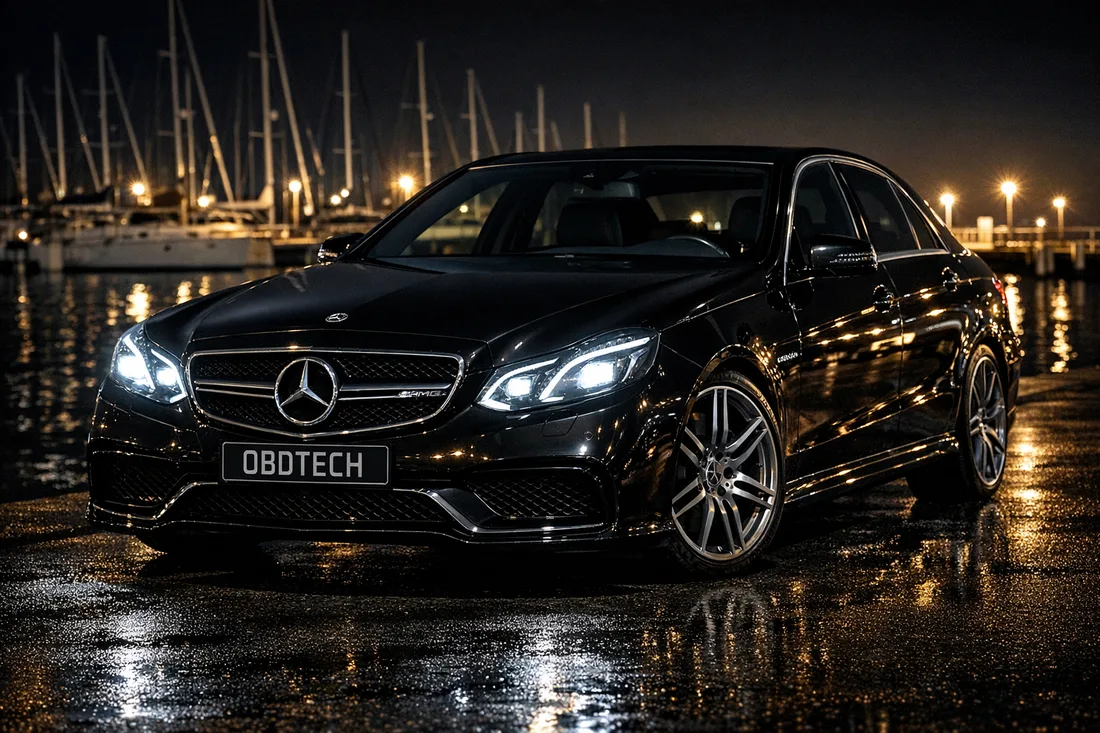
The Mercedes Benz E Class has spent decades being the executive saloon that genuinely earns its badge, not just wears it. From the composed, long legged W211 diesels that rack up enormous mileage without complaint, through to the borderline absurd W212 E 63 AMG V8 that looks like a company car and drives like a sports car, this is a family of machines that rewards owners who look after them and quietly punishes those who don't. We see all three of these regularly at our workshop in Penrose, and across the whole E Class range there are patterns, shared quirks and very specific faults worth knowing before you buy, service or tune one.

The OM642 V6 That Needs a Few Specific Things
The E 300 CDI BlueTEC sits at the top of the W211 diesel range and it earns that position. The OM642 is a 2987cc V6 producing 211 hp and 540 Nm, with a 16.5:1 compression ratio and bore and stroke of 83.0 by 92.0 mm. It is managed by a Bosch EDC16 ECU and it is genuinely one of the better diesel engines to come out of Stuttgart, but there are a handful of known failure points that every owner should understand.
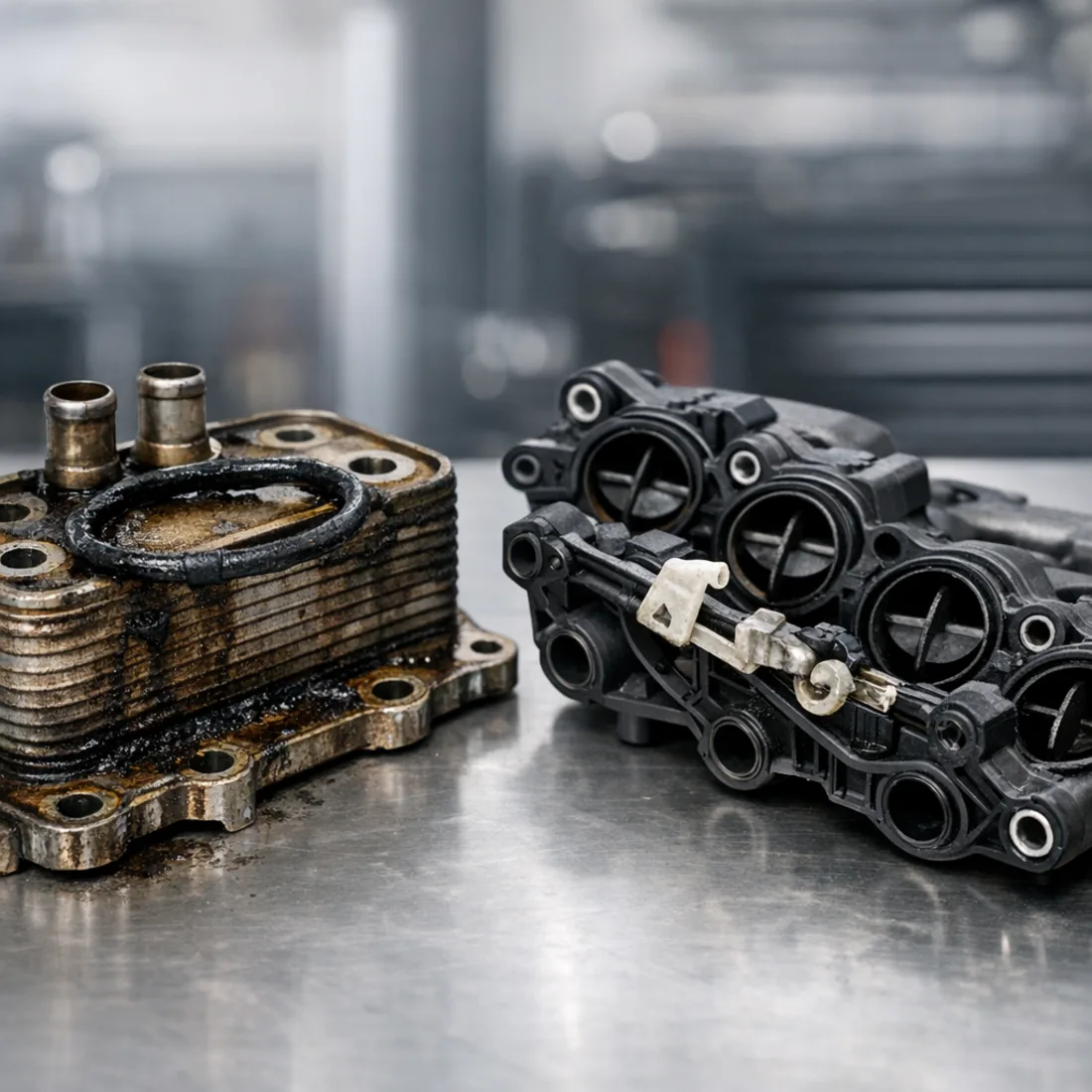
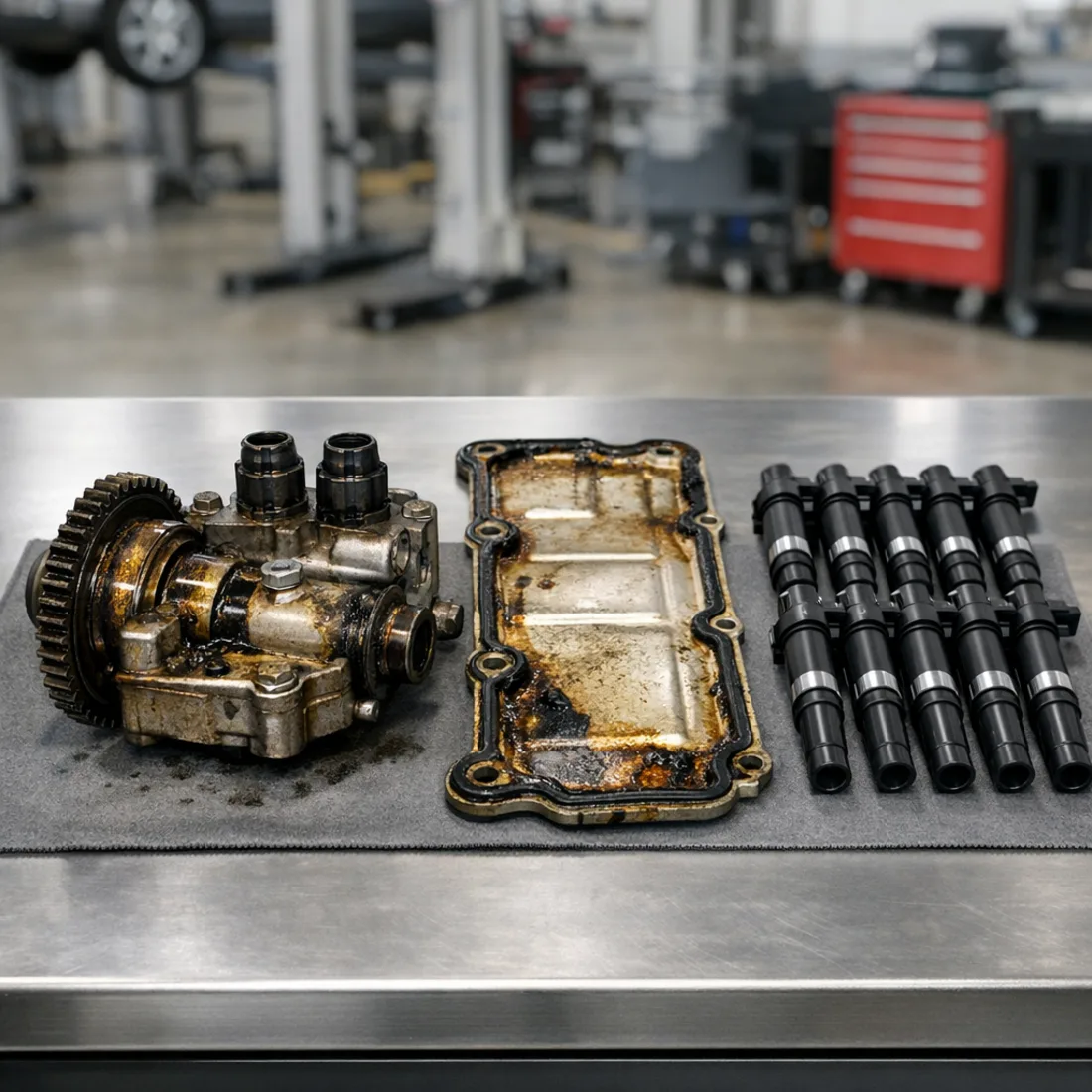
The most common fault we see on the OM642 is the oil cooler seal. It sits between the cooler and the block, and when it goes it drops oil into the valley of the engine and down onto the starter area. You often don't see it at a glance because it's buried, but you might notice oil consumption, a smell after a long run, or a slow drip from underneath. Fixing it properly means the intake has to come off, which is a reasonable job but not a small one. It is absolutely worth doing before it migrates further.
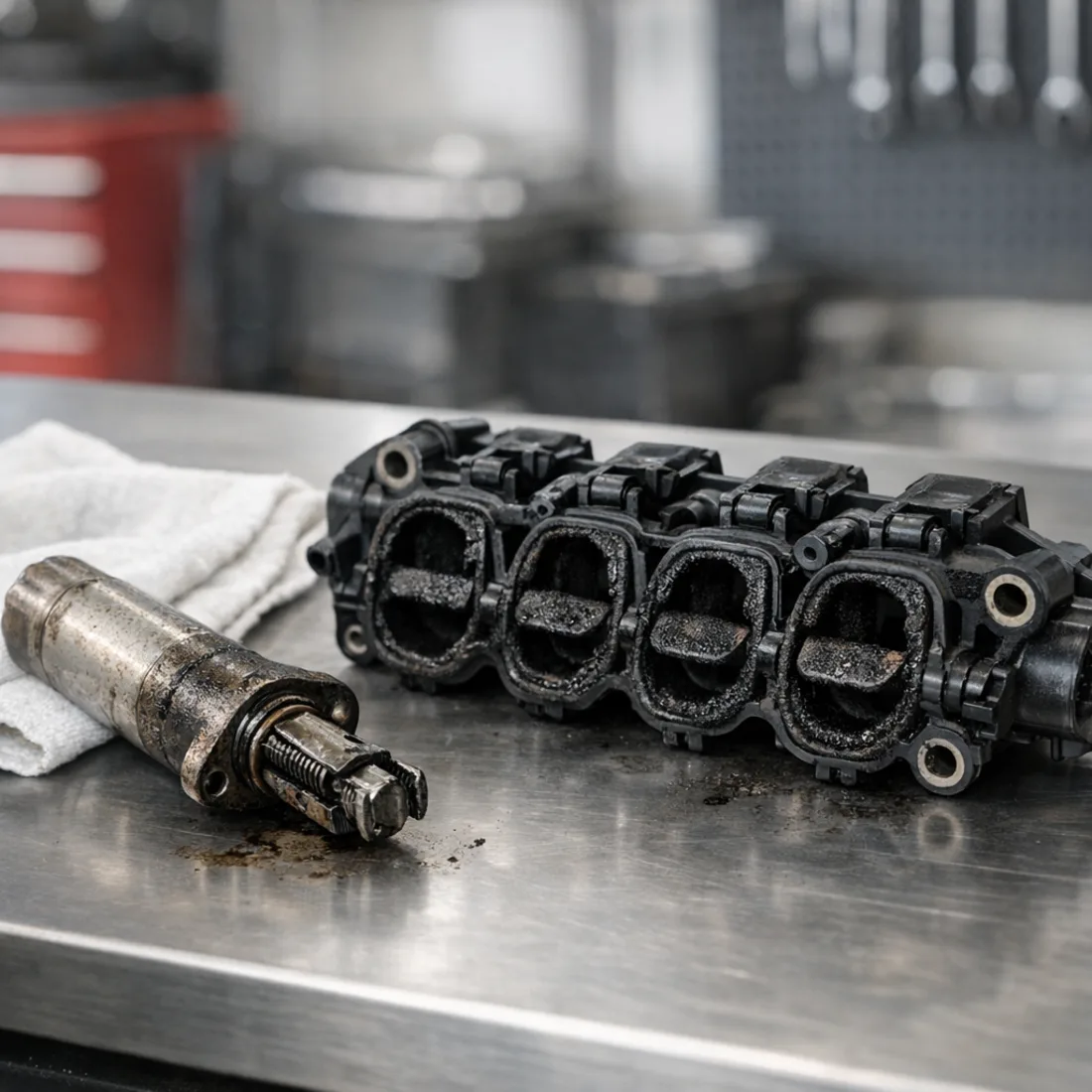
The swirl flaps and their linkage inside the intake runners are another known issue. These are common across several Mercedes diesel engines of this era. The linkage can corrode and seize, or break, and in worst case scenarios fragments can be drawn into the engine. We check the condition of these routinely on any OM642 that comes in for service. Turbo actuator wear and EGR cooler issues are also on the list, along with the expected diesel consumables: injectors and glow plugs that wear with age and mileage.
The BlueTEC system adds an AdBlue circuit into the mix. If the AdBlue pump, injector or NOx sensor develops a fault, the car will start counting down warning messages and eventually refuse to start. We diagnose the entire system properly, not just clear the codes and send you on your way.
-
Oil cooler seal leak into the engine valley and starter area
-
Swirl flap linkage corrosion, seizure or breakage
-
Turbo actuator wear and fault codes
-
EGR cooler failure or heavy clogging
-
Injector wear and rough running over high mileage
-
Glow plug failure, especially on cold start complaints
-
AdBlue pump, injector and NOx sensor faults on BlueTEC variants
-
W211 front suspension arm wear
The oil cooler seal leaks into the valley of the engine where it doesn't always show as a ground drip.
Fixing it properly means the intake has to come off. It is absolutely worth doing before it migrates further.
Routine servicing on this engine means the correct low ash diesel spec oil, fuel filter, air filter, cabin filter, drive belts, wipers, glow plugs, and brake pads and rotors as needed. The W211 suspension arms, particularly up front, are worth inspecting on any car that has covered serious distance. We use genuine or OEM specification parts only, every time.
For owners after a bit more from the OM642, a Stage 1 tune lifts output to 250 hp and 600 Nm, a gain of 39 hp and 60 Nm over stock. It is a meaningful improvement in drivability, particularly in the mid range where the engine already does most of its work. That number goes from very good to genuinely strong.
Get your E Class booked in with a proper specialist.
The Four Cylinder That Punches Harder Than You'd Expect
The E 220 CDI with the OM651 is a different animal to the V6 E 300. Where the OM642 is all smooth torque from a big displacement, the OM651 is a near square 2148cc four cylinder, bore and stroke of 88.0 by 88.3 mm, compression of 17.5:1, rated at 170 hp and 400 Nm. It is managed by either a Bosch EDC16C2 or Delphi CRD11 / DCM3.2 ECU depending on the build. The result is an engine that feels punchy and efficient rather than lazy, and in a W211 body it makes for a genuinely impressive everyday car.
But compared to the OM642, the OM651 has a couple of additional vulnerabilities that owners need to know. Injector issues are the big one. Early OM651 units fitted with Delphi injectors are known for leaking or outright failure, which shows up as rough running, hard starting, or a significant drop in power. This isn't a cheap fix, but ignoring it turns into a much bigger problem. When an injector is failing on this engine, we want to catch it before it damages the bore or puts excessive fuel into the oil.
Timing chain stretch is another concern specific to the OM651 that wasn't really a factor on the OM642 V6. If oil change intervals have been stretched or the oil level has been neglected, the chain and its tensioner can wear faster than they should. We check chain condition as part of any thorough inspection on these. Like the V6, the OM651 also runs swirl flaps and an EGR, and both can cause trouble, particularly if the car has done a lot of urban driving or short trips that never fully warm the engine through.
-
Delphi injector leaks and failure causing rough running or hard starting
-
Timing chain and tensioner stretch from irregular servicing
-
Swirl flap and intake manifold issues
-
EGR clogging, especially on short trip urban cars
-
DPF soot loading and regeneration failures
-
AdBlue system faults where fitted
-
W211 front suspension arm wear at higher mileage
The OM651 demands more attention to oil change discipline to keep the timing chain happy.
If you've got the four cylinder, keep an eye on the injectors and don't skip services.
Comparing the two W211 diesels side by side, the OM642 V6 is the more relaxed engine with a stronger torque figure from a larger displacement, and it mostly avoids the injector drama of the early OM651. The OM651 is more fuel efficient and slightly more responsive at the top of the rev range, but it demands more attention to oil change discipline to keep the timing chain happy. Both share the swirl flap and EGR concerns. If you've got the V6, look after the oil cooler seal. If you've got the four cylinder, keep an eye on the injectors and don't skip services.
Routine servicing items are similar between the two: correct low ash diesel oil, fuel filter, air filter, cabin filter, glow plugs, drive belts and brake components. On the OM651 we'd add the timing chain to the inspection checklist for any car that's had inconsistent service history. A Stage 1 tune on the OM651 brings output to 190 hp and 460 Nm, gains of 20 hp and 60 Nm. The torque increase in particular is noticeable in daily driving. For the bigger mechanical repairs across both W211 diesels, including timing chains, injectors, EGR work, DPF cleaning and transmission or clutch service, our team handles the full scope of this work.
6.2 Litres of Naturally Aspirated V8 That Demands Respect
And then there's this. The W212 E 63 AMG moves the conversation somewhere else entirely. Where the W211 diesels are about efficiency and long distance composure, the W212 E 63 AMG is about 6208cc of naturally aspirated M156.985 V8, a compression ratio of 11.3:1, bore and stroke of 102.2 by 94.6 mm, 525 hp and 630 Nm of torque through an MCT 7-speed wet clutch transmission. It is managed by a Bosch ME9.7 ECU. On the outside it looks like any other well dressed executive saloon. On the inside it is genuinely one of the fastest four door cars ever built.
The M156 is a spectacular engine but it is not without its own specific failure modes. Camshaft and cam adjuster wear is the headline issue. The cam adjusters can develop rattle and wear on higher mileage examples, and when they go, they go properly. A full cam adjuster job on an M156 is significant work and significant cost, so buying one with a documented service history and checking for any top end noise matters a great deal. The early head bolts on these engines are also known to stretch, which can cause seeping at the head. Not catastrophic if caught early, but something to look for.
Beyond the top end concerns, the M156 is hard on oil. Consumption is normal to a degree on these engines, but it needs monitoring because running low on oil accelerates exactly the cam wear we've just described. Oil leaks from various seals are also common on older examples. Coil packs and the high pressure fuel system are worth inspecting on any car of this vintage. The MCT transmission is generally robust but it benefits from correct fluid service and an adaptation reset through XENTRY, especially if the car has developed any hesitation or a rough take off.
-
Cam adjuster and camshaft wear, often heard as a top end rattle
-
Head bolt stretch and head seeping
-
Oil consumption and leaks from ageing seals
-
Coil pack failure causing misfires
-
High pressure fuel system faults
-
MCT transmission fluid condition and adaptation
-
AIRMATIC or steel suspension component condition
-
Brakes, which are large, expensive and critical on a 525 hp car
On the outside it looks like any other well dressed executive saloon. On the inside it is genuinely one of the fastest four door cars ever built.
The M156 is one of the last great AMG naturally aspirated engines and it is worth every cent of that commitment.
Routine servicing on the E 63 AMG uses the correct high performance grade oil, air filters, cabin filter, spark plugs, drive belts and wipers. The brakes on this car deserve a specific mention: they are large, they work hard, and pads and rotors here cost more than on either W211 diesel. Budget for it. For proper brake repairs on AMG spec hardware, our team handles the full scope of this work.
For owners wanting more from the M156, a Stage 1 tune brings output to 555 hp and 655 Nm, gains of 30 hp and 25 Nm over a standard car that is already very fast. It sharpens the throttle response and lifts the top end noticeably. Combined with a Vmax removal if yours is speed limited, the difference is real.
Picking Between Them: Which W211 or W212 E Class Is the Right Buy?
If you're shopping for a used E Class from this era, the choice between the three depends entirely on what you want from the car. Here is how we'd frame it.
You want the long distance cruiser. It has the most torque of the two W211 diesels, a composed V6 character, and it'll cover serious kilometres if the oil cooler seal has been attended to. Look for service history, check for oil in the valley around the engine, and ask whether the swirl flaps have ever been inspected or replaced. The Stage 1 tune taking it to 250 hp and 600 Nm makes it genuinely quick for a big executive diesel.
You want the efficiency pick. It costs less to fuel, it is a bit more sprightly in feel, and it is very capable for everyday use. The OM651 injector concern is the main thing to investigate before buying. Get it on a proper scanner and check for any codes relating to injector balance or trim. If the timing chain hasn't been inspected and the service history is patchy, budget for a chain inspection. A clean example with documented history is a great all rounder.
You want the most engaging E Class from this era. It costs more to buy, more to service, more to brake, and it demands quality oil changed on schedule. But nothing about a 525 hp naturally aspirated V8 in a full size saloon is supposed to be economical. The M156 is one of the last great AMG naturally aspirated engines. Check the cam adjusters carefully before buying. Everything else can be managed with proper servicing.
- E 300 CDI BlueTEC: check for oil in the valley around the engine and confirm the oil cooler seal has been attended to
- E 300 CDI BlueTEC: ask whether the swirl flaps have ever been inspected or replaced
- E 220 CDI: get it on a proper scanner and check for codes relating to injector balance or trim
- E 220 CDI: if service history is patchy, budget for a timing chain inspection
- E 63 AMG: listen carefully for a cold start top end rattle that points to cam adjuster wear
- E 63 AMG: confirm documented service history and correct oil grade use throughout
- All models: confirm XENTRY capable diagnostics have been used for any fault work
- The sweet spot for pure value is a well sorted W211 E 300 CDI BlueTEC with the oil cooler seal already done and a reasonable service history. It is a lot of car for the money.
How We Service the Whole E Class Range
Servicing intervals vary between the three, so we work to the manufacturer's schedule for each. On the W211 diesels, the correct low ash oil specification is non negotiable, especially with DPF systems fitted. On the E 63 AMG, the oil grade and change frequency matter enormously given the M156's oil consumption characteristics and the direct relationship between oil condition and cam adjuster longevity. We fit genuine or OEM specification parts on every job, no compromises.
For the W211 diesels, XENTRY lets us see injector balance values, EGR live data, DPF soot load, AdBlue system status and turbo actuator feedback in real time. That is the difference between knowing exactly what is wrong and guessing. For the E 63 AMG, it lets us read the full engine, transmission and chassis data, and perform the MCT adaptation reset that the gearbox needs after fluid service.
Factory Tooling for Every Generation
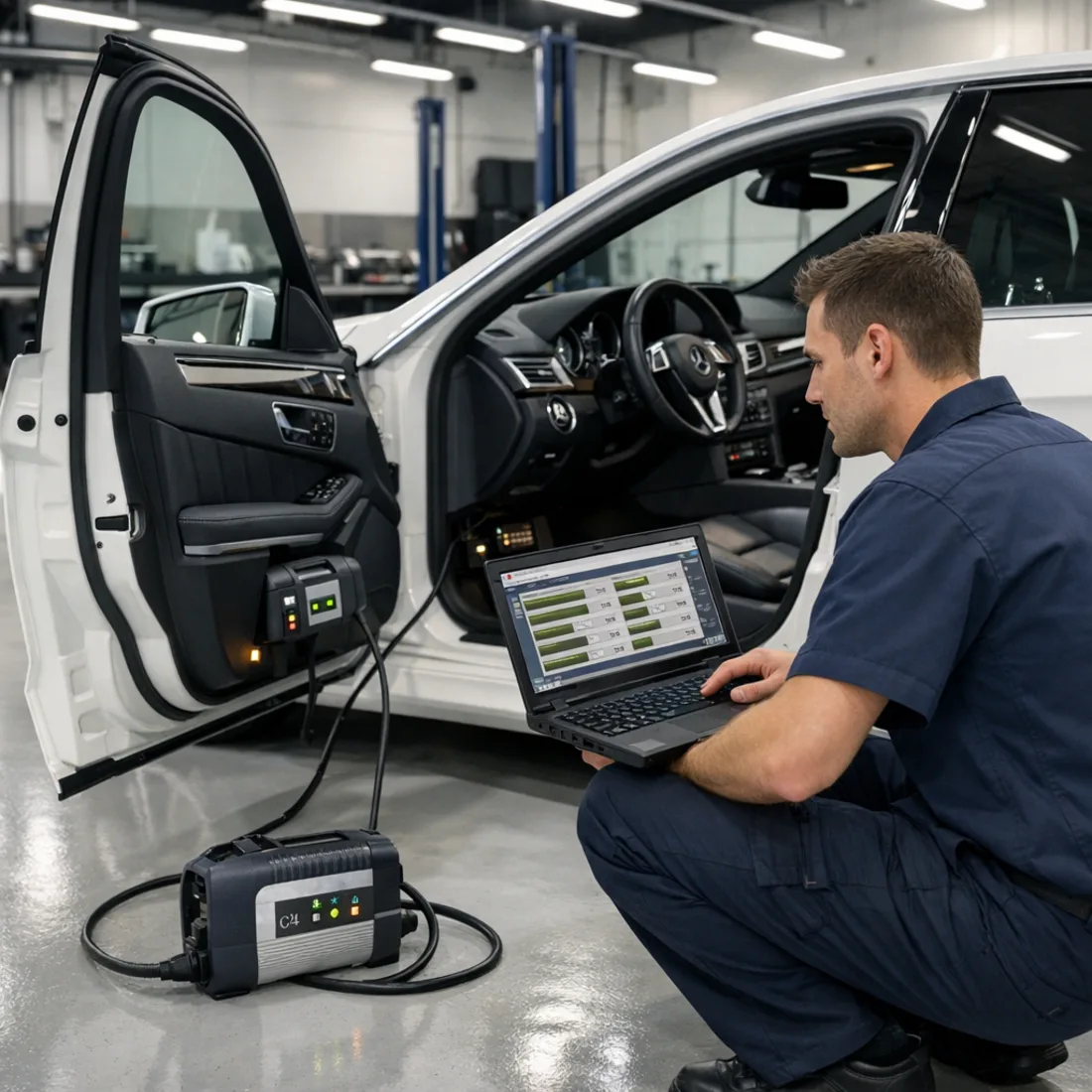
Every one of these cars, the W211 diesels and the W212 AMG, gets diagnosed using the factory Mercedes Benz XENTRY and DAS platform through a genuine C4 or C6 interface. That matters. Generic scan tools can read generic fault codes, but they can't access guided tests, live adaptation data, component coding or the deeper control unit information these cars need for a proper diagnosis. When we clear a fault or replace a part that requires coding, we do it with the correct tooling.
We also use XENTRY for any coding work after parts replacement, which is increasingly relevant on modern Mercedes vehicles. Replacing a control module, a sensor or certain suspension components without coding them in correctly leaves the car with faults or limited function. Our car programming and coding service covers this properly for all three generations.
Tuning Across the E Class Family
All three of these cars respond well to a Stage 1 tune done properly. The numbers differ but the principle is the same: we remap the ECU to work within the engine's safe operating limits while unlocking headroom that the factory left on the table for emissions compliance, market positioning or fleet averaging.
On the OM642 V6 the torque gain is the thing you feel most. The mid range, where the engine already does most of its work, goes from very good to genuinely strong. Related options include EGR OFF, DPF OFF, DTC Removal, START/STOP OFF, FLAPS, Vmax and AdBlue.
The OM651 picks up 60 Nm and it shows in the way the car pulls from low revs in real world driving. Related options include EGR OFF, DPF OFF, DTC Removal, FLAPS, Vmax and AdBlue.
A 30 hp lift is meaningful on a car already producing 525 hp, and the refinement of the throttle map is often what owners notice first. We also offer a pop and crackle map and Vmax removal for the E 63 AMG where requested. Related options include DTC Removal, Pop and Bang Crackle map, DECAT, FLAPS and Vmax.
For a full breakdown of what is achievable across the E Class range, see our tuning options page.
Frequently Asked Questions
The questions we get most. Something else on your mind? Get in touch.