W205 C Class: Five Engines, One Platform, Zero Shortcuts
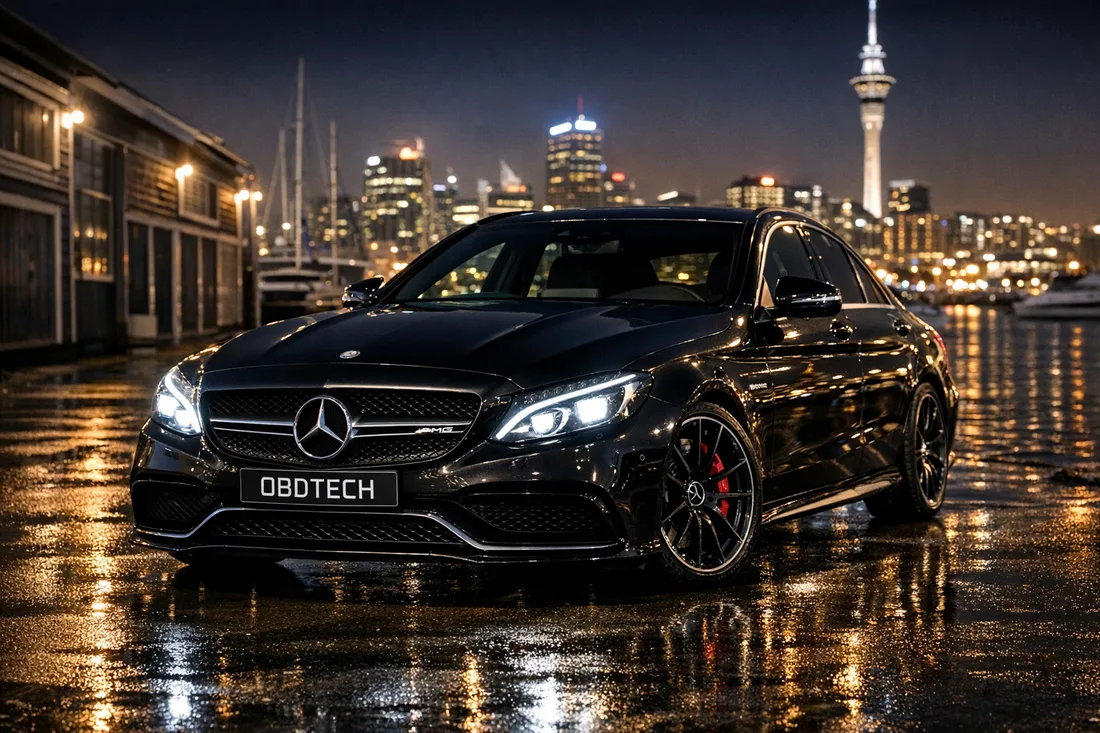
The W205 C Class ran for nearly a decade and wore a remarkable number of faces: a frugal 136hp oil burner, a mild hybrid city petrol, two versions of Mercedes' new OM654 diesel, and a 510hp twin turbo AMG monster that made the whole range look politely understated. Same platform, same general shape, wildly different engineering underneath. That spread is exactly why W205 ownership can catch people out, because the car you're servicing or fault finding depends entirely on which engine sits under that long bonnet. Our workshop in Penrose sees all of them, and this page covers what actually goes wrong, how the variants compare and what to look for whether you're buying, owning or diagnosing one.
C 200 CDI: The OM651 and Its Well Known Weak Points
The C 200 CDI is the entry point of the W205 diesel range, running the OM651 2.1-litre four cylinder with an 88.0 x 88.3mm bore and stroke, a 16.2:1 compression ratio, and 136hp from the factory with 360Nm of torque. The ECU is Bosch EDC17C66 or Delphi CRD3 depending on build date. It's the oldest engine architecture across the W205 family and, honestly, the one with the longest known fault history.
The injector issues deserve special mention. When an OM651 starts running rough or is reluctant to fire on a cold morning, the temptation is to reach for a generic scanner, clear the fault and hope for the best. That won't cut it here. We use the factory Mercedes XENTRY platform with a genuine C4 or C6 interface, which gives us the guided injector tests, live return volume data and adaptation reset capability that a generic reader simply can't provide.
Routine service on the CDI covers oil and filter with the correct low ash diesel grade oil, air filter, fuel filter, cabin filter, drive belts, glow plugs, and brake pads and rotors. The timing chain is not a consumable you should ignore. If you're hearing any rattle on cold start, get it inspected before it becomes a full engine off job.
Compared to the OM654 diesels that came later, the OM651 is a more complex unit to keep running cleanly, but it's also widely understood and parts availability is good. If you're buying a used C 200 CDI, a compression test and a proper injector data check should be on your pre purchase list.
-
Injector wear, injector seal failure and return line leaks, showing as rough running or hard cold starts
-
Timing chain and tensioner wear, a known concern on some OM651 builds
-
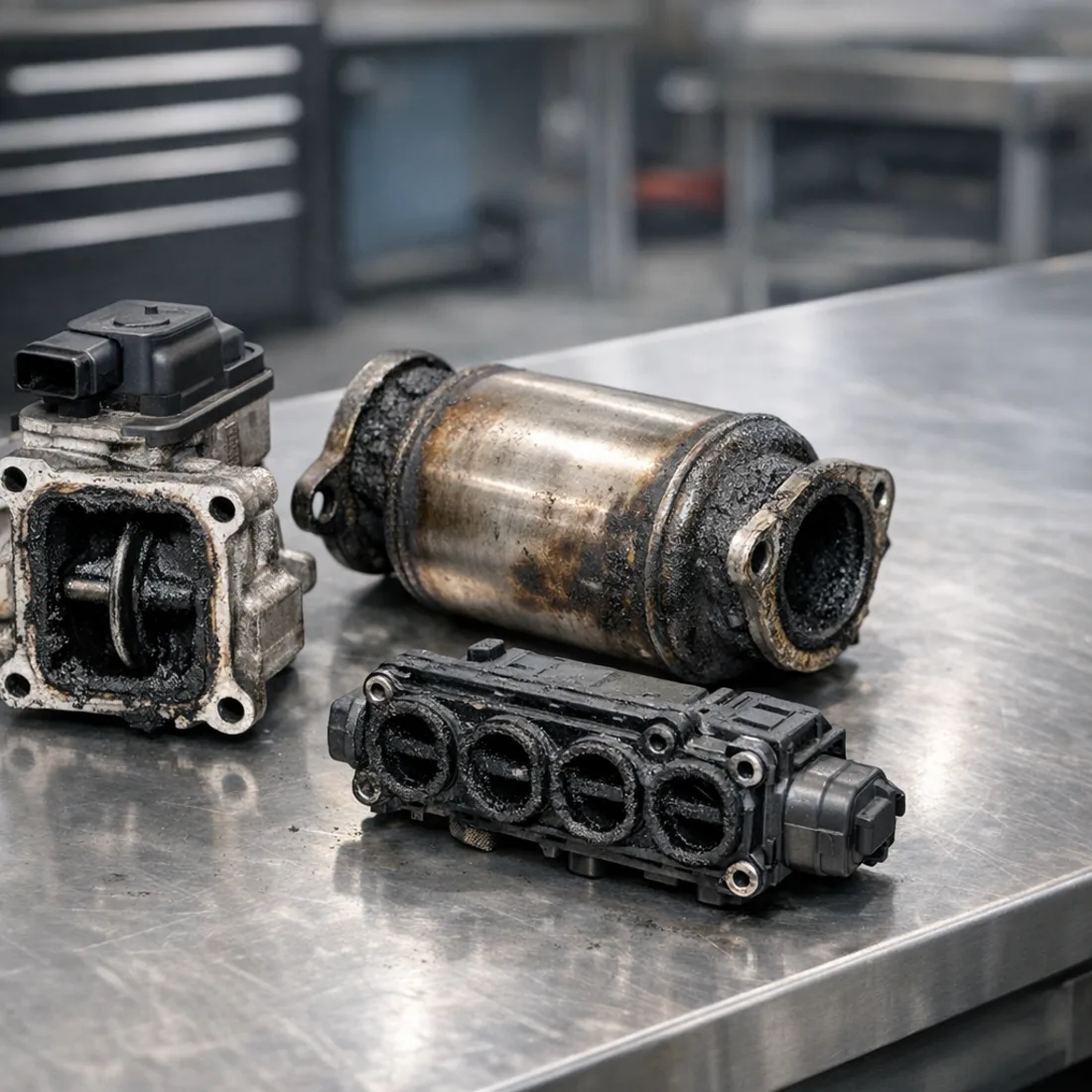
EGR valve fouling and swirl flap issues, especially on cars doing short urban trips
-
DPF clogging when the car rarely gets a proper run
-
Turbo actuator faults and boost irregularities on higher mileage examples
The OM651 is the oldest engine in the range and has the most established fault profile.
A compression test and a proper injector data check should be on your pre purchase list.
Get your W205 booked in with a workshop that knows every engine in the range.
C 200 Petrol: The 48V Mild Hybrid That Confuses Generic Scanners
The petrol C 200 is the most technologically layered of the non AMG W205 variants. Under the bonnet sits the 1.5-litre M264 direct injection turbo petrol, but that engine is paired with a 48V EQ Boost belt starter generator that adds a mild hybrid layer most independent workshops are not equipped to read properly. The ECU is Bosch MED17.7.7, and factory output is 184hp with 280Nm.
The 48V system is where owners most often hit trouble with non specialist workshops. The belt starter generator, its battery pack and the way the two voltage systems interact require factory level diagnostics to read correctly. XENTRY with a genuine C4 or C6 interface lets us interrogate all control modules, including the 48V battery management and BSG units, and code new components in properly once replaced.
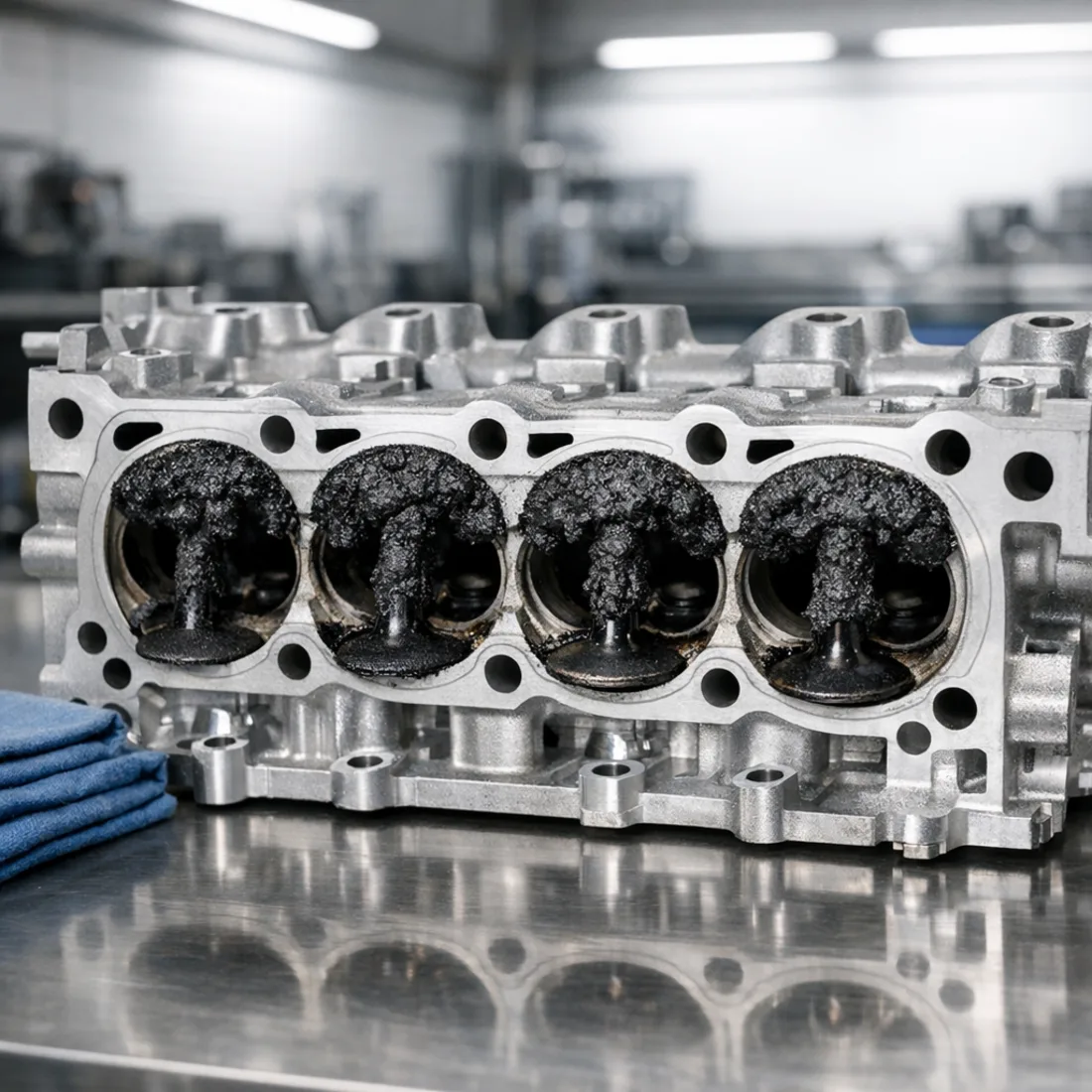
The carbon build up issue is worth understanding. Because the M264 is direct injection, fuel doesn't wash over the intake valves the way it does on older port injection engines. Over time, oil vapour from the breather deposits carbon on the valve stems and seats, and that affects idle quality and throttle response. It's not unique to Mercedes, but it does need attention periodically and it won't show on a compression test until it's well advanced.
Where the C 200 CDI suits someone who does mostly highway kilometres, the petrol C 200 suits urban use better on fuel, but that 48V system means you really do need a workshop that can talk to all of it. Don't let anyone near it with just a generic OBD reader.
-
Stop start and drivability complaints from the 48V BSG system that generic tools misinterpret
-
Electric water pump and thermostat failures affecting coolant management
-
Carbon build up on intake valves, a direct injection characteristic that builds progressively over time
-
Ignition coil and sensor faults presenting as misfires under load
-
Timing chain wear on higher mileage examples
The mild hybrid setup can throw drivability or start stop complaints that generic tools misread.
Correct diagnosis matters; XENTRY reads the full module network including the 48V battery management unit.
Routine service includes oil and filter with the correct MB approved low ash grade, air filter, cabin filter, spark plugs, drive belt, brake pads and rotors, and coolant. We also look at the water pump and thermostat as preventive work given their failure rate on this engine.
Stage 1 tuning takes the M264 from 184hp and 280Nm to 220hp and 350Nm, a worthwhile step if the car feels a touch underwhelming in standard form. On the 48V side we test the starter generator, battery and charging behaviour properly as part of our auto electrical diagnostics.
C 220d: The OM654's Entry Point and Where It Shows Its Age
The C 220d is where Mercedes introduced the OM654 to the W205 family, and on paper it's a significant step up from the OM651. It's an all aluminium 2.0-litre with a rear mounted timing chain, better thermal efficiency and generally less drama around injectors. Factory output is 194hp and 400Nm, controlled by a Bosch MD1CP001 ECU. The gearbox ECU is a Getrag VGSNAG3.
That said, it's not without its quirks. The rear timing chain placement means that when the chain does show wear, it's a more involved job than on an engine with the chain at the front, and the labour cost reflects that. Oil change discipline matters more here, not less.
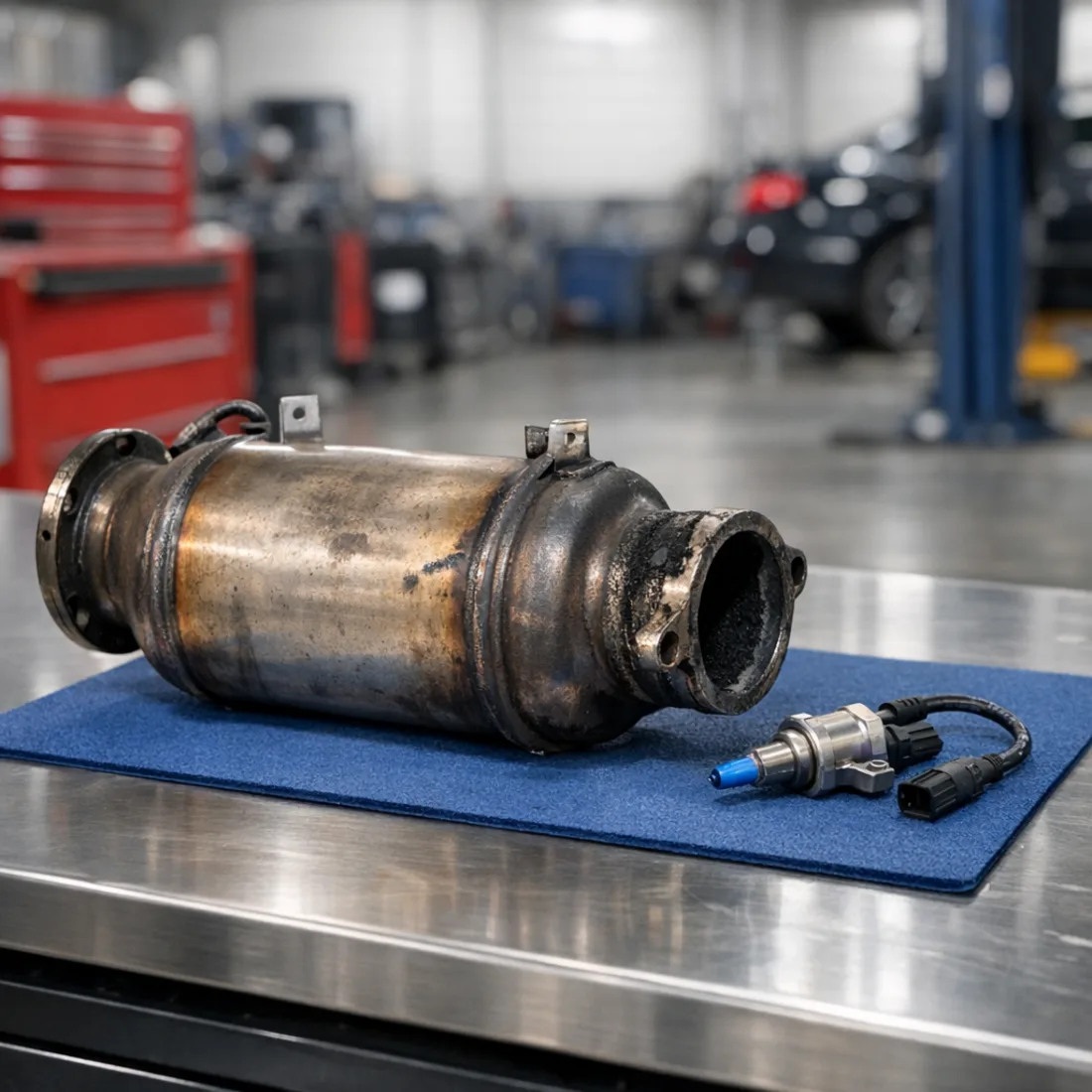
The DPF and AdBlue combination requires proper attention on these cars. Short trip driving prevents the DPF from completing a full regeneration cycle, and the AdBlue system will throw faults if it's not maintained correctly. We handle DPF cleaning, EGR servicing and AdBlue system diagnosis and repair properly, using the XENTRY platform to read guided fault codes and reset adaptation values after work is done. Generic scanners get you part of the picture at best.
Compared to the C 200 CDI, the C 220d is a notably more refined daily driver and the OM654 is the better long term proposition if it's been looked after. Compared to the C 300d, you're giving up around 50hp and 100Nm but saving on purchase price. For most owners doing mixed urban and motorway driving, the C 220d is the sweet spot of the W205 diesel range.
-
Timing chain and guide wear on higher mileage cars, especially those with irregular service history
-
EGR cooler faults and fouling
-
Turbo actuator faults causing boost irregularities
-
DPF clogging on cars used mainly for short urban trips
-
AdBlue system faults and NOx sensor failures
-
Injector wear on higher mileage examples
Stage 1 tuning moves the OM654 in the C 220d from 194hp and 400Nm to 220hp and 460Nm.
That brings it meaningfully closer to C 300d territory for a fraction of the cost.
C 300d: The OM654 With More Muscle and the Same Watch Points
The C 300d shares its OM654 2.0-litre block and Bosch MD1CP001 ECU with the C 220d, but tuned up to 245hp and 500Nm. It's the same fundamental architecture, which means the same strengths and the same vulnerabilities, just with more urgency in the way it delivers its power.
The fault list largely mirrors the C 220d: timing chain attention on high mileage cars, EGR cooler issues, turbo actuator faults, DPF clogging on short trip cars, and AdBlue and NOx sensor problems. Because the C 300d is often bought as a higher spec option and driven harder, we do see turbo actuator faults and boost irregularities showing up a bit earlier than on the more modestly loaded C 220d. The NOx sensors on these are also worth monitoring proactively given how much they affect emissions system function.
Cold start chain noise on either OM654 model is the signal to act promptly. The chain sits at the rear of the block, and if it's stretching or the tensioner is losing pressure, oil changes on schedule and inspection are far cheaper than what comes next if you wait.
Between the C 220d and C 300d, both are solid choices used. If purchase price is flexible, the C 300d gives you noticeably more relaxed motorway performance. If budget is tight, a Stage 1-tuned C 220d gets you most of the way there.
-
AdBlue system and NOx sensor faults, particularly on facelift cars with more complex emissions systems
-
EGR cooler leaks and fouling
-
Turbo actuator faults from harder use
-
Chain noise on cold start suggesting timing chain attention needed
-
DPF saturation on cars not regularly driven at motorway speeds
Cold start chain noise on either OM654 model is the signal to act promptly.
Oil changes on schedule and early inspection are far cheaper than what comes next if you wait.
Stage 1 tuning on the C 300d lifts it from 245hp and 500Nm to 270hp and 560Nm. It's a modest gain in percentage terms but noticeable in real world response, particularly on overtaking.
For a look at what tuning options are available across the W205 range, talk to our team before committing.
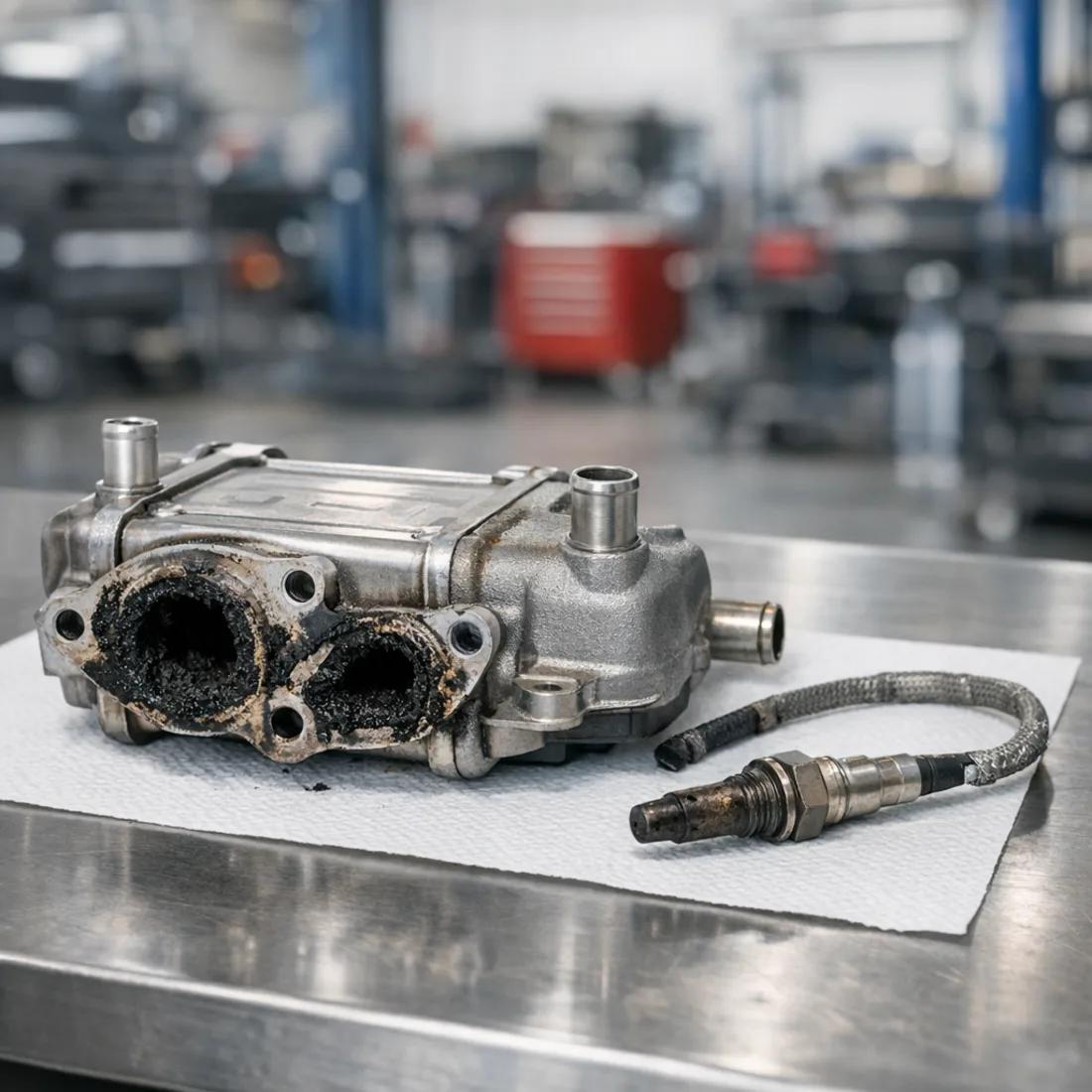
C 63 AMG S: 510hp, Hot V Turbos and Zero Tolerance for Lazy Servicing
Then there's this. The C 63 AMG S sits in an entirely different conversation from the rest of the W205 family. The M177 is a 4.0-litre twin turbo V8 in a hot V configuration, meaning the turbos live between the cylinder banks where they spool fast and stay hot. Factory output is 510hp and 700Nm. The ECU setup involves Bosch MED17.7.5, ME9.7 and a Siemens/Continental VGS4-NAG2 for the nine speed MCT transmission. This is not a car where approximate servicing is acceptable.
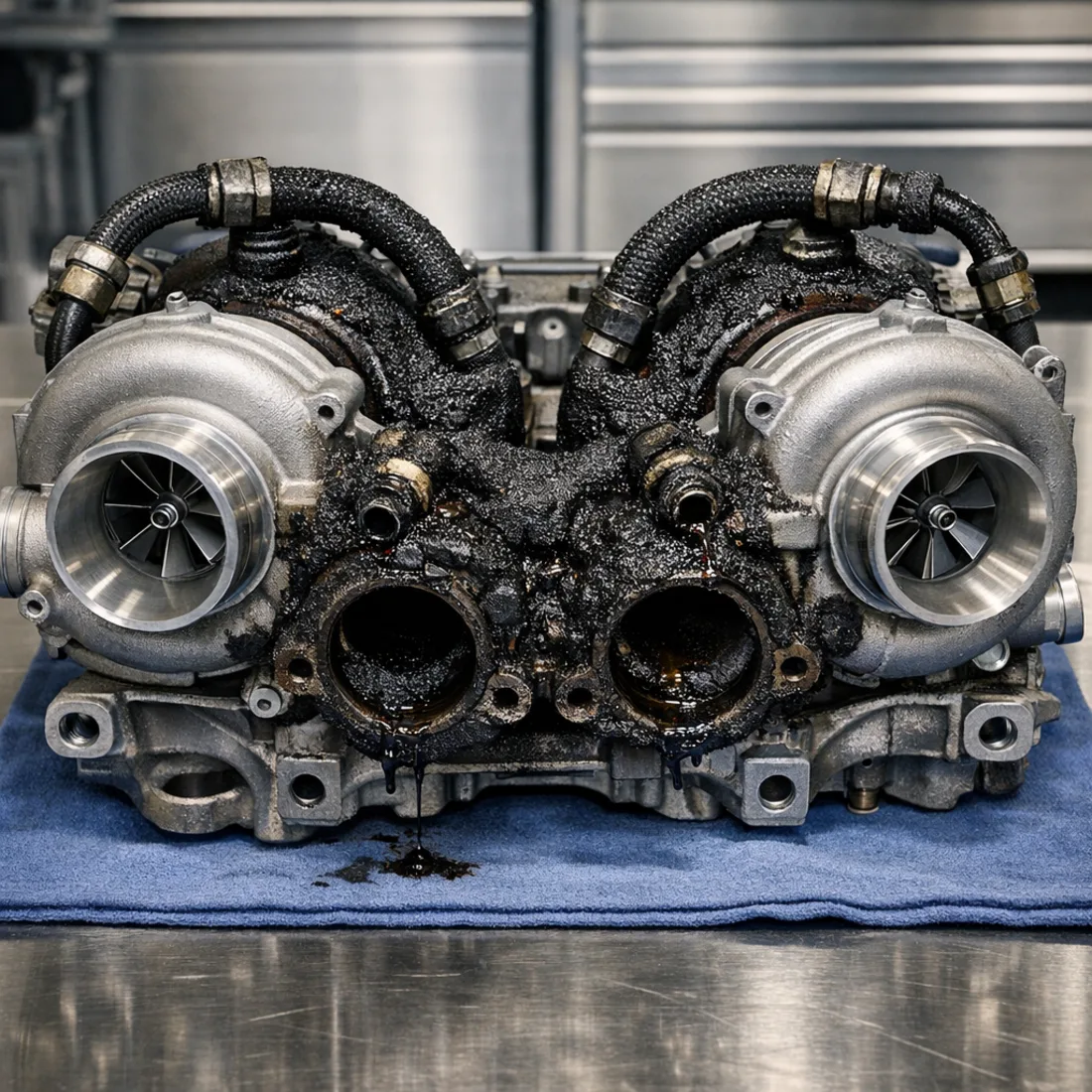
The hot V layout is elegant engineering but it creates a heat environment around the turbos that punishes oil that's past its service life. The black death oil seepage we see around the turbo area on neglected C 63s is largely preventable with the correct fully synthetic low ash oil changed on schedule. Once the seals are compromised and oil is baking onto hot turbo surfaces, you're into a much bigger job.
The MCT transmission deserves its own mention. It's a nine speed multi clutch unit that delivers exceptional performance when serviced properly and becomes expensive quickly when it isn't. Fluid changes matter. On cars that have spent time on track, the clutch pack wear is worth checking with a transmission specialist rather than waiting for slip complaints to appear.
Diagnosing the C 63 AMG S properly requires XENTRY and DAS through a genuine C4 or C6 interface. The AMG specific control units, the transmission adaptations, the individual cylinder misfires and the high pressure fuel system data simply aren't accessible on generic scan tools. We read all of it.
-
Front and rear main seal and camshaft magnet oil leaks
-
Oil seepage and heat soak around the hot V turbo area
-
Coil pack and spark plug failures under hard use
-
Wear in the nine speed MCT transmission clutch pack, especially on tracked cars
-
Carbon build up on intake ports
-
PCV and breather system issues
-
Cracked exhaust manifolds and boost leaks on high mileage examples
-
AMG engine mount deterioration
The black death oil seepage around the turbo area on neglected C 63s is largely preventable.
The correct fully synthetic low ash oil changed on schedule keeps those seals intact and the turbos clean.
Routine service on the M177 includes the correct AMG specification fully synthetic oil and filter, air filters, cabin filter, iridium spark plugs, drive belts, and the big brake pads and rotors these cars chew through. MCT fluid service and coolant are also on the schedule.
Stage 1 tuning takes the M177 from 510hp and 700Nm to 570hp and 820Nm, a gain of 60hp and 120Nm. On a car that's already this capable, that step is about sharpening throttle response and pulling harder through the mid range rather than chasing numbers for their own sake.
Buying a Used W205: Which One Makes Sense for You
The W205 range covers such different territory that the right buying advice genuinely depends on what you need the car to do. As a general rule across the whole W205 family: service history matters more than mileage. A 120,000km car with a proper paper trail is less risky than a 60,000km example whose history stops at the first three year service.
Your priority is fuel economy and you do mostly highway driving. The OM654 is a more modern and generally more refined unit than the OM651, though all three diesel variants share the DPF and AdBlue obligations that come with modern diesel ownership. A car that's mostly done short city trips is a higher risk buy regardless of which diesel it is.
City and mixed use suits you best. The 48V EQ Boost system means you need to be confident the mild hybrid components are functioning correctly before you buy. Get it on a proper Mercedes diagnostic system for a pre purchase check, not a quick OBD read at a petrol station scanner.
The OM651 is the oldest engine in the range and has the most established fault profile. It can be a solid buy if the service history is genuine and a compression and injector test comes back clean. The timing chain is the biggest single item to verify.
You want an extraordinary car and are prepared to own it properly. Buy one with patchy service history and you're inheriting someone else's decisions about the M177's oil, the MCT fluid and the brake wear. Buy one with documented specialist servicing and the gap between a well kept example and a neglected one is significant in this model.
- Compression test and injector data check on any OM651 C 200 CDI
- Proper Mercedes XENTRY pre purchase scan, not a generic OBD read
- Confirm 48V BSG system and battery health on the C 200 petrol
- Listen for cold start chain noise on all OM654 diesel models
- Check DPF soot loading on any diesel with a short trip history
- Verify AdBlue system and NOx sensor condition on C 220d and C 300d
- Inspect for oil seepage around the hot V turbo area on C 63 AMG S
- Check MCT transmission adaptation data and fluid condition on C 63 AMG S
- Confirm service history is genuine and recorded by a Mercedes capable workshop
Servicing the W205 Family: What Changes Across the Range
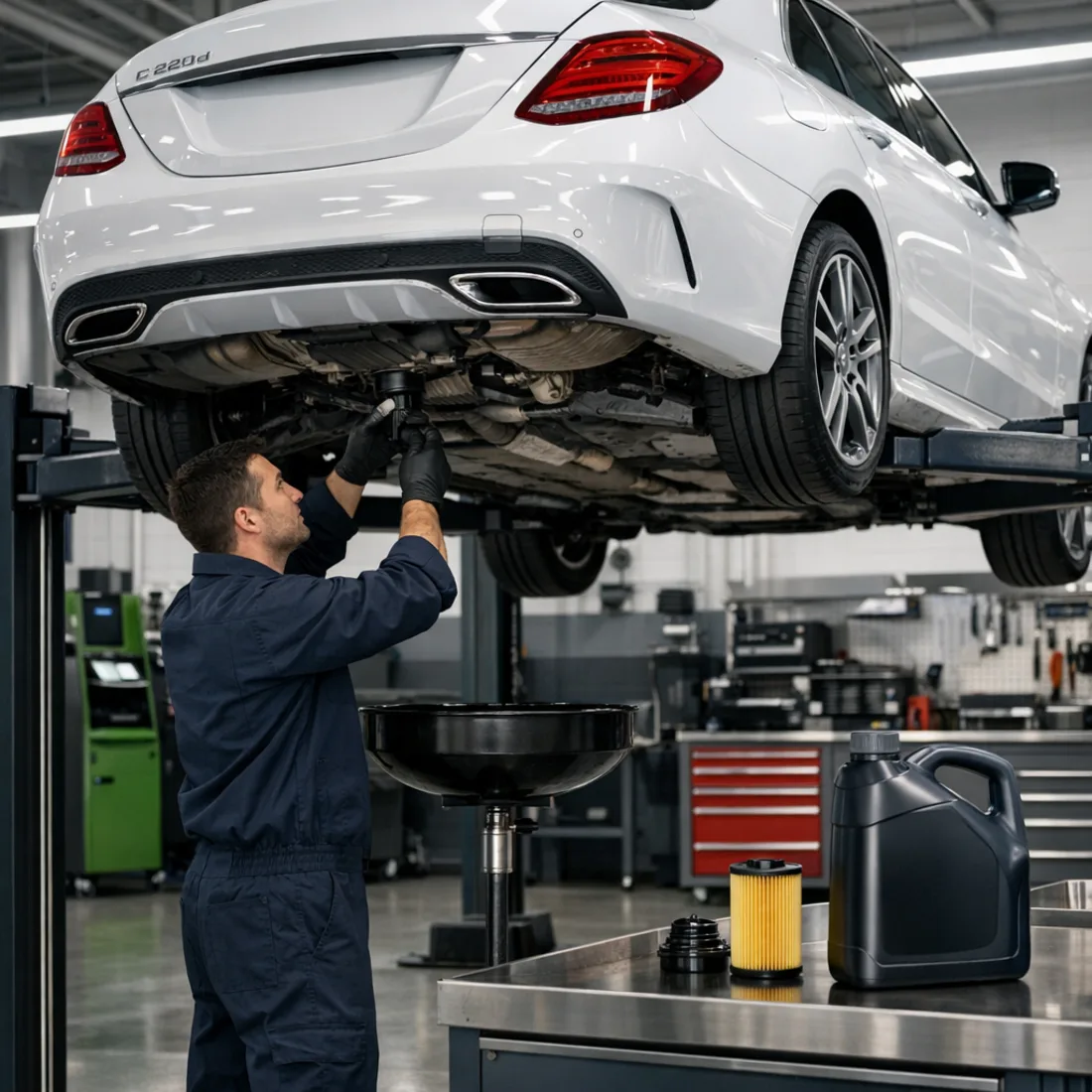
Every W205 in our workshop gets oil and filter, air filter, cabin filter, and a brake inspection as part of a standard service. Beyond that baseline, the specifics branch out considerably depending on what's under the bonnet.
The diesel variants (C 200 CDI, C 220d, C 300d) all need fuel filter replacement at the appropriate interval, glow plug inspection, and DPF and EGR attention. The C 220d and C 300d on the OM654 also need AdBlue topped up and the NOx sensor system monitored. On the OM651 in the C 200 CDI, injector data logging is worth doing at every service to catch drift early.
The C 200 petrol needs spark plugs at the correct interval, a drive belt inspection, and the 48V EQ Boost system tested alongside the conventional 12V circuit. The electric water pump and thermostat are worth checking proactively given their failure rate on the M264.
The C 63 AMG S runs iridium plugs, goes through brakes faster than anything else in the family, and needs its MCT transmission fluid kept fresh. The AMG specification oil grade is not a suggestion. On a 510hp V8 with turbos cooking between the cylinder banks, the oil is genuinely load bearing in a way it isn't on the C 220d. For all W205 models, we use genuine OEM parts throughout. We don't source aftermarket filters or pads and hope for the best on a car that cost this much new.
How We Diagnose Every W205 Variant
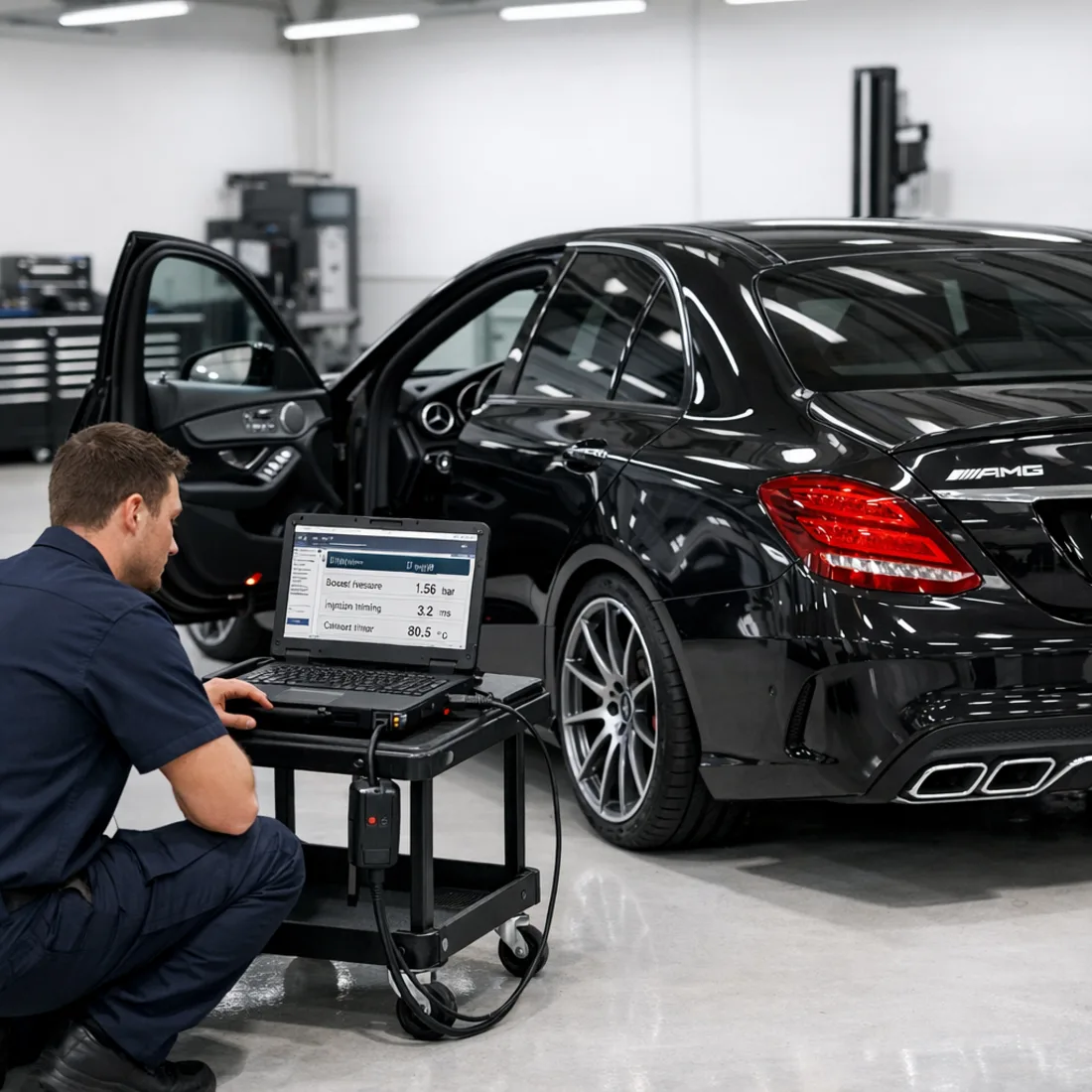
Across every model in the W205 range, we use the factory Mercedes XENTRY diagnostic platform with a genuine C4 or C6 interface. That's not a detail to gloss over. The W205 family has control modules for functions that a generic OBD reader can't even see, including the 48V battery management unit on the C 200 petrol, the AMG specific drivetrain modules on the C 63, the transmission adaptation data on the MCT and the VGSNAG3, and the guided injector and EGR tests on all diesel variants.
Generic scan tools read engine codes. XENTRY reads the full module network, runs manufacturer guided tests with live data, checks adaptation values, and allows correct coding when parts are replaced. On a W205, that difference matters every single time.
For the diesel emissions systems specifically, DPF regeneration status, EGR adaptation values, AdBlue dosing data and NOx sensor readings are all accessible through XENTRY in a way that lets us make decisions based on real data rather than guesswork. The same applies to transmission fluid condition checks and clutch adaptation resets on the MCT in the C 63.
If your W205 has a warning light that your regular mechanic couldn't interpret, or if a fault keeps returning after being cleared elsewhere, bring it in. What looks like an intermittent gremlin is usually telling a very specific story in the data. Our auto electrical and diagnostics team knows how to read it.
Tuning the W205: What Each Engine Gains
Stage 1 tuning is available across the entire W205 range, and the gains vary considerably depending on how much headroom the factory left in the calibration. All tuning work is done on the factory ECU using calibration files developed specifically for these engines. We don't use piggyback devices or chip in a box solutions.
The C 200 CDI on the OM651 sees the largest relative gain across the W205 range. In a car that can feel a bit underdone on the open road in standard trim, that transforms the driving experience.
The C 200 petrol on the M264 gains a worthwhile step in response and pull, a meaningful improvement if the car feels a touch underwhelming in standard form around town and on the open road.
Stage 1 tuning moves the OM654 in the C 220d meaningfully closer to C 300d territory for a fraction of the cost, with improved mid range torque and throttle response.
A modest gain in percentage terms but noticeable in real world response, particularly on overtaking. The C 300d's already strong base makes every extra Nm of torque count in the mid range.
On a car already at this performance level, the gain is about improved mid range response and sustained pull at high rpm rather than raw numbers. It sharpens what the M177 already does brilliantly.
For full detail on what we offer across the W205 range, take a look at our power gains and tuning page.
Frequently Asked Questions
The questions we get most. Something else on your mind? Get in touch.