Mercedes Benz G Class: G 350 CDI, G 350 d and G 63 AMG
The G Class has been in continuous production since 1979, the boxy silhouette barely changed, yet the engineering underneath has evolved from agricultural simplicity to twin turbo V8 excess. This page covers three generations we see regularly in the workshop: the OM642-powered G 350 CDI, the newer OM656-powered G 350 d, and the M177-powered G 63 AMG. Each has its own character, its own weak spots, and its own rewards for owners who stay on top of them.



G 350 CDI: The V6 Diesel That Started It All
The G 350 CDI is where most of the used G Class market in New Zealand sits. It runs the OM642 3.0-litre V6 diesel producing 245 hp and 600 Nm, and on paper that sounds bulletproof. In practice the OM642 has a few well known habits that every G 350 CDI owner should understand before a small issue becomes an expensive one.
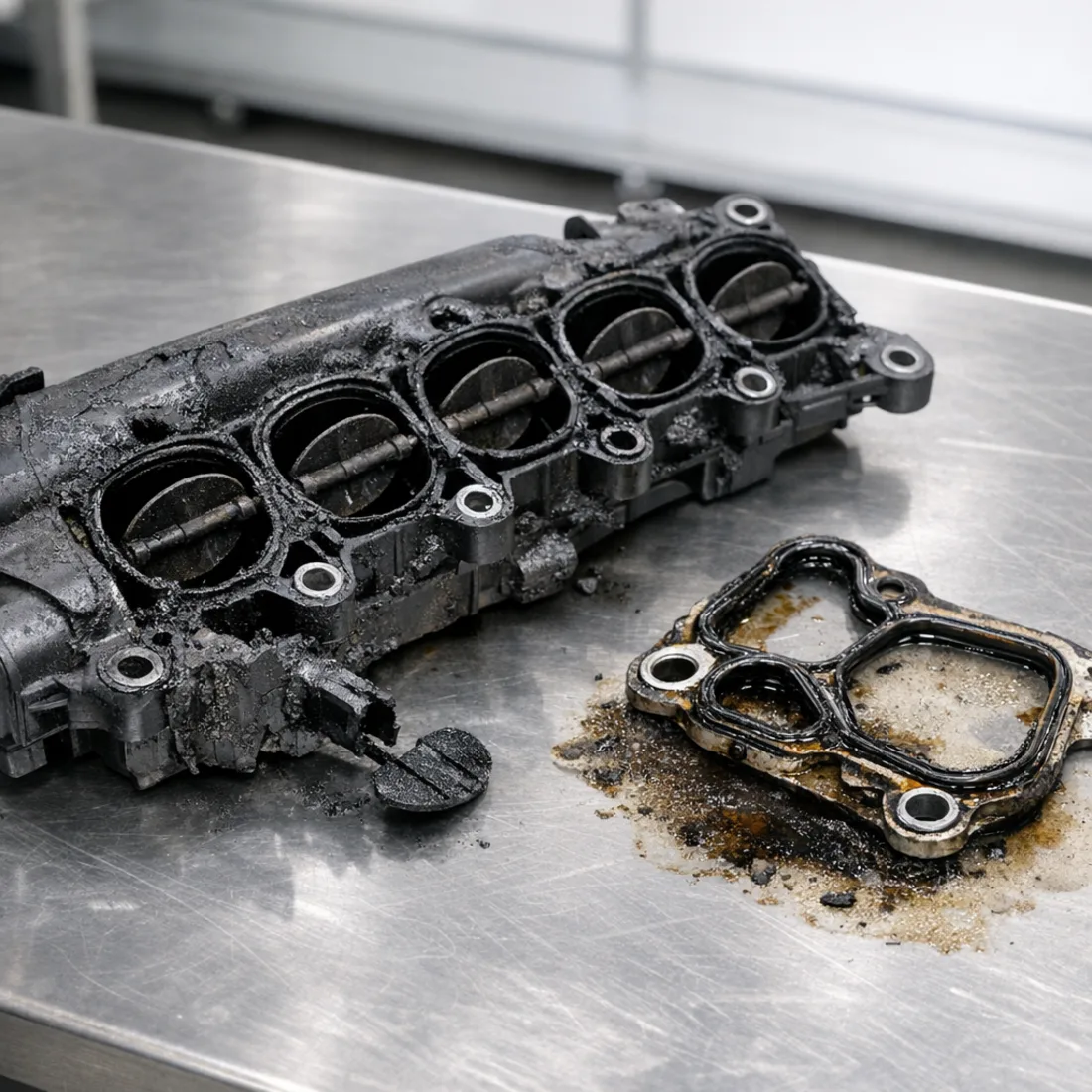
The oil cooler and its gasket are the first thing to look at. They sit in the valley of the V6 and when the gasket starts weeping, oil migrates into the surrounding intake area. It is a classic sign on these engines and one we see regularly. Left alone it creates carbon build up that compounds the next issue: the swirl flaps and intake manifold. The OM642 swirl flap system clogs and eventually fails on higher mileage cars, and getting that intake cleaned properly makes a real difference to how the engine breathes and how cleanly it starts when cold.
EGR clogging is next on the list, especially if the vehicle has spent a lot of time in city traffic. The G Class is a heavy machine and short trips mean the DPF never gets a proper regeneration cycle, which accelerates soot loading and puts extra stress on the whole emissions system. If you are buying a used G 350 CDI, find out what kind of driving it has done. A well exercised example that has seen regular open road runs is in a completely different place to one that has spent its life doing short school runs.
-
Oil cooler gasket weeping into the intake valley
-
Swirl flap and intake manifold carbon build up and failure
-
EGR clogging on vehicles doing mixed or short trip driving
-
Turbo actuator faults on higher mileage cars
-
DPF regeneration problems from low speed urban use
A well exercised CDI is a genuinely capable machine.
Go in with eyes open about the oil cooler gasket and swirl flap situation.
Routine service on the CDI covers the correct low ash diesel oil and filter, air filter, fuel filter, cabin filter, drive belts, and glow plugs. We also inspect the timing chain, brake pads and rotors, and handle DPF and EGR cleaning where the system needs attention.
Stage 1 tuning is available on the OM642 and pushes output to 280 hp and 650 Nm, a modest but noticeable improvement on a vehicle this heavy.
Get your G Class booked in with a proper specialist.
G 350 d: The Inline Six Steps Up
When Mercedes replaced the OM642 V6 with the OM656 3.0-litre inline six in the current W463 G 350 d, they did not just swap engines. The OM656 is a significantly more sophisticated unit producing 286 hp and 600 Nm from a smaller displacement, with a higher compression ratio and a completely different architecture. It also brought 48V mild hybrid technology and a more complex emissions system. The result is a genuinely impressive diesel, but the complexity means the faults are different to what CDI owners were used to.
The emissions hardware is where most of the real work sits on the OM656. AdBlue system faults, SCR catalyst problems, and NOx sensor failures are the common complaints, and they tend to arrive as warning lights that owners initially hope will go away on their own. They do not. The EGR system on the inline six also accumulates carbon, particularly on vehicles doing short urban trips, and DPF regeneration issues follow the same pattern as the older V6.
The 48V mild hybrid system is new territory compared to the CDI and worth flagging. The starter generator and its wiring loom can generate faults that look confusing on a generic scan tool but read cleanly on proper factory software. This is exactly why we use Mercedes XENTRY with a genuine interface rather than a generic reader. The guided test capability matters on these vehicles.
Compared to the CDI, the G 350 d is a better car in almost every measurable way. It is quicker, quieter, more fuel efficient and more refined. The trade off is that its emissions system is more involved to maintain, and the 48V architecture adds another layer of electrical complexity. If you buy one, stay on top of the AdBlue system and do not ignore NOx sensor warnings.
-
AdBlue system faults and SCR catalyst issues
-
NOx sensor failures triggering warning lights and power reduction
-
EGR cooler carbon build up
-
DPF regeneration problems on short trip vehicles
-
48V mild hybrid starter generator and associated wiring faults
The G 350 d is the sweet spot if you want a modern G Class without AMG running costs.
The OM656 is a better engine in every respect, but the emissions system complexity is real.
Routine service on the G 350 d covers oil and filter with the correct low SAPS grade for the OM656, air filter, fuel filter, cabin filter, glow plugs, drive belts, and AdBlue and NOx sensor checks.
Stage 1 tuning on the OM656 is a genuine step up from the CDI option, moving output to 380 hp and 800 Nm, a gain of 94 hp and 200 Nm. For a G Class that already pulls hard, that is a substantial transformation.

G 63 AMG: When AMG Got Hold of the Wehrmacht Truck
Picture a vehicle that started life as a Cold War military transport and came back from AMG with 585 hp, 850 Nm, a nine speed automatic, three locking differentials, and air suspension. The W465 G 63 AMG is genuinely absurd in the best way. It is also the most demanding G Class to maintain correctly, and owners who treat it like a normal SUV service job find out about it eventually.
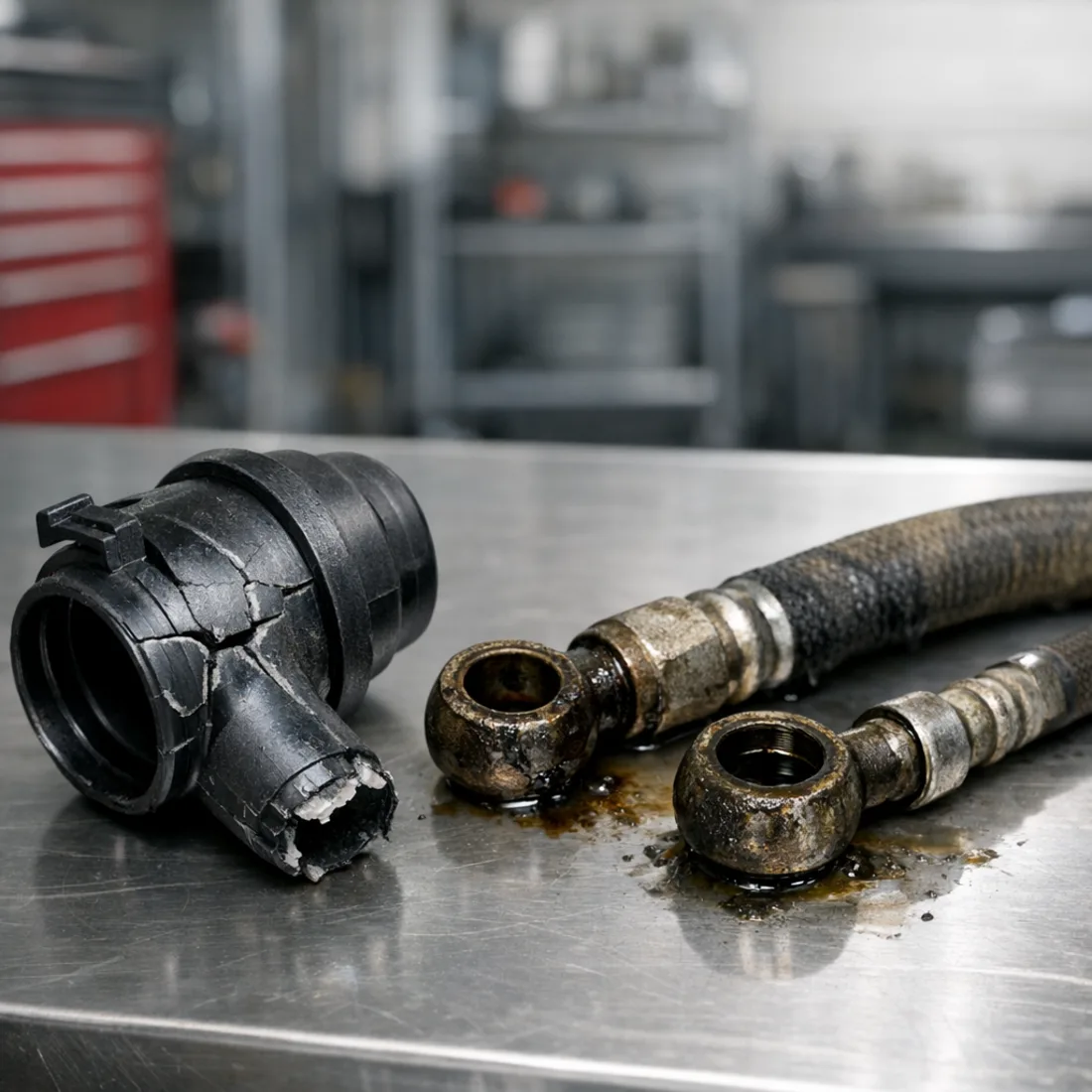
The M177 is a 4.0-litre twin turbo V8 with a hot vee turbo layout, meaning both turbos sit in the valley between the cylinder banks. That keeps the exhaust path short and spool up fast, but it also means serious heat soak is a real consideration. The intercooler and cooling system condition matter more on this engine than a conventional layout, and the plastic charge air and coolant fittings are a known weak spot. They get brittle with heat cycles and when they fail, they fail suddenly. We see them come in still running on reduced pressure, having been ignored because the driver assumed the slight performance change was just a bad day.
The 9-speed AMG SpeedShift transmission is strong, but the G Class is a heavy machine and the transmission and transfer case work harder than they would in a lighter vehicle. Fluid changes on both are not optional maintenance, they are the reason they last. The solid rear axle and heavy suspension components are robust by design, but the adaptive dampers and active engine mounts are electronics heavy components that wear and can generate confusing faults if diagnosed with the wrong tool.
-
Plastic charge air and coolant fittings cracking from heat cycling
-
Oil leaks from timing cover and valve covers
-
Coil pack and spark plug wear at high output levels
-
Turbo oil feed and coolant line condition
-
9G Tronic transmission fluid condition on high load vehicles
-
Transfer case and locking differential fluid condition
-
Active engine mount and adaptive damper wear
A G 63 that has been properly maintained is spectacular.
One that has been serviced on the cheap is an expensive lesson.
Routine service includes oil and filter with the correct low SAPS AMG approved grade for the M177, air filters for both banks, cabin filter, spark plugs and coil inspections, drive belts, brake pads and rotors sized for the AMG package on a vehicle this heavy, plus gearbox, transfer case and differential fluid checks.
Stage 1 tuning on the M177 takes output from 585 hp and 850 Nm to 660 hp and 1100 Nm. That is a gain of 75 hp and 250 Nm from a reflash, with throttle and torque delivery sharpened significantly. On a vehicle that already sounds extraordinary, the tuned version is a step beyond.
Picking Between Them: Used Buying Guide
If you are shopping for a used G Class and the generation is not locked in, here is how to think about it.
You want the most accessible entry point with excellent parts availability. The OM642 is a known quantity and a good one if you go in with eyes open about the oil cooler gasket and swirl flap situation. Get a compression test, check for oil in the intake, and find out if the DPF has been cleaned or replaced. A well maintained CDI is a genuinely capable machine and the tuning headroom, while modest, is real.
You want a modern G Class without AMG running costs. The OM656 is a better engine in every respect, but the emissions system complexity is real and you need a clean service history on the AdBlue and DPF side. Avoid anything with a history of ignored warning lights, because the NOx system on these cars does not forgive extended neglect. Budget for the fact that servicing needs factory grade tooling to do properly.
The service history is everything. Check the plastic fittings under the bonnet have been addressed, confirm the transmission and transfer case fluids have been changed at appropriate intervals, and make sure the brakes have been done with correct AMG spec parts. The G 63 AMG is not a used car bargain hunt. A G 63 that has been properly maintained is spectacular.
- G 350 CDI: check oil cooler gasket, swirl flaps, DPF service history
- G 350 d: check AdBlue system health, NOx sensor history, DPF condition
- G 63 AMG: check charge air fittings, full service history, transmission fluids, brake condition
Servicing the G Class: What Changes Between Generations
All three generations share the same body on frame ladder chassis philosophy and the same basic maintenance needs around brakes, suspension, differentials and driveshafts. Where they diverge is the drivetrain and emissions hardware. Our car servicing approach for the G Class is the same across all three: correct grade fluids, genuine OEM parts, and no shortcuts on the ancillary checks.
The CDI needs its diesel specific items covered: glow plugs, timing chain inspection, EGR and DPF cleaning at the right intervals, and fuel filter changes that some owners skip. The G 350 d adds AdBlue and NOx system maintenance to that list, plus attention to the 48V mild hybrid components. The G 63 AMG trades all of that for petrol specific items: spark plugs across both banks, coil packs, turbo oil and coolant lines, and the AMG grade brake components that this vehicle genuinely needs given its weight.
On all three, do not skip the transfer case and differential fluids. The G Class drivetrain is one of its defining features and it is also one of the components that suffers most visibly when fluid maintenance is neglected. The locking differentials on the AMG variant in particular deserve attention.
All generations: differential, transfer case and driveshaft inspection at every service. Diesel generations: EGR, DPF and timing chain checks on schedule. G 350 d specific: AdBlue, SCR and NOx sensor monitoring. G 63 AMG specific: spark plugs, coils, charge air fittings, AMG brake components.
How We Diagnose the G Class
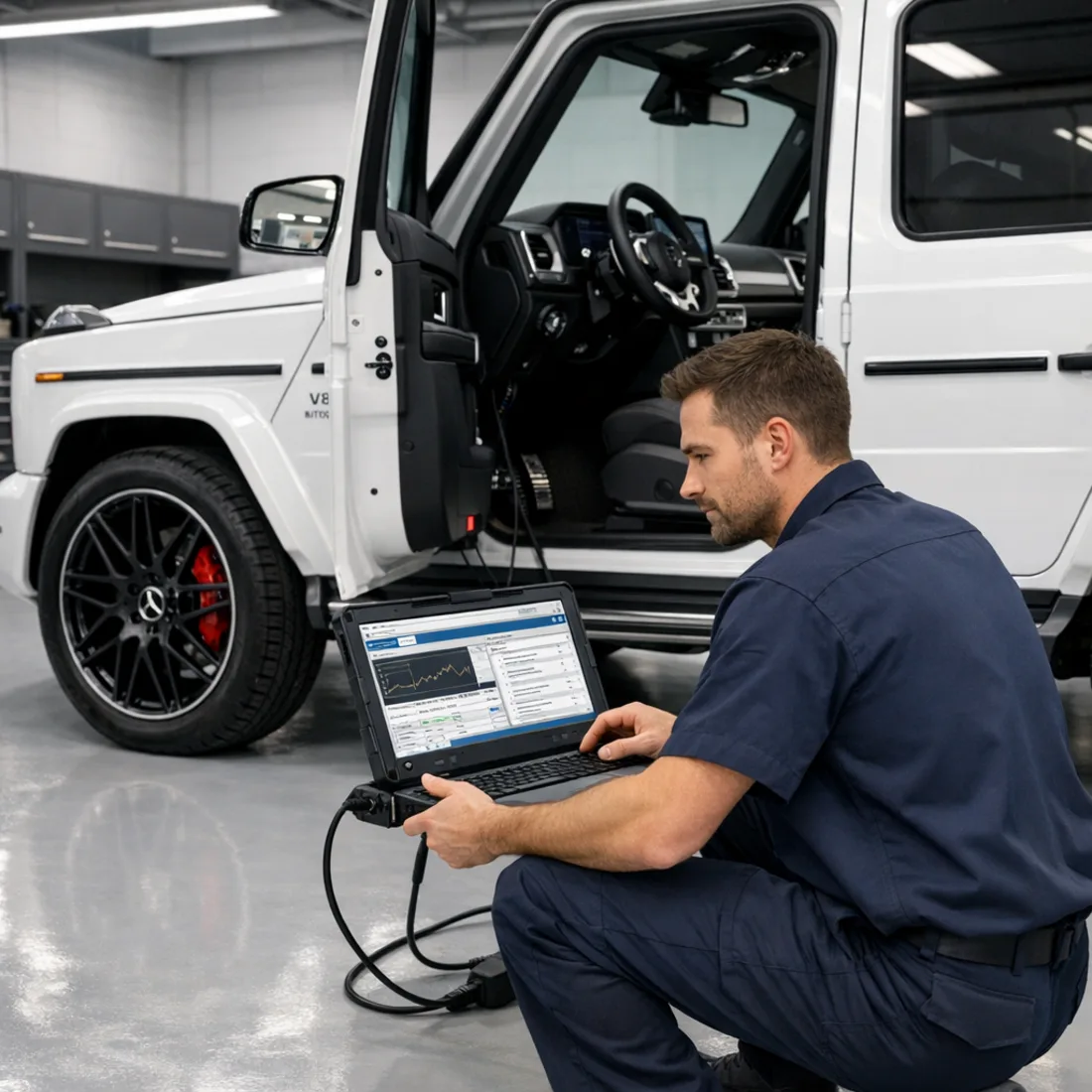
All three generations use Mercedes XENTRY and DAS accessed through a genuine C4 or C6 interface. That distinction matters. A generic OBD reader can pull basic fault codes from the engine ECU, but it cannot read the coding and adaptation data stored in the individual control units, cannot run guided fault finding tests, and cannot communicate with the transfer case, differential ECUs, adaptive damper controllers or the 48V system on the G 350 d. On these vehicles, a generic scan tool does not tell you enough to fix anything confidently.
With XENTRY we can read and clear faults across all control units, check live data from the fuel system, turbo, transmission and suspension, run actuator tests, and confirm whether a component has been replaced and coded correctly. On the G 63 AMG we can also read the AMG specific powertrain adaptations that tell us how the transmission and engine are behaving over time. For auto electrical faults, this level of access is the difference between a real diagnosis and an expensive guess.
Tuning the G Class: Stage 1 Across the Range
All three generations have Stage 1 tuning available from our workshop. The scope and the result are quite different across the range. All tuning is done via ECU file work, and we work with the correct platform for each variant rather than using a one size approach.
On the G 350 CDI the OM642 gains 35 hp and 50 Nm, moving to 280 hp and 650 Nm. It is a modest but real improvement on a heavy vehicle and sharpens the mid range noticeably. ECU: Bosch EDC17CP57. Related work available: EGR OFF, DPF OFF, DTC Removal, Pop and Bang Crackle map, START/STOP OFF, FLAPS, Vmax, Adblue.
On the G 350 d the numbers are far more dramatic: the OM656 gains 94 hp and 200 Nm, reaching 380 hp and 800 Nm. That is a transformation, not a tweak, and it puts the diesel G Class in genuinely fast SUV territory. ECU: Bosch EDC17CP57 or Bosch MD1CP001 depending on specification. Related work available: EGR OFF, DPF OFF, DTC Removal, Pop and Bang Crackle map, START/STOP OFF.
On the G 63 AMG the M177 gains 75 hp and 250 Nm to reach 660 hp and 1100 Nm. The throttle and torque delivery improvements make a vehicle that was already impressive feel substantially more forceful. ECU: Bosch MED17.7.3 or Bosch MED17.7.5. Related work available: DTC Removal, Pop and Bang Crackle map, START/STOP OFF, DECAT, FLAPS, Vmax.
A proper Stage 1 tune on the M177 works within the engine's mechanical limits and does not require hardware changes. The key is that the base vehicle is in good condition first, with fresh plugs, healthy coils and a cooling system that is not already under stress. We check all of that before tuning. Submit your vehicle details via our file service to get started.
Frequently Asked Questions
The questions we get most. Something else on your mind? Get in touch.