CLA 250 and CLA 45 AMG S
The C118 CLA is two very different cars wearing the same sharp suit. At one end, the CLA 250 is a punchy, daily friendly 2.0 turbo with a sophisticated dual clutch gearbox and a cabin that punches well above its class. At the other, the CLA 45 AMG S is home to the most powerful production four cylinder engine ever built, a machine that rewards properly maintained hardware and punishes neglect fast. Both live in our workshop regularly, and this page tells you what we actually find on each one, what to watch when buying used, and how they compare when it comes time to service or fix them.


CLA 250: The Everyday Weapon
The CLA 250 pairs the M260 2.0 litre turbocharged four with an 8-speed 8G DCT dual clutch transmission, managed by a Bosch MED17.7.7 ECU. Stock figures are 224 hp and 350 Nm, which is a satisfying combination in a car this size. It is generally a strong engine, but there are a handful of things that bite if you let the maintenance slide.
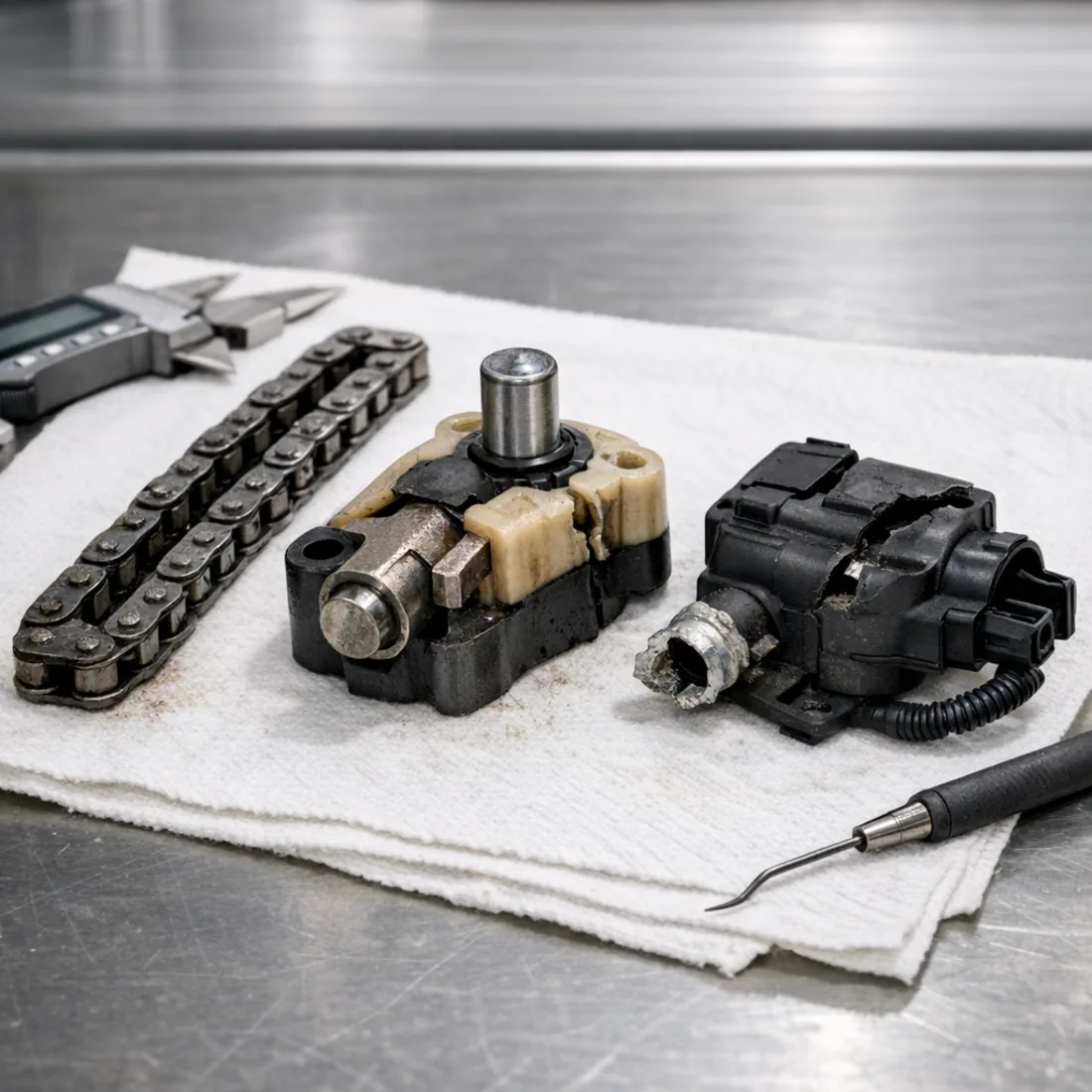
The most common issue we see on higher mileage CLA 250s is timing chain wear. The M260 uses a chain driven valvetrain, and when servicing gets pushed out, chain stretch can show up earlier than you would expect. Catching it before the rattle becomes a bang is obviously the priority. Related to that, turbo actuator and wastegate faults are not uncommon, and they tend to surface as hesitation under boost or inconsistent power delivery. Because this is a direct injection engine, carbon build up on the intake valves is also worth checking at higher kilometres. The intake valves get no fuel wash down, so deposits accumulate over time and eventually start affecting throttle response and idle quality.
Oil weeps from the front cover and minor coolant leaks are other things we find routinely on these. Neither is catastrophic in isolation, but both tell you the car has been doing some kilometres and that a thorough inspection is overdue. The 8G DCT gearbox is generally well behaved, but when shift quality starts to feel vague or rough, fluid and mechatronic condition are the first things to check.
-
Timing chain wear on higher mileage M260 engines
-
Turbo actuator and wastegate issues causing inconsistent boost
-
Carbon build up on intake valves from direct injection
-
Front cover oil weeps and slow coolant leaks
-
8G DCT shift quality degradation from overdue fluid service
-
Charge air system leaks affecting boost response
Catching timing chain stretch before the rattle becomes a bang is obviously the priority.
The repair cost rises considerably once secondary damage is involved.
Routine servicing on the CLA 250 covers oil and filter using the correct low ash Mercedes specification, air and cabin filters, spark plugs at the right interval, brake pads and rotors, coolant and brake fluid, drive belt inspection, and DCT clutch and mechatronic fluid changes. Suspension bushes and mounts are worth checking too, particularly on cars that have seen Auckland's less charitable road surfaces.
For owners who want a bit more from the M260, Stage 1 tuning takes the CLA 250 from 224 hp and 350 Nm to 250 hp and 400 Nm, a gain of 26 hp and 50 Nm. It is a worthwhile step on a car that is already fun to drive.
Get your C118 CLA booked in with a proper specialist.
CLA 45 AMG S: Four Cylinders, No Compromise
Four cylinders, 421 hp, 500 Nm. Those numbers are not a misprint. The M139 in the CLA 45 AMG S is the most powerful production four cylinder engine ever built, and it is a genuine engineering statement. The Bosch MG1CP002 ECU manages the engine, with the ZF 8HP handling transmission duties through an AMG SPEEDSHIFT wet clutch DCT. If you are coming from the CLA 250, the step up here is not a small increment, it is a different category entirely.
That level of output means the M139 lives a hard life, especially in the hands of enthusiastic owners. Heat related stress on the turbo and intercooler system is the primary concern we see in the workshop. The turbo on this engine is working considerably harder than the M260 unit, and the charge air pipework, boost sensors and the full cooling circuit all need close attention. Under track use or repeated hard pulls, oil condition degrades faster than on a standard road car, so monitoring oil change intervals properly matters here more than on almost any other four cylinder in the market.
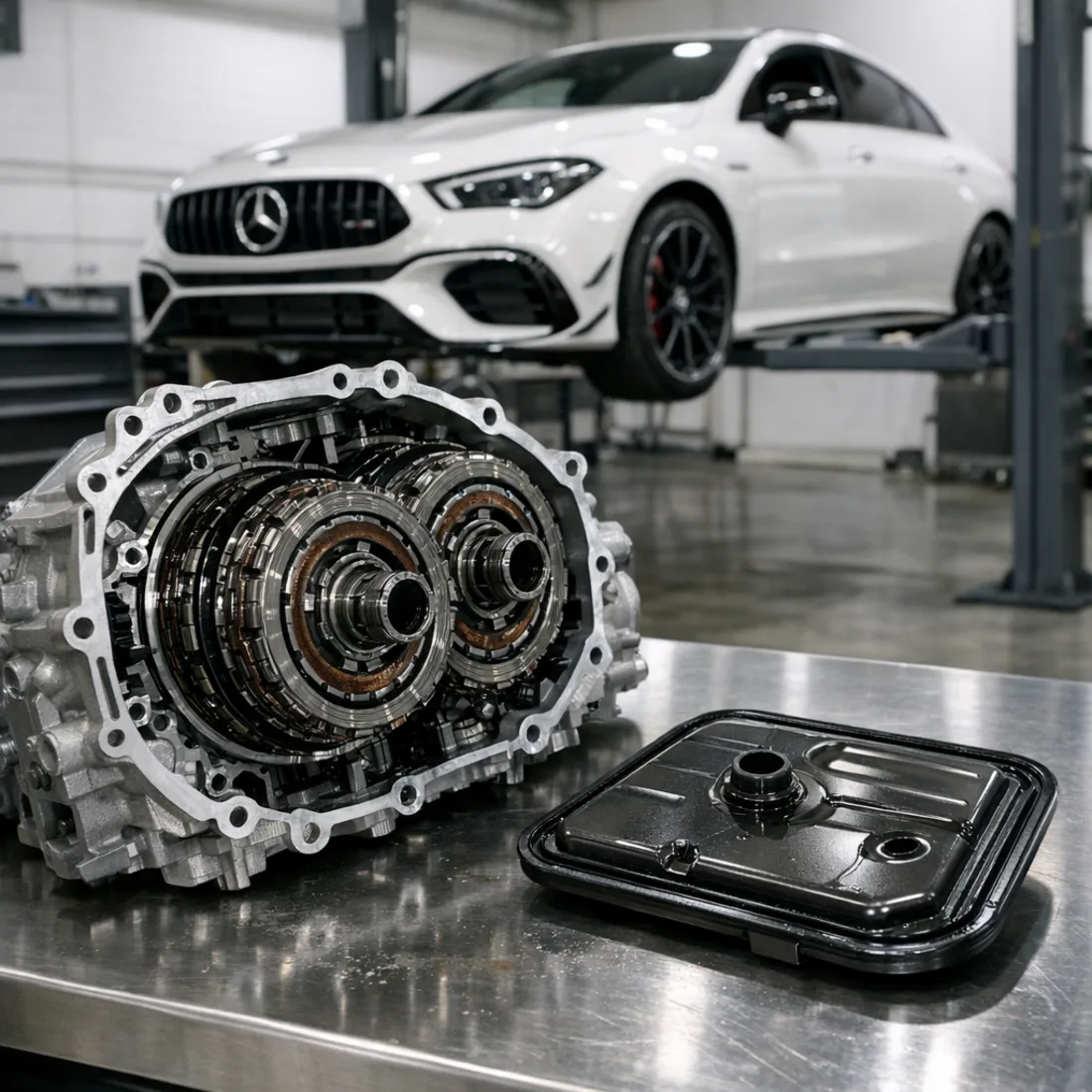
The AMG SPEEDSHIFT DCT is a wet clutch unit and it needs its fluid and filter kept genuinely fresh. When DCT service gets skipped on these, shift quality suffers first and clutch pack wear follows. It is a much more expensive fix than the fluid change, so staying on top of it is straightforward value protection.
-
Heat related turbo and intercooler stress under hard use
-
Charge air pipework and boost sensor faults from high boost operation
-
Cooling circuit issues under sustained high load driving
-
AMG SPEEDSHIFT DCT fluid and filter degradation
-
Accelerated oil condition breakdown under track or spirited use
-
Suspension and mount wear from the added performance loads
When DCT service gets skipped, shift quality suffers first and clutch pack wear follows.
It is a much more expensive fix than the fluid change, so staying on top of it is straightforward value protection.
Routine servicing on the CLA 45 AMG S uses the correct AMG grade oil specification, not a generic Mercedes spec. Air filter, cabin filter, spark plugs, brake pads and rotors (the AMG brakes are strong and the pads work accordingly hard), DCT transmission fluid and filter, and a thorough inspection of the cooling and boost system are all standard work on this car. Suspension mounts and bushes get a harder life on the 45 than on the 250, so they are worth checking regularly too.
Stage 1 tuning on the M139 moves the numbers from 421 hp and 500 Nm to 470 hp and 620 Nm. That is a gain of 49 hp and 120 Nm on a car that is already fast.
Picking Between Them: Buying Advice Across the C118 Range
Both variants share the same C118 body, the same interior architecture, and XENTRY based diagnostics. But from an ownership standpoint, they are genuinely different propositions, and it is worth understanding those differences before you sign anything.
Daily usability is the priority. The M260 is a durable engine when serviced properly, fuel costs are manageable, and the 8G DCT is smooth and refined in normal use. A car with full documented history and no oil weeps is the one to pursue. Avoid anything with a patchy service record, because the timing chain and DCT work needed to bring a neglected car up to scratch adds up quickly.
You want the full performance experience and are prepared to maintain it accordingly. Check whether the car has seen track days, and if so, whether oil changes were done more frequently to match. DCT fluid history matters even more here than on the 250. A low mileage, dealer serviced example is the safe pick. A high mileage one with no AMG spec service records is a risk that is hard to price accurately.
- Full documented service history with correct spec fluids
- No timing chain cold start rattle on the M260
- DCT fluid condition and shift quality check on both variants
- Charge air system and boost pipes inspected for leaks
- No oil weeps from the front cover or slow coolant leaks
- Track day history declared and matched maintenance on the CLA 45 AMG S
- Intercooler and charge air pipework inspected for heat damage on the 45
- Suspension bushes and mounts checked, especially on the AMG S
Servicing the C118 CLA: What It Actually Takes
Both C118 variants need Mercedes specification fluids and genuine or OEM quality parts. We fit brand new genuine or OEM parts only, which matters on a car where the control units are this closely calibrated to hardware tolerances. Generic parts and off spec fluids might complete a service on paper, but they create problems further down the track.
The service requirements differ meaningfully between the two variants. The CLA 250 runs on the standard Mercedes low ash oil specification. The CLA 45 AMG S needs the correct AMG grade oil, a distinction that matters when the engine is producing this level of output and heat. Spark plug intervals, brake pad life, and DCT fluid change frequency all differ between the two because the 45 is working harder across the board.
Our car servicing covers all of this with the correct parts and fluids for each variant. For brake specific work, our brake repair service handles everything from pad and rotor replacement to brake fluid flushes on both the CLA 250 and the CLA 45 AMG S. And when the DCT needs attention, our team handles the full fluid service, filter change, and mechatronic inspection, more detail on that at our TCU and gearbox repairs page.
How We Diagnose the C118 CLA
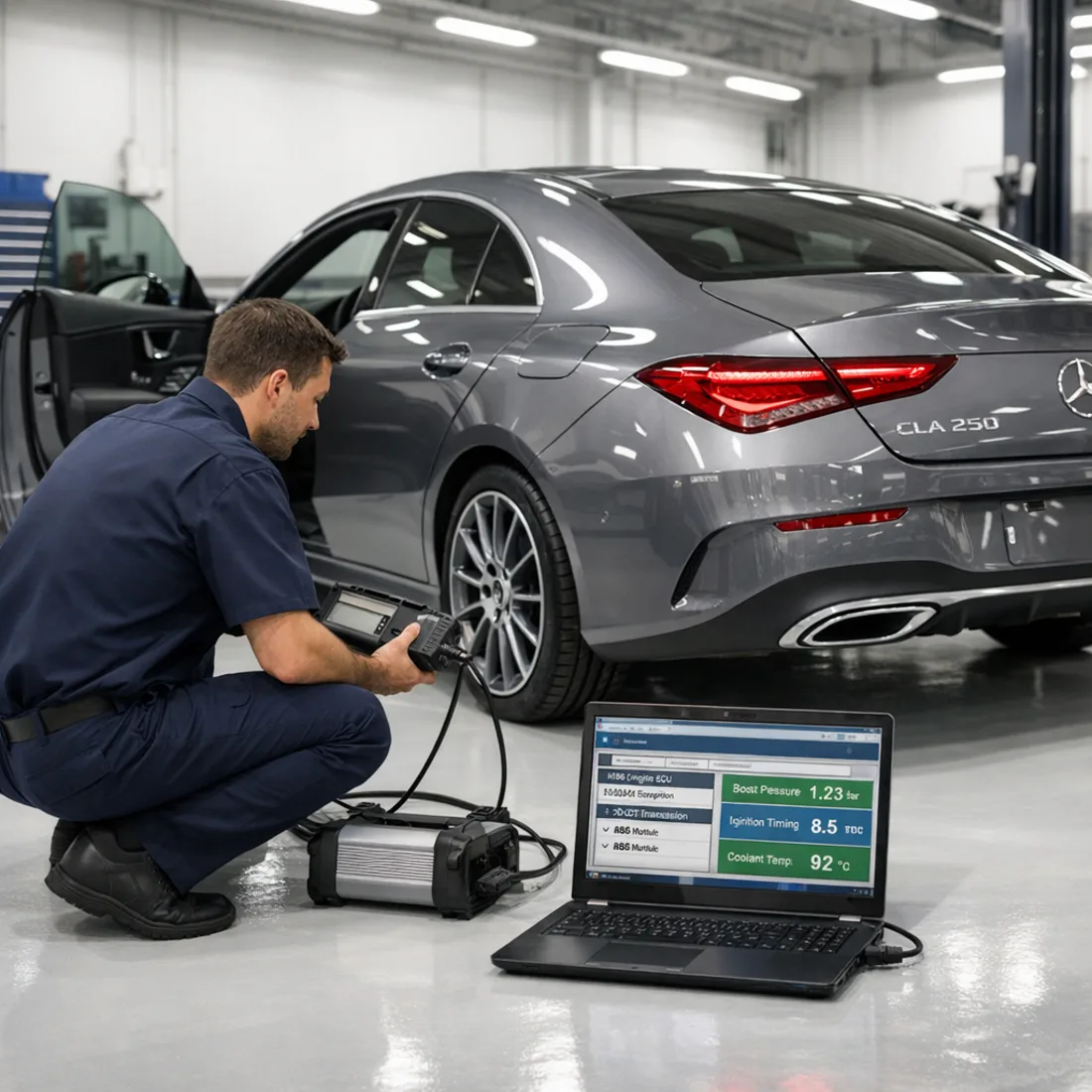
Both variants run Mercedes Benz's proprietary control architecture, and generic scan tools simply do not cut it here. You might pull a generic fault code from the engine ECU, but you will miss what the transmission control unit, the suspension control module, the restraints system, and the other dozen or so control units are telling you. We use the factory XENTRY and DAS platform through a genuine C4 or C6 interface, which means we read every module on the car, see live data in the real formats the factory uses, and code correctly when parts are replaced.
On the CLA 250, that means we can read the MED17.7.7 ECU properly, check DCT adaptation values, and see whether timing chain stretch is being flagged before it becomes audible. On the CLA 45 AMG S, the MG1CP002 ECU stores a much wider range of performance related data, and reading it properly lets us see the full picture of how the car is performing under load, not just whether a fault code has tripped.
This matters practically because a lot of C118s arrive with fault codes that have been cleared somewhere else without the underlying cause being found. We work backwards from the live data and module history, not just the current fault list.
Tuning the C118 CLA: What the Numbers Look Like
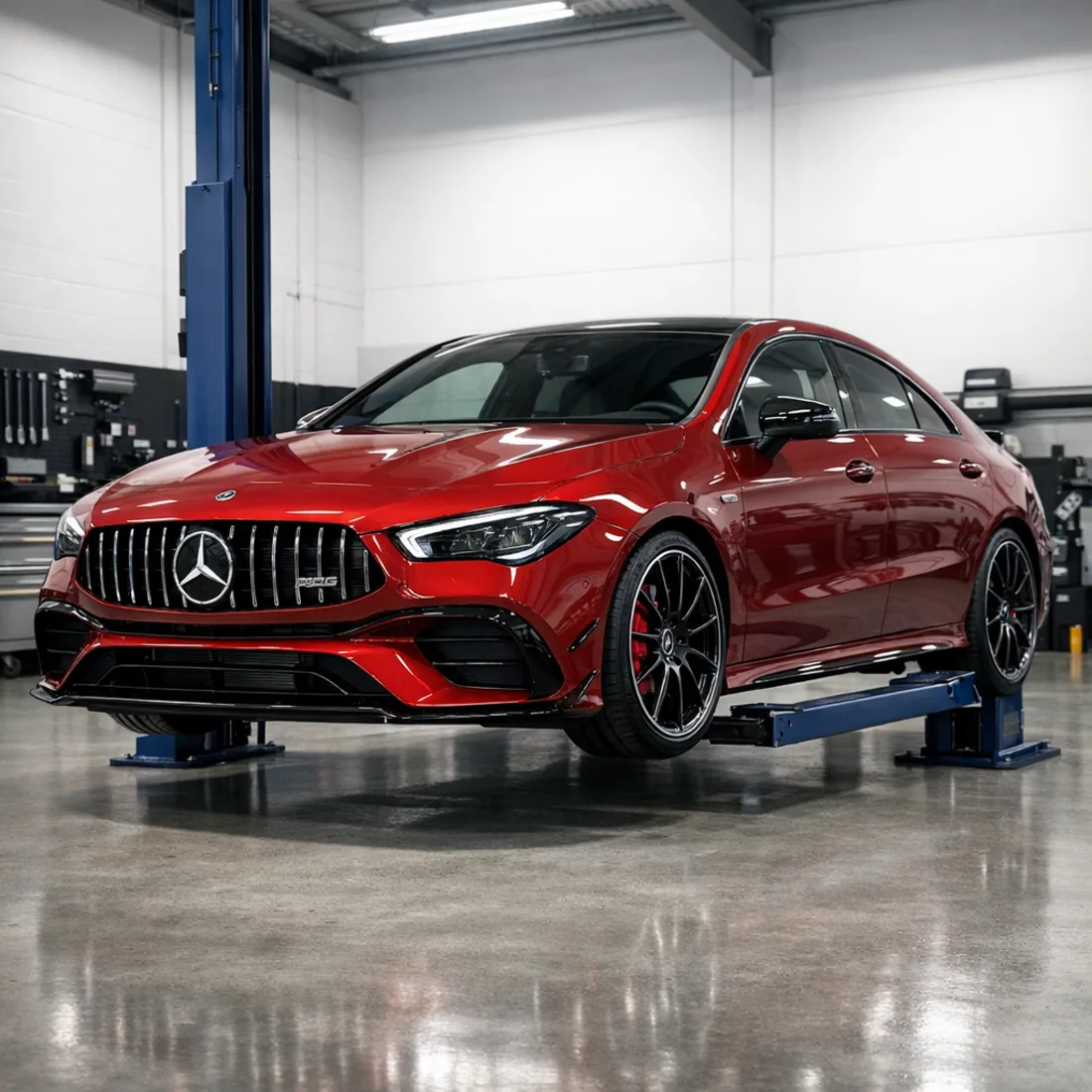
Both C118 variants respond well to Stage 1 tuning, and the gains on each are meaningful rather than cosmetic.
The CLA 250 goes from 224 hp and 350 Nm to 250 hp and 400 Nm. That is a 26 hp and 50 Nm gain on the M260, and it makes the CLA 250 noticeably more responsive in the mid range without changing the car's daily driver character. It is a clean, well suited step for a car used on the road every day.
The CLA 45 AMG S is in a different league to begin with, and Stage 1 takes it further still. From 421 hp and 500 Nm to 470 hp and 620 Nm, a gain of 49 hp and 120 Nm. On an already fast car, that 120 Nm torque increase in particular transforms how the car delivers its power across the rev range. It is a substantial step, and it works best on a car that is mechanically sorted and properly serviced, because you are loading the M139, the DCT, and the drivetrain harder than stock calibration ever planned for.
We do not tune a car that has outstanding mechanical issues. If the charge air system has a leak, the DCT fluid is overdue, or the turbo is showing heat stress, those get fixed first. Tuning a car that has underlying issues just accelerates the damage. See our file service for more on how we approach ECU calibration.
Frequently Asked Questions
The questions we get most. Something else on your mind? Get in touch.