Toyota Alphard 3.5 V6: Service and Repair for the 2GR FE
There is something quietly impressive about a people mover that weighs close to two tonnes yet pulls through traffic with genuine ease. The Toyota Alphard 3.5i does exactly that, pairing a lounge on wheels cabin with a 3456 cc naturally aspirated V6 that makes 280 horsepower and 330 Nm without breaking a sweat. It is the kind of vehicle people buy expecting effortless reliability, and for the most part the 2GR FE engine delivers. But even the smoothest machinery has its quirks, and the Alphard is no exception. Knowing where those quirks live, and how to head them off, is what keeps one of these vans running the way Toyota intended.

What the 2GR FE Actually Is
The 2GR FE is a 3.5 litre, naturally aspirated V6 with a bore and stroke of 94.0 mm by 83.0 mm and a compression ratio of 10.8 to 1. It runs dual VVT i, meaning variable valve timing on both the intake and exhaust camshafts, and it uses a timing chain rather than a rubber belt. That last point matters because there is no cambelt replacement interval to worry about.
What does matter, though, is oil quality. The VVT i actuators are fed by oil pressure, and if the oil is old, diluted or the wrong grade, those actuators begin to hunt and hesitate at low revs. You get a rough cold start, occasionally a P0010 or P0020 style fault around the camshaft actuator circuits, and sometimes a check engine light in an amber or orange colour. It feels like a minor annoyance until it is not.
-
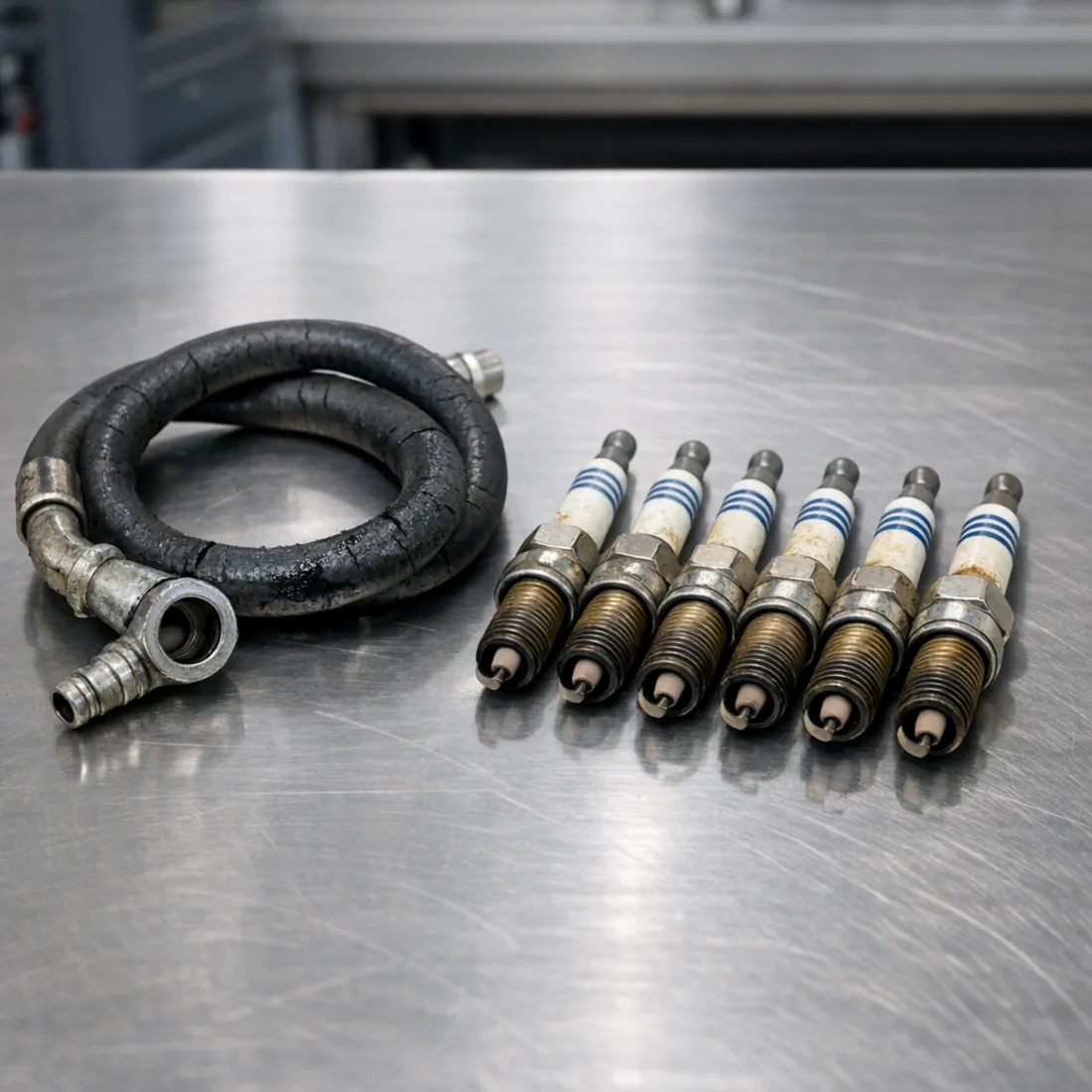
VVT i oil supply hose on early 2GR FE engines: rubber degrades over time, seals weep and you end up with a slow oil leak that hides behind the engine. Left alone, a dropping oil level means less pressure to the VVT i actuators, accelerating wear on the very components you were trying to protect.
-
VVT i actuator hunting and hesitation at low revs caused by old, diluted or wrong grade oil, leading to P0010 or P0020 camshaft actuator circuit faults and an amber check engine light.
-
Water pump weeping seal on higher mileage examples: a small coolant leak at the pump face can go undetected until it worsens or leaves dried residue on the block. On a high compression V6, an unchecked coolant loss eventually means an overheating event.
-
Spark plug degradation: the 2GR FE runs six iridium plugs and fitting cheaper copper alternatives drops combustion quality, hurts fuel economy and forces the management system to work harder to compensate with dual VVT i.
It feels like a minor annoyance until it is not.
Knowing where the 2GR FE's quirks live, and how to head them off, is what keeps one of these vans running the way Toyota intended.
On early 2GR FE engines, the oil supply hose feeding the VVT i system is the most commonly discussed wear point. Over time the rubber degrades, seals weep and you end up with a slow oil leak that hides behind the engine and goes unnoticed until oil consumption becomes obvious. The fix is straightforward: inspect the hose, replace it if there is any sign of weeping or cracking, and keep the oil level honest. It is the sort of job that takes minutes to check and much longer to ignore.
Higher mileage Alphards are worth having the cooling system looked over. A small coolant leak at the pump face can go undetected until it either worsens or leaves a dried residue on the block. On an engine this size, an unchecked coolant loss eventually means an overheating event, and overheating a high compression V6 is an expensive afternoon. Catching it early during a scheduled service inspection is the sensible approach.
Get your Alphard booked in with a proper 2GR FE specialist.
Routine Servicing Done Right
Because the 2GR FE has a timing chain instead of a belt, there is no sudden expensive cambelt replacement lurking on the schedule. What the engine does need is clean, correct grade fully synthetic oil changed at proper intervals. The VVT i system is the most oil sensitive part of this engine, and running it to the edge of a service interval on degraded oil is exactly how those actuators develop problems. We also replace the oil filter, check and replace the air filter and cabin filter, inspect and replace drive belts, and fit a fresh set of iridium spark plugs when the interval calls for it. Our full vehicle servicing covers all of this in a single visit.
Brakes on a vehicle this heavy need to be in honest condition. The Alphard is not a sports car, but two tonnes of people mover under braking demands properly functioning pads and rotors. We inspect pad thickness, rotor surface and caliper operation, and we carry out brake pad and rotor replacement using brand new parts to the correct specification. Fluid condition and brake line integrity get checked at the same time.
Suspension components and sensors also get inspected as part of our mechanical work, because worn bushes and failed wheel speed sensors can mask larger issues on a vehicle used for long family runs. We also check coolant concentration and condition, inspect the VVT i oil hose for weeping, and look over general fluid levels and quality. For any electrical gremlins, sensor faults or wiring concerns, our auto electrical team handles those through the same Techstream diagnostic workflow.
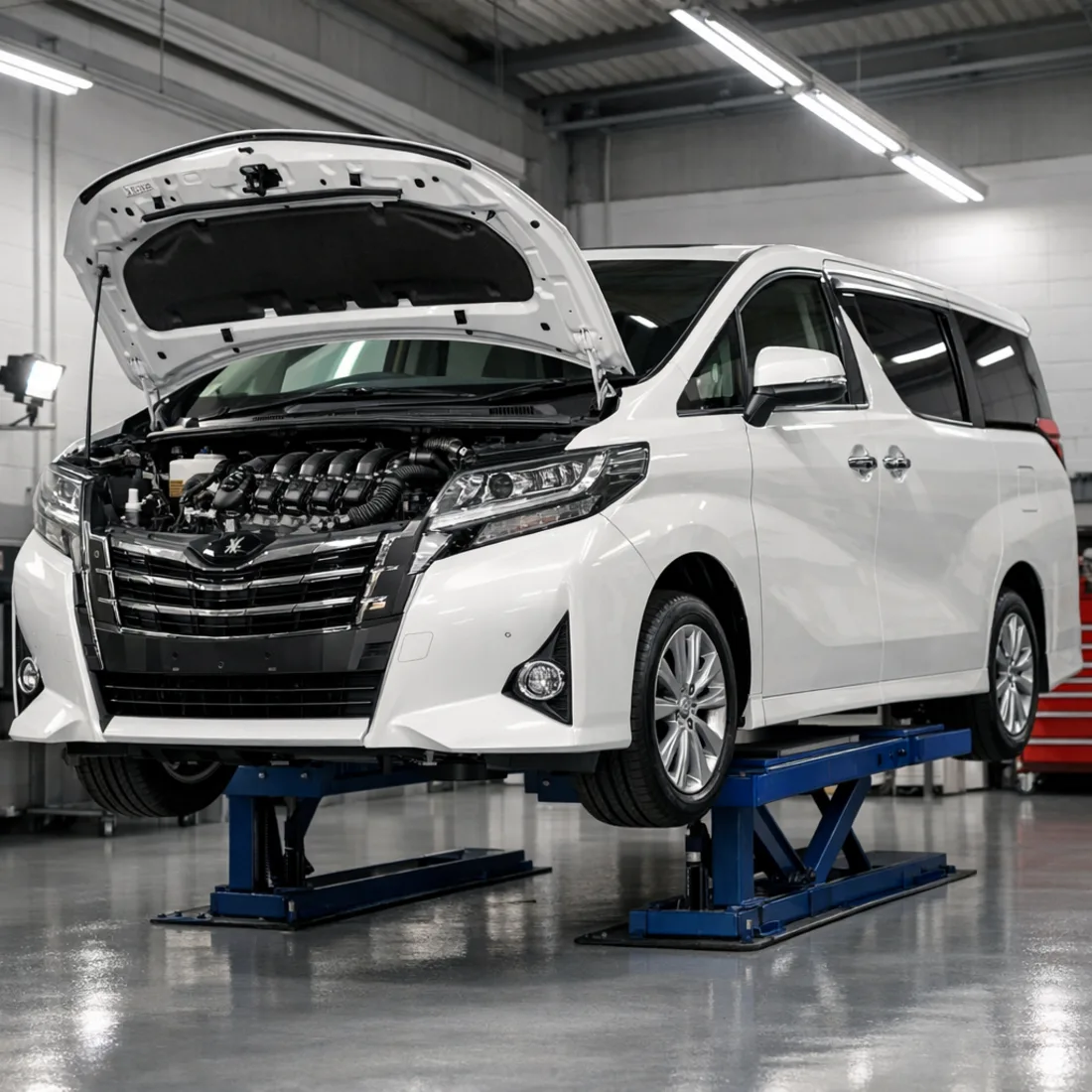
How We Diagnose the Alphard Properly
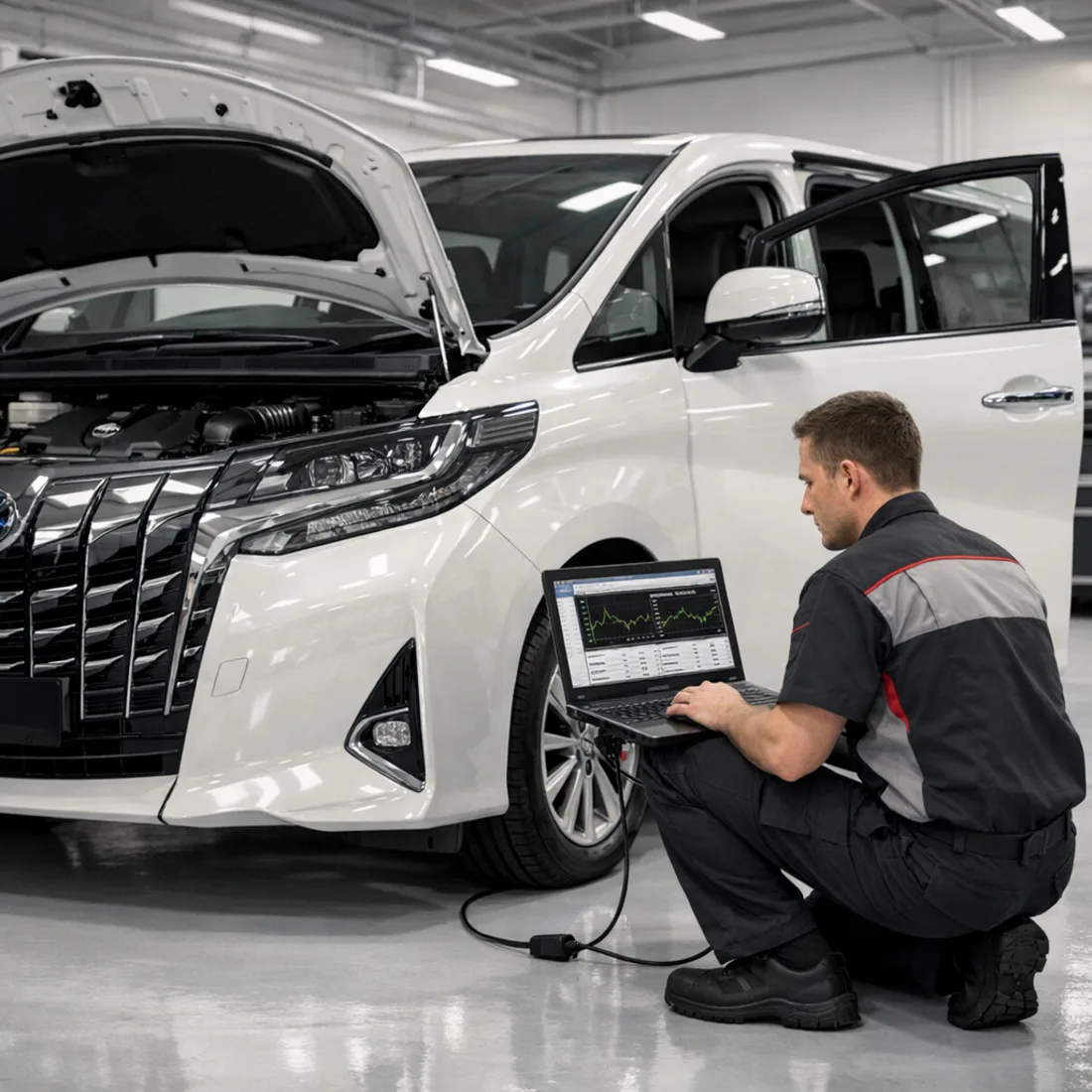
We use Toyota Techstream with the correct vehicle interface to communicate with the Alphard's Denso ECU rather than a generic scan tool. That distinction matters more than it sounds. Techstream reads manufacturer specific fault codes, live sensor data streams and freeze frame data that a generic reader simply cannot access.
On the 2GR FE specifically, being able to watch VVT i oil control valve duty cycles and camshaft position deviation in real time means the difference between knowing which actuator is struggling and just guessing. We can also run active tests and reset service functions correctly, so the vehicle leaves with its systems in the right state rather than just the warning light cleared.
Performance Tuning for the 2GR FE
A naturally aspirated engine does not respond to a tune the way a turbocharged one does, and we will be straight with you about that. The 2GR FE is already a well calibrated unit from the factory. That said, there is some genuine gain available.
Our Stage 1 ECU tune on the Alphard's Denso unit moves output from the stock 280 horsepower and 330 Nm to 295 horsepower and 352 Nm, a gain of 15 horsepower and 22 Nm. It is not a transformation, but on a vehicle you drive every day it improves throttle response and makes the engine feel a little more eager, particularly in the mid range where family driving happens most. We also offer DTC Removal and a Start Stop Off function for those who find the factory stop start system more irritating than useful. These are calibration level changes written directly to the ECU, not a device plugged into the OBD port.
For the full picture on what the tune involves, have a look at our tuning options.
Frequently Asked Questions
The questions we get most. Something else on your mind? Get in touch.