Toyota Auris 1.2T: Servicing, Repairs and Diagnostics in Auckland
The Auris 1.2T is a bit like a Swiss Army knife someone quietly upgraded. On the outside it looks exactly like the sensible, dependable Toyota you expected. Pop the bonnet and there is a turbocharged 1.2 litre four cylinder, the 8NR FTS, spinning out 116 horsepower and 185 Nm from just 1197cc. Toyota built this engine to be efficient and smooth rather than showy, and by and large it delivers. But small turbo direct injection engines have a particular set of quirks that get louder as the kilometres pile up, and the Auris is no exception. We have had plenty of them on the hoist and we know exactly where to look.

What the 8NR FTS Actually Is
The 8NR FTS is Toyota's compact turbocharged petrol unit, fitted to the Auris as part of their move toward smaller, forced induction engines. It displaces 1197cc across a bore of 71.5 mm and a stroke of 74.5 mm, with a compression ratio of 10.0 to 1. The brain controlling it is a Denso 896xx series ECU, which is a capable and well mapped unit from the factory. Eight valves, direct injection, and a turbocharger working together to make the most of that small capacity. In everyday driving it pulls well, particularly in the mid range where the torque comes in early. It is not trying to be exciting. It is trying to be right, most of the time.
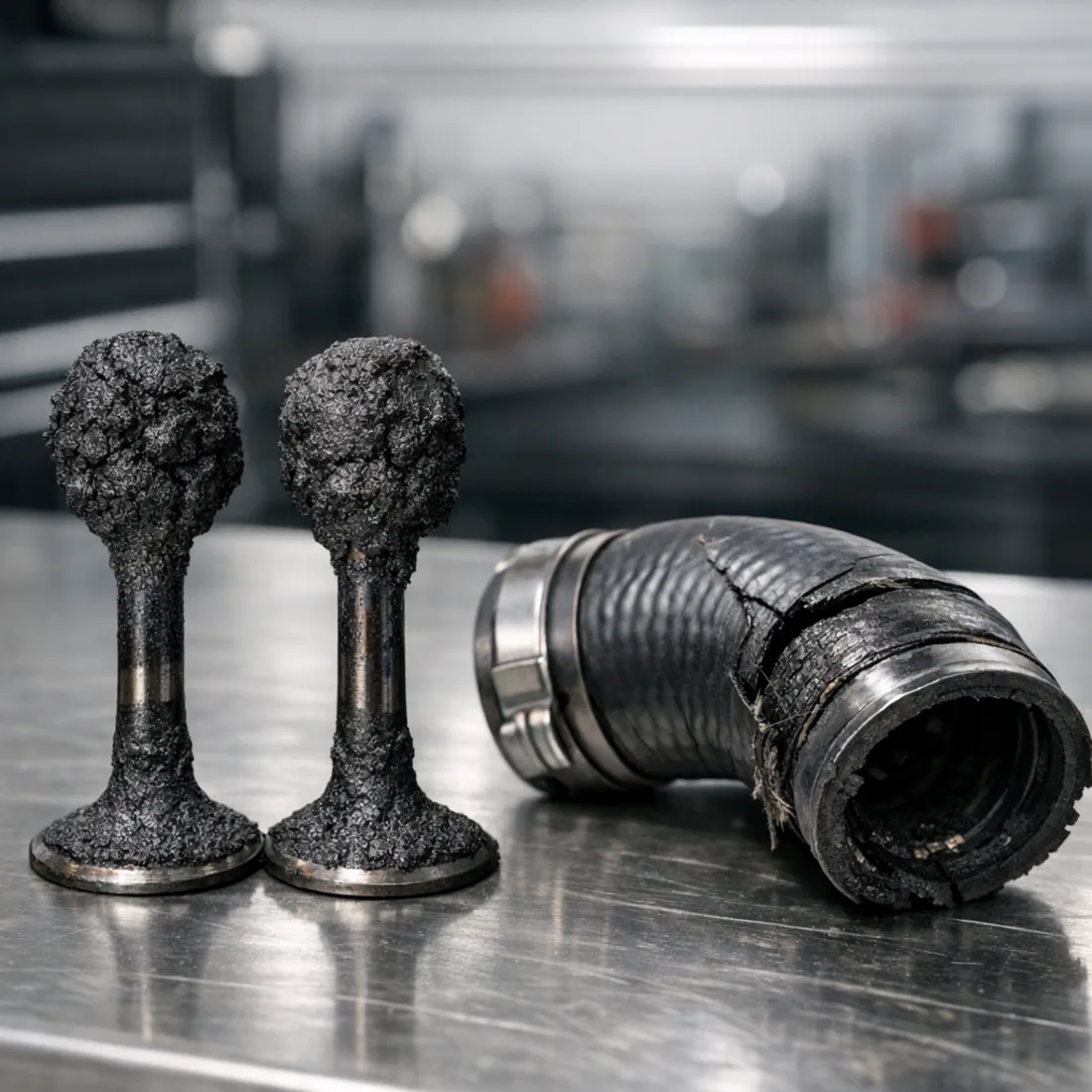
What direct injection means in practice is that fuel is sprayed directly into the combustion chamber rather than upstream of the intake valve. Efficient, yes. But the intake valves never get that fuel wash that port injection engines rely on to stay clean. Over tens of thousands of kilometres, carbon deposits build up on the back of those valves. It is slow and invisible until suddenly the idle is rough, the throttle response feels hesitant, and the engine occasionally stumbles at light load. That is the carbon talking.
-
Carbon build up on the intake valves: direct injection means no fuel wash over the valves, so carbon accumulates steadily, causing rough idle at cold start, hesitation when pressing the accelerator from a standstill, and occasional misfires that clear once the engine warms up.
-
Higher than expected oil consumption: some Auris 1.2T owners notice the oil level dropping between services faster than it should, which accelerates wear on the turbocharger bearings and piston rings if left unchecked.
-
Turbo plumbing and boost leaks: intercooler pipes, boost hoses and couplers are under constant pressure cycling, heat and vibration. Boost leaks show up as sluggish acceleration, a flat spot in the power delivery, or an engine that feels like it is breathing through a pillow.
The tune just lets it do a bit more of it, within safe limits and without compromising reliability.
A gain of 14 horsepower and 40 Nm over stock transforms the in gear pull noticeably on a car this size.
We use Toyota Techstream with the correct interface to talk to the Auris at a factory level. That means we are not limited to generic OBD fault codes. Techstream reads live data streams from the engine management, checks stored and pending faults across all modules including the transmission and ABS, and lets us run active tests to command components and watch how the system responds. When an 8NR FTS comes in with a hesitation issue, we can watch fuel trim corrections, boost pressure in real time, and injector pulse width live while the engine runs. That is how you root cause a fault rather than guess at it.
For the Denso 896xx ECU specifically, Techstream gives us the read access we need to understand what the engine is actually doing rather than what a generic reader thinks it is doing. There is a meaningful difference, and it shows in the quality of the repair. We also carry out mechanical repairs across the full range of issues these cars develop, whether it is an intake clean, a boost leak repair, an oil consumption investigation or a suspension refresh.
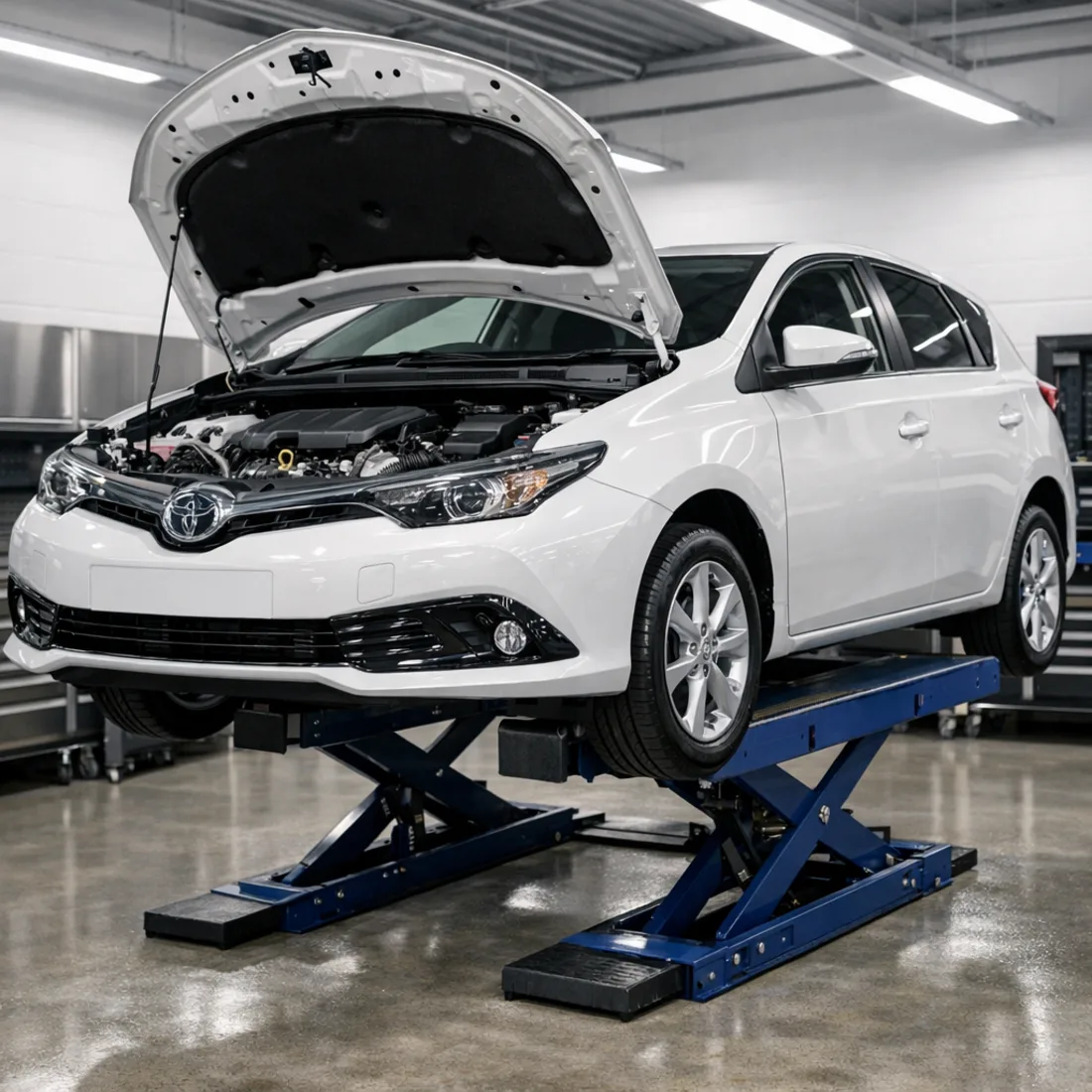
Get your Auris 1.2T booked in with a proper specialist.
Keeping the 8NR FTS Honest
The 8NR FTS requires a low viscosity fully synthetic oil that meets or exceeds the Toyota factory specification. Using the wrong grade in a turbocharged direct injection engine is not a minor issue. It affects bearing film thickness, fuel economy, and long term ring seal. We use the correct grade every time, change the filter with it, and note the current oil level to track any consumption trend. Our full car servicing covers oil and filter, air filter, cabin filter, wiper blades and a drive belt inspection as standard items on the Auris. Nothing gets forgotten because we have a proper process, not a checklist ticked through in a hurry.
Spark plugs in a turbocharged petrol engine work harder than they do in a naturally aspirated one. The 8NR FTS runs a meaningful compression ratio of 10.0 to 1 on top of boost, which means worn plugs will cause misfires, rough running and a measurable drop in fuel economy long before the engine management light comes on. We fit the correct specification plugs at the right interval. It is one of those jobs that costs very little relative to the damage a neglected plug gap causes over time.
As these Auris models age, brake pads and rotors naturally come up for replacement. Worn rotors that have gone beyond the minimum thickness do not just feel bad under braking, they extend stopping distances in a way that matters when it counts. We inspect the full brake system and carry out brake repairs with brand new parts fitted to the correct specification. Suspension bushes, wheel bearings and ABS sensors are also regular items on higher mileage cars that we check and replace as needed.
Done Properly, Not Just a Code Read
We use Toyota Techstream with the correct interface to talk to the Auris at a factory level. That means we are not limited to generic OBD fault codes. Techstream reads live data streams from the engine management, checks stored and pending faults across all modules including the transmission and ABS, and lets us run active tests to command components and watch how the system responds.
When an 8NR FTS comes in with a hesitation issue, we can watch fuel trim corrections, boost pressure in real time, and injector pulse width live while the engine runs. That is how you root cause a fault rather than guess at it. For the Denso 896xx ECU specifically, Techstream gives us the read access we need to understand what the engine is actually doing rather than what a generic reader thinks it is doing. There is a meaningful difference, and it shows in the quality of the repair.

Getting More From the Little Turbo
For owners who want the Auris to feel less like a quiet achiever and more like an engaged driver's car, we offer a Stage 1 tune for the 8NR FTS. Working through the Denso 896xx ECU, we remap the fuelling, boost and ignition timing to lift output to around 130 horsepower and 225 Nm of torque. That is a gain of 14 horsepower and 40 Nm over stock, which on a car this size transforms the in gear pull noticeably. The turbo is already there doing the work. The tune just lets it do a bit more of it, within safe limits and without compromising reliability.
Fuelling, boost pressure and ignition timing are optimised together via the Denso 896xx platform. DTC removal is available as part of the tune where applicable. Vmax adjustment is available for vehicles where the factory limiter applies. Decat option is available for off road and track use only; decat configurations may affect WOF compliance and are not suitable for road registered vehicles.
If you want to understand what that means in the real world, take a look at our power gains page for more detail on what Stage 1 delivers on this engine. Every part we fit is genuine brand new OEM or OEM grade quality, so you are not gambling on a part of unknown history in a turbocharged engine that depends on tight tolerances to run correctly.
Frequently Asked Questions
The questions we get most. Something else on your mind? Get in touch.