Toyota Hiace 2.5, 3.0 and 2.8 D-4D
The Toyota Hiace is the engine room of the New Zealand trades and delivery scene. Three generations of diesel four cylinder have powered these vans through millions of kilometres of urban stops, motorway runs and heavy loads. Each engine brought its own strengths and its own weak points, and understanding where each one sits in the story is the difference between staying on the road and getting caught out by a fault that was entirely predictable.

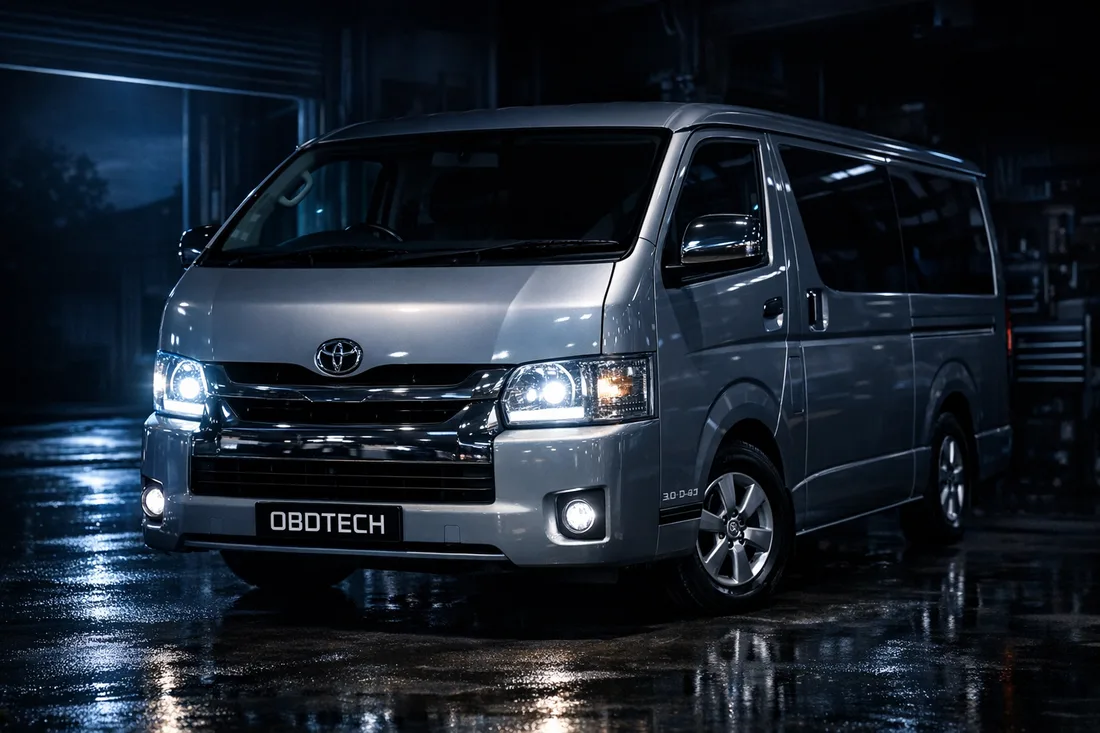
Toyota Hiace 2.5 D-4D: The Original Workhorse
The 2.5 D-4D with the 2KD FTV is where the modern Hiace diesel story starts for most New Zealand owners. It's a 2494cc four cylinder with an 18.5:1 compression ratio, 92.0 mm bore and 93.8 mm stroke, and from the factory it makes 102 hp and 260 Nm. Not a lot of numbers on paper, but this engine earned its reputation by just running. Plumbers, electricians, couriers and caterers have relied on it for years, and most of the time it delivered.
That reliability can actually work against owners. Because the van keeps going, the service book gets stretched and the early warning signs get ignored. By the time something becomes obvious it's usually well past the point where it was cheap to fix.
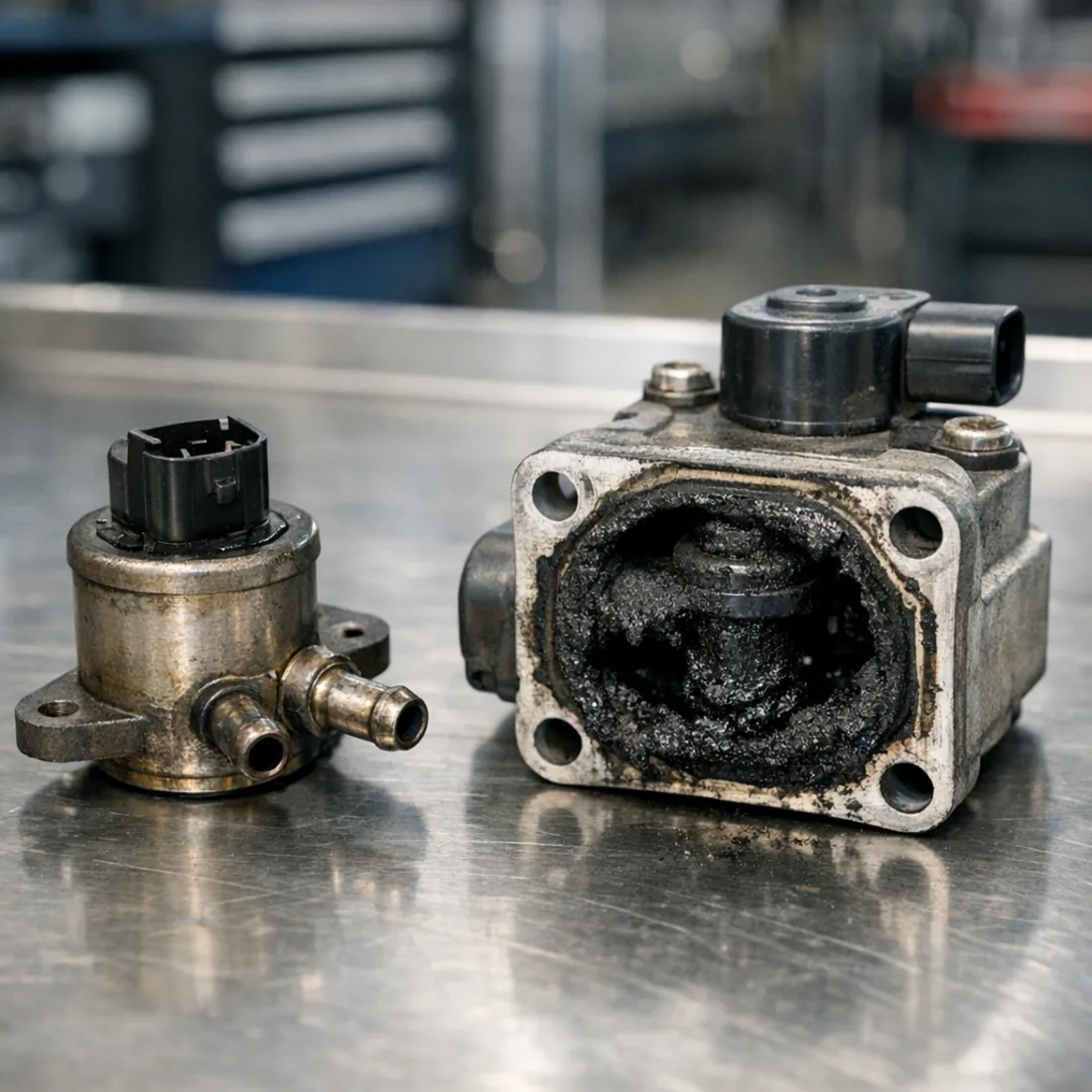
The suction control valve is arguably the most common single part failure we see on this engine. It controls fuel pressure at the injection pump, and when it starts to wear it produces exactly the kind of intermittent symptoms that owners and cheap scan tools tend to misread. A proper diagnosis with Toyota Techstream, reading live injector correction data and suction control valve behaviour, tells the real story quickly. A generic code reader rarely gives you the full picture on these.
Routine service on the 2KD FTV should include the correct diesel grade oil and filter, air filter, fuel filter, cabin filter, drive belts, glow plugs and wipers. Brake pads and rotors take a hammering on loaded vans, and suspension components wear faster than most owners expect when the van is consistently near its payload limit.
-
Suction control valve failure on the injection pump, causing hard starting, power loss and limp mode
-
Injector wear leading to rough running, smoke and higher fuel consumption
-
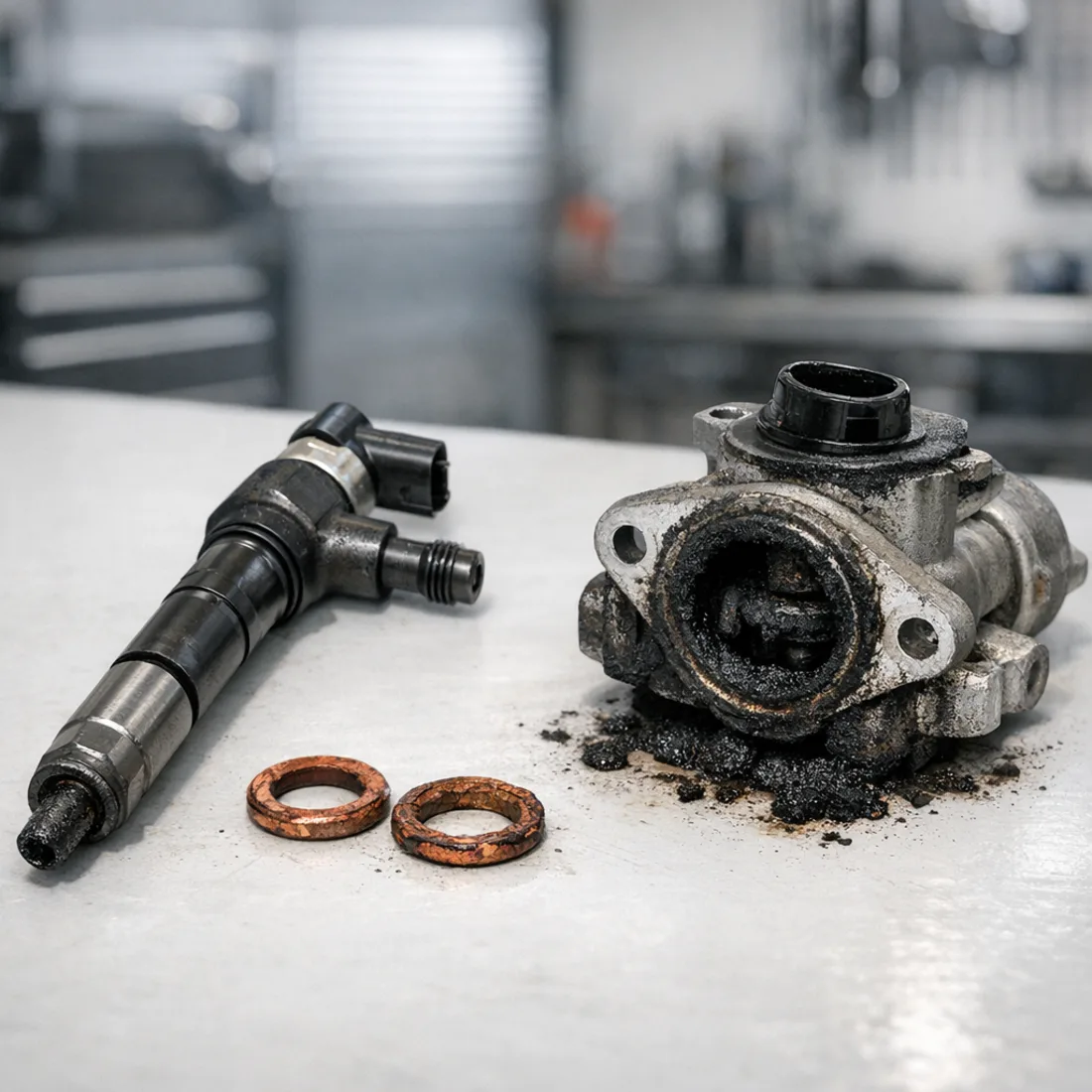
Injector seal leaks, which leave carbon build up around the injector wells
-
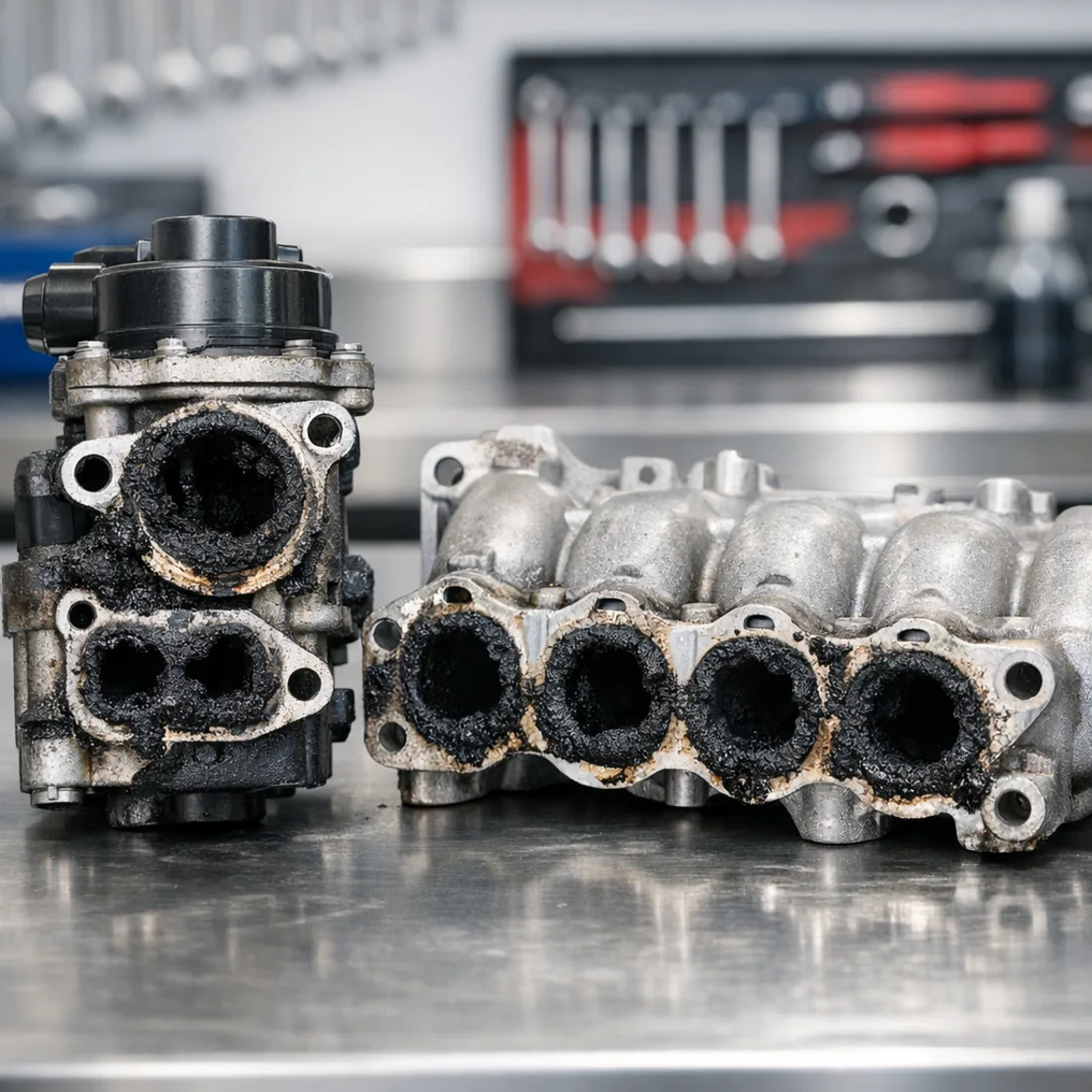
EGR valve and intake manifold carbon fouling, triggering poor running and fault codes
-
DPF clogging on vans doing constant short, low speed urban work
-
Turbo actuator and boost issues on high mileage examples that have worked hard under load
A generic code reader rarely gives you the full picture on these.
Live injector correction data and suction control valve behaviour from Toyota Techstream tells the real story quickly.
A Stage 1 tune is available for the 2KD FTV, taking output from 102 hp and 260 Nm to 132 hp and 320 Nm. On a loaded van that extra torque makes a genuine difference to drivability, particularly when merging or climbing.
Get your Hiace booked in with a proper specialist.
Toyota Hiace 3.0 D-4D: More Power, Different Problems
Toyota stepped things up with the 1KD FTV 3.0 D-4D. Capacity went from 2494cc to 2982cc, bore and stroke to 96.0 mm and 103.0 mm, compression ratio to 17.9:1, and power jumped to 170 hp and 360 Nm from the factory. It's a bigger, torquier engine and on paper it looks like the obvious upgrade over the 2.5. On a fully loaded van it genuinely feels it.
But the 1KD FTV came with its own issues, some of them more expensive than anything the 2KD FTV tends to produce. The injectors are a recurring theme, just as on the 2.5, but on the 3.0 injector seal leaks and wear patterns tend to become serious faster when the engine is worked hard. Hard starting, rough idle, smoke and crankcase contamination are the calling cards.
That head gasket and piston cracking risk is the 3.0's standout problem compared to the 2.5. The 2KD FTV will generally tell you it's unhappy before it does serious damage. The 1KD FTV under thermal stress can go further before the warning signs are obvious, and by then the repair bill is significant. Keeping the cooling system in good shape, fresh coolant, no weeping hoses, a functioning thermostat, is not optional on this engine.
We diagnose the 3.0 with Toyota Techstream, reading live injector correction values, DPF regen status and actual sensor data. The Denso ECU on this engine responds well to proper factory level tooling. If your workshop is plugging in a generic Bluetooth reader, they're working blind on the stuff that actually matters.
-
Injector wear and injector seal leaks causing rough running, smoke and hard starting
-
EGR valve and intake manifold carbon build up, similar pattern to the 2.5 but accelerated by the larger displacement
-
DPF clogging on urban duty vans that rarely get a proper run
-
Head gasket issues and cracked pistons on hard worked or overheated examples
-
Cooling system neglect, which on this engine turns minor overheating into major internal damage quickly
The 1KD FTV under thermal stress can go further before the warning signs are obvious.
Keeping the cooling system in good shape is not optional on this engine.
Stage 1 tuning on the 1KD FTV takes it from 170 hp and 360 Nm to 210 hp and 480 Nm, gains of 40 hp and 120 Nm. That transforms a loaded Hiace from something that feels sluggish under weight to something that actually drives with confidence. It's genuinely useful, not just a bragging rights number.
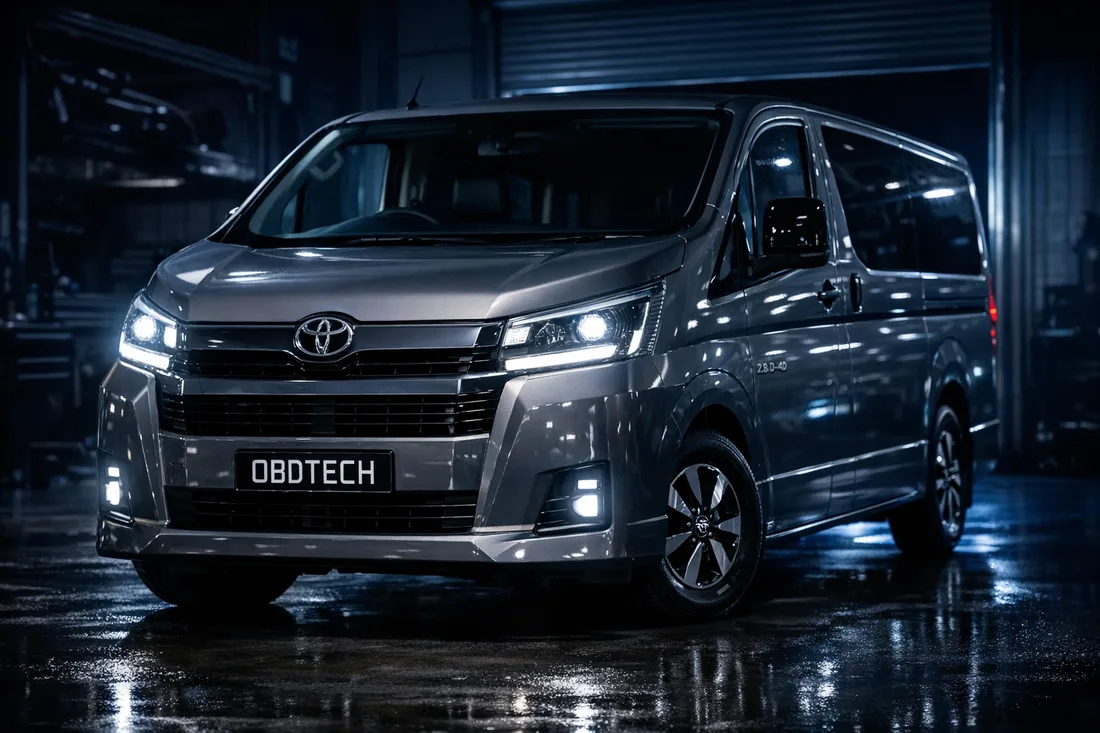
Toyota Hiace 2.8 D-4D: The Current Generation Done Right
The 2019-and later Hiace brought a completely new platform and a new engine: the 1GD FTV 2.8 litre diesel making 177 hp. It's a modern common rail unit with more sophisticated emissions hardware than either predecessor, and it feels the part. Smoother, quieter, more refined than the 3.0 it effectively replaced. But refined doesn't mean problem free, and some of the fault patterns that plagued the older engines are alive and well in a new form.
Carbon build up on the intake and EGR system is still very much a thing. The 1GD FTV is more sensitive to running conditions than the 2KD or 1KD because the emissions calibration is tighter. A van doing constant short low speed runs in Auckland traffic will clog its DPF faster than one that gets regular open road work, and the intake carbon can accumulate silently until performance drops noticeably.
The DPF situation on the 2.8 is worth understanding clearly. This engine uses a more capable forced regen function than the older units, but it needs the right tooling to run it properly. We use Toyota Techstream to execute forced regens, read live DPF differential pressure data and check injector correction values, which tells us whether a regen will solve the problem or whether the filter needs a clean. Guessing with a generic tool is how vans end up with a new DPF when a proper clean would have done the job.
Stage 1 tuning is available for the 1GD FTV for owners who want better mid range pull on a loaded van. The engine has headroom in its calibration, and the gains come through in exactly the RPM range that matters for a working van pulling away from lights or climbing a ramp.
-
Carbon build up on the EGR valve and intake manifold, often worse on fleet vans doing urban cycles
-
DPF clogging requiring forced regeneration or cleaning on vans with predominantly short run duty cycles
-
Injector wear at higher mileage, particularly on fleet examples running hard every day
-
Timing chain noise at higher mileage on hard used vans
-
AdBlue system faults where the urea injection system is fitted
Guessing with a generic tool is how vans end up with a new DPF when a proper clean would have done the job.
Toyota Techstream lets us make an informed decision before any parts are ordered.
Every tune we do is specific to the vehicle's condition. We won't tune a van that has injector issues or a partially blocked DPF, because a tune on a compromised engine doesn't produce the result the owner expects and can mask underlying problems. Get the fundamentals right first, then tune.
Buying Used: How to Pick Between the Generations
If you're shopping for a used Hiace, the generation choice matters more than most buyers realise. Here's the honest rundown.
Budget is the primary concern and the van won't be doing sustained high speed highway work. Parts are plentiful, the fault patterns are well understood and a suction control valve or injector job won't ruin you. Just know it's the least powerful of the three and a loaded van will feel it on hills.
You want serious torque from a proven older platform. 360 Nm stock and 480 Nm with a Stage 1 tune puts it in a different league from the 2.5 for loaded work. Check the cooling system history carefully. A well maintained 3.0 is a great van. A neglected one that's seen overheating events is a potential money pit. Pull the service records, check for white smoke history and get a proper pre purchase inspection done before committing.
You want the most modern platform with the best refinement and the longest remaining service life. It's more expensive used, but the engineering is newer and the emissions hardware, while more complex, is more capable when properly maintained. For a business buying a van that'll be in service for the next eight to ten years, it makes sense.
- 2.5 D-4D: best budget option, simpler repairs, lower power ceiling
- 3.0 D-4D: best torque per dollar, check cooling and injector history carefully
- 2.8 D-4D: best modern package, higher entry price, most capable platform long term
Servicing All Three Generations
All three engines share the same basic service discipline: the correct diesel spec engine oil matters, the fuel filter is not optional, and glow plugs are worth checking before winter if the van is high mileage. Beyond that each generation has its own specific intervals and fluid specs, and using the wrong oil grade on the 1GD FTV in particular can accelerate DPF issues.
Our vehicle servicing on Hiace vans covers the full schedule regardless of which generation you're running. Oil and filter, air filter, fuel filter, cabin filter, drive belts, glow plugs, wipers. We fit genuine or OEM spec parts only, not aftermarket substitutes, because on a van that earns money every day the difference in longevity matters.
Brakes deserve specific mention on working vans. A Hiace running near payload regularly will wear pads and rotors significantly faster than the service book suggests, because the book is written for average use. If your van is loaded most days, check the brakes more often than the schedule says.
Use the correct low SAPS diesel grade oil on all three engines, particularly the 1GD FTV with its DPF. Fuel filter changes are critical on all three, injector issues often start with contaminated fuel. Suspension components on loaded vans wear faster than the schedule expects, particularly rear leaf springs and shock absorbers.
How We Diagnose These Vans
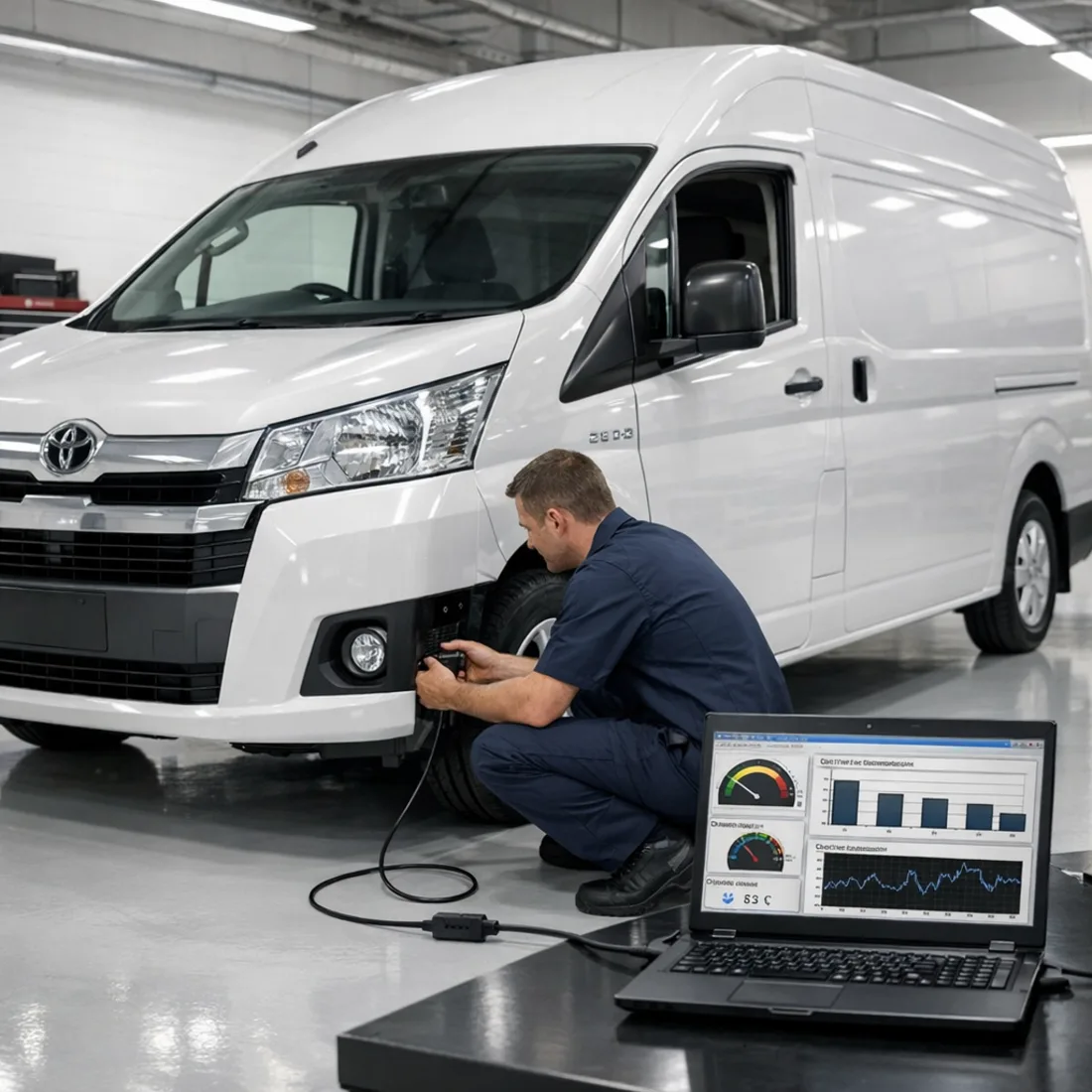
All three generations use Denso ECUs and all three respond to Toyota Techstream as the factory diagnostic tool. That matters because Techstream gives us access to live injector correction values, forced DPF regen functions, actuator tests, glow plug circuit checks and real sensor data that a generic Bluetooth reader simply can't reach.
On the 2KD FTV, Techstream lets us watch the suction control valve behaviour in real time, which is the difference between diagnosing a failing SCV correctly and guessing. On the 1KD FTV we can run live injector correction data across all cylinders and watch DPF differential pressure, which tells us whether a DPF clean or a DPF replacement is actually needed. On the 1GD FTV the forced regen function, combined with live DPF data, means we can make an informed decision before any parts are ordered.
For ECU programming, key coding and module work across all three generations, our car programming and coding service handles the full scope of what these vans need, from replacement ECU configuration through to immobiliser and key work.
The point of proper tooling is that it saves money. Every time we find a van that's had a new DPF fitted when a clean and a forced regen would have fixed it, that's a Techstream subscription paying for itself many times over. We don't guess on these vans.
Tuning Options Across the Generations
All three Hiace engines are tunable and the gains are genuinely useful on a working van rather than a purely numbers exercise.
That's a 30 hp and 60 Nm improvement, which makes a real difference when you're loaded and pulling away in traffic.
This is the most dramatic transformation of the three and the one that most visibly changes how the van feels under load.
Stage 1 is available for improved mid range pull, particularly useful for fleet operators who want better loaded drivability without engine stress.
Every tune we do is specific to the vehicle's condition. We won't tune a van that has injector issues or a partially blocked DPF, because a tune on a compromised engine doesn't produce the result the owner expects and can mask underlying problems. Get the fundamentals right first, then tune. Talk to us about a file service for your Hiace.
Frequently Asked Questions
The questions we get most. Something else on your mind? Get in touch.