Toyota Hilux Diesel: 3.0 D-4D and 2.4D, the Full Story
The Hilux has earned its place on New Zealand farms, building sites and highway runs the hard way, not through marketing but through decades of actual punishment. The 3.0 D-4D with its 1KD FTV engine carried that reputation through the mid-2010s, and the newer 2.4D with its 2GD FTV picked up the baton for the current generation. Both are genuinely capable diesels. Both have real weak spots. And if you own either one, understanding where it sits in the Hilux story tells you exactly what to watch for and when to act.


Toyota Hilux 3.0 D-4D: The 1KD FTV Era
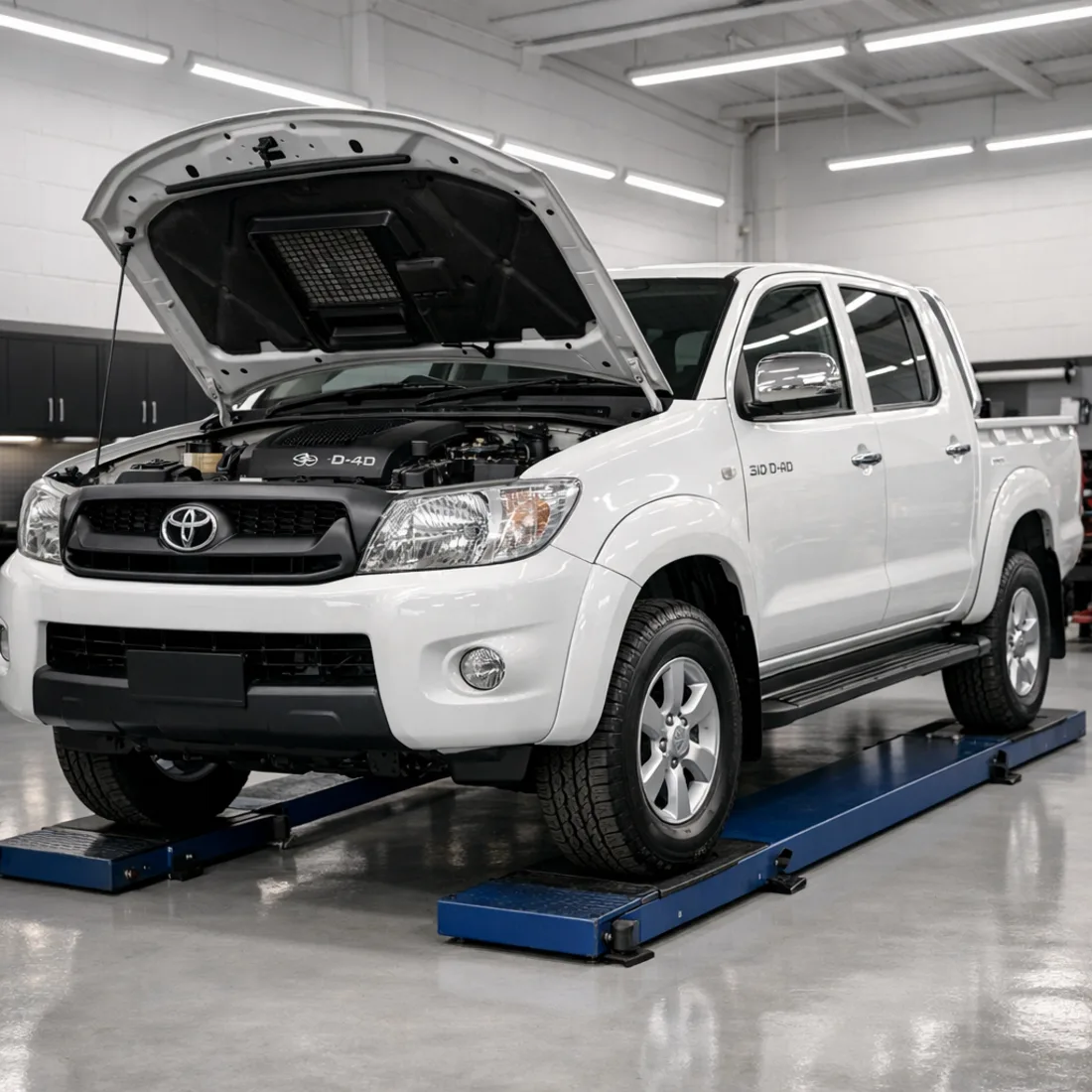
The 1KD FTV is a 2982cc straight four diesel with a 15.0:1 compression ratio and a bore and stroke of 96.0 x 103.0 mm. In the Hilux it produces 171 hp and 360 Nm of torque from the factory. That is a genuinely strong setup for a working ute, and plenty of these engines are still pulling heavy loads in New Zealand without complaint. But they have covered some serious mileage by now, and the weak points are well established.
Injector wear is the one to know. High pressure common rail injection is hard on injectors over time, and worn or leaking injectors on the 1KD FTV cause rough idle, black smoke, poor economy and hard starting. The fix is not a generic spray and hope job. We read live injection correction data with Toyota Techstream to see exactly which injector is struggling before anything gets pulled apart.
The cooling system deserves more respect than most owners give it. Head gasket and cracked piston failures on the 1KD FTV are almost always linked to overheating events, sometimes minor ones that were not caught early. If you are buying one of these used, check the coolant condition, look for white residue around the header tank and do not skip a proper compression test if the truck has covered big kilometres.
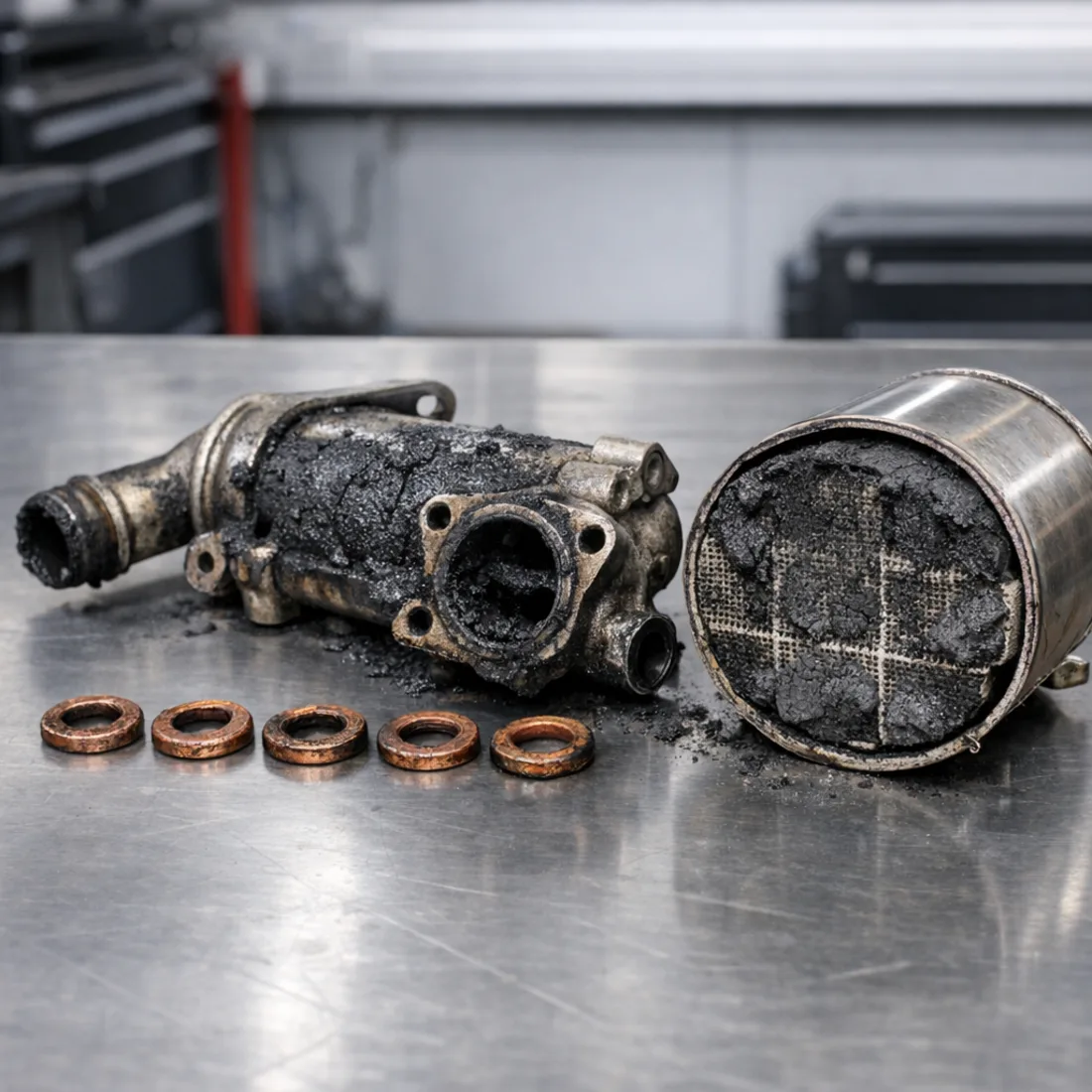
Carbon build up is the other slow burning issue. Short city runs, lots of idling and infrequent highway stints let carbon accumulate in the intake and on the EGR valve faster than you would expect. Left unchecked it leads to limp mode and rough running. We clean rather than guess on these, using forced actuator tests through Techstream to see EGR movement before we decide what the job actually is.
The 1KD FTV uses a Denso ECU (Denso 175822-887 / Denso NEC76F00xx). That matters for diagnostics and for tuning. A generic scan tool will pull fault codes but it will not give you live injection data, DPF regen status or actuator tests. Techstream does all of that, and it is what we use on every 3.0 D-4D that comes through.
-
Injector wear and seal leaks, especially from higher mileage
-
Carbon build up on the intake manifold and EGR valve
-
DPF clogging on utes doing mostly short, low speed trips
-
EGR cooler and valve gumming up over time
-
Head gasket and cracked piston issues on overheated or hard worked units
A generic scan tool will pull fault codes but it will not give you live injection data, DPF regen status or actuator tests.
Techstream does all of that, and it is what we use on every 3.0 D-4D that comes through.
Routine servicing on the 3.0 D-4D covers engine oil and filter in the correct diesel grade, fuel filter, air filter, cabin filter, drive belts, glow plugs where needed, brake pads and rotors, and suspension components that take a beating on load carrying utes. Timing chain rather than belt, but that chain still relies on clean oil at the right grade and regular intervals to stay quiet and stay timed correctly. Do not let oil changes slide on these.
For owners wanting more from the 1KD FTV, we offer a Stage 1 tune that takes output to 210 hp and 460 Nm, gains of 39 hp and 100 Nm over stock. That is a meaningful improvement in towing response and overtaking ability, and it is achieved through calibrated ECU mapping rather than rough adjustments. The truck still needs to be in good mechanical shape first, injectors included.
Get your Hilux booked in with a proper specialist.
Toyota Hilux 2.4D: The 2GD FTV Generation
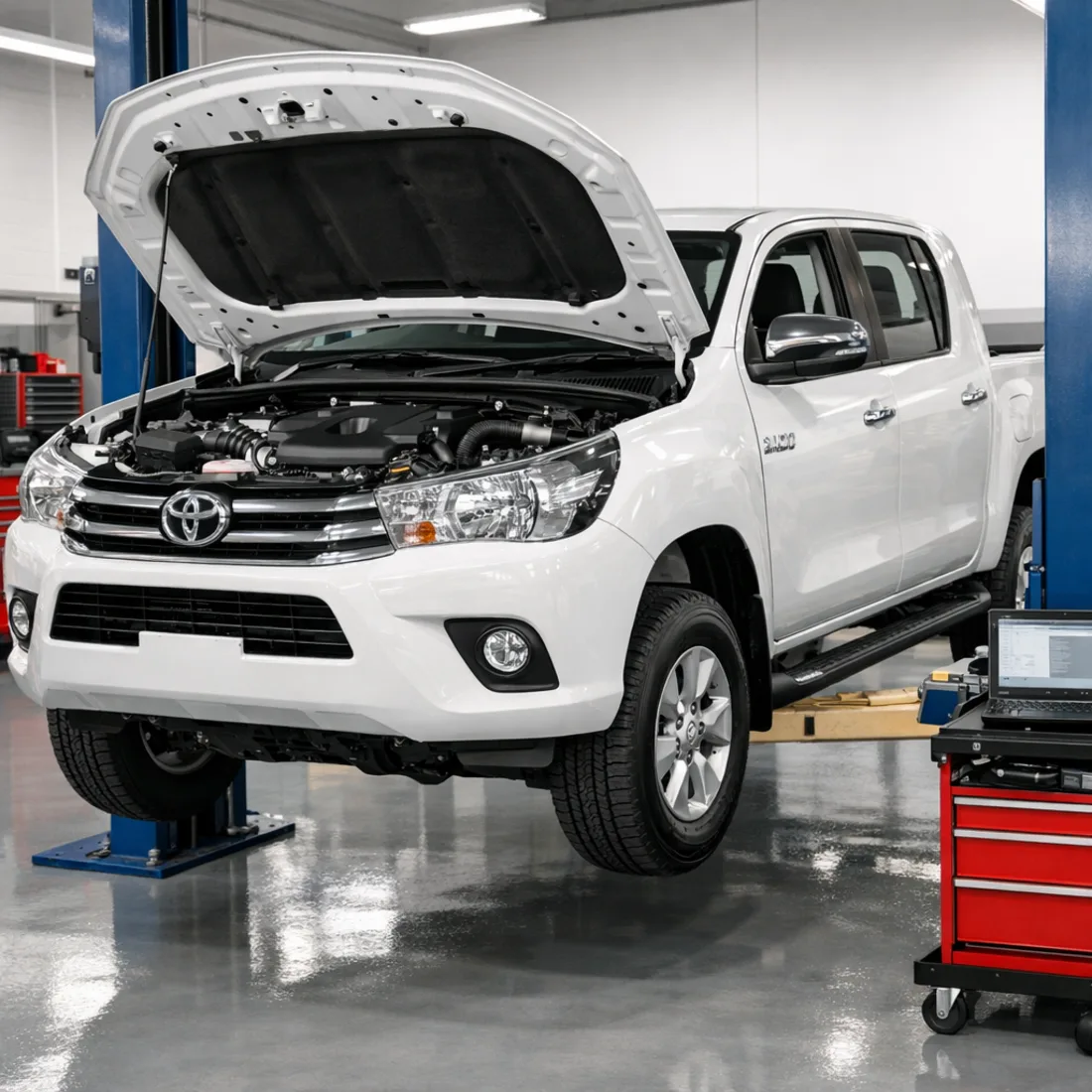
When Toyota moved to the 2GD FTV for the post-2016 Hilux, they went smaller in displacement but kept the torque competitive. The 2GD FTV is a 2393cc four cylinder diesel with a 15.6:1 compression ratio, 92.0 x 90.0 mm bore and stroke, 150 hp and 400 Nm of torque from the factory. Compared to the 1KD FTV it is a more modern design, runs through a Denso R7F701202 ECU, and the emissions hardware is more sophisticated. That last point is relevant, because it is where the 2GD FTV's problems live.
The DPF and EGR system are the headline issues on this engine, more so than on the 1KD FTV. The 2GD FTV is fitted with more extensive emissions hardware, and it needs highway kilometres and proper regen cycles to keep that hardware functioning. Utes doing school runs, short construction site hops or urban delivery work are exactly the ones that end up in limp mode with a blocked DPF and a carboned up EGR valve.
The fix is not always a replacement part. Often we run a forced DPF regen through Techstream, clean the EGR valve and cooler, and check injector correction values to confirm fuel delivery is within tolerance. That diagnosis first approach saves money and avoids replacing parts that are still serviceable. If the DPF is genuinely at end of life, we replace it with a genuine OEM unit, not a cheap substitute.
AdBlue systems appear on some variants in this generation. Where fitted, the NOx sensor, dosing pump and SCR system need proper diagnosis if a warning light appears. These are not components you want to guess on, and we handle the full system correctly rather than applying a workaround that creates downstream problems.
The 2GD FTV is a timing chain engine, which is a genuine improvement over belt driven competitors. But the chain's longevity depends entirely on consistent oil changes with the correct low ash diesel grade. Stretched or dirty oil accelerates chain wear and can upset timing, so the service intervals on this engine are not optional.
-
DPF clogging, especially on utes doing short low speed trips without proper regen
-
EGR valve and cooler carbon build up leading to limp mode
-
Intake manifold carbon accumulation over time
-
Injector and fuel system cleanliness, particularly if lower quality diesel has been used
-
Timing chain noise if oil changes have been stretched or the wrong grade used
A generic scanner might tell you a DPF pressure differential fault is present. Techstream tells you whether the DPF is at 60% capacity and needs a forced regen, or at 100% and needs replacement.
That is the difference between a job that costs you an hour of time and one that costs a multiple of that.
On the diagnostic side, the 2GD FTV responds to Toyota Techstream in the same way as the 1KD FTV: live data, forced regens, injector correction values and actuator testing. Generic scan tools will read the DTC but they will not tell you whether the DPF is at 80% capacity or 100%, or whether the EGR is moving correctly. That detail is what separates a proper fix from an educated guess.
Stage 1 tuning on the 2GD FTV takes output to 185 hp and 460 Nm, gains of 35 hp and 60 Nm. The torque figure matches the 1KD FTV's Stage 1 result, which makes the tuned 2.4D feel substantially stronger on the road than the stock figures suggest. If you are towing regularly or carrying heavy loads, the difference in throttle response and mid range pull is noticeable from the first drive. Check out our diesel tuning power gains for more on what is achievable on these engines.
Picking Between Them: Buying Advice Across the Generations
If you are shopping for a used Hilux diesel and trying to decide between the 3.0 D-4D and the 2.4D, the short answer is: the 2GD FTV is the newer, more modern design, but it punishes neglect more visibly through its emissions hardware. The 1KD FTV is the older engine and higher mileage examples are common now, but its failure modes are well understood and often cheaper to address if caught early.
You want a well understood, higher displacement engine with known failure modes. Prioritise a compression test and a check of the cooling system history. Overheated units can have latent head gasket issues that do not show up on a basic scan. Ask about injector service history and check for black smoke on cold start. A 1KD FTV with clean coolant, no smoke and tight injectors is a very capable ute, often available at a lower price point.
You want the newer, more modern design. The DPF condition is the first thing to check. A forced regen through Techstream will show you exactly where the DPF sits. A truck that has spent its life doing short Auckland runs may have a DPF close to the end of its service life even at relatively low odometer readings. The sweet spot is a 2GD FTV with documented service history, a clear DPF regen log and evidence of correct oil grades being used.
- On the 3.0 D-4D, carry out a compression test before purchase
- Check cooling system history and coolant condition on the 1KD FTV
- Look for white residue around the header tank on older 3.0 D-4D examples
- Check for black smoke on cold start, pointing to injector wear
- On the 2.4D, run a forced DPF regen through Techstream to check soot load
- Check for EGR related fault codes and any logged limp mode events on the 2GD FTV
- Confirm correct oil grades have been used on both engines
- Both engines are strong when maintained correctly; history and condition matter more than the badge
Servicing Across the Hilux Diesel Family
Both generations share more in common on the servicing side than you might expect. Correct oil grade matters enormously on both engines. The 2GD FTV specifically calls for a low ash diesel grade to protect the DPF, and using the wrong oil accelerates the blockage you are trying to avoid. On the 1KD FTV, the correct diesel grade protects the injectors and the timing chain equally.
Our full vehicle servicing for both Hilux generations covers engine oil and filter service using the correct diesel spec grade, fuel filter, air filter and cabin filter replacement, drive belt inspection and replacement, glow plug condition checks and replacement where required, brake pad and rotor inspection and replacement especially on load carrying and towing utes, suspension component inspection including ball joints and bushes, cooling system inspection and coolant condition check, and DPF and EGR inspection and cleaning where needed.
If your Hilux is doing heavy towing or load carrying, brake wear accelerates faster than the service interval assumes. We check brake condition on every service and carry genuine OEM replacement parts for both generations.
How We Diagnose Both Generations
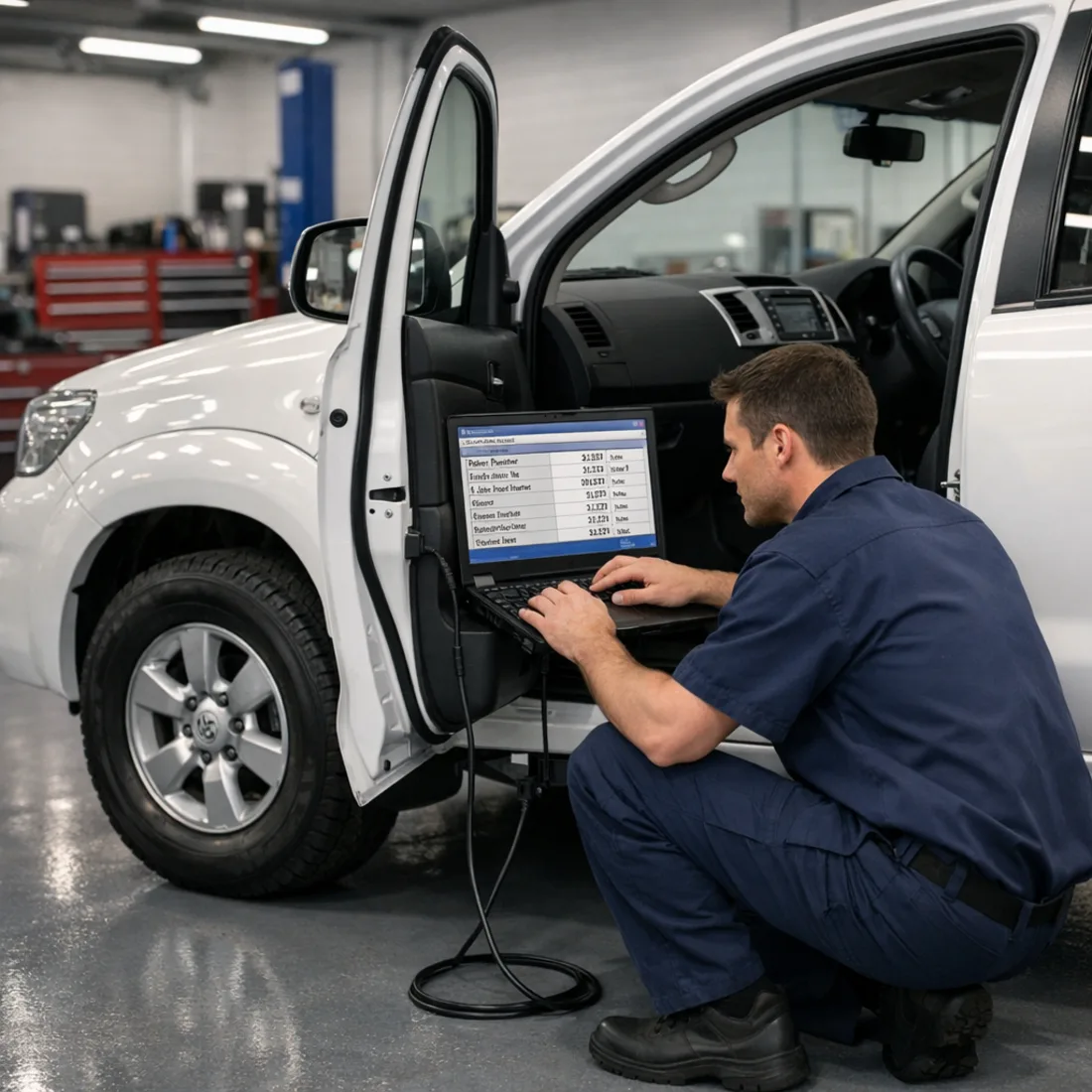
Toyota Techstream is the factory diagnostic tool for both the 1KD FTV and 2GD FTV, and it is what we use on both. Not a clone, not a generic reader. The real software gives us access to live injection correction values, DPF regen status and soot load percentages, EGR valve position and movement, glow plug circuit testing, and forced actuator tests across the whole drivetrain.
The practical difference is significant. A generic scanner might tell you a DPF pressure differential fault is present. Techstream tells you whether the DPF is at 60% capacity and needs a forced regen, or at 100% and needs replacement. That is the difference between a job that costs you an hour of time and one that costs a multiple of that. Getting the diagnosis right first is how we protect your budget as well as your engine.
For electrical faults, immobiliser issues or any ECU related work across both generations, our team handles the full Toyota diagnostic and programming stack. Both generations use Denso ECUs with different specifications, and the correct tooling for each matters when it comes to any programming or coding work involved in a repair.
Tuning: What Both Engines Can Do
Both Hilux diesel generations respond well to ECU tuning, and the results are meaningful for anyone using their ute as a working vehicle rather than just a commuter. Tuning is only worthwhile on a mechanically sound vehicle. On the 1KD FTV, we check injector condition before touching the map. On the 2GD FTV, the DPF and EGR system need to be in proper working order. A tune on a truck with a half blocked DPF is not going to give you the gains on paper, and it puts more load on components that are already struggling. We get the engine right first, then we tune it.
The 1KD FTV Stage 1 tune moves the needle from 171 hp and 360 Nm to 210 hp and 460 Nm. That is 39 more horsepower and 100 Nm of additional torque, and you feel it most on highway on ramps and when towing. The calibration is written specifically for the Denso 175822-887 / NEC76F00xx ECU rather than a generic map. The Stage 1 calibrations are written for real world working use, not track performance.
The 2GD FTV Stage 1 goes from 150 hp and 400 Nm to 185 hp and 460 Nm, gains of 35 hp and 60 Nm. Interestingly, both engines end up at the same 460 Nm torque figure after tuning, meaning the newer 2.4D effectively closes the gap on the older 3.0's factory advantage. The tune is written for the Denso R7F701202 ECU. If you are towing regularly or carrying heavy loads, the difference in throttle response and mid range pull is noticeable from the first drive.
Both ECUs are Denso units with the specific part numbers noted for each generation, and our tuning files are written for those exact hardware variants rather than generic maps. Visit our tuning page for the full breakdown of what is available across both Hilux generations, or browse diesel tuning power gains to see what is achievable.
Frequently Asked Questions
The questions we get most. Something else on your mind? Get in touch.