VW Crafter: 2.5 TDI, 2.0 TDI 163hp and 2.0 TDI 140hp
The Crafter is one of those vans that earns its keep so quietly you only notice it when it stops. Three distinct generations have worn that badge, each with a different engine, a different ECU family and a different set of habits that reward knowing about them before something fails on the Southern Motorway. This page covers all three, what they share, what changed between them, and what our workshop sees on the hoist week after week.
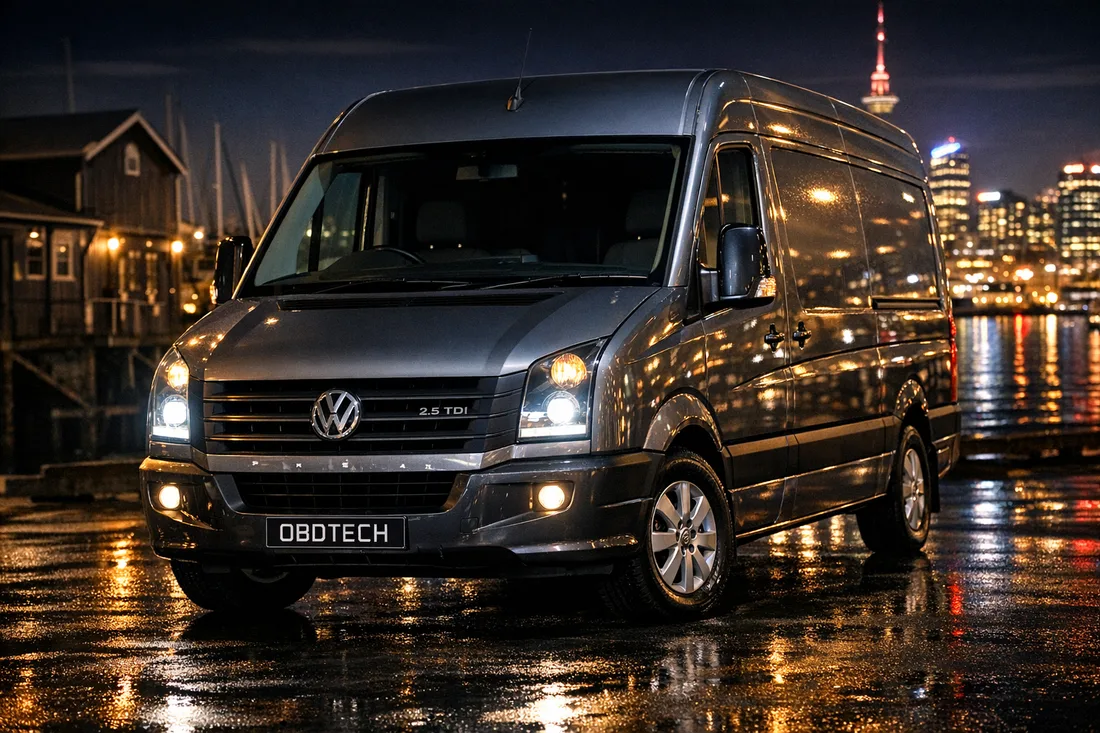


Crafter 2.5 TDI (Engine Code BJK, 109hp)
This is where the Crafter story starts for most New Zealand operators. The BJK is a 2461cc five cylinder with a 16.8:1 compression ratio and an 81.0 x 95.5 mm bore and stroke. Stock figures are 109hp and 280Nm, which is honest but not overwhelming in a fully loaded van. The ECU is a Bosch EDC16CP34 or EDC17CP20, depending on build date, and that matters because a generic scan tool will talk to neither of them properly.
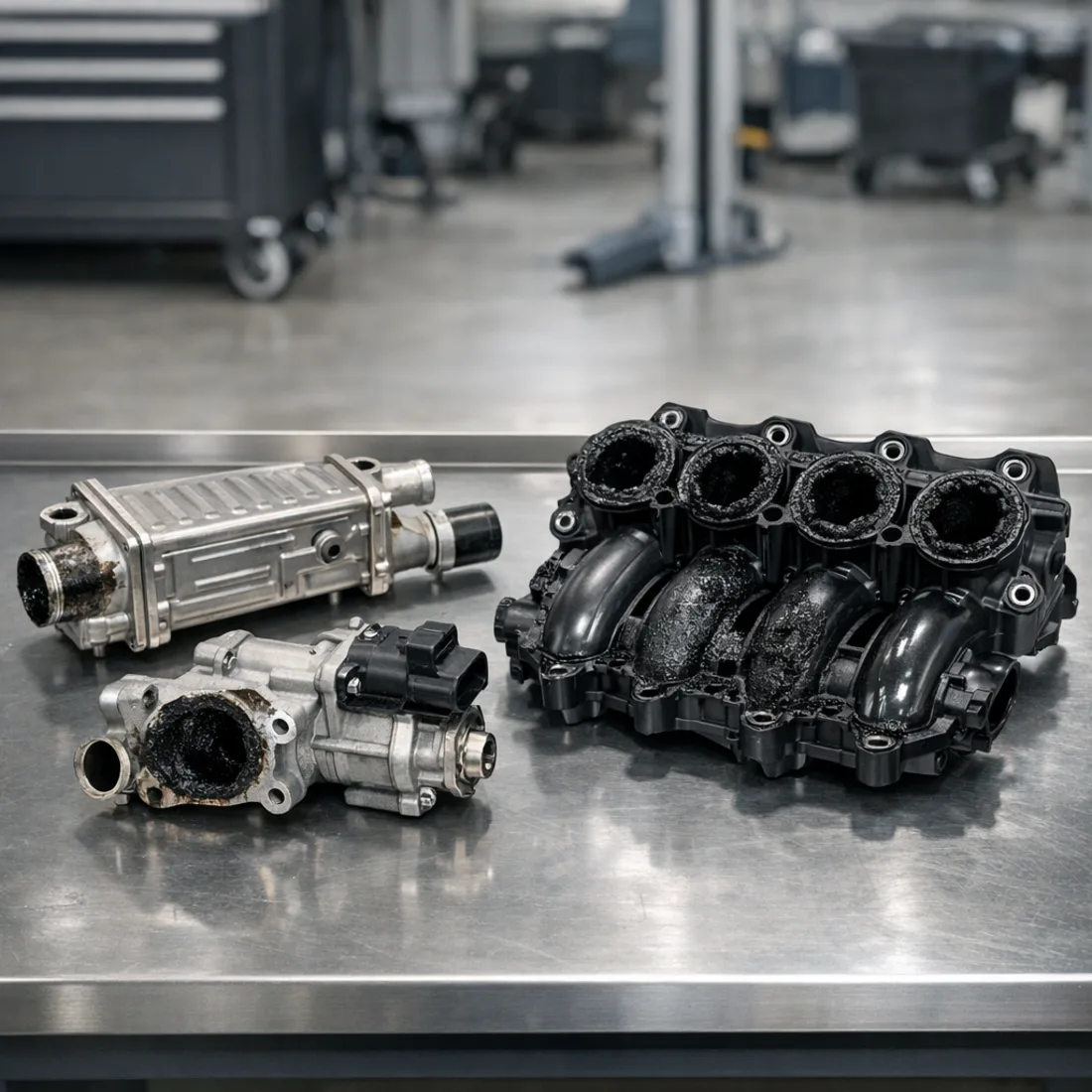
The five cylinder character is distinctive, and so are the weak points. Injector wear and injector seal leaks show up as rough running and hard starts, often long before a fault code appears. The turbo actuator and EGR valve both accumulate problems from the kind of stop start Auckland work this van typically does. Soot build up in the intake is a natural consequence of a clogged EGR, and by the time the driver notices a power loss it has usually been building for a while.
-
Injector wear and seal leaks causing rough running and hard starts
-
Turbo actuator faults and boost pressure issues under load
-
EGR valve clogging and intake soot build up
-
Dual mass flywheel and clutch wear on higher mileage loaded vans
-
Timing chain tensioner rattle on cold start
A worn tensioner will rattle on cold start and that rattle deserves immediate attention.
Chain repairs on this engine are not cheap if you leave them too long.
One thing worth calling out on the BJK is the timing setup. It is chain driven, which sounds like good news, but a worn tensioner will rattle on cold start and that rattle deserves immediate attention. Chain repairs on this engine are not cheap if you leave them too long. The dual mass flywheel and clutch take a particular beating in vans that spend their lives fully loaded, so if you are buying one used, budget for those components if they have not been replaced.
We use genuine VW ODIS on the BJK, not a generic reader. That means we can read injector coding, run actuator tests and pull proper service data rather than guessing from a generic fault list. From a tuning standpoint, a Stage 1 file on the BJK takes output from 109hp and 280Nm up to 140hp and 350Nm, which makes a real difference to how the van pulls from low revs when it is loaded. That gain of 31hp and 70Nm transforms daily usability without touching the drivetrain.
Get your Crafter booked in with a proper specialist.
Crafter 2.0 TDI 163hp (Engine Code CKUB)
VW moved to a 1968cc four cylinder common rail for the next generation Crafter, dropping the five cylinder but turning up the numbers significantly. The CKUB puts out 163hp and 400Nm from the factory, with a 16.0:1 compression ratio and the same 81.0 x 95.5 bore and stroke as the BJK. The ECU moved on too, with Bosch EDC17C54 or EDC17C64 units depending on variant. This is a more modern platform, and in most respects a better one, but it brought its own set of habits.
The switch from a five cylinder to a four means the CKUB sits closer to a car derived architecture, which is reflected in how it behaves on the road. It is smoother and more refined than the BJK at motorway speeds. What did not change is the operating environment: it still spends most of its life doing short urban runs in a van that rarely gets above 60km/h for long enough to complete a proper DPF regeneration cycle.
-
EGR valve clogging and heavy carbon build up in the intake tract
-
DPF loading and failure to regenerate on short urban routes
-
Timing chain wear on higher mileage examples, rattle on cold start
-
Injector and fuel system problems from poor fuel quality
-
Turbo actuator and boost pressure faults under load
On the tuning side the CKUB responds extremely well to a Stage 1 file: 163hp and 400Nm climbs to 225hp and 485Nm.
Owners who tow or carry consistent heavy loads notice it immediately.
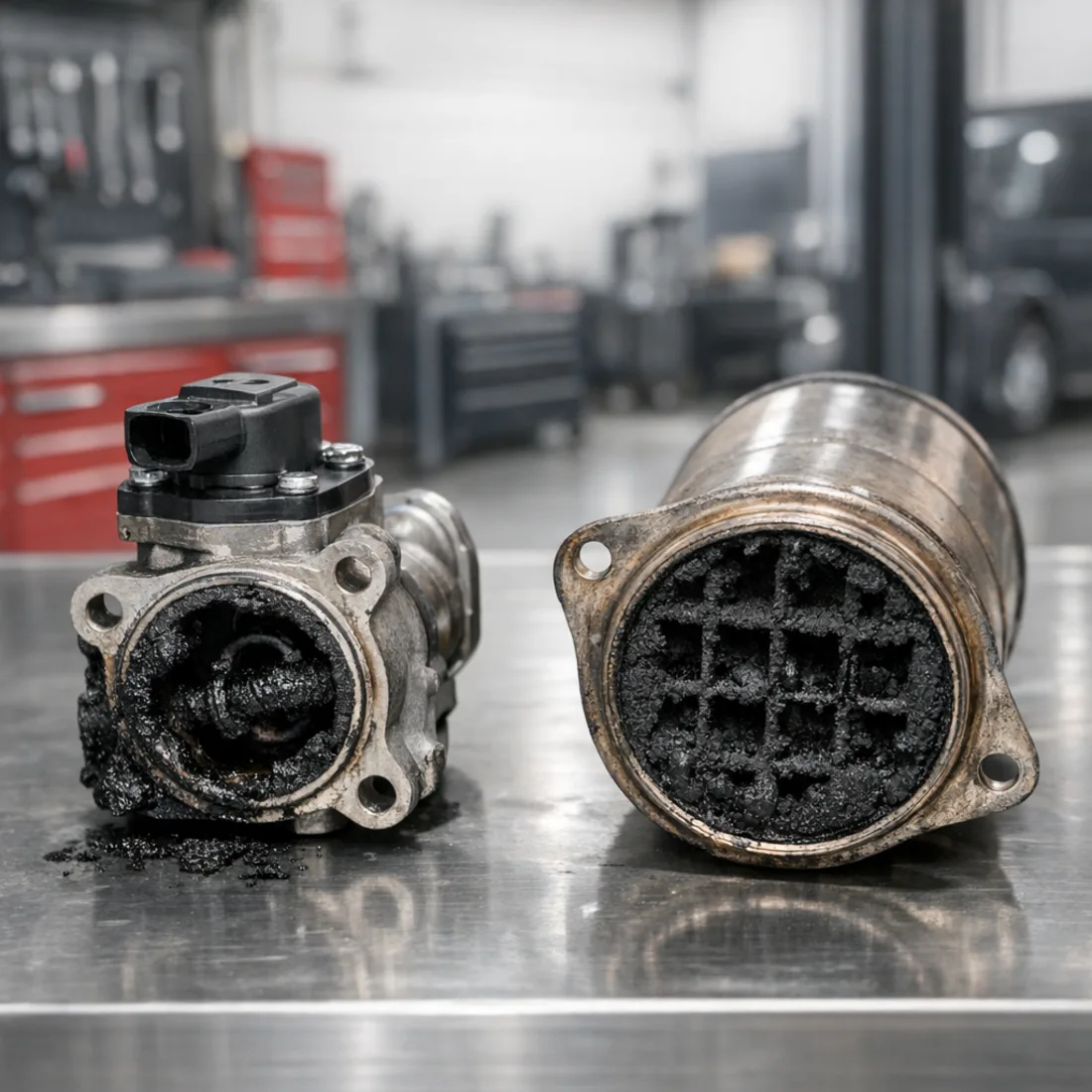
The EGR and DPF story on the CKUB is familiar from the BJK but more acute, because the common rail system runs at higher pressures and the soot output when the engine is not up to temperature is significant. Carbon fouling in the intake is one of the most consistent things we see on these vans. If the van has never had the EGR circuit cleaned, assume it needs it.
Timing chain wear is something to verify before buying a used CKUB. Listen for rattle on cold start. It is chain driven like the BJK, and the same principle applies: a worn tensioner caught early is manageable; a chain that has skipped is a much bigger job. Our ODIS setup handles the EDC17C54 and EDC17C64 natively, which means live data, guided fault finding, adaptation resets and forced DPF regeneration are all available rather than the approximations a generic reader offers. That distinction matters when you are chasing an intermittent boost fault or trying to work out whether a DPF needs cleaning or replacement.
Crafter 2.0 TDI 140hp Euro 6 (Engine Code DAUA)
The DAUA is the most recent engine in this lineup and the most emissions regulated. It is also 1968cc with a 16.0:1 compression ratio and the same bore and stroke as the CKUB, but the Euro 6 certification added a full SCR (selective catalytic reduction) system with AdBlue dosing on top of the DPF and EGR that the CKUB already had. Stock output is 140hp and 340Nm, which is lower than the CKUB despite being the newest engine, partly because the calibration is tuned to emissions compliance over outright performance. The ECU is a Bosch EDC17C64 or Delphi DCM6.2.
Compared to the CKUB, the DAUA is a more complex vehicle to diagnose and service. More sensors, more actuators, more systems interacting. The AdBlue and NOx system is the biggest new variable: when the SCR is not performing correctly, the van will derate or enter limp mode, and the fault codes can be misleading if you are not reading them with proper factory tooling.
-
DPF and EGR clogging from short urban delivery routes without a full regeneration cycle
-
AdBlue dosing faults and NOx sensor failures triggering limp mode
-
EGR cooler problems and turbo actuator issues under load
-
Injector wear as kilometres climb
-
Timing belt service interval, which is different from the chain driven BJK and CKUB
One fundamental difference from the earlier generations: the DAUA uses a timing belt, not a chain.
Book that service before the interval, not after.
The emissions system is where most DAUA owners end up at our door. The combination of DPF, EGR and AdBlue/SCR means there are three interdependent systems that can each trigger warning lights, and they interact in ways that a generic reader simply cannot trace accurately. We use ODIS with the DAUA, which lets us force DPF regenerations, reset AdBlue counters, run NOx sensor tests and read live SCR efficiency data. That is the only way to properly diagnose a limp mode event on one of these vans.
Despite being the most emissions constrained of the three generations, the DAUA still responds well to a Stage 1 tune. From 140hp and 340Nm it moves to 175hp and 400Nm, a gain of 35hp and 60Nm. For a van doing regular towing or heavy load work in Auckland, that is a meaningful improvement in usable torque from low in the rev range where vans spend most of their time.
Picking Between Them: Used Buying Guide
If you are shopping for a used Crafter and have flexibility on which generation to buy, here is an honest breakdown.
You want the simplest architecture of the three. No AdBlue, a more straightforward ECU and a proven five cylinder that, looked after, can cover big mileages. Budget for injectors, a dual mass flywheel and potentially a timing chain tensioner on older high mileage examples. At the right price it is still a solid workhorse, and the Stage 1 tune from 109hp to 140hp makes it genuinely pleasant to drive loaded.
You want the sweet spot for used buyers. More power than the BJK, no AdBlue complexity, and the common rail system responds exceptionally well to a tune. Verify EGR and DPF condition and timing chain health. If those check out on a service history showing regular oil changes with the correct grade, it is a capable van. The tuning headroom from 163hp to 225hp is the best of the three generations by a margin.
You need a newer vehicle, lower emissions compliance or a fresher warranty situation. Go in knowing the AdBlue and SCR system adds a layer of complexity and ongoing maintenance cost. Short run urban delivery work is particularly hard on its DPF. Make sure any used example has a clear AdBlue and DPF service history, and check the NOx sensors have not been bodged.
- Injectors, dual mass flywheel and timing chain tensioner on the BJK
- EGR and DPF condition and timing chain health on the CKUB
- Clear AdBlue and DPF service history on the DAUA Euro 6
- NOx sensor integrity on DAUA units
- Regular oil change history with the correct low SAPS diesel grade across all three
Servicing All Three Generations
Routine servicing is where the generations converge more than they differ. All three run diesel, all three benefit from the correct low SAPS oil grade, and all three will suffer accelerated wear if that is substituted for a cheaper alternative. We stock and fit genuine and OEM spec parts only, which matters on commercial vehicles where a substandard filter or belt is carrying real operating loads.
Standard car servicing across the Crafter range covers engine oil and filter using the correct diesel grade for the specific engine, fuel filter, air filter and cabin filter, drive belts and timing belt on the DAUA (timing chain inspection on BJK and CKUB), glow plugs, brake pads and rotors, and EGR cleaning, DPF servicing and AdBlue system resets where applicable.
Brake wear on all three deserves a mention. A loaded Crafter doing delivery runs is far harder on its brakes than a car covering the same distance. We see pads and rotors at the replacement threshold on vans with surprisingly modest odometer readings. Our brake repairs service covers the full axle on all three generations, and it is worth getting both axles checked at each service rather than waiting for a wear indicator to come on.
How We Diagnose Crafter Problems
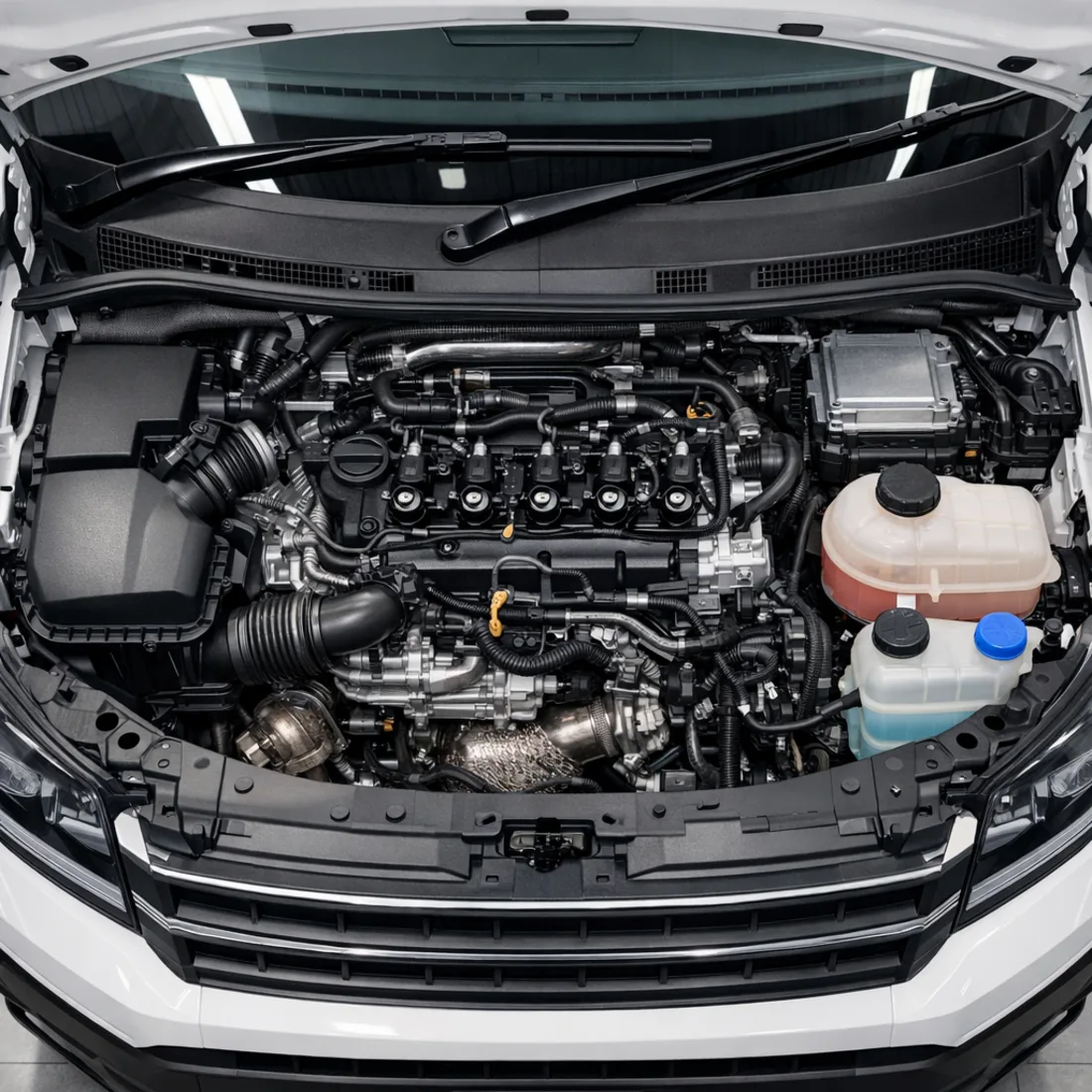
All three generations respond to genuine VW ODIS, and that is what we use. Not a universal aftermarket reader, not a Bluetooth dongle. ODIS talks to the Bosch EDC16CP34 and EDC17CP20 in the BJK, the EDC17C54 and EDC17C64 in the CKUB, and the EDC17C64 and Delphi DCM6.2 in the DAUA. Each of those ECUs has guided functions, adaptation channels and live measurement blocks that a generic tool simply does not reach.
In practice that means: we can read actual injector correction values and spot wear before it becomes a hard fault. We can run turbo actuator tests under controlled conditions. We can force a DPF regeneration and watch the soot load drop in real time. We can reset AdBlue counters and run NOx sensor diagnostics rather than guessing at SCR faults. And we can check glow plug response times, which is one of the cheapest things to fix if caught early and one of the most inconvenient faults in a morning delivery schedule if not.
For electrical faults, wiring and sensor work across the Crafter range, our auto electricians team handles everything from sensor replacements to full wiring diagnosis on all three generations. Commercial vans accumulate electrical wear in ways passenger cars do not, particularly around body harnesses and the additional circuits that get added for racks, lighting and refrigeration.

Tuning the Crafter: What Changes and What Does Not
All three generations are tuneable at Stage 1, and all three benefit from the same thing: more usable torque low in the rev range, which is exactly what a loaded van needs most. The CKUB has the most headroom of the three. The DAUA sits between them after a tune and its gains come with the caveat that the Euro 6 emissions systems need to be in good health before tuning makes sense. We sort the mechanical platform first.
A Stage 1 file on the BJK transforms daily usability without touching the drivetrain. The gain of 31hp and 70Nm makes a real difference to how the van pulls from low revs when it is loaded.
The CKUB responds extremely well to a Stage 1 file. That is a substantial improvement in real world pulling power, and owners who tow or carry consistent heavy loads notice it immediately.
Despite being the most emissions constrained of the three, the DAUA still responds well to a tune. For a van doing regular towing or heavy load work in Auckland, that is a meaningful improvement in usable torque from low in the rev range.
Tuning a van with a partially blocked DPF or a misfiring AdBlue injector is not the right order of operations. Contact us about a file service and we will check the platform before writing any file.
Frequently Asked Questions
The questions we get most. Something else on your mind? Get in touch.