Volkswagen Touran 2.0 TDI: Servicing, Diagnostics and Repairs Done Properly
Family MPVs are a bit like fridges. You load them up, run them hard, and never really think about them until something goes wrong. The Volkswagen Touran does a genuinely impressive job of being invisible that way, quietly hauling school bags and football boots around Auckland with a composed dignity that most seven seaters can't match. But the EA288 engine underneath, the 2.0 TDI in its 190hp DFHA tune, has a handful of quirks that catch owners off guard, usually at the worst possible moment. We know this engine well. Here is what to watch for and how we keep yours running the way VW intended.

One Engine, Done Right
The Touran in this specification runs a single powertrain: the 1968cc EA288 2.0 TDI, engine code DFHA, producing 190hp and 400Nm from the factory. The brain managing all of that is a Bosch EDC17C64 or EDC17C74 ECU, depending on the build. Bore is 81.0mm, stroke is 95.5mm, and compression sits at 18.0:1, which gives you a sense of how hard this engine works to extract diesel energy efficiently.
The drive belt layout matters here, because unlike some diesel engines that use a chain, this one runs a cambelt. That is a service item with a finite life, not a set and forget component. Miss the interval and you are looking at the kind of internal damage that turns a maintenance bill into an engine rebuild quote. We keep close track of that interval for our customers.
-
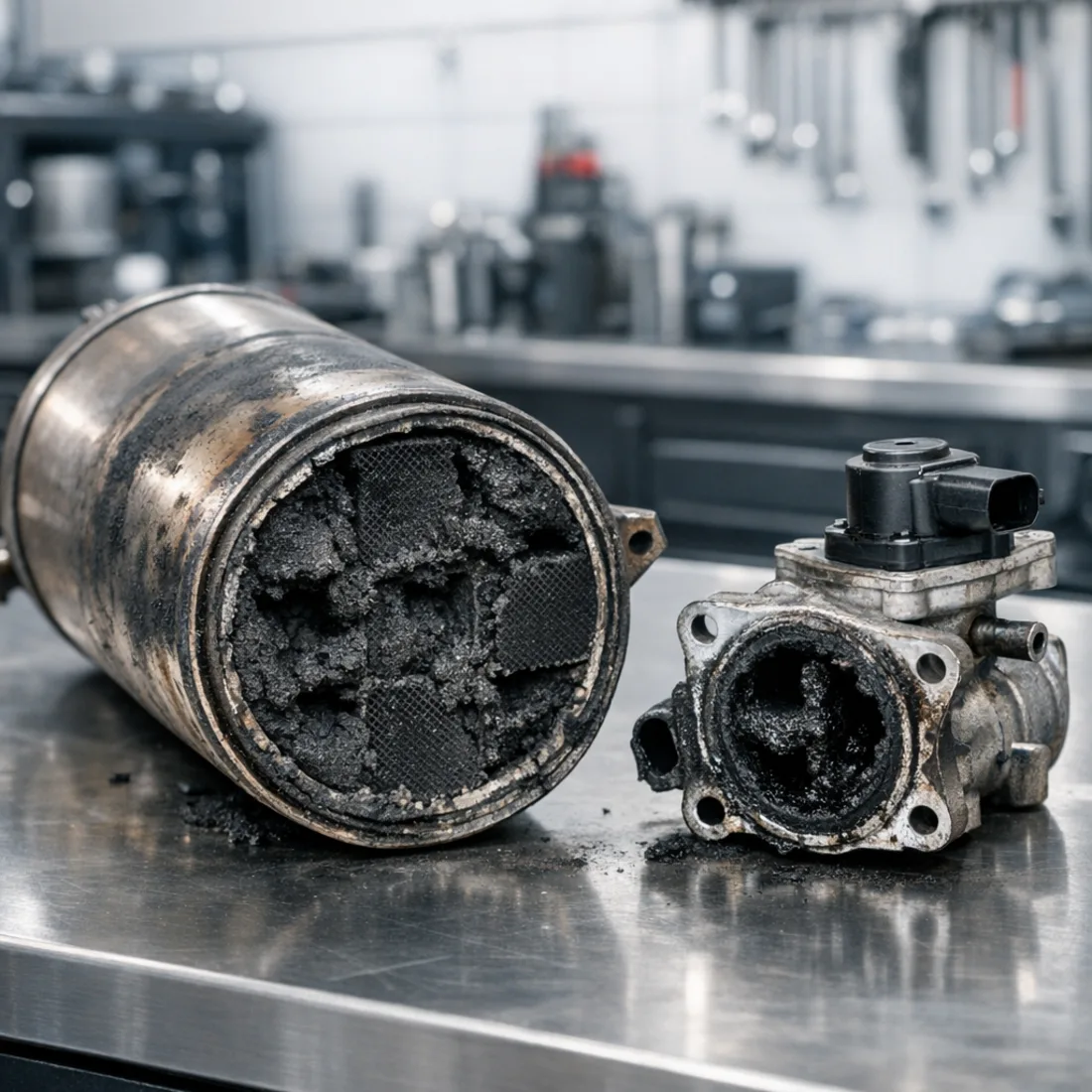
EGR valve sticks and cooler develops internal leaks, causing rough idle, black smoke, and an amber engine management light. A weeping EGR cooler can push coolant into the intake tract, resulting in white smoke and a coolant level that keeps dropping.
-
DPF clogging on short urban runs. The filter fills up, the warning light comes on (amber first, progressing to red), and the car goes into a power limited limp mode when the engine never gets hot enough to complete a regeneration cycle.
-
AdBlue and SCR system warnings from faulty NOx sensors, a failing AdBlue dosing pump, or contaminated fluid. If ignored, the system counts down to a hard engine start restriction built in by VW.
-
Intake carbon build up on the manifold flaps and inlet ports caused by EGR recirculation. The flaps stick, airflow is restricted, and the engine develops hesitation under load and rough cold starts that worsen gradually.
Clearing a DPF fault with a generic tool and calling it done is not a diagnosis.
ODIS lets us see exactly what the soot loading is, what the differential pressure sensor is reporting, whether a forced regen completed or aborted, and why.
We use ODIS, the factory VW diagnostic platform, not a generic aftermarket reader. That matters because ODIS reads the full fault memory across every control module in the car, runs guided fault finding routines, accesses live data from the EDC17 ECU in real time, and can perform the output tests and adaptations that the repair actually requires.
ODIS lets us see exactly what the soot loading is, what the differential pressure sensor is reporting across the filter, whether a forced regen completed or aborted, and why. For the SCR system, it reads the NOx sensor values upstream and downstream so we can tell whether the catalyst is actually converting, or whether the dosing system has stopped injecting AdBlue entirely. That level of detail is what separates a proper fix from a parts swap that fails again in three months.
Get your Touran booked in with a proper specialist.
Routine Servicing Worth Booking
The DFHA engine requires a full synthetic low SAPS oil that meets VW's 507.00 specification. This is not a detail to gloss over. The 507.00 spec is specifically required for diesel engines with a DPF, because conventional or even many high quality oils leave an ash residue that accelerates filter clogging. Using the wrong oil is one of the fastest ways to shorten the life of your DPF. We use the correct grade, every time, with a fresh filter to match. Our full car servicing for the Touran covers every item the engine needs at the right interval.
Beyond the oil service, we work through air filter replacement (checking the housing seal while we are in there), fuel filter service which directly affects injector longevity, cabin pollen filter, wiper blades and washer system check, glow plug inspection and replacement for reliable cold starting on a diesel, drive belt and tensioner inspection, and cambelt and water pump renewal at the correct service interval.
Brake wear is another area we cover thoroughly. The Touran carries real weight when loaded, and the braking system works for it. Worn pads scrubbing against rotors that are past their minimum thickness is a combination that increases stopping distances noticeably, and that is before you consider the heat management issues that come with glazed or warped rotors. Our brake repair service covers front and rear pad replacement with correct bedding in procedure, rotor machining or replacement to spec, brake fluid flush, handbrake adjustment and caliper slide pin service, and wheel bearing and hub inspection while the wheel is off.
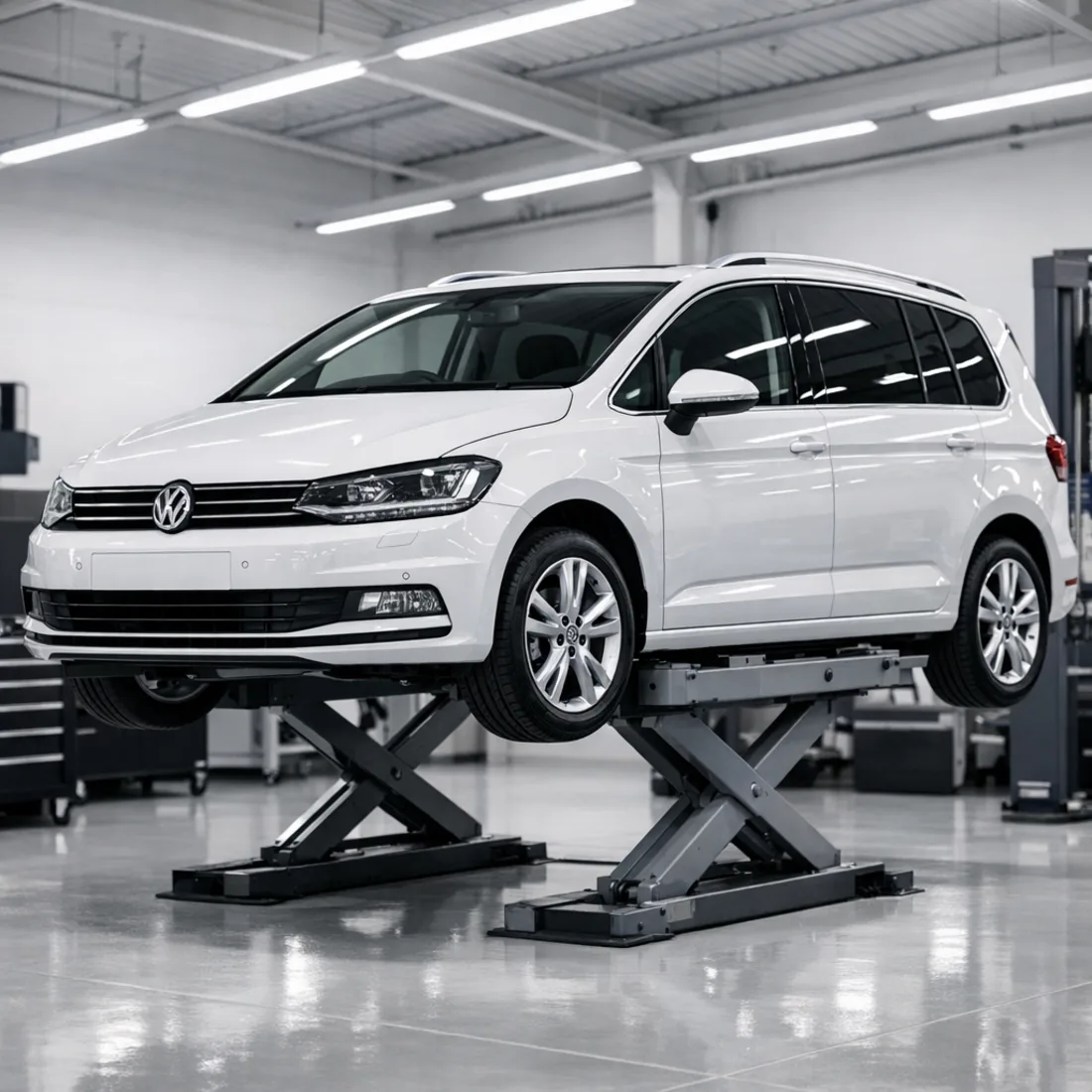
We also handle clutch replacement on manual gearbox variants and full DSG servicing for dual clutch equipped cars, including the mechatronic unit checks that the DSG needs at higher mileage. Suspension components, including control arm bushes, ball joints and shock absorbers, are all part of our mechanical repairs scope too.
How We Actually Diagnose It
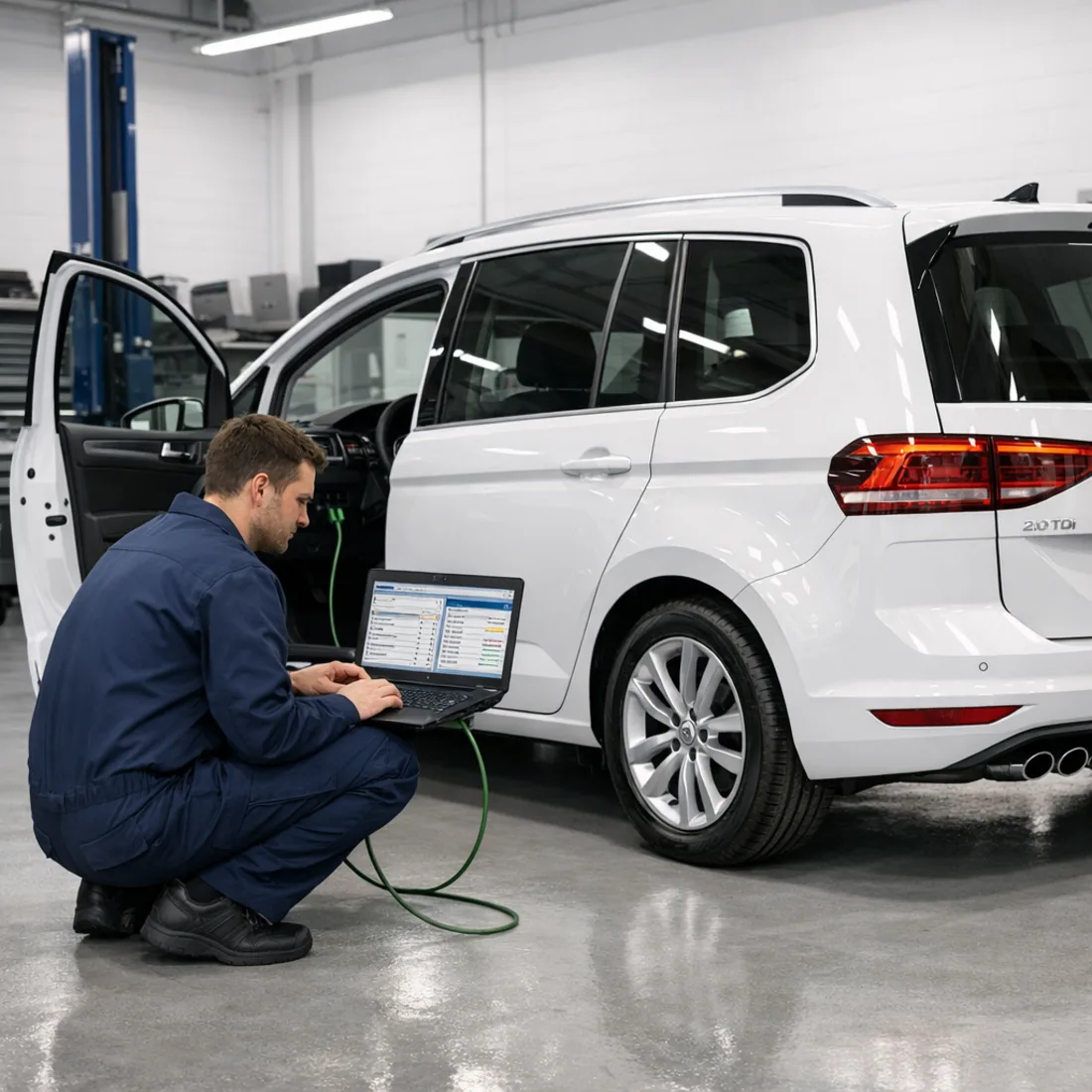
We use ODIS, the factory VW diagnostic platform, not a generic aftermarket reader. That matters because ODIS reads the full fault memory across every control module in the car, runs guided fault finding routines, accesses live data from the EDC17 ECU in real time, and can perform the output tests and adaptations that the repair actually requires. Clearing a DPF fault with a generic tool and calling it done is not a diagnosis.
ODIS lets us see exactly what the soot loading is, what the differential pressure sensor is reporting across the filter, whether a forced regen completed or aborted, and why. For the SCR system, it reads the NOx sensor values upstream and downstream so we can tell whether the catalyst is actually converting, or whether the dosing system has stopped injecting AdBlue entirely. That level of detail is what separates a proper fix from a parts swap that fails again in three months.
More Power From the Same Engine
The DFHA was not tuned to its limit from the factory. There is room in the Bosch EDC17 to work with, and we offer a Stage 1 ECU remap that brings the output up to 225hp and 460Nm, a gain of 35hp and 60Nm over stock. The difference is felt most strongly in the mid range pull at motorway speeds and when overtaking, where that extra torque makes the engine feel noticeably more relaxed and confident.
Stage 1 runs on standard hardware with no hardware modifications required. It is a clean, mapped file written to the ECU through the OBD port. Additional options include a Pop and Bang crackle map, Start/Stop system disable coding, speed limiter adjustment, and DPF, EGR and intake flap related software work for off road or track use only (note: defeat or removal of these systems affects WOF compliance and is not street legal). All tuning work is done under logged road test conditions so the result is verified, not assumed. We read the live data back through ODIS after any ECU work to confirm the engine is running cleanly at its new calibration.
Explore the specifics on our ECU tuning page if you want the full picture on what is involved and what to expect. We fit genuine OEM and OEM grade brand new parts as standard across all our servicing and repair work.
Frequently Asked Questions
The questions we get most. Something else on your mind? Get in touch.