Volkswagen Eos 1.4 TSI: Servicing, Diagnostics and Repairs Done Properly
Picture a warm Auckland afternoon, the Eos roof folding away into its own boot like a mechanical origami trick, and you're thinking this is exactly what a car should be. It's a clever machine. A four seat convertible that also happens to carry a turbocharged 1.4 litre petrol engine, a panoramic glass sunroof, and enough electronic sophistication to keep a small IT department busy. The trouble is, clever machinery needs careful attention, and the Eos rewards owners who stay on top of it and quietly punishes those who don't. That's where we come in.

One Engine, and What You Need to Know About It
The New Zealand market Eos from 2011 to 2013 runs the 1.4 TSI with engine code CAX. It's a 1390cc four cylinder, direct injection, turbocharged petrol unit producing 122 horsepower and 200 Newton metres of torque from the factory. Bore and stroke sit at 76.5mm by 75.6mm with a 10.0:1 compression ratio, and the ECU is either a Bosch MED17.5.20 or a Bosch MED17.5.5 depending on the specific build. This is the single charger version of the engine, not the twin charged unit found in other VAG models, which means it's actually a fairly straightforward setup. Straightforward doesn't mean trouble free, though.
The CAX engine uses a timing chain rather than a belt, and many owners assume that means it's a fit and forget item. It isn't. On higher mileage examples the chain and its tensioner can stretch or weaken, and when that happens the symptoms start subtly: a rattling noise on cold start that fades after a minute, maybe a slightly rough idle. Ignore it long enough and the chain can skip a tooth, at which point you're looking at bent valves and a very different conversation about repair costs. If you hear that cold start rattle, treat it seriously and get the timing components inspected before the damage escalates.
Direct injection is efficient, but it has a well known side effect. Because fuel is injected directly into the cylinder rather than through the intake port, the back of the intake valves never gets the fuel wash that port injected engines rely on to stay clean. Over time, oil vapour from the crankcase ventilation system bakes onto the valve stems and valve heads as a hard carbon deposit. The result is rough running at idle, misfires under light load, and a noticeable flat spot when you first tip into the throttle. The fix is a proper intake decarbonise, which we carry out as a dedicated service on the CAX. It's not glamorous, but the difference in how the engine pulls afterwards is immediately obvious.
-
Timing chain and tensioner can stretch or fail on higher mileage examples, causing a cold start rattle that can escalate to skipped teeth and bent valves if ignored.
-
Carbon build up on intake valves is common on this direct injection engine, causing rough running at idle, misfires under light load, and a flat spot on initial throttle tip in.
-
Plastic water pump and thermostat housing develop cracks and leaks, leading to gradual coolant loss and risk of overheating a turbocharged direct injection engine.
-
PCV valve failure causes excessive oil consumption, rough idle, and fault codes pointing vaguely at a lean mixture or boost leak that can be easy to misdiagnose without proper tooling.
-
Folding roof drain channels block with leaves and debris, causing water to back up into the cabin and pool in the footwells or behind the rear seats.
Ignore that cold start rattle long enough and the chain can skip a tooth.
At that point you're looking at bent valves and a very different conversation about repair costs.
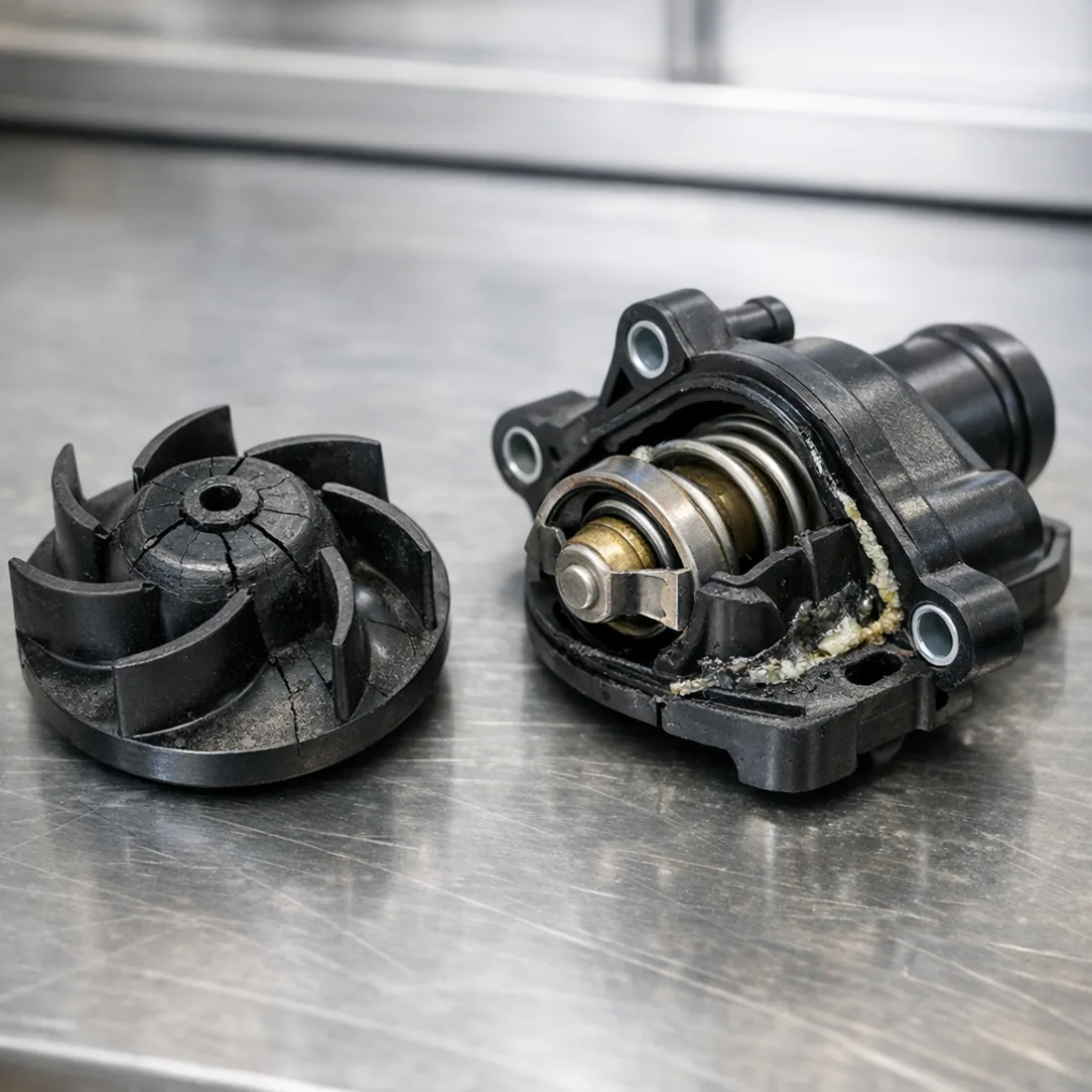
The CAX uses a plastic impeller water pump and a plastic thermostat housing. Plastic components in a pressurised, heat cycled cooling system have a finite lifespan, and on these engines that lifespan is often shorter than owners expect. The water pump can crack or lose its impeller, and the thermostat housing develops hairline fractures that weep coolant slowly at first. You might notice a faint sweet smell from the engine bay, or a coolant level that keeps dropping without any obvious puddle underneath. Left alone, either fault will eventually lead to an overheating event, and overheating a turbocharged direct injection engine is an expensive mistake. We replace these with quality components and pressure test the cooling system properly rather than just topping up the reservoir.
The positive crankcase ventilation valve on the CAX is another known wear item. When it sticks open or fails, you get excessive oil consumption, a rough idle, and often a fault code pointing vaguely at a lean mixture or boost leak. Because the symptoms overlap with several other faults, it's easy to chase the wrong diagnosis without proper tooling. A new PCV valve is not expensive. The diagnostic time saved by having the right equipment to confirm it before you start swapping parts is where the real value lies.
This one is specific to the Eos and worth calling out plainly. The folding hardtop roof is a genuine engineering achievement, but the drain channels that run water away from the roof seals and frame are narrow and love to block with leaves, grit, and debris. When they block, water backs up and finds its way inside the cabin, often pooling in the footwells or behind the rear seats. The fix is usually straightforward: clear the drains, inspect the seals for any cracking or deformation, and check that the roof operates through its full cycle without binding. The complication is finding it before mould sets in, which is why a roof and drain inspection should be part of any pre purchase check or annual service on this car.
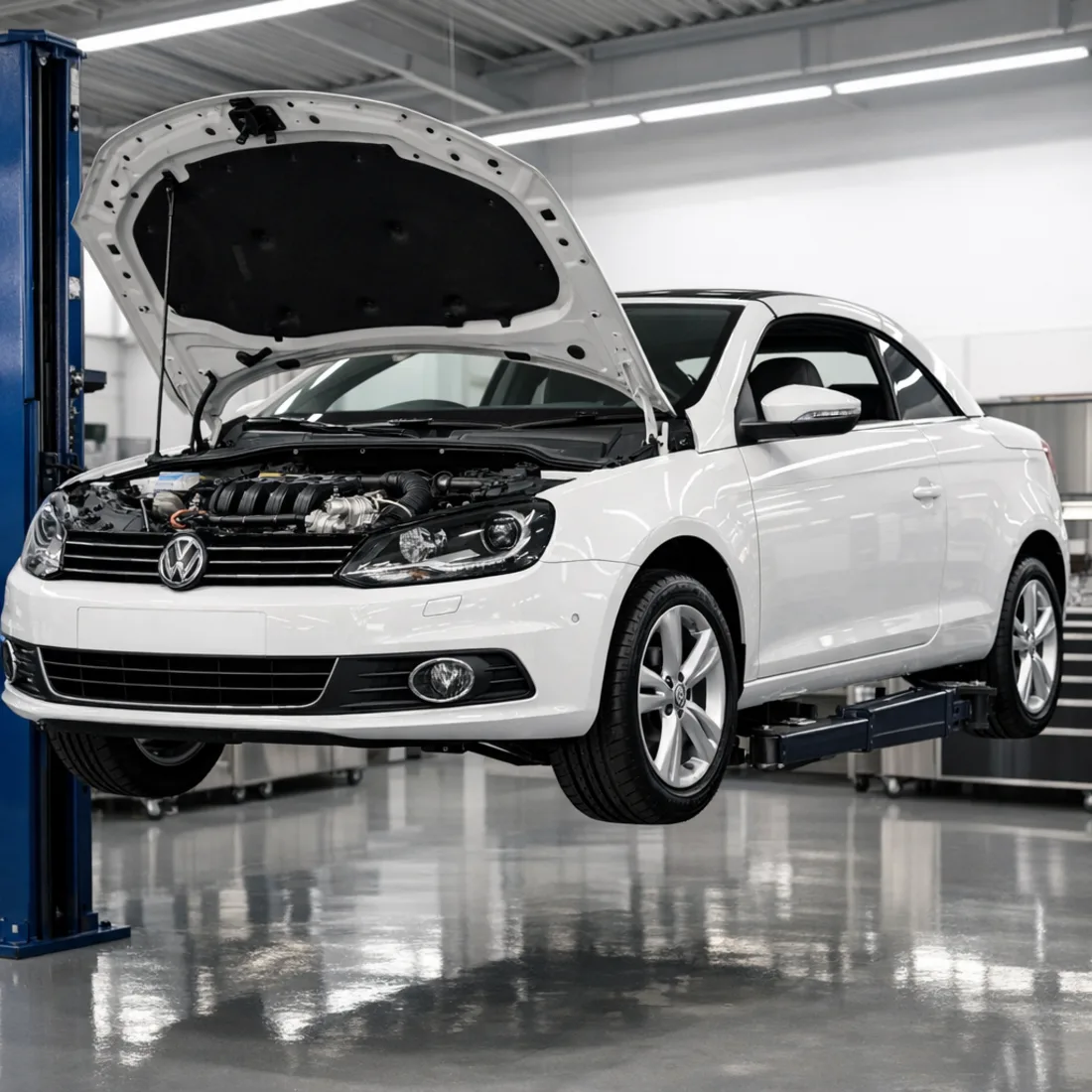
Get your Eos booked in with a specialist who knows it properly.
Service, Repairs and What's Worth Booking
The CAX engine calls for a full synthetic oil that meets or exceeds the VW low SAPS specification. Using a standard off the shelf oil that doesn't meet this spec will shorten the life of the catalytic converter and can affect the DPF compliance on later models. We use the correct grade every time. Beyond the oil and filter, a full Eos service with us covers the air filter, cabin filter, and a fresh set of spark plugs, because the ignition system on a direct injection turbo works harder than most and worn plugs accelerate carbon deposits. We also inspect the ignition coils while the plugs are out, because failing coils on this engine often misfire intermittently before they fail completely and they can take a while to show a consistent fault code.
Drive belt condition, brake pads, and rotors are all part of what we assess at every service visit. The Eos is not a light car, and the braking system earns its keep. If the pads are getting close, we'll tell you before they're gone. Suspension checks are part of the same visit, and on a car that spends its life with a significant amount of roof mechanism weight at the rear, keeping the suspension geometry honest matters for both tyre wear and handling.
For the roof, drains, and any water ingress issues, that work sits alongside the body electrical diagnosis we handle through our auto electrical team. Tracing a water leak to its source and confirming the drain channels are clear is quicker when you're not guessing, and we've seen enough Eos examples to know where to look first.
How We Diagnose the Eos Properly
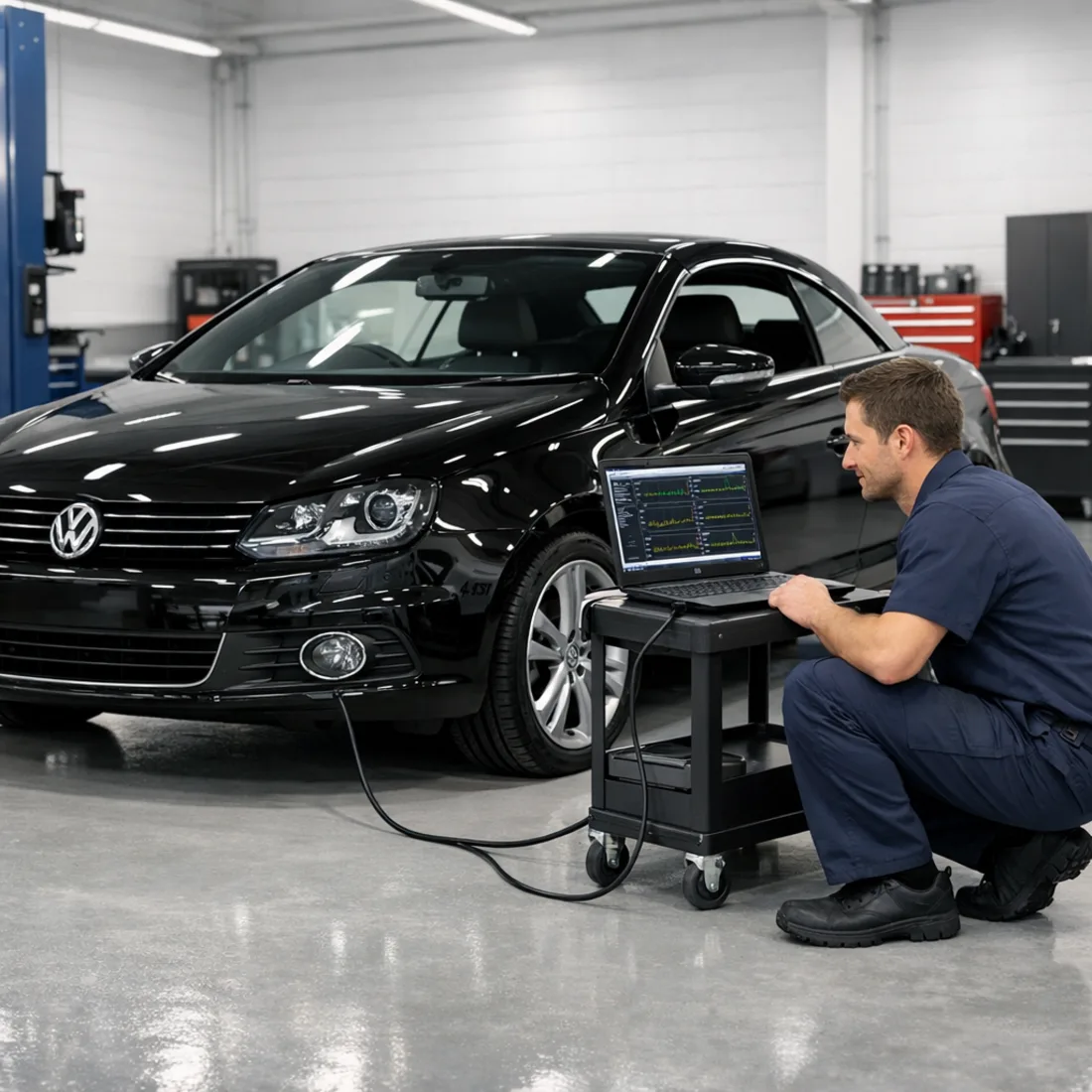
We use ODIS, the Volkswagen Group's own factory level diagnostic platform, to work on these cars. That matters because the Bosch MED17 ECU family and the Eos body control modules store data that generic scan tools either misread or miss entirely. ODIS reads live data streams from the engine, reads freeze frame fault conditions as they actually occurred, and allows guided fault finding through the same diagnostic trees the factory uses. When we're chasing a misfire on a CAX, we're looking at injector balance rates, boost actual versus requested, and ignition timing corrections in real time, not just reading a fault code and guessing at the cause. That process is faster, more accurate, and means we're fixing the right thing the first time.
For electrical and body system work on the Eos, including the folding roof control module and the complex hood positioning sensors, proper coding matters too. Our team handles module programming and coding in house, so if a control unit needs replacing or initialising after repair, we don't have to send the car elsewhere.
Stage 1 Tuning for the CAX Engine
The CAX in factory tune leaves a reasonable amount of performance on the table, which is not unusual for a Euro spec engine calibrated conservatively for a range of fuel qualities and market conditions.
A Stage 1 ECU remap on this engine lifts output from the stock 122 horsepower and 200 Newton metres to 155 horsepower and 270 Newton metres. That's an extra 33 horsepower and 70 Newton metres of torque without any hardware changes, and the difference in real world driveability is significant: stronger mid range pull, less need to drop gears on the motorway, and a car that feels more in proportion with what the roof mechanism suggests it should be. The tune is written and flashed directly to the Bosch MED17 ECU. We can also add options including a pop and bang crackle map, start stop disable, DTC removal, and Vmax limiter adjustment depending on what you're after. DECAT and intake flap (FLAPS) options are available for off road or track use, though DECAT may affect WOF compliance on a road registered vehicle.
Everything we fit is brand new, genuine OEM or OEM grade quality. That applies to every service item and every mechanical repair. When you bring your Eos in, you're getting parts that belong in the car, fitted by people who actually know it. More detail on what's achievable is on our power gains page.
Frequently Asked Questions
The questions we get most. Something else on your mind? Get in touch.